Siding • 2026-10-05
Small House Siding Ideas Exterior: Big Curb Appeal for Small Homes
If your small house looks plain, flat, or tired from the street, new siding is one of the fastest ways to change that. The right lines, colors, and accents can make a small home look taller, bigger, and more inviting. This guide walks through three proven siding ideas, with real costs and care facts, so you can plan with confidence.
Vertical board and batten adds height, light colors like soft blue make walls look larger and can help cut cooling costs, and natural wood accents bring warmth. With fiber cement returning about 114% of its cost at resale and vinyl about 97%, both are smart picks for a small home. Finish with black trim and a bold front door for big curb appeal.
Subscribe to our newsletter
Our bi-weekly newsletter full of inspiration, podcast, trend and news.
Small House Siding Ideas Exterior: Big Curb Appeal for Small Homes
Does your small house look plain, flat, or tired from the street? New siding is one of the fastest ways to change that. The right lines, colors, and accents can make a small home look taller, bigger, and more inviting. This guide walks through three proven small house siding ideas, with real costs and care facts, so you can plan with confidence.
Quick Answer: The best small house siding ideas are vertical board and batten to add height, light colors like soft blue to make the home look bigger, and natural wood accents for warmth, finished with crisp black trim. Based on national averages, replacing siding costs about $14 per square foot for vinyl and about $17 for fiber cement, and both come in board and batten styles. [1]
3 Small House Siding Ideas for Big Curb Appeal
On a small house, every wall is easy to see from the street, so the direction of the siding, the colors, and the accents all matter. Here are three ideas that work together.
1. Vertical Board and Batten to Add Height
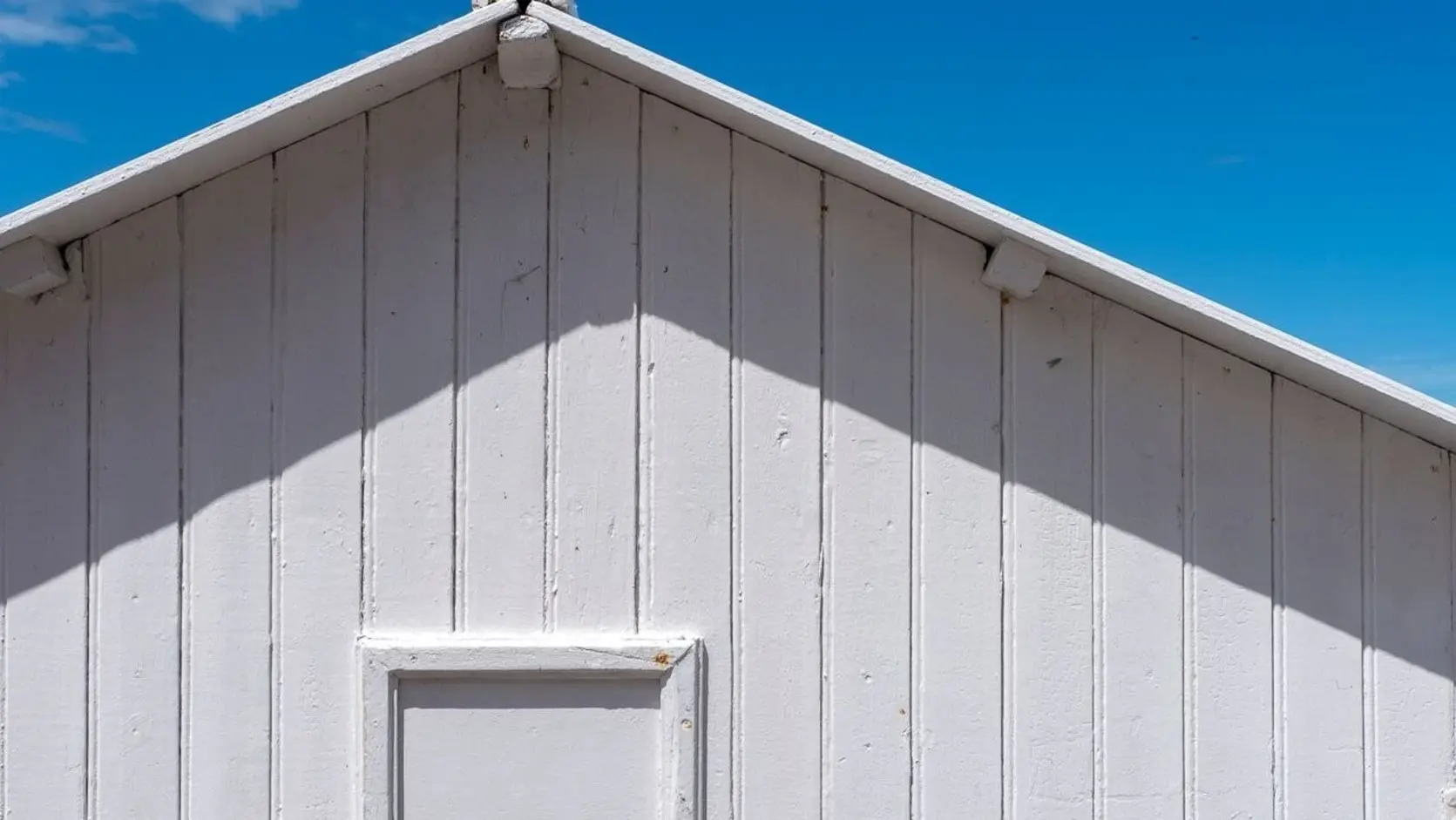
Board and batten is made of wide vertical boards with thin strips, called battens, covering the seams. The tall, repeating lines pull the eye upward, which helps a short or single-story house look taller. It is a style, not a material, so you can get it in vinyl or fiber cement. Vinyl siding lasts about 60 years and fiber cement 100 years or more with normal care. Use it on the whole house for a modern farmhouse look, or just on the front gable to add height where it shows most. [4]
Best for: Ranch homes, cottages, and one-story houses that need more height and character.
2. Light Colors to Make a Small Home Look Bigger
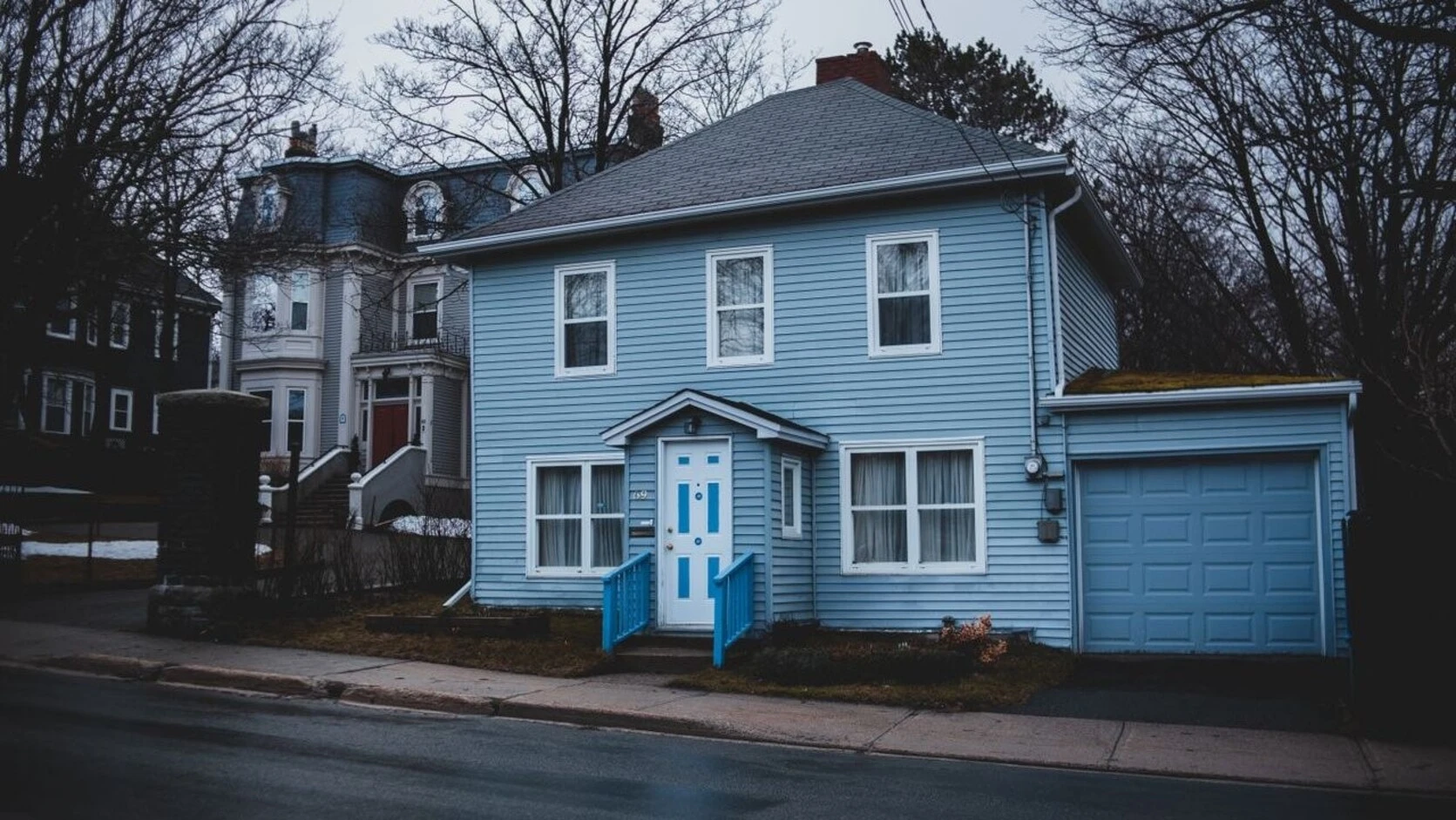
Light siding colors make walls look larger and help a small house stand out instead of blending into the yard. Soft blue is a great pick because it feels fresh and calm without being stark white. Pair it with black trim around the windows, doors, and corners. The dark outline gives the house a crisp shape so a light color never looks washed out. Light colors can also help with summer bills. Research from Lawrence Berkeley National Laboratory found that “cool walls,” which reflect more sunlight than typical walls, could cut energy costs for single-family homes by 4% to 27% across California climates. In warm climates, a cool wall can save as much energy as a cool roof of the same size, or more. [2]
Best for: Small homes in sunny or warm areas, and any house that needs to look bigger from the street.
3. Natural Wood Accents for Warmth
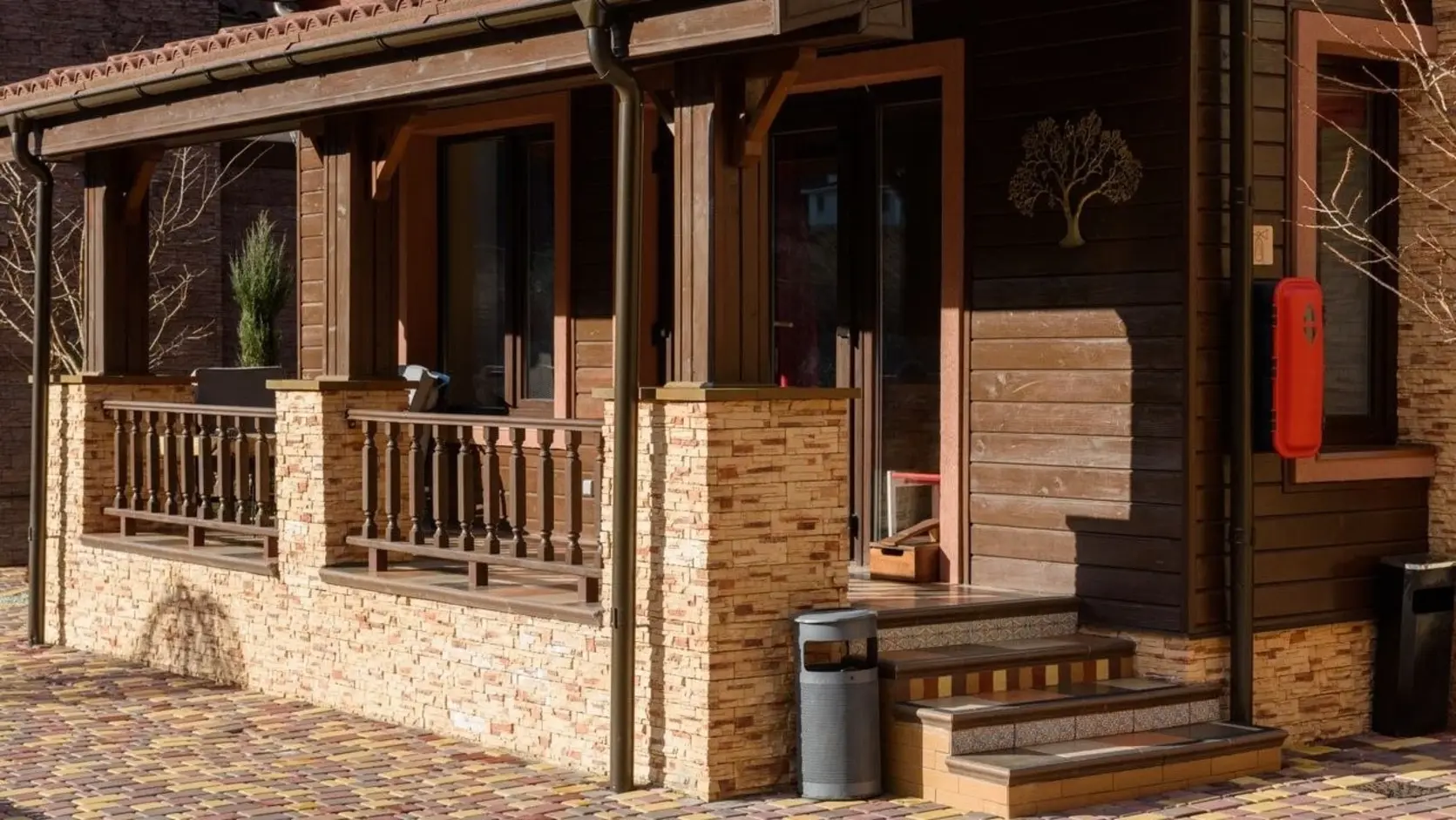
A little natural wood adds warmth that light siding alone cannot. Use it in small doses, like the front gable, porch posts, a porch ceiling, shutters, or the area around the front door. Keeping wood to accents also keeps upkeep small, because real wood needs a finish to last. Research from the USDA Forest Products Laboratory shows how often that finish needs attention. A water-repellent preservative lasts only about 1 to 2 years. One coat of semitransparent stain on new wood lasts about 2 to 4 years, while a two-coat system on rough wood can last up to 10 years. Good house paint over primer lasts 4 to 5 years with one coat and up to 10 years with two. Unfinished wood exposed to sun and weather will slowly turn gray. [3]
Best for: Porches, gables, and entries where a warm touch makes the whole house feel welcoming.
Cost and Lifespan at a Glance
Here is how the main siding materials for these ideas compare, using national cost data, lifespan estimates, and wood finish research. [1][3][4]
Comparison Table
| Siding Type | Replacement Cost (per sq ft) | Small House (1000 sq ft of siding) | Lifespan |
|---|---|---|---|
| Vinyl (lap or board and batten) | About $14 | About $14,400 | About 60 years |
| Fiber Cement (lap or board and batten) | About $17 | About $17,200 | 100+ years |
| Natural Wood Accents | Varies by area and species | Small areas only | Long, with a fresh finish every 2 to 10 years |
*Per-square-foot costs are estimates made by dividing the 2025 national average cost of replacing 1,250 square feet of siding ($17,950 for vinyl and $21,485 for fiber cement) by 1,250. Small-house totals multiply that by 1,000 square feet of wall. Siding area is not the same as floor area. Prices change with location, trim work, removal of old siding, and permits.
Want to find the real best value? Look at what comes back when you sell. Fiber cement siding returns about 114% of its cost at resale and vinyl about 97%. Both are strong choices, and adding wood only as accents keeps the look warm without a big maintenance bill. [1]
More Small House Siding Ideas That Look Great
Make the Front Door the Star
A bold front door in a warm wood tone or a deep color gives the eye one clear focal point, which makes a small house look more put-together.
Use Wide Trim
Wide trim around windows and doors makes them look larger. In black, it frames each opening and ties the whole palette together.
Mix Two Textures
Pair board and batten on the gable with lap siding on the lower walls. Two textures add interest without making a small house look busy.
Keep the Roof in Mind
Choose siding colors that work with your roof color. A dark roof pairs well with soft blue walls and black trim.
Before new siding goes on, ask your contractor to check the wall sheathing and the weather barrier underneath. New siding over hidden rot or water damage will not last, no matter how good it looks.
Conclusion
Small house siding ideas work best when every choice makes the home feel bigger and warmer. Vertical board and batten adds height, light colors like soft blue make the house look larger and can help with cooling, and natural wood accents add warmth. Finish with black trim and a bold front door, and your small house can have big curb appeal.
Frequently Asked Questions
What siding makes a small house look bigger?
Vertical board and batten adds height, and light colors like soft blue make the walls look larger. Black trim keeps the shape crisp.
Do light siding colors save energy?
They can. Berkeley Lab research found that cool, light-reflecting walls could cut energy costs for single-family homes by 4% to 27% across California climates. [2]
How often do wood siding accents need refinishing?
It depends on the finish. Semitransparent stain can last 2 to 4 years with one coat and up to 10 years with two, and good paint lasts 4 to 10 years. [3]
How much does it cost to side a small house?
Based on national averages, about $14 per square foot of wall for vinyl and about $17 for fiber cement, or roughly $14,400 to $17,200 for 1,000 square feet of siding. [1]
References
[1] Zonda Media. (2025). Cost vs. Value report 2025: National averages. Journal of Light Construction. https://www.jlconline.com/cost-vs-value/2025/
[2] Lawrence Berkeley National Laboratory. (2019, July 9). Can’t take the heat? ‘Cool walls’ can reduce energy costs, pollution. Berkeley Lab News Center. https://newscenter.lbl.gov/2019/07/09/cool-walls-can-reduce-energy-costs-pollution/
[3] Cassens, D. L., & Feist, W. C. (1986). Selection and application of exterior finishes for wood (NCR-135). Purdue University Cooperative Extension Service and USDA Forest Products Laboratory. https://extension.purdue.edu/extmedia/ncr/NCR-135.html
[4] International Association of Certified Home Inspectors (InterNACHI). (n.d.). InterNACHI’s standard estimated life expectancy chart for homes. https://www.nachi.org/life-expectancy.htm
Subscribe to our newsletter
Our bi-weekly newsletter full of inspiration, podcast, trend and news.