Bathroom • 2026-10-05
Small Bathroom Remodel Cost: What Drives the Price & How to Save
A small bathroom remodel can make a dated, cramped space feel brand new, but the price often comes as a surprise. Your total comes down to three choices: your layout, your vanity and fixtures, and your tile. Using 2025 national Cost vs. Value data, this guide shows how each one moves the price so you can plan with confidence.
Keeping the plumbing where it is saves the most, with a midrange remodel returning about 80% of its cost at resale compared with just 42% for an upscale expansion. Learn how WaterSense fixtures can lower your water bills, where to splurge on tile, and simple ways to stretch your budget. Plan smart, compare remodelers, and get a bathroom that lasts.
Subscribe to our newsletter
Our bi-weekly newsletter full of inspiration, podcast, trend and news.
Small Bathroom Remodel Cost: What Drives the Price & How to Save
Is your small bathroom looking dated, cramped, or worn out? A remodel can make it feel brand new, but the price can surprise you. The good news is that small bathroom remodel cost comes down to just three things: your layout, your vanity and fixtures, and your tile. This guide shows how each one moves the price, with real national numbers, so you can plan with confidence.
Quick Answer: Small bathroom remodel cost depends on three things: whether you keep the layout, the vanity and fixtures you choose, and your tile. A midrange remodel of a 5-by-7-foot bathroom that keeps the layout costs about $26,138 on average in the U.S., and about 80% of that comes back at resale. Expanding a 35-square-foot bathroom to 100 square feet with upscale finishes costs about $81,612. Keeping the plumbing where it is saves the most. [1]
3 Things That Set Your Small Bathroom Remodel Cost
A 5-by-7-foot bathroom is only 35 square feet, but it is packed with plumbing, fixtures, and tile. At the national midrange average, that works out to about $750 per square foot. Here is where that money goes. [1]
1. Layout: Keep the Plumbing Where It Is
Layout is the biggest price driver. The national midrange remodel keeps the tub, toilet, and sink in the same spots and simply replaces them, for about $26,138. The upscale version grows the same 35-square-foot bathroom to 100 square feet, adds a separate toilet area, a neo-angle shower, and a freestanding tub, and costs about $81,612, more than three times as much. Even without making the room bigger, changing the layout adds up. The universal design remodel takes out the tub for a curbless walk-in shower and widens the door, and it costs about $42,183. Moving a toilet or shower means opening the floor or walls, running new drain and water lines, and often pulling permits. Every pipe that stays put is money you can spend on the parts you see and use. [1]
How to save: Keep the toilet, tub or shower, and sink where they are. This is the single biggest way to control cost.
2. Vanity and Fixtures
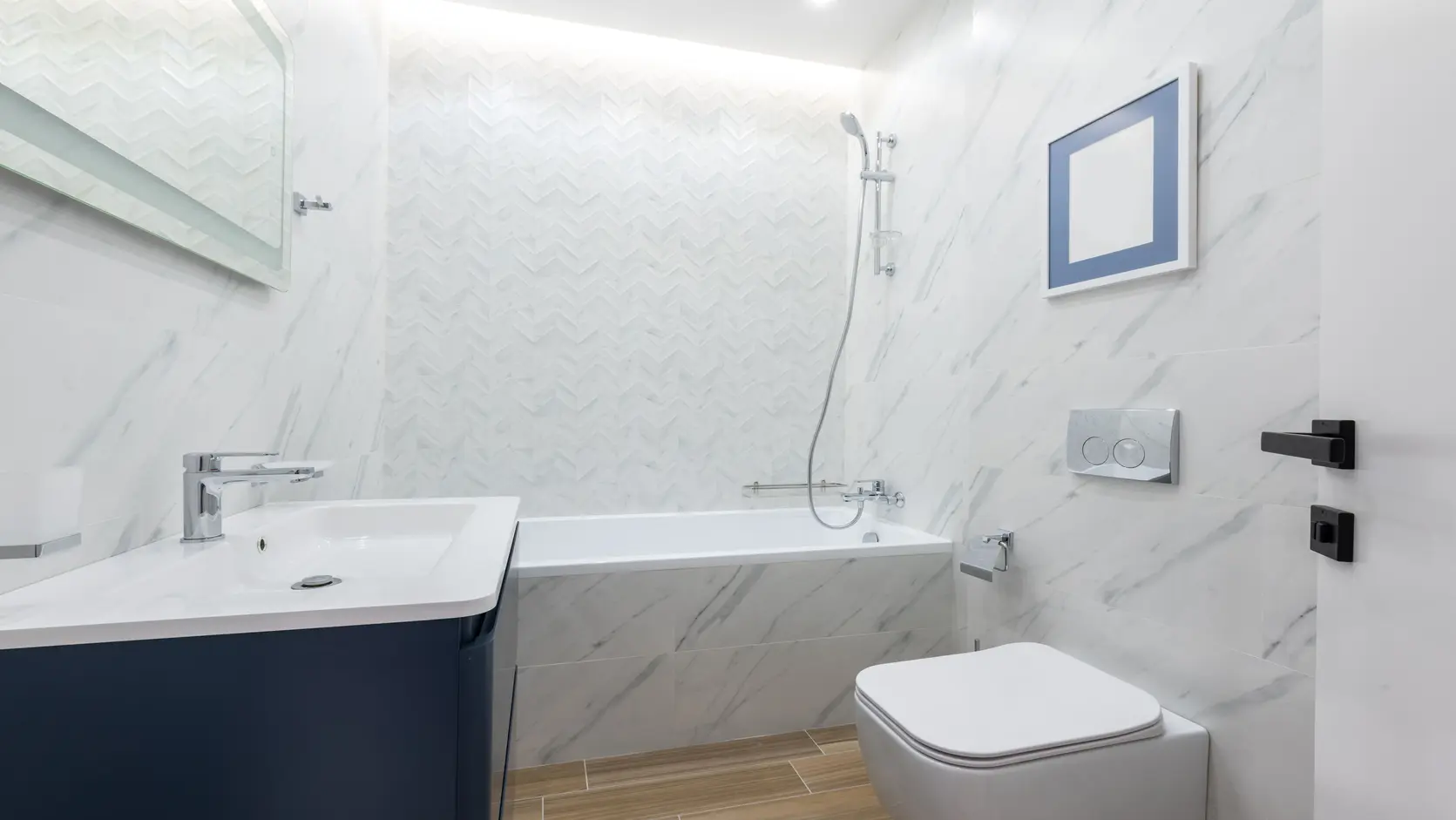
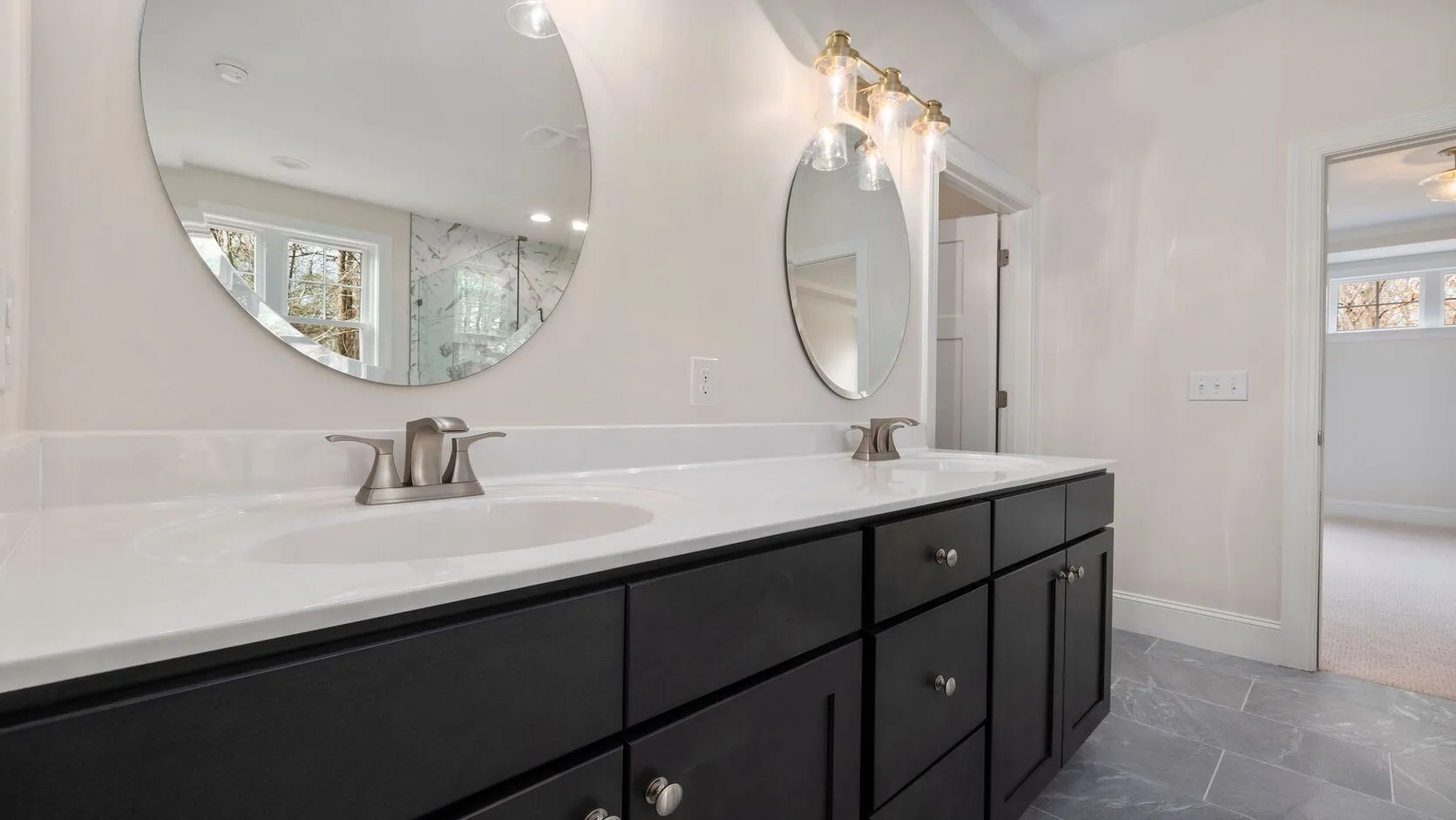
Fixtures are where your style shows, and where prices spread out. The midrange remodel uses a standard white toilet, a solid-surface vanity top with a built-in sink, a recessed medicine cabinet, and a pressure-balanced shower valve. The upscale remodel steps up to a stone countertop with two sinks, a freestanding soaker tub, body-spray shower fixtures, and a frameless glass enclosure. Smart fixture choices can also save money every month. WaterSense toilets use 1.28 gallons per flush or less, compared with as much as 6 gallons for older toilets, and replacing old toilets can save a household more than $170 a year in water costs. A WaterSense showerhead uses no more than 2.0 gallons per minute instead of the standard 2.5 and can save the average family 2,700 gallons of water a year. [3]
How to save: Pick a standard-size vanity and solid-surface top, and choose WaterSense toilets and showerheads that lower your bills for years.
3. Tile Choice
Tile covers the floor and the shower or tub walls, so the type and pattern you pick matter. The midrange remodel uses a 4-by-4-inch ceramic tile tub surround and a ceramic tile floor. The upscale remodel adds diagonal-laid floor tile with matching base, an accent strip in the shower, and electric heat under the floor. Patterns like diagonal layouts need more cuts and more labor than a straight layout. In a small bathroom, the floor is only about 35 square feet, so a nicer floor tile adds less than you might think. The shower or tub walls are often the larger tiled area. The upside is that tile lasts. InterNACHI estimates ceramic wall tile lasts 70 years or more and tile floors 75 to 100 years, so good tile can outlast every fixture in the room. [4]
How to save: Splurge on a small area, like the floor or an accent strip, and keep the larger wall areas simple with a straight layout.

Small Bathroom Remodel Cost at a Glance
Here is how the three main small bathroom remodel levels compare on layout, fixtures, tile, and cost, using 2025 national Cost vs. Value data. [1]
Comparison Table
| Remodel Level | Layout | Vanity and Fixtures | Tile | Avg. Cost | Cost Recouped |
|---|---|---|---|---|---|
| Midrange (5x7 ft) | Kept the same | Standard toilet, solid-surface vanity, medicine cabinet | 4x4 ceramic surround, ceramic floor | $26,138 | 80% |
| Universal Design (5x7 ft) | Tub out, curbless shower, wider door | Comfort-height toilet, adaptive vanity, fold-out seat | Ceramic walls, luxury vinyl tile floor with radiant heat | $42,183 | 61% |
| Upscale (35 to 100 sq ft) | Expanded, separate toilet area | Stone top with dual sinks, soaker tub, frameless shower | Diagonal floor tile, heated floor | $81,612 | 42% |
Costs are 2025 U.S. national averages from the Cost vs. Value report. Real prices change with your location, the condition of your plumbing, the products you choose, and permits.
Want to find the real best value? Compare what you spend with what comes back when you sell. The midrange remodel that keeps the layout returns about 80% of its cost, while the upscale expansion returns only about 42%. For most small bathrooms, keeping the layout and choosing mid-level fixtures gives the best mix of price, comfort, and resale value.
More Ways to Save on a Small Bathroom Remodel
Refresh What Still Works
If your tile and tub are in good shape, a new vanity, faucet, lighting, and paint can make the room feel new for far less than a full remodel.
Replace the Exhaust Fan
Bathroom exhaust fans last about 5 to 10 years. A working fan clears moisture that can damage new paint, grout, and cabinets. [4]
Choose Everything Before Work Starts
Pick your vanity, fixtures, and tile before demolition begins. Late changes and back-ordered products can stretch the timeline and the budget.
Compare More Than One Remodeler
Talk to a few local bathroom remodelers and compare their plans, materials, timelines, and warranties before you choose.
Before you pick tile and fixtures, ask your remodeler to check for hidden water damage under the floor and behind the tub or shower walls. Fixing rot before the new tile goes in costs far less than fixing it after.
Conclusion
Small bathroom remodel cost comes down to three choices. Keeping the layout saves the most, your vanity and fixtures set the style and the monthly water bill, and your tile choice decides how the room looks for decades. Keep the plumbing where it is, spend on the pieces you touch every day, and compare remodelers, and your small bathroom can feel brand new without wasting your budget.
Frequently Asked Questions
How much does a small bathroom remodel cost?
A midrange remodel of a 5-by-7-foot bathroom that keeps the layout costs about $26,138 on average in the U.S. [1]
What makes a small bathroom remodel cost more?
Changing the layout is the biggest driver. Expanding a 35-square-foot bathroom to 100 square feet with upscale finishes costs about $81,612, more than three times the midrange remodel. [1]
Is a small bathroom remodel worth it?
For most homes, yes. A midrange bathroom remodel returns about 80% of its cost at resale, and you get a better room to use every day.
Which fixtures save money after the remodel?
WaterSense toilets can save more than $170 a year in water costs, and WaterSense showerheads can save the average family 2,700 gallons of water a year. [2]
References
[1] Zonda Media. (2025). Cost vs. Value report 2025: National averages. Journal of Light Construction. https://www.jlconline.com/cost-vs-value/2025/
[2] U.S. Environmental Protection Agency. (n.d.). Residential toilets. WaterSense. https://www.epa.gov/watersense/residential-toilets
[3] U.S. Environmental Protection Agency. (n.d.). Showerheads. WaterSense. https://www.epa.gov/watersense/showerheads
[4] International Association of Certified Home Inspectors (InterNACHI). (n.d.). InterNACHI’s standard estimated life expectancy chart for homes. https://www.nachi.org/life-expectancy.htm
Subscribe to our newsletter
Our bi-weekly newsletter full of inspiration, podcast, trend and news.