
Explore All
BROWSE BY CATEGORY
Interior
Exterior
Home Essentials
Homeowner Tools
Blogs & Guides
Find a Pro
Book Your Appointment Now
Home Essentials
About Renovize Home
Explore All
BROWSE BY CATEGORY
Interior
Exterior
Home Essentials
Homeowner Tools
Blogs & Guides
Find a Pro
Book Your Appointment Now
Home Essentials
About Renovize Home
Last Updated 2025-12-11
Replacing damaged window frames is essential for restoring the structural strength and weather protection your home depends on. When frames deteriorate due to rot, warping, cracks, or long-term moisture exposure, they no longer support the window properly or seal out air and water. This leads to drafts, rising energy bills, interior water damage, and weakened window stability. Frame replacement removes the compromised material and rebuilds a solid, level, and well-insulated foundation for the window.
By installing new materials with proper sealing, flashing, and alignment, homeowners regain a tight, secure barrier that protects against leaks, heat loss, and future deterioration. It also improves window performance, enhances comfort, and prevents structural problems from spreading into surrounding walls. Replacing damaged window frames is not just a cosmetic improvement, it’s a difficult repair that restores long-term safety, durability, and weather resistance.
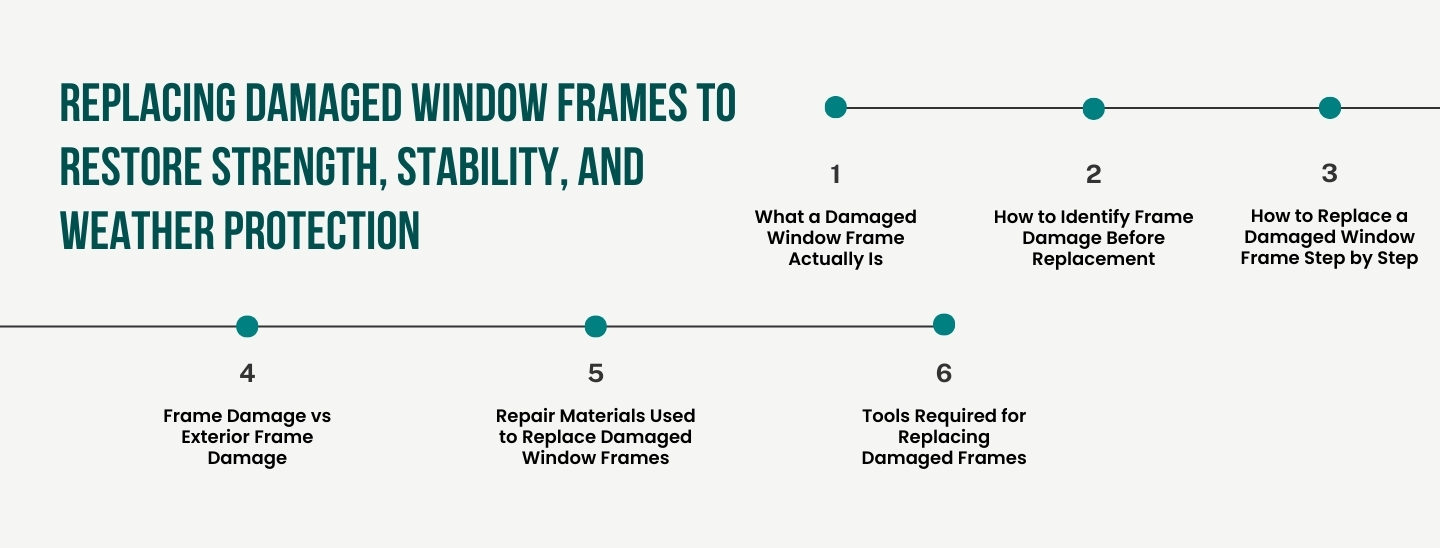
Table of Contents
How to Identify Frame Damage Before Replacement
Why Window Frames Become Damaged
How to Replace a Damaged Window Frame
Replacing Interior Frame Damage vs Exterior Frame Damage
When the Damaged Area Requires a Full Section Replacement
Repair Materials Used to Replace Damaged Window Frames
Tools Required for Replacing Damaged Window Frames
Cost of Replacing Damaged Window Frames
DIY vs Professional Frame Replacement
Final Views
Identifying frame damage early can help homeowners assess the severity of the problem and determine whether partial repairs or full replacement is necessary. Window frames don't fail suddenly, there are often early warning signs that worsen over time. Recognizing these signs early can prevent water intrusion, structural decay, and expensive repairs to surrounding walls.
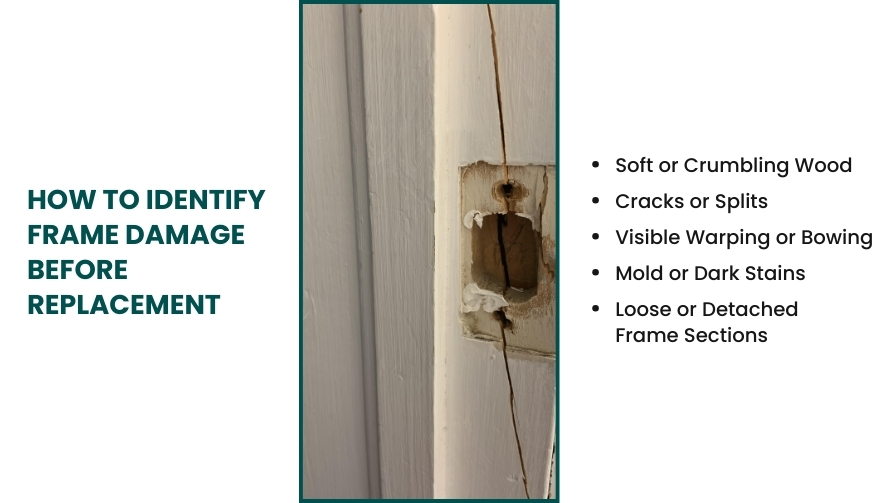
One of the most noticeable signs of frame damage is soft or crumbling wood. If the wood feels spongy, flaky, or hollow when pressed with a finger or tool, it has likely suffered from rot due to moisture exposure. Healthy wood should feel firm and solid. Rotted wood loses its structural integrity, making it unable to securely hold the window sash or screws.
Cracks along the edges of the window frame are another indication of structural stress. These splits may start small but can worsen over time with regular window use. Even hairline cracks can weaken the frame's support, leading to misalignment, difficulty locking the window, or drafts. Larger, deeper cracks may indicate that part of the frame needs to be removed and replaced.
Warping is a significant sign of moisture damage or temperature-related stress. When wood absorbs water, it can swell unevenly, causing the frame to bow inward or outward. This warping can prevent the window sash from fitting properly within the frame, creating gaps, difficulty opening or closing, and uneven pressure on the glass. In many cases, a warped frame requires partial or complete replacement.
Mold, dark stains, or discoloration around the window frame are telltale signs of moisture intrusion. These stains often occur where the sealant has failed or water has seeped into the frame, causing long-term damage. Mold growth indicates that moisture has penetrated deeper into the wood, leading to potential decay. The affected areas may be soft or crumbly, and the damage may extend beyond the visible surface.
Loose or detached sections of the window frame suggest that the frame has been weakened over time. These gaps can occur when the frame's screws or nails have loosened or when the wood has rotted. This can affect the stability of the window, making it difficult to close properly and increasing the risk of water penetration.
Understanding what causes frame damage helps ensure the new replacement lasts longer and doesn’t fail again. Window frames weaken because of environmental conditions, mistakes in installation, material failures, or long-term neglect. Identifying the root cause is essential for long-term prevention.
Water is the number-one cause of frame damage. Rain, roof leaks, clogged gutters, condensation, or poor drainage gradually soak into the wood. Over time, the moisture breaks down the fibers, causing rot, swelling, mold growth, and loss of structural strength. Consistent exposure shortens the frame’s lifespan dramatically.
When caulking ages, shrinks, or cracks, tiny gaps form between the frame and the wall. These gaps may seem minor, but they allow water to flow behind the trim and into the wood. With every rainfall, moisture accumulates inside the frame, slowly causing rot, warping, and decay.
Wood-destroying insects such as termites, carpenter ants, or wood-boring beetles can hollow out frames from the inside. This type of damage often goes unnoticed until the frame becomes soft or collapses under pressure. Even small insect trails indicate internal structural weakening.
Constant sunlight dries out wood and weakens its natural oils, making it more vulnerable to cracking. Extreme temperature changes cause the frame to expand and contract repeatedly, creating stress fractures and small openings that worsen over time. This is common in homes with south-facing or west-facing windows.
As windows age, the wood or composite material naturally loses density and resilience. Paint peels, joints loosen, and the frame becomes more vulnerable to moisture and temperature conditions. Older windows also often contain outdated materials that are not as weather-resistant as modern frames.
Replacing a damaged window frame is a careful process that removes weakened wood, restores structural support, and rebuilds a fully protected perimeter around the window. These steps are written so that even homeowners with little experience can understand how the repair works and why each stage matters.
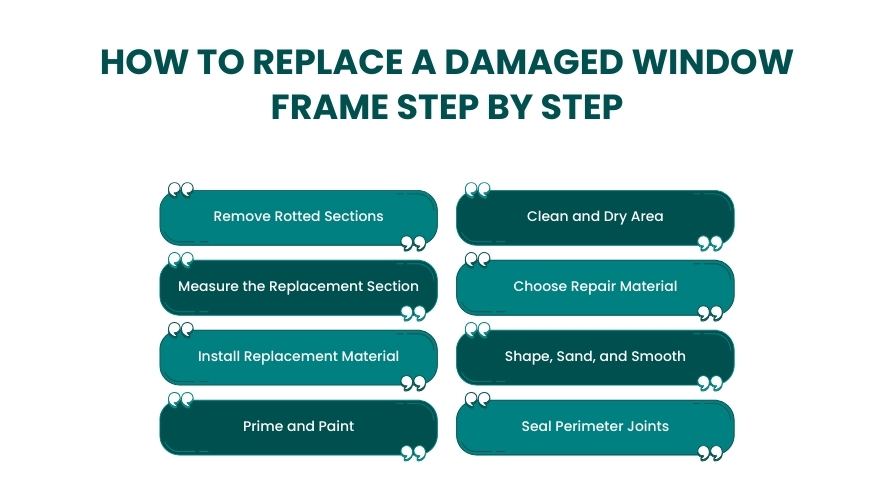
The first step is to fully remove every soft, crumbling, or broken part of the frame. Using a pry bar, oscillating saw, or chisel, the damaged wood is cut out until only strong, solid material remains. This ensures that no hidden rot is left behind to spread later. Professionals always test the surrounding wood by pressing gently, if it sinks or cracks, it must be removed as well.
After the damaged sections are removed, the repair area must be cleaned thoroughly. Loose fibers, dust, wet debris, and old paint flakes are brushed away so the new material can bond properly. If the frame is damp, fans or a heat gun are used to dry the area completely. A clean, dry, and solid base is essential for long-lasting frame restoration.
Accurate measurement prevents gaps, misalignment, and uneven surfaces. The width, depth, and length of the missing section are measured carefully to match the replacement material. Whether using filler, epoxy, or brand-new trim, the repair piece must fit tightly against the remaining frame. Precise measurements also keep the window square and level.
The right repair method depends on how deep the damage goes:
Once the material is selected, the damaged area is rebuilt. If using filler or epoxy, the mixture is pressed firmly into the cavity with a putty knife, ensuring it reaches all corners. For larger repairs, the new frame piece is cut to size, positioned flush with the existing frame, and secured with exterior-grade screws. Proper fastening is crucial so the frame remains sturdy and properly aligned when the window opens or closes.
After the filler, epoxy, or new wood section has cured or been secured, the surface is shaped and sanded to blend with the original frame profile. This step removes any ridges, uneven edges, or sharp transitions so the window looks seamless. Smooth sanding also helps paint adhere uniformly and prevents visible repair lines.
Priming and painting the frame protects it from future water exposure and restores a clean, finished look. Primer seals the new material and blocks moisture from penetrating the wood. After drying, exterior-grade paint is applied in one or two coats, creating a durable barrier against rain, humidity, and sunlight. Skipping this step leaves the repair vulnerable to new rot.
The final step is resealing the entire perimeter of the window with fresh caulk. This includes edges where the frame meets the wall, sill joints, and any small corners that could allow water inside. A continuous, smooth bead of silicone or latex creates a watertight barrier that prevents leaks and protects the new repair from future damage. Proper sealing extends the life of both the repair and the entire window.
Understanding the differences between interior and exterior frame damage is crucial for determining the correct repair methods, materials, and extent of replacement needed. Both areas are exposed to different elements such as moisture, temperature changes, and wear, which impact how damage occurs and how it should be addressed.
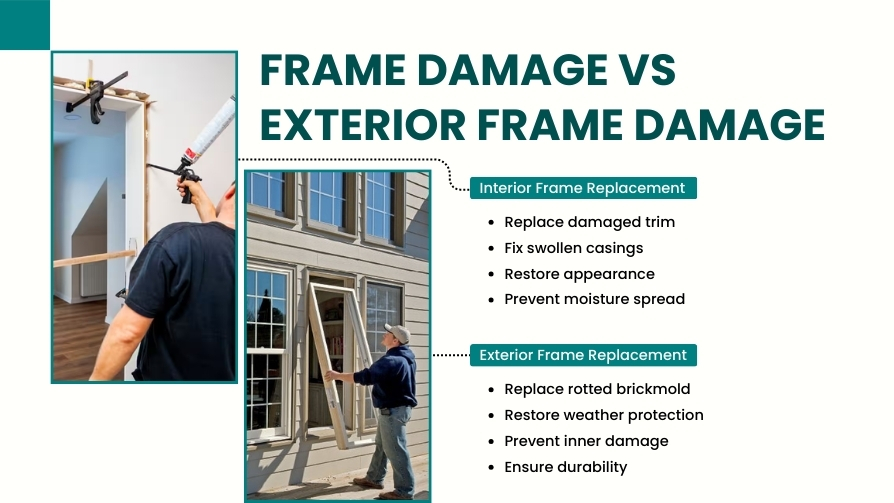
Interior frame damage typically affects areas like sill trim, casings, or stool pieces. This type of damage is often caused by condensation or minor leaks from indoor humidity. Common signs of damage include:
Repairing or replacing interior components restores the window’s aesthetic appeal and prevents moisture from spreading into drywall or flooring. Timely repairs can also prevent mold growth, further deterioration inside the home, and issues with structural integrity and indoor air quality.
Exterior frame damage is usually more severe and involves components like rotted brickmold, sill noses, and outer casings. These parts are exposed to harsher conditions, including direct sunlight, storms, and continuous moisture. As a result, exterior frames deteriorate faster. Replacing exterior frame parts is essential for:
A properly replaced exterior frame will restore the window’s ability to withstand outdoor elements, protect the home from water damage, and preserve the longevity of both the window and the surrounding materials.
Some frame damage cannot be restored with fillers or epoxy because the structural integrity is already compromised. When the damage affects strength, alignment, or the ability to hold hardware, full section replacement becomes the only safe option.
When rot extends several inches into the wood, the frame loses its ability to support the sash or hold screws. Fillers cannot rebuild collapsed fibers. Full replacement restores the strength needed to keep the window stable and functional.
If hinges, locks, or latches loosen because the wood around them is too soft, the frame can’t hold fasteners securely. This causes misalignment and weak locking. Installing a new frame section re-establishes solid anchoring points.
Bowing occurs when moisture warps the wood and changes its shape over time. A bowed section cannot be straightened with filler. Replacing it realigns the window, restores smooth operation, and prevents further distortion.
Termites or wood-boring insects hollow out wood from within, leaving behind weak, paper-like shells. Hardeners and fillers cannot fix deep internal cavities. All compromised wood must be cut out and replaced to ensure safety.
Choosing the right repair materials is crucial when replacing damaged window frames. The type of material used depends on the severity of the damage, the location of the issue, and the extent of rot or decay. Using the wrong material can result in quick failure or recurring damage. Here's an overview of common repair materials used for window frame restoration.
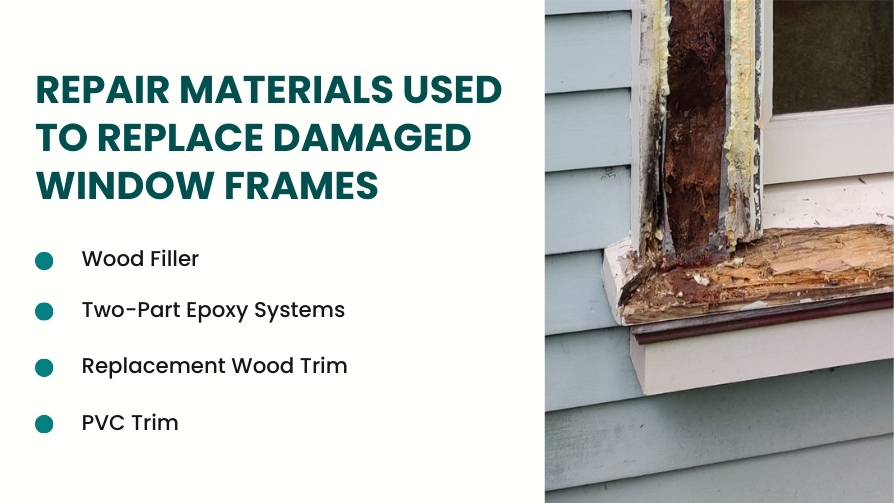
Wood filler is perfect for addressing shallow dents, chips, and surface cracks where the underlying wood remains intact. It hardens quickly, can be sanded smooth, and is ideal for cosmetic-level repairs. However, it is not suitable for deep structural rot or areas with significant wood damage.
Two-part epoxy systems are widely used for moderate frame damage and are especially effective at rebuilding rotted wood sections. Epoxy penetrates deeply into porous wood and hardens into a durable, waterproof, wood-like bond. It’s perfect for medium repairs, but it cannot restore frame sections with major material loss.
For severely damaged areas where large portions of the frame are missing or too weak to hold hardware, replacement wood trim is necessary. New wood boards are custom-cut to fit and installed to restore full structural support. This method is essential when the frame has experienced significant damage that cannot be repaired with fillers or epoxy.
PVC and composite trim are ideal for exterior window frame repairs, particularly in areas with high moisture exposure. These materials are moisture-proof, rot-resistant, and do not warp or absorb water, making them perfect for homes in rain-prone or humid climates. PVC and composite trim offer long-lasting protection and superior durability for exterior repairs.
Using the right tools is crucial for properly replacing damaged window frames. The right tools ensure that damaged sections are removed cleanly, and newly installed materials fit securely and safely, restoring your window’s functionality and appearance.
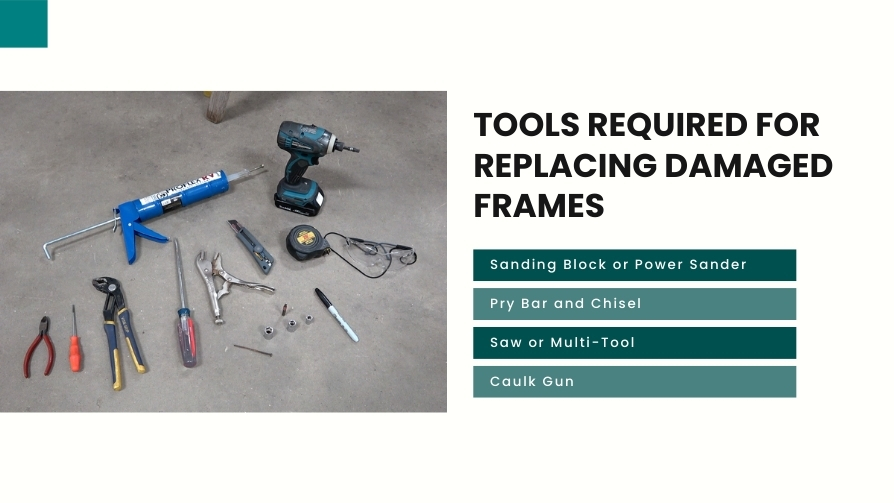
A pry bar and chisel are essential for removing cracked, soft, or rotted sections of the frame without causing further damage to the surrounding structure. These tools help identify the boundary between healthy and decayed wood, ensuring that only the damaged areas are removed. Proper removal minimizes material loss and sets the foundation for a solid repair.
An oscillating tool or saw is used to cleanly cut away damaged wood and shape openings for new trim pieces. These tools allow for precise cutting, especially in tight corners or areas with deep rot, ensuring that the new frame materials fit securely.
A sanding block or power sander smooths repaired areas, preparing the surface for primer and paint. A uniform surface is essential for blending new materials seamlessly with the existing frame, ensuring a polished and cohesive look.
A caulk gun is used to apply fresh sealant after the repair is complete. Proper sealing prevents future leaks, ensures water resistance, and protects the new frame materials from moisture and rain. Sealing is a critical step in preventing long-term damage.
The cost of repairing or replacing a damaged window frame depends on how deep the damage goes, the materials involved, and whether the repair requires simple patching or full structural rebuilding. Minor surface issues can be repaired affordably, but deeper rot, insect damage, and severe warping often require more time, labor, and replacement trim. Understanding these cost ranges helps homeowners plan realistically and avoid surprises during repair.
Small cosmetic repairs cost $50–$120 per window, depending on the size of the damaged spot. These repairs usually involve adding wood filler or two-part epoxy to shallow dents, chips, light rot patches, or early cracking. Because the frame remains structurally solid, the repair does not require heavy labor or new trim materials, keeping the price low and manageable.
Partial frame replacement typically ranges from $150–$350 per window, depending on the trim type and the amount of wood that must be replaced. This includes replacing sill noses, outer brickmold, lower frame edges, or side casing pieces that are too damaged for filler. The cost covers cutting out the damaged section, fitting a new board, fastening it securely, and sealing the perimeter to prevent future moisture.
When frame damage spreads across multiple areas, such as deep rot, bowing, large hollowed sections, or long-term insect activity, repairs usually cost $350–$650+ per window. This includes removing large portions of the frame, rebuilding structural areas, installing new material, sanding, priming, painting, and resealing everything. The labor is higher because the repair must restore strength, alignment, and weather protection.
If the repair estimate reaches $600–$900+ per window, it is often more practical to replace the entire frame or choose a full-frame window replacement. At this point, the amount of labor and new material required is nearly the same as installing a brand-new unit. Full replacement provides better long-term durability and eliminates hidden moisture or rot that may remain behind repaired areas.
Understanding the cost ranges helps homeowners compare repair options and choose the most practical solution based on the severity of frame damage. The table below breaks down the typical prices for every level of repair, from small fixes to full frame replacement.
| Type of Repair | What It Includes | Typical Cost Range |
|---|---|---|
| Small Filler or Epoxy Repairs | Surface fixes for chips, dents, light rot, and shallow cracks | $50 – $120 per window |
| Partial Wood Section Replacement | New sill nose, brickmold, casing, or frame edges installed | $150 – $350 per window |
| Extensive Frame Damage Repairs | Large rot removal, structural rebuilding, new trim + sealing | $350 – $650+ per window |
| Full Frame Replacement (When Repairs Aren’t Enough) | Entire frame rebuilt or a new full-frame window installed | $600 – $900+ per window |
Some window frame repairs are manageable for homeowners, but deeper structural issues always require a professional to ensure safety and long-lasting results. Understanding when to tackle repairs yourself and when to call in an expert can help you avoid costly mistakes and ensure your windows are properly restored.
DIY window frame repairs are ideal for minor cosmetic damage, small rot patches, or simple filler-based fixes. These tasks require basic tools and minimal structural knowledge. As long as the frame remains stable and the damage is not severe, DIY repairs can be a cost-effective way to restore functionality.
A professional is essential when dealing with structural weakness, deep rot, insect damage, or exterior frame replacement. Experts are also necessary for addressing misalignment, hardware failure, or bowed frames to ensure that repairs are done correctly and to prevent future issues. Improper handling of major repairs can lead to more expensive long-term problems.
Replacing damaged window frames is one of the most important steps in protecting your home from drafts, moisture, and structural deterioration. Once a frame begins to rot, warp, crack, or lose its ability to support hardware, the window can no longer keep your home insulated or weatherproof. Repairing or replacing the damaged sections restores strength, improves alignment, and prevents leaks from spreading into surrounding walls and flooring.
Whether the job involves a small patch, a partial wood replacement, or a full-frame rebuild, addressing the problem early always leads to better long-term results. Fresh sealing, proper materials, and solid installation protect your home against future damage and extend the life of the entire window. With the right approach, and professional support when needed, you can ensure your windows remain strong, secure, and efficient for many years to come.
If the wood is soft, hollow, or crumbling deeply, replacement is required. These signs indicate that the structural integrity of the frame has been compromised, making repairs ineffective in the long run.
Yes, two-part epoxy can rebuild missing sections and restore strength to moderately rotted wood. It forms a strong, waterproof bond, filling in gaps and reinforcing the frame’s structure. However, it cannot replace large areas of lost material or restore the frame if the damage is too severe.
Yes, most exterior trim and damaged interior sections can be replaced individually. This allows for targeted repairs without the need to replace the entire window frame. It’s a cost-effective option if only a portion of the frame is compromised.
A properly sealed and painted repair can last many years, depending on the quality of the materials used and the environmental conditions. Regular maintenance, such as resealing and repainting, can significantly extend the lifespan of the repair.
To prevent frame rot from recurring, maintain good caulking, paint, and ensure proper water drainage around the window. Regular maintenance of these elements helps protect the frame from moisture damage.
Join our mailing list for exclusive updates, expert tips, and special offers tailored to your needs. Be the first to know about the latest in home services.

Renovize Home is a platform that supports homeowners from planning to renovation. Whether it’s Renovize AI for guidance or a one-on-one call with Pro Finder, we understand your project and match you with local contractors tailored to your needs.
Who We Are
About Renovize HomeGet in TouchHomeownwer Support:
Coming Soon!
General Inquiries:
support@renovizehome.com
Head Office:
24 Greenway Plaza, STE 1800M, Houston, TX 77046.