
Explore All
BROWSE BY CATEGORY
Interior
Exterior
Home Essentials
Homeowner Tools
Blogs & Guides
Find a Pro
Book Your Appointment Now
Home Essentials
About Renovize Home
Explore All
BROWSE BY CATEGORY
Interior
Exterior
Home Essentials
Homeowner Tools
Blogs & Guides
Find a Pro
Book Your Appointment Now
Home Essentials
About Renovize Home
Last Updated 2025-12-05
Window screens play a crucial role in keeping your home comfortable, they let fresh air flow inside while blocking dust, insects, and outdoor debris. But when screens tear, loosen, or warp, the airflow becomes restricted and your home loses an important layer of protection. Damaged screens also make windows look older and reduce the overall comfort and cleanliness of indoor spaces.
Repairing window screens is a simple yet valuable upgrade. Whether the problem is small holes, broken frames, sagging mesh, or worn-out spline, restoring the screen brings back clean airflow, keeps pests out, and improves ventilation. Proper screen repair also extends the life of your windows and helps maintain a healthier home environment. With the right techniques, homeowners can enjoy clearer views, smoother breezes, and stronger everyday protection.
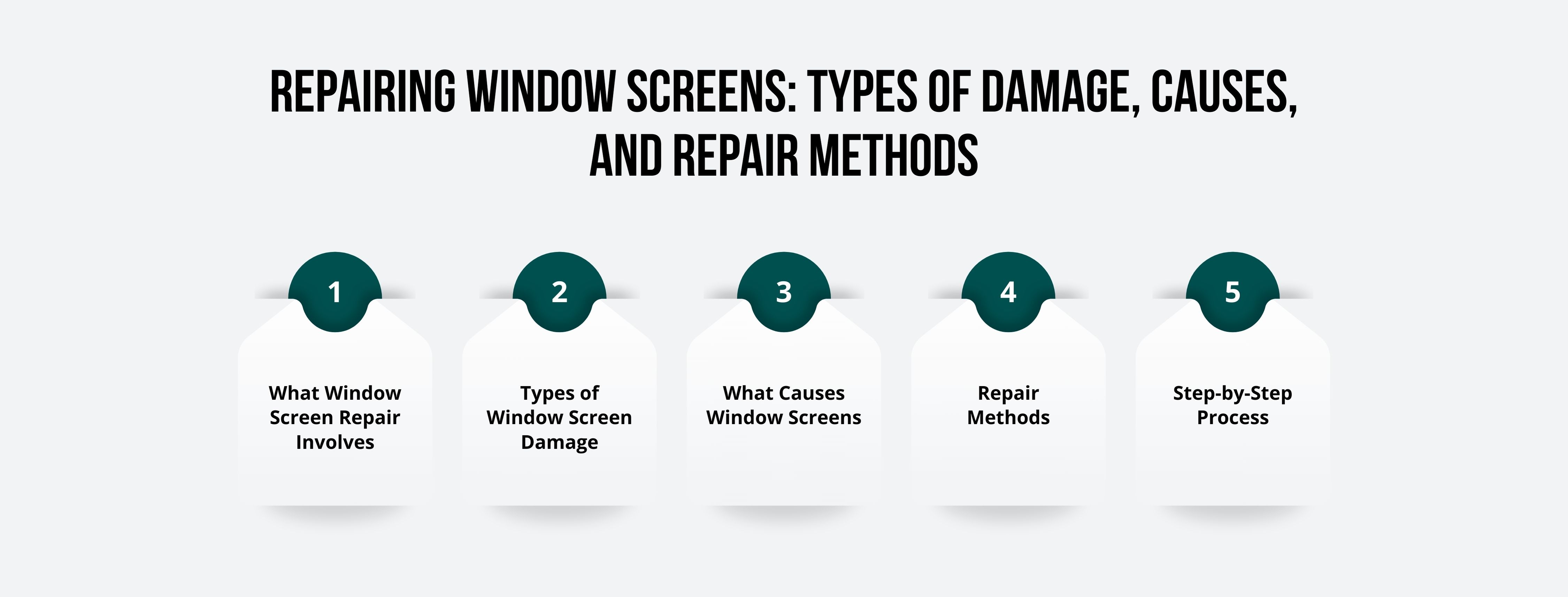
Table of Contents
What Window Screen Repair Involves
Types of Window Screen Damage and the Correct Fix for Each
Signs Your Window Screen Needs Repair
What Causes Window Screens to Wear Out
Repair Methods That Restore Strength and Ventilation
Repairing Screens Based on Window Type
How Damaged Screens Affect Comfort and Home Protection
Step-by-Step Process Used to Repair Window Screens
Cost of Repairing Window Screens Based on Materials and Damage Level
DIY vs Professional Screen Repair
Preventing Future Screen Damage Through Simple Maintenance
Final Views
Window screen repair focuses on restoring airflow, improving protection, and keeping your indoor environment cleaner. As screens age, the mesh can tear, stretch, or sag, and the frame may loosen from constant use or weather exposure. Pets, wind pressure, and sunlight can also weaken the structure over time. Repairing a window screen usually involves fixing or replacing the damaged parts so the screen fits tightly again and works like new. This can include mesh replacement, straightening the frame, renewing the spline, or rebuilding the entire screen if needed.
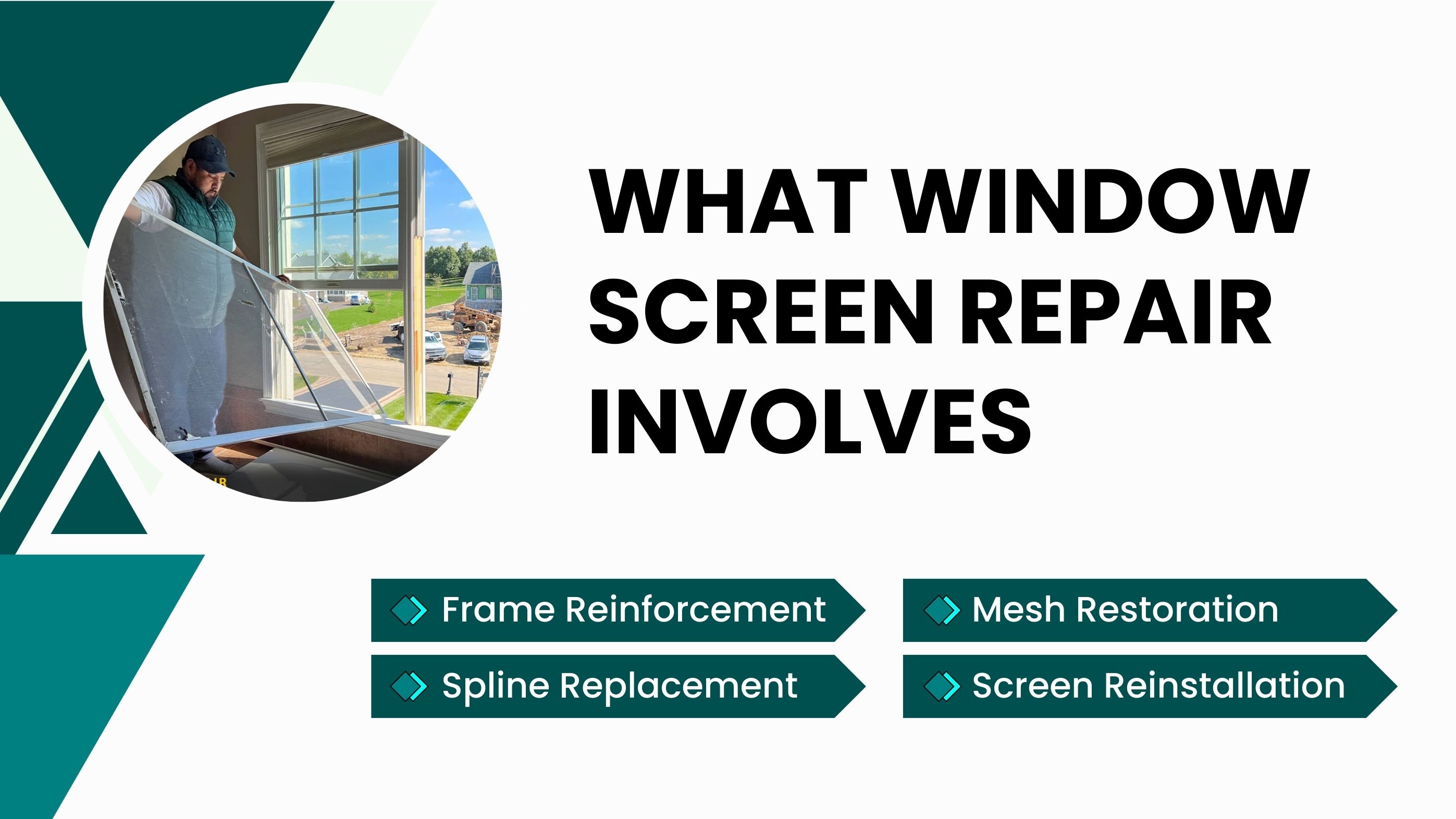
Mesh restoration involves removing the damaged mesh and installing a new one that fits tightly into the frame. This step is essential when the screen has holes, rips, or visible wear. A fresh mesh improves airflow, enhances visibility, and restores full insect protection.
When screen frames bend from wind, pressure, or accidental impact, they must be straightened or rebuilt. Reinforcing the frame helps the screen stay rigid and prevents sagging. A strengthened frame also ensures the mesh stays evenly stretched and the screen fits snugly in the window.
The spline is the rubber cord that holds the mesh securely in the frame. If it becomes brittle, loose, or stretched, the mesh will sag or fall out. Replacing the spline creates tight tension across the screen, giving it a clean, firm appearance and restoring durability.
Once repairs are complete, the screen is reinstalled into the window track or frame opening. Proper reinstallation ensures the screen sits squarely, locks in place, and seals the edges so insects and debris cannot enter. A secure fit also helps the screen withstand wind and regular use.
Window screens can fail in several different ways, and each issue needs a specific repair technique to ensure the screen stays strong, tight, and effective. Understanding the type of damage helps homeowners decide whether a simple patch, a new spline, or a full re-screen is needed. The goal is always to restore clean airflow, insect protection, and a smooth, tight screen surface.
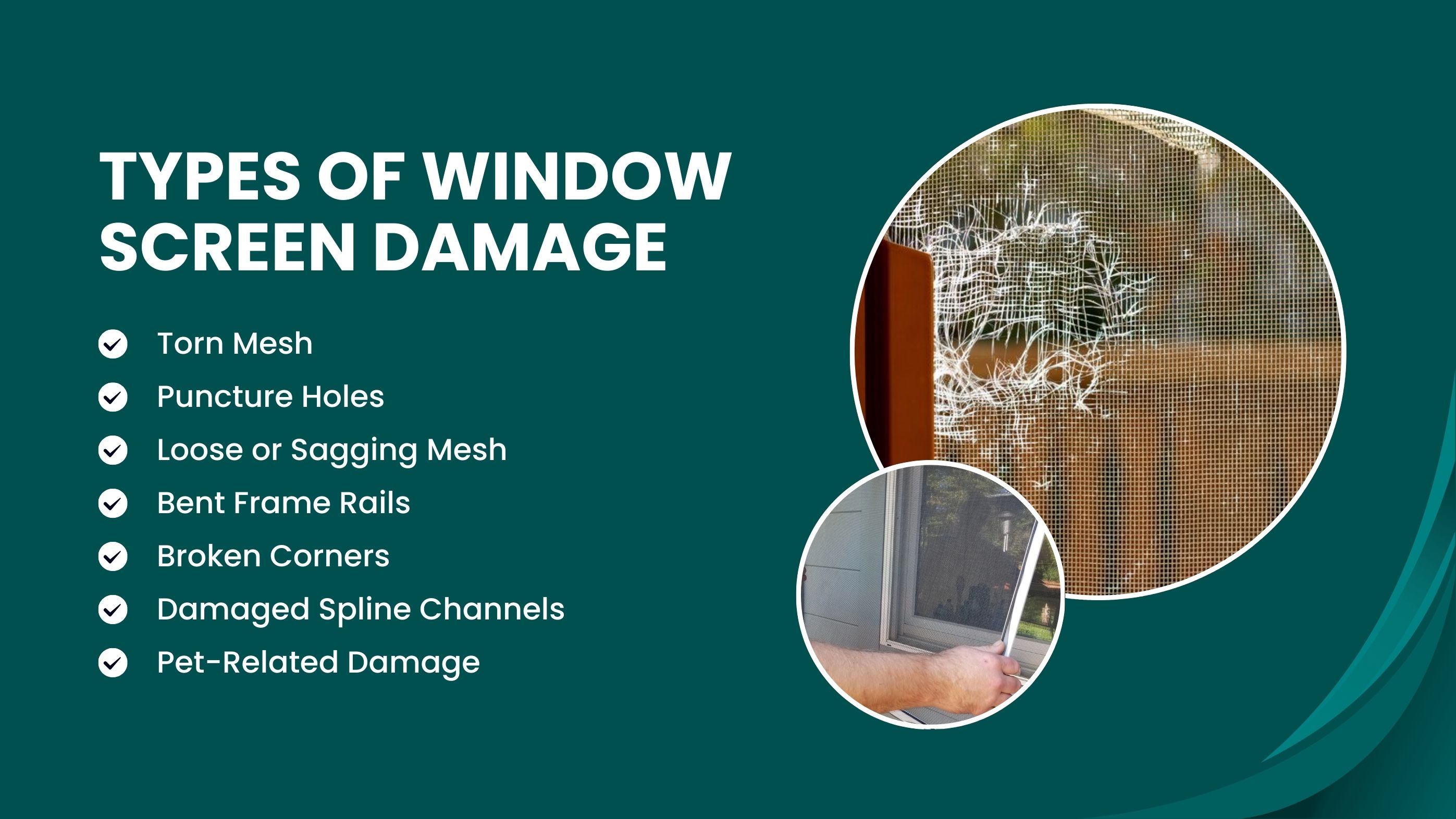
Tears often start small but quickly spread, especially when the screen is touched or exposed to wind. Small rips can be patched temporarily, but larger or multiple tears usually require replacing the entire mesh for a long-lasting result.
Sharp objects, debris, or pet claws can create round or jagged holes in the mesh. Small punctures can be patched, but noticeable holes often require re-screening to restore the screen’s appearance and full insect protection.
Sagging happens when the mesh loses tension or the spline weakens. The fix involves removing the old spline, re-stretching the mesh evenly, and installing a new spline to create a tight, flat surface again.
Strong wind, pressure, or accidental impact can bend the screen bars. The rails are either straightened using tools or replaced entirely if the bend is severe. A straight frame ensures the mesh stays tight and the screen fits properly in the window opening.
Corner connectors keep the frame square and stable. When they break, the whole screen becomes loose or twisted. Replacing the connectors restores the frame’s shape and prevents future sagging or separation.
When spline channels warp or crack, the mesh can’t stay locked in place. Repair may involve reshaping the channel, reinforcing it, or replacing the affected frame section so the mesh installs securely.
Pets often scratch or lean on screens, causing tears or stretched mesh. The solution is installing stronger pet-resistant mesh that can withstand claws and pressure without tearing or sagging.
These common warning signs indicate your window screen is no longer providing proper ventilation or protection. When screens show any of these issues, airflow decreases, insects enter more easily, and the overall comfort of your home declines.
Window screens weaken for several reasons, and most problems develop slowly rather than suddenly. Sunlight, weather, animals, and normal household activities gradually break down the mesh, loosen the spline, or distort the frame. When screens start wearing out, airflow becomes restricted, insects enter more easily, and the window loses its clean appearance. Understanding each cause helps homeowners prevent the same damage from happening again after repairs.
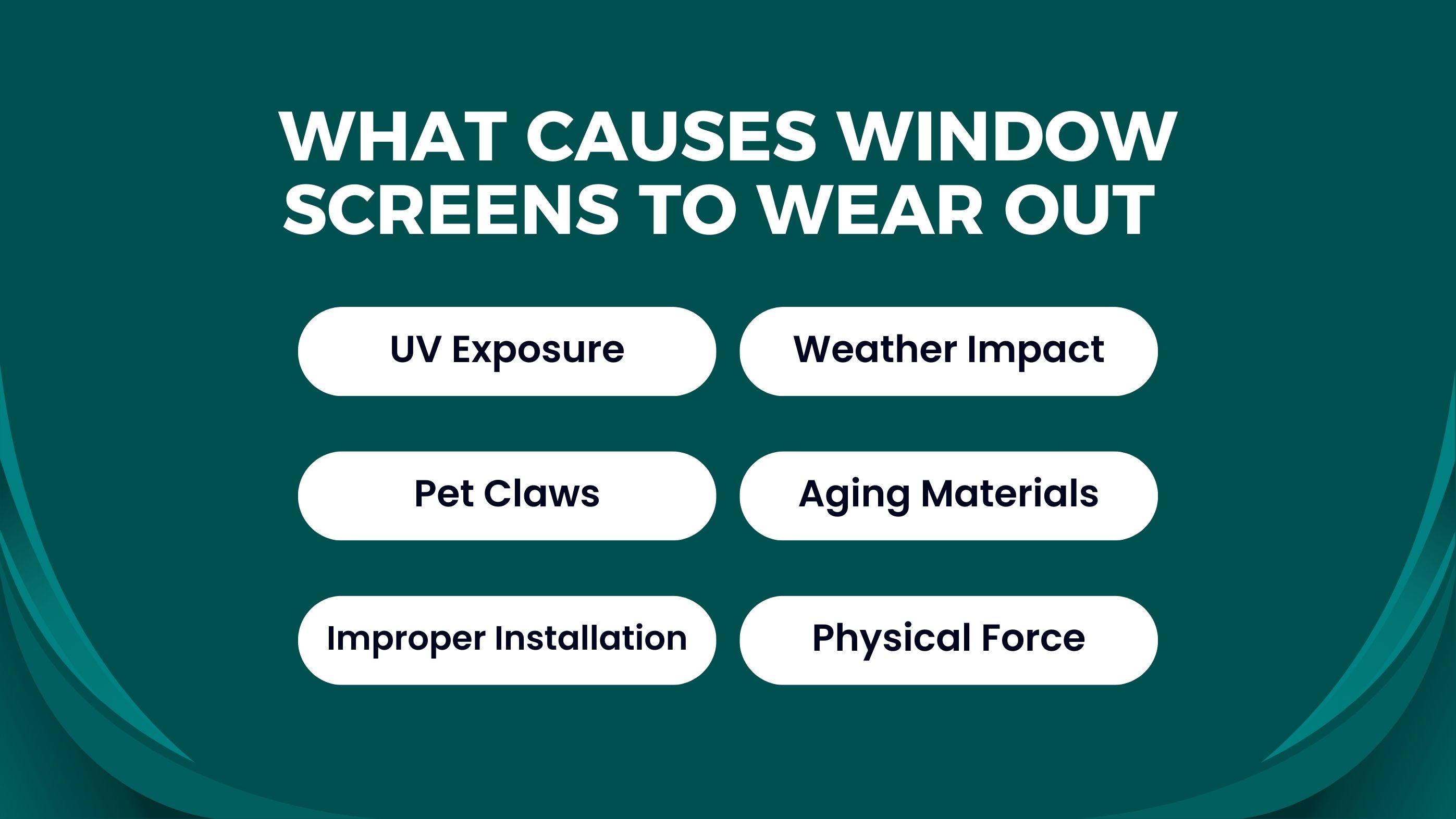
Direct sunlight is one of the biggest causes of screen deterioration. The constant exposure to UV rays weakens fiberglass or polyester mesh, making it brittle and less flexible. Over time, the material becomes chalky, discolored, and prone to snapping under even minor pressure. This kind of wear is extremely common on screens facing south or west. Once the mesh becomes UV-damaged, replacement is the only long-term solution.
Wind, rain, humidity, and temperature swings slowly weaken the strength of a window screen. Storm pressure can stretch the mesh so it no longer sits tightly, while heavy rain or humidity can cause wooden screen frames to swell or warp. Hot weather softens vinyl frames and cold temperatures make mesh stiff and fragile. Over the years, these constant weather changes create wear patterns that eventually lead to sagging, gaps, and tears.
Pets, especially cats and dogs, often scratch at window screens when excited or trying to look outside. Their claws catch on the mesh, creating small cuts that tear wider with time. Even if the screen doesn’t rip immediately, repeated scratching weakens the fibers and causes the mesh to loosen in the spline channel. Pet damage is one of the most common reasons homeowners switch to heavy-duty or pet-resistant mesh.
Most mesh materials naturally lose elasticity as they age. Fiberglass mesh becomes dull and brittle, while aluminum mesh becomes dented and develops permanent creases. Older spline can dry out, shrink, or crack, making the mesh loose. After 5–10 years, many screens simply don’t have enough structural strength to stay tight or secure, even without visible damage. This aging process is gradual but unavoidable.
If a window screen is installed without proper tension or with the wrong spline size, it will sag or pull loose much faster. A spline that is too thin cannot hold the mesh tightly, while one that is too thick can warp the frame over time. Misaligned frames create pressure points that eventually lead to mesh separation or frame twisting. Poor installation usually shows up as early sagging, wrinkles, or gaps along the edges.
Pressure from outside objects, like furniture bumping into the screen, children leaning on it, or impact from branches or balls, can cause noticeable dents, creases, or punctures. Even mild pressure can distort aluminum frames or push mesh out of place. Once the frame bends, the screen can no longer sit flat or secure, leading to tension loss and reduced strength.
Window screen repair focuses on restoring strong airflow, smooth tension, and a secure fit. The right method depends entirely on whether the damage is in the mesh, the frame, or the spline channel. Each repair approach below helps the screen return to full working condition while extending its lifespan.
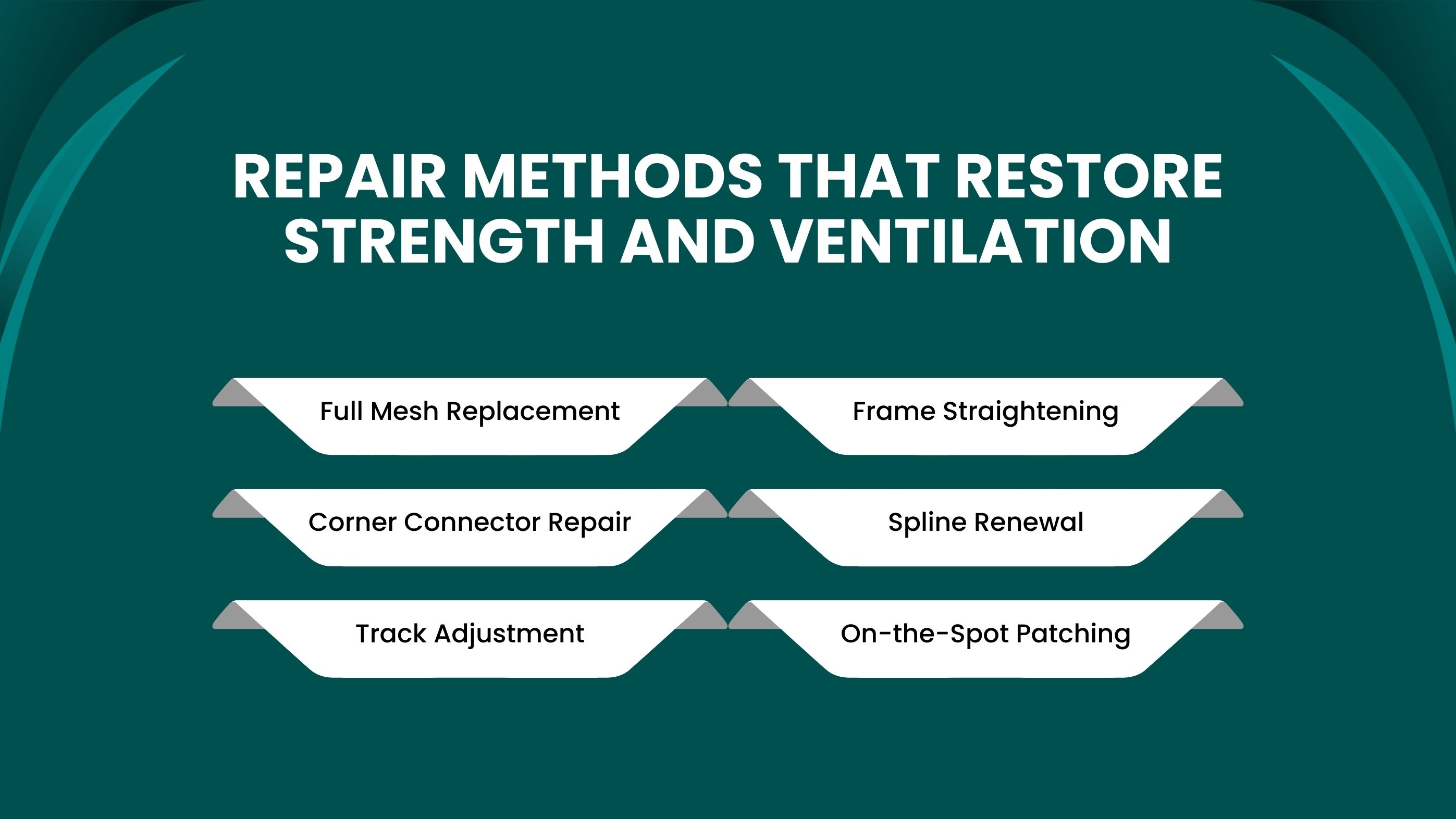
When the mesh is torn, brittle, discolored, or full of punctures, a complete replacement is the best option. The old mesh is removed, the frame is cleaned, and a new mesh material, fiberglass, aluminum, solar-blocking, or pet-resistant, is installed. This restores visibility, ventilation, and insect protection. Full replacement also ensures the screen looks uniform without patches or mismatched sections.
Bent or twisted frames keep screens from fitting properly into the window opening. Repair involves removing the mesh, clamping the frame, and straightening the metal bars until they return to the correct shape. Minor bends can be fixed easily, while deeper bends sometimes require replacing individual frame rails. A straight frame ensures even mesh tension and prevents future sagging.
Most window screens have plastic or metal corner connectors that hold the frame pieces together. When these corners crack or break, the entire frame becomes unstable or bowed. Replacing the connectors restores the square shape of the screen and strengthens the frame. This repair is essential before installing new mesh because the frame must be sturdy to hold tight tension.
If the spline has dried out, stretched, or popped loose, the mesh cannot stay tight. Spline renewal means removing the old spline, re-stretching the mesh fully across the frame, and installing a new spline that fits snugly into the channel. This creates a smooth, wrinkle-free finish and keeps the mesh locked in place even during strong wind pressure.
Sometimes the screen is fine, but it doesn’t fit properly in the window track due to alignment issues. The repair involves reshaping the track slightly or adjusting the frame edges so the screen slides, pops, or locks into place smoothly. This prevents rattling, popping out, or getting stuck halfway.
For very small holes, typically smaller than a dime, patch kits provide a quick, temporary fix. Mesh patches stick onto or weave into the damaged area, restoring insect protection without replacing the entire screen. While convenient, patches are best used for minor damage only because they may be visible up close.
Different window styles use different screen shapes, rail systems, and attachment methods. Because of this, the repair approach must match the window type to ensure proper fit, tension, and smooth operation. Understanding how each screen works helps homeowners restore function without causing new alignment issues.
Sliding window screens run along lower and upper tracks, so repair focuses on cleaning the rails, adjusting the screen’s guide wheels, and ensuring the frame is straight. If the mesh is sagging or loose, it is re-stretched with a new spline so the screen glides smoothly without catching or wobbling.
Double-hung screens sit in upper and lower channels and move with the window sash. Repair includes replacing torn mesh, tightening the frame, and making sure the screen locks correctly into both rails. Proper sizing is essential so the screen stays stable when either sash opens.
Casement windows typically have interior-mounted screens that match crank-out hardware. These screens require specialized framing because they must sit flush inside the window. Repair involves rebuilding bent frames, tightening corner connectors, and replacing mesh so the screen doesn’t interfere with the crank.
Fixed or picture windows often use large, non-removable screens with rigid frames. Repairs usually require full mesh replacement because damage anywhere along the surface affects the entire screen. Reinforcing the frame and adding a new spline ensures the large mesh panel stays tight and visually clean.
Window screens play a major role in keeping your home comfortable, clean, and safe. When they tear, loosen, or warp, the effects go far beyond appearance. Damaged screens make it harder to ventilate rooms, allow pests inside, and reduce the overall quality of your indoor environment. These detailed points explain exactly how screen damage impacts everyday living and why timely repairs matter.
Even small tears or gaps along the edges of the screen allow insects like mosquitoes, flies, spiders, and tiny gnats to enter your home. Once pests get inside, they can bite, contaminate food, and spread bacteria. Damaged screens eliminate the protective barrier that keeps unwanted insects outside. Over time, insect entry becomes more frequent and harder to control, especially at night when indoor lights attract bugs.
A screen full of sagging mesh or clogged debris blocks fresh air from entering. This limits natural ventilation, making rooms feel warm, stale, and uncomfortable. Homes that rely on open windows instead of air conditioning feel the impact even more. Damaged screens trap heat inside and prevent cool breezes from circulating, reducing indoor comfort and increasing reliance on fans or HVAC systems.
Functioning screens act like a filter, keeping dust, pollen, and airborne debris out of your home. When the mesh is torn or stretched, this protective layer disappears. Dirt, leaves, lint, and outdoor particles blow directly inside through the openings. This results in dusty furniture, dirty floors, and worsened allergies, especially during windy or pollen-heavy seasons. For allergy-sensitive homeowners, this becomes a major problem.
Loose or weakened screens struggle to stay in place when hit by wind pressure. A worn spline or bent frame allows the screen to rattle loudly or pop out entirely. If the screen falls out, it immediately exposes your home to insects, debris, and weather elements. In some cases, a blown-out screen can be damaged beyond repair or even cause injury if the frame is large and heavy.
Screens slightly soften sunlight and add a thin privacy layer by reducing visibility from outside. When the screen is torn or missing, sunlight enters directly, creating glare that can make rooms hotter and less comfortable. In addition, anyone standing outside can see more clearly into your home, reducing privacy. For homes facing busy streets or neighboring houses, this becomes a noticeable concern.
When screens are damaged, they disrupt the natural balance of airflow, filtration, and indoor comfort. Warm air gets trapped inside, more dust enters, pests find easy entry, and the home begins to feel more closed in. Over time, poor ventilation can even increase moisture levels inside, contributing to mold, stale odors, and uneven temperatures. Damaged screens affect multiple aspects of daily comfort, not just appearance.
Repairing a window screen is a straightforward process when each step is done carefully. This method restores tight mesh, strengthens the frame, and ensures the screen fits securely back into the window. The detailed steps below explain exactly how professionals and DIY homeowners repair screens properly.
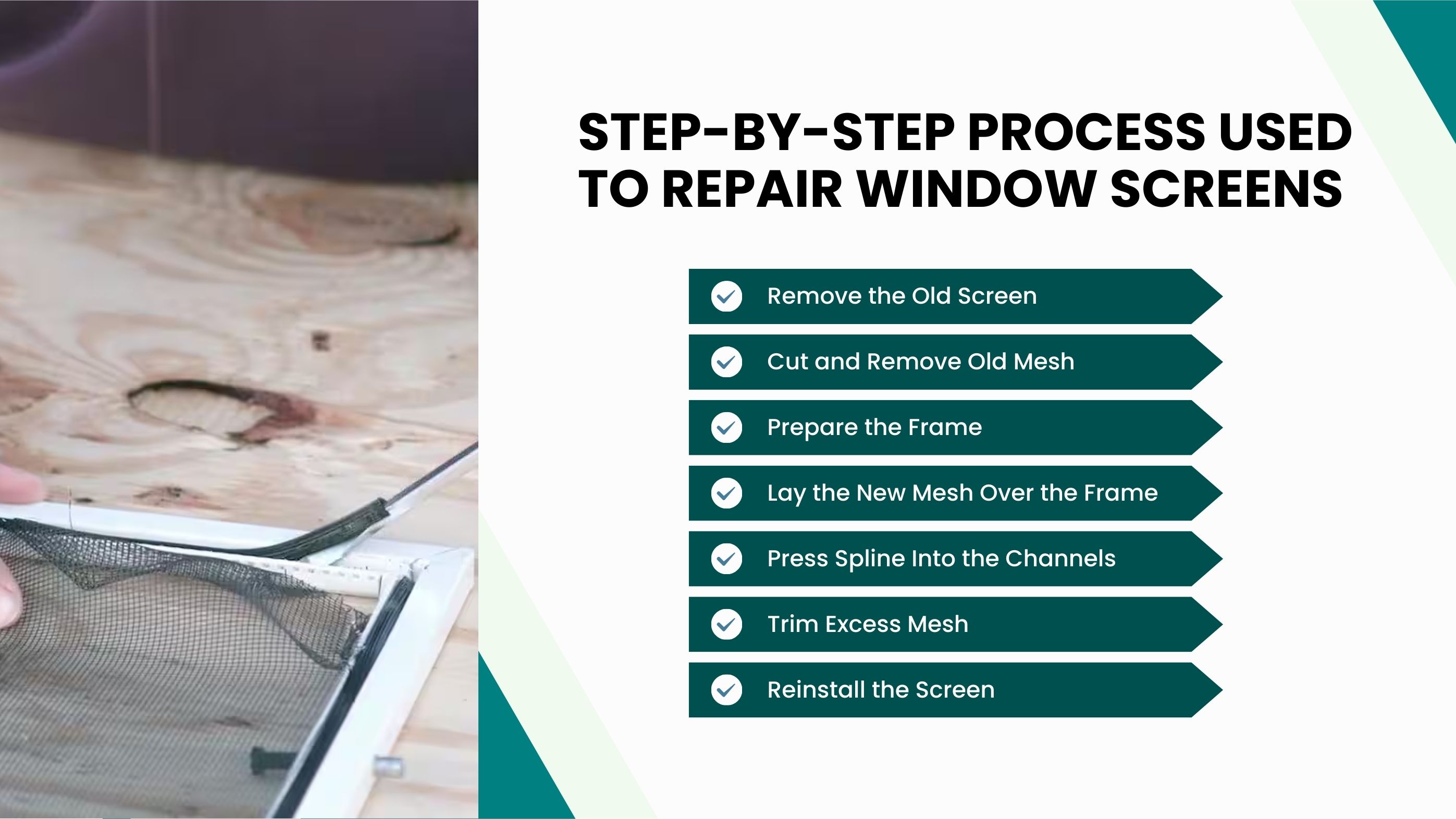
The repair starts by removing the entire screen frame from the window. Sliding screens are lifted upward and pulled out, while fixed screens may require loosening tabs or clips. Once removed, the frame is placed on a flat, stable surface such as a table or floor. A flat surface is essential because any twist or pressure on the frame can cause new alignment problems later in the process.
A utility knife or sharp blade is used to cut through the old mesh and remove the worn spline holding it in place. Care is taken not to damage the frame’s spline channel while removing the material. All remaining mesh fibers, old rubber spline pieces, and debris are completely cleared away. This step creates a clean frame ready for new mesh installation.
Before adding a new mesh, the frame is carefully inspected for bends, dents, or loose corners. Bent rails are straightened, and broken corner connectors are replaced. The spline channel is cleaned thoroughly so the new spline can grip properly. A clean, straight frame ensures the new mesh will stretch evenly and stay tight for years.
New mesh material, fiberglass, aluminum, solar-blocking, or pet-resistant, is rolled out over the frame. The mesh is cut slightly larger than the frame on all sides to allow for stretching and adjustments. This extra material ensures the mesh sits flat and stays under tension during installation, preventing wrinkles or sagging later.
Using a spline roller, the spline is pressed into the channel on one side of the frame to anchor the mesh. The installer works around the frame, pulling the mesh tight while rolling the spline firmly into each channel. Correct tension is crucial: too loose creates sagging, and too tight can warp the frame. When done properly, the mesh becomes smooth, tight, and secure.
Once the mesh is fully secured, the extra material around the frame edges is trimmed with a utility knife. The blade runs along the outer edge of the frame to remove excess mesh neatly without damaging the screen. A clean trim gives the screen a professional finish and helps prevent fibers from fraying or getting caught.
The repaired screen is placed back into the window track, making sure all retaining tabs, springs, or slide locks align properly. The screen should sit flush without gaps or wobbling. Once reinstalled, the window is opened and closed to confirm smooth airflow and proper fit. A tight, secure fit ensures insects cannot enter, and the screen stays stable even during strong winds.
Repair costs depend on the size of the screen, the type of mesh, and how damaged the frame or spline is. Most standard-size window screens fall between 24–36 inches, while oversized picture-window screens can exceed 48–60 inches, which increases material and labor costs.
Mesh replacement typically costs $20–$80, depending on material and screen size.
Frame repairs range from $10–$40, depending on severity.
If more than 25% of the frame is damaged, rebuilding becomes more cost-effective than repairing.
Spline replacement is one of the most affordable repairs, typically $5–$15 per screen.
Refreshing the spline improves mesh tension by 50–70% and instantly fixes sagging.
A complete rebuild usually costs $40–$120, depending on size and material choice. This includes:
Large screens (porch/patio screens) may cost $100–$150+, especially if the opening is more than 36–48 inches wide.
Specialty meshes cost more due to durability and specialized performance:
Solar mesh reduces glare and heat by 70–90%, making it ideal for sunny rooms.
Most homeowners spend $20–$120 per screen depending on mesh type, frame condition, and size. The table below breaks down the most common repair costs so you can quickly compare what each fix typically costs.
| Repair Type | Description | Typical Cost Range |
|---|---|---|
| Basic Mesh Replacement (Fiberglass) | Standard mesh, most common | $20 – $40 |
| Aluminum Mesh Replacement | Stronger and weather-resistant | $25 – $55 |
| Pet-Resistant Mesh Replacement | Extra durable, claw-proof | $40 – $80 |
| Spline Replacement Only | Tightens loose screens | $5 – $15 |
| Frame Straightening / Corner Repair | Fixes bent rails or joints | $10 – $35 |
| Full Screen Rebuild | New mesh + new frame | $40 – $120 |
| Solar-Blocking or Specialty Mesh | Heat and glare reducing | $50 – $100+ |
| Large Fixed Screens | Oversized picture-window screens | $70 – $150+ |
Some window screen repairs are simple enough for homeowners to handle, while others require professional tools, experience, and precision. Knowing which type of repair you can safely manage, and when to call a pro, helps ensure the screen stays strong, tight, and long-lasting.
DIY repairs work well for small or moderate tasks that don’t require a major framework. Homeowners can easily replace basic fiberglass mesh, patch tiny holes, clean tracks, or install new spline if the frame is in good condition. These tasks only require simple tools like a spline roller, scissors, and a utility knife. However, DIY repairs must be done carefully, overstretching the mesh or cutting unevenly can cause wrinkles, sagging, or loose-fitting screens.
Some repairs are too complex or risky for beginners. Bent frames, warped corners, oversized screens, and tight spline channels require professional skill to restore proper shape and tension. Professionals also handle specialty materials like pet-resistant mesh, metal mesh, or solar-blocking mesh that must be installed under precise tension. Hiring a pro ensures the screen sits perfectly square, stays secure in the track, and lasts much longer than an incorrect DIY installation.
Regular care is the easiest way to extend the life of window screens and prevent tears, sagging, and frame distortion. With a few quick maintenance habits, screens stay cleaner, stronger, and far more durable throughout the year.
Window screen repair may seem like a small task, but it plays a big role in keeping your home comfortable, protected, and well-ventilated. From restoring airflow to blocking insects and preventing dust from entering, a well-maintained screen improves daily living in ways homeowners often overlook. By understanding the causes of screen damage and choosing the right repair method, whether it’s mesh replacement, frame straightening, spline renewal, or a full rebuild, you can extend the life of your screens and improve overall comfort.
DIY repairs work well for simple tasks, but complex issues like warped frames, specialty mesh, or large screens are best handled by professionals to ensure perfect tension and long-lasting performance. With regular maintenance and the right materials, window screens can stay strong, tight, and effective for many years. A properly repaired screen brings back clear airflow, better protection, and a cleaner, more comfortable home environment.
The sagging may be due to a loosened spline or an issue with the frame itself. Over time, the spline that holds the mesh in place can loosen, causing the screen to sag. Additionally, if the frame is slightly bent or misaligned, it can also affect the tension, resulting in a sagging screen even if the mesh appears intact.
Both materials have their advantages. Fiberglass mesh is more flexible, making it ideal for a tight fit and easy installation. However, aluminum mesh is stronger and more durable, especially in high-traffic or high-impact areas. The downside is that aluminum can bend more easily when struck. If you need flexibility and ease of installation, go for fiberglass; if durability is your priority, aluminum is a better choice.
Yes, small holes in your screen can be patched, provided the tear isn’t too large. There are screen repair kits available that allow you to apply a patch to minor damage. However, if the tear is too large or the screen is heavily damaged, it’s better to replace the entire mesh to ensure proper functionality and prevent further wear.
If your screen pops out during strong winds, it could be due to a warped frame or worn-out tracks. Over time, the frame may lose its shape, or the tracks can become damaged or clogged, making it easier for the screen to pop out when subjected to pressure from wind. Regular maintenance and replacing worn components can prevent this issue.
Yes, damaged screens can negatively impact indoor air quality. Torn or damaged screens allow dust, pollen, and debris to enter your home more easily. This can lead to an increase in allergens and pollutants inside, potentially affecting air quality and contributing to respiratory issues. Repairing or replacing damaged screens helps keep your indoor air clean and prevents these particles from entering.
Join our mailing list for exclusive updates, expert tips, and special offers tailored to your needs. Be the first to know about the latest in home services.

Renovize Home is a platform that supports homeowners from planning to renovation. Whether it’s Renovize AI for guidance or a one-on-one call with Pro Finder, we understand your project and match you with local contractors tailored to your needs.
Who We Are
About Renovize HomeGet in TouchHomeownwer Support:
Coming Soon!
General Inquiries:
support@renovizehome.com
Head Office:
24 Greenway Plaza, STE 1800M, Houston, TX 77046.