
Explore All
BROWSE BY CATEGORY
Interior
Exterior
Home Essentials
Homeowner Tools
Blogs & Guides
Find a Pro
Book Your Appointment Now
Home Essentials
About Renovize Home
Explore All
BROWSE BY CATEGORY
Interior
Exterior
Home Essentials
Homeowner Tools
Blogs & Guides
Find a Pro
Book Your Appointment Now
Home Essentials
About Renovize Home
Last Updated 2025-12-08
Replacing old or damaged glass panes is one of the simplest ways to restore clarity, improve insulation, and make your home feel more comfortable. Fresh panes remove fog, scratches, and cracks that block light and weaken the window’s strength.
Newer glass also seals out drafts, reduces outside noise, and helps your heating and cooling system work more efficiently. By upgrading the pane, you not only get a clearer view but also a safer, quieter, and more energy-friendly home.
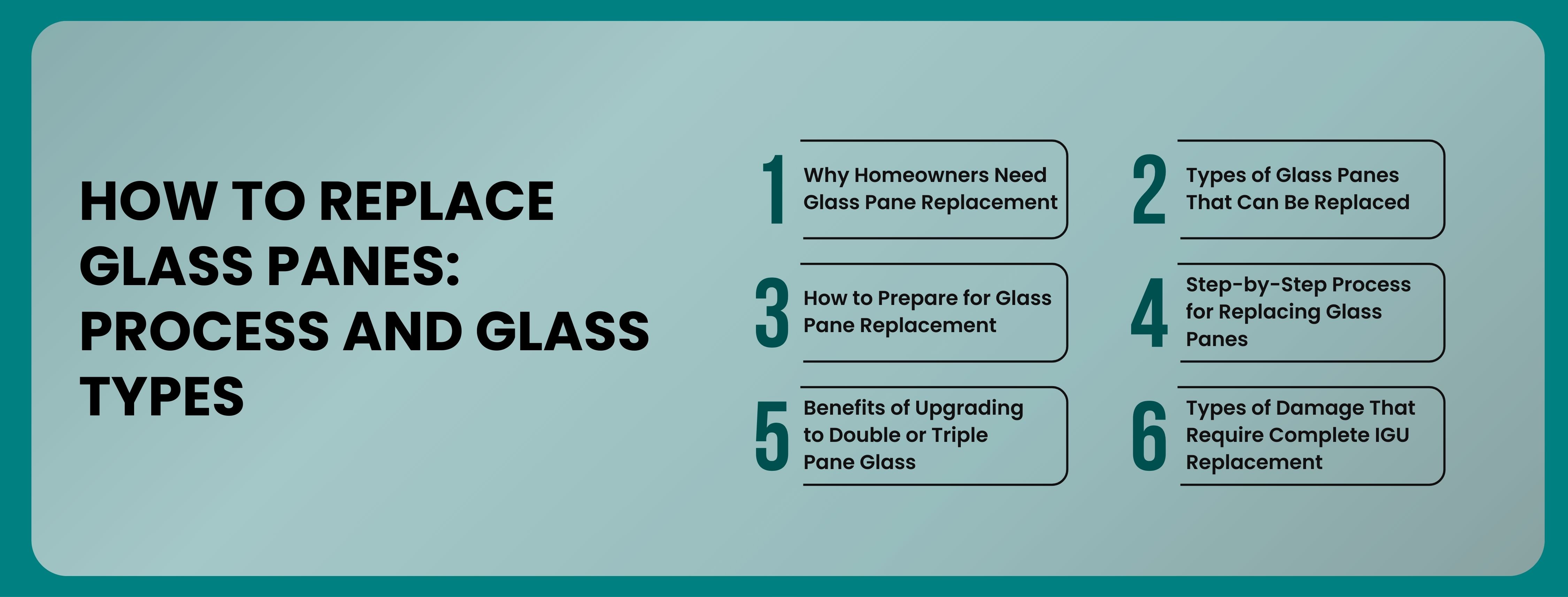
Table of Contents
What Glass Pane Replacement Actually Involves
Why Homeowners Need Glass Pane Replacement
Types of Glass Panes That Can Be Replaced
How to Prepare for Glass Pane Replacement
Step-by-Step Process for Replacing Glass Panes
Benefits of Upgrading to Double or Triple Pane Glass
When Glass Replacement Alone Is NOT Enough
Types of Damage That Require Complete IGU Replacement
Tools and Materials Used in Glass Pane Replacement
Cost of Replacing Glass Panes
DIY vs Professional Glass Replacement
Final Thought
Replacing a glass pane involves carefully removing the old or damaged glass and installing a new pane that fits securely into the existing frame. The process restores clear visibility, improves insulation, and strengthens the window without needing a full window replacement.
It also helps stop drafts, moisture leaks, and safety risks that come from cracked, foggy, or failing glass. Once the new pane is sealed in place, the window becomes clearer, tighter, and much more energy-efficient.
Homeowners replace glass panes when the window can no longer stay clear, safe, or energy-efficient. Some issues cannot be fixed with simple repairs, especially when the damage affects visibility, insulation, or the sealed structure of the glass.
Replacing the pane restores clarity, improves comfort, and keeps the window performing the way it should.
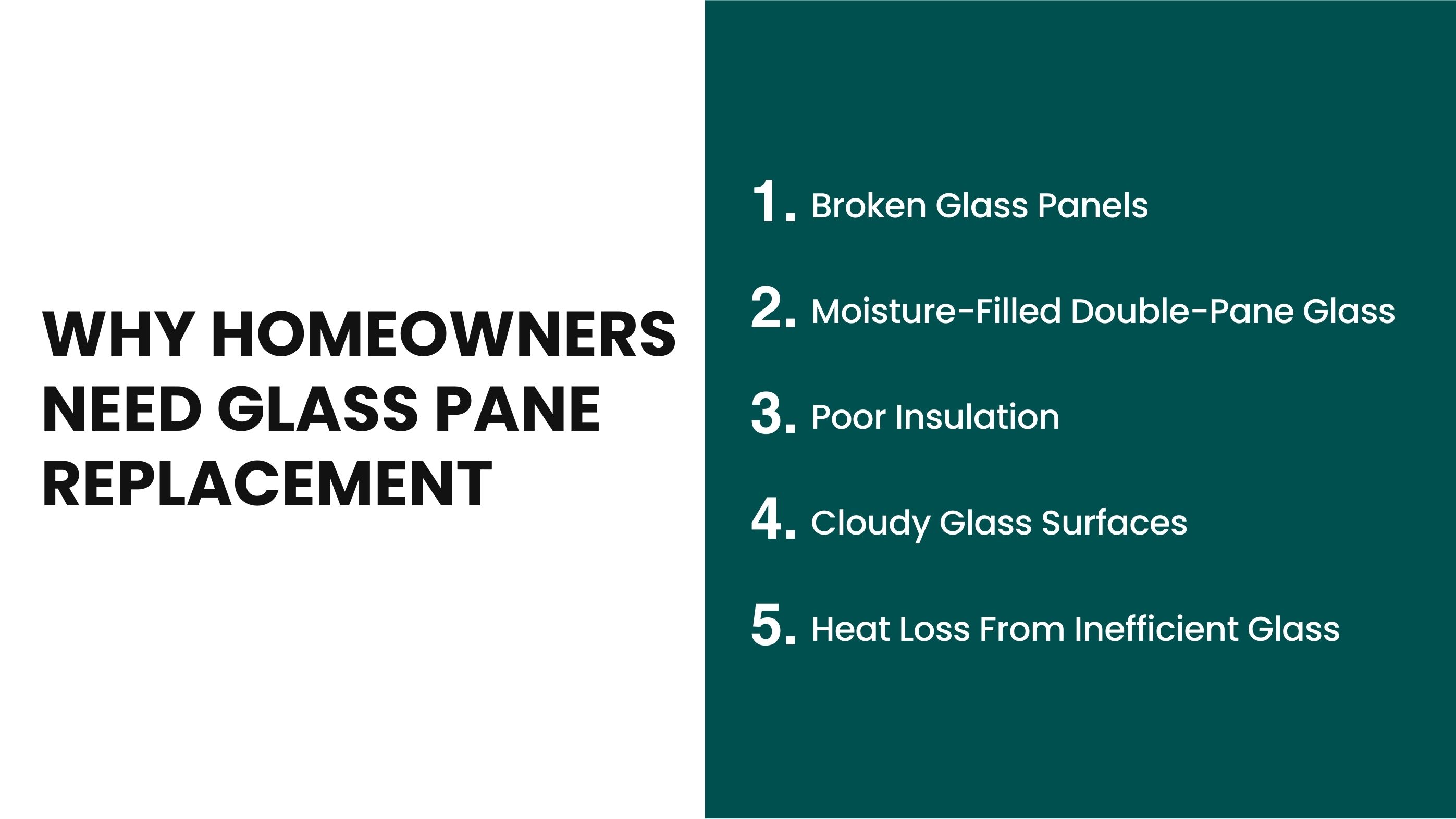
When glass breaks from an impact, storm debris, or pressure stress, the strength of the pane is lost. Replacement is the only safe option because cracked glass can spread quickly and may shatter without warning.
If the seal inside a double-pane window fails, moisture collects between the panes and causes fogging. Since the insulated unit cannot be opened or repaired, the entire IGU must be replaced.
Older single-pane windows let in drafts and struggle to keep indoor temperatures stable. Replacing the pane with modern insulated glass helps improve comfort and reduces heating and cooling costs.
Deep scratches or hazy spots weaken the glass and make the window hard to see through. When polishing can’t restore clarity, a new pane gives the window a clean, clear finish again.
Aging or outdated glass transfers heat easily, causing higher energy bills. Upgrading to better-insulated glass reduces heat loss and creates a more comfortable indoor environment.
Different windows use different types of glass, and each one requires its own replacement method to restore clarity, safety, and insulation. Whether the goal is simple repair, better energy savings, or meeting safety standards, the right type of glass ensures the window performs the way it should.
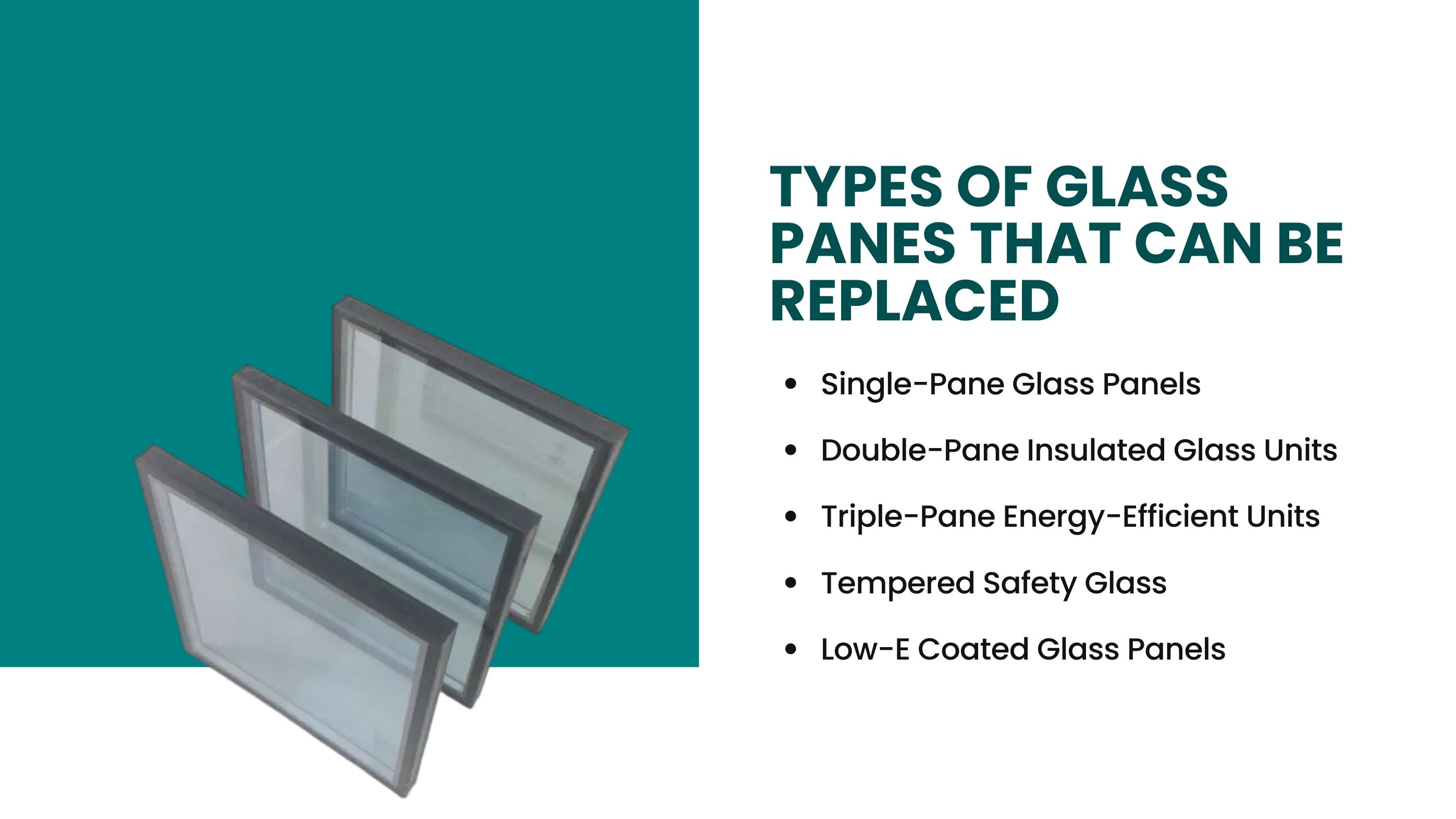
Single-pane windows are the easiest to replace because the glass sits directly in the sash and is held in place with putty or window stops. A new pane is cut to size and fitted securely for a clean, clear finish.
When a double-pane window fogs or fills with moisture, the entire sealed unit must be replaced. This restores insulation, visibility, and energy efficiency without removing the full window frame.
Triple-pane glass is used in colder regions or homes wanting higher energy savings. If one pane cracks or the seal fails, the full insulated unit is replaced to maintain its strong thermal performance.
Tempered glass is required in high-risk areas like doors, shower windows, or large floor-level panels. It cannot be repaired once damaged, so a new tempered panel is installed to meet safety standards.
Low-E glass includes a special coating that blocks UV rays and reduces heat transfer. When damaged or outdated, the pane is replaced with a new coated panel to maintain comfort and protect interiors from sun exposure.
Preparing for glass pane replacement helps ensure the new glass fits correctly, seals tightly, and stays safe for long-term use. A few simple checks before installation prevent common issues like drafts, leaks, or loose panes, and make sure the window frame can support the new glass properly.
Before any glass is replaced, the frame must be checked for signs of rot, warping, or moisture damage. A weak or uneven frame cannot hold new glass securely and may cause future leaks or cracks.
Precise measurements are essential because even a small error can lead to gaps, rattling glass, or a pane that doesn’t sit correctly in the sash. Accurate width, height, and depth measurements ensure a perfect fit.
Window frames are designed to support specific glass thicknesses, whether it’s single-pane, double-pane, or triple-pane. Matching the correct thickness and glass type ensures proper insulation and stability.
Some areas of the home like bathrooms, doors, or low-positioned windows require tempered safety glass by law. Confirming these requirements beforehand ensures the replacement meets all safety and building standards.
Replacing a glass pane follows a simple, clear process that removes the damaged panel and installs a new one with a tight, secure fit. Each step ensures the window stays insulated, safe, and properly sealed once the new glass is in place.
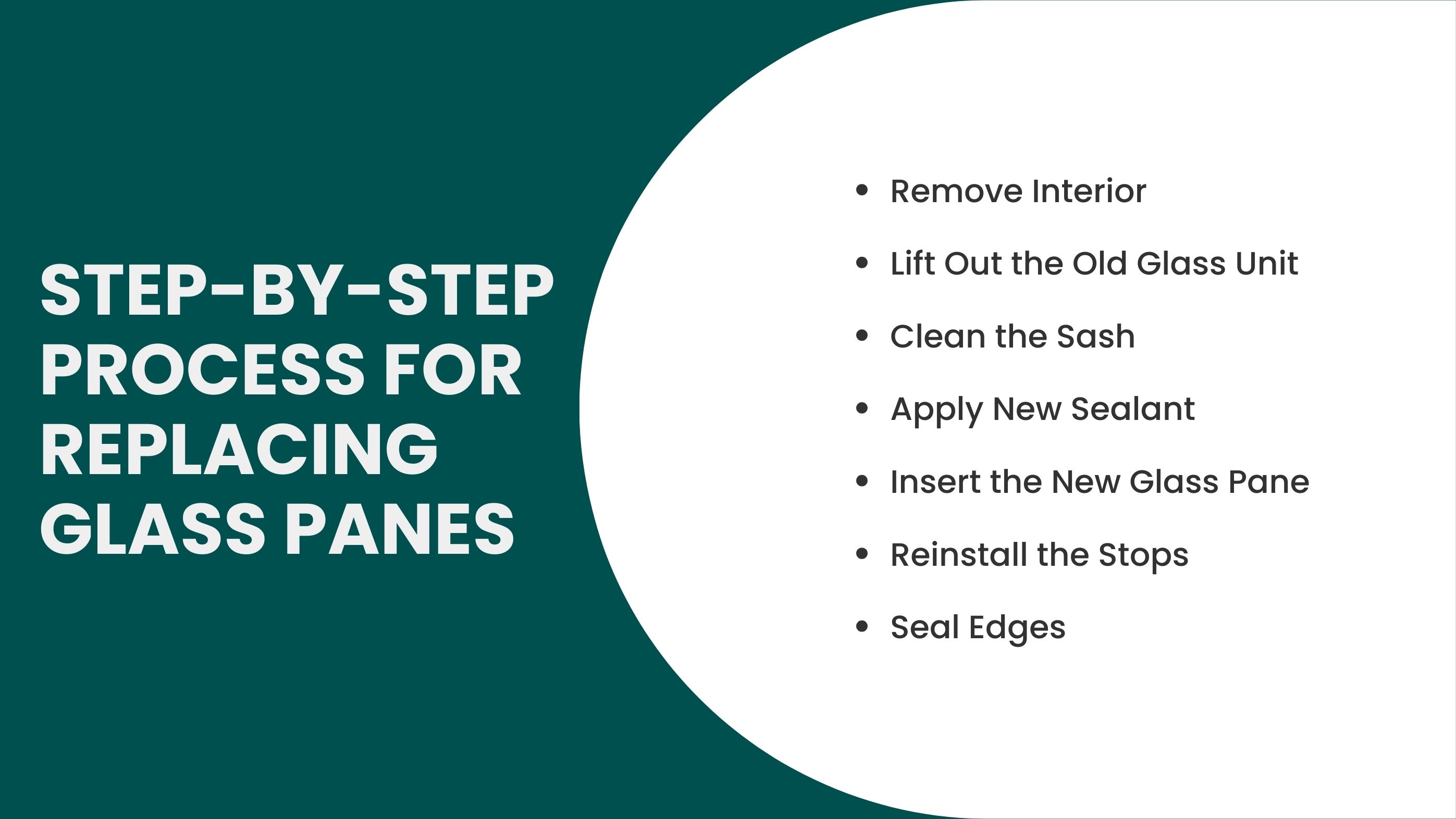
The small trim pieces holding the glass in place are lifted carefully using a flat tool. This frees the old pane without damaging the frame or bending the stops.
Once the stops are removed, the cracked, broken, or fogged glass pane is lifted out slowly. Extra care is taken to keep the frame intact and avoid sharp edges.
Old sealant, dirt, and loose debris are cleaned from the channel so the new pane sits flat. A smooth, clean surface helps the replacement seal properly.
A fresh layer of glazing tape or sealant is placed inside the frame. This creates an airtight bed that cushions the glass and blocks drafts.
The new glass is positioned into the frame, centered, and gently pressed against the sealant so it sits evenly in the channel.
The stops are snapped or nailed back into position to secure the glass. They must be placed evenly to avoid uneven pressure on the pane.
A thin bead of caulk is applied around the perimeter to prevent air and moisture leaks. The sealant is allowed to cure fully so the window becomes stable, tight, and weather-ready.
Upgrading to double or triple pane glass gives your home stronger insulation, quieter rooms, and better long-term comfort. These advanced glass layers help control temperature, reduce noise, and improve energy use without changing your entire window frame.
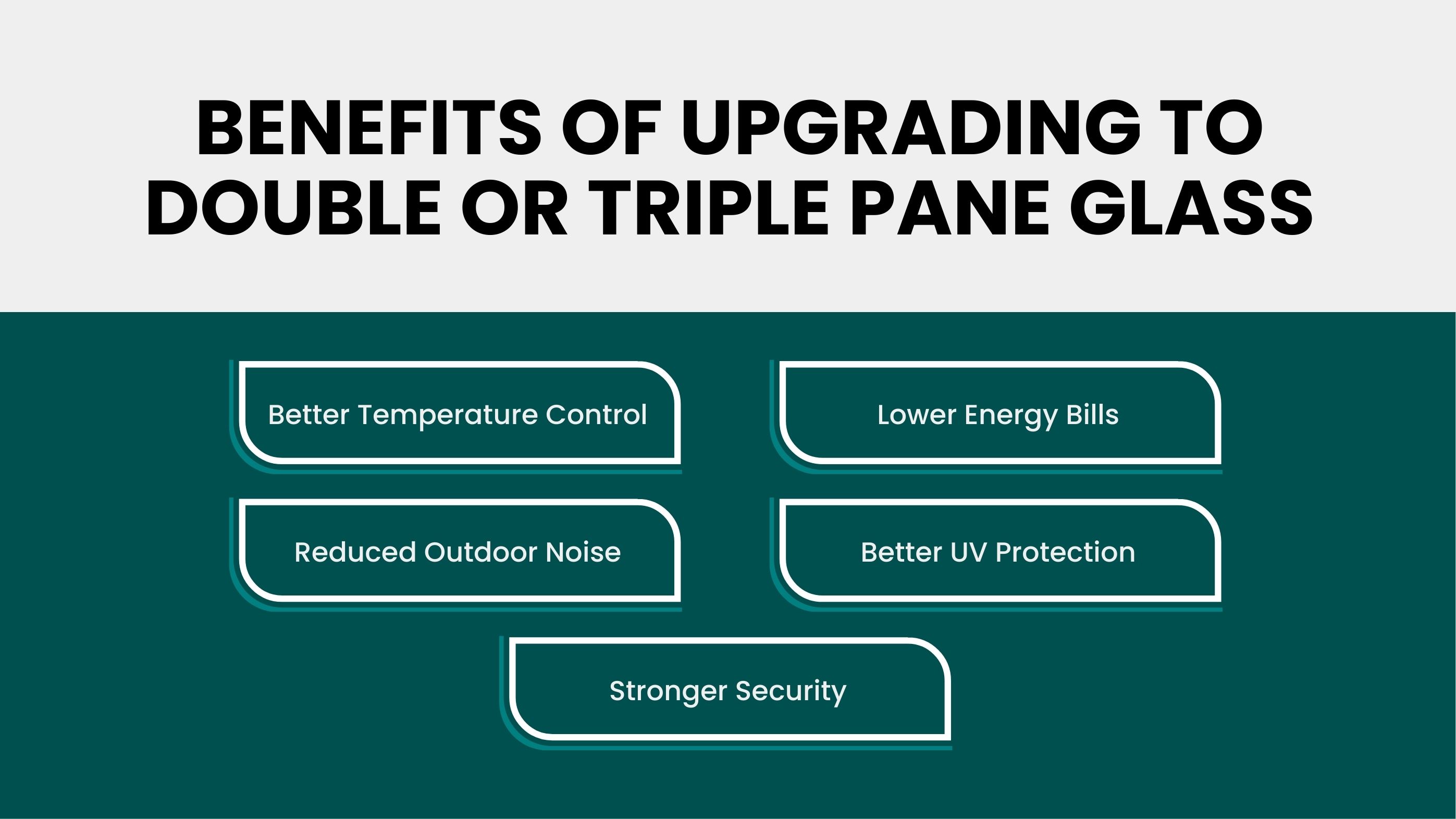
The extra layers create a stronger barrier that slows heat loss in winter and reduces heat gain in summer, helping your home stay comfortable all year.
With less heat escaping or entering, your heating and cooling system doesn’t have to work as hard. This leads to steady savings over time.
More layers of glass and insulating gas between panes help block traffic noise, loud neighbors, and outdoor sounds for a quieter home.
Modern coatings on double and triple pane glass reduce harmful UV rays that can fade furniture, flooring, and fabrics.
The thicker, multi-layered design makes the glass more resistant to breakage, giving your home added protection against impacts and forced entry.
Replacing the glass helps with visibility, insulation, and comfort, but some problems go deeper than the pane itself. If the frame, sash, or hardware is damaged, new glass will not solve drafts, leaks, or closing issues. In these cases, the surrounding structure must be fixed first to ensure the new pane stays secure and performs well.
When the window frame is rotted, soft, or cracked, it cannot support a new pane safely. The damaged wood or material must be repaired or replaced before installing new glass, or the window will continue to leak and weaken over time.
If the sash is bent or twisted, the glass will not sit evenly, causing gaps, stress cracks, or poor sealing. Straightening or rebuilding the sash is necessary to create a stable, secure fit for the new pane.
New glass cannot fix issues caused by faulty locks, hinges, or cranks. When hardware no longer pulls the window tight against the frame, the unit cannot seal properly. Repairing or replacing the hardware is essential to ensure the new pane provides full insulation and security.
Some problems inside double-pane or triple-pane windows cannot be fixed with simple resealing or surface repair. When the sealed unit loses its barrier, moisture, minerals, and air leaks begin affecting clarity and insulation. In these cases, replacing the entire insulated glass unit (IGU) is the only long-lasting and effective solution.
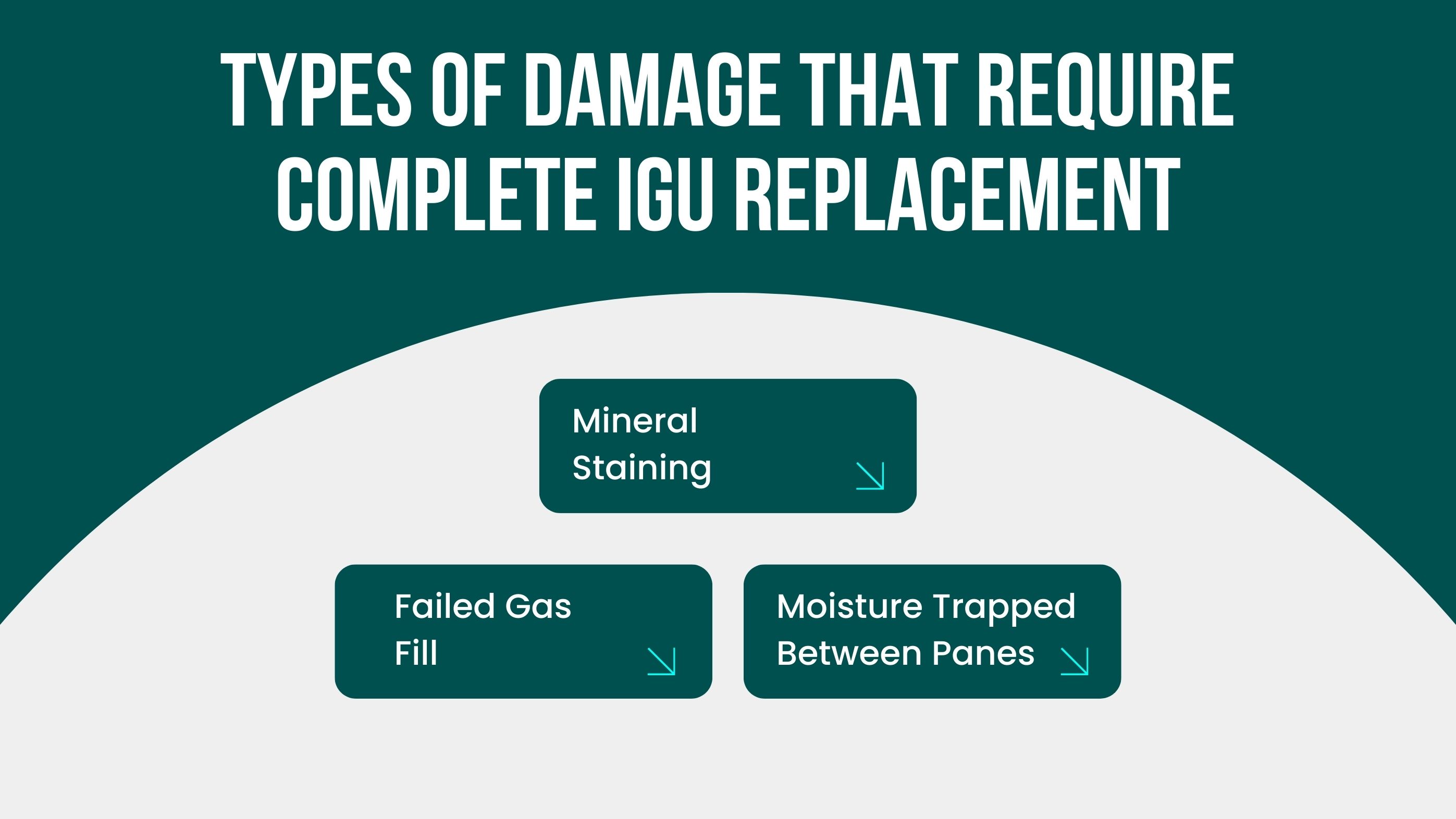
When condensation appears inside the glass layers, the IGU seal has fully failed. No caulk or exterior repair can reach inside the sealed space, so the only way to restore clear visibility and proper insulation is to replace the entire glass unit.
Long-term moisture inside the IGU leaves mineral deposits that look like white haze, streaks, or fog. These stains cannot be cleaned from the outside because they sit between the panes. A full IGU replacement is needed to restore a clear, clean view.
Insulated glass units are filled with gas to reduce heat transfer. When the seal breaks, this gas escapes, causing the window to lose its energy-saving performance. Since the gas cannot be refilled in a failed IGU, replacing the entire unit is the only effective fix.
Glass pane replacement requires the right tools and materials to ensure the new glass sits safely, seals tightly, and stays protected from drafts and moisture. Each item plays a specific role in supporting the glass, securing the edges, and preventing damage during installation. Using proper tools also reduces the risk of cracking the new pane or harming the window frame, which makes the replacement process smoother and safer.
Glazing tape and setting blocks help position the glass correctly inside the frame and keep it from shifting. They provide a cushioned, even base that prevents stress points and makes sure the pane stays stable over time.
This sealant creates a durable, weatherproof barrier around the glass. It stays flexible, resists UV damage, and prevents air or moisture from slipping into the frame, ensuring the window remains tightly sealed.
These tools help remove interior or exterior stops without cracking or bending them. They allow clean, controlled removal so the frame and trim remain in good condition for reinstalling after the new glass is set.
Suction cups make it easier and safer to carry and position large or heavy glass panes. They provide a strong grip, reduce the risk of slipping, and help installers lower the glass gently into the frame without strain.
The cost of replacing glass panes depends on the type of glass you choose, the size of the window, the thickness of the pane, and whether the glass has energy-efficient coatings. Labor costs also vary based on how easily the frame can be accessed and whether any trim, hardware, or sash adjustments are needed.
Understanding these price differences helps homeowners plan a realistic budget and choose the glass option that delivers the right balance of comfort, clarity, and efficiency.
Single-pane replacements are usually the most affordable because the glass sits directly in the sash and requires minimal installation steps. Costs are driven mostly by size and thickness rather than extra materials.
Replacing a double-pane insulated glass unit costs more because the entire sealed unit must be swapped out. This includes the two layers of glass, the spacer, and the factory-sealed edges that prevent moisture from entering.
Triple-pane units come at a premium due to their added layers, improved energy efficiency, and heavier weight. They are ideal for homeowners in colder climates or those looking for maximum insulation and noise reduction.
Tempered glass costs more because it must be heat-treated for safety. It is required in areas like doors, bathrooms, and low windows, and cannot be cut after manufacturing, which increases handling and replacement costs.
Custom sizes, unique shapes, arched windows, and large glass panels come with higher pricing due to special fabrication and careful transport. These panes often require additional labor and equipment to install safely.
| Glass Type | Estimated Cost (Material + Labor) | Why the Cost Varies |
|---|---|---|
| Single-Pane Glass Replacement | $100 – $200 per pane | Size, thickness, and basic installation effort. |
| Double-Pane IGU Replacement | $180 – $450 per unit | Full insulated unit swap (two panes + spacer + sealed edges). |
| Triple-Pane IGU Upgrade | $400 – $850 per unit | Extra layers, higher energy efficiency, heavier installation. |
| Tempered Safety Glass Replacement | $150 – $400 per pane | Heat-treated safety requirements and non-cuttable nature. |
| Custom-Shaped or Oversized Pane | $400 – $1,200+ per pane | Special fabrication, transport precautions, and extra labor/equipment. |
Glass replacement can sometimes be handled at home, but only in very simple situations. The right choice depends on the type of glass, the size of the pane, and any safety requirements. Knowing when a repair is safe to do yourself and when to call a professional helps prevent injuries, poor sealing, or long-term window damage.
DIY replacement may be suitable for small, basic single-pane windows where the stops can be removed easily and the glass can be lifted out without special tools. These simple setups allow homeowners to replace the pane safely as long as the frame is in good condition and the glass is regular, non-tempered material.
Professional service is always needed for insulated glass units (double or triple pane), large or heavy panes, and any tempered safety glass. These types require special handling, exact measurements, and airtight installation to prevent fogging, drafts, or breakage. A pro is also essential when the frame is warped, the sash is loose, or structural damage is present, ensuring the window is safe, sealed, and fully functional after the replacement.
Replacing your glass panes is one of the most effective ways to improve clarity, comfort, and insulation without changing your entire window. Fresh glass stops drafts, clears fog, strengthens security, and helps your home stay comfortable in every season. Whether you choose simple single-pane replacement or upgrade to energy-efficient insulated glass, the right pane makes your home brighter, quieter, and more efficient for the long run.
Yes, as long as the window frame is solid and not warped or rotted, the glass alone can be replaced without removing the entire unit.
Most double-pane windows last around 15–25 years, depending on your climate, sun exposure, and the quality of the insulated glass unit.
Yes, upgrading from old or single-pane glass to double- or triple-pane glass can noticeably reduce heat loss, drafts, and energy use.
No, fogging means the seal inside the insulated glass unit has failed, and the entire glass unit needs to be replaced.
Once the new glass is prepared, most replacements take less than an hour because the process is straightforward and the frame stays in place.
Join our mailing list for exclusive updates, expert tips, and special offers tailored to your needs. Be the first to know about the latest in home services.

Renovize Home is a platform that supports homeowners from planning to renovation. Whether it’s Renovize AI for guidance or a one-on-one call with Pro Finder, we understand your project and match you with local contractors tailored to your needs.
Who We Are
About Renovize HomeGet in TouchHomeownwer Support:
Coming Soon!
General Inquiries:
support@renovizehome.com
Head Office:
24 Greenway Plaza, STE 1800M, Houston, TX 77046.