
Explore All
BROWSE BY CATEGORY
Interior
Exterior
Home Essentials
Homeowner Tools
Blogs & Guides
Find a Pro
Book Your Appointment Now
Home Essentials
About Renovize Home
Explore All
BROWSE BY CATEGORY
Interior
Exterior
Home Essentials
Homeowner Tools
Blogs & Guides
Find a Pro
Book Your Appointment Now
Home Essentials
About Renovize Home
Last Updated 2025-12-12
Upgrading to energy-saving siding gives your home stronger insulation, helping maintain steady temperatures through every season. This reduces how hard your heating and cooling systems need to work, lowering your monthly energy bills. With better protection against drafts and weather, your home becomes more efficient, more comfortable, and more durable for years to come.
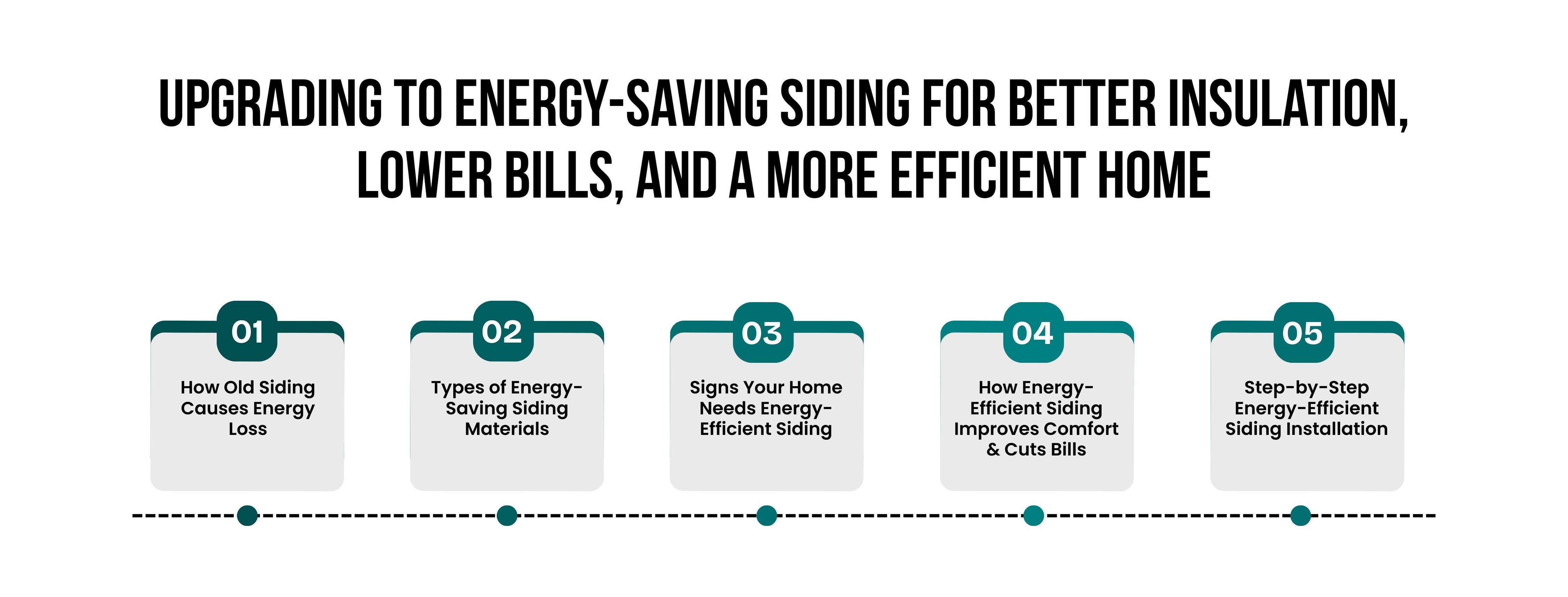
Table of Contents
What Energy-Saving Siding Is and Why Homeowners Upgrade
How Old Siding Causes Energy Loss
Types of Energy-Saving Siding Materials and Their Benefits
Signs Your Home Needs an Energy-Efficient Siding Upgrade
How Energy-Efficient Siding Improves Comfort and Reduces Bills
How Energy-Efficient Siding Improves Comfort and Reduces Bills
Preparing the Home for an Energy-Saving Siding Upgrade
Process of Installing Energy-Efficient Siding
Cost of Upgrading to Energy-Saving Siding
DIY vs Professional Energy-Efficient Siding Installation
Final Views
Energy-saving siding is a modern solution designed to improve your home’s insulation, block drafts, and create a thermal barrier. This type of siding typically includes built-in insulation or is installed with exterior foam boards, significantly increasing the R-value of your walls.
By enhancing the thermal efficiency of your home, energy-saving siding helps to regulate indoor temperatures, keeping your home warmer in the winter and cooler in the summer. This reduction in temperature fluctuations decreases the strain on your HVAC system, leading to energy savings and a more comfortable living environment.
Energy-saving siding works by providing enhanced insulation to the exterior walls of your home. It helps reduce heat loss in winter and keeps cool air inside during summer, making it easier to maintain a comfortable indoor temperature year-round.
This combination of insulation and moisture protection ensures your home remains energy-efficient while safeguarding against weather damage.
Energy-saving siding stands out from traditional siding due to its built-in insulation or foam backing, which helps increase the R-value of the walls. This added insulation reduces heat loss, boosts thermal resistance, and minimizes the need for excessive heating and cooling.
These unique features make energy-saving siding a more efficient and cost-effective option for homeowners looking to improve their home’s performance.
Upgrading to energy-saving siding offers multiple advantages for homeowners, especially when it comes to improving comfort and energy efficiency. By upgrading, homeowners can address cold spots, reduce rising utility costs, and enjoy better temperature regulation throughout the year.
These benefits not only make your home more comfortable but also provide significant long-term savings. Plus, energy-efficient siding adds value to your home by enhancing its curb appeal and reducing its environmental footprint.
Old siding naturally weakens over time, allowing air to pass through cracks, gaps, and thin panels that no longer protect the home effectively. When siding becomes loose, warped, or brittle, outdoor air moves into the wall cavity while conditioned indoor air escapes. This forces the HVAC system to work harder, leading to higher utility bills and rooms that never stay at a consistent temperature.
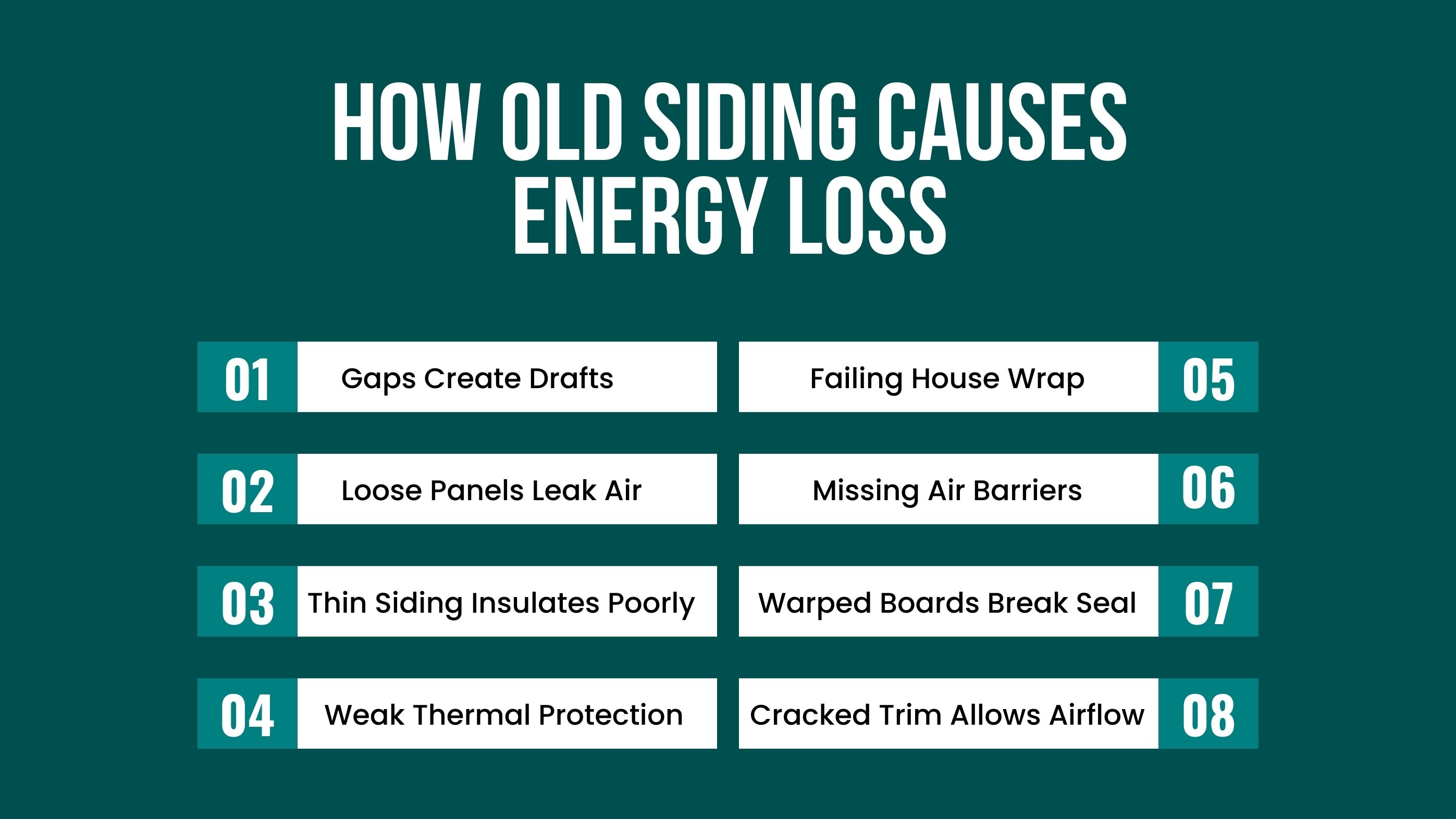
Loose siding seams, cracked trim, and aging caulk create small openings that allow outdoor air to slip inside the home. These gaps act like hidden vents, bringing in cold air during winter and hot air during summer. Even tiny openings around panels can cause noticeable drafts and increase heating and cooling costs.
Older vinyl and aluminum siding were not built with insulation in mind. These thin panels offer little resistance to heat transfer, allowing temperatures outside to affect rooms inside. Without proper thermal protection, walls feel colder in winter and hotter in summer, making the HVAC system run longer to maintain comfort.
Many older homes have deteriorated or missing house wrap, leaving the sheathing unprotected. When house wrap fails, air and moisture bypass the barrier that is supposed to support energy efficiency. This leads to damp walls, mold risk, and increased energy loss through unsealed areas of the exterior.
Warped, cracked, or rotting boards weaken the home’s thermal “shell.” Damaged siding pulls away from the wall and exposes the sheathing underneath, creating new paths for air leakage. Once the thermal seal is broken, indoor temperatures become harder to control, and rooms develop persistent hot or cold spots.
Energy-saving siding comes in several materials, each offering its own level of insulation, durability, and weather protection. Some add insulation directly through foam-backed panels, while others rely on exterior foam boards to strengthen the wall’s thermal resistance. The best choice depends on your climate, home age, and budget, but all these materials help reduce energy loss and improve indoor comfort.
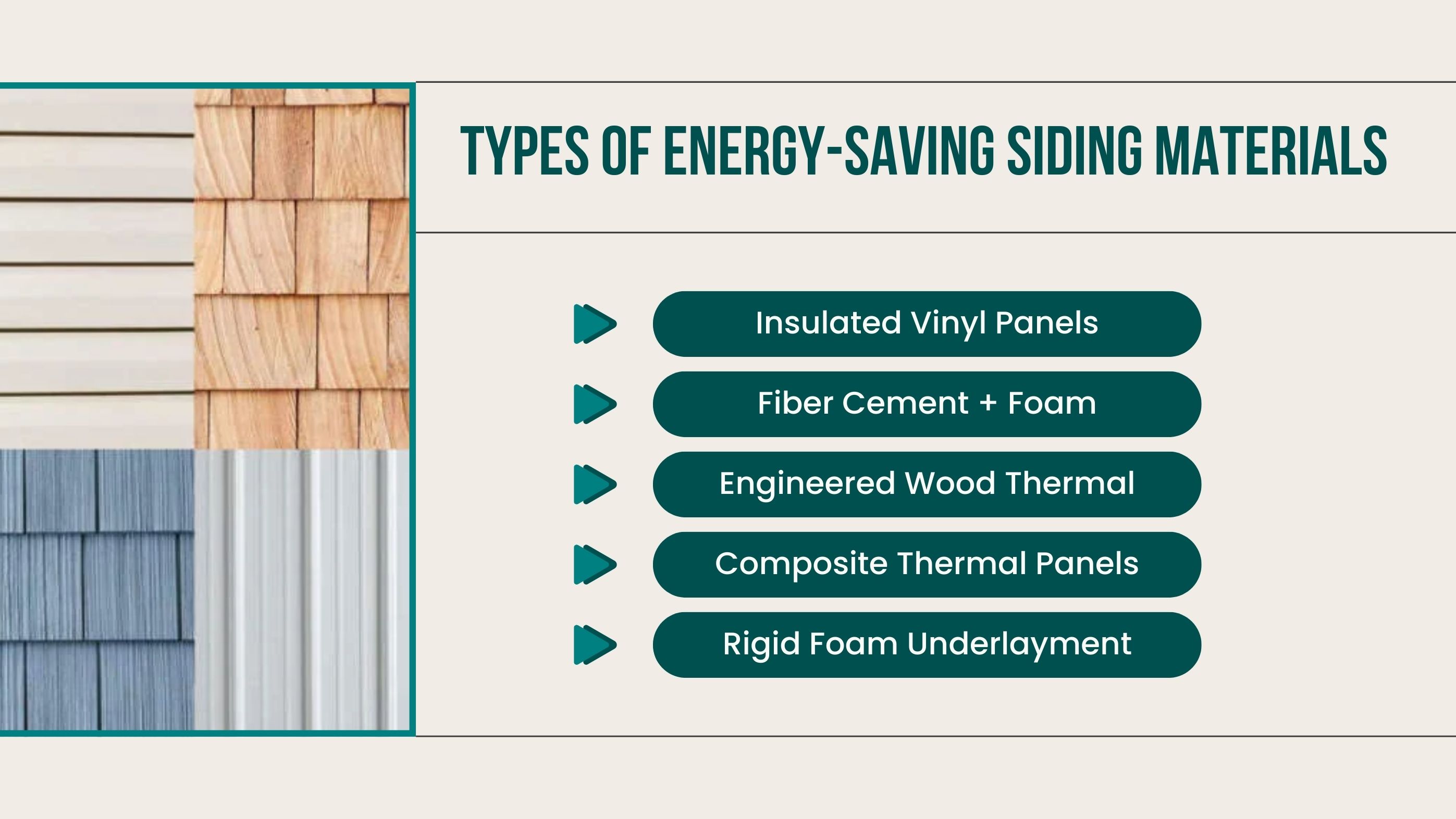
Insulated vinyl siding is designed with foam-backed panels that significantly improve the R-value, offering better insulation compared to standard vinyl siding. The foam filling behind the panel reduces drafts and strengthens the siding, helping it resist warping over time. This type of siding provides an ideal balance between energy efficiency and ease of installation. These are the benefits of Insulated vinyl siding:
Insulated vinyl siding is an excellent choice for homeowners looking to improve their home’s energy performance while keeping installation simple and cost-effective.
Fiber cement siding on its own is dense and durable, but pairing it with exterior foam board creates a strong thermal barrier. The foam board adds thickness and reduces heat transfer, while the fiber cement resists moisture, pests, and harsh weather. This combination is especially effective in climates with extreme temperature swings, offering long-lasting energy efficiency and exterior protection.
Engineered wood siding provides the warm, natural look of wood with better insulation than raw lumber. Many engineered wood products include built-in thermal layers or are installed with foam sheathing for added energy savings. The material is treated to resist insects and moisture while offering improved temperature stability inside the home.
Composite thermal siding panels are made from advanced materials designed specifically for high energy performance. These panels offer superior R-value, excellent durability, and strong resistance to air infiltration. They’re commonly used in modern builds or major exterior upgrades where homeowners want maximum insulation and long-term efficiency.
Rigid foam underlayment is installed behind siding to eliminate cold spots and strengthen the wall’s overall insulation. It creates a continuous thermal layer that reduces air leakage and increases R-value across the entire exterior. This system works with nearly all siding materials and is one of the most effective ways to improve wall performance without changing the home’s appearance.
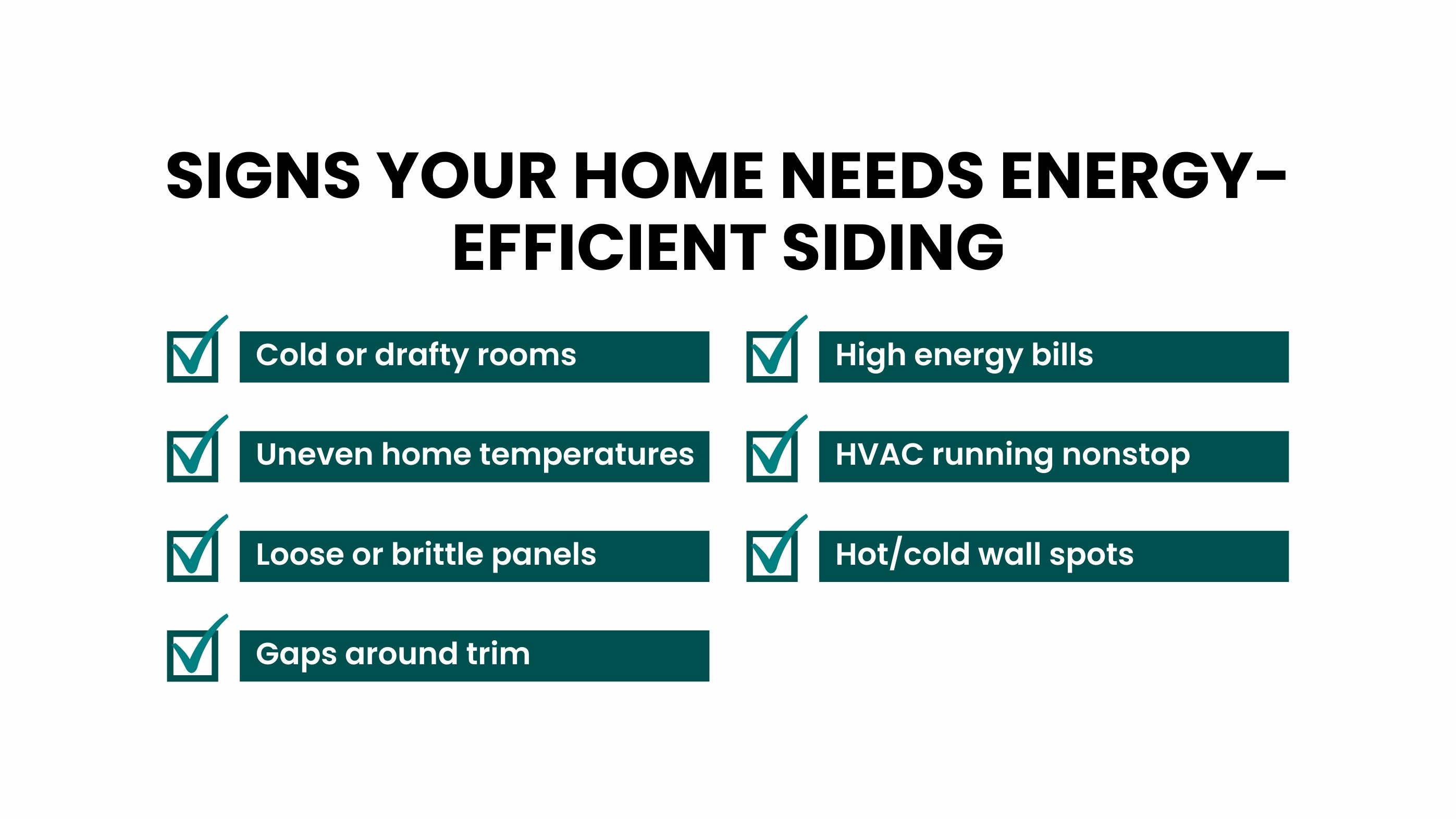
Energy-saving siding becomes essential when your home starts to show signs of performance issues, not just cosmetic aging. When exterior walls can no longer protect against temperature fluctuations, drafts, and moisture, the entire interior becomes harder to heat and cool. These signs suggest that your current siding is no longer providing the insulation and sealing needed for comfort and energy efficiency.
Energy-efficient siding transforms how your home handles heat, air movement, and moisture. By strengthening the exterior walls with better insulation and tighter sealing, it reduces the workload on your HVAC system and keeps rooms consistently comfortable. Instead of fighting drafts, hot spots, and rising utility costs, the home becomes more stable, efficient, and easier to heat and cool year-round.
Energy-efficient siding plays a vital role in transforming how your home handles heat, air movement, and moisture. By reinforcing the exterior walls with improved insulation and tighter seals, it minimizes the workload on your HVAC system and helps maintain a consistent, comfortable temperature inside. This makes your home more stable and energy-efficient, reducing the strain on your heating and cooling systems year-round.
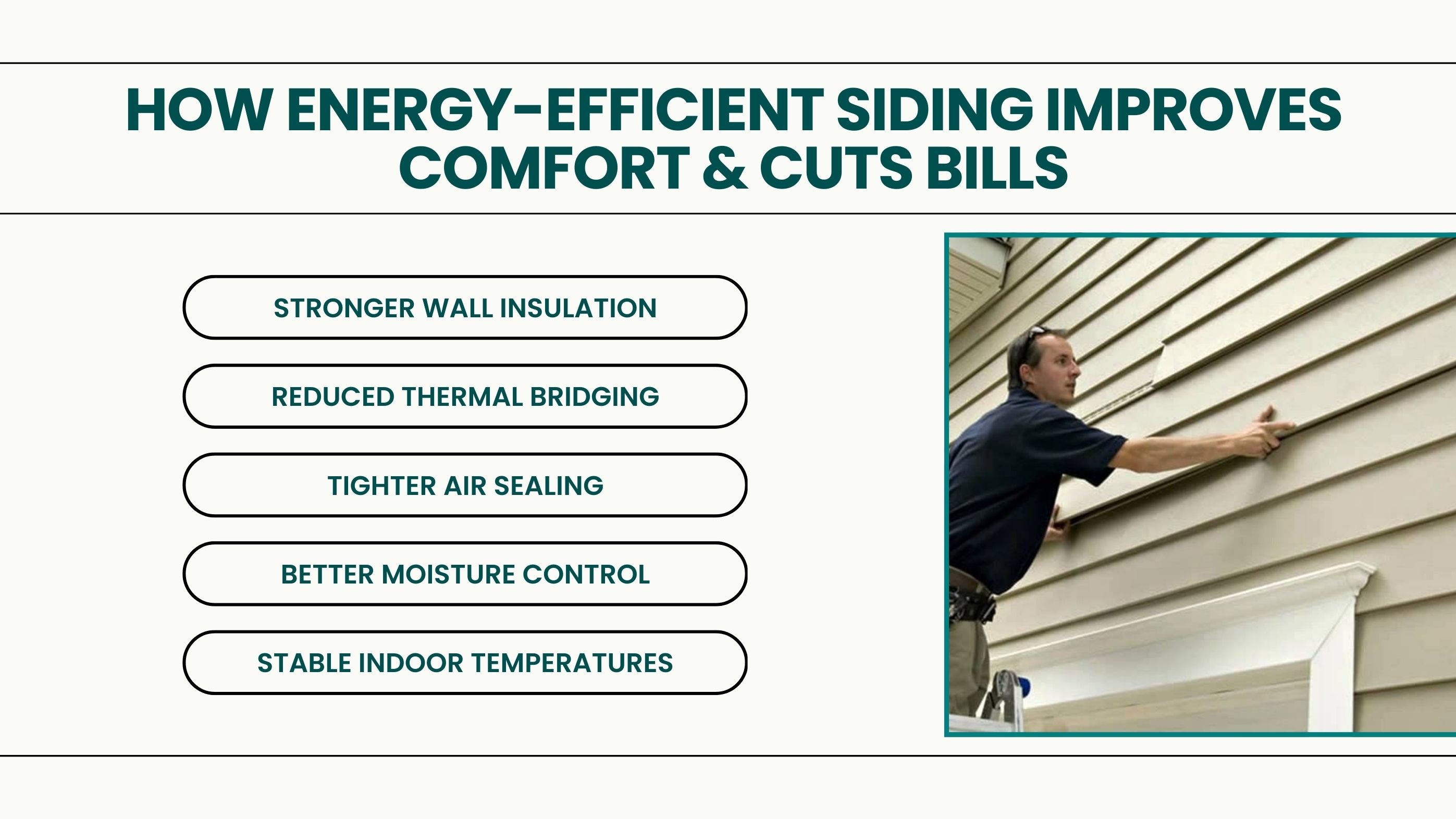
Energy-efficient siding incorporates insulation directly into the wall system, preventing heat from escaping during the winter and entering during the summer. This insulation blocks air from leaking through thin exterior materials, helping rooms maintain a steady, comfortable temperature. As a result, your HVAC system doesn’t have to run constantly to regulate the temperature, leading to lower energy consumption and reduced utility bills.
Thermal bridging occurs when heat flows through wooden studs or uninsulated sections of the wall. Energy-efficient siding addresses this by adding foam boards or insulated backing that cover the entire surface of the wall. This layer significantly reduces heat transfer at weak points, improving the overall R-value of the home and enhancing energy efficiency.
Modern siding systems include advanced features like improved flashing, insulated trim, and tighter seams, which eliminate gaps where drafts usually enter. These enhanced air seals prevent unwanted outdoor air from sneaking into the home and keep conditioned indoor air from escaping. This ensures that living spaces remain more comfortable, particularly near windows, corners, and exterior-facing walls.
Energy-efficient siding works in tandem with high-quality house wrap and proper flashing to keep moisture out of the wall cavity. Moisture control is crucial because when walls stay dry, they retain heat more effectively and prevent issues like mold or rot that can degrade insulation. This not only protects your home’s structure but also ensures the long-term energy performance of your siding.
With better insulation and more efficient air seals, your home stays closer to your desired temperature with less energy input. Rooms that were previously too cold in the winter or too hot in the summer become comfortable throughout the day. This stable environment reduces the strain on your HVAC system, lowers monthly energy bills, and enhances the overall energy efficiency of your home for years to come.
Preparing the home correctly is one of the most important steps in achieving long-term efficiency from new siding. Good preparation ensures the walls are dry, structurally sound, and ready to support insulation and modern weather barriers. This foundation work helps the new siding perform better, last longer, and deliver consistent comfort throughout the home.
The first step is taking off old siding to expose the wall beneath. This makes room for modern insulating materials and prevents new siding from being installed over weak or warped surfaces. Removing damaged or brittle panels also ensures that air leaks, loose seams, and old gaps won’t interfere with your home’s new thermal performance.
Once the old siding is removed, contractors inspect the sheathing for soft spots, discoloration, mold growth, or water stains. These issues must be repaired before new siding is installed, otherwise the damage continues to spread behind the walls. Fixing moisture problems at this stage ensures the home stays dry and supports better insulation over time.
Modern energy-saving siding relies on high-quality weather barriers and properly installed flashing. New house wrap creates a breathable layer that blocks wind and moisture while letting trapped vapor escape. Flashing around windows, doors, and corners prevents future leaks and keeps the wall system sealed tightly. These elements are essential for maintaining energy efficiency and protecting the structure.
Before the new siding goes up, contractors often add rigid foam boards or exterior insulation panels to increase thermal performance. These layers create a continuous insulating blanket that covers studs, reduces thermal bridging, and improves overall R-value. The added insulation helps stabilize indoor temperatures, lowers heating and cooling costs, and makes the home more comfortable year-round.
Installing energy-efficient siding is a structured process that strengthens the home’s insulation, seals drafts, and improves long-term comfort. Each step plays an important role in protecting the wall system and creating a tight thermal envelope. This breakdown helps homeowners understand how the upgrade works from start to finish.
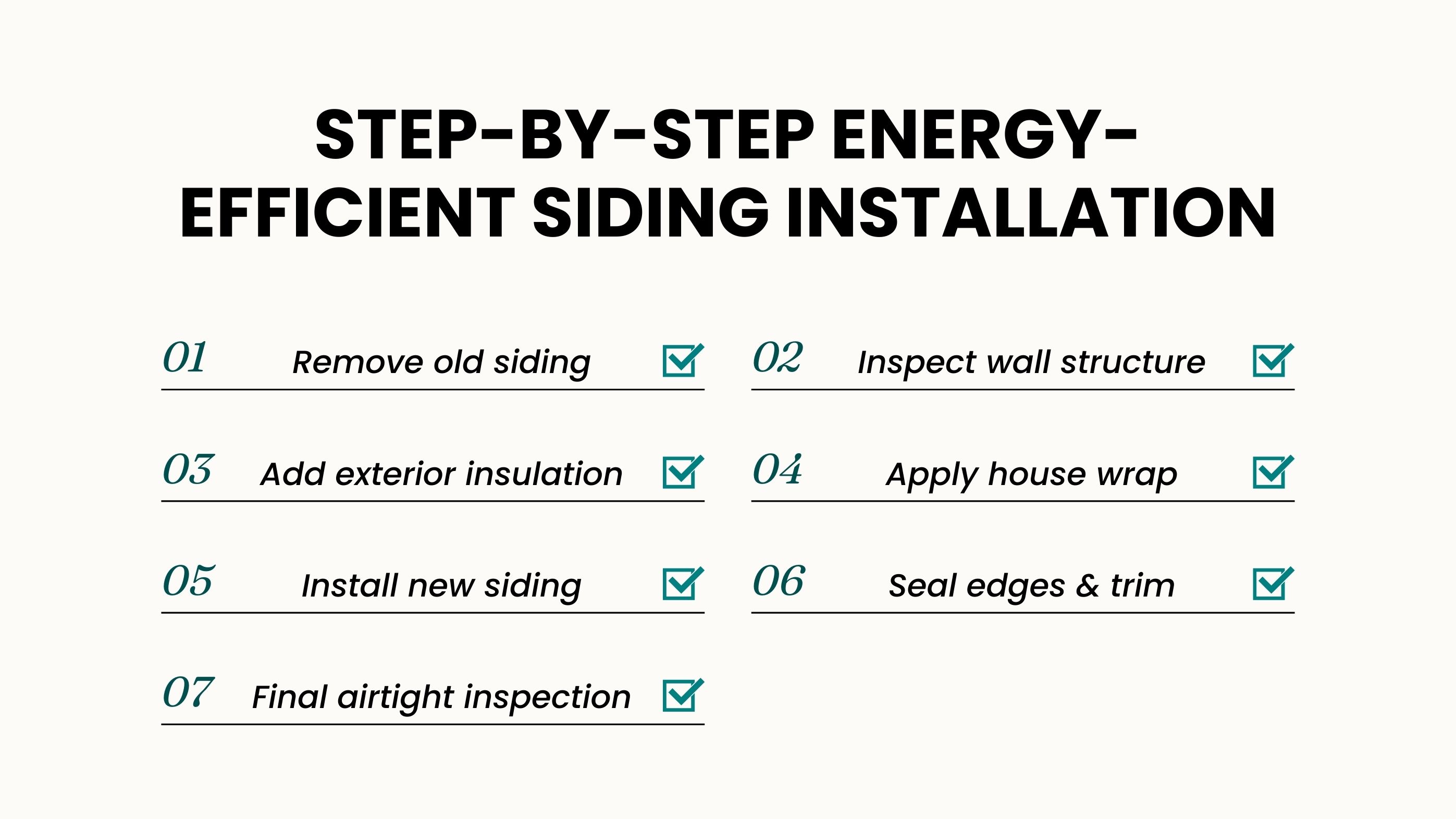
The installation begins by removing outdated, loose, or damaged siding panels. Taking off the old material exposes the sheathing and prevents new siding from being installed over weak surfaces. This step also eliminates hidden gaps, drafts, and moisture pockets so the upgrade starts with a clean, solid foundation.
With the siding removed, contractors examine the sheathing, framing, and surrounding areas for rot, mold, or moisture damage. Any weak or soft sections are repaired or replaced to ensure the wall can support new insulation and siding. Fixing structural issues at this stage prevents future problems and strengthens overall performance.
Next, rigid foam boards or exterior insulation panels are added to increase the wall’s R-value. These boards create a continuous thermal layer that reduces heat loss and covers areas where studs normally allow energy to escape. This step is key to improving temperature stability and lowering heating and cooling costs.
A high-quality house wrap is installed to act as a breathable barrier that blocks wind and moisture. Flashing is added around windows, doors, and seams to prevent water infiltration and protect vulnerable areas. Together, these layers improve air control and keep the interior wall system dry and energy-efficient.
Once the wall is insulated and sealed, the new siding panels are installed. Whether it’s insulated vinyl, fiber cement, engineered wood, or composite material, each panel is hung securely and aligned properly. This step gives the home its new exterior look while enhancing long-term energy performance.
After the siding is in place, contractors seal all edges, joints, and trim pieces. This includes corners, window frames, and door surrounds where drafts commonly develop. Proper sealing ensures the home stays airtight and prevents outdoor air from slipping behind the siding.
The process ends with a detailed inspection to ensure every panel is aligned, every edge is sealed, and all insulation layers are fully connected. Contractors verify that the siding system meets energy-efficiency standards and performs as intended. This final check ensures the home is protected, well-insulated, and ready for long-term comfort.
Upgrading to energy-saving siding can vary in cost depending on factors such as the siding material, insulation level, the size of your home, and the condition of the existing exterior walls.
Homes requiring sheathing repair or additional insulation will have higher costs, while homes with simpler layouts may fall on the lower end of the pricing spectrum. Though the initial investment might be higher than standard siding, energy-efficient materials ultimately help reduce monthly utility costs and deliver long-term savings.
For insulated vinyl siding, this is one of the most affordable energy-efficient options. It uses foam-backed panels that improve the R-value without requiring significant changes to the wall structure.
The cost typically ranges from $6.50 to $10.50 per square foot installed, making it a popular choice for homeowners looking for a budget-friendly upgrade with solid energy performance.
When it comes to fiber cement with foam board, this type of siding provides a mid-to-high-range upgrade. The foam board adds enhanced insulation, while the fiber cement provides exceptional durability and weather resistance.
The typical cost for this material is $10.00 to $16.00 per square foot installed, which is ideal for homeowners who prioritize a long lifespan, fire resistance, and consistent year-round insulation.
Engineered wood, composite siding, and advanced thermal panels fall in the premium category due to their enhanced insulation, moisture resistance, and structural benefits. These materials often come with built-in insulation or work in conjunction with high-R-value foam layers.
The cost for engineered wood typically ranges from $11.00 to $16.00 per square foot installed, while composite siding and thermal panels can cost between $12.00 to $18.00+ per square foot installed. These materials are ideal for homeowners seeking superior long-term performance, curb appeal, and energy efficiency, as they offer both aesthetic appeal and enhanced energy savings.
Several factors influence the final siding installation price. Homes that require old siding removal, sheathing repairs, or upgraded house wrap may see higher costs. Multi-story homes or complex architectural features also increase labor time.
Energy-saving siding can reduce heating and cooling bills by 10% to 25%, depending on insulation levels and climate. Over time, these savings add up, often covering a significant portion of the installation cost. Homes with drafty walls or high utility usage see the fastest return on investment.
Most homeowners recoup the upgrade through long-term efficiency, improved comfort, and increased property value.
| Siding Type | 2025 Installed Cost (Per Sq Ft) | Energy Efficiency Level |
|---|---|---|
| Insulated Vinyl | $6.50 – $10.50 | Moderate to High |
| Fiber Cement + Foam Board | $10.00 – $16.00 | High |
| Engineered Wood | $11.00 – $17.00 | Moderate to High |
| Composite Thermal Panels | $12.00 – $18.00+ | Very High |
| Rigid Foam + Any Siding | +$1.50 – $3.50 add-on | High |
Energy-efficient siding installation is more complex than standard siding because it involves insulation layers, precise air sealing, and strict installation techniques. These systems must be installed correctly to prevent moisture issues, drafts, and reduced thermal performance. While homeowners can handle minor upkeep, the full installation of energy-saving siding is almost always a job for trained professionals.
These small tasks are safe and manageable for most homeowners. They help maintain efficiency without affecting the siding’s structural or insulating performance.
These DIY actions support the siding system but do not replace professional installation for major upgrades.
Energy-efficient siding systems must be installed with precision to ensure insulation layers connect correctly and moisture stays out of the wall cavity. Professionals have the tools, knowledge, and safety equipment needed for this work.
Incorrect installation can lead to trapped moisture, reduced insulation value, and even voided manufacturer warranties. Professional installation ensures every layer functions together to keep your home comfortable, efficient, and protected.
Upgrading to energy-saving siding gives your home stronger insulation, lower energy bills, and better year-round comfort. It blocks drafts, stabilizes indoor temperatures, and protects your walls from moisture while giving the exterior a fresh, modern look. With long-lasting materials and noticeable efficiency improvements, this upgrade pays off through reduced HVAC strain, increased home value, and a more comfortable living environment.
Yes, insulated siding reduces heat loss through exterior walls, blocks drafts, and keeps indoor temperatures stable. With less strain on the HVAC system, homeowners typically see noticeable reductions in monthly heating and cooling costs.
Absolutely, most siding upgrades include the option to add rigid foam board or continuous insulation behind the new panels. This extra layer boosts R-value, reduces thermal bridging, and improves the overall energy efficiency of the wall system.
Energy-efficient siding can last 25 to 50+ years depending on the material and climate. Premium materials like fiber cement or engineered wood deliver longer lifespans, especially when paired with proper house wrap and regular maintenance.
Yes, older homes often have thin siding, worn weather barriers, and little to no insulation in the exterior walls. Upgrading to energy-saving siding can make a dramatic difference in comfort, efficiency, and long-term protection for aging structures.
Yes, the added thickness and foam backing in insulated siding absorb sound and reduce noise transfer from traffic, neighbors, wind, and outdoor activity. This makes indoor spaces quieter and more comfortable.
Join our mailing list for exclusive updates, expert tips, and special offers tailored to your needs. Be the first to know about the latest in home services.
Renovize Home is a platform that supports homeowners from planning to renovation. Whether it’s Renovize AI for guidance or a one-on-one call with Pro Finder, we understand your project and match you with local contractors tailored to your needs.
Who We Are
About Renovize HomeGet in TouchHomeownwer Support:
Coming Soon!
General Inquiries:
support@renovizehome.com
Head Office:
24 Greenway Plaza, STE 1800M, Houston, TX 77046.