
Explore All
BROWSE BY CATEGORY
Interior
Exterior
Home Essentials
Homeowner Tools
Blogs & Guides
Find a Pro
Book Your Appointment Now
Home Essentials
About Renovize Home
Explore All
BROWSE BY CATEGORY
Interior
Exterior
Home Essentials
Homeowner Tools
Blogs & Guides
Find a Pro
Book Your Appointment Now
Home Essentials
About Renovize Home
Last Updated 2025-12-19
Siding is the first line of defense for your home against external elements. However, it’s constantly exposed to weather conditions like hailstorms, high winds, and moisture, which can cause significant damage over time. In addition, wildlife such as woodpeckers can create unsightly holes that compromise the integrity of your siding. Addressing these issues promptly with the right repairs is essential to maintaining the functionality and aesthetics of your home’s exterior.
In this, you will learn about the various types of damage caused by hail, wind, water, and woodpeckers, the common signs to look out for, and the best repair solutions to restore your siding’s performance. Whether your siding is vinyl, wood, metal, or fiber cement, we’ll cover material-specific repair methods and preventive measures to help you extend the lifespan of your siding. By identifying the damage early and applying the right fixes, you’ll be able to protect your home and avoid costly future repairs.
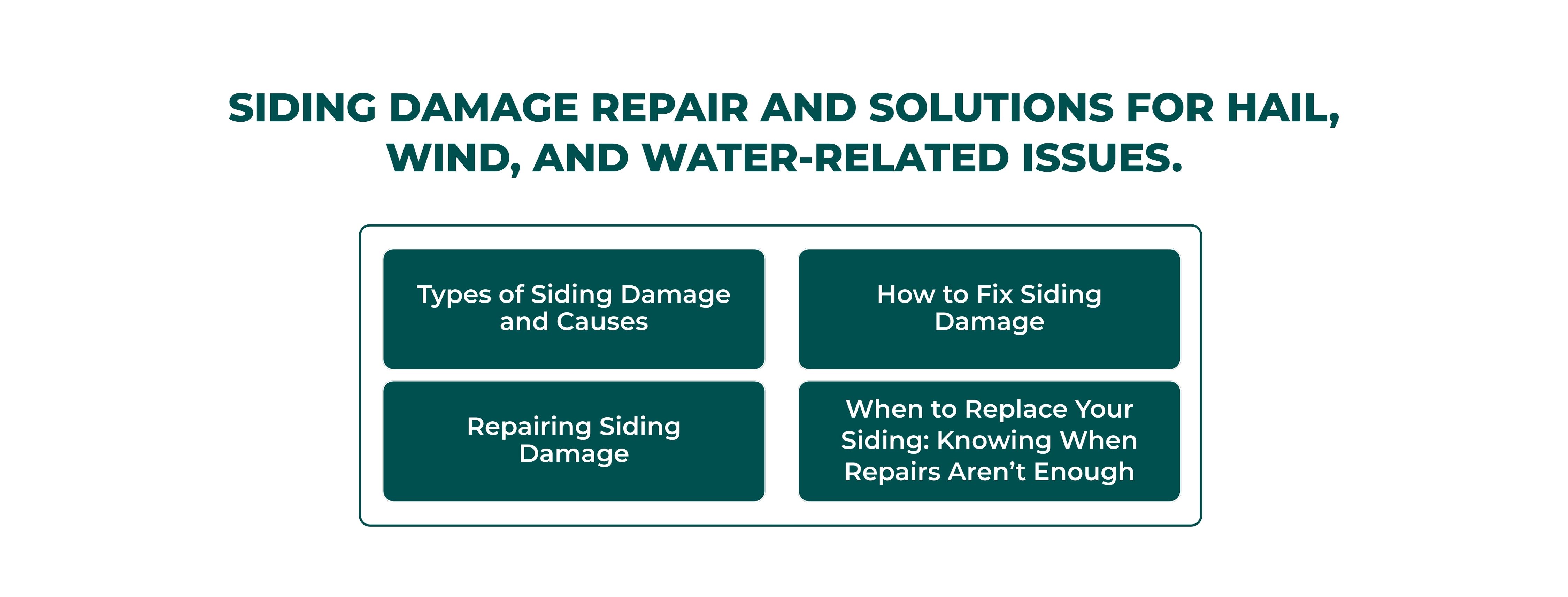
Table of Contents
Types of Siding Damage and Causes
How to Fix Siding Damage
Repair vs. Replace: When to Repair Siding and When to Replace It
Cost Breakdown for Siding Damage Repair
Final Views
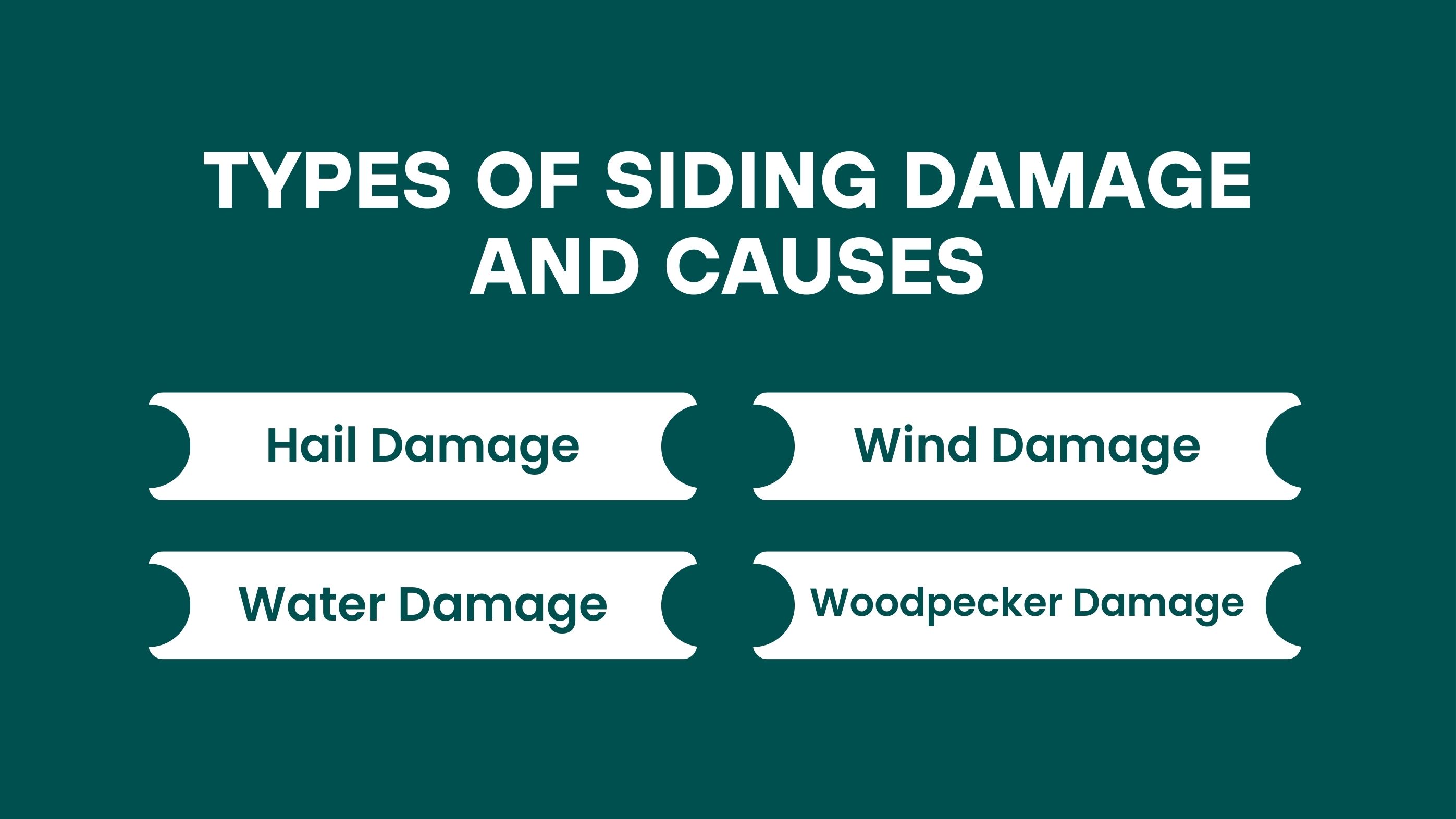
Understanding the different types of siding damage is crucial for addressing the issue early and preventing long-term damage. Each type of damage has specific causes, signs to look for, and impacts on the siding's performance. Whether it’s hail damage, wind damage, water infiltration, or woodpecker-related harm, each issue compromises your siding’s integrity, leaving your home vulnerable to moisture, pests, and reduced energy efficiency. Identifying these issues early can save you from costly repairs and further deterioration. Here’s a detailed breakdown of the most common types of siding damage and how they affect your home’s exterior.
Hail can cause significant damage to siding, particularly when the hailstones are large or the siding is made of softer materials like vinyl or wood. This type of damage can range from small dents to larger cracks or even punctures in the material.
Hail damage typically shows up as small dents, cracks, or holes on your siding. If left unaddressed, these imperfections can lead to moisture damage and further deterioration of the siding.
Hail damage weakens the siding's integrity, allowing moisture to enter behind the panels, which can cause additional issues like mold and rot.
Wind damage typically occurs when strong gusts from storms or hurricanes dislodge or tear off panels of siding. It can also cause gaps between panels, making your home more vulnerable to water infiltration and pest infestations.
Wind damage can cause torn panels, loose trim, or sections blown off entirely. You may also notice misalignment or gaps in the siding.
Wind damage exposes the house to the risk of water intrusion, pests, and further weathering.
Water damage occurs when moisture infiltrates behind the siding, often due to poor installation, inadequate sealing, or environmental conditions like heavy rain or snow. Over time, this moisture weakens the material, leading to rotting, mold, and decay.
Look for soft spots, swelling, discoloration, or visible mold. Water damage is often accompanied by rust on metal siding or decayed areas on wood.
Several factors contribute to water damage in siding. Understanding these causes can help prevent future issues.
Water infiltrating the siding can weaken the material, leading to rotting, rusting, and mold growth.
Woodpeckers drill into siding to find food, create nests, or mark territory, often causing holes or punctures in the material. This type of damage is not only cosmetic but can expose the siding to moisture, leading to further deterioration.
Woodpecker damage typically appears as circular or irregular holes in the siding. The holes can be deep or shallow, depending on the bird's activity.
Several factors contribute to water damage in siding. Understanding these causes can help prevent future issues.
Woodpecker damage leaves your siding vulnerable to moisture and pests.
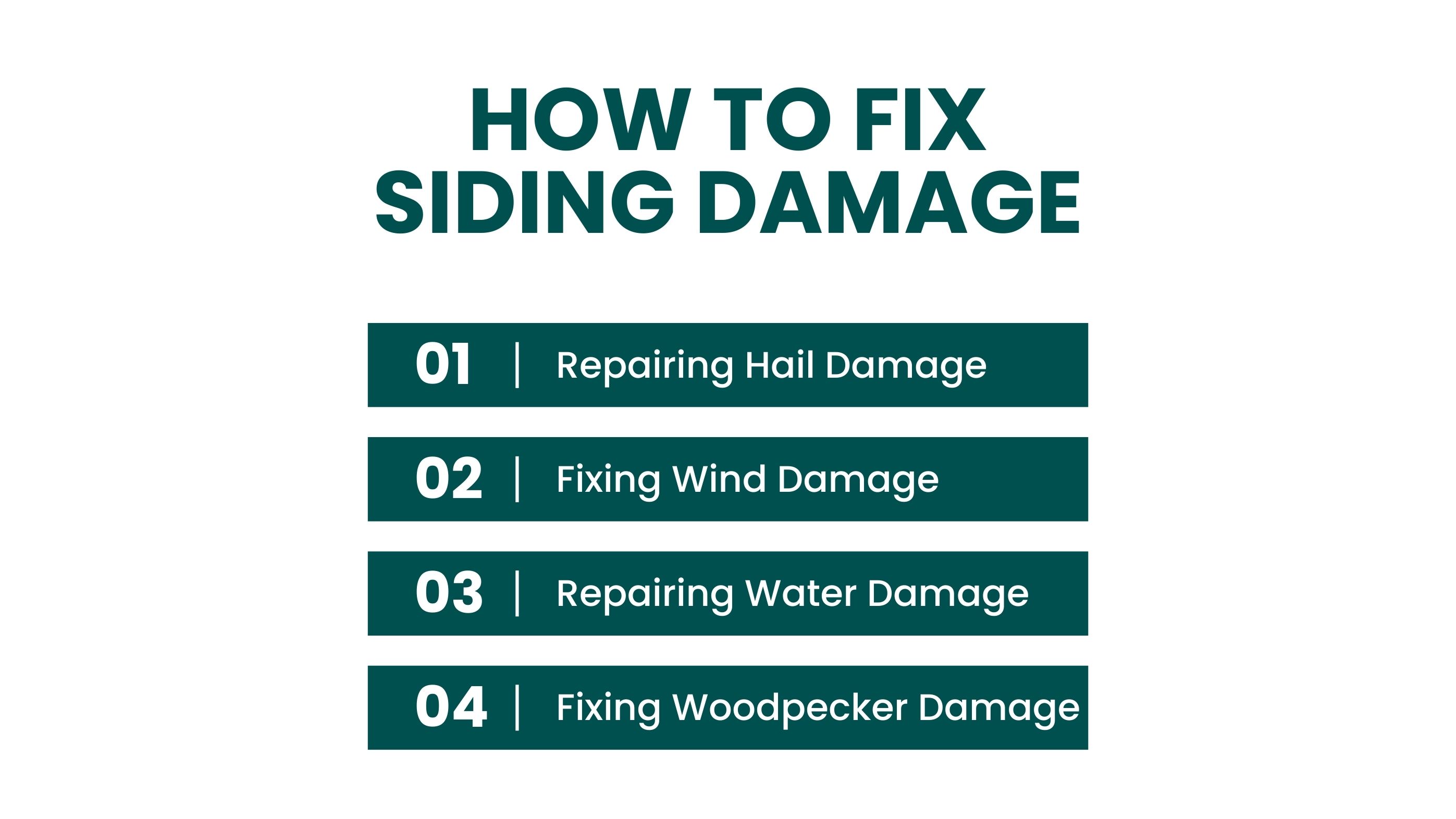
Fixing siding damage promptly can prevent further issues like water infiltration, mold, and structural damage. Whether it's hail, wind, water, or woodpecker damage, there are simple repair solutions that will restore your siding’s appearance and performance. Below are methods for addressing common types of siding damage, ensuring your home stays protected and looking great.
Hail can cause significant damage to siding, ranging from minor cracks to large holes, depending on the size of the hailstones. These damages, if not addressed, can lead to water infiltration and the growth of mold or mildew, compromising your home’s protection. Early repairs ensure your siding maintains its integrity and prevents moisture from entering.
Wind can cause siding panels to become loose, misaligned, or even blow off completely, especially during strong gusts or storms. When this happens, the gaps left behind can expose your home to further damage, allowing water to penetrate and causing mold or rot. Securing or replacing the panels promptly is essential to restoring your home’s protection.
Water damage often happens when moisture infiltrates behind the siding due to poor sealing, clogged gutters, or prolonged exposure to rain. Water can weaken the siding, leading to rot, mold, and structural issues. If left unchecked, water damage can spread to other areas of your home, increasing repair costs.
Woodpeckers often cause holes in siding while pecking for food, nesting, or marking their territory. While the damage is often cosmetic, it can leave the siding vulnerable to moisture, pests, and further deterioration. Fixing the damage as soon as possible is essential to restore the siding’s effectiveness and appearance.
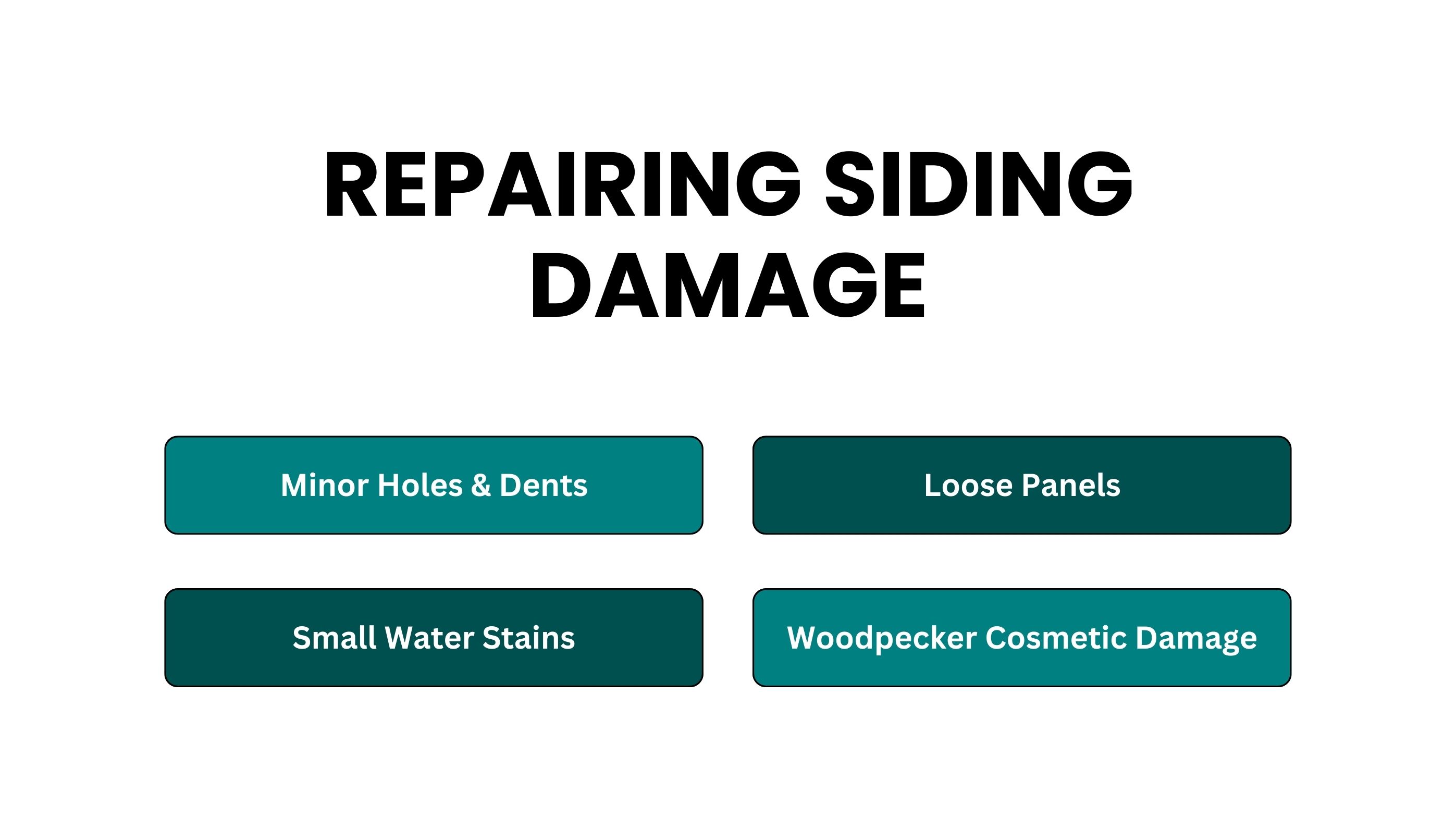
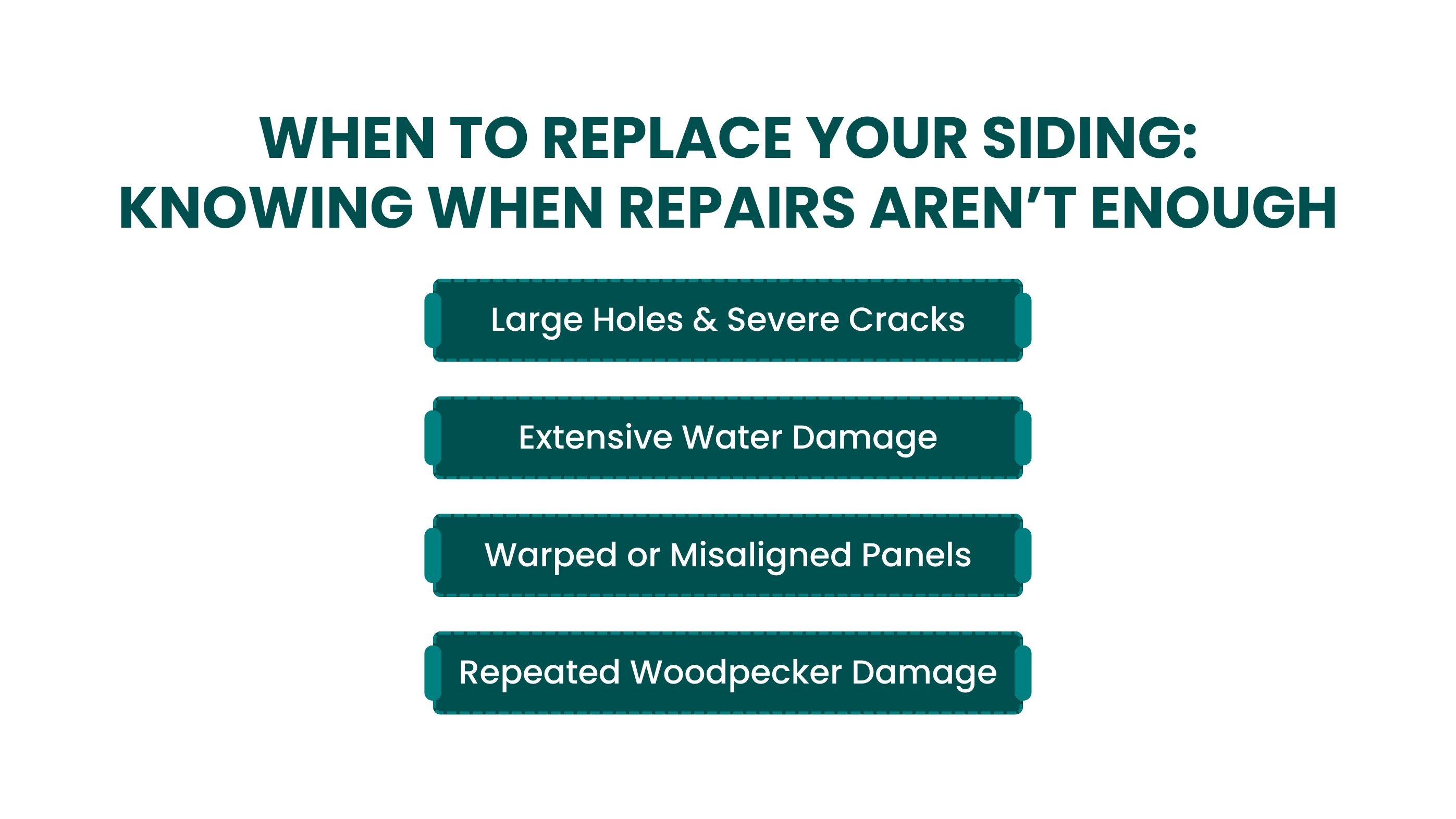
Deciding whether to repair or replace damaged siding can be challenging. The key lies in assessing the severity of the damage and understanding how it affects your home’s structure and long-term protection. In some cases, simple repairs can suffice, but in others, replacing damaged panels may be more cost-effective and necessary. Below, we explore common types of siding damage and when each option makes sense.
Hailstorms can leave your siding with everything from minor dents to significant cracks and holes. Knowing the extent of the damage will help you decide whether repairing or replacing is the right option.
For minor hail damage, repairs are often sufficient to restore your siding’s function and appearance without breaking the bank.
In more severe cases, hail damage can compromise the performance of your siding, making replacement a more viable solution.
High winds can wreak havoc on your siding by loosening panels, creating gaps, or tearing off sections. Depending on the severity, wind damage can often be repaired, but there are situations where replacement is the best option.
For minor wind damage, small repairs are generally sufficient to restore your siding’s stability.
In some cases, wind damage may be too severe to repair, requiring full replacement of the affected panels.
Water infiltration behind the siding is one of the most serious issues, as it can cause rot, mold, and structural damage. Addressing water damage early is critical to prevent extensive repairs down the road.
For small water damage, repairs can restore the functionality of the siding and prevent further issues.
If water damage is more extensive, simply repairing it might not solve the problem in the long term.
Woodpeckers can create holes in siding, which not only damages the material but also opens the door for moisture and pests. Timely repairs are important to avoid further deterioration.
If the damage is minor, patching up the holes is a quick and easy fix.
If the damage is extensive, replacing the damaged sections may be necessary.
The cost of repairing siding varies depending on the material type, the severity of the damage, and the labor required. Understanding these costs will help homeowners make informed decisions about whether to repair or replace damaged siding. Below, we provide a detailed breakdown of labor costs, material costs, and additional expenses involved in siding repairs.
Labor costs fluctuate based on the material being repaired and the extent of the damage. Here's a breakdown of typical labor costs by material type:
Material costs vary based on the siding type and the specific repairs required. Here’s a detailed breakdown of typical material costs:
Repairing damage caused by water, wind, hail, or woodpeckers may come with additional costs due to the severity of the damage. These repairs can involve structural fixes, mold remediation, or more extensive labor.
Water damage is a serious concern as it can lead to mold, wood rot, and even structural failure if left unaddressed. The following additional costs may arise when dealing with water damage:
Wind damage can cause panels to loosen, tear, or become misaligned, exposing the house to further weathering. Repairing wind damage promptly can prevent additional issues like water penetration and structural damage.
Hail can cause dents, cracks, and holes in siding, leading to water infiltration and structural issues if not repaired promptly. Repair costs will vary depending on the severity of the damage and the type of siding material.
Woodpecker damage typically involves holes or deep punctures that weaken the siding, making it vulnerable to moisture and pests. Minor issues can often be repaired, but extensive damage may require full section replacement.
| Repair Type | Low-End Cost | High-End Cost | Notes |
|---|---|---|---|
| Labor (Vinyl) | $40/hr | $70/hr | Lower for minor repairs, higher for replacements |
| Labor (Wood) | $55/hr | $95/hr | Requires more time and skill |
| Labor (Aluminum) | $50/hr | $85/hr | Specialized tools for dent repair |
| Vinyl Patch Kits | $10 | $25 | For small holes or cracks |
| Wood Filler | $8 | $20 | Used for patching wood repairs |
| Aluminum Repair Kits | $20 | $40 | For dent and minor damage repairs |
| Mold Remediation | $500 | $2,000 | For water-damaged areas with mold growth |
| Rotted Wood Replacement | $200 | $500 | For replacing water-damaged wood |
| Drying Equipment | $500 | $1,500 | For drying out walls affected by water |
| Wind Damage (Securing Panels) | $150 | $400 | For reattaching or replacing panels |
| Hail Damage (Panel Replacement) | $200 | $600 | For replacing damaged panels |
| Hail Damage (Dent Repair) | $100 | $250 | For fixing dents in softer siding materials |
| Woodpecker Hole Repair | $50 | $200 | For patching small holes or punctures |
| Woodpecker Panel Replacement | $200 | $500 | For replacing large sections of damaged siding |
Siding damage, whether caused by hail, wind, water, or woodpeckers, can seriously compromise the protection of your home. Understanding the different types of damage and the appropriate repair or replacement methods ensures your home remains secure and aesthetically pleasing. Regular maintenance, timely repairs, and preventive measures can extend the lifespan of your siding and save you money in the long run. Whether you’re dealing with minor cosmetic issues or more severe damage, taking prompt action can protect your home from the elements and enhance its curb appeal for years to come.
Hail damage can range from small dents to large holes, depending on the size of the hailstones. For minor dents and cracks, use a vinyl repair kit or siding fillers to patch the affected area. For more severe damage, replacing the damaged section with matching material is necessary to ensure your siding maintains its protective functionality and appearance.
Wind damage can cause siding to loosen or tear away, especially during severe storms. To prevent this, ensure that the siding panels are properly fastened and sealed at the edges. Reinforce vulnerable areas, such as trim and seams, with additional support to avoid damage during high winds. Periodic checks and maintenance will help reduce the risk of wind-related damage.
Water damage can weaken the siding and promote mold or rot if left unchecked. Start by removing the damaged vinyl siding and inspecting the underlying wall for any moisture buildup. Replace any rotted materials or insulation, then reinstall the siding. Sealing all joints and seams with caulk can prevent further moisture infiltration.
Woodpecker damage can lead to unsightly holes or punctures in the siding. For minor damage, fill the holes with wood filler or epoxy, then sand and paint the area to blend it with the surrounding surface. If the damage is extensive, you may need to replace the affected section of siding and repaint it to match the rest of your home’s exterior.
While it’s difficult to fully protect your siding from hail, you can reduce the risk of significant damage by installing impact-resistant siding materials such as fiber cement or steel. Additionally, you can use protective barriers like hail guards or screens to shield vulnerable areas of your home from hailstones.
Join our mailing list for exclusive updates, expert tips, and special offers tailored to your needs. Be the first to know about the latest in home services.
Renovize Home is a platform that supports homeowners from planning to renovation. Whether it’s Renovize AI for guidance or a one-on-one call with Pro Finder, we understand your project and match you with local contractors tailored to your needs.
Who We Are
About Renovize HomeGet in TouchHomeownwer Support:
Coming Soon!
General Inquiries:
support@renovizehome.com
Head Office:
24 Greenway Plaza, STE 1800M, Houston, TX 77046.