
Explore All
BROWSE BY CATEGORY
Interior
Exterior
Home Essentials
Homeowner Tools
Blogs & Guides
Find a Pro
Book Your Appointment Now
Home Essentials
About Renovize Home
Explore All
BROWSE BY CATEGORY
Interior
Exterior
Home Essentials
Homeowner Tools
Blogs & Guides
Find a Pro
Book Your Appointment Now
Home Essentials
About Renovize Home
Last Updated 2025-12-18
Maintaining your home's exterior involves matching siding repairs to the existing color, texture, and style. A seamless blend ensures your repairs don’t disrupt the overall look, preserving your home's curb appeal and long-term durability. Whether fixing a small crack or replacing large sections, matching the new siding to the old creates a uniform, professional appearance that adds value and protects your home from the elements.
It's important to match both the material and color of the new siding to the existing sections. Mismatched patches can negatively affect your home’s appearance and lower its value, so careful attention to detail is essential for a cohesive, well-maintained exterior.
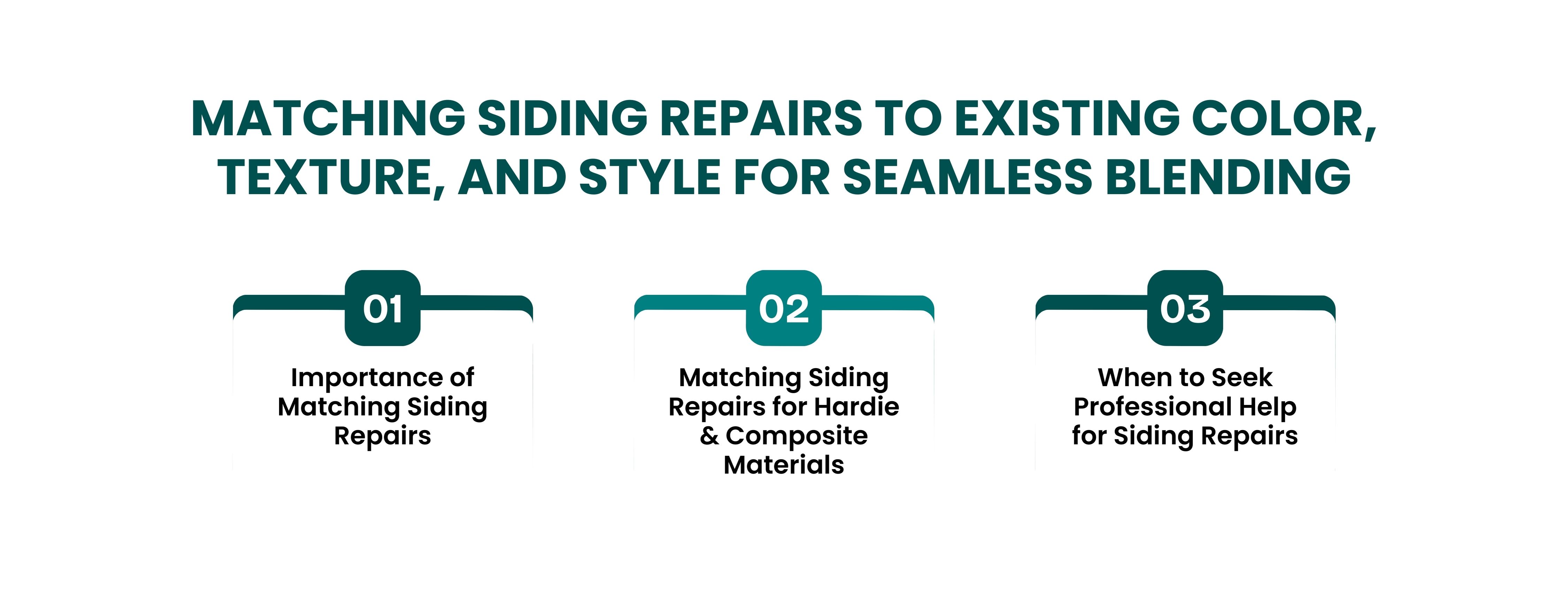
Table of Contents
Why Matching Siding Repairs Is Essential for Curb Appeal
Key Aspects of Matching Siding Repairs
Methods for Achieving Seamless Blending
Material-Specific Considerations for Matching Repairs
When to Consider Professional Help for Seamless Siding Matching
Cost Breakdown for Matching and Blending Siding Repairs
Final Thoughts
Matching siding repairs is crucial for maintaining your home's visual appeal and preventing mismatched sections that can disrupt the overall aesthetic. A well-executed repair ensures a seamless look, enhances curb appeal, and helps preserve your home’s value over time. Here's why it matters:
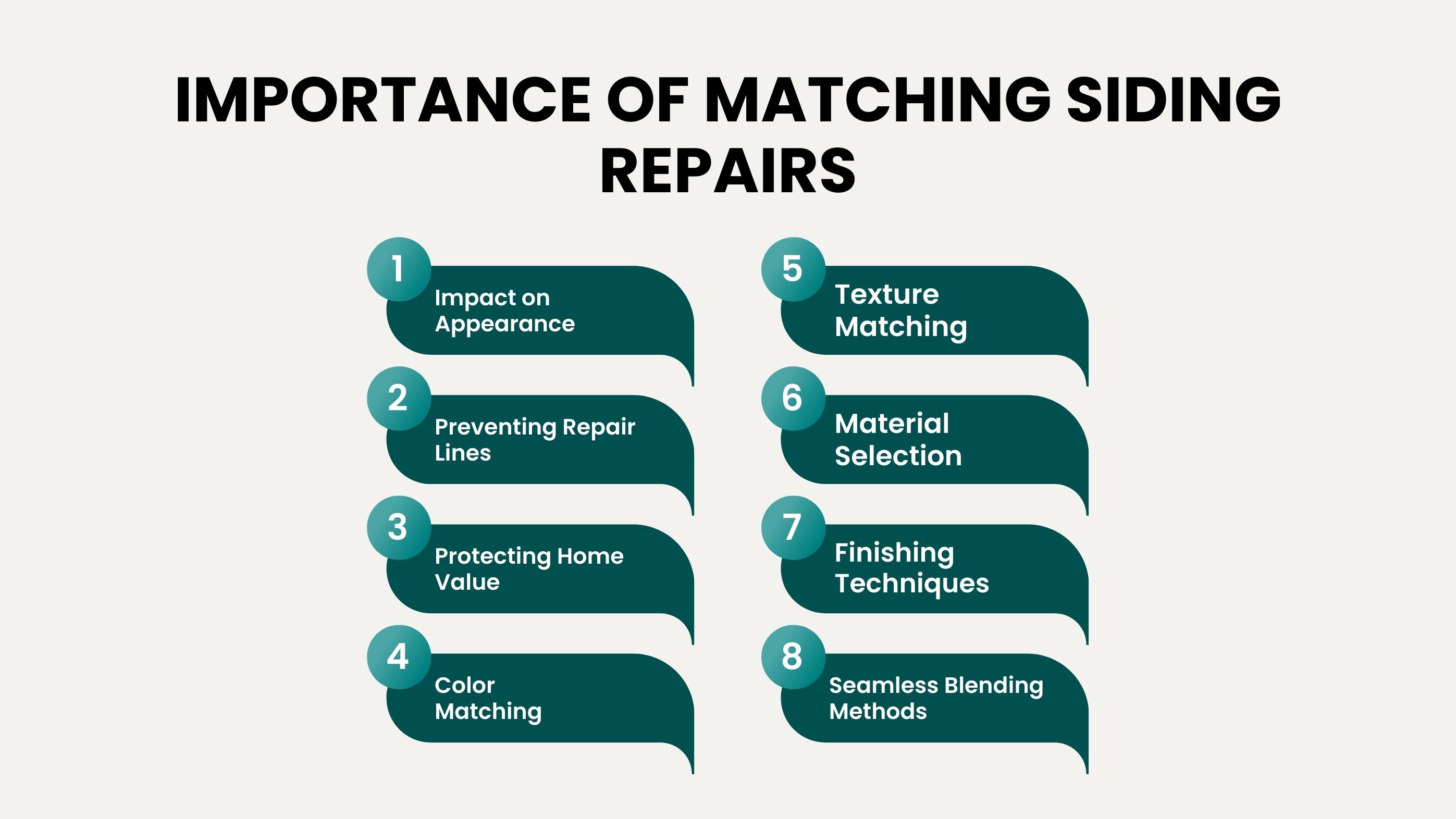
Mismatched siding can create an uneven, patchy look that detracts from the home’s exterior. Whether it’s the texture or color, differences in the new and old siding are noticeable and can make your house appear less cohesive.
Visible lines where new siding meets old siding can draw attention to the repair. Matching the materials properly ensures there are no noticeable boundaries, leaving the home with a smooth, uninterrupted exterior.
Consistent siding repairs help preserve your home's value. Mismatched repairs can make the property appear neglected, lowering its curb appeal and potential resale value. A well-matched repair maintains both the visual integrity and long-term worth of your home.
When it comes to repairing siding, ensuring a seamless blend with the existing material involves several key factors. From color to texture and style, each aspect plays a vital role in making repairs appear natural and undetectable. Here are the primary considerations:
Choosing the right color for siding repairs is essential to maintaining a uniform exterior. Whether you’re painting the new section or selecting pre-finished materials, the goal is to match the existing color as closely as possible. Consider the following:
The texture of the new siding should be as similar as possible to the old material. Different siding materials have different finishes, such as smooth, rough, or embossed surfaces. The finish you choose should complement the existing siding's texture:
Siding styles come in various forms, and ensuring consistency in style is crucial for a seamless repair:
Selecting the right material for repairs is just as important as matching color, texture, and style. Different materials expand and contract differently, so it's essential to use materials that will react similarly to the existing siding.
The finishing process is important for ensuring the new section blends in with the rest of your home. This includes painting, sealing, or staining:
Achieving a seamless blend between new and old siding requires careful attention to detail. From painting to precise cutting, the methods used in repairing siding are essential to ensure that the new sections integrate smoothly with the existing material. Here’s how to achieve flawless blending:
When it comes to siding repairs, color uniformity is crucial, especially if the new section is exposed. To achieve a perfect match, follow these steps:
The texture of the siding is just as important as the color. If the texture of the new section doesn’t match the old, it can disrupt the appearance of the entire exterior. Here’s how to ensure the new material blends seamlessly:
One of the simplest and most effective ways to ensure seamless blending is by using pre-finished materials. These materials come ready to install, reducing the effort needed to match color and texture:
Using pre-painted siding eliminates the need for additional painting or staining, ensuring an exact match with the existing color. These materials are often manufactured to match standard color charts, so homeowners can select materials that are already designed to blend with common exterior colors.
For textured siding, pre-textured materials like embossed panels or wood-grain finishes offer a consistent surface that matches the look and feel of older materials. These materials are often available in popular styles and patterns, reducing the risk of mismatches.
Pre-finished materials save time and ensure the new sections are ready for immediate installation without the need for additional finishing steps. This is particularly useful for large repairs or when time is a factor.
Pre-finished materials are often more durable than freshly painted or stained sections. They come with protective coatings that resist fading, peeling, and weathering, ensuring the repair lasts as long as the existing siding.
Because these materials are already treated, they require less ongoing maintenance. They are less likely to need re-staining or repainting, keeping your home looking fresh for years.
Each type of siding material requires unique techniques to ensure that repairs blend seamlessly with the existing surface. Whether your home has vinyl, wood, fiber cement (Hardie board), or composite siding, it’s essential to understand the specific considerations for each material to achieve a flawless repair. Here’s a breakdown of how to approach matching repairs based on the material:
Vinyl siding is a popular choice due to its low maintenance and durability, but it can be tricky to match, especially if the siding has faded over time.
Wood siding offers a natural, timeless look, but it requires careful attention when making repairs, particularly to ensure the grain and finish are consistent.
One of the first things to consider is the wood species. Ensure that the new boards are made from the same wood type as the original siding to preserve both the appearance and integrity. Common wood types for siding include cedar, pine, and redwood. Each wood species has unique characteristics, including color, grain, and texture, so matching is essential.
After installation, the new boards will need to be stained or painted to match the rest of the siding. For refinishing, use the same stain or paint used on the existing siding. If the wood is exposed to the elements, consider using a weatherproof, UV-resistant finish to preserve the appearance over time.
Wood naturally expands and contracts with temperature and humidity changes, which can affect the grain. Ensure that the new boards are cut in a way that matches the direction and flow of the existing grain to prevent the repair from standing out.
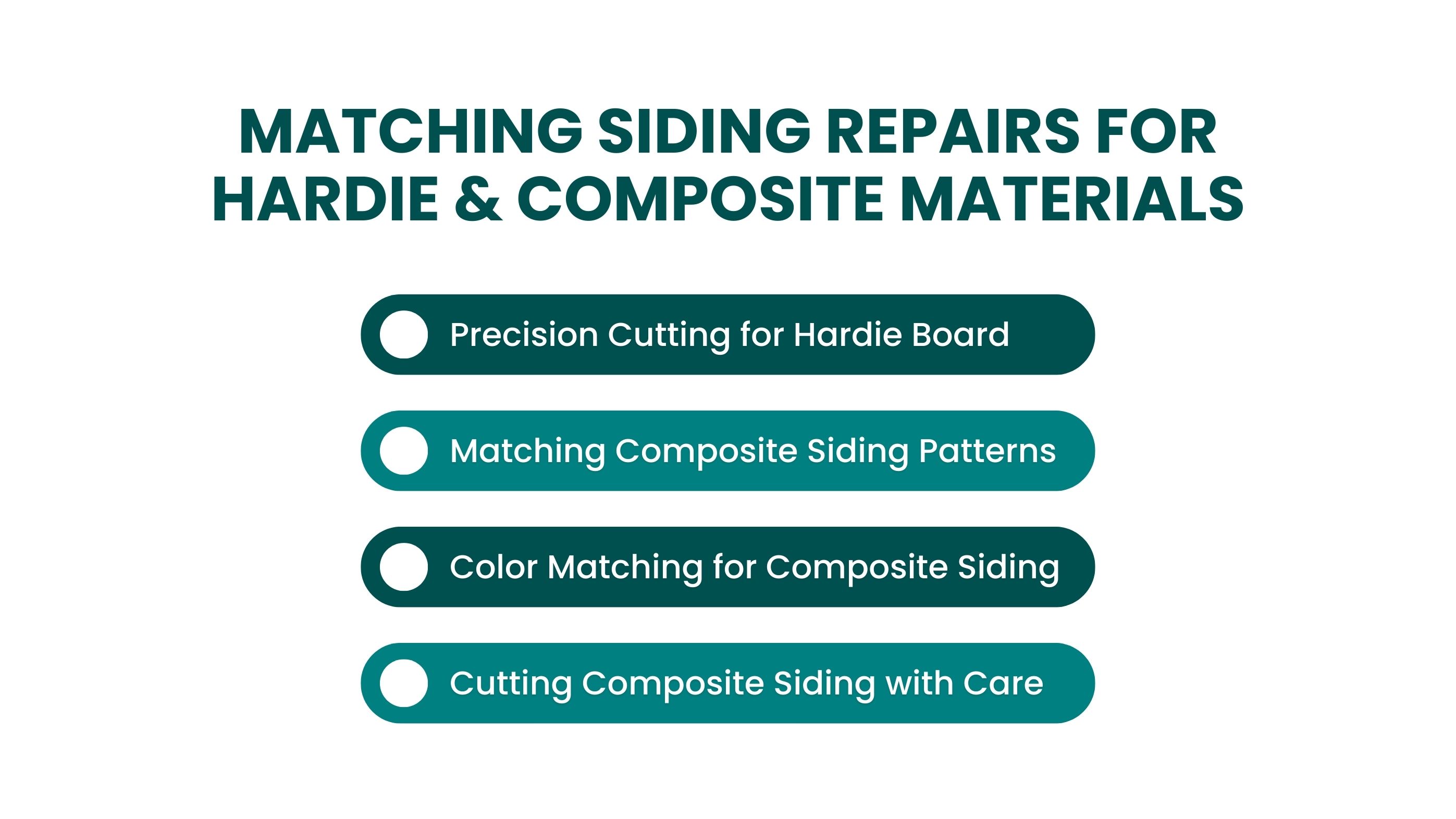
Fiber cement siding, like Hardie board, is durable and low-maintenance but requires careful blending to match the color and texture.
Composite siding combines different materials to create a durable, low-maintenance exterior. When repairing composite siding, matching the look and texture of the original material is important for achieving a seamless finish.
While DIY repairs can be a cost-effective option for minor siding fixes, certain situations demand the expertise and precision of professional repair services. Achieving a seamless blend in color, texture, and style often requires specialized tools, knowledge, and experience. Here’s when you might want to consider professional help:
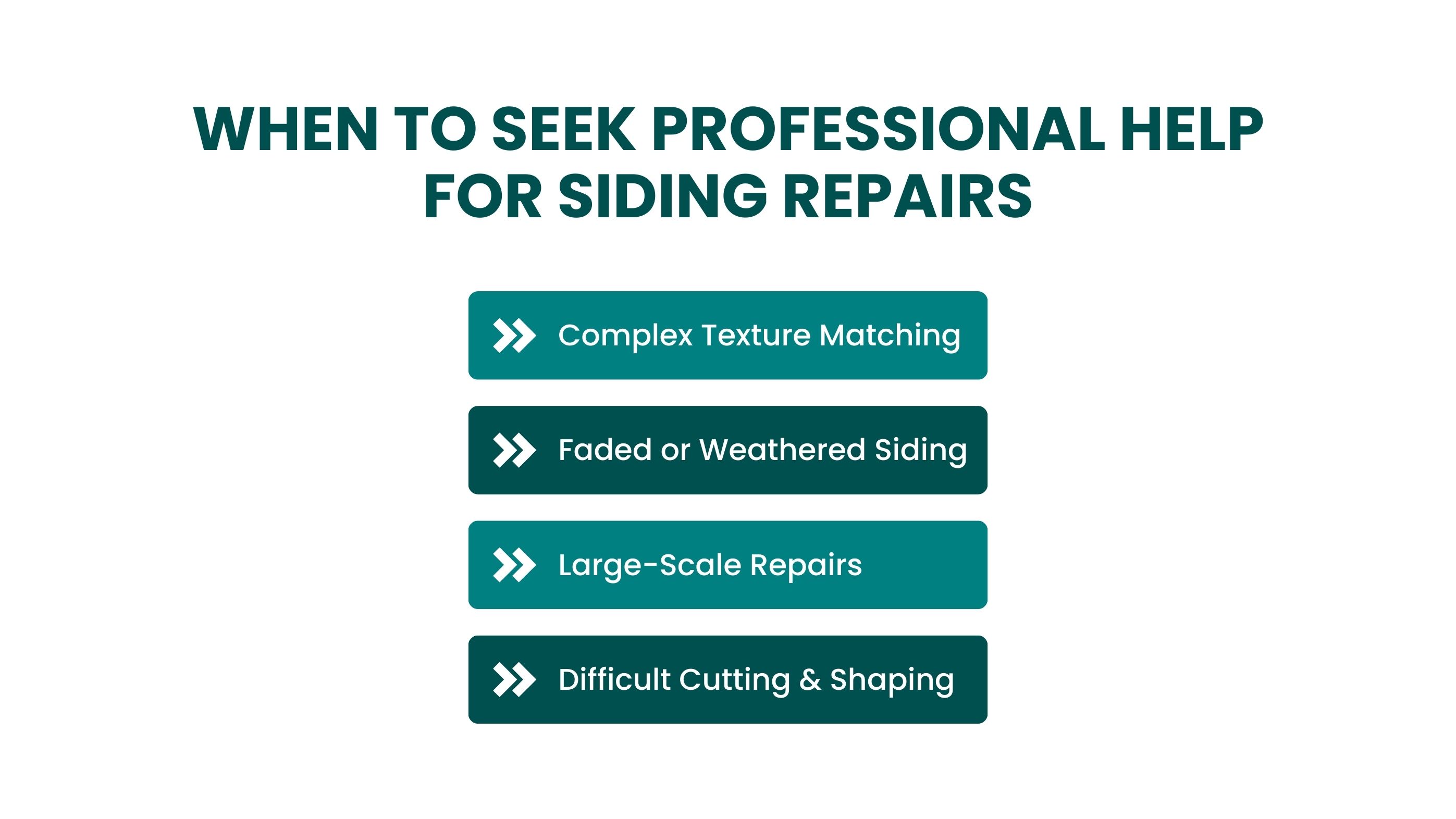
Although DIY repairs are possible for basic siding fixes, there are certain scenarios where achieving a flawless match might be out of reach without professional assistance:
The cost of matching and blending siding repairs can vary widely depending on the materials used, the complexity of the repair, and whether professional services are required. Understanding these costs helps homeowners budget appropriately for their siding repairs. Here's a detailed breakdown:
Labor costs for siding repairs depend largely on the type of siding material, as each material requires different handling, tools, and expertise:
Vinyl is relatively easy to work with, so labor costs are typically lower. Repairs often involve simple panel replacement or caulking, making labor costs for vinyl siding around $50–$75 per hour. If color or texture matching is required, additional work may slightly increase the cost.
Wood siding is more labor-intensive due to the need for precise cutting, staining, and finishing. Labor costs for wood siding repairs can range from $70–$100 per hour, depending on the level of detail and the need for refinishing or matching the wood grain.
Fiber cement is dense and difficult to cut, requiring specialized tools. This increases both labor time and costs. Labor for fiber cement repairs typically ranges from $80–$120 per hour, with additional time needed for cutting and precise installation to ensure a perfect blend.
| Siding Material | Labor Cost | Details |
|---|---|---|
| Vinyl Siding | $50–$75 per hour | Simple panel replacement, lower cost |
| Wood Siding | $70–$100 per hour | More labor-intensive, detailed work |
| Fiber Cement | $80–$120 per hour | Requires specialized tools and cuts |
| Composite Siding | $70–$90 per hour | Labor-intensive for matching finish |
Matching siding repairs to your existing color, texture, and style is key to maintaining the visual appeal and value of your home. A seamless repair not only enhances curb appeal but also ensures your home remains protected from the elements for years to come. Whether you choose to tackle small repairs yourself or hire a professional for more intricate jobs, achieving a perfect match will ensure your home looks cohesive and well-maintained.
From selecting the right materials to using precise cutting and finishing techniques, every detail counts in making sure the new sections blend seamlessly with the existing siding. While DIY repairs can be effective for minor fixes, professional help can make a significant difference when it comes to large-scale repairs, complex textures, or color matching. Ultimately, taking the time to ensure a flawless siding repair will improve both the aesthetics and long-term durability of your home.
To match new siding with your existing color, either choose the same manufacturer’s color or use a custom-matching service from a professional.
Yes, you can paint siding repairs as long as you use high-quality exterior paint that matches both the finish and color of your existing siding.
Ensure the new siding matches the texture, color, and style of the existing siding by using the same material or applying matching paint or stain to the new sections.
To match the texture, carefully cut and shape the new siding and use appropriate finishing techniques (such as staining, painting, or texturing) to ensure a seamless look.
The cost to blend siding repairs depends on the material, labor, and whether you hire a professional. On average, expect to pay between $200–$800 for most siding projects.
Join our mailing list for exclusive updates, expert tips, and special offers tailored to your needs. Be the first to know about the latest in home services.

Renovize Home is a platform that supports homeowners from planning to renovation. Whether it’s Renovize AI for guidance or a one-on-one call with Pro Finder, we understand your project and match you with local contractors tailored to your needs.
Who We Are
About Renovize HomeGet in TouchHomeownwer Support:
Coming Soon!
General Inquiries:
support@renovizehome.com
Head Office:
24 Greenway Plaza, STE 1800M, Houston, TX 77046.