
Explore All
BROWSE BY CATEGORY
Interior
Exterior
Home Essentials
Homeowner Tools
Blogs & Guides
Find a Pro
Book Your Appointment Now
Home Essentials
About Renovize Home
Explore All
BROWSE BY CATEGORY
Interior
Exterior
Home Essentials
Homeowner Tools
Blogs & Guides
Find a Pro
Book Your Appointment Now
Home Essentials
About Renovize Home
Last Updated 2025-12-16
Home exteriors naturally lose vibrancy as years of sunlight, wind, rain, and temperature changes weaken their original finish. Faded siding makes a house look older than it really is, affects curb appeal, and signals that the protective surface is wearing thin. Even if the structure beneath is still solid, dull and weather-stained siding can lower property value and make maintenance issues harder to spot.
Replacing aged or sun-damaged siding gives homeowners a fresh exterior that looks clean and modern. It does more than improve appearance. New siding helps seal out moisture, reduces heat loss, keeps pests away, and protects wall framing from hidden deterioration. It also offers access to improved materials such as vinyl, fiber cement, steel, or engineered wood that hold color better and require fewer repairs over time.
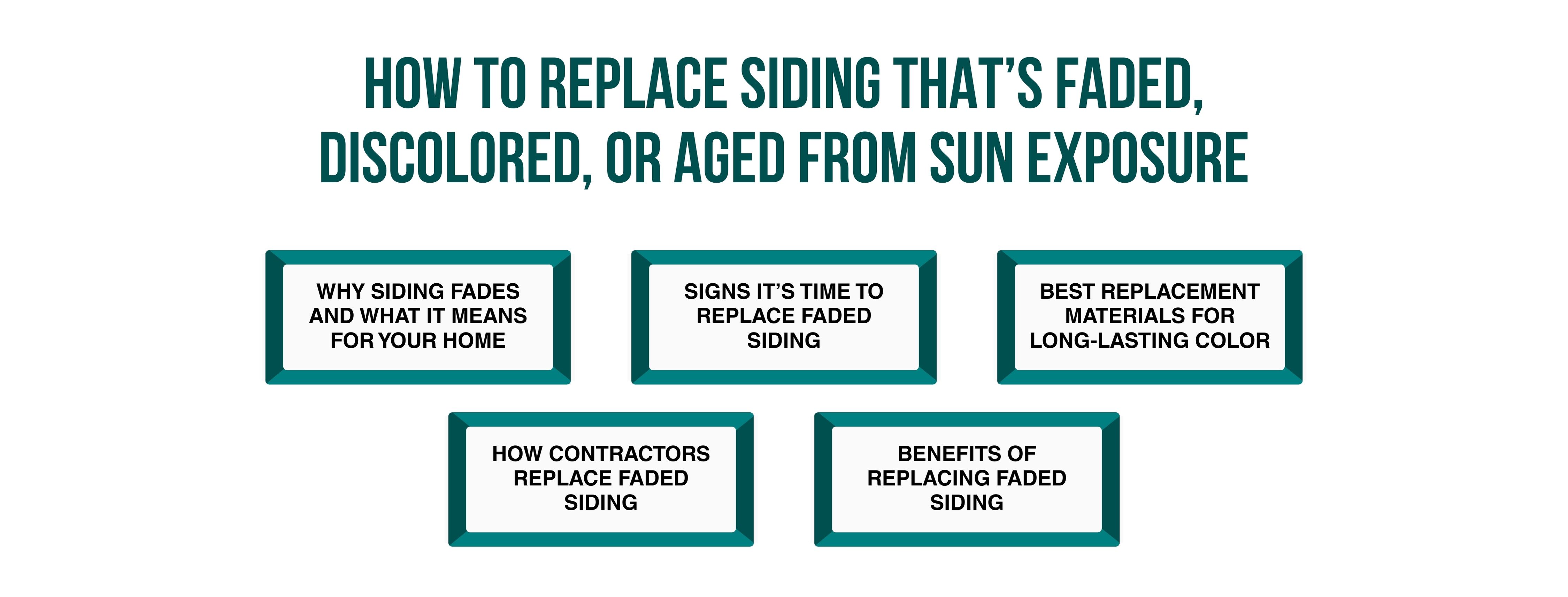
Table of Contents
Why Siding Fades and What It Means for Your Home
How to Replace Faded Siding
Signs It’s Time to Replace Faded Siding
Best Replacement Materials for Long-Lasting Color
Cost Factors for Replacing Faded Siding
Benefits of Replacing Faded Siding
Final Thoughts
Siding fading is more than a cosmetic issue—it’s often the first visible sign that the exterior surface is breaking down. Over time, sunlight, moisture, pollution, and natural aging slowly degrade the protective coating that keeps siding strong and weather-resistant. Once that layer weakens, siding absorbs moisture faster, collects dirt more easily, and becomes more vulnerable to cracking or heat damage.
Fading usually appears first on sun-exposed walls, creating uneven color across the home. While the structure underneath may still be intact, dull or washed-out siding reduces curb appeal and can mask early material failure. In many cases, visible fading precedes more serious issues like brittleness, chalking, or peeling by 3–7 years, signaling that replacement planning should begin.
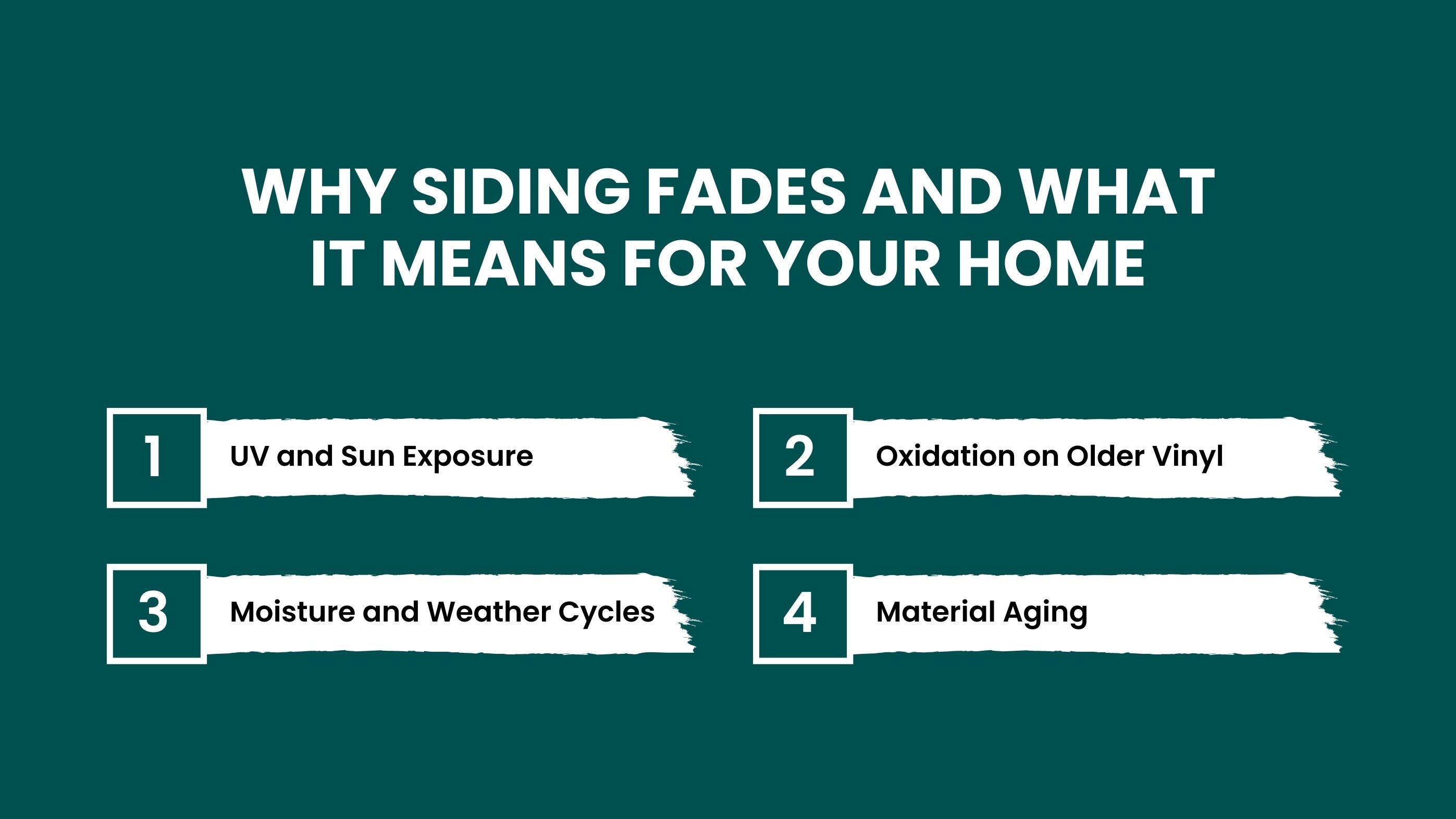
Daily sun exposure is the leading cause of siding color loss. Ultraviolet rays break down pigment molecules, while repeated heat exposure dries out surface coatings. South- and west-facing walls often fade 30–50% faster than shaded areas. Homes in bright climates or surrounded by reflective surfaces such as concrete or light-colored pavement experience accelerated fading due to increased heat absorption.
Older vinyl siding commonly fades due to oxidation, a process where the protective surface layer dries out and degrades. This creates a chalky residue that transfers to hands or clothing when touched. Once oxidation begins, vinyl loses flexibility and becomes more prone to cracking or warping. At this stage, cleaning rarely restores color, and siding typically reaches the end of its functional life within 5–10 years.
Siding constantly expands and contracts as it absorbs rain, dries in sunlight, and cools overnight. These repeated weather cycles wear down coatings faster, especially in regions with frequent storms or high humidity. Moist environments can increase staining and surface breakdown by 20–40%, leading to blotchy discoloration, peeling, and material fatigue that pressure washing cannot fix.
All siding materials have a natural cosmetic lifespan. Painted wood often begins fading within 5–8 years without refinishing. Fiber cement gradually lightens over decades of exposure. Older vinyl loses color depth and flexibility as it nears the end of its service life, typically 20–30 years. When fading spreads across large sections, it indicates the material’s protective qualities are no longer effective.
Replacing faded siding means removing worn exterior panels and installing new ones that restore protection and appearance. Faded siding usually appears after 15–30 years, depending on material and sun exposure, and once color breakdown starts, moisture absorption increases by 20–40%. Replacing siding at this stage helps prevent hidden wall damage and extends the home’s exterior lifespan by decades.
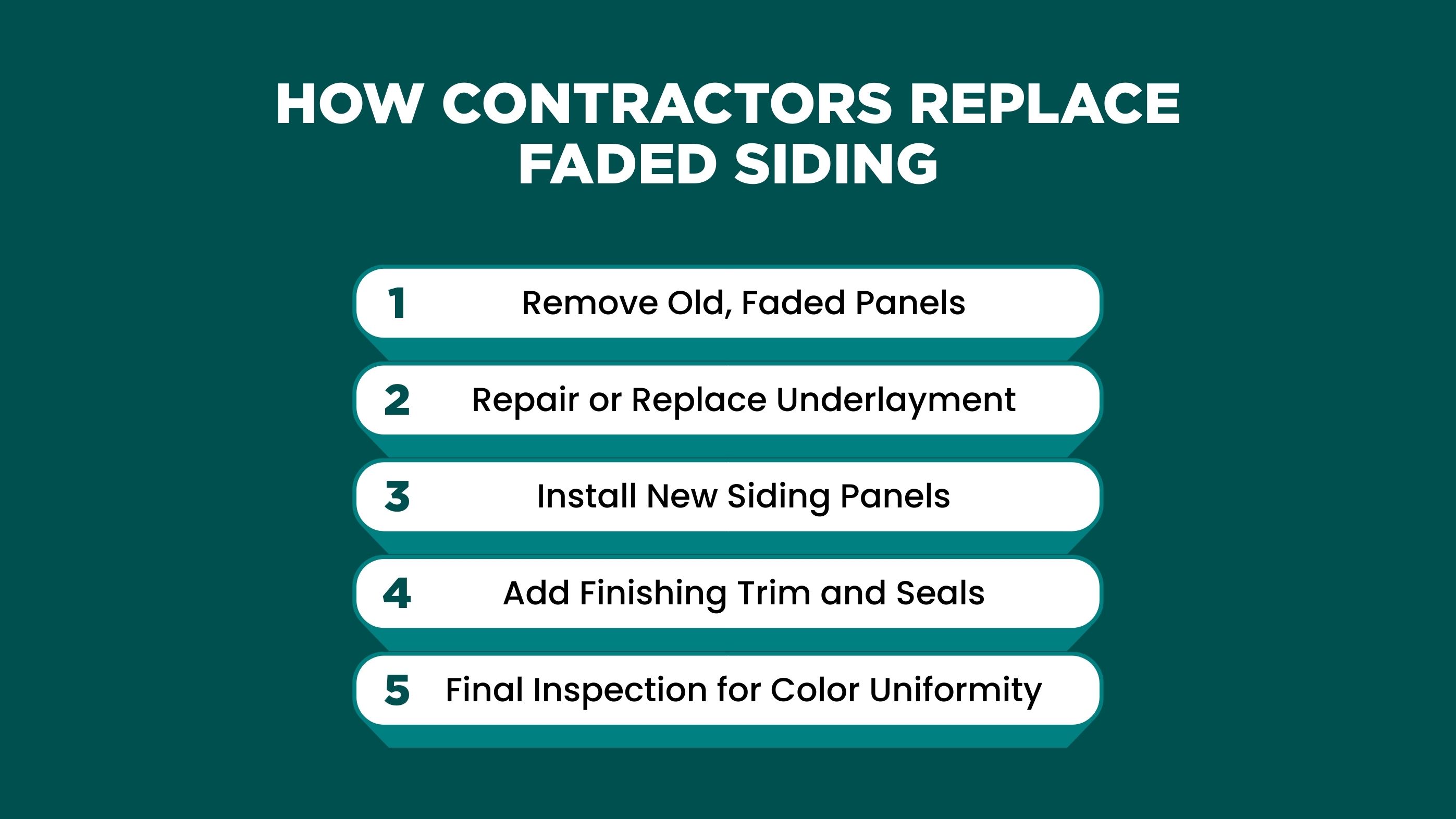
Begin by removing old siding panels section by section. This process exposes the wall sheathing so moisture stains, rot, or insect damage can be identified early. In many homes, 1 out of every 4 siding replacements reveals minor wall damage that must be addressed before new panels are installed.
With siding removed, installers inspect the exposed wall system. Soft wood, loose panels, or small cracks are repaired to restore stability. Fixing these issues at this stage can prevent repair costs that are often 3–5 times higher if moisture problems are left hidden behind new siding.
A new moisture barrier is installed over the wall surface to block rain and humidity while allowing trapped vapor to escape. Properly installed barriers can reduce water intrusion by up to 90%, helping protect insulation and framing from future damage.
New siding panels are installed from the bottom up and aligned carefully to keep lines straight. Panels are fastened to allow natural movement, which can range up to ½ inch with temperature changes. This prevents cracking, buckling, and uneven surfaces over time.
Trim pieces and sealants are added around windows, doors, and corners. These areas account for nearly 70% of siding-related leaks when improperly sealed. Correct trim installation keeps water and air from entering behind the siding and improves overall durability.
The project finishes with a full inspection to confirm panel alignment, color consistency, and tight seams. Installers check that all edges are sealed and fasteners are secure. This final step ensures the siding performs reliably for 20–50 years, depending on the material used.
Fading often reveals deeper wear beneath the surface. As siding loses color, it usually also loses strength, moisture resistance, and insulating performance. When multiple warning signs appear together, replacement becomes more cost-effective than ongoing maintenance.
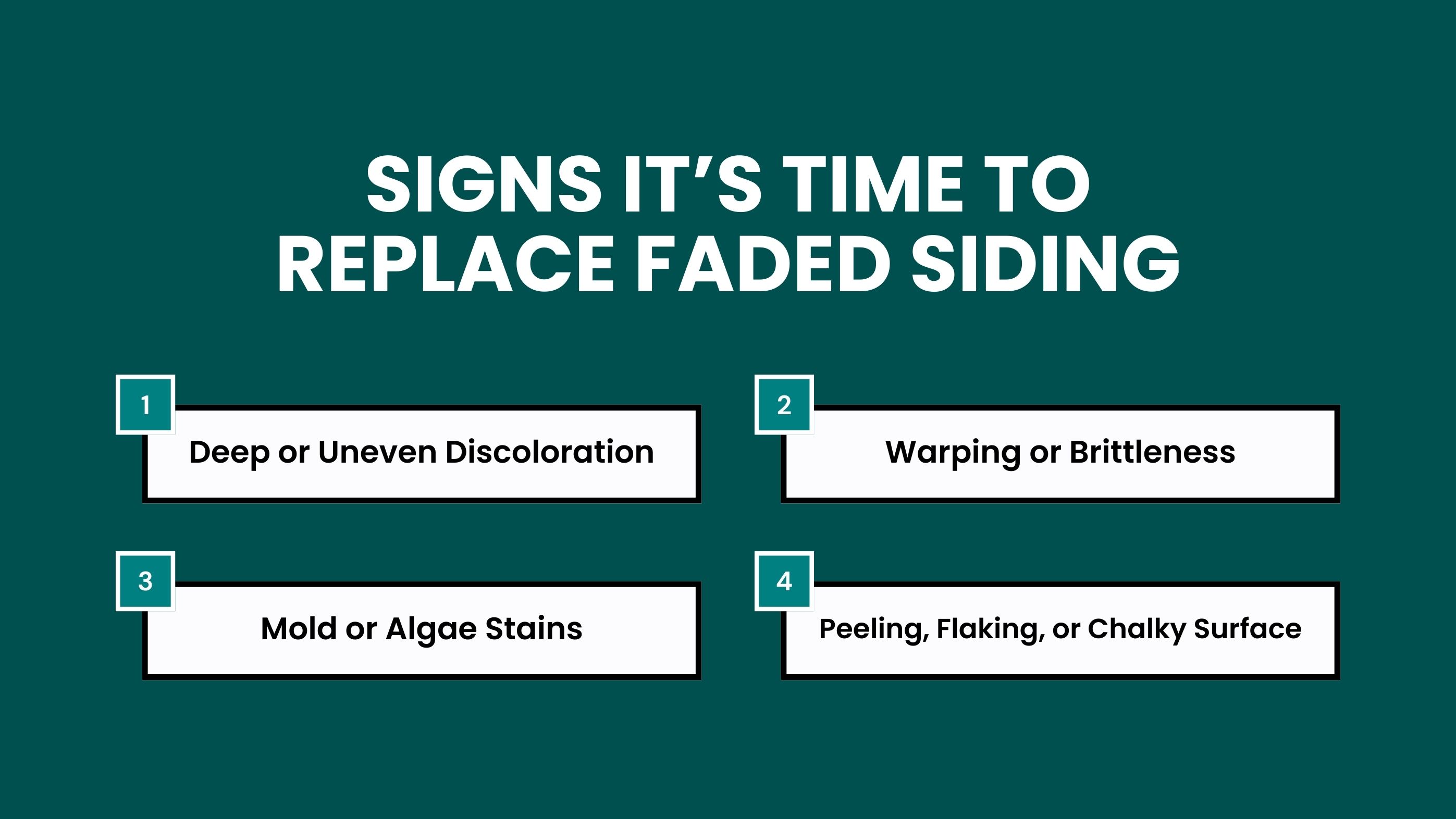
Uneven fading, streaks, or patchy color show that protective coatings have failed at different rates. This causes inconsistent weather resistance across the home. Once discoloration reaches this level, repainting or cleaning rarely lasts more than 1–2 years, because the base material has already deteriorated.
Faded siding that feels brittle, cracked, or warped signals heat damage and structural fatigue. Sun-dried panels lose flexibility, allowing gaps that invite moisture and pests. These changes usually indicate advanced deterioration and cannot be reversed with surface treatments.
Mold or algae stains that return after cleaning suggest moisture is trapped behind the siding. When siding holds moisture, the risk of hidden rot and insulation damage increases significantly. Persistent staining often appears before interior odor or wall damage becomes noticeable, making it an early replacement indicator.
A chalky residue or peeling surface means the outer protective layer has fully eroded. At this stage, siding becomes porous, absorbing water and dirt rapidly. Repainting or refinishing typically fails within a short time, as underlying layers can no longer support coatings.
Modern siding materials are engineered to resist fading, reduce maintenance, and maintain color far longer than older products. Replacing faded siding with updated materials improves both appearance and long-term protection.
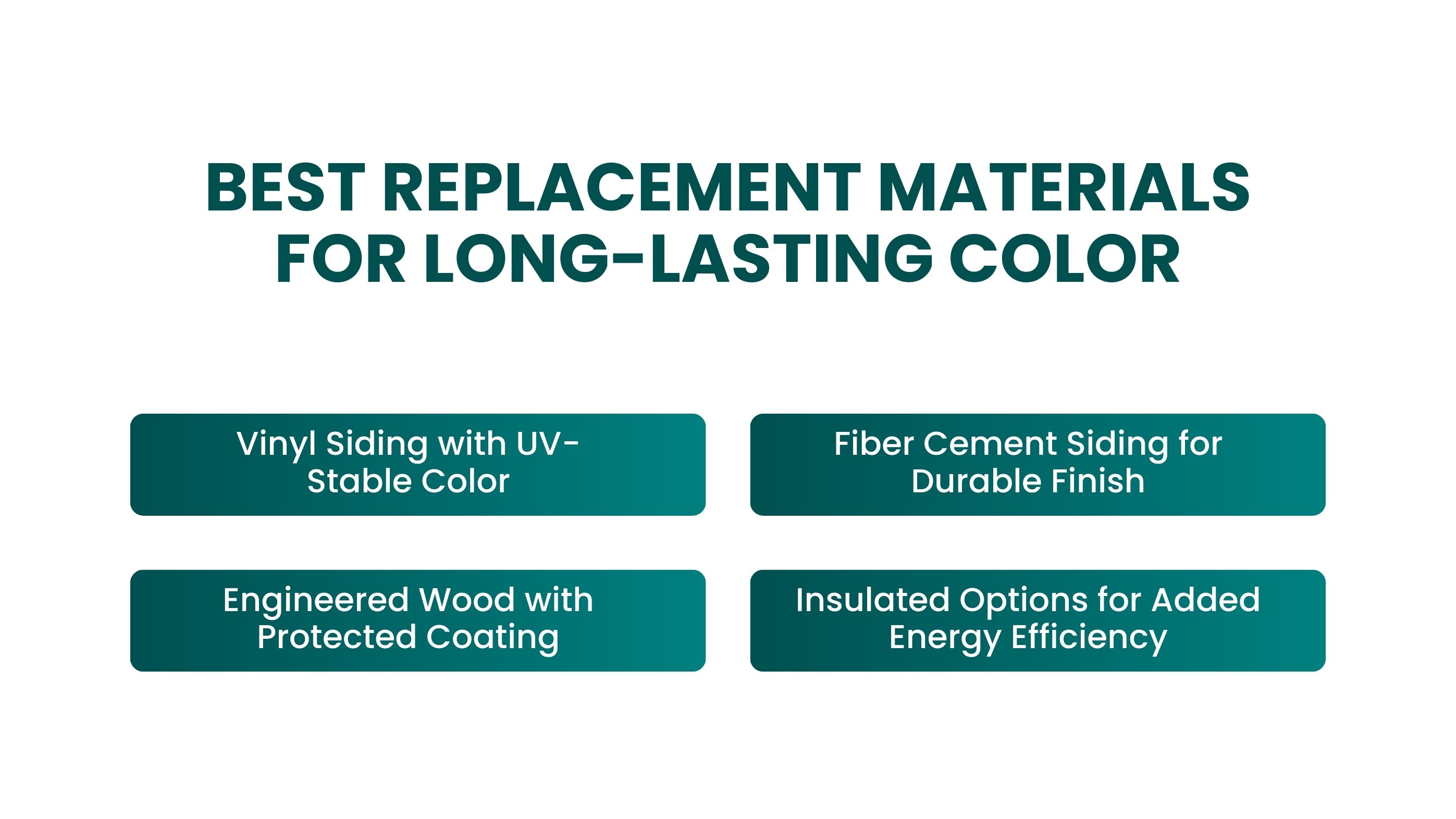
Modern vinyl siding uses color blended through the material rather than applied only on the surface. UV inhibitors slow pigment breakdown, helping vinyl retain color 10–15 years longer than older versions. It resists chalking, never needs repainting, and remains one of the lowest-maintenance options available.
Fiber cement siding uses factory-applied coatings that bond tightly and resist sun damage. These finishes typically retain color 25–30 years with minimal fading. The material’s density also helps it withstand heat, wind, and seasonal weather shifts with little surface wear.
Engineered wood siding combines wood fibers with protective resins and baked-on coatings. This layered construction seals out moisture and slows fading while preserving a natural appearance. Compared to traditional wood, engineered options reduce repainting frequency by 50% or more
Insulated siding includes a foam backing that supports panels and reduces heat transfer. This design helps protect color by limiting temperature stress and can improve energy efficiency by 5–10%. For homeowners replacing faded siding, insulated panels provide both visual renewal and comfort benefits.
Replacing faded siding is an investment, and costs vary from home to home. Prices change based on the type of material chosen, how much preparation is needed, and the labor involved in installation. Understanding what influences pricing helps homeowners plan realistically and make confident decisions.
Different siding products come with different price ranges and lifespans. Vinyl is typically the most budget-friendly and low-maintenance, while fiber cement and engineered wood offer more durability and richer finishes but cost more upfront. Higher-grade materials often last longer, resist fading better, and require fewer repairs over time, which can balance their initial cost.
Taking off old siding affects pricing because some materials are harder to remove than others. Brittle panels crack easily, older layers may require extra cleanup, and homes with multiple siding layers need more labor to strip everything down. The more time it takes to remove and dispose of existing panels, the more the overall installation cost increases.
Siding replacement often reveals hidden problems such as rotten sheathing, mold, pest damage, or missing moisture barriers. Fixing these issues is essential before installing new siding, but it adds to the total cost. Repairing insulation, replacing damaged boards, or installing new weather barriers ensures the siding performs well but requires additional labor and materials.
Homes with simple wall lines are faster and cheaper to side than homes with complex features. Extra corners, roof lines, trim details, vaulted areas, and multiple windows or doors increase cutting, fitting, and sealing work. These areas demand precision and add time, which raises installation costs. Larger square footage and two-story layouts also influence overall pricing due to additional material and labor needs.
| Home Size / Project Type | Typical Cost Range | What Affects Price |
|---|---|---|
| Small home or partial replacement | $4,000 – $9,500 | Limited walls, basic vinyl |
| Average full home replacement | $10,000 – $22,000 | Material choice, prep work |
| Large home or premium materials | $18,000 – $40,000+ | Fiber cement, engineered wood, trim upgrades |
Updating faded siding does more than make your home look better. It restores the protective layer your exterior needs to stay dry, energy efficient, and structurally strong. New siding materials are designed to last longer, resist wear, and require far less upkeep than older finishes, making replacement a smart improvement with both practical and financial rewards.
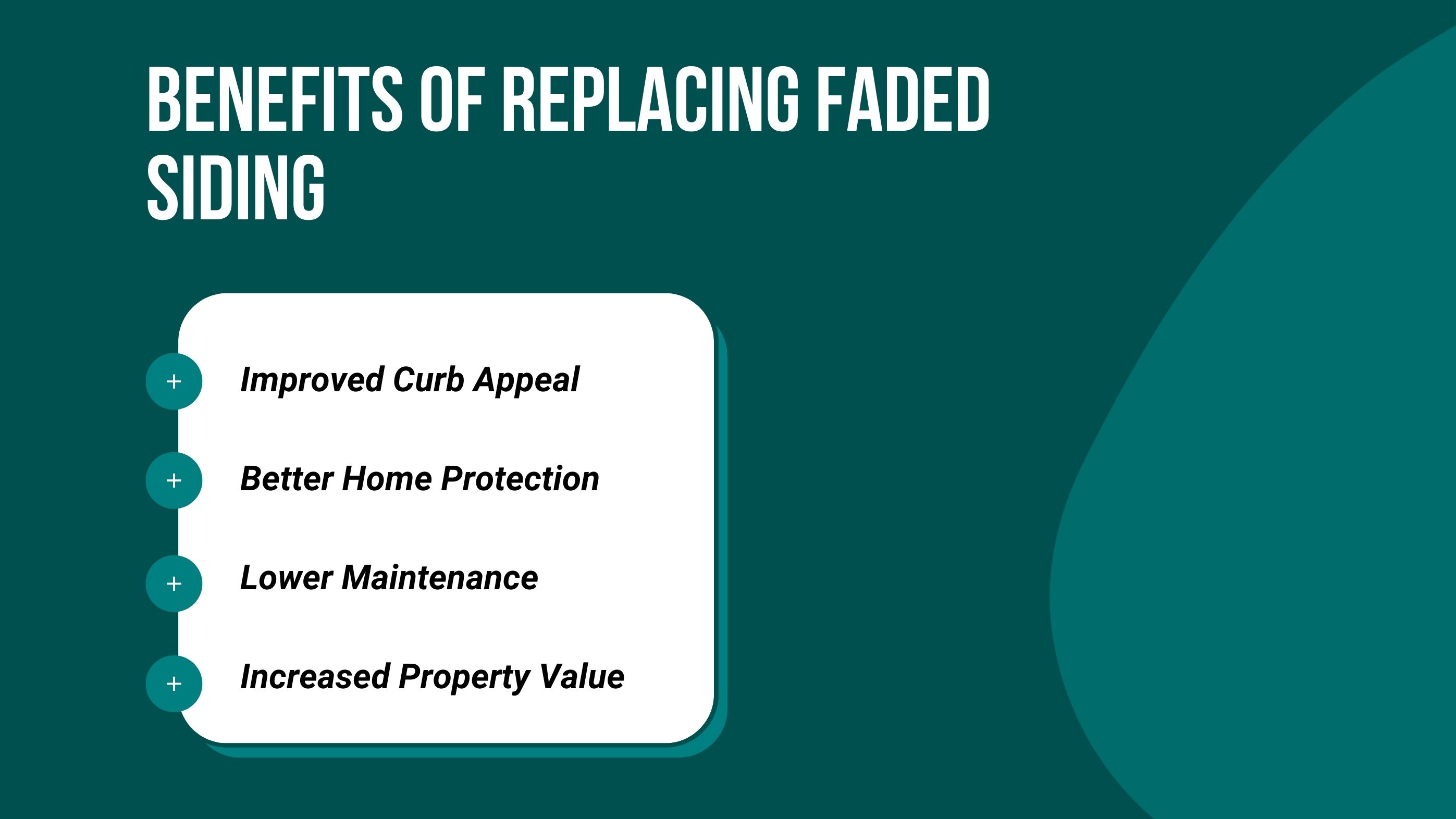
A fresh, even exterior gives homes an immediate facelift. Consistent color, clean lines, and modern textures make the property look newer and well cared for. Whether you want to enjoy a nicer-looking home or attract potential buyers, upgraded siding instantly elevates exterior style and pride of ownership.
New siding acts as a stronger shield against everyday elements. Today’s products are built to block moisture, resist UV exposure, and keep pests out of wall cavities. With a tighter installation and better sealing, replacement siding helps prevent rot, mildew, and heat loss, keeping the home safer and more comfortable year-round.
Modern siding is engineered to hold its color and finish without constant work. Unlike older materials that needed repainting or frequent scrubbing, new options resist fading, staining, and peeling. A quick rinse is often all it takes to keep the exterior looking clean, allowing homeowners to enjoy a long-lasting appearance with far fewer chores.
Buyers notice a well-maintained exterior, and siding replacement is one of the upgrades that delivers strong return on investment. A fresh façade signals that the home has been cared for and protected, which boosts confidence and interest. Upgraded siding can help homes sell faster and for more money, making it a wise improvement whether you plan to stay or sell in the future.
Replacing siding that has lost its color is more than a cosmetic refresh. It restores the home’s first layer of protection, keeps moisture out, and prevents hidden rot from slowly developing behind wall panels. Modern siding materials keep their color longer, reduce maintenance work, and improve curb appeal instantly. For homeowners planning to sell or simply wanting a cleaner, healthier exterior, siding replacement delivers strong value and long-term peace of mind.
Waiting too long can lead to structural repairs, insulation damage, or higher energy bills. Acting early means you upgrade both appearance and protection while avoiding costlier issues later. Whether you prefer vinyl, fiber cement, or engineered wood, today’s options give you better durability, improved fade resistance, and a more polished look.
Mild fading can be refreshed with exterior paint, but when discoloration is severe or panels have become brittle, painting only hides the problem temporarily. In those cases, replacement is the better long-term solution because it restores both appearance and protection.
Modern siding materials are engineered to hold color for many years. High-quality vinyl, fiber cement, and engineered wood can stay vibrant for decades, especially when cleaned occasionally and installed with proper underlayment.
Fading itself is cosmetic, but it often signals that the protective surface is wearing thin. If fading is paired with warping, chalking, or staining, the siding has likely weakened and may soon allow moisture or pests into the wall system.
Yes, new siding improves curb appeal, strengthens weather protection, and reassures buyers that the home has been updated. These benefits often lead to higher resale value and more interest from potential buyers.
Fiber cement and updated vinyl made with UV-stable pigments deliver excellent fade resistance. They maintain their finish well in sunny climates and require minimal maintenance to stay looking new.
Join our mailing list for exclusive updates, expert tips, and special offers tailored to your needs. Be the first to know about the latest in home services.
Renovize Home is a platform that supports homeowners from planning to renovation. Whether it’s Renovize AI for guidance or a one-on-one call with Pro Finder, we understand your project and match you with local contractors tailored to your needs.
Who We Are
About Renovize HomeGet in TouchHomeownwer Support:
Coming Soon!
General Inquiries:
support@renovizehome.com
Head Office:
24 Greenway Plaza, STE 1800M, Houston, TX 77046.