
Explore All
BROWSE BY CATEGORY
Interior
Exterior
Home Essentials
Homeowner Tools
Blogs & Guides
Find a Pro
Book Your Appointment Now
Home Essentials
About Renovize Home
Explore All
BROWSE BY CATEGORY
Interior
Exterior
Home Essentials
Homeowner Tools
Blogs & Guides
Find a Pro
Book Your Appointment Now
Home Essentials
About Renovize Home
Last Updated 2025-12-18
Siding lasts much longer when small issues are repaired early and routine maintenance keeps moisture, pests, and weather from damaging the exterior. Instead of waiting for panels to warp, crack, loosen, or rot, homeowners can extend siding lifespan by making targeted repairs at the right time and following simple preventive habits. From fixing a loose board to addressing early signs of moisture damage, these small actions protect the home’s structure and help siding perform as it should.
Understanding how siding ages, where damage typically starts, and which maintenance steps matter most allows homeowners to keep their exterior looking clean, stable, and weather-resistant for years. With the right approach, even older siding can remain strong and functional without needing full replacement.
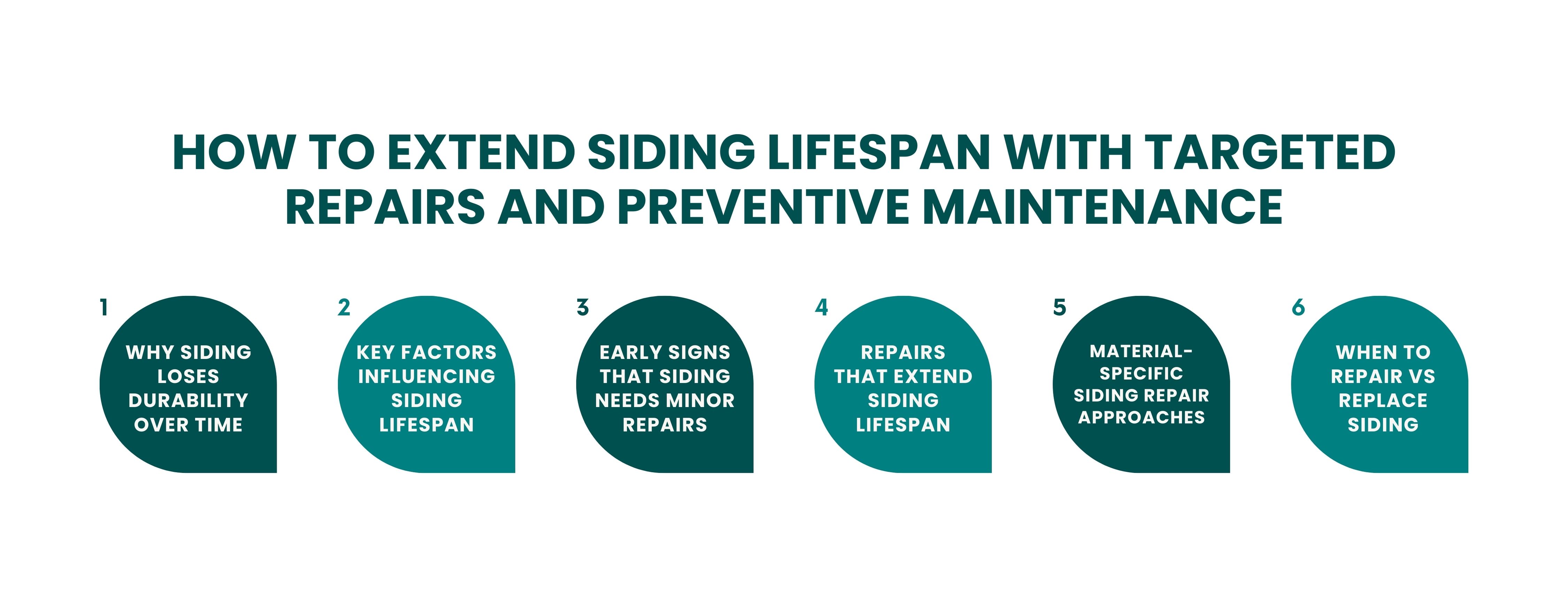
Table of Contents
Why Siding Loses Durability Over Time
Factors That Influence the Lifespan of Your Siding
Early Signs That Siding Needs Minor Repairs
Repairs That Increase Siding Lifespan
Material-Specific Repair Approaches
Preventive Steps That Help Siding Last Longer
When Repairs Are Enough vs When Replacement Is Necessary
Cost Factors for Lifespan-Extending Siding Repairs
Final Views
Siding gradually loses strength as it faces years of weather exposure, temperature changes, and moisture cycles. Even high-quality siding will wear down over time if these elements repeatedly stress the material. Understanding these natural durability losses helps homeowners spot early problems and take preventive steps before major repairs are needed.
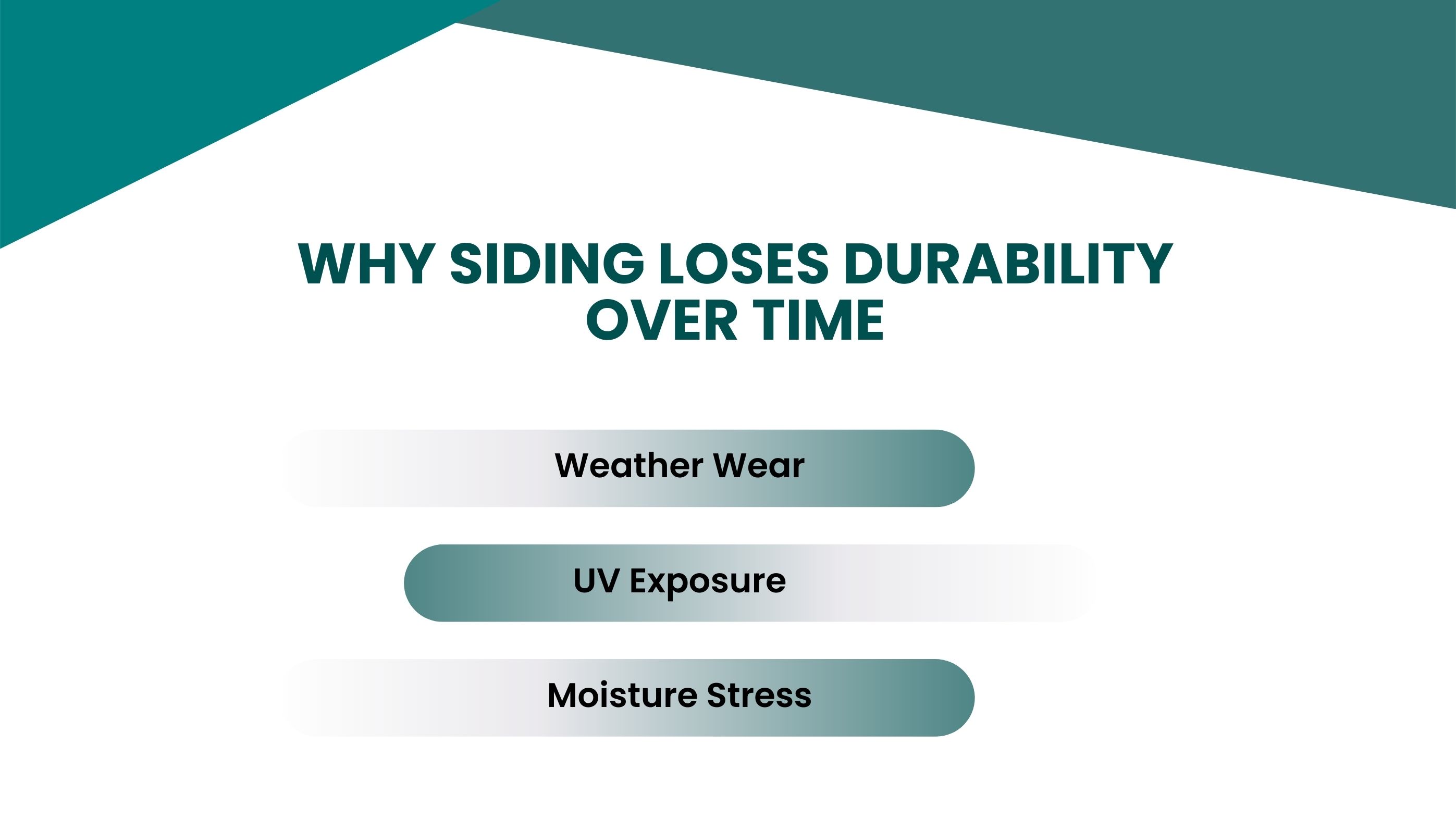
Seasonal weather patterns slowly weaken siding boards. Wind, rain, hail, and temperature swings place constant pressure on the material, causing it to expand, contract, and face surface erosion. Over many years, this repeated stress leads to small cracks, loosened panels, and weakened edges. Homes in storm-prone or high-wind areas tend to show these signs sooner.
Constant sunlight breaks down the surface finish of siding, especially on south- and west-facing walls. UV rays cause fading, brittleness, and chalking, which reduces the siding’s protective coating. As the outer layer weakens, the board becomes more vulnerable to cracking and moisture penetration. Darker siding colors usually show UV wear more quickly.
Moisture is one of the most damaging elements for siding. Rain, humidity, and trapped condensation can cause swelling, rot, mold, or warping. Even a small gap in caulking or flashing allows moisture to slip behind the siding and weaken the board from the inside out. Homes near heavy rainfall or high humidity require extra maintenance to combat moisture-related deterioration.
Beyond natural weathering, several long-term factors determine how well siding performs and how long it lasts. These include material selection, installation quality, local climate, and ongoing maintenance habits. Understanding these influences helps homeowners protect the siding they already have and choose better options for future repairs.
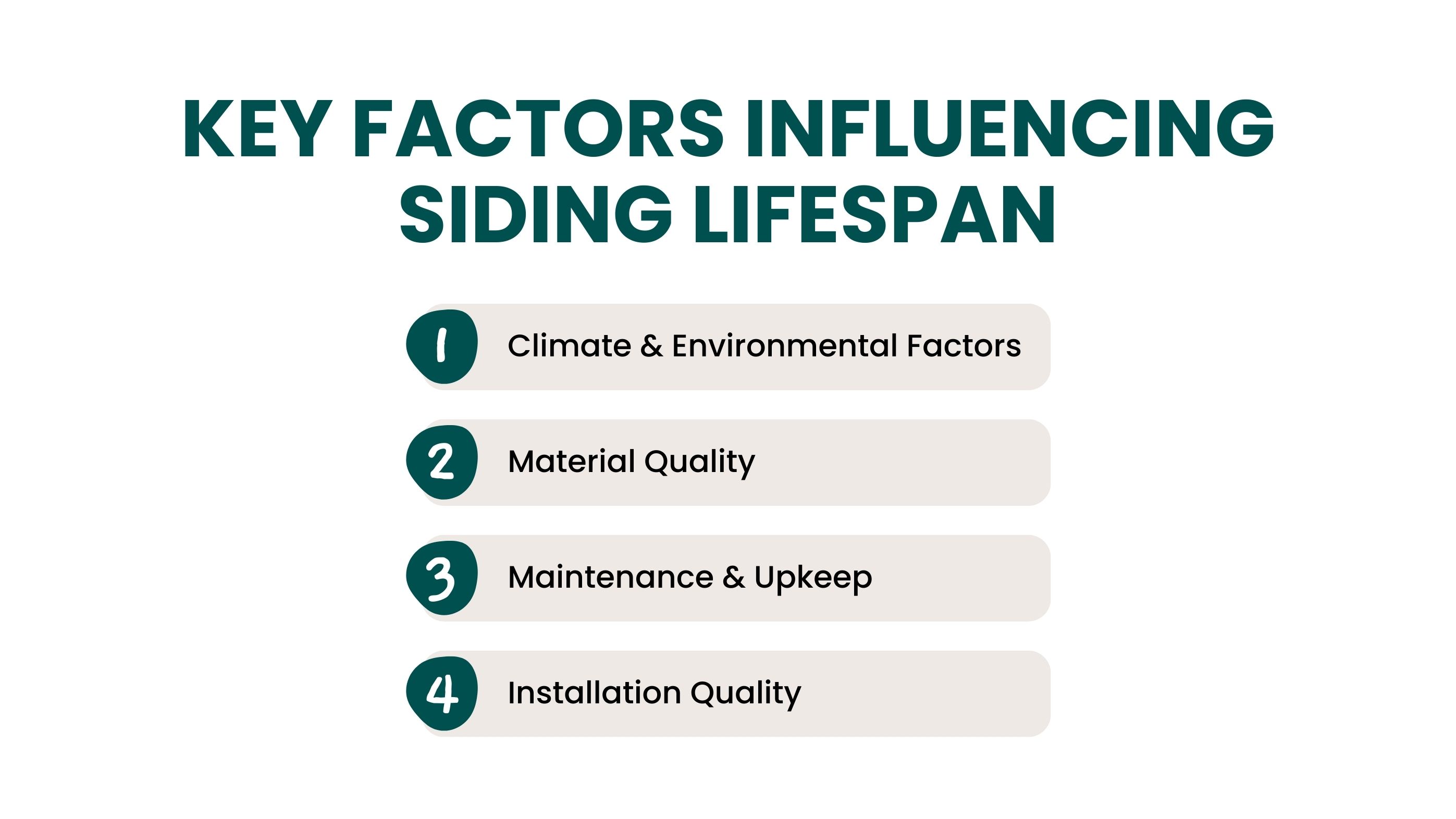
Different siding materials age at different rates. Vinyl siding is affordable and long-lasting when properly maintained, while fiber cement can last up to 50 years due to its resistance to rot and insects. Wood siding provides a natural appearance but has the shortest lifespan without regular sealing and painting. Choosing a durable, climate-appropriate material significantly improves long-term performance.
Local climate heavily affects siding lifespan. Homes exposed to extreme sunlight, heavy rainfall, or high winds tend to experience earlier deterioration. Different environmental pressures weaken siding in different ways, so matching material to climate is critical.
Siding that receives consistent cleaning, seasonal inspections, and timely repairs lasts far longer than siding left unattended. Removing dirt, checking caulk, tightening loose fasteners, and repainting or sealing exposed areas prevent minor issues from becoming structural problems. Even five minutes of care each season can make a noticeable difference in lifespan.
Even the best siding fails early if installed incorrectly. Improper fastener spacing, missing flashing, poorly aligned panels, or skipped moisture barriers all shorten siding lifespan. Professionally installed siding stays secure, drains water correctly, and resists wind or thermal stress far better than DIY jobs or rushed work.
Small issues appear long before siding fails completely. Catching these early signs allows homeowners to repair individual boards, protect the sheathing, and extend the entire system’s lifespan. These early indicators are subtle, but they signal that the siding is beginning to lose strength or weather protection.
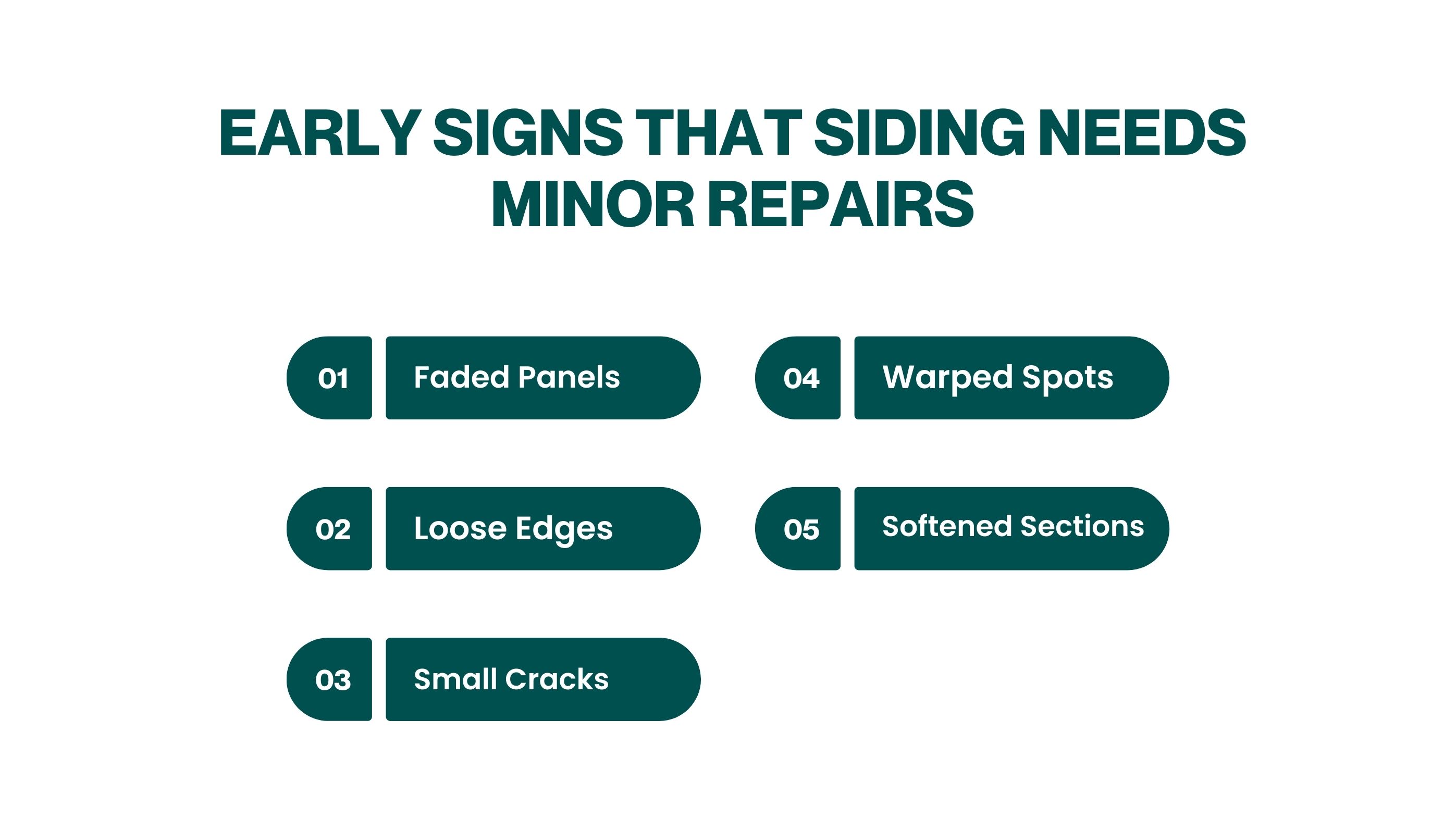
Fading is one of the earliest signs that siding is losing its UV protection. While discoloration alone doesn’t mean the siding has failed, it shows that the surface coating is wearing thin. Once the protective layer weakens, the board becomes more vulnerable to brittleness, cracking, and moisture absorption. Early surface care can prevent deeper deterioration.
Loose edges appear when panels begin pulling away from the wall due to wind pressure, shifting fasteners, or thermal expansion. Even a slight lift allows wind-driven rain to slip behind the siding and affect the sheathing. Tightening or re-securing these areas quickly prevents the problem from spreading to adjacent boards.
Small cracks develop from impact, sun exposure, or seasonal expansion. These cracks may look minor, but they allow moisture and air to enter the siding system. If ignored, small cracks expand into larger fractures and lead to rot or mold behind the wall. Spot repairs at this stage help preserve long-term durability.
Warping indicates that a section of siding is responding poorly to heat, moisture, or structural movement. Warped panels push outward, break alignment, or create gaps along seams. This makes the siding lose its weatherproof seal. Correcting warp early, before the board becomes permanently deformed, prevents the need for full replacement.
Soft areas usually mean moisture has reached the inner layers of the siding or the sheathing behind it. These sections feel spongy when pressed and often appear near lower walls or areas exposed to splashback. Soft spots are early warnings of deeper issues, such as:
Targeted repairs can significantly extend the life of existing siding by restoring stability, sealing moisture entry points, and reinforcing weak areas. These small interventions protect the home without requiring full siding replacement and keep the entire exterior performing as intended.
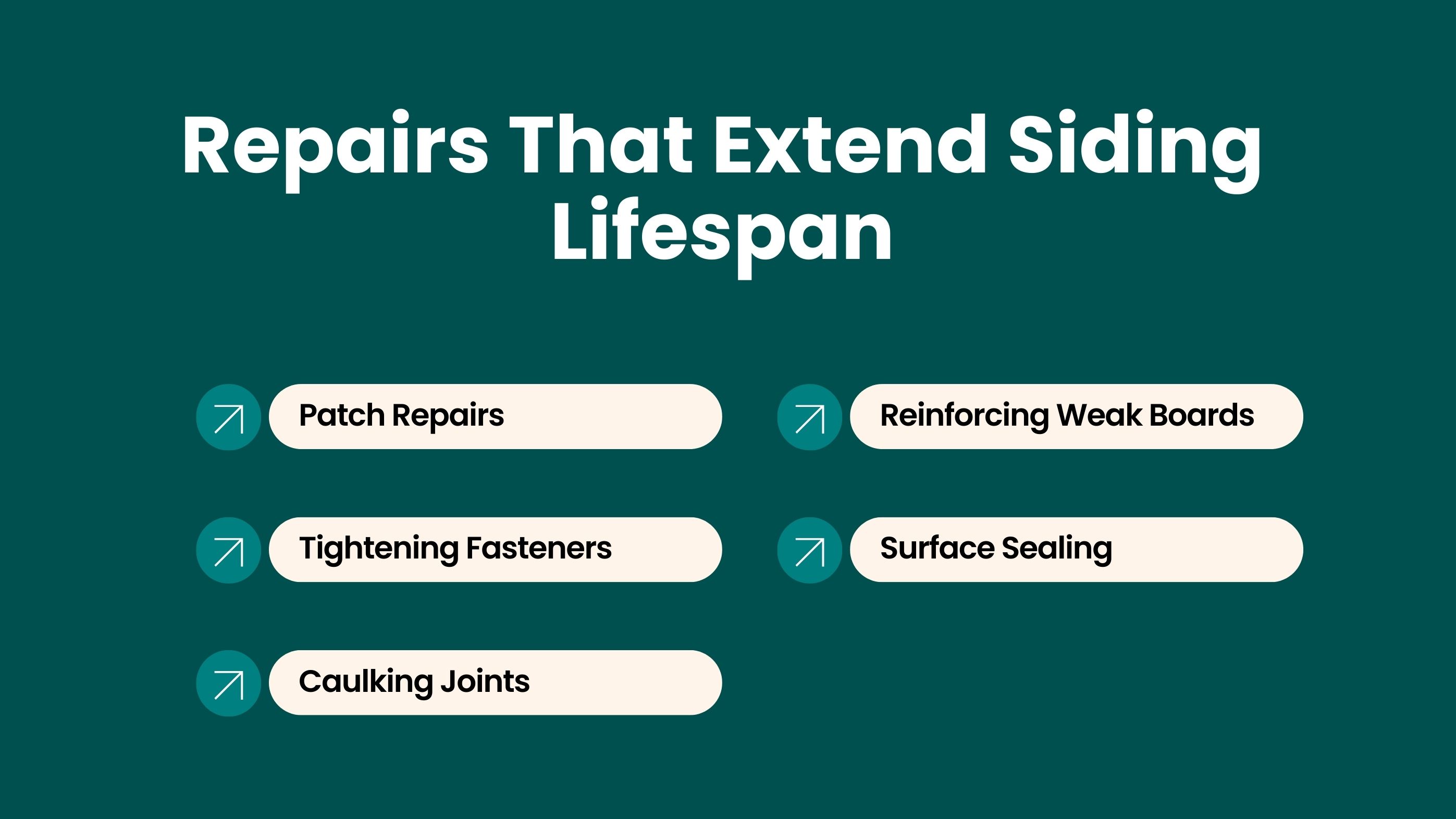
Patch repairs restore small dents, holes, or chips that appear after minor impacts or weather exposure. Using the correct exterior-grade filler or replacement patch prevents moisture from entering and strengthens the surface once again. This simple repair keeps damage from spreading and preserves the board’s protective layer.
Loose nails or screws cause siding panels to shift, vibrate in wind, or pull out of alignment. Re-tightening or replacing fasteners restores the board’s grip on the wall and prevents movement that can lead to cracks or edge damage. Proper fastening also helps the siding expand and contract naturally without strain.
Caulking fills small gaps around windows, doors, trim, and vertical seams. These areas are frequent entry points for moisture, especially during storms.
Some siding boards begin to bow or flex but have not yet fully cracked or warped. Reinforcing these sections, either with fasteners, backer support, or minor alignment adjustments, restores stability. This prevents the board from bending further and avoids premature replacement.
Surface sealing adds an extra layer of protection against UV, moisture, and temperature changes. Sealants or protective coatings slow down fading, reduce brittleness, and help the siding maintain its finish for years. This step is especially beneficial for wood, engineered wood, and older siding showing early signs of wear.
Different siding materials respond differently to damage, so each one requires a repair method suited to its strength, flexibility, and moisture behavior. Using the wrong repair technique can make the damage worse or shorten the siding’s lifespan. The following approaches match each material with the safest, most effective repair method.
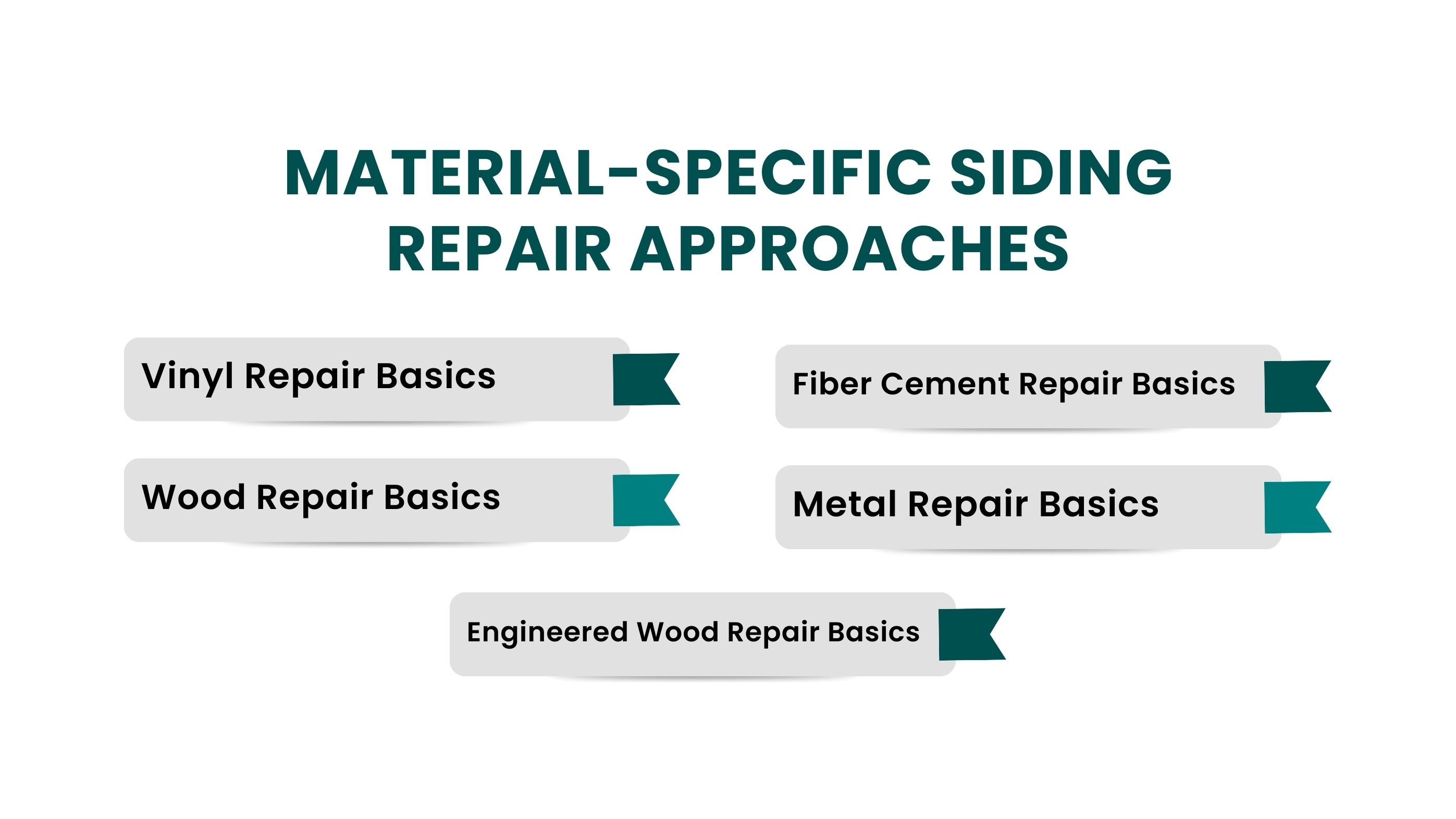
Vinyl siding is flexible and lightweight, making it one of the easiest materials to repair. Small cracks or dents can often be patched or heat-softened, while larger damage requires snapping in a replacement panel. Because vinyl expands and contracts with temperature change, repairs must maintain its loose-fastening method to prevent future warping. Matching profile and color is important so the repair blends with surrounding panels.
Wood siding repairs focus on moisture control and structural stability. Small holes or cracks can be filled with exterior wood filler, but softened or rotted sections must be cut out and replaced. Before installation, replacement boards are primed and sealed on all sides to prevent moisture absorption. Wood repairs must also maintain proper spacing to allow natural expansion and prevent splitting over time.
Fiber cement is rigid and requires careful handling during repairs. Small chips can be filled with approved cement patching products, but cracked or heavily damaged planks must be replaced entirely. Because fiber cement is brittle, installers use dust-controlled cutting tools and support the board to avoid breaking adjacent panels. After installation, edges are sealed to prevent moisture intrusion.
Metal siding repairs usually involve smoothing dents, tightening fasteners, or replacing severely bent panels. Aluminum and steel can dent easily but rarely crack, so localized damage can sometimes be corrected without full board replacement. Rust spots must be sanded, primed, and painted to prevent spreading. Proper sealing is important to avoid galvanic corrosion and maintain weather resistance.
Engineered wood siding is designed to resist moisture better than natural wood, but it still requires timely repairs when damage appears. Minor surface damage can be filled and repainted, while swollen or delaminated sections must be replaced. Repairs must maintain protective coatings, as exposed edges are vulnerable to water absorption. Proper sealing ensures long-term performance.
Regular maintenance slows down natural wear and prevents small issues from turning into structural damage. These simple preventive steps protect the siding from moisture, sun exposure, and fastener movement, the main causes of lifespan reduction.
A yearly inspection helps homeowners spot cracked boards, loose edges, failing caulk, and early signs of moisture damage. Checking key areas, like corners, rooflines, and around windows, makes it easier to address problems before they spread. Early detection is the most effective way to extend siding lifespan without costly repairs.
Cleaning siding prevents dirt, mold, and mildew from eating into the surface or trapping moisture. A soft-brush cleaning or low-pressure rinse removes buildup safely.
Painted and stained sidings need a fresh coating every few years to maintain UV and moisture protection. Repainting prevents sun-driven fading and creates a barrier against water penetration. Materials like wood, engineered wood, and fiber cement benefit the most from consistent surface protection. Proper sealing noticeably increases their overall lifespan.
Managing moisture around the home reduces nearly every type of siding damage. Clean gutters, extended downspouts, and proper grading help water move away from walls. Homes with heavy rainfall or irrigation systems need extra attention to prevent splashback. Reducing moisture exposure prevents swelling, rot, warping, and mold.
Loose or raised fasteners allow siding panels to shift, rattle, or detach during storms. Tightening or replacing them ensures the panels stay aligned and maintain their weatherproof seal. This small task prevents major issues like warped boards, water entry, or siding pulling away from the wall.
Knowing whether siding needs a small repair or a full replacement prevents overspending and protects the home’s structure. Minor cosmetic issues usually need simple fixes, while deeper moisture or structural failures require full board replacement. This section explains both clearly.
Sometimes, siding only experiences surface-level damage that does not affect its ability to protect the home. In these situations, repairing the board is safer, faster, and more cost-effective than replacing the entire section.
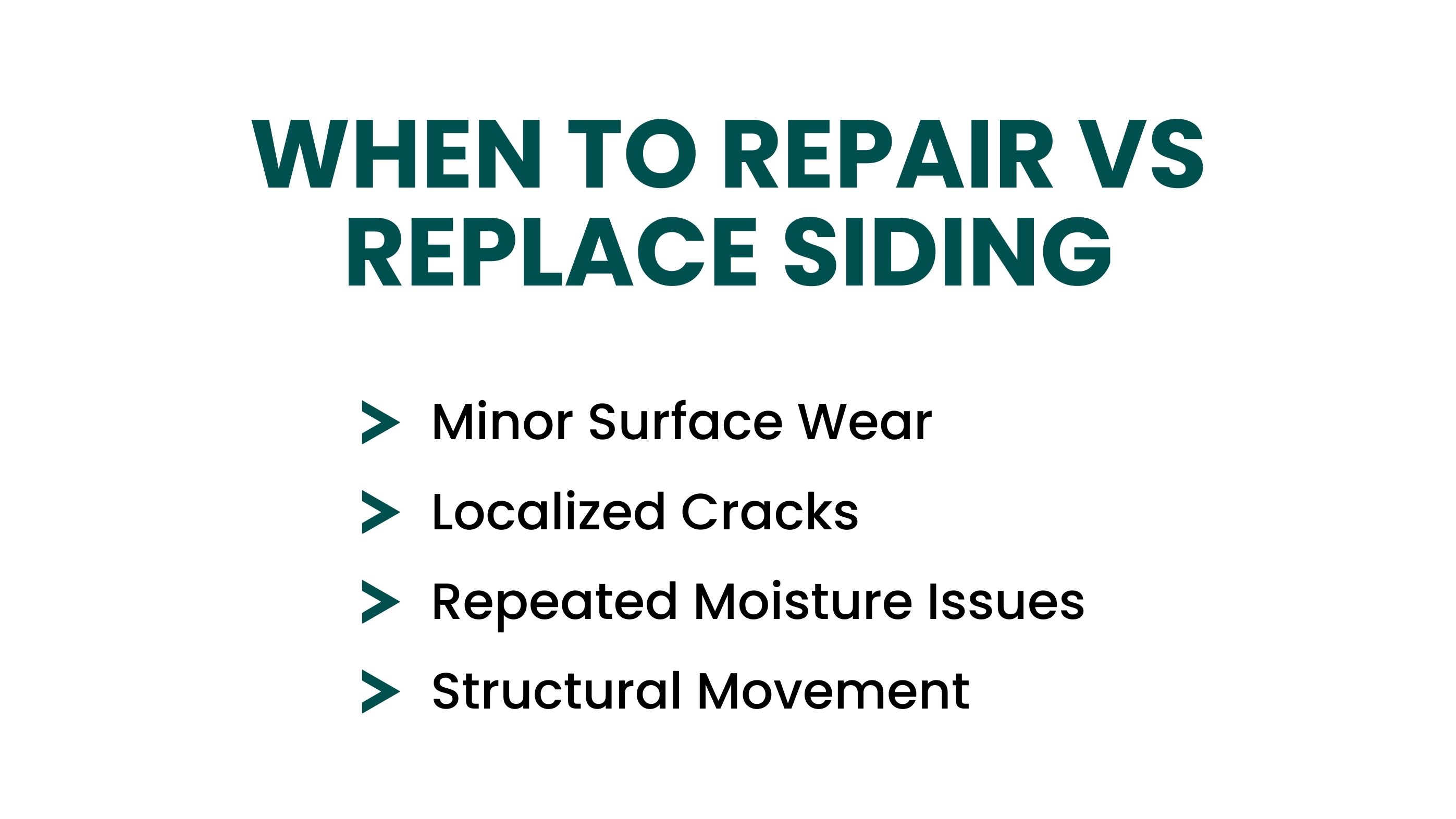
Minor wear happens when siding shows light, cosmetic changes but remains fully functional. This includes color fading, small dents, or scuffs that do not penetrate the material. The board’s structure is still strong, and moisture cannot enter through these surface marks. Repairs work when:
Localized cracks are small, isolated breaks that usually come from impacts or seasonal expansion. These cracks can often be filled, sanded, and sealed if they haven’t spread to the edges of the board. The goal is to close the gap before water can enter and weaken the material. Repair is appropriate when:
Some siding issues cannot be stopped with patching because they affect the deeper structure, moisture barrier, or the board’s ability to stay attached. In these cases, replacement prevents the problem from spreading and protects the home long-term.
When water reaches the inside of the siding, the material begins to weaken from within. Repeated moisture damage creates soft, swollen, or crumbling areas that patches cannot permanently fix. Even with repairs, the moisture often returns unless the damaged board is fully removed. Replacement is necessary when you see:
Boards that shift out of position or lose their fastening strength can no longer support repairs. Structural movement often indicates issues with framing, sheathing, or fastener slots. These conditions make the board unstable, and patching won’t hold. Replacement is required when:
Repairing siding is almost always cheaper than full replacement, but costs vary depending on the material, repair method, accessibility, and the condition of the board. The following cost breakdown helps homeowners understand what they should expect before scheduling repairs.
Labor is one of the biggest contributors to siding repair pricing. Different materials require different tools, repair techniques, and handling, which directly affects cost. Materials like fiber cement and metal require more skill and equipment, while vinyl repairs are easier and faster.
Material expenses vary based on what is needed to repair cracks, holes, or minor surface damage. High-performance fillers and UV-stable sealants cost more but significantly improve long-term durability.
The level of damage strongly affects the total repair cost. Minor cosmetic issues are inexpensive, while repeated or moisture-related damage requires more labor and materials.
Repairs on higher walls require ladders or scaffolding, which increases time and labor costs. Ground-level siding is the easiest and cheapest to repair.
| Cost Category | Low-End | High-End | Notes |
|---|---|---|---|
| Labor - Vinyl | $2.50/sq.ft | $5.00/sq.ft | Fastest installation |
| Labor - Wood | $4.00/sq.ft | $7.50/sq.ft | Requires sealing |
| Labor - Fiber Cement | $6.00/sq.ft | $10.00/sq.ft | Dust control & special tools |
| Labor - Metal | $5.50/sq.ft | $9.00/sq.ft | Precision cutting needed |
| Patch Materials | $10 | $60 | Varies by filler type |
| Minor Repair Total | $50 | $150 | Cosmetic fixes |
| Moderate Repair Total | $150 | $350 | Includes minor sealing |
| Severe Repair Total | $350 | $700+ | Moisture or structural issues |
| Second-Story Access | $75 | $150 | Height surcharge |
| Hard-to-Reach Areas | $100 | $250 | Corners, rooflines |
Targeted siding repairs and routine upkeep can significantly extend the lifespan of your home’s exterior, preventing small issues from turning into major structural problems. By identifying early signs of wear, like fading panels, loose edges, or warping, you can address damage quickly and maintain strong weather protection year-round. Material-appropriate repairs, proper sealing, and attention to moisture control ensure your siding continues performing the way it should.
Long-term siding health comes from consistent preventive maintenance. Annual inspections, cleaning, fastener checks, and sealing exposed joints protect the siding from climate stress, UV exposure, and water infiltration. When repairs are no longer enough, replacement of the affected boards keeps the home safe while preserving curb appeal. With the right repair approach and ongoing care, homeowners can maximize siding longevity and avoid costly exterior problems in the future.
Vinyl siding typically lasts 20–40 years, depending on factors like maintenance, sunlight exposure, and weather conditions. Regular cleaning and periodic inspections can extend the lifespan of vinyl siding, ensuring it remains functional and visually appealing for years.
Most siding materials, such as vinyl, wood, and fiber cement, last between 20–50 years. The lifespan depends largely on climate (e.g., extreme temperatures or humidity) and the level of maintenance provided. Siding that’s well-maintained in a moderate climate may last on the higher end of the range.
Cedar siding, known for its natural beauty, typically lasts 20–30 years with proper maintenance, such as regular staining or sealing. Without adequate protection, moisture and pests can shorten its lifespan, so ongoing care is essential for maximum durability.
Aluminum siding can last 30–50 years, depending on maintenance and weather conditions. It’s a durable material resistant to rust and decay, but regular maintenance such as painting and inspecting for dents helps ensure its long lifespan.
Wood siding typically lasts 20–40 years if properly maintained with moisture protection and sealing. Without regular maintenance, wood can be susceptible to rot, insects, and weather damage, which can significantly reduce its lifespan.
Join our mailing list for exclusive updates, expert tips, and special offers tailored to your needs. Be the first to know about the latest in home services.

Renovize Home is a platform that supports homeowners from planning to renovation. Whether it’s Renovize AI for guidance or a one-on-one call with Pro Finder, we understand your project and match you with local contractors tailored to your needs.
Who We Are
About Renovize HomeGet in TouchHomeownwer Support:
Coming Soon!
General Inquiries:
support@renovizehome.com
Head Office:
24 Greenway Plaza, STE 1800M, Houston, TX 77046.