
Explore All
BROWSE BY CATEGORY
Interior
Exterior
Home Essentials
Homeowner Tools
Blogs & Guides
Find a Pro
Book Your Appointment Now
Home Essentials
About Renovize Home
Explore All
BROWSE BY CATEGORY
Interior
Exterior
Home Essentials
Homeowner Tools
Blogs & Guides
Find a Pro
Book Your Appointment Now
Home Essentials
About Renovize Home
Last Updated 2025-12-18
Small issues like holes, dents, and discoloration in your siding may seem like minor cosmetic problems, but if left untreated, they can lead to serious and costly issues. Even small cracks can allow moisture to seep behind the siding, leading to mold, rot, or structural damage. In fact, the average cost of repairing water damage to a home’s siding can range from $500 to $3,000, depending on the extent of the damage and the materials involved. By addressing small problems early, you can avoid expensive repairs and extend the lifespan of your siding.
In this, we will go through the simple steps for fixing common siding issues, providing cost-effective solutions that not only preserve the exterior appearance but also prevent larger, more expensive damage down the road. Whether it's filling small holes, repairing dents, or eliminating discoloration, taking action now ensures that your siding continues to protect your home for years to come.
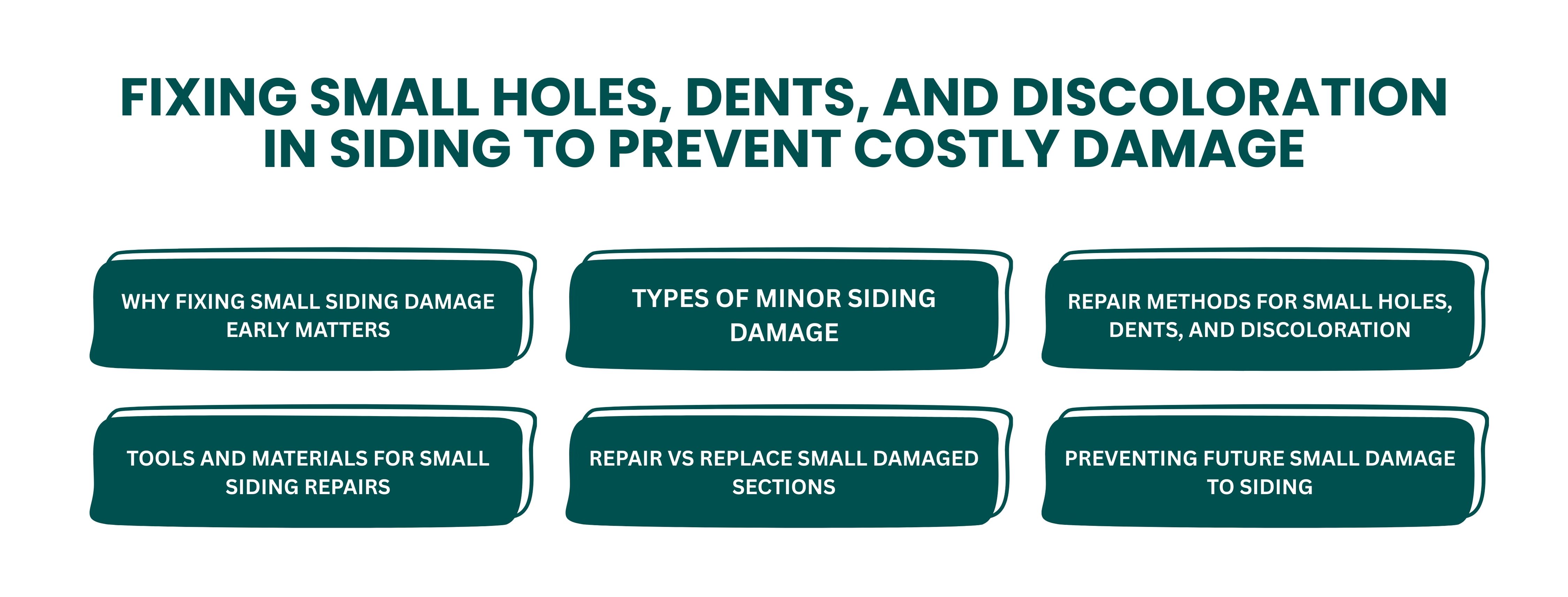
Table of Contents
Why Small Siding Damage Should Be Fixed Early
Types of Minor Siding Damage
Repair Methods for Small Holes, Dents, and Discoloration
Tools and Materials for Small Siding Repairs
When to Repair vs Replace Small Damaged Sections
Preventing Future Small Damage to Siding
Cost Breakdown for Fixing Small Holes, Dents, and Discoloration
Final Views
Small issues in siding, such as holes, dents, and discoloration, may seem insignificant at first, but delaying repairs can cause bigger problems down the line. These minor imperfections can lead to water infiltration, pest intrusion, and reduced curb appeal. Fixing these problems early saves homeowners money and prevents more significant repairs from being needed.
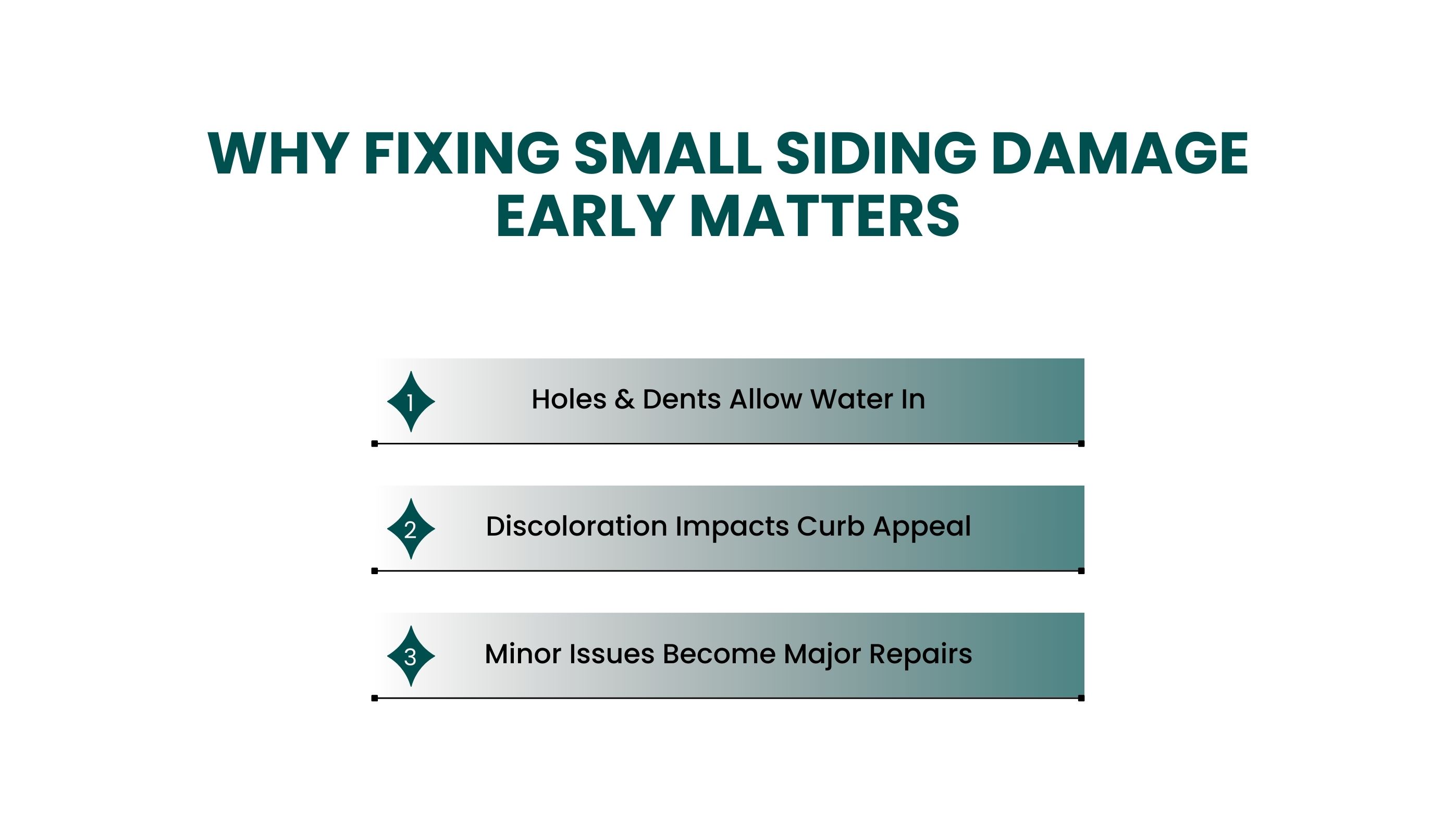
Even a small hole or dent can be a gateway for moisture to penetrate behind the siding. Once water enters, it can cause wood rot, mold, and mildew to form in the sheathing, framing, or insulation, which leads to expensive repair costs and potential structural damage. The longer these small issues are ignored, the more likely they are to escalate, creating a larger repair problem. Why early fixes matter:
While fading or discoloration may not affect the performance of the siding, it does hurt the home's appearance and curb appeal. Homes with faded or unevenly colored siding look less maintained and can lose value. Over time, areas of the siding may deteriorate more rapidly if the paint or finish has worn away, allowing environmental damage to take hold. How discoloration can hurt:
What starts as a small issue, like a single crack or dent, can quickly turn into a major repair if left untreated. Small holes can expand, cracks can spread, and water damage can worsen, requiring entire sections of siding to be replaced. Fixing small damage as soon as it appears helps avoid the costs of major repairs down the road, which can be 3–4 times more expensive than a quick patch.
The escalation of untreated damage:
Minor siding damage can stem from several different sources, including physical impact, weather, pests, or environmental conditions. While these issues may not seem urgent at first, they can evolve into larger problems if not addressed promptly. Understanding the types of minor damage helps homeowners take quick action before it escalates.
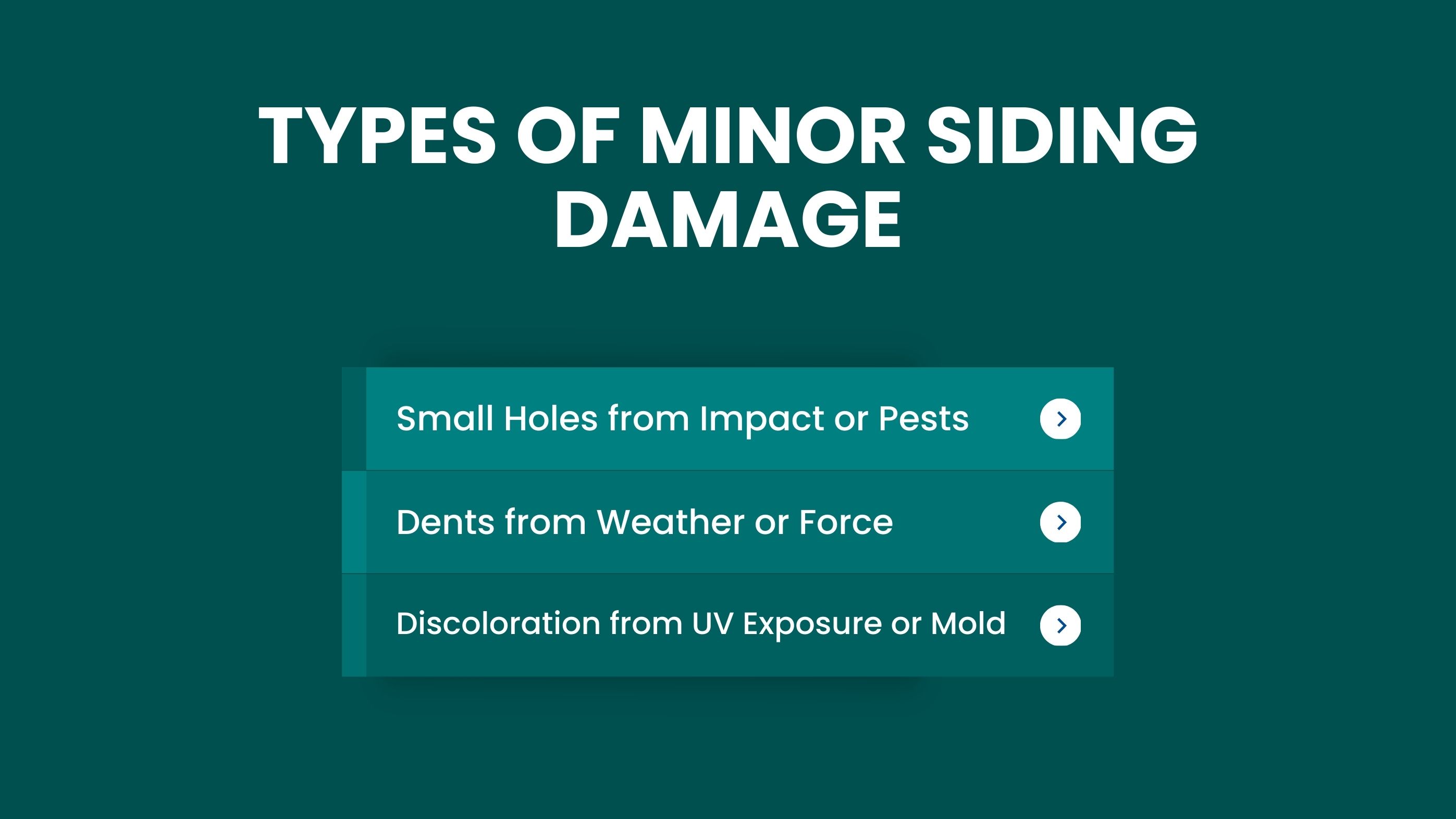
Impact damage, such as from lawn tools, falling debris, or pests like squirrels and insects, often leads to small holes in the siding. These holes may seem insignificant, but they expose the sheathing behind the siding to the elements, leading to potential water damage, rot, and mold growth. Prompt repairs are essential to maintain the siding's integrity and prevent further damage.
Dents often form when siding is struck by hail, branches, or physical force, especially in materials like vinyl, aluminum, or softer wood. These dents may not immediately appear to compromise the siding’s integrity, but over time, they can lead to cracking or warping. Additionally, dents create pockets where water can accumulate, increasing the risk of further damage if not addressed.
UV exposure and mold growth are two common culprits of siding discoloration. UV rays cause fading or chalking, especially on darker siding colors, while mold and mildew growth leave unsightly patches or stains. Both issues diminish curb appeal and, if left untreated, can degrade the protective coating, making siding more vulnerable to damage.
Fixing small issues early prevents larger, more expensive problems down the road. Whether it’s patching a hole, fixing a dent, or restoring color, there are several methods to handle common siding damage. The goal is to blend the repair with the rest of the siding to ensure it remains functional and aesthetically pleasing.
When small holes appear in vinyl or wood siding, they can often be patched using exterior-grade fillers, caulks, or vinyl plugs. The repair material should match the siding's color and texture to blend seamlessly with the surrounding panels. In cases of vinyl siding, specialized vinyl patching kits come with plug inserts that fit into the hole, making the repair process simple and effective.
Dents in metal or vinyl siding can be repaired with dent repair kits, which often include a filler, smoothing tools, and pullers. These kits are designed to restore the panel’s smoothness without requiring full replacement. For minor dents, the repair involves cleaning the area, applying the filler, smoothing it, and then painting over it to match the existing finish.
Faded or discolored siding can often be restored with cleaning and touch-up paint. Cleaning techniques like pressure washing or gentle scrubbing remove dirt, mildew, or surface stains. Once cleaned, faded siding can be repainted or treated with a color-restoring product to bring back its original vibrancy. For moldy areas, applying a mold-removal cleaner before repainting ensures a fresh, lasting finish.
Having the right tools and materials ensures that repairs are done effectively and professionally. Whether you're patching holes, fixing dents, or restoring color, using the correct products makes a significant difference in the final result.
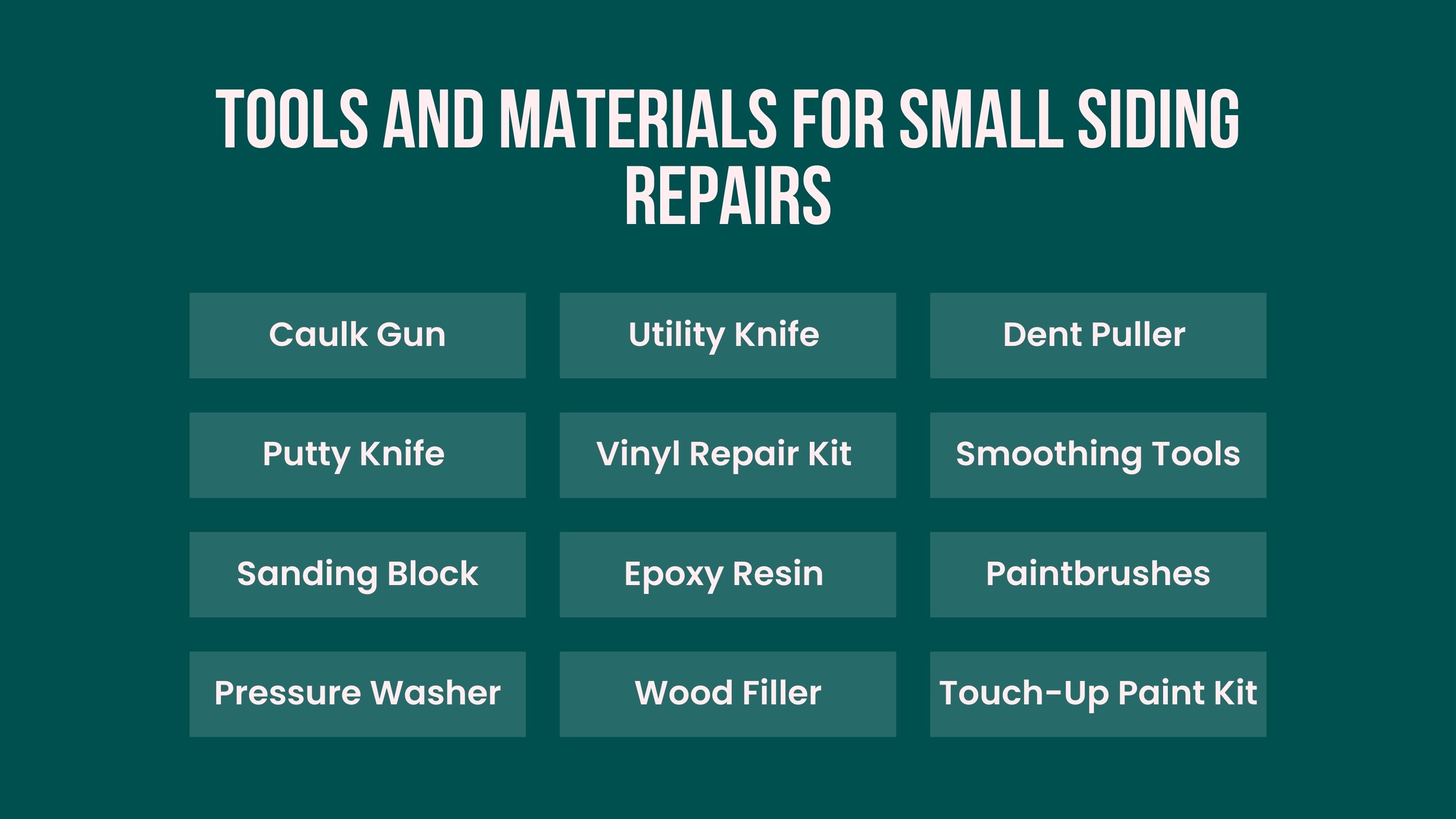
For small holes in siding, caulk and patch kits are quick and effective solutions. Caulk, epoxy, and wood fillers can be used to fill holes, and many kits come with materials matched to specific siding types (like vinyl or wood). These products are easy to apply, dry quickly, and blend seamlessly with the surrounding surface.
When discoloration or fading occurs, sanding and painting restore the siding’s original look. Sanding smooths the surface, removes rough patches, and helps new paint adhere better. After sanding, applying a fresh coat of matching paint or a touch-up kit brings the siding back to life, matching the surrounding panels perfectly.
Metal dent repair kits are designed to pull out minor dents in aluminum or steel siding without replacing the panels. These kits come with specialized tools like dent pullers, smoothing tools, and fillers to restore the metal surface. Once the dent is fixed, it is sanded, filled, and repainted to blend in with the surrounding siding.
Making the decision between repairing or replacing small sections of siding depends on the severity of the damage and the overall condition of the material. While minor issues can often be repaired, there are times when replacement is the more cost-effective and long-term solution. Understanding when to repair versus replace can help homeowners avoid unnecessary costs and ensure their home’s exterior remains in great shape.
Minor damage such as small holes, dents, or discoloration can usually be fixed without the need to replace the entire panel. These small imperfections can be repaired using a variety of methods, which are often quick, cost-effective, and simple. Repairing minor issues can save homeowners from the expense and hassle of a full replacement, as long as the damage does not affect the integrity of the entire siding board.
Small punctures or holes in siding can be repaired with ease using a variety of materials. Options include caulk for vinyl siding, vinyl plugs for quick fixes, or wood fillers for wood siding. These materials are typically easy to apply, restore the siding’s function, and blend the repair seamlessly with the existing structure.
Dents in metal or vinyl siding can be repaired using specific dent repair kits. These kits are designed to help homeowners gently restore the shape of the material. For minor dents, a small amount of heat and the use of specialized tools can restore the original shape of the panel.
Fading or staining on siding can be fixed through thorough cleaning followed by a fresh coat of paint. The cleaning process removes built-up dirt, while painting ensures the siding looks like new. This process is ideal for those looking to refresh the appearance of their home without the need to replace their siding.
Small cracks in siding can be sealed using exterior-grade fillers designed for the specific siding material. For vinyl and wood, exterior-grade caulk works well to close up gaps. These types of fillers not only prevent water from entering but also ensure the board remains weatherproofed and structurally sound.
While minor repairs can be effective for small issues, some types of damage may be beyond repair. In these situations, replacement may be the best option. When the damage is too extensive or recurring, it can compromise the integrity of your siding, which could lead to bigger, more costly issues down the road, like water penetration or mold growth. Understanding when repairs are no longer effective helps homeowners save money in the long run.
When the damage is too large to be filled properly, the board may no longer function as it should. Larger holes or cracks compromise the structural integrity of the siding and cannot be fixed with fillers or patches. In these cases, full replacement of the affected section is necessary to maintain your home’s exterior.
If your siding panels are warped or bent due to exposure to extreme weather or age, repairs may not suffice. When fasteners fail to hold the board securely, the panel is no longer serving its protective function. In this case, replacing the board is essential for ensuring the stability and security of your siding.
Water damage is one of the most serious issues when it comes to siding. Moisture can compromise the structural integrity of the siding, causing it to rot and lose its functionality. If water damage has permeated deep into the material, repairs may only offer temporary relief. Replacing the damaged sections will help ensure your home remains dry and protected from further damage.
Over time, siding naturally deteriorates due to sun exposure, weather conditions, and aging materials. When the siding is too old and repairs are no longer effective, replacing the entire section is often the best option for long-term protection. New siding will provide better insulation, improved curb appeal, and greater durability.
Regular maintenance and preventative measures help extend the lifespan of your siding and keep minor issues from becoming major repairs. By staying proactive, homeowners can avoid the expense and hassle of extensive siding repairs and ensure their home stays in good condition.
Regular inspections help homeowners spot small issues before they escalate. Checking the siding for loose fasteners, cracks, dents, or signs of water damage once or twice a year allows for early intervention. Early fixes prevent moisture from entering the system and reduce the risk of needing major repairs.
One of the best ways to prevent future damage is by sealing seams and joints to keep water out. Moisture is a primary cause of siding deterioration, and even small gaps can allow water to penetrate and cause rot. Caulking and applying weather-resistant sealants around trim, windows, and corners ensures that water stays out and the siding performs at its best.
Regular painting or coating is crucial to protect siding from UV exposure, moisture, and weathering. Repainting every 5–7 years (or as needed) prevents fading, cracking, and other forms of deterioration. UV-resistant coatings not only enhance the aesthetic appeal of siding but also provide an additional layer of protection from the sun’s harmful rays.
When dealing with small damages like holes, dents, and discoloration, understanding the cost breakdown helps homeowners make informed decisions. These costs vary based on the material type, the repair method, and how complex the repair is. Below, we break down the typical costs associated with each aspect of siding repair.
Labor costs differ depending on the siding material and the complexity of the repair. Vinyl siding repairs are generally quicker and cheaper, while wood and metal repairs take longer and require more expertise. Fiber cement (Hardie board) requires special cutting tools, increasing labor time and cost.
Labor cost increases if there’s significant damage behind the siding (e.g., moisture-related issues) or if the repair requires working on hard-to-reach areas.
Materials used for patching, sealing, and painting vary based on the type of siding being repaired. Vinyl, wood, and metal each require specific patching compounds and paint types. A higher-quality patching compound or specialty paint can increase the overall repair cost.
These materials are designed for specific repair types, so the cost will depend on the damage and the materials being used.
The time and complexity involved in siding repairs also impact the cost. Minor repairs like filling small holes in vinyl are quick and inexpensive, while more complex repairs, like fixing large dents in metal siding or repairing wood rot, require more time and precision. For example, replacing a whole section of damaged siding is far more costly than patching a single hole.
The time required increases with difficulty, such as working at height or dealing with hard-to-reach sections.
Below is a detailed cost breakdown for typical siding repairs based on material type, severity, and complexity.
| Repair Type | Low-End Cost | High-End Cost | Notes |
|---|---|---|---|
| Labor (Vinyl) | $40/hr | $70/hr | Faster, easier repairs |
| Labor (Wood) | $55/hr | $95/hr | Requires more time and skill |
| Labor (Metal) | $60/hr | $110/hr | Precision required for dent repair |
| Labor (Fiber Cement) | $75/hr | $125/hr | Special tools and techniques needed |
| Patch Materials (Vinyl) | $10 | $25 | Vinyl patch kits or plugs |
| Wood Filler (Epoxy/Putty) | $8 | $20 | High-quality filler for wood repairs |
| Caulk (Sealing) | $6 | $15 | Essential for weatherproofing |
| Exterior Paint (Touch-ups) | $15 | $40 | For painting repaired areas |
| Metal Dent Filler | $12 | $30 | For restoring metal siding's smoothness |
| Fiber Cement Patch Compound | $12 | $25 | Special patching compound for fiber cement |
Addressing small siding issues such as holes, dents, and discoloration early can prevent more serious and expensive repairs down the line. Understanding the costs for different repair types, labor, and materials helps homeowners make informed decisions about when to repair or replace damaged siding. Regular maintenance and timely repairs can extend the lifespan of your siding, save you money, and protect your home from long-term damage.
Yes, small holes can usually be patched instead of replaced. By using caulk, filler, or vinyl repair kits, you can fill the hole and blend it seamlessly with the rest of the siding. This method is cost-effective and works well for minor damage, especially when the hole is confined to a small area.
Small dents in vinyl siding can be fixed using a vinyl dent repair kit or caulking. If the dent is shallow, caulk can be applied and smoothed out to restore the surface. For deeper dents, a dent repair kit with fillers and smoothing tools can help bring the surface back to its original state.
Faded siding, whether caused by UV exposure or weathering, can be restored by painting it with matching color or using specialized cleaning products designed to remove discoloration. For long-term results, applying a UV-protective coating or sealant can help prevent further fading and maintain the siding’s appearance.
Small siding repairs, if done correctly, can last for several years. However, over time, repairs may start to show wear and tear, particularly if the siding is exposed to harsh weather conditions. It’s important to reapply sealants and perform touch-ups periodically to maintain the siding's integrity and appearance.
Yes, small holes in siding can usually be repaired by homeowners using basic tools such as patch kits, caulk, or fillers. This DIY approach works best for minor damage and can help you save on labor costs. However, it’s important to use materials that match the siding type for a seamless repair.
If the damage is widespread, affects the structural integrity of the siding, or if the material is too old and worn, replacement may be necessary. Additionally, if repeated repairs are required, it may be more cost-effective to replace the damaged sections entirely to ensure the long-term protection of your home.
Join our mailing list for exclusive updates, expert tips, and special offers tailored to your needs. Be the first to know about the latest in home services.

Renovize Home is a platform that supports homeowners from planning to renovation. Whether it’s Renovize AI for guidance or a one-on-one call with Pro Finder, we understand your project and match you with local contractors tailored to your needs.
Who We Are
About Renovize HomeGet in TouchHomeownwer Support:
Coming Soon!
General Inquiries:
support@renovizehome.com
Head Office:
24 Greenway Plaza, STE 1800M, Houston, TX 77046.