
Explore All
BROWSE BY CATEGORY
Interior
Exterior
Home Essentials
Homeowner Tools
Blogs & Guides
Find a Pro
Book Your Appointment Now
Home Essentials
About Renovize Home
Explore All
BROWSE BY CATEGORY
Interior
Exterior
Home Essentials
Homeowner Tools
Blogs & Guides
Find a Pro
Book Your Appointment Now
Home Essentials
About Renovize Home
Last Updated 2025-12-16
Keeping your siding in good condition is one of the simplest ways to protect your home and maintain its appearance. Siding damage often starts small, but even a ¼-inch gap or loose panel can allow moisture and pests to reach the wall system. Over time, untreated siding issues can increase water exposure by 20–30%, leading to insulation damage and higher energy loss.
Fixing siding panels early can extend the life of your exterior by 10–20 years and help avoid repairs that cost 3–5 times more once moisture spreads behind the walls. Addressing cracked, warped, or loose panels promptly keeps your home structurally sound, improves comfort, and preserves curb appeal without the need for full replacement.
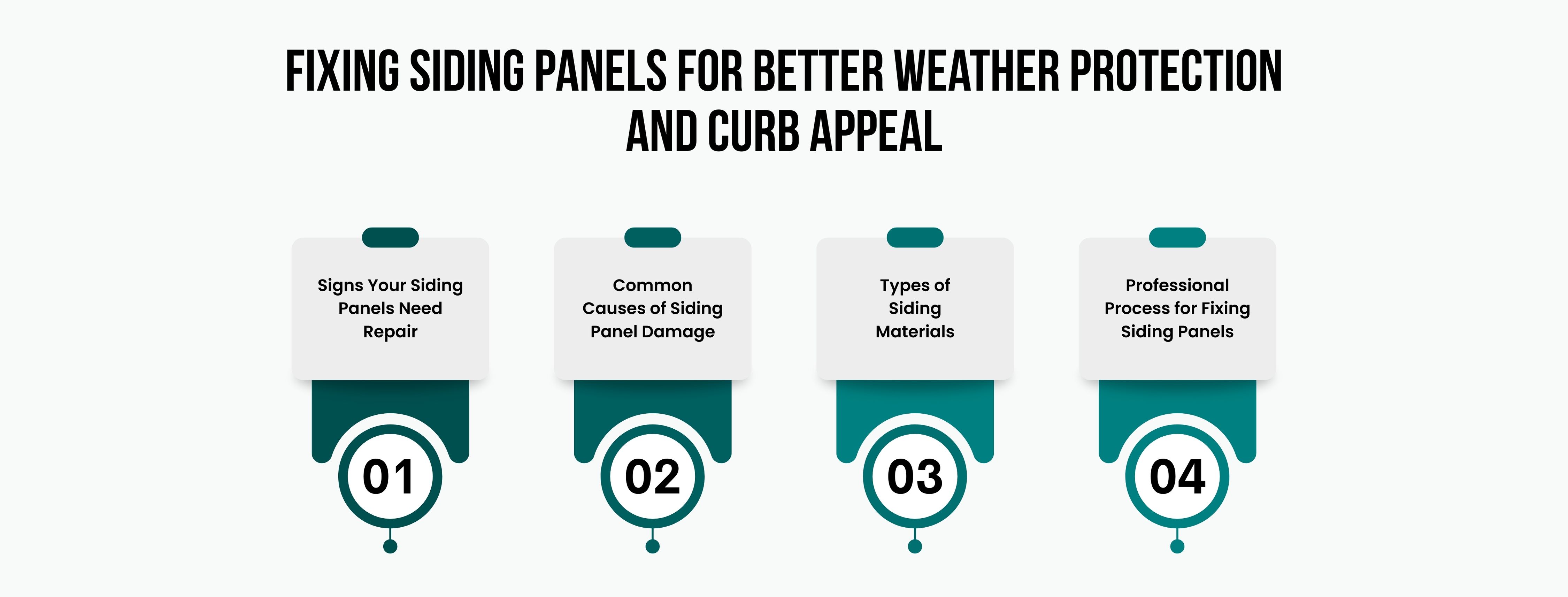
Table of Contents
Signs Your Siding Panels Need Repair
Common Causes of Siding Panel Damage
Types of Siding Materials and How They’re Repaired
Repair vs Full Siding Replacement
Benefits of Fixing Siding Panels Early
Final Thoughts
Your siding often sends early warning signals before serious damage occurs. Spotting these signs early can help you prevent moisture intrusion, costly repairs, and energy loss. Here are the most common issues homeowners should watch for; each one tells you the protective exterior layer is failing and needs attention.
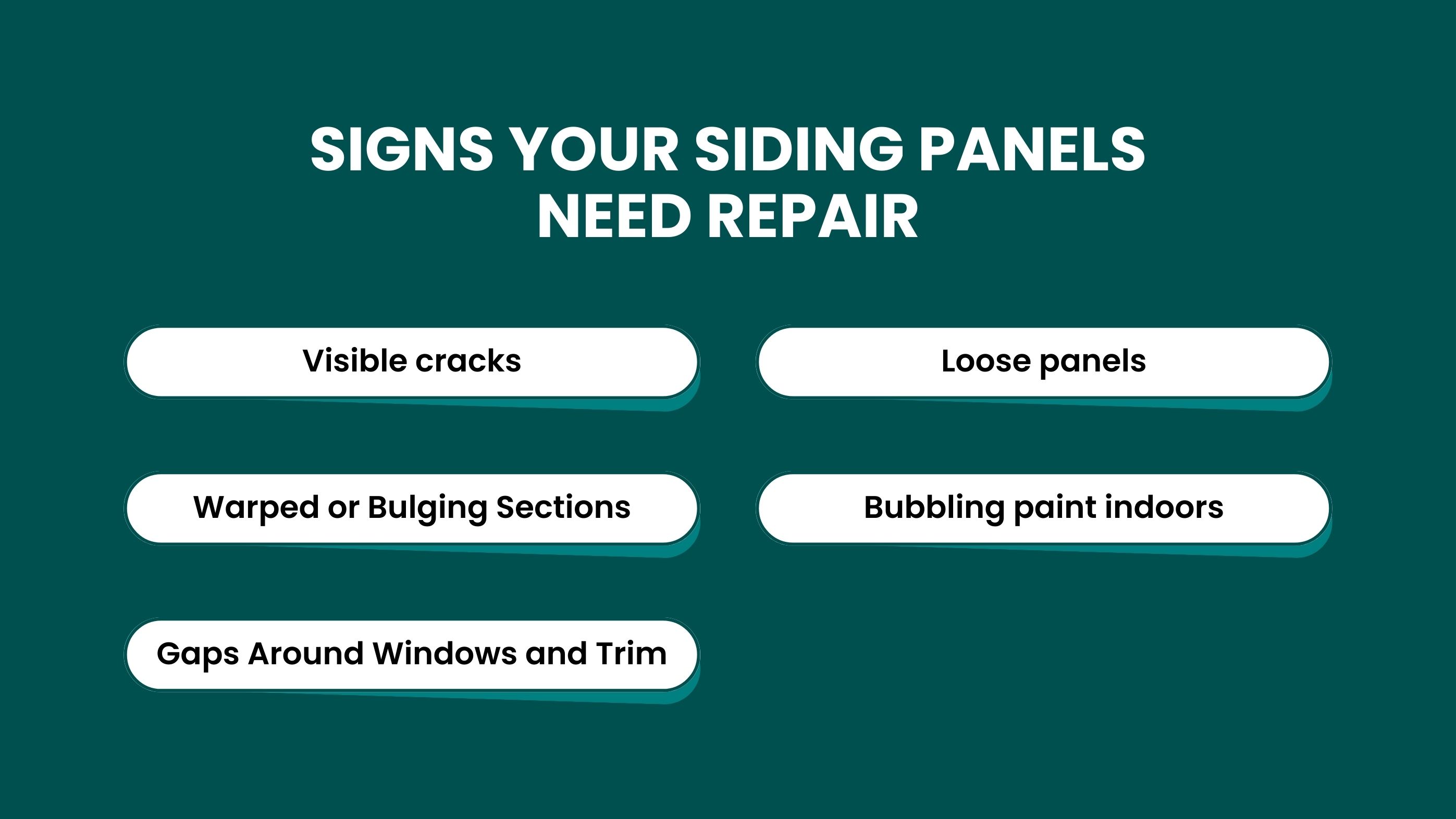
Small cracks or long splits may seem minor, but they allow water to seep behind the siding. Over time, that trapped moisture can rot the wall structure and weaken insulation.
These issues may start small but grow larger with weather exposure, making early repair essential.
If panels shift, move in the wind, or you hear rattling during storms, your siding isn’t securely attached anymore. This movement creates openings where rain, insects, and air can enter.
A loose panel today can turn into a lifted, torn, or missing panel after strong winds so securing it quickly is important.
When siding bends outward or pulls away from the surface, it no longer sits tight against the wall which lets moisture, drafts, and pests enter.
Warping often signals heat expansion, moisture exposure, or improper fastening, and it usually worsens over time without repair.
Small openings may appear harmless, but gaps give water direct access behind siding especially around windows and corners where leaks often start.
Once moisture gets into these gaps, it can damage framing, encourage pests, and weaken insulation making repairs urgent.
Sometimes the first sign of siding failure shows up inside the house. If water penetrates the exterior, it travels into interior surfaces.
This means moisture has already bypassed the siding, putting walls at risk of mold and rot. Fixing the siding damage immediately prevents deeper structural repairs.
Understanding why siding gets damaged helps homeowners fix the root issue instead of just treating the symptoms. While siding is built to protect your home from weather, time, and daily exposure, various factors weaken it sometimes slowly, sometimes suddenly. Here are the main reasons siding panels fail and what typically causes each type of damage.
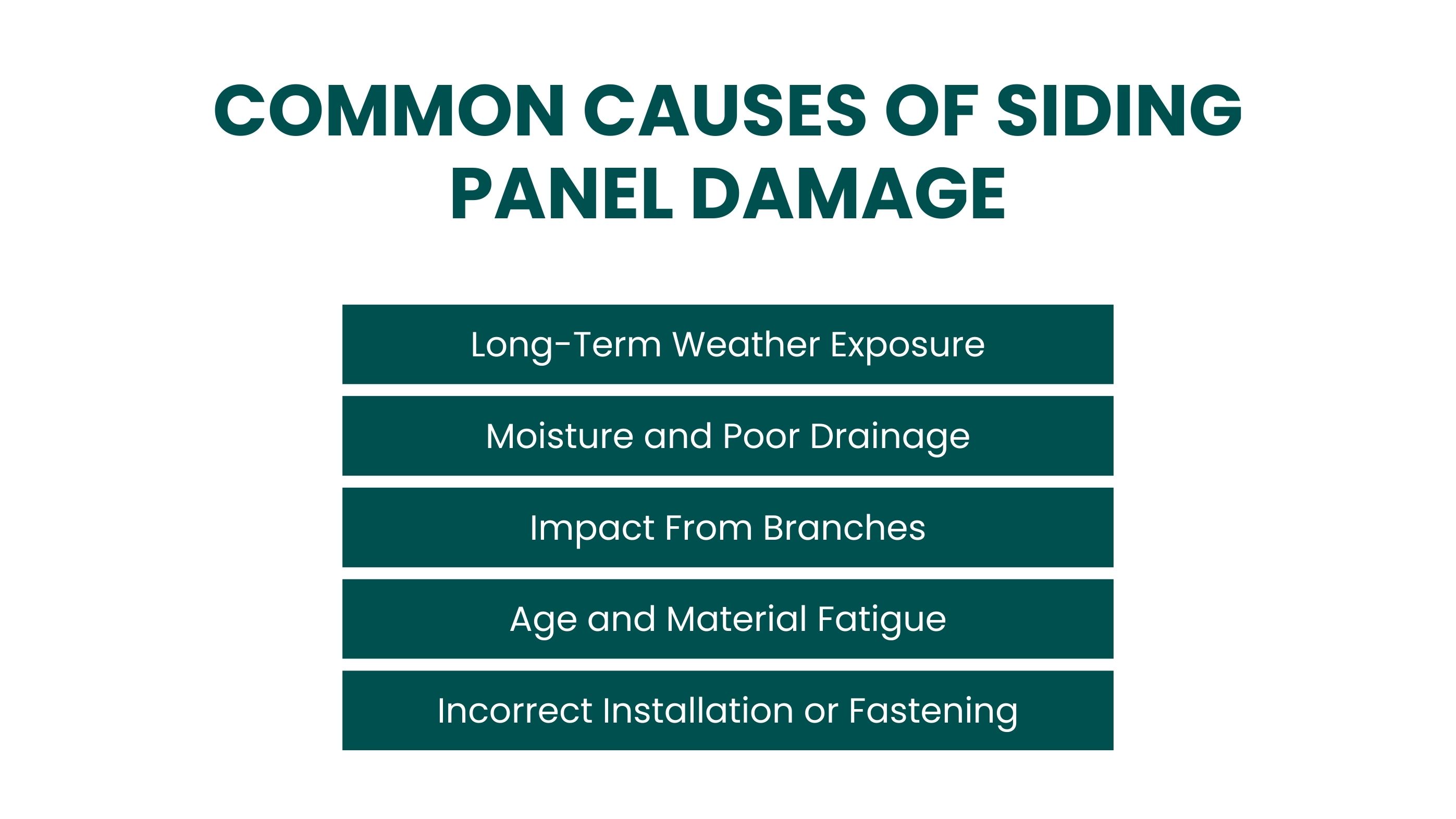
Siding faces constant outdoor conditions, and over the years, this takes a toll.
Even durable siding eventually wears down under these forces, making inspections and timely repairs essential.
Water is one of siding’s biggest enemies. When it doesn’t drain properly, damage accelerates.
This trapped moisture leads to swelling, rot, mold, or soft spots, especially around trim and lower wall areas.
Sometimes damage happens in an instant.
Impact damage is easy to overlook but can open pathways for moisture making repairs important even for small dents.
When siding isn’t installed correctly, problems show up early.
These mistakes cause warping, rattling, and gaps often requiring correction before new siding can perform well.
Like any building component, siding doesn’t last forever.
Once siding reaches the end of its lifespan, problems tend to multiply making replacement more effective than repeated patching.
A siding repair may look small from the outside, but it has a big impact on how your home performs:
Fixing siding panels focuses on installing or replacing damaged sections so your exterior works like it should:
Siding isn’t one-size-fits-all different materials behave differently, age differently, and require different repair methods. Knowing how your siding type is repaired helps you understand what to expect, whether you’re fixing small defects or replacing full sections.
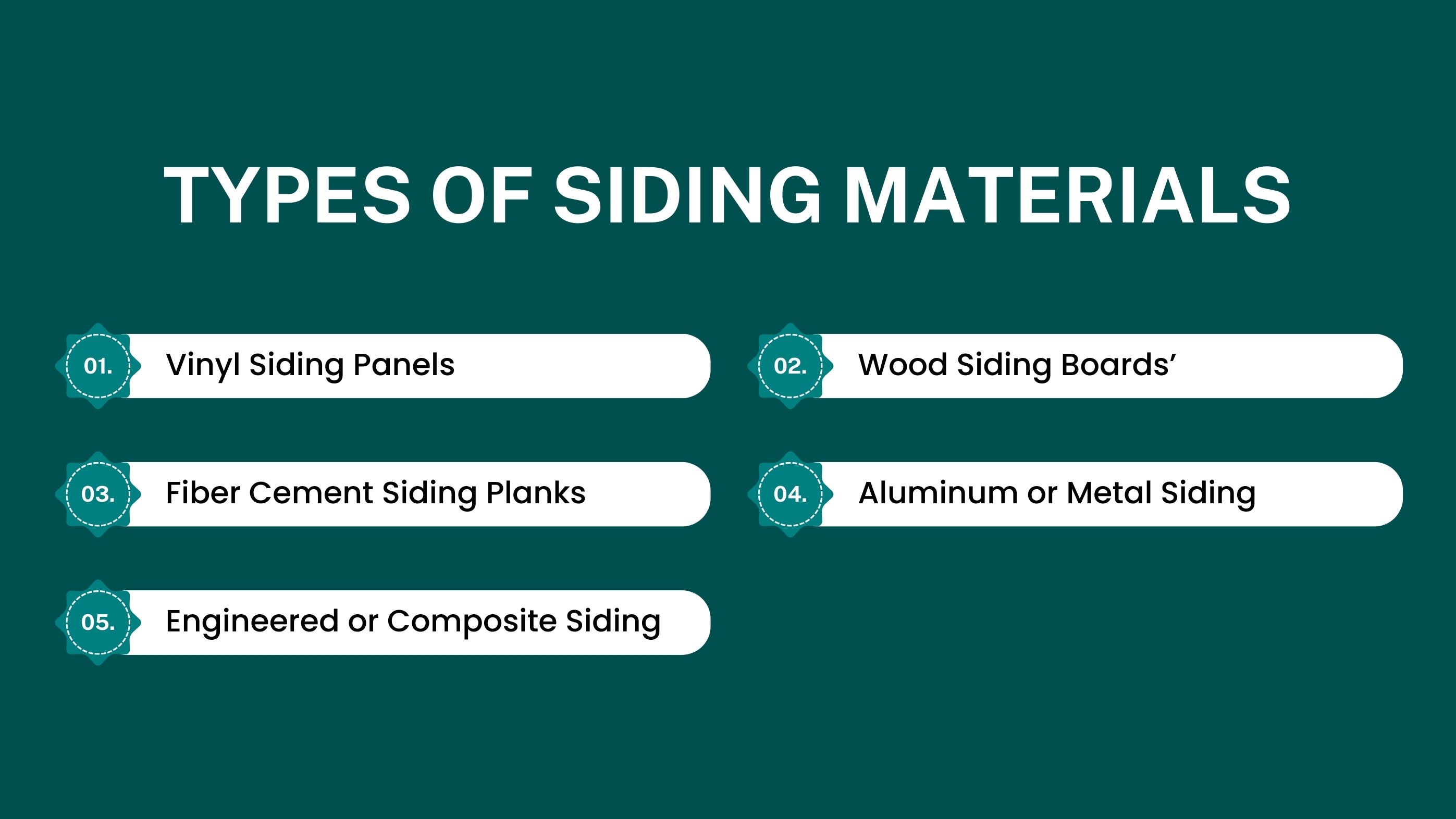
Vinyl is designed to interlock, making repairs relatively quick and clean.Repair often includes:
This makes vinyl siding one of the easiest materials to repair with minimal disruption to the wall.
Wood offers natural beauty, but it requires more hands-on repair because moisture can cause rot. Typical repair steps include:
This keeps wood siding structurally sound and visually seamless.
Fiber cement is strong but must be handled carefully during repair to avoid cracking. Repairs usually involve:
This ensures durability and maintains manufacturer warranty conditions.
Metal siding is resilient but can show dents or scratches from impact. Repair methods include:
Composite siding blends wood fibers with resins, offering durability but requiring precise repair when damaged. Professionals typically:
Once resealed and painted, repairs blend into the home while strengthening long-term weather resistance.
Not all siding problems require an overhaul. Some issues are small and can be fixed with localized repairs, while others point to deeper damage where replacing the entire siding system is the smarter long-term choice. Understanding the difference helps homeowners avoid overspending or ignoring serious structural problems.
Spot repairs work well when the damage is limited and the siding system is generally healthy. Repairs are often sufficient when:
In these cases, a technician can remove the damaged pieces, check behind them, install new panels, and reseal the area. This restores protection and appearance without replacing the whole wall.
A full siding replacement becomes necessary when problems are widespread or recurring. Total installation often provides better value when:
In these situations, fixing single spots doesn’t solve the underlying problem and repeated patching can cost more over time. A full replacement refreshes the exterior, improves weather resistance, increases energy efficiency, and boosts curb appeal and home value.
Taking care of siding damage as soon as you notice it saves homeowners money, protects the structure, and keeps the house looking its best. Small cracks or loose panels can quickly grow into bigger issues if ignored, making timely repairs one of the smartest maintenance decisions you can make.
Damaged siding lets water sneak behind the exterior surface and into the wall system. Fixing cracks, gaps, or loose panels prevents:
Early repairs keep moisture outside where it belongs, helping your walls stay strong and dry.
Even small gaps in siding allow outside air to enter and conditioned air to escape. Repairing those openings:
This creates more stable indoor temperatures and lowers energy bills over time.
Loose siding creates easy entry points for insects and small animals like ants, spiders, mice, or wasps. Sealing repairs:
A well-maintained exterior tells buyers the home has been cared for. Fixing siding damage:
Timely siding repairs help preserve property value and make a strong first impression to anyone who sees your home.
Fixing siding panels may seem like a small maintenance task, but it plays a major role in protecting your home’s structure, comfort, and value. Even minor damage—such as a cracked panel or small gap—can increase moisture exposure by 20–30%, leading to insulation problems, rot, and higher energy loss if left untreated. Addressing issues early helps avoid repairs that often cost 3–5 times more once damage spreads behind the walls.
By understanding the warning signs, common causes, and repair methods for different siding materials, homeowners can make informed decisions about when to repair and when replacement makes more sense. Timely siding repairs help extend the life of your exterior by 10–20 years, improve energy efficiency, keep pests out, and maintain strong curb appeal. Whether it’s securing a loose panel or replacing damaged sections, proactive siding care keeps your home protected, efficient, and visually well-maintained for years to come.
Yes, a single crack or loose panel can let water behind the wall and cause rot, mold, or insulation damage. Fixing it early avoids costly structural repairs later.
Warping near gutters, downspouts, or sprinklers often means moisture is the cause. If it happens mostly on sun-facing walls with surface discoloration, heat or over-tight nailing is likely responsible.
Absolutely, pros can unlock a few panels, remove the damaged piece, and reinstall everything so the repair blends in almost seamlessly.
Leaving damage untreated allows water, insects, and air leaks into your home’s walls. Over time, this leads to rot, mold growth, higher energy bills, and expensive structural fixes.
Yes, new boards must be primed and painted or stained to match existing siding and to protect against moisture and sunlight.
Join our mailing list for exclusive updates, expert tips, and special offers tailored to your needs. Be the first to know about the latest in home services.
Renovize Home is a platform that supports homeowners from planning to renovation. Whether it’s Renovize AI for guidance or a one-on-one call with Pro Finder, we understand your project and match you with local contractors tailored to your needs.
Who We Are
About Renovize HomeGet in TouchHomeownwer Support:
Coming Soon!
General Inquiries:
support@renovizehome.com
Head Office:
24 Greenway Plaza, STE 1800M, Houston, TX 77046.