
Explore All
BROWSE BY CATEGORY
Interior
Exterior
Home Essentials
Homeowner Tools
Blogs & Guides
Find a Pro
Book Your Appointment Now
Home Essentials
About Renovize Home
Explore All
BROWSE BY CATEGORY
Interior
Exterior
Home Essentials
Homeowner Tools
Blogs & Guides
Find a Pro
Book Your Appointment Now
Home Essentials
About Renovize Home
Last Updated 2025-12-12
Exterior trim components do much more than add style to a home, they form a protective barrier that keeps water, pests, and weather from damaging the structure. Trim, fascia, soffits, frieze boards, rake trim, drip edges, and corner pieces all work together to seal the edges of siding, support gutter systems, ventilate the attic, and defend the roofline from moisture intrusion. These components play a critical role in preventing rot, mold, leaks, and long-term structural damage.
When any of these parts become worn, cracked, warped, or storm-damaged, the home becomes vulnerable to hidden moisture problems and energy loss. Replacing deteriorated trim ensures a watertight exterior, healthier ventilation, and a cleaner, more finished appearance. A well-maintained trim system protects the entire building envelope and extends the life of both the siding and the roof.
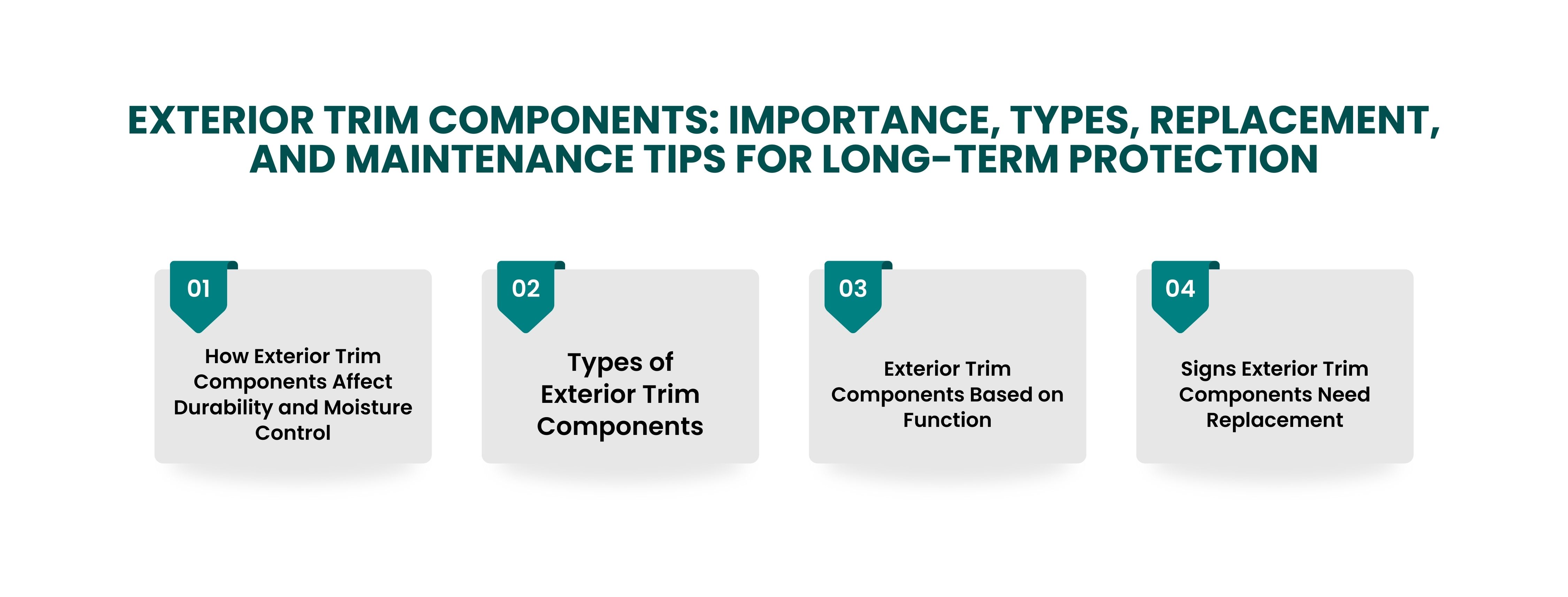
Table of Contents
What Exterior Trim Components Actually Do for the Home
How Each Exterior Trim Component Affects Durability and Moisture Control
Types of Exterior Trim Components Homeowners Frequently Replace
Exterior Trim Components Based on Function
How these Components work Together
Signs Exterior Trim Components Need Replacement
Replacement Options for Long-Lasting Exterior Trim Systems
Cost Considerations for Replacing Trim Components
Maintenance Tips to Extend Trim, Fascia and Soffit Lifespan
Final Views
Exterior trim components form a protective system that works around the entire structure of the home. They seal vulnerable edges, support the roofline, guide water away from the walls, and help maintain proper airflow in the attic. Without functioning trim components, moisture can seep into the siding, gutters may loosen, and the roofline can deteriorate faster. Understanding the role of each trim element helps homeowners decide when repairs or replacements are necessary to keep the home safe and structurally sound.
Trim pieces create a sealed barrier that blocks gaps where water or pests could enter. They reinforce the edges of siding, framing, and roof connections so the home stays weather-tight and stable. Trim protection includes:
Trim components also control how water moves across and away from the home. When properly installed, they prevent pooling, overflow, and water damage along the roofline. Drainage and performance roles include:
Each exterior trim component plays a specific role in protecting the siding system and keeping moisture away from the home’s structure. When even one trim piece becomes cracked, loose, rotted, or storm-damaged, the entire exterior becomes vulnerable to leaks, rot, pest entry, and gutter failure. Understanding how each component functions helps homeowners know when replacement is necessary to maintain long-term durability and roofline integrity.
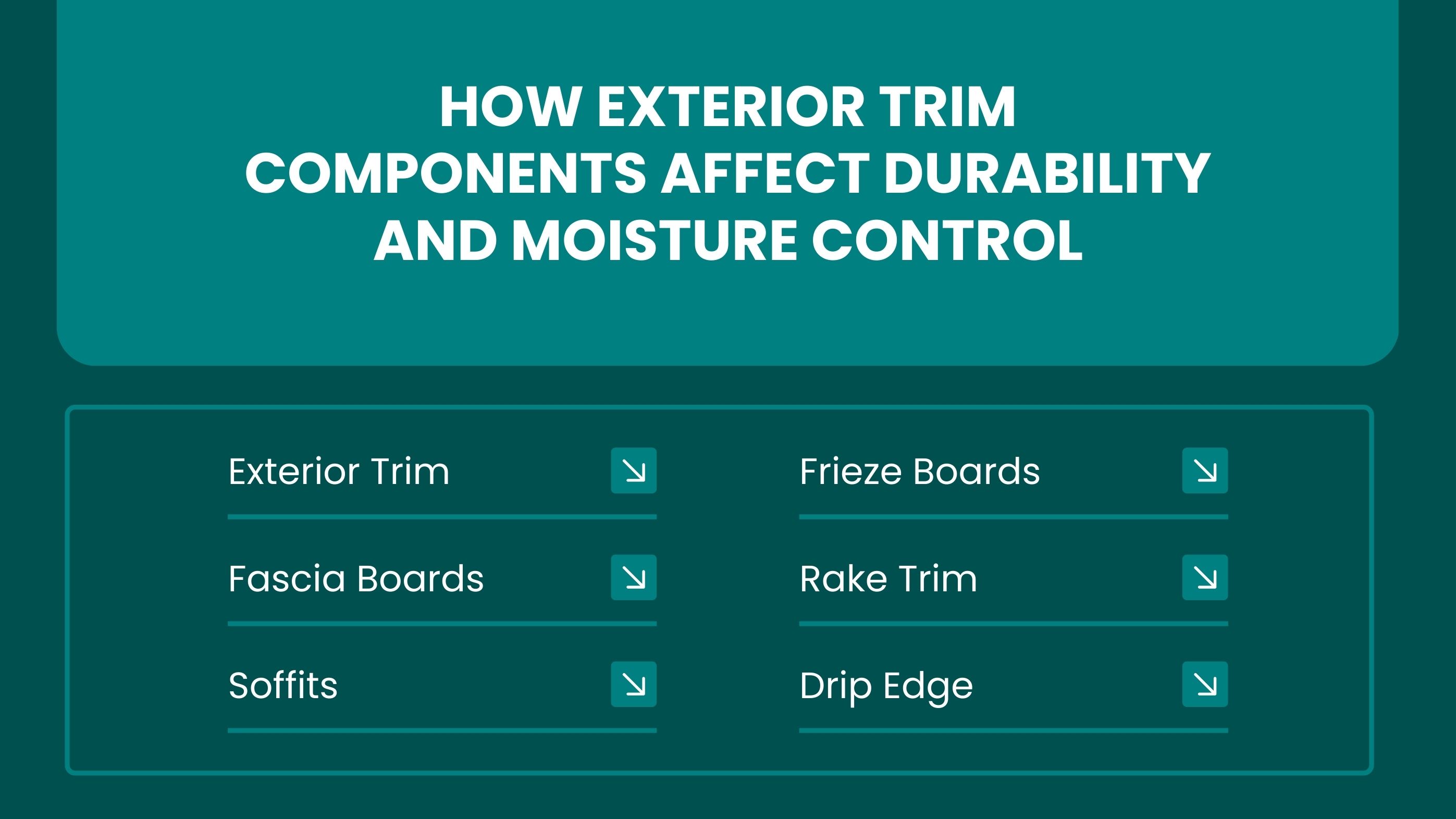
Exterior trim seals the vulnerable edges where siding meets windows, doors, outside corners, and wall transitions. When this trim cracks, separates, or warps, water slips behind the siding and reaches the wooden sheathing. Over time, this hidden moisture causes rot, mold, and structural weakening. Replacing exterior trim restores a tight, weatherproof seal that prevents leaks and allows the siding system to perform at full strength.
Fascia boards run horizontally along the roof edge and provide the attachment point for gutters. They protect the ends of roof rafters and stop water from flowing behind the gutter system. When fascia becomes soft, rotted, or loose, gutters sag, overflow, and push water directly onto the siding and foundation. Replacing damaged fascia restores roof-edge stability and ensures gutters work correctly, preventing moisture damage to both the siding and roofline.
Soffits sit beneath roof overhangs and control how air moves in and out of the attic. Proper ventilation keeps attic temperatures balanced and prevents condensation that can lead to mold, mildew, and wood rot. When soffits crack, fall out, or become blocked by debris, the attic loses airflow and moisture begins to build up inside the roof system. Replacing damaged soffits protects both the siding and the roof by restoring healthy ventilation.
Frieze boards sit between the top of the siding and the bottom of the soffit. Their job is to close the gap between the wall and the roof overhang. When frieze boards warp, pull away, or crack, gaps form that allow wind-driven rain, insects, and cold air to enter the home’s structure. Replacing the frieze board maintains a continuous weather barrier along the upper siding line.
Rake trim runs along the sloped edges of gable roofs, protecting exposed roof decking from water, wind, and UV damage. This trim also gives gable ends a clean, finished look. When rake trim becomes loose or storm-damaged, the gable edges remain exposed to moisture, increasing the risk of leaks and structural deterioration. Replacement ensures the gable ends stay sealed and well-protected.
The drip edge is a small but essential metal flashing installed under the shingles and above the fascia. It prevents water from curling back under the roofing material and soaking the fascia boards. Missing or damaged drip edges leads to long-term water intrusion, rot, and trim deterioration. Installing or replacing drip edge supports proper drainage and significantly improves roofline durability.
Different trim materials wear down at different rates depending on climate, moisture exposure, and age. Homeowners often replace trim to restore a watertight seal, strengthen siding connections, and prevent roofline moisture damage. Below are the most common exterior trim materials and why they are frequently replaced.
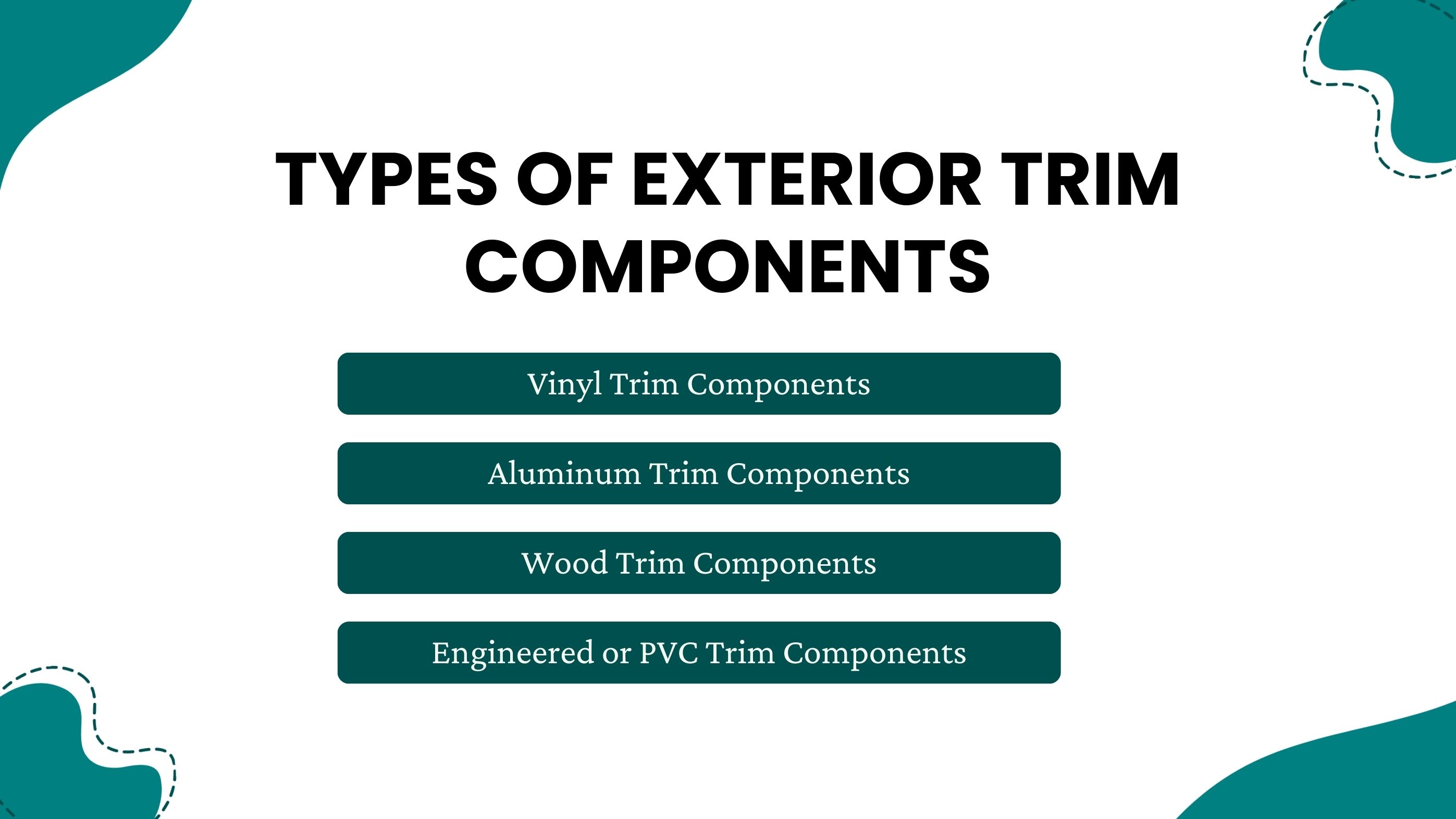
Vinyl trim is widely used around windows, doors, outside corners, and siding transitions because it’s affordable, low-maintenance, and resistant to rot. However, over time it can crack, warp, or separate from the siding, especially in extreme temperatures. Mostly, homeowners replace vinyl trim due to:
Aluminum trim is commonly used for fascia wraps, soffit panels, and rake edges. It offers long-lasting protection but can dent, bend, or come loose in storms or high winds. Mostly, aluminum trim needs replacement due to:
Wood trim provides a classic, traditional look, but it is the most vulnerable to moisture damage. It can swell, crack, peel, and eventually rot, especially in older homes or properties with poor drainage. Common reasons for wood trim replacement are:
Engineered and PVC trim products are designed to resist moisture, insects, and warping, making them ideal for high-exposure areas along the roofline. They are durable substitutes for wood and require far less maintenance. Mostly, homeowners upgrade to engineered or PVC trim due to:
Every trim component contributes to the home’s protection in a different way. Some parts strengthen the structure, others manage airflow, and some refine the appearance while still supporting the siding system. Grouping them by function helps homeowners understand how each piece contributes to moisture control, roofline protection, and overall siding performance
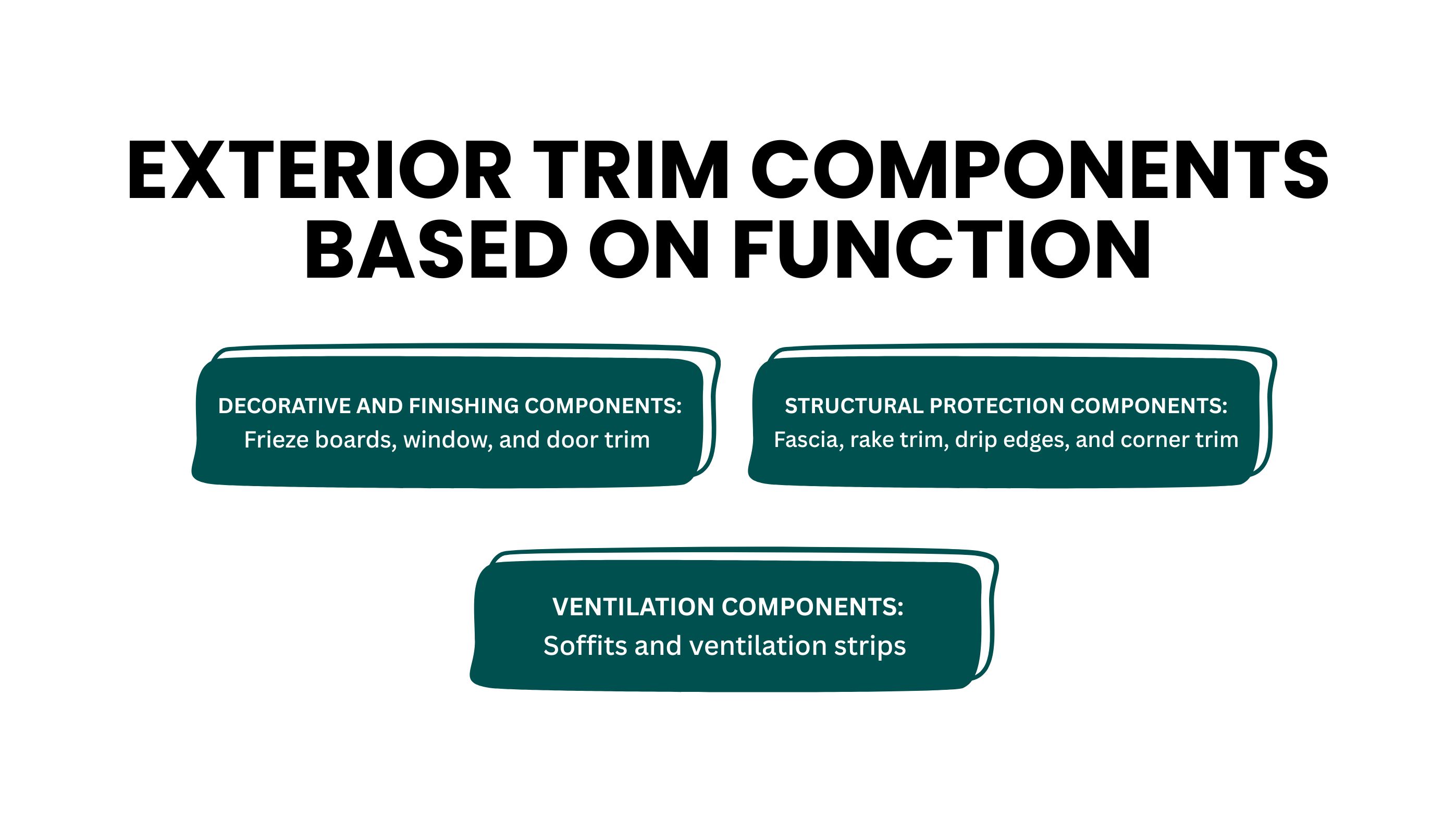
Structural trim components reinforce the home’s most vulnerable edges, especially where siding meets the roofline. Fascia boards, rake trim, drip edges, and corner trim protect these areas from water intrusion and wind damage. These components provide:
Proper airflow is essential for preventing moisture buildup inside the attic and behind siding panels. Soffits and soffit ventilation strips regulate the movement of fresh air and keep heat and humidity under control. Ventilation trim helps by:
Some trim components enhance appearance while also sealing important gaps. Frieze boards, window trim, and door trim refine the home’s exterior and create clean finishing lines. These finishing trims can:
Exterior trim components function as a unified protective system. Each piece supports the next, creating a continuous shield that prevents water intrusion, pest entry, and structural deterioration. When one component becomes loose, cracked, or weakened, the surrounding elements begin to fail as well, reducing the siding’s ability to protect the home. Understanding how these trim parts interact helps homeowners evaluate their exterior as a complete system rather than isolated pieces.
Soffits pull fresh air into the attic, regulating temperature and preventing moisture buildup. Without airflow, heat and humidity rise inside the roof structure, leading to condensation, mold growth, and damage to wood framing. By keeping attic ventilation balanced, soffits indirectly protect trim, fascia, and siding from moisture-related issues.
Fascia boards sit at the roof edge and provide the support that gutters depend on. When rainwater or snow fills the gutters, the fascia carries the load. If fascia boards weaken or rot, gutters sag, overflow, and direct water against the siding or foundation. Healthy fascia ensures the entire drainage system works correctly and keeps moisture away from structural components.
Trim around windows, doors, corners, and wall connections creates a tight seal that stops water from slipping behind siding panels. These boards prevent drafts, pests, and rain from entering areas where siding cannot fully cover. When trim boards crack or separate, moisture travels behind the siding and spreads into sheathing or wall cavities.
The drip edge is a small but essential metal flashing installed beneath shingles. It prevents water from curling under the roof and soaking fascia boards. Without it, rain can seep into trim components and cause wood rot. A functioning drip edge maintains clean water flow and reinforces the roofline’s moisture defense.
Along sloped gable edges, rake trim shields exposed roof decking from wind-driven rain, snow, and sun. Because gables receive more direct weather exposure, they rely heavily on rake trim to stay sealed. When rake trim becomes loose or damaged, moisture can penetrate at angles the shingles don’t fully cover.
Frieze boards sit at the transition where siding meets the underside of the roof overhang. Their job is to close this vulnerable gap and keep wind, water, and pests from entering. When frieze boards warp or pull away, the opening becomes an easy entry point for insects, drafts, and moisture.
All trim components depend on one another to keep the home protected.
If one fails, the others must work harder, and the exterior quickly becomes vulnerable. This is why replacing one damaged trim piece often requires checking the entire system to ensure complete protection.
Exterior trim often shows early warning signs before major siding or roofline damage appears. These small issues can allow water, insects, and moisture into the structure if ignored. Understanding these signs helps homeowners take action early and protect the home’s exterior before bigger problems develop.
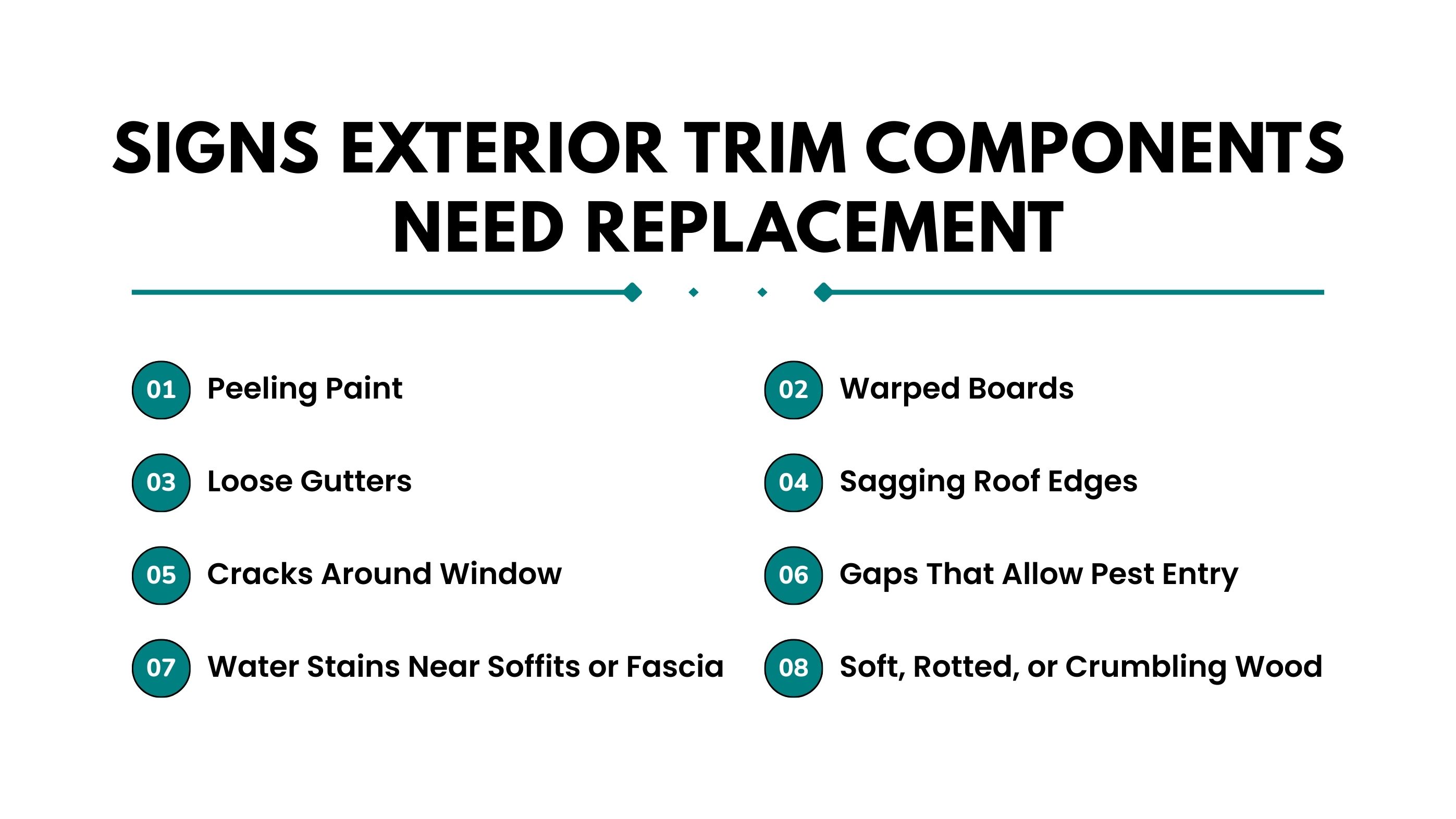
When trim boards begin peeling or warping, it usually means moisture has already reached the material beneath the paint. Older wood trim is especially vulnerable. Peeling surfaces lose their protective coating, allowing water to penetrate deeper. Over time, this leads to swelling, soft spots, and rot, especially where trim meets siding or roof edges.
If gutters begin to sag or pull away from the home, the fascia board supporting them is likely deteriorating. Weak fascia can no longer hold the weight of the gutter system, especially during rain or snow. This causes water to spill over the edges and run down the siding, increasing the risk of rot and moisture damage to exterior walls.
Trim around windows and doors is designed to seal two of the most sensitive openings in the home. When cracks appear, even tiny ones, water can slip behind the siding and reach the wall framing. Over time, this leads to mold growth, soft wood, and air leaks that affect energy efficiency. Cracked trim signals that the protective seal is failing.
When exterior trim separates from siding, small openings form that insects and rodents can easily enter. Common pests that enter through trim gaps include:
Water staining or discoloration along the roofline is a strong sign that trim is no longer preventing moisture intrusion. This may indicate a ventilation issue with soffits, a leak behind the fascia, or a damaged drip edge allowing water to curl back. Water stains usually lead to mold growth or wet insulation if not addressed quickly.
Softness in wood trim is a late-stage warning sign. By the time trim feels spongy or begins to crumble, moisture has already caused deep rot. At this point, the trim can no longer support gutters or provide a seal for siding edges. Rot spreads quickly, so damaged sections must be replaced immediately to protect the roofline and siding system.
Replacing exterior trim is essential for keeping the home protected from moisture, pests, and structural decay. Today’s trim materials offer multiple durability levels, maintenance needs, and cost ranges. Choosing the right replacement ensures the entire siding and roofline system performs better and lasts longer.
Vinyl and aluminum trim are two of the most common replacement materials because they offer low maintenance, weather resistance, and affordability. Vinyl trim is often used around windows, doors, J-channels, and corners, while aluminum trim is frequently installed on fascia, rake boards, and soffit panels.
Vinyl trim does not rot and requires minimal upkeep, making it ideal for homeowners seeking long-term value without frequent repainting. Aluminum trim, on the other hand, offers added strength for roof edges and gutter support. It resists rust and provides a clean, modern look, but it can dent during storms if not properly installed.
These materials are popular for full trim upgrades because they hold up well against temperature changes, UV exposure, and moisture.
PVC and composite trim are premium materials designed to withstand harsh climates and high-moisture rooflines. They do not swell, rot, or absorb water, making them ideal for soffits, fascia, gable ends, and any area exposed to heavy rainfall or humidity.
PVC trim maintains its shape even after years of sun and moisture exposure. Composite materials, which blend wood fibers with polymers, offer the appearance of real wood without its vulnerability to insects or decay. These options are excellent choices for long-term durability and reduced maintenance.
Wood trim remains a common choice in traditional or historic homes because of its natural appearance and versatility. However, wood is the most maintenance-intensive trim option. It must be primed, sealed, and repainted regularly to protect it from rot, insects, and moisture damage.
Wood trim can still perform well when properly maintained, but replacement is often required if rot develops. Homeowners choosing wood trim should plan for routine upkeep to preserve its beauty and structure.
Exterior trim replacement costs vary depending on the material, size of the home, accessibility, and whether fascia, soffits, or drip edges require replacement at the same time. Additional repairs, such as rot removal, gutter rehanging, or replacing damaged sheathing, can increase total project cost. In general, trim replacement costs fall into these ranges:
| Trim Component / Material | Average Cost per Linear Foot | Typical Total Cost Range |
|---|---|---|
| Vinyl Trim Replacement | $4 – $9 | $250 – $1,200 |
| Aluminum Trim / Fascia Wraps | $7 – $15 | $400 – $1,800 |
| PVC or Composite Trim | $10 – $20 | $600 – $3,000 |
| Wood Trim Replacement | $6 – $12 | $300 – $1,500 |
| Soffit Replacement (Vinyl/Aluminum) | $8 – $25 | $600 – $3,500 |
| Fascia Board Replacement | $6 – $12 (wood) / $8 – $18 (metal) | $500 – $2,000 |
| Drip Edge Installation | $1 – $3 | $150 – $400 |
| Rot Repair (Add-On Cost) | — | +$250 – $1,000 |
| Gutter Rehanging (If Required) | — | +$200 – $600 |
Proper maintenance helps homeowners avoid expensive repairs and extend the life of their exterior trim and roofline components. Simple seasonal checks and cleaning routines are enough to prevent rot, moisture damage, and pest intrusion.
Soffits play a key role in attic ventilation. Dust, debris, or insect nests blocking the vents can trap moisture and heat, causing mold growth or weakening the roof structure. Cleaning soffit vents ensures the attic stays dry and well-ventilated.
Seasonal inspections help catch early rot, peeling paint, or gutter-related stress before major damage occurs. If fascia boards begin softening or pulling away, water may already be seeping into the roofline.
Clogged gutters overflow and send water rushing down trim and siding, which accelerates rot and staining. Keeping gutters clean allows rainwater to flow properly and reduces pressure on fascia boards.
Wood trim needs routine sealing and repainting to stay protected from rain, UV exposure, and pests. Fresh paint prevents moisture absorption and extends the lifespan significantly.
Any small gaps around siding, trim joints, soffits, or corners should be sealed immediately. Early caulking prevents larger structural issues by stopping water and insects from entering weak points.
Exterior trim components do far more than add finishing detail, they create the protective framework that keeps your siding, roofline, and attic safe from water, pests, and structural damage. When soffits ventilate properly, fascia supports gutters, drip edge directs rain, and trim seals vulnerable edges, the entire exterior works as a unified moisture-defense system. Once any component fails, gaps open, water enters, and the home becomes vulnerable to rot, mold, and costly repairs.
Choosing the right replacement materials, whether vinyl, aluminum, PVC, composite, or wood, combined with proactive maintenance, ensures long-term durability and performance. Regular inspections, clean gutters, sealed gaps, and timely repairs help the trim system last for years and protect the home’s structure. With proper care, exterior trim keeps your home strong, dry, and visually balanced, preserving both safety and curb appeal.
Exterior trim deteriorates fastest due to constant moisture exposure, clogged gutters that overflow onto trim boards, pest activity, and long-term UV damage. When water repeatedly contacts trim, especially around rooflines, windows, and corners, it leads to rot, swelling, and paint failure. Sun exposure further dries and cracks materials, accelerating breakdown over time.
In many cases, yes. Fascia and soffit connect directly at the roofline and are exposed to the same moisture and ventilation conditions. When one component fails, the other is often already weakened or close to failure. Replacing both together helps ensure proper airflow, prevents future rot, and avoids repeated labor costs.
Yes, many vinyl trim components such as window trim, corner posts, and J-trim can be replaced without removing the full siding panels. Professionals use specialized tools to unlock and swap trim sections while keeping surrounding siding intact. This makes trim replacement faster, more affordable, and less disruptive.
Exterior trim lifespan depends on the material. Vinyl and aluminum trim can last several decades with minimal maintenance, while wood trim typically requires more frequent replacement due to moisture exposure and rot. Proper sealing, painting, and drainage can extend the lifespan of all trim materials.
Join our mailing list for exclusive updates, expert tips, and special offers tailored to your needs. Be the first to know about the latest in home services.
Renovize Home is a platform that supports homeowners from planning to renovation. Whether it’s Renovize AI for guidance or a one-on-one call with Pro Finder, we understand your project and match you with local contractors tailored to your needs.
Who We Are
About Renovize HomeGet in TouchHomeownwer Support:
Coming Soon!
General Inquiries:
support@renovizehome.com
Head Office:
24 Greenway Plaza, STE 1800M, Houston, TX 77046.