
Explore All
BROWSE BY CATEGORY
Interior
Exterior
Home Essentials
Homeowner Tools
Blogs & Guides
Find a Pro
Book Your Appointment Now
Home Essentials
About Renovize Home
Explore All
BROWSE BY CATEGORY
Interior
Exterior
Home Essentials
Homeowner Tools
Blogs & Guides
Find a Pro
Book Your Appointment Now
Home Essentials
About Renovize Home
Last Updated 2025-12-17
Siding color is one of the most powerful design choices a homeowner can make. It sets the overall mood of the exterior, highlights or softens architectural details, and instantly influences how large or small a home appears. The right color can modernize an older house, add warmth to a contemporary design, or create a balanced, timeless look that feels naturally connected to the environment.
From bold modern tones to soft neutrals, earthy naturals, and deep dramatic shades, siding colors do more than change appearance, they help define personality. A well-chosen color creates harmony with the roof, trim, landscaping, and surrounding neighborhood. Whether the goal is a fresh, welcoming look or a strong contemporary statement, siding colors play a central role in shaping curb appeal and elevating the home’s overall style.
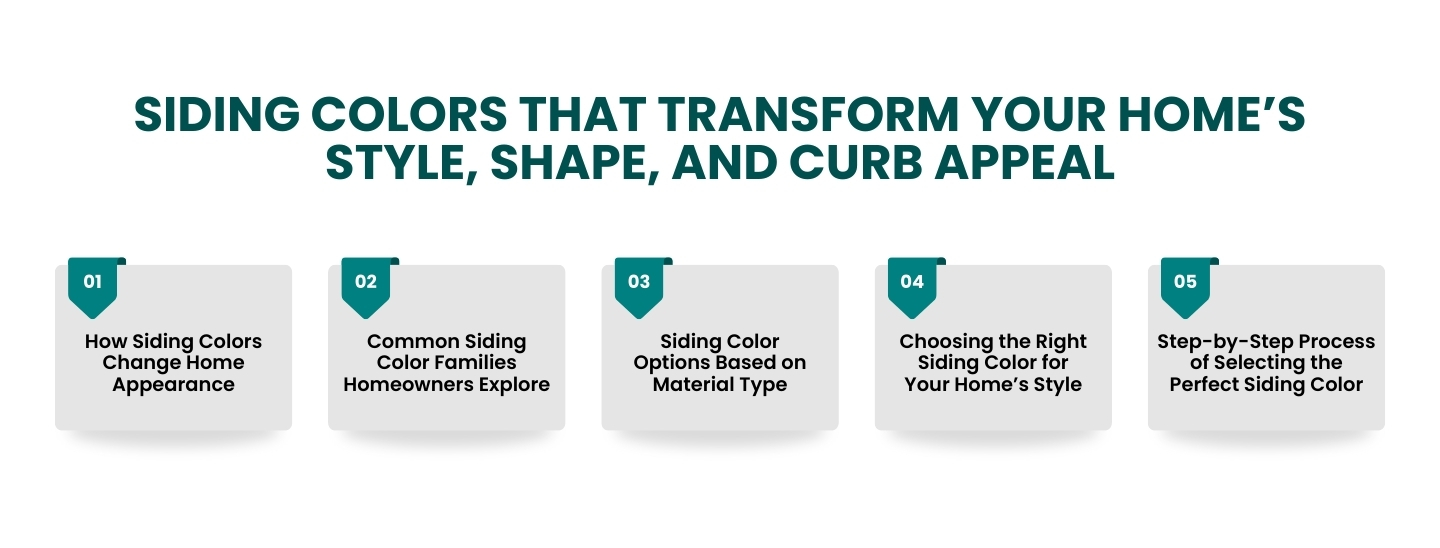
Table of Contents
How Siding Colors Change the Look and Perception of the Home
Common Siding Color Families Homeowners Explore
Popular Siding Color Ideas
Siding Color Options Based on Material Type
Texture Types That Influence How Siding Colors Look
Choosing the Right Siding Color for Your Home’s Style
Trending Siding Colors for 2025
Cost Considerations When Choosing Siding Colors
Maintenance Requirements for Keeping Siding Colors Fresh
Final Thoughts
Siding color can greatly impact the way a home is perceived, from its size and shape to its overall style. Different colors create varying impressions, making the home feel larger, bolder, calmer, or more welcoming. Understanding how color affects your home’s aesthetic helps you choose a shade that complements your personal style and the architectural design of your property.
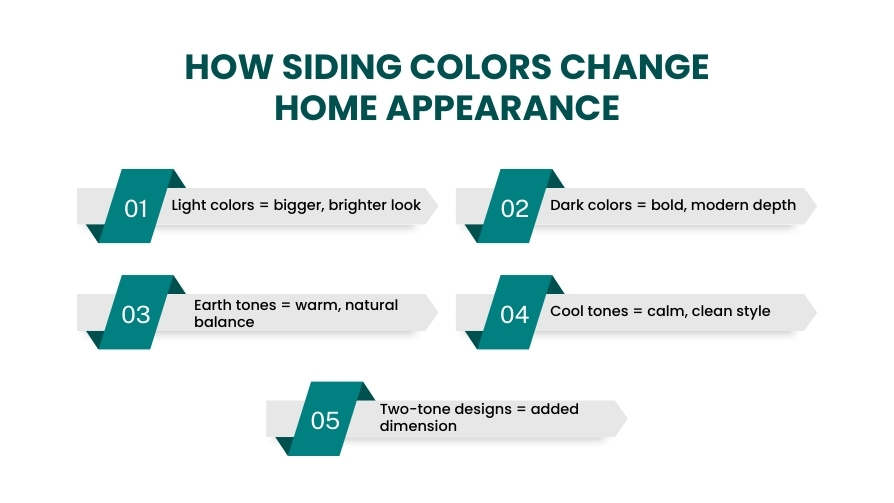
Light colors like cream, tan, and almond reflect sunlight, making the home feel larger and more airy. These shades are perfect for smaller homes or areas with limited natural light, as they visually expand the space. Light tones also pair well with darker roof colors, offering a balanced, inviting look.
Dark hues like navy, charcoal, and deep grey add depth and sophistication. These shades absorb light, creating strong contrasts and emphasizing sleek architectural lines. Dark exteriors are ideal for modern and farmhouse-style homes that want a bold, dramatic statement.
Earth tones, such as brown, cedar, and wood stains, create a warm, grounded aesthetic. These colors blend naturally with landscaping, stonework, and wooded surroundings, making the home feel more connected to nature. Ideal for traditional and craftsman-style homes, they provide a timeless, welcoming look.
Cool tones like blue, grey, and muted sage create a peaceful, modern exterior. These colors work well with minimalist designs, highlighting smooth lines and geometric shapes. Cool tones also pair beautifully with white trim and natural wood accents, maintaining a fresh and balanced look.
Two-tone siding adds dimension and visual interest. By using a primary color for the main level and a secondary color for accents, gables, or trim, you can break up large surfaces and create a polished, custom look. This approach works for both traditional and modern designs, offering a refined finish without overwhelming the exterior.
Homeowners explore different siding color families to find a look that matches their home’s architecture, surroundings, and personal style. Each color group brings its own character, whether it's calm, bold, warm, or modern. Understanding these families helps homeowners choose palettes that stay beautiful for years.
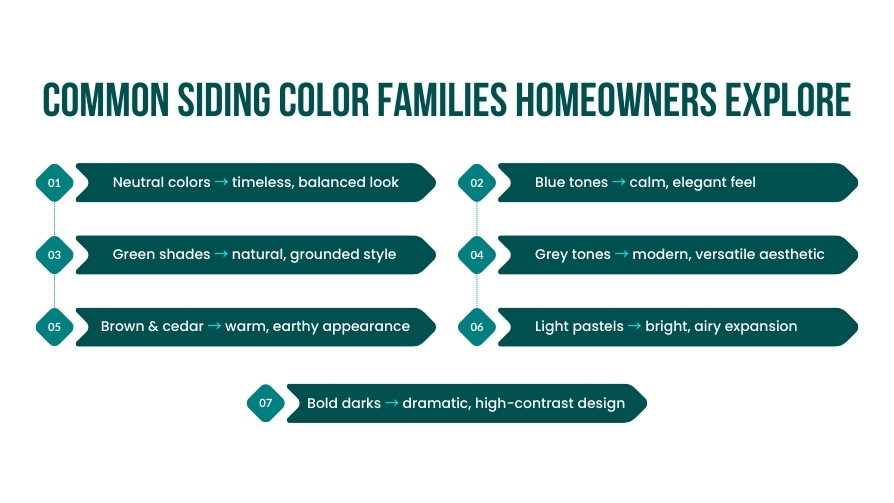
Neutral siding colors remain timeless and universally appealing. Shades like cream, beige, clay, taupe, and soft greys create a clean, balanced exterior that blends easily with most roof and trim combinations. Neutrals never overpower architectural features, making them a favorite for long-term curb appeal. It is best for:
Blue siding colors offer a calming, elegant feel that ranges from soft coastal shades to rich, modern tones. Lighter blues create a breezy atmosphere, while deeper options like Pacific Blue or blue-grey add sophistication and depth. It is best for:
Green siding colors blend seamlessly with greenery and natural landscapes. Shades like sage, cypress, and spruce give the home a soothing, organic character that feels grounded and inviting. It is best for:
Grey remains one of the most popular choices for contemporary, farmhouse, and coastal homes. Light grey feels clean and airy, while deeper shades like graphite, driftwood, and slate deliver modern contrast. It is best for:
Brown and cedar-inspired siding colors bring warmth, richness, and natural texture to the home. Whether using real cedar shakes or wood-look vinyl, these tones add depth and create a welcoming, earthy appearance. It is best for:
Light and pastel siding colors brighten the home and add gentle character. Soft yellows, pale blues, and creamy tones create a warm, cheerful presence and make smaller homes appear larger. It is best for:
Bold and dark colors create a strong, eye-catching exterior. Deep greens, stormy greys, and dark blues highlight the home’s lines and bring a modern, dramatic effect. It is best for:
Popular siding color ideas are shaped by long-term trends, architectural compatibility, and how well colors age over time. Homeowners usually gravitate toward shades that enhance curb appeal, complement roof and trim colors, and remain visually balanced across seasons rather than short-lived trends.
Light and neutral siding colors remain popular because they brighten exteriors and make homes appear larger and more welcoming. These shades reflect sunlight well and adapt easily to different architectural styles.
Common popular choices include:
These colors are especially popular for classic, coastal, and transitional homes
Modern homes often use deeper, high-contrast siding colors to create a bold and structured appearance. These shades emphasize architectural lines and work well with minimal trim palettes.
Popular modern color ideas include:
Earth-toned siding colors are popular among homeowners who want their homes to blend naturally with surrounding landscapes. These shades feel grounded, warm, and visually timeless.
Common choices include:
Each siding material presents color differently based on texture, finish, and how light interacts with the surface. Some materials enhance deep modern tones, others bring out natural warmth, while some are ideal for clean, uniform finishes. Understanding how color appears on each material helps homeowners choose exterior shades that remain visually appealing over time.
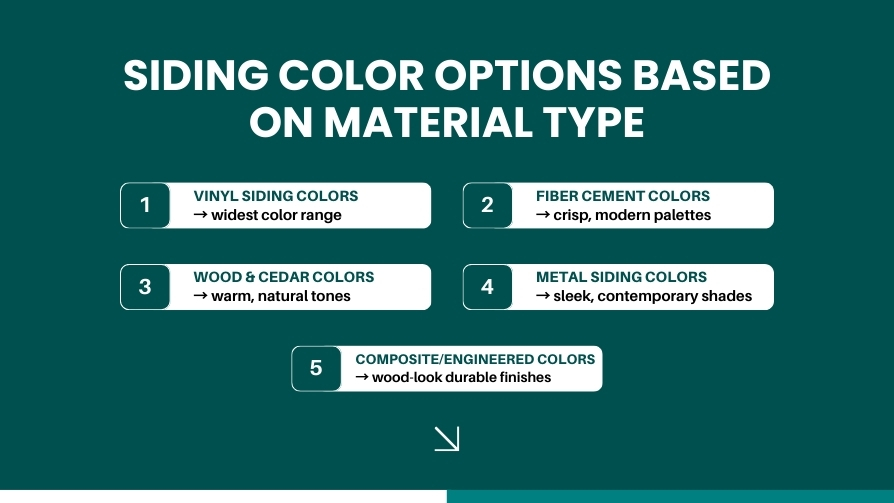
Vinyl siding offers the widest variety of exterior color choices, making it popular for homeowners exploring different visual styles. Its smooth and textured finishes allow colors to appear consistent and balanced across large surfaces.
Popular vinyl siding color choices include:
Fiber cement siding displays color with sharp definition, making it well suited for clean, modern palettes. Its surface allows colors to appear crisp rather than muted, which works well for contemporary architecture.
Common fiber cement color choices include:
Wood and cedar siding highlight natural grain patterns, allowing color to enhance texture rather than cover it. Stains and finishes bring depth and warmth that naturally evolve over time.
Popular wood and cedar color tones include:
Metal siding supports strong, modern color statements with clean lines and smooth finishes. Colors tend to appear uniform and bold, making them ideal for contemporary designs.
Popular metal siding colors include:
Composite and engineered wood siding mimics the look of natural wood while offering stable, long-lasting color. These materials are often chosen for their ability to balance warmth with modern styling.
Common composite siding color choices include:
The right siding color combination creates balance, harmony, and a polished exterior. When colors work together, roof, siding, trim, shutters, and brick, your home instantly looks more intentional and visually appealing. These combinations help homeowners understand how to match siding with existing features.
The roof covers a large visual area, so siding color should complement its tone, not compete with it. Matching siding to roof color creates a stronger, more cohesive exterior.
Best siding colors for:
Brick brings texture and strong natural color to a home, so the siding shade should soften and complement it. Red and brown bricks pair especially well with muted, earthy, and neutral tones.
Some popular combinations include:
General rules:
Siding texture plays a major role in how color appears on a home. The same shade can look completely different depending on whether the surface is smooth, grainy, or patterned. Texture affects how light reflects, how shadows fall, and how strong or soft the color looks in different weather conditions. Some textures make colors appear deeper and richer, while others make them look clean, sleek, or subtly blended. Understanding these texture types helps homeowners choose siding colors that show consistently across different lighting and seasons.
Wood grain texture enhances warm and natural tones by giving the siding visual depth and organic character. Browns, cedar shades, and wood-stain colors look richer on wood-grain surfaces because the grooves catch light and shadow, creating a layered effect. This texture brings a natural warmth that works beautifully on traditional, craftsman, and rustic homes. The slight variations within the pattern also help the color blend smoothly with the surrounding landscaping and natural materials, making the exterior feel connected to its environment.
Smooth siding textures offer a clean, polished appearance that works especially well with modern and minimalist designs. Because the surface reflects light evenly, dark colors and cool greys appear sharper and more defined. Deep blue, graphite, charcoal, and even pure white look sleek and contemporary on smooth siding. This texture creates strong visual lines and makes the color stand out without any surface distraction. Homes that use smooth siding often aim for a refined, architectural look that feels both modern and high-end.
Shake and shingle textures bring movement and variation to the exterior, making colors appear dynamic and layered. The uneven surfaces and subtle shadows create a lively interaction between light and texture, which makes accent colors stand out beautifully. These textures are often used on gables, upper stories, porches, or as part of two-tone siding designs to add visual interest. Shake and shingle textures help break up large surfaces, giving the home a more detailed and inviting look.
Vertical siding, especially in board-and-batten style, adds height and structure to a home’s exterior. The vertical lines draw the eye upward, making the house feel taller and more architecturally defined. When paired with contrasting colors, such as white siding with dark trim or deep siding colors with bright accents, the effect becomes even stronger. Board-and-batten profiles are commonly used in farmhouse, modern, and contemporary homes where clean lines and bold geometry highlight the color’s impact. This texture works especially well for designs aiming for height, rhythm, and strong curb appeal.
Every home style has color families that naturally complement its architecture. Choosing a siding color that fits the home’s design helps maintain balance and creates a cohesive, intentional exterior. When the color matches the structure, trim, and roof style, the home feels more complete and visually harmonious.
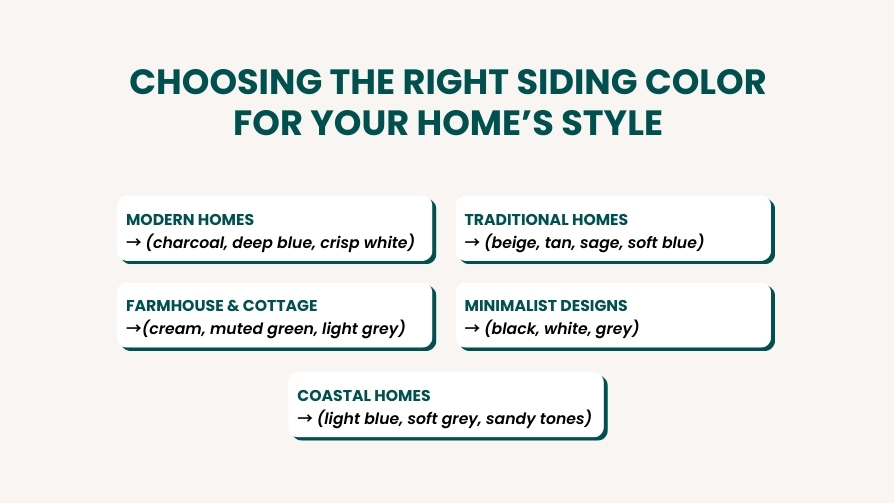
Modern homes typically look best with bold, confident color choices. Deep greys, charcoal, dark blue, and crisp white emphasize clean lines and strong edges. These colors enhance the modern feel by creating high contrast with large windows, black frames, or metal accents. The sleek appearance of modern architecture pairs well with colors that feel structured, sharp, and contemporary.
Traditional homes benefit from soft, warm, and welcoming colors. Beige, tan, sage, soft blue, and gentle neutrals complement classic architectural features without overpowering them. These tones create a timeless look that feels comfortable and familiar. Traditional exteriors rely on balanced, harmonious shades that make the home feel established and inviting.
Farmhouse and cottage designs suit lighter, softer siding colors that highlight their cozy charm. Cream, light grey, and muted green are among the most popular choices because they keep the home bright and approachable. These tones complement board-and-batten textures and natural wood accents, creating a relaxed and homey appearance that fits perfectly with these styles.
Minimalist homes focus on clean simplicity, so the color palette often revolves around monochrome or black-and-white contrasts. These high-contrast combinations highlight symmetry and straight lines while keeping the exterior streamlined. Minimalist color choices remove visual clutter and allow the structure itself to stand out.
Coastal homes favor airy and refreshing colors inspired by the ocean and shoreline. Light blue, soft grey, and sandy neutrals create a gentle, breezy feel that pairs well with bright trim and natural light. These colors help the home blend with its surroundings while maintaining a light, open atmosphere that reflects coastal living.
Choosing the perfect siding color is a thoughtful process that blends personal style with architectural balance. Each step helps homeowners narrow down choices, see how colors behave in real lighting, and understand how different textures and profiles influence the final look. Following this step-by-step approach ensures the final color feels intentional, timeless, and visually harmonious from every angle.
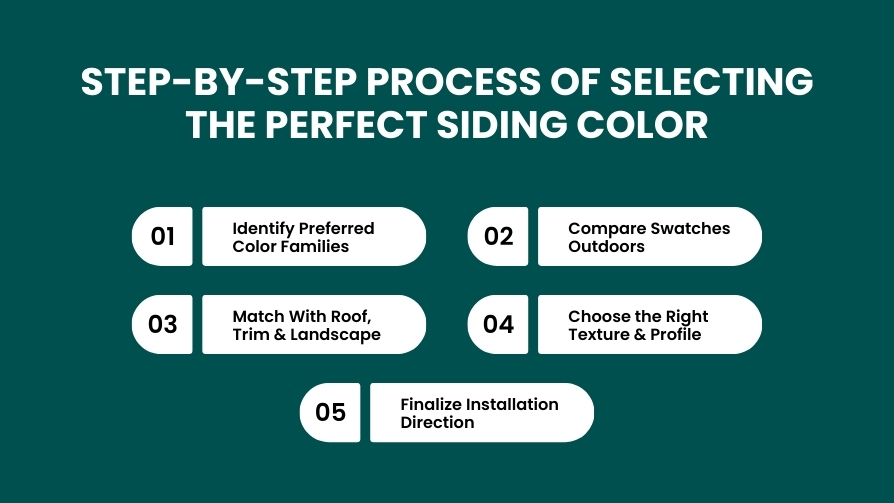
Selecting a siding color starts with choosing the general color families you are most drawn to, warm, cool, neutral, dark, bright, or natural tones. Warm colors feel welcoming and traditional, cool tones feel calm and modern, and neutral shades offer versatility and timelessness. Identifying your preferred color group early helps narrow down hundreds of options and guides the rest of the selection process.
Siding color looks completely different in sunlight, shade, and cloudy conditions, which is why outdoor swatch testing is essential. Colors that look perfect indoors can appear brighter, darker, or more muted once placed on the exterior. Viewing swatches at different times of day helps homeowners understand how the color behaves in morning sun, afternoon light, and evening shadows. This ensures the final selection remains attractive year-round.
A siding color must coordinate with existing features like the roof, trim, gutters, stonework, and surrounding landscaping. Matching these elements creates a unified exterior where no color feels out of place. When siding blends smoothly with the roof tone and complements accents such as shutters and front doors, the entire home feels visually balanced. Ignoring these connections often leads to color conflict, making the home appear disjointed or overly busy.
Texture significantly affects how siding colors appear. Smooth finishes make colors look clean and modern, while wood grain and shake textures add warmth and variation. Vertical panels create height and can make colors appear deeper, while horizontal layouts soften the shade. Choosing the right texture ensures the color appears the way it was intended once installed on a full exterior wall.
The direction of the siding, horizontal, vertical, shake, shingle, or a mixed approach, changes how the color interacts with the home’s shape. Horizontal siding feels traditional and calm, vertical and board-and-batten profiles emphasize height, and shake accents add texture and variation. Finalizing the layout ensures the chosen color complements the architectural style and enhances the home’s overall character.
Matching siding colors with the home’s existing features, such as the roof, brickwork, and trim- creates a balanced, visually appealing exterior. When these elements work together, the home feels unified and intentional rather than mismatched or busy. The combinations below help homeowners choose siding colors that complement the home’s fixed features and maintain harmony across the entire exterior.
The roof is one of the largest and most permanent visual elements of a home, which makes it one of the strongest influences on siding color choices. A well-matched siding color enhances the roof instead of competing with it, and creates a cohesive exterior that feels visually balanced.
These combinations prevent color clashes and ensure the home looks harmonious from every angle, especially when viewed from the curb.
Brick adds strong tones and textures, so siding colors must complement its underlying warmth or coolness. The goal is to balance the brick’s natural depth with siding shades that soften or enhance its color rather than overwhelm it.
These pairings highlight the brick’s natural beauty while ensuring the exterior feels balanced and visually cohesive.
Trim acts as the visual frame of your home, shaping its structure and defining key architectural elements. The right trim color enhances the siding, draws attention to the windows and doors, and creates contrast or softness depending on the desired effect.
The right trim color elevates the main siding shade, ties the home together, and strengthens its overall design identity.
Siding color trends for 2025 continue to move toward natural, calming, and modern tones that bring warmth and sophistication to a home’s exterior. These trending shades offer a balance between long-lasting appeal and fresh contemporary style, making them popular choices for new builds and remodels across the country. From rich blues to soft neutrals, the year’s most popular colors focus on enhancing architectural features while ensuring the home looks elegant in any lighting.
Deep blue tones remain one of the strongest color trends heading into 2025. These shades create a rich, upscale look that works beautifully with white or black trim. Deep blues add depth and character without overwhelming the home, making them ideal for modern, coastal, and contemporary designs.
Soft grey continues to be one of the most popular siding colors because of its incredible versatility. It pairs well with nearly every roof color, trim style, and architectural profile. In 2025, homeowners prefer mid-tone greys that balance brightness with warmth, giving the home a clean and welcoming appearance.
Sage green represents the shift toward natural, earthy tones that feel calm and grounded. These muted greens blend almost effortlessly with landscaping, making them perfect for suburban, traditional, farmhouse, and cottage-style exteriors. Sage offers personality while still feeling timeless.
Warm taupe tones bring a soft, modern warmth to the exterior. These hues fall between brown and grey, giving homes a smooth, neutral base that feels neither too cool nor too warm. In 2025, warm taupes are especially popular for homeowners who want a sophisticated look that remains subtle and inviting.
Siding color choice can influence total project cost more than many homeowners realize. Some colors are standard and widely available, while others require premium pigments or special coatings to prevent fading. Multi-color layouts, accent areas, and material-specific color options can also add to the overall budget. Understanding these cost factors helps homeowners choose colors that fit both their design vision and spending plan.
Basic neutral colors, such as beige, grey, tan, cream, and off-white- typically cost the least because manufacturers produce them in large volumes. These shades do not require premium pigments or special UV-resistant coatings, which makes them more budget-friendly. On most materials, standard color pricing ranges from $2.50 to $6.00 per sq. ft., depending on the siding type.
Deep blues, charcoal blacks, forest greens, and other rich tones often require fade-resistant coatings to stay vibrant over time. These coatings help prevent sun bleaching and color unevenness, especially in high-sunlight regions. Because of this added protection, dark or premium colors typically cost between $3.50 and $8.50 per sq. ft. Materials like fiber cement and metal may fall on the higher side due to specialized manufacturing processes.
Homes that use multiple siding colors, such as a different shade for gables, upper floors, or board-and-batten sections, usually require more material and installation time. Additional trim pieces and profile transitions also add to the cost. Two-tone or accent-heavy designs generally increase the project price by 10% to 25%, bringing material costs to $4.00–$10.00 per sq. ft., depending on the combination.
Each siding material has its own pricing structure and color technology:
Here is a simple breakdown of estimated siding color costs across materials and finishes.
| Color Category / Option | Average Cost per sq. ft. | Notes |
|---|---|---|
| Standard neutral colors | $2.50 – $6.00 | Widely available; lowest cost range |
| Deep or dark premium colors | $3.50 – $8.50 | Require fade-resistant coatings |
| Two-tone or accent designs | $4.00 – $10.00 | Added trim + extra material |
| Vinyl siding colors | $2.00 – $7.00 | Cheapest for standard colors |
| Fiber cement color finishes | $5.50 – $11.00 | Factory-baked coatings increase longevity |
| Engineered wood colors | $4.50 – $9.00 | Premium stains or wood-look tones |
| Metal siding colors | $4.00 – $12.00 | High durability and uniform color |
Keeping siding colors fresh and vibrant over the years requires simple but consistent maintenance. While modern siding materials are designed to resist fading, dirt buildup, and weather changes, routine care helps protect the finish and prevents discoloration. These steps ensure the siding color stays sharp, the exterior remains clean, and the home maintains strong curb appeal throughout every season.
Routine cleaning is the easiest way to preserve siding color. Dust, pollen, mold, and everyday environmental debris can accumulate on the surface and cause the siding to look dull. A gentle wash once or twice a year helps remove buildup and restore brightness. Using mild soap and low pressure prevents damage while keeping the color looking clean and fresh.
Certain siding colors, especially dark or richly pigmented tones- benefit from fade-resistant or UV-stable coatings. Sun exposure can gradually lighten deeper shades, making protective finishes essential for long-term color stability. Homeowners in high-sunlight regions may need periodic inspections to ensure the coating remains effective. Choosing materials with factory-applied UV protection helps maintain color vibrancy for many years.
Seasonal inspections help identify early signs of wear or discoloration before they become noticeable. Checking the siding in spring and fall allows homeowners to catch issues like fading, mildew spots, or water damage caused by extreme weather. Addressing these small concerns early prevents long-term color loss and ensures the siding continues to perform as intended.
For materials that support touch-ups, such as wood, engineered wood, and some fiber cement products, minor scratches or scuffs can be corrected to keep the exterior looking uniform. Touch-ups help maintain consistent color, especially in high-contact areas near doors, decks, or landscaping. This small maintenance step helps the home retain a polished and well-kept appearance.
Choosing the right siding color is one of the most impactful decisions a homeowner can make for their exterior. The perfect shade not only improves curb appeal but also enhances architectural features, balances the home’s shape, and creates a style that feels timeless. By understanding how color families, textures, roof tones, and surrounding elements influence the final look, homeowners can make confident choices that match their personal taste and long-term vision.
Modern visual tools, outdoor swatch testing, and thoughtful color comparisons help eliminate guesswork and prevent mismatched combinations. Considering cost factors, maintenance needs, and material-based color options also ensures the siding stays vibrant and durable for many years. Whether exploring soft neutrals, deep modern tones, nature-inspired shades, or bold contrasting accents, today’s siding color trends offer endless ways to create a beautiful, harmonious exterior. With the right preparation and color insight, any homeowner can transform their home’s appearance and achieve a stunning, cohesive design that remains attractive through every season.
Neutral greys, beige, and soft white stay timeless across decades, offering a versatile and appealing aesthetic that works with most architectural styles. These colors remain fashionable and adaptable, ensuring that your home maintains its curb appeal for years to come
Yes, dark shades absorb more sunlight, which can lead to faster fading over time. To maintain their richness, dark siding colors should be treated with UV-stable coatings. This protective layer helps reduce sun damage and extends the lifespan of your siding.
Soft grey, deep blue, white, sage, and warm beige consistently attract buyers. These colors are widely recognized for their ability to complement a variety of architectural styles while maintaining broad market appeal, making your home stand out in a positive light.
Yes, light tones, such as soft whites and light greys, can visually expand the footprint of a small home. By reflecting more light, they create the illusion of a larger, more open space, making them an excellent choice for smaller homes or areas that feel cramped.
Yes, two-tone siding colors are an excellent way to add depth and dimension to your home. They can highlight architectural details, such as trim or porches, while providing a modern, dynamic look. When done well, two-tone combinations can also create visual interest and elevate the overall exterior design.
Join our mailing list for exclusive updates, expert tips, and special offers tailored to your needs. Be the first to know about the latest in home services.

Renovize Home is a platform that supports homeowners from planning to renovation. Whether it’s Renovize AI for guidance or a one-on-one call with Pro Finder, we understand your project and match you with local contractors tailored to your needs.
Who We Are
About Renovize HomeGet in TouchHomeownwer Support:
Coming Soon!
General Inquiries:
support@renovizehome.com
Head Office:
24 Greenway Plaza, STE 1800M, Houston, TX 77046.