
Explore All
BROWSE BY CATEGORY
Interior
Exterior
Home Essentials
Homeowner Tools
Blogs & Guides
Find a Pro
Book Your Appointment Now
Home Essentials
About Renovize Home
Explore All
BROWSE BY CATEGORY
Interior
Exterior
Home Essentials
Homeowner Tools
Blogs & Guides
Find a Pro
Book Your Appointment Now
Home Essentials
About Renovize Home
Last Updated 2025-11-05
Your roof protects everything beneath it, but over time, age, weather, and wear can reduce its strength. When patch repairs are no longer effective, homeowners usually face two main options: a full tear-off or a re-roofing project.
A full tear-off involves removing every layer of your existing roof, while re-roofing means adding a new layer of shingles on top of the old one. Understanding both options helps you make the right decision for your home’s long-term protection, appearance, and safety.
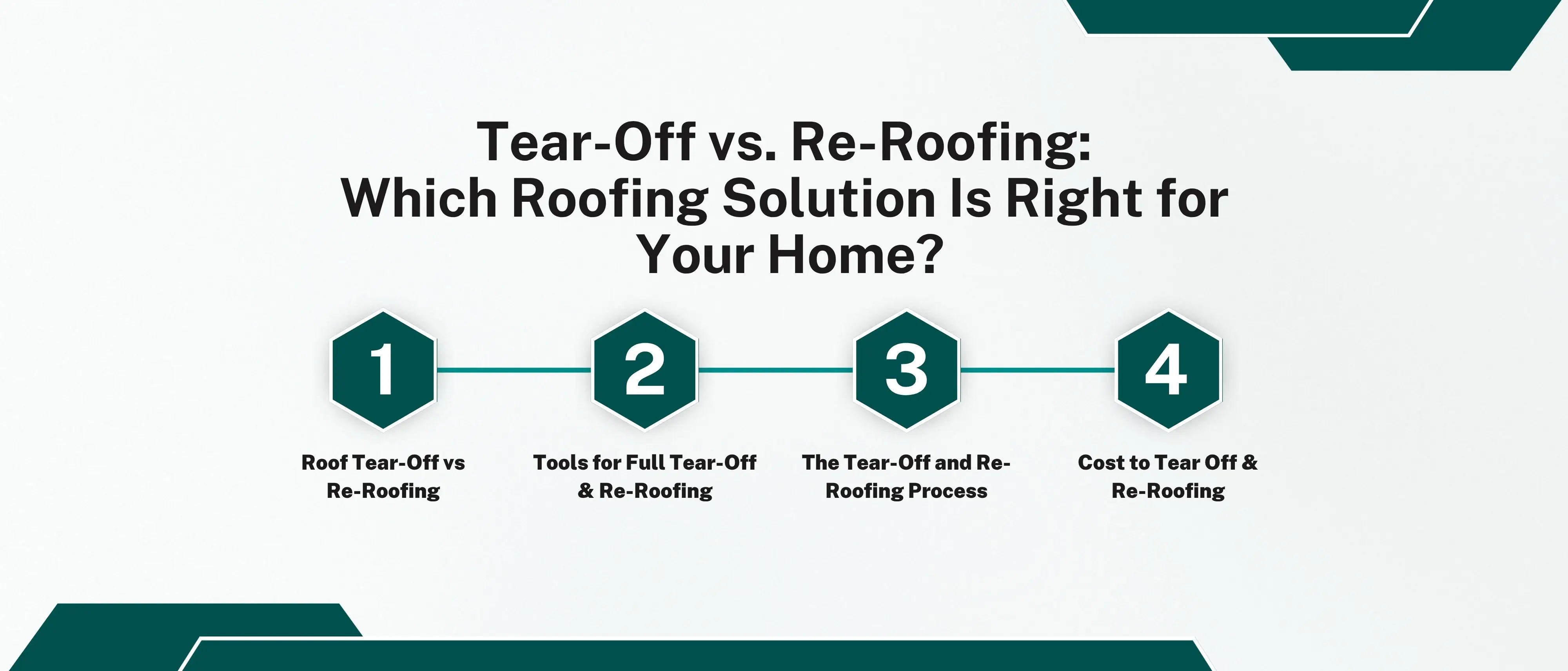
Table of Contents
What is a Roof Tear-Off?
What is Re-Roofing?
Difference Between Roof Tear-Off and Re-Roofing
Cost to Tear Off and Re-Roofing
Tools for Full Tear-Off and Re-Roofing
Tear-Off vs Overlay (Re-Roof)
Custom Roof Designs and Shingles
Process of Tear-Off and Re-Roofing
When to Choose Tear-Off Over Re-Roofing
Final Thoughts
A roof tear-off is the process of completely removing all existing roofing materials including shingles, underlayment, nails, and damaged decking to start with a clean surface. This method allows roofers to inspect the roof deck for signs of rot, water infiltration, or structural weakness. By rebuilding from the base, you ensure a solid foundation for the new roofing system, improving durability and weather resistance.
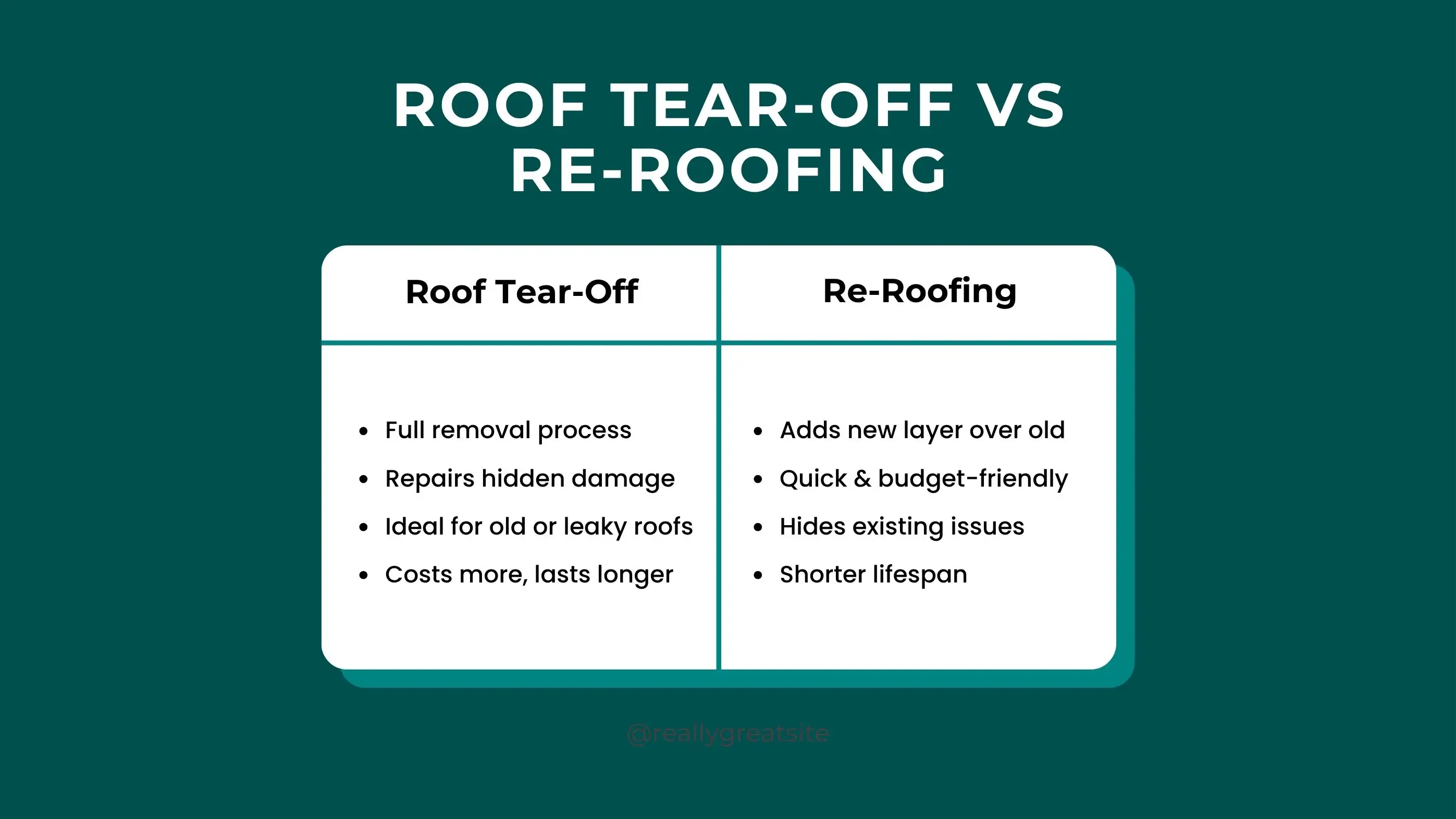
Many homeowners confuse re-roofing with roof replacement, but the two serve very different purposes. Re-roofing involves installing a new layer of shingles over the old one, while roof replacement requires removing all existing materials and installing everything new from the deck up.
Re-roofing is quicker and more budget-friendly, but roof replacement ensures a stronger, longer-lasting system.
Re-roofing should only be done if the existing roof is stable and there’s no sign of trapped moisture or leaks in the attic.
The difference between roof tear-off and re-roofing lies in the depth of restoration and long-term reliability of the roof system. Both approaches aim to renew your roof, but they serve very different purposes depending on the roof’s condition, age, and structure.
A full tear-off involves removing every layer of old roofing shingles, nails, underlayment, and sometimes damaged sections of decking. This allows roofers to examine the base for rot, mold, or moisture trapped beneath the surface. It’s a more thorough process that ensures your new roofing system is built on a solid foundation.
Tear-offs are ideal for homes with multiple roof layers, leaks, or visible sagging. Although it costs more initially, it offers superior longevity (20–30 years) and full manufacturer warranty eligibility.
Re-roofing, on the other hand, is a quicker and less invasive option where a new shingle layer is placed directly over the old one. This method restores appearance and waterproofing without removing the existing materials. It’s less expensive and can be completed in a shorter time frame, making it popular for newer roofs that only have one layer and no structural issues. However, it adds extra weight to the roof and limits future repair flexibility since hidden problems beneath remain covered.
The overall cost depends on your roof’s size, pitch, and materials used. A typical U.S. homeowner can expect the following pricing breakdown.
Tear-off costs include labor for removal, waste disposal, and cleanup. Contractors often charge by the roofing square (100 sq. ft.), and costs increase if your roof has multiple layers or heavy materials such as clay tile. Accessibility also affects pricing of steep roofs or homes with multiple stories that require more time and safety equipment.
Re-roofing costs depend on roof size, slope, material, and local labor. Because a new shingle layer is added over the existing one, it’s usually cheaper than a full tear-off. Architectural asphalt is the most affordable; premium or impact-rated shingles cost more. Make sure the estimate includes ridge caps, starter strips, nails, ventilation checks, and any needed flashing/boot replacements.
| Repair Type | Average Cost (USD) | Details |
|---|---|---|
| Roof Tear-Off | $1.00 – $2.50 per sq. ft. | Labor to remove old layers, disposal, and full cleanup. Steeper or multi-story roofs cost more. |
| Re-Roof (Asphalt Overlay) | $2.50 – $4.50 per sq. ft. | New asphalt shingle layer over one existing layer (when code allows). Includes starter, ridge caps, nails, and basic flashing touch-ups. |
| Re-Roof (Upgraded Asphalt) | $3.00 – $5.50 per sq. ft. | Architectural/impact-rated shingles; added labor and materials, still an overlay (no tear-off). |
| Full Tear-Off & New Roof | $7,500 – $18,000+ | Complete removal + new underlayment, vents, flashings, and shingles for an average-size home. |
The overall cost of a tear-off and re-roofing project depends on several factors:
Most U.S. homes fall between $7,000 and $15,000 for a complete tear-off and re-roof, with warranties extending 20 to 50 years depending on the product.
Using the right tools ensures both efficiency and safety during the entire roofing process. From removing old shingles to installing a new roof, each tool plays a crucial role in achieving a clean, durable, and long-lasting result. Professional roofers rely on specialized equipment to prevent damage to the roof deck, reduce manual labor, and maintain accuracy at every stage. The right combination of tear-off and re-roofing tools ensures the new roof performs well for decades.
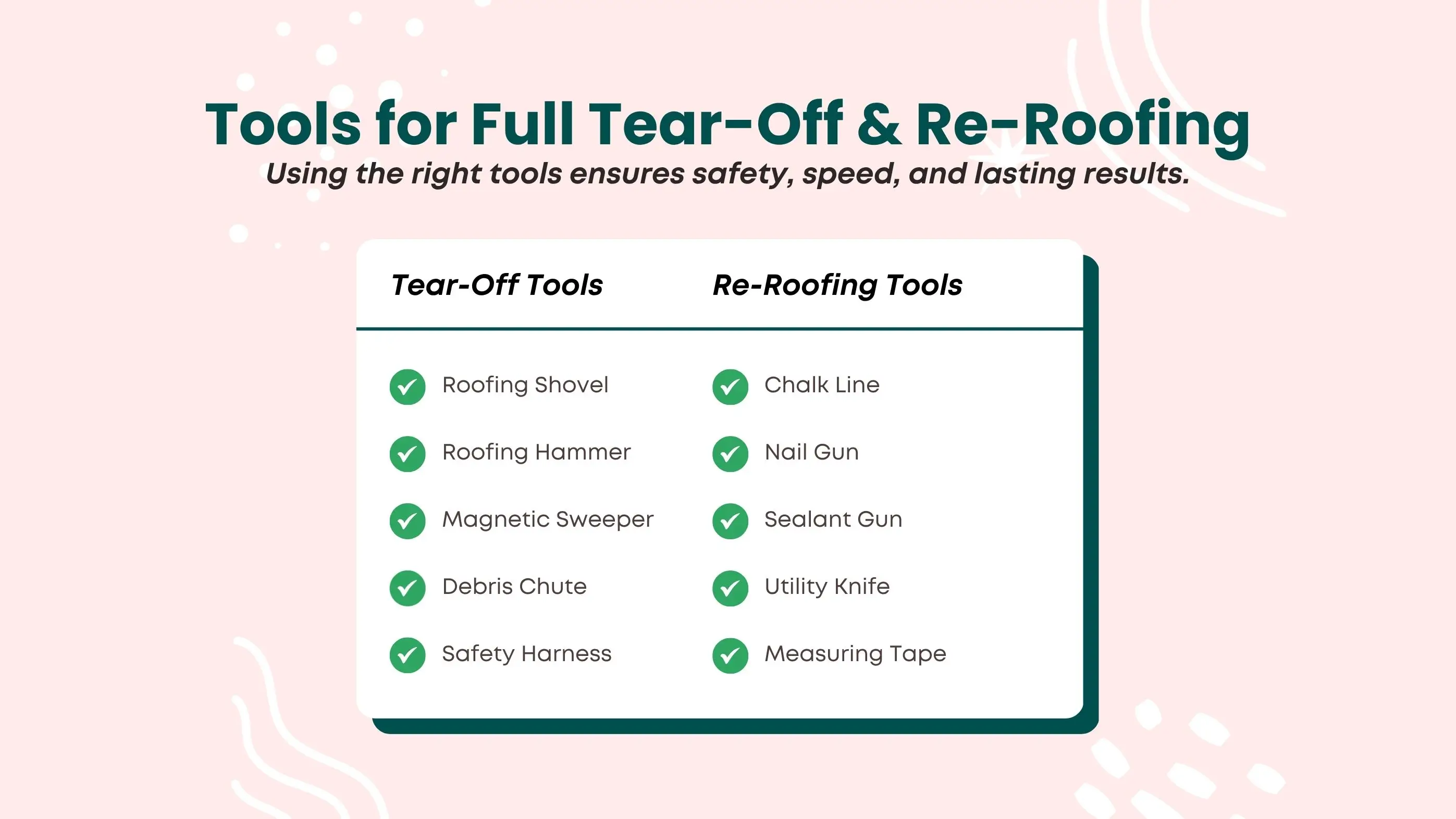
Re-roofing requires precision and attention to detail. Each tool ensures proper alignment, sealing, and fastening so that the new roofing system can handle weather stress and last for years. Proper use of these tools not only enhances performance but also gives your roof a professional, flawless finish.
When deciding between removing your old roof or adding a new layer, understanding the benefits and drawbacks of each method helps guide your choice.
| Factor | Tear-Off | Overlay (Re-Roof) |
|---|---|---|
| Lifespan | 20–30 years, longer-lasting since old materials are fully removed. | 10–15 years, shorter lifespan due to layering over existing roof. |
| Weight | Removes old layers, keeping roof structure light and balanced. | Adds extra load, which may stress older roof framing. |
| Inspection | Allows full inspection of the deck for rot, mold, or soft spots. | Covers existing layers, hiding potential damage underneath. |
| Cost | Higher upfront cost due to removal and disposal of old materials. | Lower initial cost since it skips tear-off labor. |
| Code Compliance | Required after two existing layers, ensures structural safety. | Permitted only once and not suitable for damaged roofs. |
Although overlays save money initially, they often shorten roof life and make future tear-offs more costly. A complete tear-off offers the best value and long-term peace of mind.
A full tear-off and re-roofing project allows you to redesign your roofing system from the ground up. This gives you a chance to improve insulation, ventilation, and energy efficiency while enhancing curb appeal.
When planning your new roof:
Understanding the complete tear-off and re-roofing process helps homeowners stay informed about what happens during installation and ensures the project meets professional standards. A well-executed process not only guarantees better roof performance but also prevents hidden issues such as moisture buildup, poor ventilation, or premature shingle failure. Below is a detailed breakdown of each step involved in a full tear-off and re-roofing project.
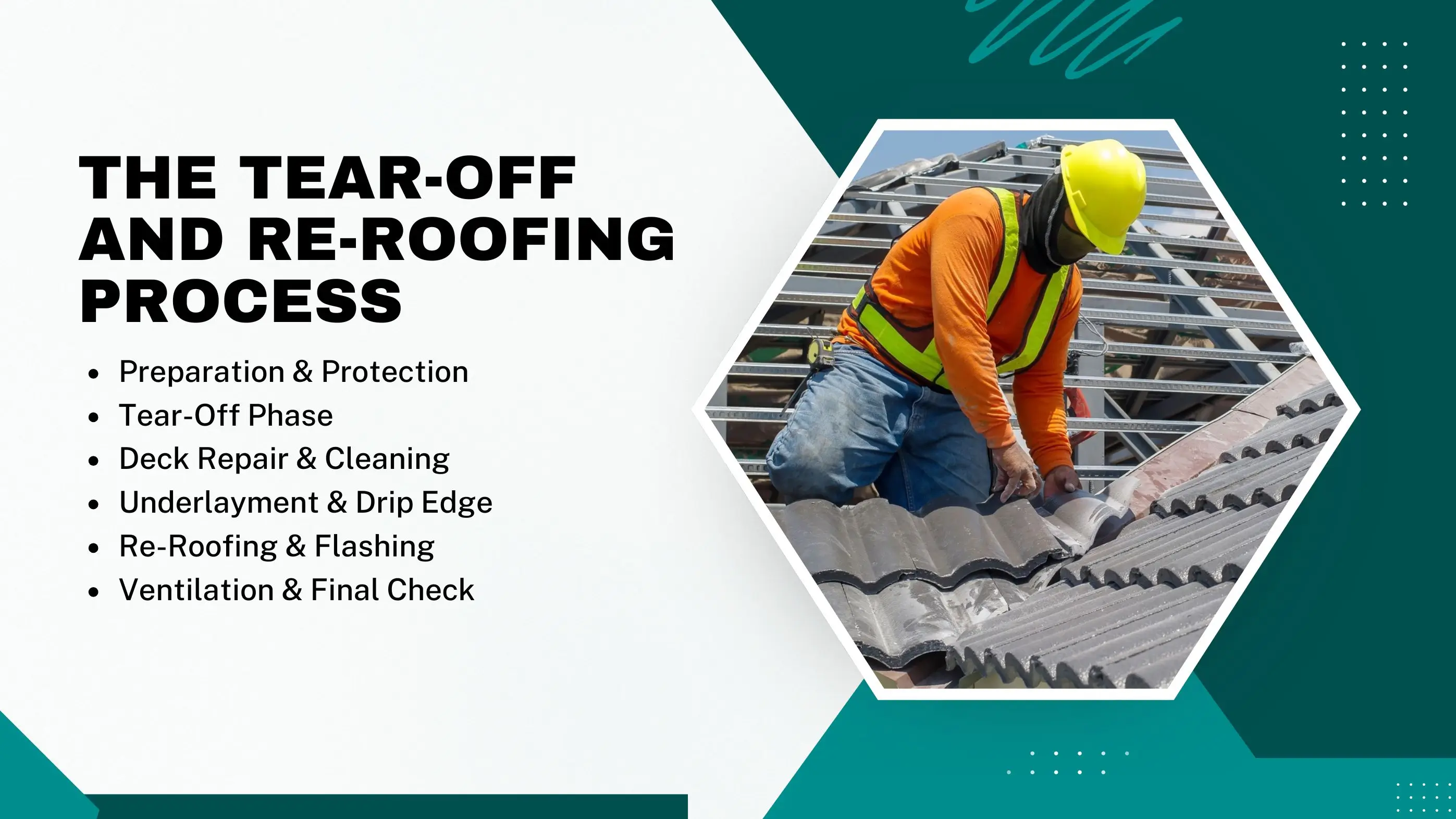
Before any roof work begins, professional contractors prepare the area to ensure safety and prevent property damage.
This careful preparation creates a clean, secure work environment and reduces cleanup time once the project is complete.
The tear-off is the most labor-intensive part of the roofing process but also the most important for long-term results.
Once the old materials are removed, the decking (roof base) is carefully examined and repaired.
The underlayment acts as the first line of defense against leaks and wind-driven rain.
Once the deck and underlayment are secured, new shingles or roofing materials are installed.
Proper ventilation is crucial for roof longevity and indoor comfort.
Choose a Full Tear-Off when your roof has multiple layers, visible leaks, or damaged decking. It’s the better option if you plan to stay in your home long-term or want to maximize warranty coverage.
Choose Re-Roofing if the existing roof has only one layer in good shape, the deck underneath is solid, and you need an affordable upgrade with a shorter timeline.
A full tear-off and re-roofing project restores your home’s protection from the ground up. While re-roofing can be faster and less costly, a complete tear-off ensures better structural strength, improved ventilation, and extended durability. With proper planning, quality materials, and professional installation, your new roof will safeguard your home for decades.
Connect with verified roofing experts through Renovize Home to find trusted professionals who can inspect, tear off, and rebuild your roof with precision and care.
A full tear-off adds greater resale value because buyers see it as a long-term fix with full warranty coverage and no hidden layers.
If you see leaks, sagging, or more than one shingle layer, a tear-off is best. It exposes deck damage and ensures a stronger rebuild.
Not always. Older framing may not support the added weight of another layer, especially if it already shows structural stress.
You can’t inspect or repair the roof deck. Trapped moisture, nails, and soft spots stay hidden, leading to expensive damage later. A full tear-off removes these risks and restores your roof’s integrity.
A full tear-off is more reliable. It allows proper sealing, flashing replacement, and deck fastening, all crucial for withstanding strong winds, hail, or heavy rain common in storm-prone regions.
Join our mailing list for exclusive updates, expert tips, and special offers tailored to your needs. Be the first to know about the latest in home services.

Renovize Home is a platform that supports homeowners from planning to renovation. Whether it’s Renovize AI for guidance or a one-on-one call with Pro Finder, we understand your project and match you with local contractors tailored to your needs.
Who We Are
About Renovize HomeGet in TouchHomeownwer Support:
Coming Soon!
General Inquiries:
support@renovizehome.com
Head Office:
24 Greenway Plaza, STE 1800M, Houston, TX 77046.