
Explore All
BROWSE BY CATEGORY
Interior
Exterior
Home Essentials
Homeowner Tools
Blogs & Guides
Find a Pro
Book Your Appointment Now
Home Essentials
About Renovize Home
Explore All
BROWSE BY CATEGORY
Interior
Exterior
Home Essentials
Homeowner Tools
Blogs & Guides
Find a Pro
Book Your Appointment Now
Home Essentials
About Renovize Home
Last Updated 2025-11-10
Your roof’s strength depends on the integrity of its structure: the hidden framework that carries weight, resists wind, and keeps your home safe. The roof structure includes rafters, trusses, sheathing, and connectors that distribute loads evenly across the building. When these parts weaken from age, moisture, or improper design, they can lead to sagging, leaks, or even collapse. Understanding the structure of a roof helps homeowners plan maintenance, reinforce weak areas, and protect their property for decades.
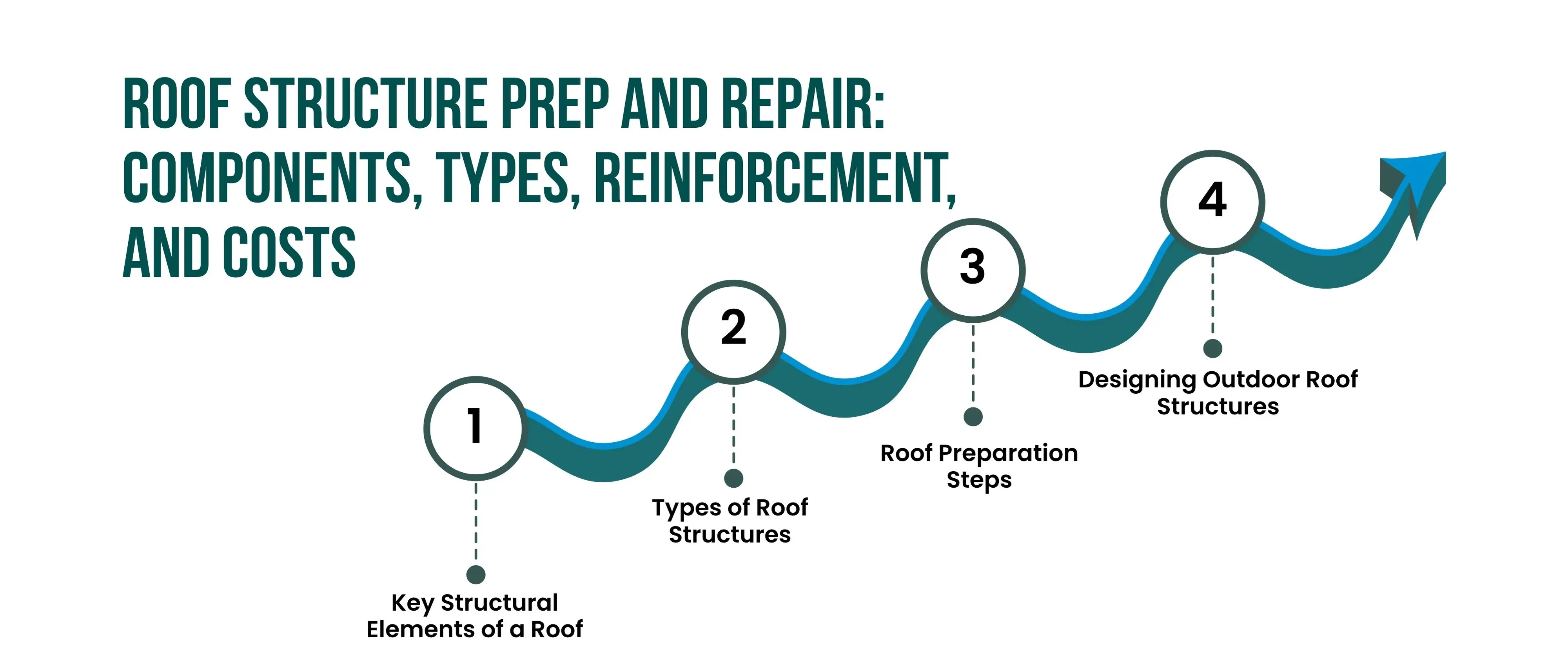
Table of Contents
What Is the Roof Structure and Why It Matters
Key Structural Elements of a Roof
Types of Roof Structures and How They Work
Materials for and Assemblies
Roof Diagnostics and Documentation for Long-Term Health
Roof Preparation Steps for a Solid Re-Roofing Foundation
Designing Outdoor Roof Structures
DIY vs Professional Structural Repairs
The roof structure is the skeleton of your roof. It transfers loads such as snow, wind, and roofing weight down to the walls and foundation. Rafters or trusses support sheathing (decking), which holds shingles or tiles. Together, these roof structural components maintain shape and stability.
In simple terms, the load travels from rafters or trusses to the sheathing and then to the walls, ensuring your roof resists uplift during storms and bears snow or equipment weight without sagging. A well-built structure not only lasts longer but also prevents costly interior damage and maintains energy efficiency. Understanding the parts of a roof structure and proper maintenance can easily extend your roof’s lifespan by 20 years or more.
Every roof has multiple structural elements that must work together to support loads and resist movement. During inspections, each component is evaluated for alignment, stability, and wear.
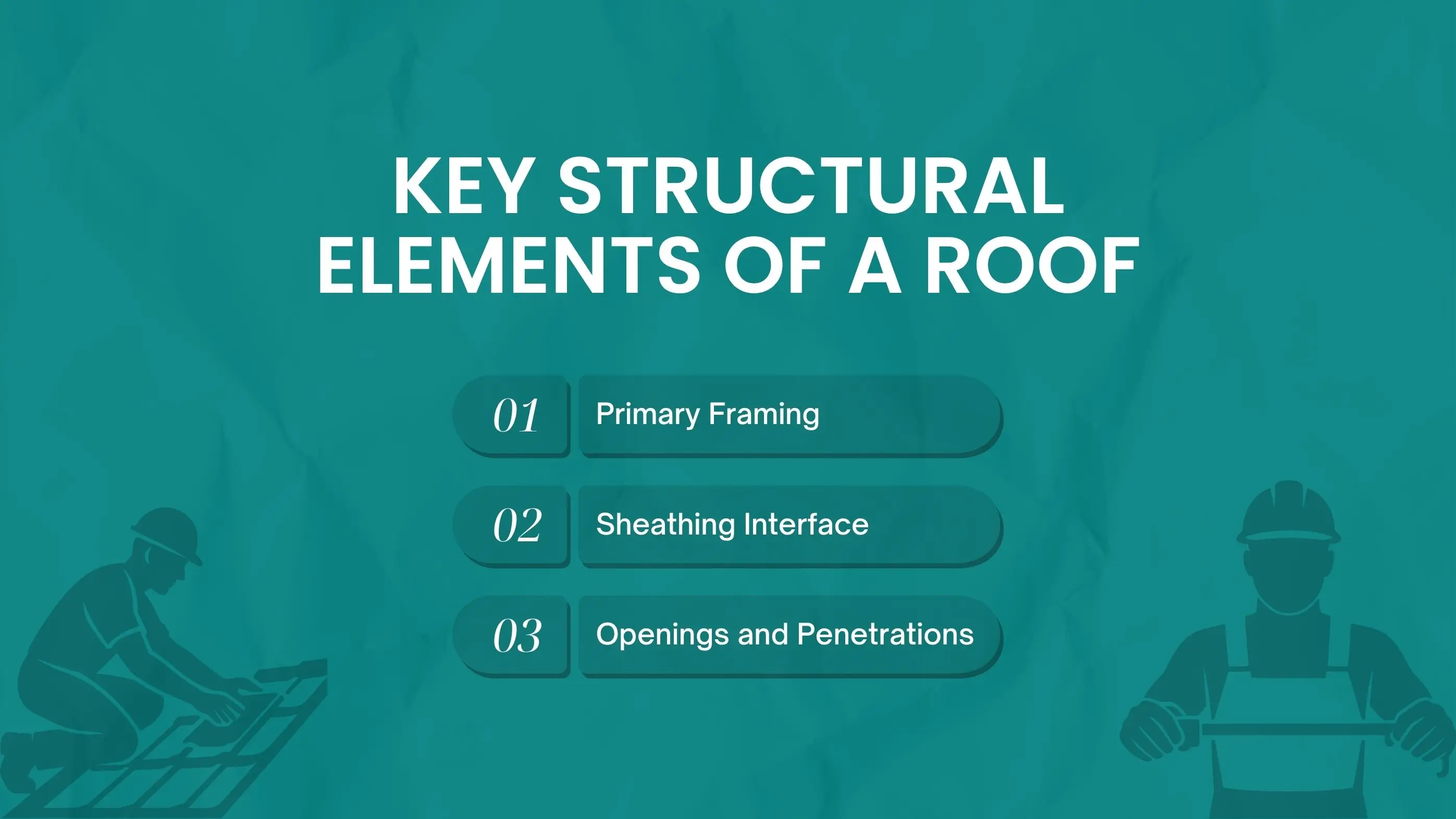
This is the backbone of the roofing system. It includes rafters, trusses, ridge beams, hip and valley members, ties, purlins, and bracing. These components of the roof structure form the main load path and determine how well the roof handles stress. Damaged framing members can lead to dips, uneven slopes, or broken connections that compromise the entire roofing structure.
The structural roof deck connects the primary frame to the roofing surface. During preparation, contractors flatten or re-plane the surface, replace weak boards, and verify nailing patterns. Proper fastening here is crucial because loose or uneven sheathing can cause roof leaks, warping, or shingle misalignment.
Areas around skylights, vents, and chimneys require special reinforcement. Using headers and trimmers creates a stable roof window structure and prevents cracks near openings. Professionals often add structural roof curb details to manage flashing and ensure watertight performance.
Each roof structure has its own shape, load behavior, and maintenance needs. Knowing your system type helps determine the right repair approach.
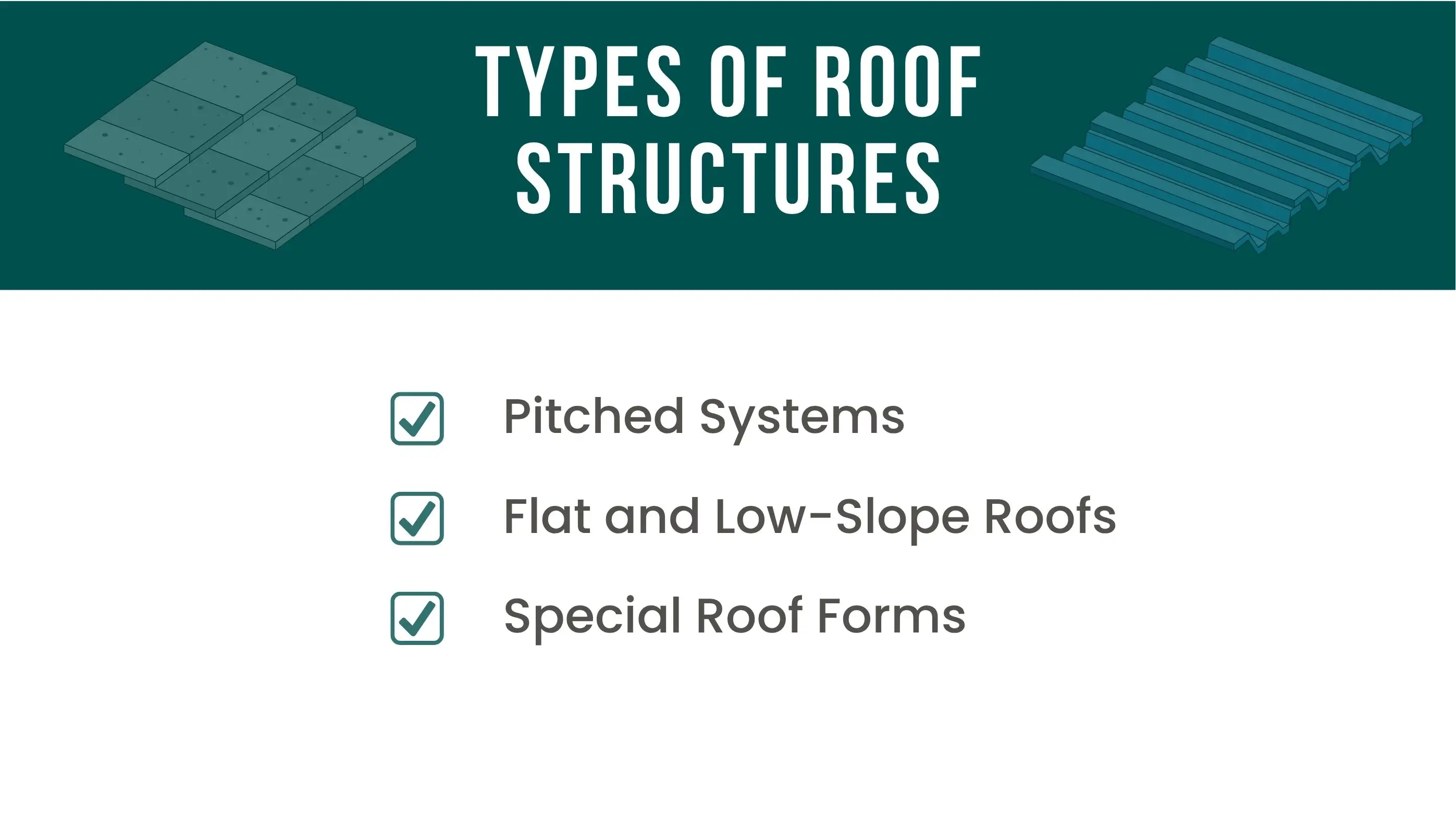
A pitched roof structure slopes downward to shed water and snow easily. Common forms include gable, hip, and shed roof structures. These systems are efficient for rainfall but require strong wind bracing. A gable roof structure has two slopes meeting at a ridge, while a hip roof shade structure adds extra stability with slopes on all sides. Shed roofs are simple and ideal for extensions or garages.
A flat roof structure is almost level but slightly angled for drainage. The structure of a flat roof includes tapered insulation and vapor barriers to prevent water pooling. Proper flat roof structure detail ensures deflection limits are met and rainwater flows toward drains or scuppers. These roofs are common in commercial buildings but require high-quality waterproofing membranes.
Architectural or modern designs often use curved, arched, or space frame roof structures. These shapes distribute loads efficiently but demand engineering precision. A curved roof structure offers wind resistance, while an arched roof structure supports large spans without interior columns. Space frame roofs combine lightweight strength and visual appeal for advanced projects.
Roof structures can be built from different materials, each offering distinct performance and cost characteristics. The right choice depends on climate, span, and architectural goals.
Most homes use wood roof structures because wood is affordable, strong, and easy to modify. Regular inspection prevents issues like termite damage or wood rot. Reinforcement often involves sistering beams, adding LVLs (laminated veneer lumber), or installing blocking for stability. A well-maintained timber roof structure can last 50 years or more with proper ventilation and sealing.
A steel roof structure offers high strength and long spans with minimal weight. It’s ideal for commercial or industrial applications. Contractors must inspect for corrosion, check bolted or welded joints, and follow fastener schedules for stability. An aluminum roof structure is lighter and corrosion-resistant, making it suitable for coastal regions. Both require periodic maintenance to maintain integrity.
Some systems rely on structural insulated roof panels or structural standing seam metal roofs that provide both strength and weather resistance. These integrated panels act as framing and surface layers, reducing weight and installation time. Structural metal roof panels are energy-efficient and durable, often paired with high-temperature underlayment for long-term protection.
Regular diagnostics and detailed documentation are essential to maintaining the structural health of your roof. Early detection helps prevent small issues from turning into costly repairs. Structural assessments combine both visual inspection and digital measurement to reveal weaknesses that may not be visible to the naked eye.
Proper documentation also ensures that all repair work meets code requirements and provides a clear record for insurance or resale purposes. Having accurate data on your roof’s condition helps plan reinforcement and maintenance more efficiently.
Inspectors examine sagging lines, cracked members, or rusted fasteners. Moisture mapping and infrared scanning detect hidden leaks or trapped condensation. Reference materials such as a roof structure diagram or flat roof structure diagram help visualize framing layouts and identify weak points.
Every repair project starts with accurate field notes and photos, followed by engineered drawings. These roof structure details include load paths, slope angles, and connection hardware. For digital coordination, contractors use modeling tools like Revit slope structural layers in roof assemblies to ensure accurate measurements and permit approval.
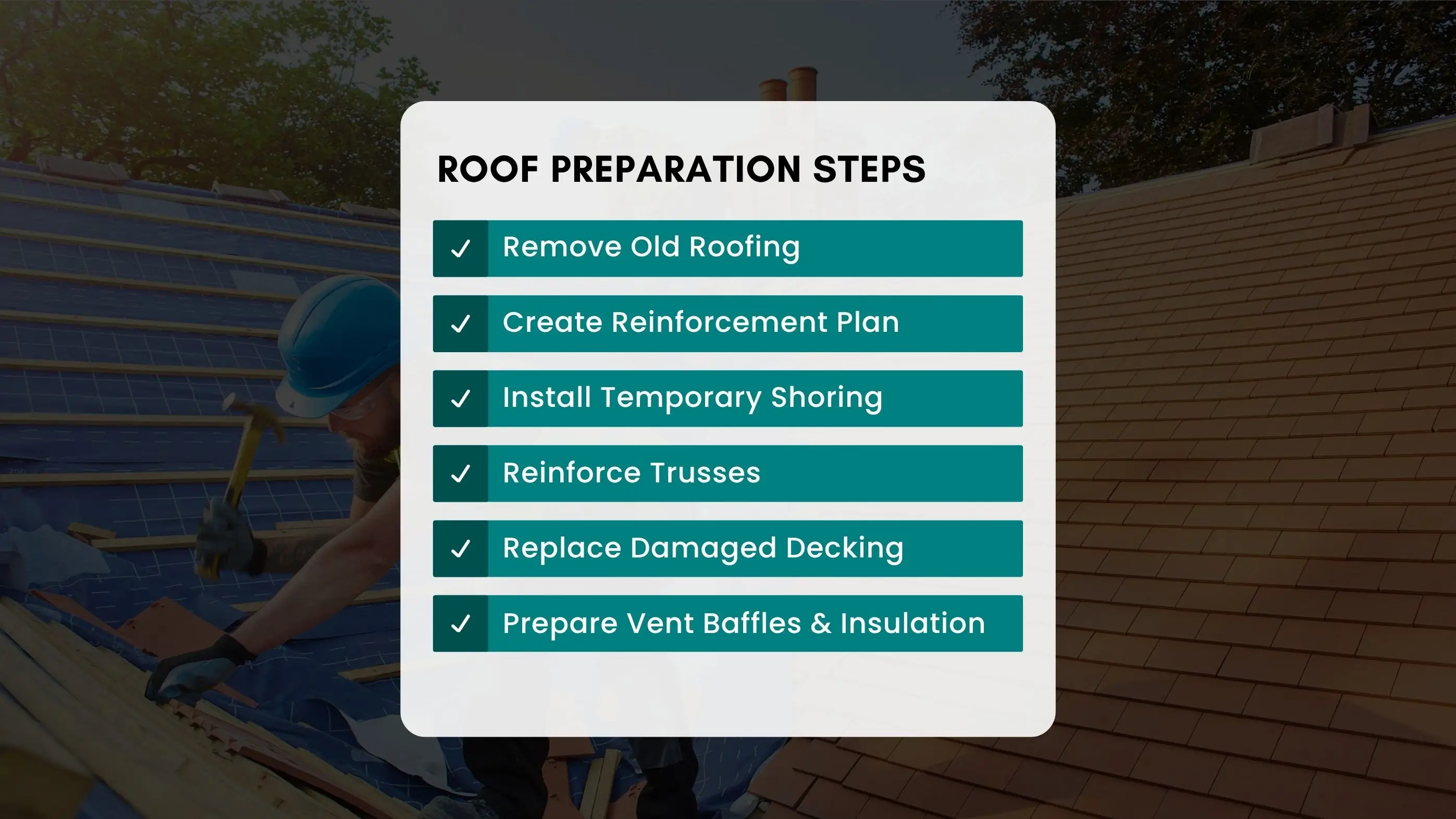
Before new roofing materials are installed, professionals stabilize and correct the framework. This phase includes removing damaged materials, reinforcing beams, and replacing weak sheathing.
A well-planned structure ensures the new roof lasts longer and performs under heavy weather conditions.
Outdoor additions such as patios, pergolas, or gazebos need proper load support. An outdoor roof structure uses posts, footings, and metal connectors to carry loads safely. A patio structure with a roof must resist both wind and rain, while a free-standing roof structure requires concrete footings and cross-bracing for balance.
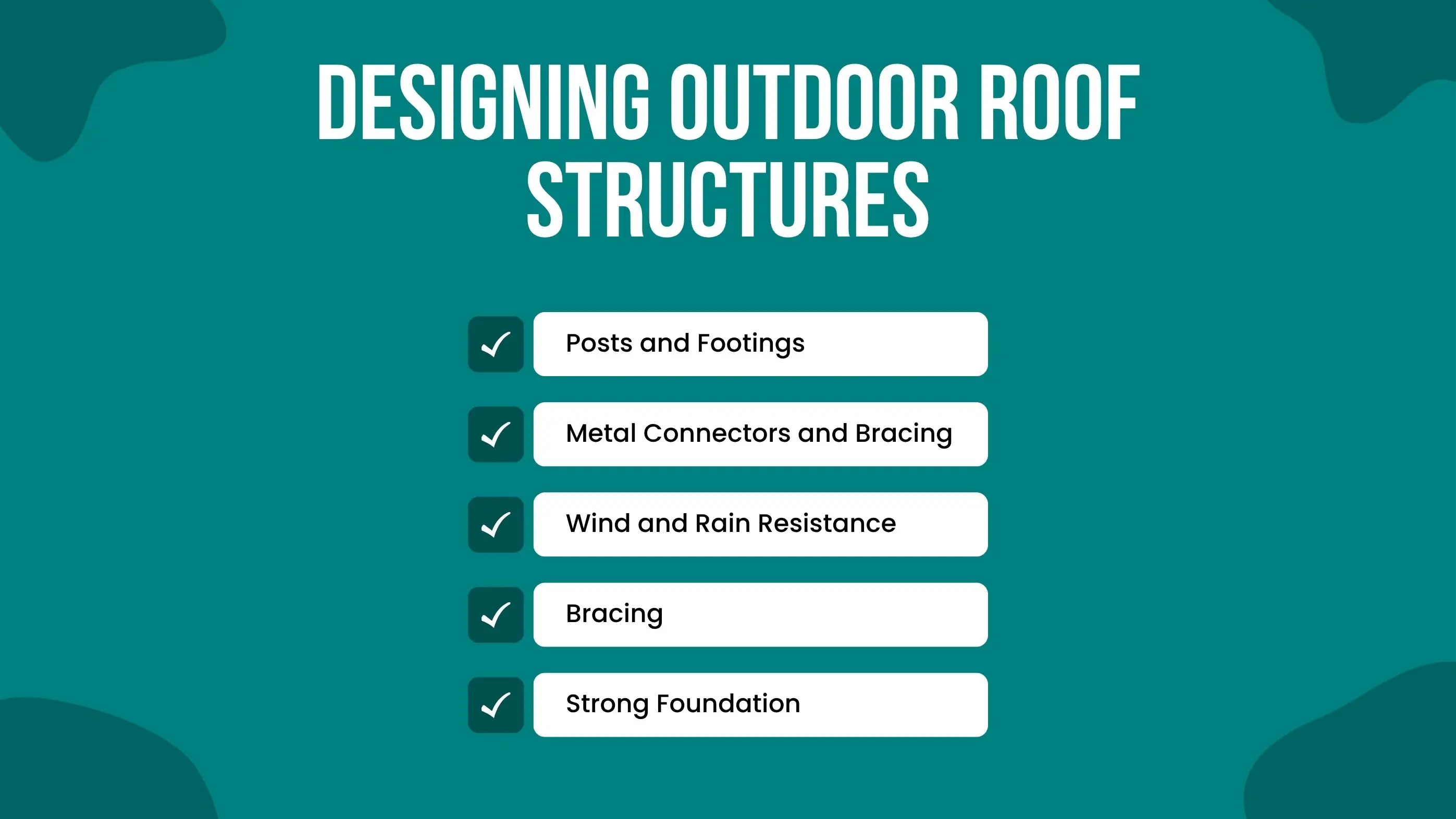
Posts anchor the roof structure, transferring loads to the foundation. Concrete footings are essential for stability, especially in areas with heavy wind or snow loads.
Metal connectors strengthen joints between the posts, beams, and roof rafters. Cross-bracing is often added to free-standing structures to provide extra balance and resist lateral movement.
A patio roof must withstand not only the weight of the roof materials but also the forces of wind and rain. Proper pitch, guttering, and drainage are critical to prevent water buildup and ensure water flows away from the structure.
If the outdoor roof structure is large (e.g., a gazebo or pergola), it may require additional bracing, larger posts, and stronger foundations to meet local building codes and ensure long-lasting performance.
Homeowners can perform light maintenance, like tightening loose fasteners or sealing small gaps, but complex structural roof repairs must be handled by licensed engineers or roof specialists. Roofing professionals ensure load calculations meet code and that reinforcement methods don’t void warranties. This also guarantees long-term safety and performance.
Roof structure repair and preparation costs vary depending on materials, damage level, and engineering needs.
| Component | Average Cost (USD) | Details |
|---|---|---|
| Framing and Materials | $4 – $8 per sq. ft. | Rafters, trusses, and connectors |
| Sheathing Replacement | $2.50 – $5.00 per sq. ft. | Deck interface and alignment |
| Engineering and Permits | $500 – $2,000 | Required for code compliance |
| Temporary Protection | $300 – $800 | Covers and shoring during work |
These rates can increase if structural reinforcement or uplift hardware is required, especially when combined with roof decking replacement costs.
The roof structure repair and preparation process follows a clear, step-by-step timeline to ensure safety, accuracy, and code compliance.
Professionals assess the existing framework, identify damage, and record all findings with measurements and photos.
Engineers prepare a detailed repair or reinforcement plan, which is then submitted for local permit approval before any work begins.
Contractors strengthen weak areas by replacing or sistering rafters, adding bracing, and correcting any framing alignment issues.
A follow-up inspection verifies that all structural adjustments meet building code and safety standards.
Once approved, the decking, underlayment, and final roofing materialsare installed for a watertight and structurally sound finish.
Most residential roof structure repair and preparation projects take three to seven days, depending on the roof size, weather conditions, and scope of reinforcement required.
While shingles may appear intact, the structural deck (sheathing + framing) carries the loads and resists movement. Weak or misaligned sheathing, inadequate fasteners, or deteriorated framing beneath won’t show immediately at the surface. By inspecting and repairing the deck and its connections first, you ensure your new roof has a strong foundation and avoid early failure or warranty issues.
For pitched roofs, proper bracing, connector hardware (hurricane clips, straps), and load-transfer paths are critical. Signs of inadequate uplift resistance include nails pulling out of rafters, ridge beams bowing, or rafter ends detached from wall plates. A structural assessment will verify that all framing and connectors comply with current codes and that reinforcement (e.g., adding straps or blocking) is applied where necessary.
Flat/low-slope roofs don’t shed water as efficiently, meaning even slight deflection or sag can lead to pooling, increased live loads, and structural fatigue. Reinforcement should include stronger beams, closer framing spacing, proper deck sheathing, tapered insulation or slope boards for drainage, and careful fastening to maintain stiffness and deflection limits. Ignoring these can shorten the roof’s lifespan significantly.
Not always, heavier materials add dead load, increasing stress on rafters, trusses, and connections. Before installing, you should evaluate existing framing capacity: check rafter/truss size, span, spacing, connection strength and overall condition. If any of these are below current loads or outdated, reinforcement (sistering beams, upgrading connectors, adding bracing) is advisable to avoid sagging or failure down the line.
Join our mailing list for exclusive updates, expert tips, and special offers tailored to your needs. Be the first to know about the latest in home services.
Renovize Home is a platform that supports homeowners from planning to renovation. Whether it’s Renovize AI for guidance or a one-on-one call with Pro Finder, we understand your project and match you with local contractors tailored to your needs.
Who We Are
About Renovize HomeGet in TouchHomeownwer Support:
Coming Soon!
General Inquiries:
support@renovizehome.com
Head Office:
24 Greenway Plaza, STE 1800M, Houston, TX 77046.