
Explore All
BROWSE BY CATEGORY
Interior
Exterior
Home Essentials
Homeowner Tools
Blogs & Guides
Find a Pro
Book Your Appointment Now
Home Essentials
About Renovize Home
Explore All
BROWSE BY CATEGORY
Interior
Exterior
Home Essentials
Homeowner Tools
Blogs & Guides
Find a Pro
Book Your Appointment Now
Home Essentials
About Renovize Home
Last Updated 2025-11-05
Over time, weather, sunlight, wind, snow, and daily wear can weaken the roof materials. Most asphalt shingle roofs last around 20 to 25 years. Tile, metal, or slate roofs can last longer, but even those eventually show signs of aging.
Is your roof nearing the end of its life? Replacing an aging roof isn’t just about avoiding leaks, it’s about protecting your home, saving money, and ensuring long-term safety. In this, we’ll go through everything you need to know about end-of-life roof replacement,
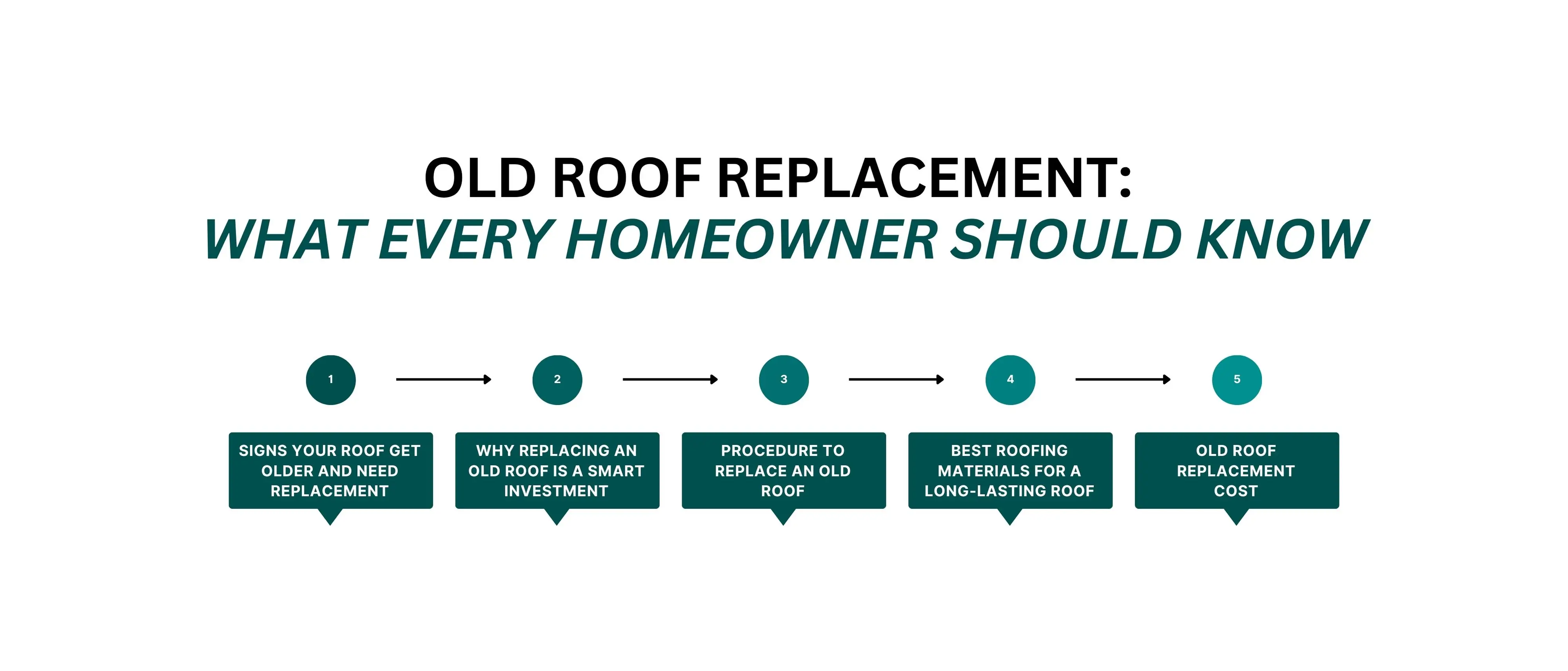
Table of Contents
Signs Your Roof Get Older and Need Replacement
Why Replacing an Old Roof Is a Smart Move
Procedure to Replace an Old Roof
Cost of Replacing Old Roof
Best Roofing Materials for a Long-Lasting Roof
When Should You Replace Your Roof?
Final Thoughts
Your roof won’t last forever, and knowing the warning signs can save you from unexpected leaks or costly repairs. An aging or damaged roof usually gives clear signals. If you know what to look for. Regular roof inspections, especially after storms or once your roof is over 15–20 years old, can help catch problems early. Below are the most common signs your roof may be at or near the end of its life:
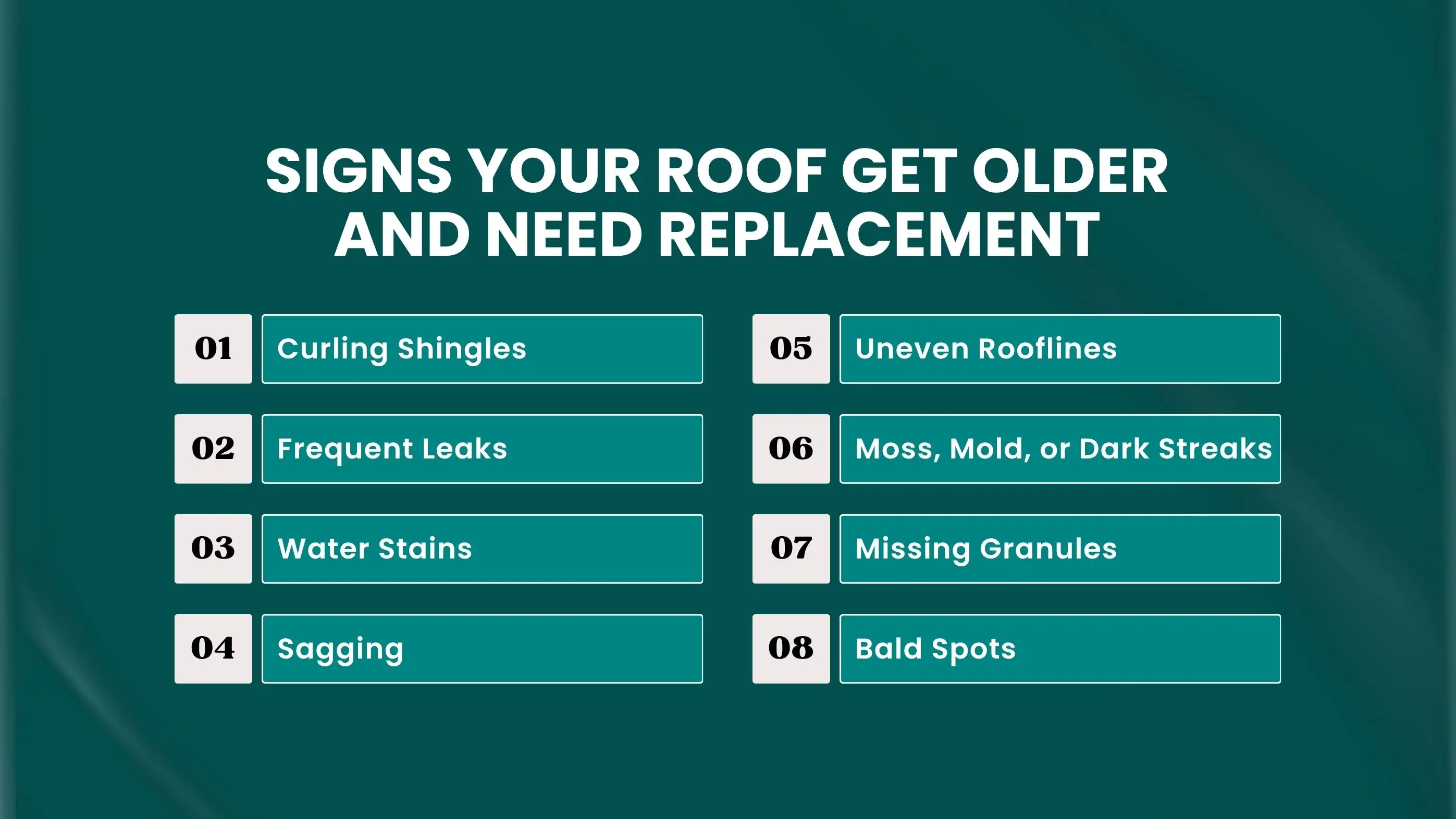
Shingles that are curling at the edges or showing visible cracks are no longer sealing your roof properly. This makes it easier for rain and wind to sneak through, leading to leaks and underlayment damage.
If you notice water stains on your ceiling or walls or see water dripping during heavy rain, it’s a clear sign your roof isn’t keeping moisture out. Frequent leaks mean repairs might not be enough, and a full replacement could be needed.
A drooping or uneven roof could mean your roof decking has water damage or your structural supports are weakening. This is a serious issue that can worsen quickly and may require urgent roof replacement to prevent collapse.
While moss and algae look harmless, they trap moisture against your shingles. Over time, this constant dampness can wear down roofing materials and lead to mold growth beneath the surface.
Asphalt shingles are coated in granules to protect them from the sun. If you find lots of granules in your gutters or notice bare spots on the roof, the shingles are wearing out and losing their ability to shield your home from UV rays and rain.
Many homeowners wait too long to replace their aging roof because they’re trying to save money. But the truth is, putting off a roof replacement can end up costing you more in the long run. An old or damaged roof can lead to interior leaks, insulation problems, higher energy bills, and even decrease your home’s market value. Replacing your roof on time protects your home, your family, and your wallet.
Old roofs can let water seep into your home through small cracks and holes. Over time, this causes ceiling stains, peeling paint, warped wood, and costly drywall repairs. Water damage also weakens the structure of your house if left untreated.
Leaks and trapped moisture create the perfect environment for mold and mildew to grow. This not only damages your home but also poses serious health risks, especially for children and people with allergies. A dry roof prevents this entirely.
An old roof may lose its ability to insulate properly. Warm air escapes in winter, and cool air leaks in summer, forcing your HVAC system to work harder. A new roof helps regulate indoor temperatures and can lower your energy costs.
When buyers see an old roof, they often walk away or offer much less. Replacing your roof before selling boosts your home’s curb appeal, passes inspections easily, and increases buyer confidence. A newer roof is also a big selling point in real estate listings.
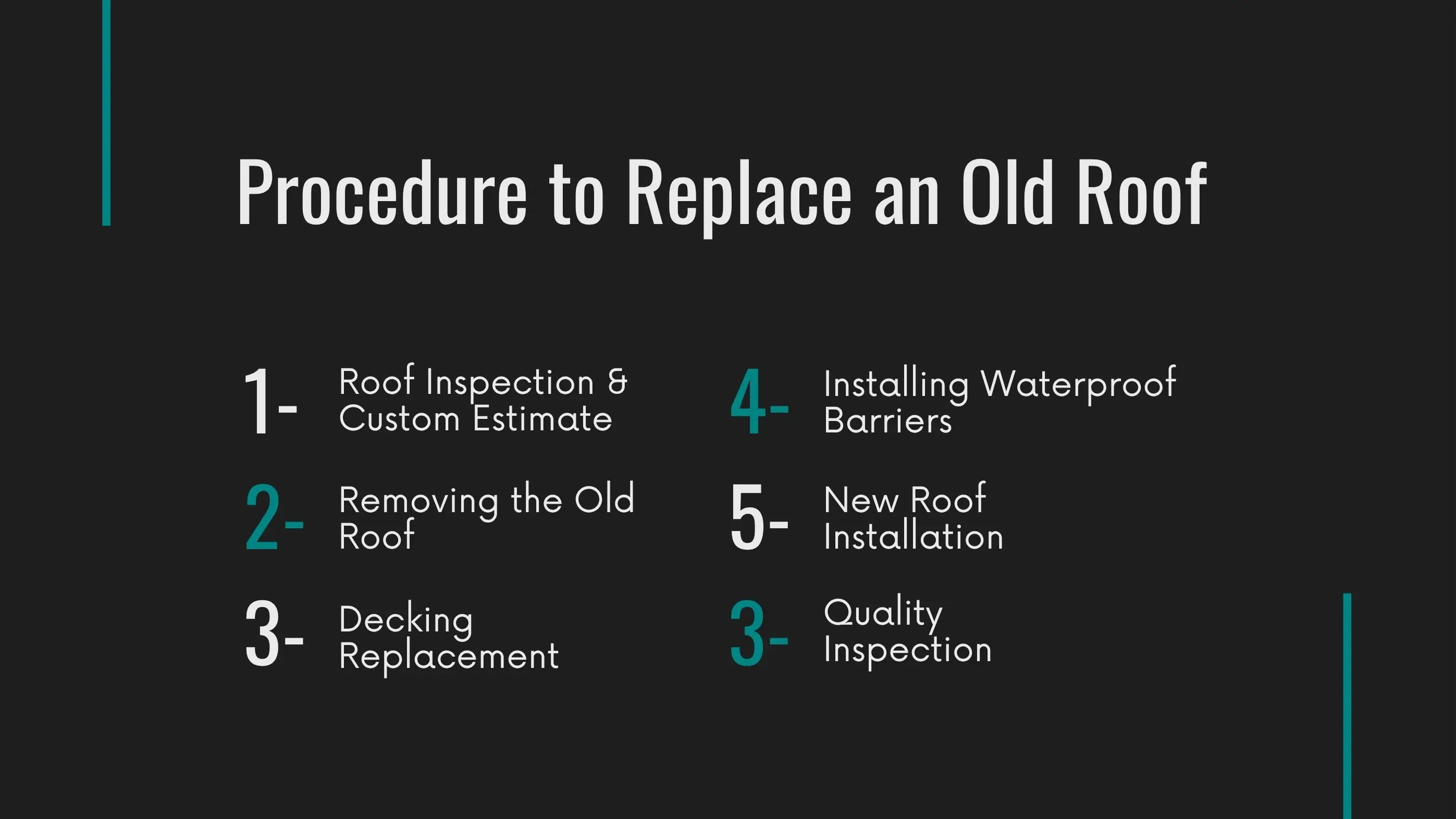
Replacing a roof may sound complicated, but when done by professionals, it's a simple process that ensures your home stays dry, strong, and energy-efficient for years to come. Think of it like giving your home a brand-new shield layer by layer. Whether your roof is made of asphalt shingles, metal, or tile, here’s what you can expect during the full roof replacement journey:
The first step is a full roof inspection by a licensed roofing contractor. They’ll check for signs of aging, leaks, and structural damage. Based on the size of your roof and materials needed, they’ll give you a personalized cost estimate. This helps you plan your budget clearly.
Before a new roof can be installed, the old one has to go. Crews carefully remove old shingles, underlayment, and sometimes flashing. This step is messy but necessary, it lets them see what’s hiding underneath.
Under your shingles is the “decking,” usually plywood or OSB board. If it’s rotten or soft, it gets replaced. This step is crucial because a solid foundation ensures your new roof stays strong and leak-free for decades.
Next comes weather protection. Roofers lay down waterproof underlayment (like felt or synthetic sheets) to shield your roof deck from rain and moisture. Ice and water shields may also be added to problem areas like valleys or edges.
Here’s where the roof takes shape! Your chosen roofing material shingles, tiles, or metal panels are nailed or secured in place. Flashing is installed around vents, chimneys, and skylights to seal gaps. Ridge caps and ventilation systems are also added to help your roof breathe.
No one likes a messy yard! After the roof is complete, crews remove leftover materials, nails, and debris. Then, a final walkthrough ensures everything is sealed, aligned, and up to code. You’re now protected for the next 20–50+ years, depending on your material.
Here’s a general idea of what a roof replacement might cost in the U.S., depending on the material and roof size:
| Roofing Material | Average Lifespan | Cost per Sq. Ft. | Total for 2 | 000 Sq. Ft. Roof |
|---|---|---|---|---|
| Asphalt Shingles | 20–30 years | $3.50 – $5.50 | - | - |
| Architectural Shingles | 25–35 years | $4.50 – $7.50 | - | - |
| Metal Roofing | 40–70 years | $7.00 – $12.00 | - | - |
| Clay/Concrete Tiles | 50–100 years | $10.00 – $15.00 | - | - |
| Slate Roofing | 75–150 years | $15.00 – $25.00 | - | - |
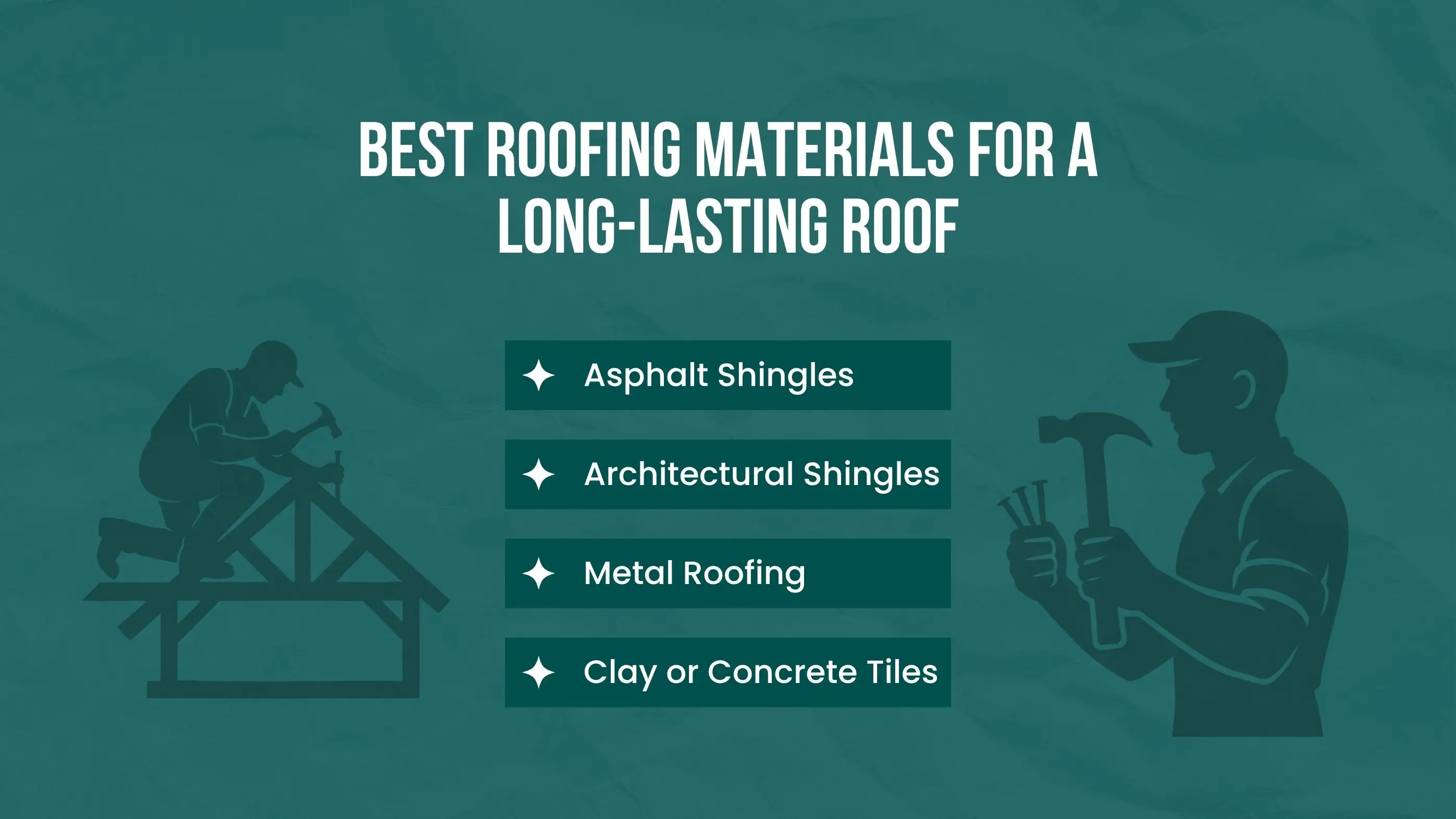
Choosing the right roofing material can extend your next roof's life:
If your roof is more than 20 years old, or you're noticing damage like missing shingles, leaks, or sagging areas, it may be time for a replacement. Waiting too long can lead to bigger problems like mold or structural issues. It's also smart to schedule a roof inspection after major storms or before listing your home for sale. Buyers often check the roof condition first.
Replacing an aging roof may seem like a big job, but it’s one of the most important home improvements you can make. A new roof keeps your family safe, protects your home, and can even lower your energy bills. If you’re noticing signs of damage, it’s time to take action.
Roof replacement can be done any time if weather conditions are safe and dry. However, late spring or early fall is usually best for smoother installation.
Yes, old roofs often trap hidden moisture that encourages mold and mildew in the attic. Those spores can spread through vents and affect breathing quality, especially for kids or people with allergies.
When roofing materials lose their seal and insulation weakens, hot and cool air leak out faster. The HVAC system runs longer to maintain indoor temperature, increasing electricity use—often one of the first silent signs of roof decline.
Yes, long-term roof sag or moisture leaks can shift roof weight unevenly, transferring stress down to walls or ceilings. A new, properly ventilated roof redistributes weight evenly and stabilizes your home’s structure.
It’s often caused by condensation. As shingles age, they fail to regulate temperature. Without proper ventilation, warm air meets cold surfaces in the attic—creating dampness and odor long before leaks appear.
You’ll have a short-lived roof. The underlayment acts as the waterproof barrier between decking and shingles. Leaving an old underlayment under new shingles traps moisture and speeds up deterioration from below.
Join our mailing list for exclusive updates, expert tips, and special offers tailored to your needs. Be the first to know about the latest in home services.

Renovize Home is a platform that supports homeowners from planning to renovation. Whether it’s Renovize AI for guidance or a one-on-one call with Pro Finder, we understand your project and match you with local contractors tailored to your needs.
Who We Are
About Renovize HomeGet in TouchHomeownwer Support:
Coming Soon!
General Inquiries:
support@renovizehome.com
Head Office:
24 Greenway Plaza, STE 1800M, Houston, TX 77046.