
Explore All
BROWSE BY CATEGORY
Interior
Exterior
Home Essentials
Homeowner Tools
Blogs & Guides
Find a Pro
Book Your Appointment Now
Home Essentials
About Renovize Home
Explore All
BROWSE BY CATEGORY
Interior
Exterior
Home Essentials
Homeowner Tools
Blogs & Guides
Find a Pro
Book Your Appointment Now
Home Essentials
About Renovize Home
Last Updated 2025-10-30
Even a small leak can cause major damage if ignored. Water can weaken roof structures, rot wooden decks, and lead to mold or ceiling stains. Many homeowners overlook small leaks until they become expensive repairs. Acting quickly and understanding how to fix minor water damage ensures your roof stays strong and your home remains protected from moisture-related issues.
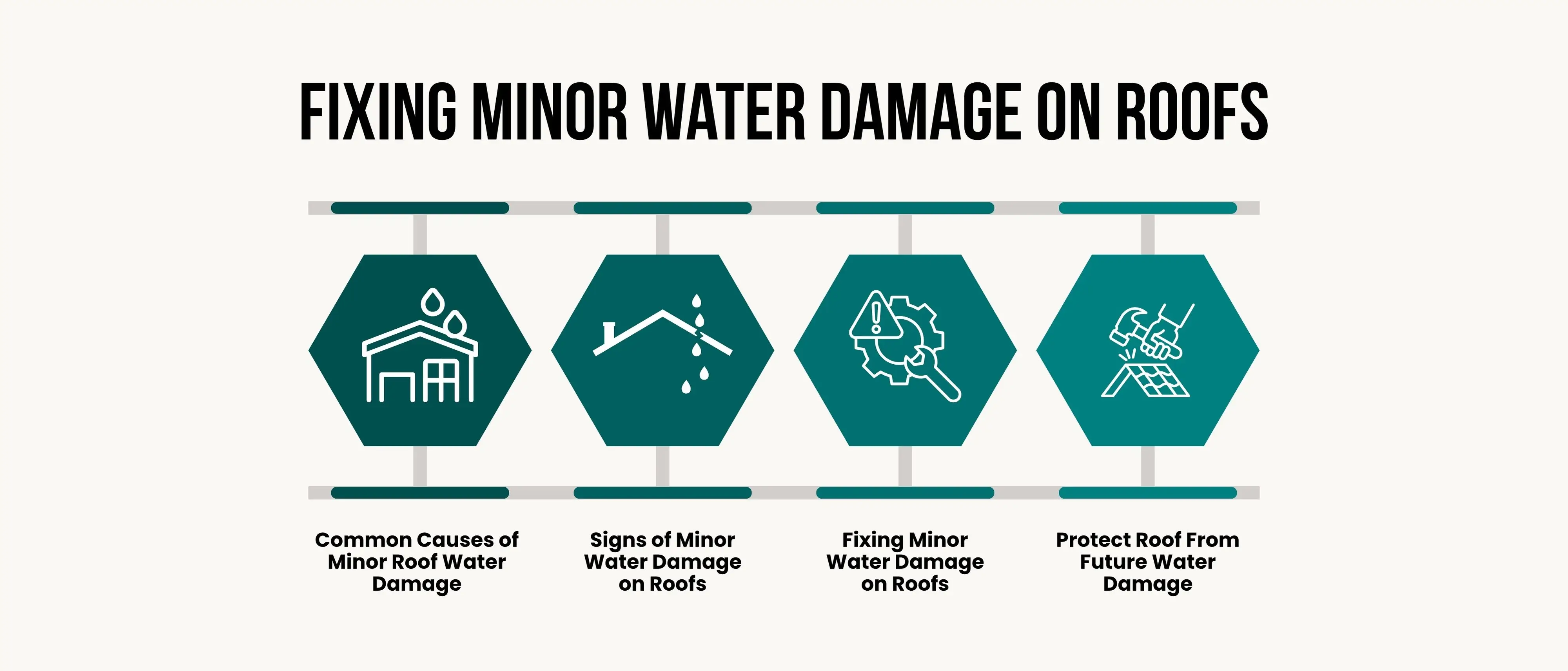
Table of Contents
Understanding Minor Roof Water Damage
Common Causes of Minor Roof Water Damage
Signs of Minor Water Damage on Roofs
Fixing Minor Water Damage on Roofs
Repairing Ceiling Water Damage
Cost of Fixing Minor Roof Water Damage
Protect Roof From Future Water Damage
When to Call a Professional Roofer
Final Thoughts
Minor roof water damage occurs when moisture seeps through small openings or cracks without yet affecting the roof’s structure. It often results from worn-out shingles, damaged flashing, or poor attic ventilation. Even though it may seem harmless at first, moisture trapped under roofing materials can slowly compromise the roof deck, insulation, and ceilings below.
Recognizing the difference between minor and major water damage helps determine the right repair approach. Minor damage can often be handled quickly, while major leaks require full restoration.
Small roof leaks or damage can lead to significant issues if not addressed promptly. Here are some of the most common causes of water damage on your roof:
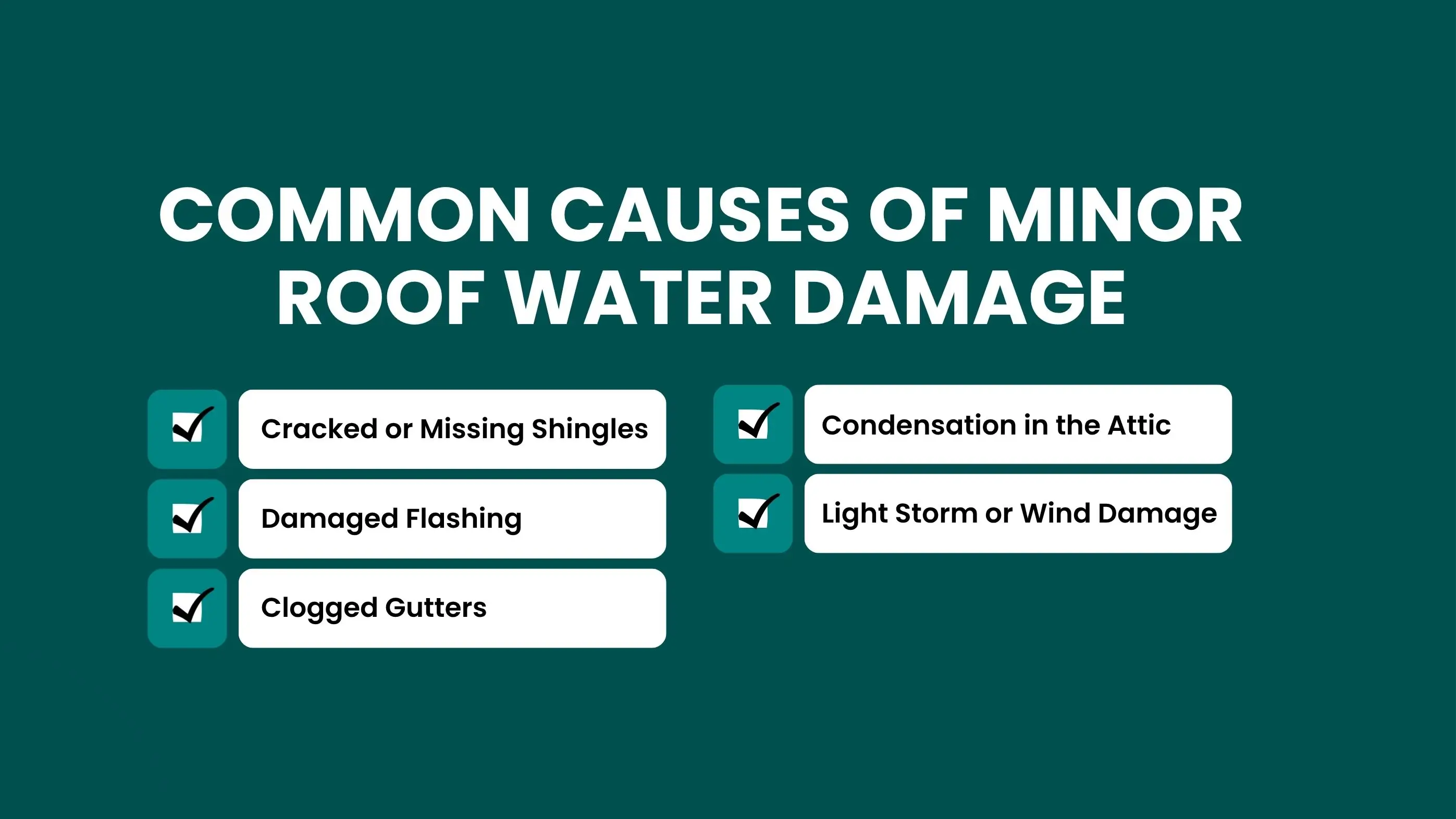
A single cracked or missing shingle is enough to allow rainwater to slip underneath and soak the underlayment. Over time, this causes wood to weaken and warp.
Flashing around chimneys, vents, and skylights protects vulnerable joints. When it corrodes or bends, water finds its way in and travels along the roof deck.
Gutters filled with leaves or debris prevent proper water flow, allowing water to pool along the roof’s edge and leak into fascia boards.
Poor ventilation traps humid air, which condenses and collects on rafters or roof sheathing, leading to mold and slow rot.
Small punctures caused by flying debris or hail may go unnoticed but gradually widen during heavy rains. Even a small roof leak can allow several gallons of water to enter your home’s attic space during a single storm, making early repair critical.
Detecting the early signs of water damage can prevent widespread decay and save money on future repairs. After every heavy rainfall, take a few minutes to inspect your home’s interior and exterior for warning signs of moisture buildup.
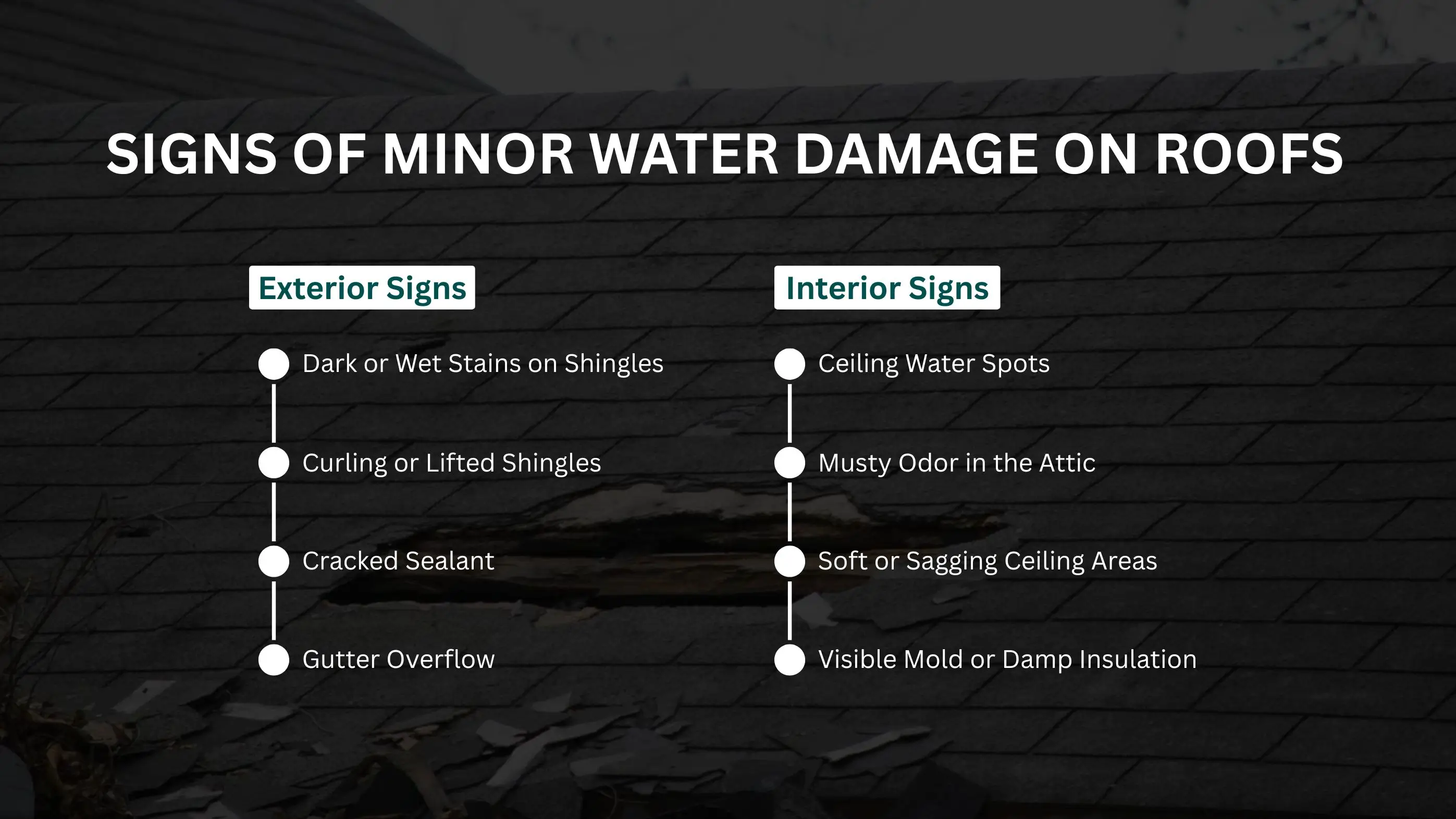
If these signs appear, immediate inspection and minor repair will prevent long-term structural damage.
Repairing minor roof water damage requires patience, the right tools, and safety awareness. Homeowners can often manage small issues themselves, but it’s crucial to fix the source of the leak before addressing visible damage.
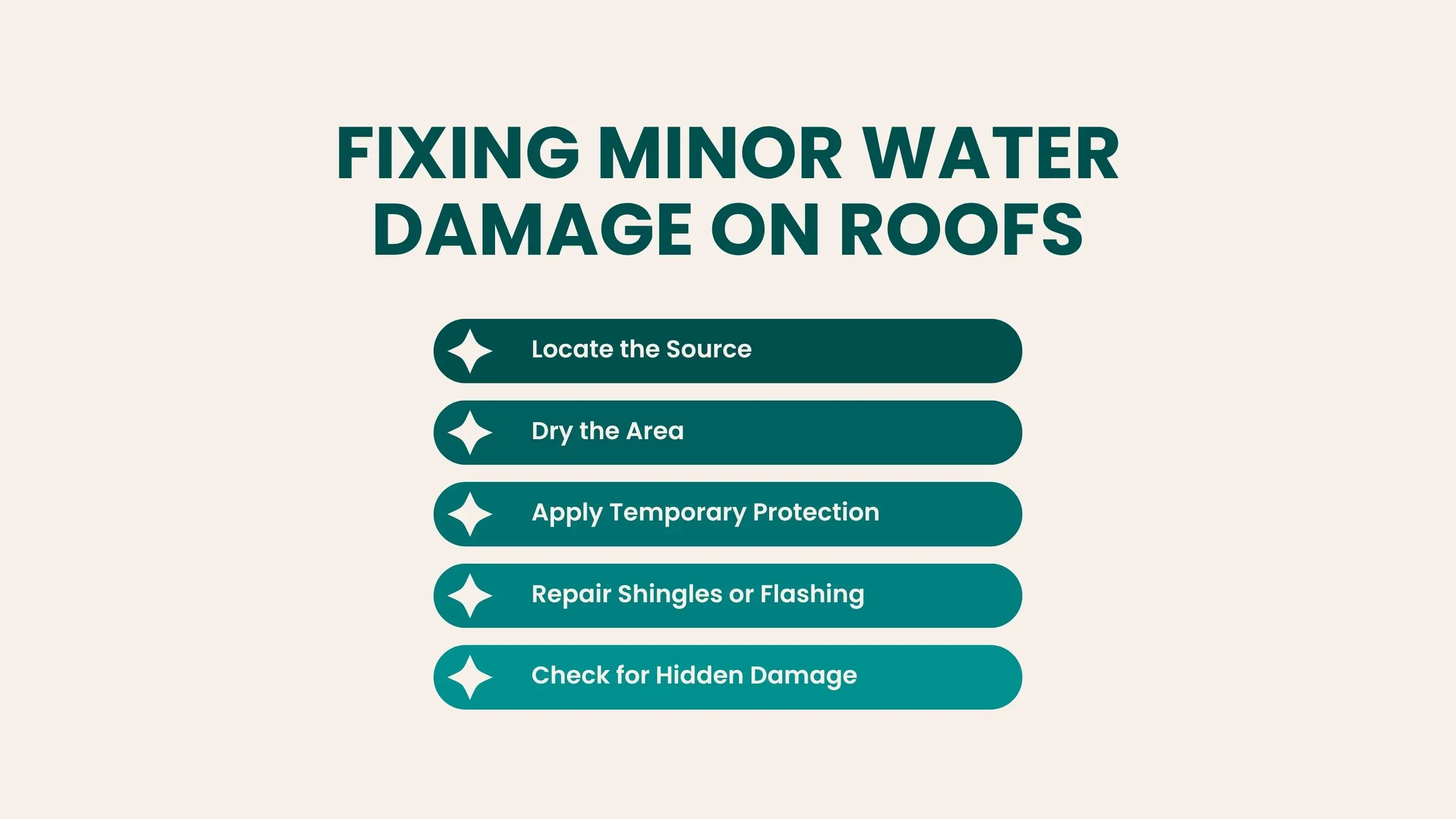
Start by inspecting the attic during daylight. Use a flashlight to trace any damp insulation or stained wood. Look for small holes or gaps where light passes through the roof. Mark these areas for repair later.
Before starting repairs, dry the affected space completely. Use fans and a dehumidifier for 24 to 48 hours. Moisture left behind can weaken materials and attract mold growth. Replace any wet insulation immediately.
If rain is expected before you complete permanent repairs, place a waterproof tarp over the area. Secure it with roofing nails or sandbags. This temporary fix keeps water out until proper sealing or shingle replacement can be done.
For shingles, lift the damaged piece carefully, remove nails, and slide in a replacement. Apply roofing cement beneath and around it to ensure a watertight seal. For flashing, clean the area of debris and old sealant, then reapply roofing cement or install new flashing pieces if corrosion is visible.
Inspect roof decking and rafters for sagging or discoloration. If wood appears dark or soft, replace the affected section before reinstalling shingles. Hidden moisture often causes the most expensive future repairs.
Ceiling water damage is often the first visible sign of a roof leak. If stains or sagging plaster appear, repair both the ceiling and roof to prevent recurrence.
Addressing ceiling moisture quickly helps maintain indoor air quality and prevents mold from spreading throughout the home.
Repair costs depend on the size of the damage, materials used, and professional labor rates. Small leaks are affordable to repair when caught early.
| Repair Type | Average Cost (USD) | Details |
|---|---|---|
| Shingle replacement | $200 – $500 | For small patches or missing shingles |
| Flashing repair | $250 – $600 | Around vents, skylights, or chimneys |
| Leak sealing | $150 – $350 | Using roofing cement or sealant |
| Ceiling repair | $300 – $700 | Includes drying, patching, and painting |
| Roof inspection | $150 – $400 | Annual inspection to prevent leaks |
Fixing minor damage yourself can save up to 40% in costs, but professional repair ensures a lasting solution and warranty-backed protection.
Preventive maintenance is the key to extending your roof’s life and avoiding recurring leaks. Simple habits performed a few times a year can save thousands in future repairs.
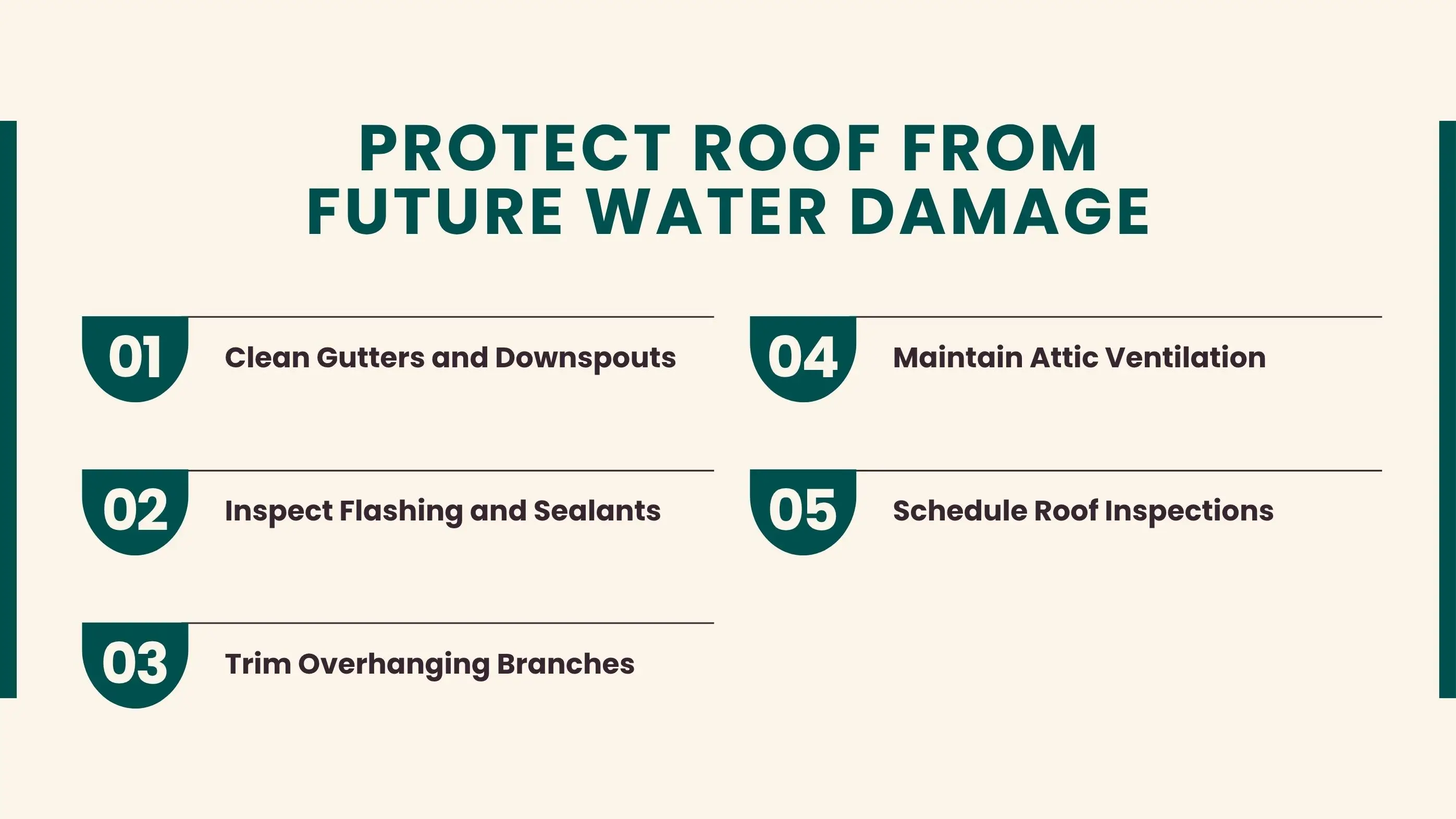
Clogged gutters force water to back up and seep under shingles. Cleaning them twice a year helps maintain smooth drainage.
Check around chimneys, vents, and skylights for cracks or corrosion. Reapply sealant every six months to maintain a tight seal.
Tree branches can scrape roofing materials or break shingles during strong winds. Keep them trimmed six feet from the roof.
Good airflow reduces humidity buildup that can damage the roof deck. Inspect vents regularly to prevent blockages.
An annual inspection helps identify hidden leaks and weak spots before they become major issues. Professional roofers use thermal cameras to detect unseen moisture.
These small steps make a big difference in keeping your roof durable and resistant to weather-related wear.
Some leaks require professional tools and expertise. Professionals use moisture meters and infrared imaging to locate trapped water below surfaces that aren’t visible to the eye.
Hiring a licensed roofer ensures that your entire roof system, from shingles to flashing, is repaired and sealed correctly.
Minor roof water damage may seem harmless, but ignoring it can lead to serious structural problems. Fast detection, proper drying, and early repairs help preserve your roof and interior from future water damage. Regular inspections, clean gutters, and well-maintained flashing protect your home year-round.
Address small issues before they become large expenses. Connect with verified roofing professionals through Renovize Home’s Pro Finder to restore your roof quickly and keep your home safe from moisture for years to come.
Within 24–48 hours in warm, humid conditions. Dry the area immediately and keep indoor RH near 40–50%.
Water often travels along rafters; the entry can be several feet “up-slope” from the stain. Follow stained wood/grain lines toward the ridge to find the source.
Avoid it, shingles are slippery when wet and more prone to damage. Wait for a dry, mild day.
For wood sheathing, under ~15% on a pin-type moisture meter is a common target before sealing and re-covering.
Only after the leak is fixed and the area is fully dry. Use a stain-blocking primer first, then paint.
Tarp the area with at least 12" overlap past the ridge and eaves. Secure at the ridge and fasten through furring strips to avoid shingle tears.
Join our mailing list for exclusive updates, expert tips, and special offers tailored to your needs. Be the first to know about the latest in home services.

Renovize Home is a platform that supports homeowners from planning to renovation. Whether it’s Renovize AI for guidance or a one-on-one call with Pro Finder, we understand your project and match you with local contractors tailored to your needs.
Who We Are
About Renovize HomeGet in TouchHomeownwer Support:
Coming Soon!
General Inquiries:
support@renovizehome.com
Head Office:
24 Greenway Plaza, STE 1800M, Houston, TX 77046.