
Explore All
BROWSE BY CATEGORY
Interior
Exterior
Home Essentials
Homeowner Tools
Blogs & Guides
Find a Pro
Book Your Appointment Now
Home Essentials
About Renovize Home
Explore All
BROWSE BY CATEGORY
Interior
Exterior
Home Essentials
Homeowner Tools
Blogs & Guides
Find a Pro
Book Your Appointment Now
Home Essentials
About Renovize Home
Last Updated 2025-10-28
A sagging roof is a serious concern that requires immediate attention to avoid further structural damage. Roof sagging happens for various reasons, and understanding why it happens is the first step in determining how to fix it.
A sagging roof not only affects the overall appearance of your home, but it can also lead to water damage, mold, and even the collapse of your roof if not addressed promptly.
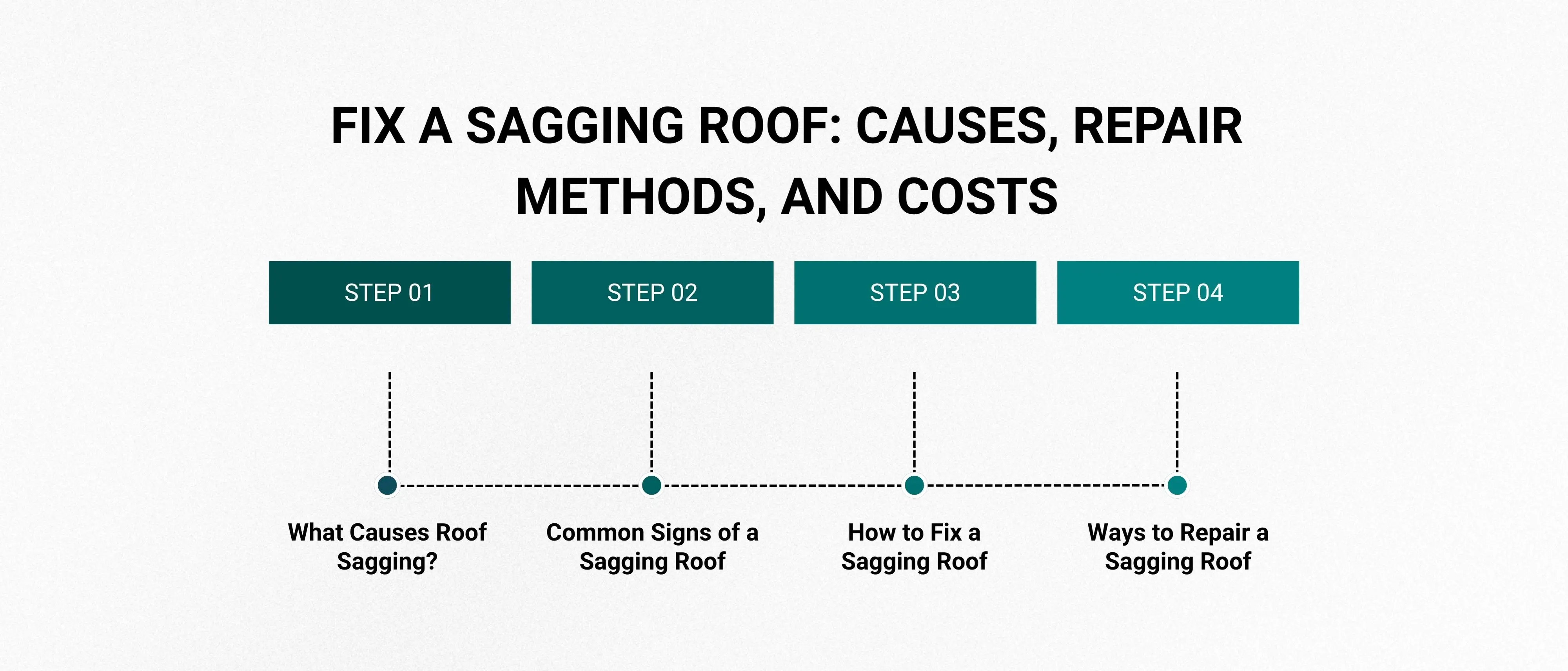
Table of Contents
Common Signs of a Sagging Roof
How to Fix a Sagging Roof
Ways to Repair a Sagging Roof
Cost to Fix a Sagging Roof
When to Call a Professional
Final Thoughts
Roof sagging is a condition where the roofline becomes noticeably bent or uneven, usually caused by the inability of the roof’s supporting structure to bear the weight or forces acting on it. There are several reasons for a roof to sag, and understanding these causes will help in deciding the right fix. Timely repairs are essential to prevent further deterioration of your roof.
There are multiple causes for roof sagging, ranging from structural weakness to external factors. Below are the primary reasons:
Roof supports, such as beams, rafters, and load-bearing walls, provide the structural integrity of the roof. If these supports are too weak or improperly installed, they may fail under pressure, leading to sagging.
Roof trusses, which are designed to support the roof, can weaken over time, especially if the materials they are made of have degraded due to exposure to moisture, sun, or other environmental factors. Aging trusses lose their strength, leading to sagging.
Excessive weight from snow, ice, or even debris can put a strain on the roof structure, causing it to sag. The added pressure can be too much for the existing roof supports, particularly in areas that are already vulnerable.
Roof sagging can occur if the roof structure becomes weakened due to water infiltration. Prolonged exposure to moisture can lead to wood rot, rusting of metal components, and deterioration of the roof’s integrity.
Identifying a sagging roof early is crucial to preventing more serious damage. A sagging roof doesn’t just affect your home’s appearance; it can also compromise your home’s structure and lead to costly repairs. Recognizing the signs of roof sagging early can help you address the issue before it gets worse. Pay attention to both visible indicators and subtle signs that might indicate a structural issue. Here are some key signs to watch for:
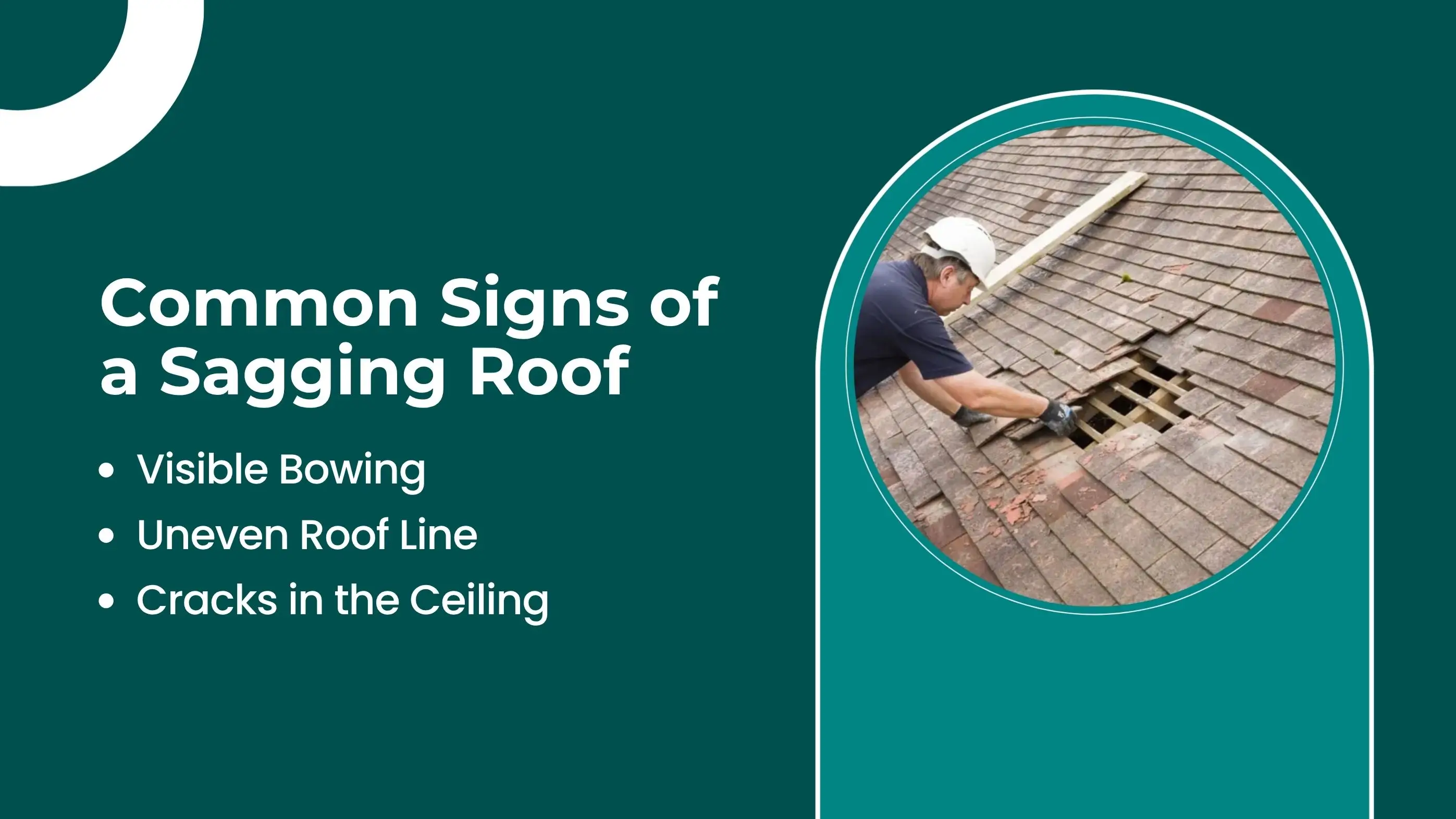
One of the most obvious signs of a sagging roof is visible bowing or dipping in specific sections. These areas may appear lower than the surrounding sections, causing the roofline to look uneven or distorted. If left unaddressed, this sagging can worsen over time and may lead to further damage. Check for these dips, especially after heavy snow, rain, or storms, as they often accelerate sagging due to added weight
An uneven roofline is another clear indicator of sagging. If one side of the roof appears lower than the other or if the ridge of the roof is no longer straight, this could be a sign that the roof supports are weakening. This issue is usually a result of structural shifts, and it's essential to investigate the cause before it causes more damage to the roof and the home’s structure.
Cracks in the ceiling or roof are often associated with sagging. As the roof sags, the added pressure can cause structural damage inside the home, leading to visible cracks in the ceiling or walls. These cracks may be accompanied by water stains, which further indicate that moisture is entering the home through the sagging roof. If you notice cracks near the roofline or any water staining, it's a strong sign that your roof needs immediate attention.
Fixing a sagging roof requires immediate attention and often a combination of methods to restore its structural integrity. Depending on the severity of the sag, the repair could be as simple as reinforcing the trusses or as involved as replacing certain parts of the roof.
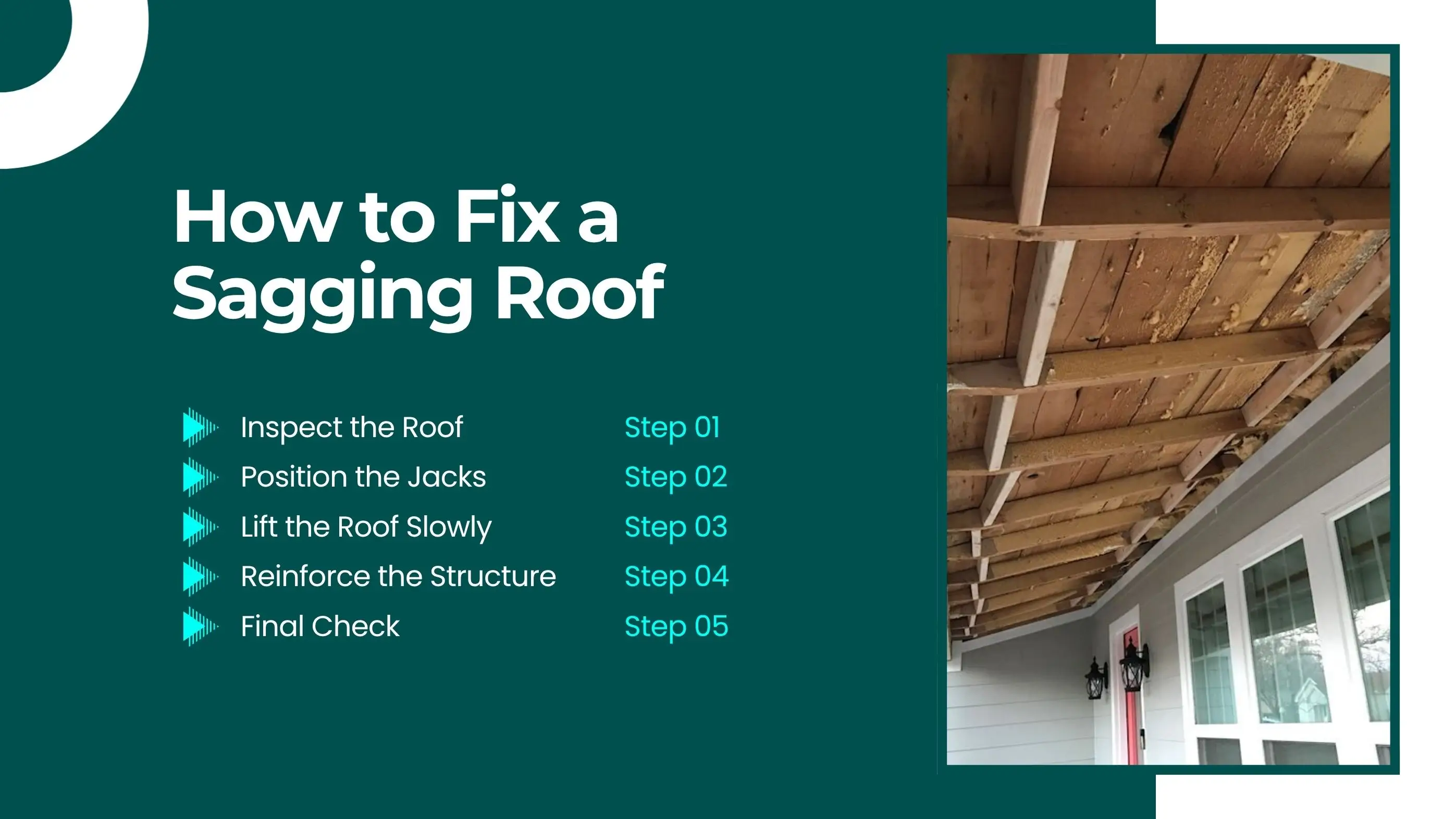
One of the most common and effective ways to fix a sagging roof is to jack up the sagging sections and restore the roofline to its original position. This requires special equipment and careful attention.
There are several techniques used for lift up a sagging roof, including:
Lifting roof trusses should be done carefully to avoid further damage:
Once the roof has been lifted back into position, it’s time to decide on the most effective repair methods to prevent the issue from returning. A sagging roof can be caused by several factors from weakened trusses to damaged roof lining so the right repair approach depends on the root cause. The main goal of any repair is to restore the roof’s strength, ensure even weight distribution, and prevent future sagging.
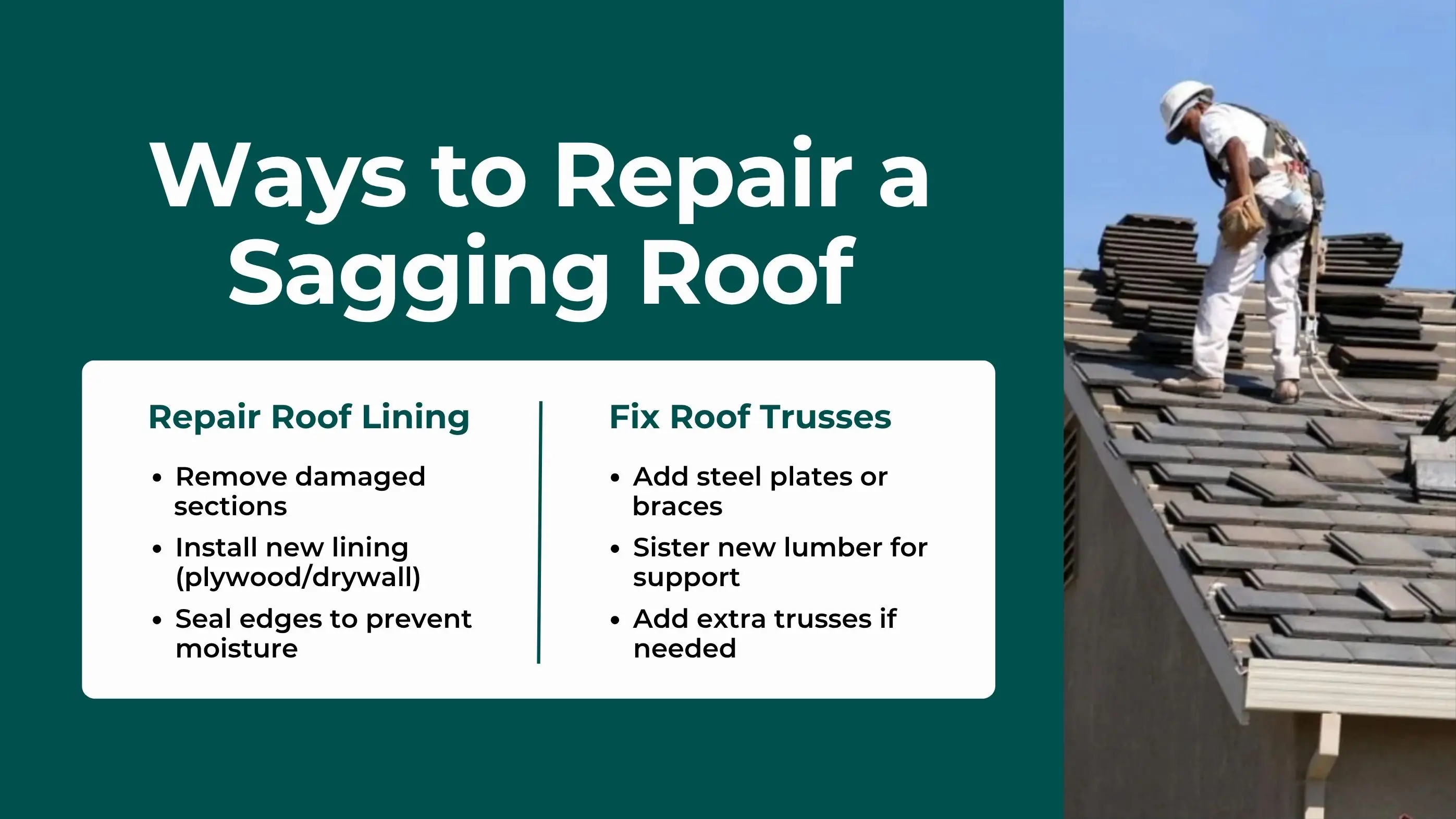
The roof lining acts as a secondary barrier that supports the roof structure and protects your home from internal water damage. Over time, it can weaken due to age, poor ventilation, or prolonged exposure to moisture. When the lining begins to sag, it not only affects the appearance of your ceiling but also compromises your home’s insulation and safety. Repairing or replacing damaged roof lining helps maintain structural stability and prevents further moisture-related deterioration.
To fix sagging roof lining effectively, follow these steps:
When the sag originates from weakened trusses, repairing or reinforcing them is crucial. Trusses form the skeleton of the roof, supporting its entire weight. Over time, they may weaken due to poor construction, rot, or heavy loads like snow or debris. Fixing sagging roof trusses restores your roof’s strength and helps prevent further structural movement.
Reinforcing trusses involves strengthening the existing framework so it can once again bear the roof’s load efficiently. Common reinforcement techniques include:
For roofs that bear heavy loads or show extensive sagging, additional supports may be required to ensure long-term stability.
The cost of fixing a sagging roof depends on the roof size, how severe the sag is, and what kind of repairs are needed. Minor issues like tightening supports or replacing a few rafters are cheaper, while major structural work can be more expensive.
Small repairs usually cost between $500 and $1,500, while major structural fixes can range from $2,000 to $5,000 or more, depending on the extent of the sagging and materials used.
Many factors affect repair pricing, such as the size of the roof, the type and quality of materials (like wood or steel), and local labor rates. The more complex the damage, the higher the cost will be overall.
| Repair Type | Average Cost Range |
|---|---|
| Minor crack sealing | $150 – $300 |
| Moderate repairs | $300 – $600 |
| Major crack or leak repair | $600 – $1,000+ |
| Full section repair | $1,000 – $2,000 |
While minor sagging issues can often be addressed by homeowners, more serious sagging problems require professional expertise. Here’s when it’s time to call in a roofer:
When hiring a contractor for sagging roof repair, consider the following:
When selecting a contractor, ensure they have a strong background in structural repairs, especially in dealing with sagging roofs. An experienced contractor will provide the best long-term solutions and help prevent further damage.
Fixing a sagging roof is essential to maintaining the integrity of your home. Whether you’re reinforcing roof trusses, repairing roof lining, or addressing water damage, addressing the issue promptly will save you money in the long run. Be sure to call a professional if the sagging is severe or if you’re unsure about the best approach. Regular roof inspections and maintenance can prevent sagging from becoming a bigger issue, ensuring your roof stays safe and functional for years to come.
Sometimes a roof looks off because of optical illusions or design slope; true sagging shows dips, uneven ridges, or displaced framing. Early detection prevents bigger issues.
Only if installed on a weak or aging roof. Solar panels add weight, so reinforcement is essential before installation on older or sag-prone structures.
No, layering shingles over a sagging roof hides structural issues and adds weight, worsening the problem. Always fix the sag before any re-roofing.
Yes, when the roof structure shifts, it can affect load-bearing walls, leading to misaligned doors, window frames, or cracks in the drywall below.
No, repair the roof structure first. Replacing drywall before the roof is stabilized risks cracking again from ongoing movement.
Not always, one truss may sag due to load redistribution. Reinforcing only that truss might shift pressure elsewhere. Inspect and address all connected trusses.
Join our mailing list for exclusive updates, expert tips, and special offers tailored to your needs. Be the first to know about the latest in home services.

Renovize Home is a platform that supports homeowners from planning to renovation. Whether it’s Renovize AI for guidance or a one-on-one call with Pro Finder, we understand your project and match you with local contractors tailored to your needs.
Who We Are
About Renovize HomeGet in TouchHomeownwer Support:
Coming Soon!
General Inquiries:
support@renovizehome.com
Head Office:
24 Greenway Plaza, STE 1800M, Houston, TX 77046.