
Explore All
BROWSE BY CATEGORY
Interior
Exterior
Home Essentials
Homeowner Tools
Blogs & Guides
Find a Pro
Book Your Appointment Now
Home Essentials
About Renovize Home
Explore All
BROWSE BY CATEGORY
Interior
Exterior
Home Essentials
Homeowner Tools
Blogs & Guides
Find a Pro
Book Your Appointment Now
Home Essentials
About Renovize Home
Last Updated 2025-10-27
Even a small crack in your roof can cause big problems if ignored. Rainwater can slowly seep through, damaging your ceiling, insulation, and even your walls. Small roof cracks can often be patched easily if caught early. This guide will help you understand what causes roof cracks, how to fix them, and when it’s best to call a professional.
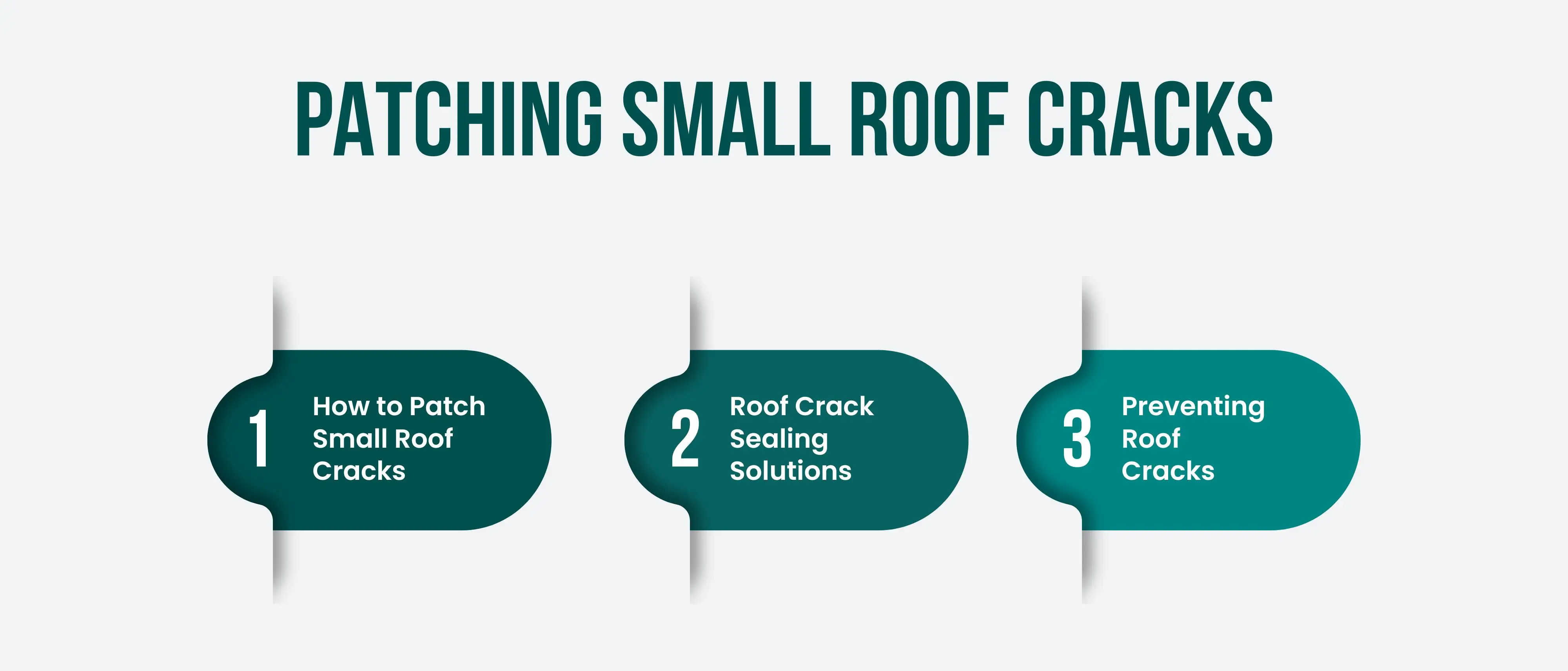
Table of Contents
Understanding Roof Cracks and Their Impact
How to Patch Small Roof Cracks
Tools and Materials for Patching Roof Cracks
Why Patching Small Roof Cracks is Important
Types of Roof Crack Repairs and How to Fix Them
Roof Crack Sealing Solutions
Roof Crack Repair Costs
DIY vs. Professional Roof Crack Patching
Finding the Right Roof Crack Repair Contractor
Preventing Roof Cracks in the Future
Ending Thoughts
Roof cracks may look harmless at first, but they are often the starting point of serious leaks and structural issues. Understanding why they happen helps you take quick action before they cause major damage.
Small cracks can appear for several reasons. Knowing the cause helps you fix the problem correctly and prevent it from happening again.
When temperatures change, your roof expands in the heat and contracts in the cold. Over time, this repeated movement weakens roofing materials, causing small cracks to appear, especially in asphalt shingles or concrete tiles.
As your roof ages, the materials naturally start to dry out and lose flexibility. Old shingles may become brittle and crack under pressure, while older sealants can peel or separate, allowing moisture in.
Sometimes, the structure of the home itself settles or shifts slightly. This movement can cause stress on the roof, leading to small but visible cracks along the surface or around joints and vents.
Patching small cracks isn’t difficult, but it does require patience and attention to detail. Whether you’re using sealant or patching tape, the goal is to make the repair watertight and long-lasting.
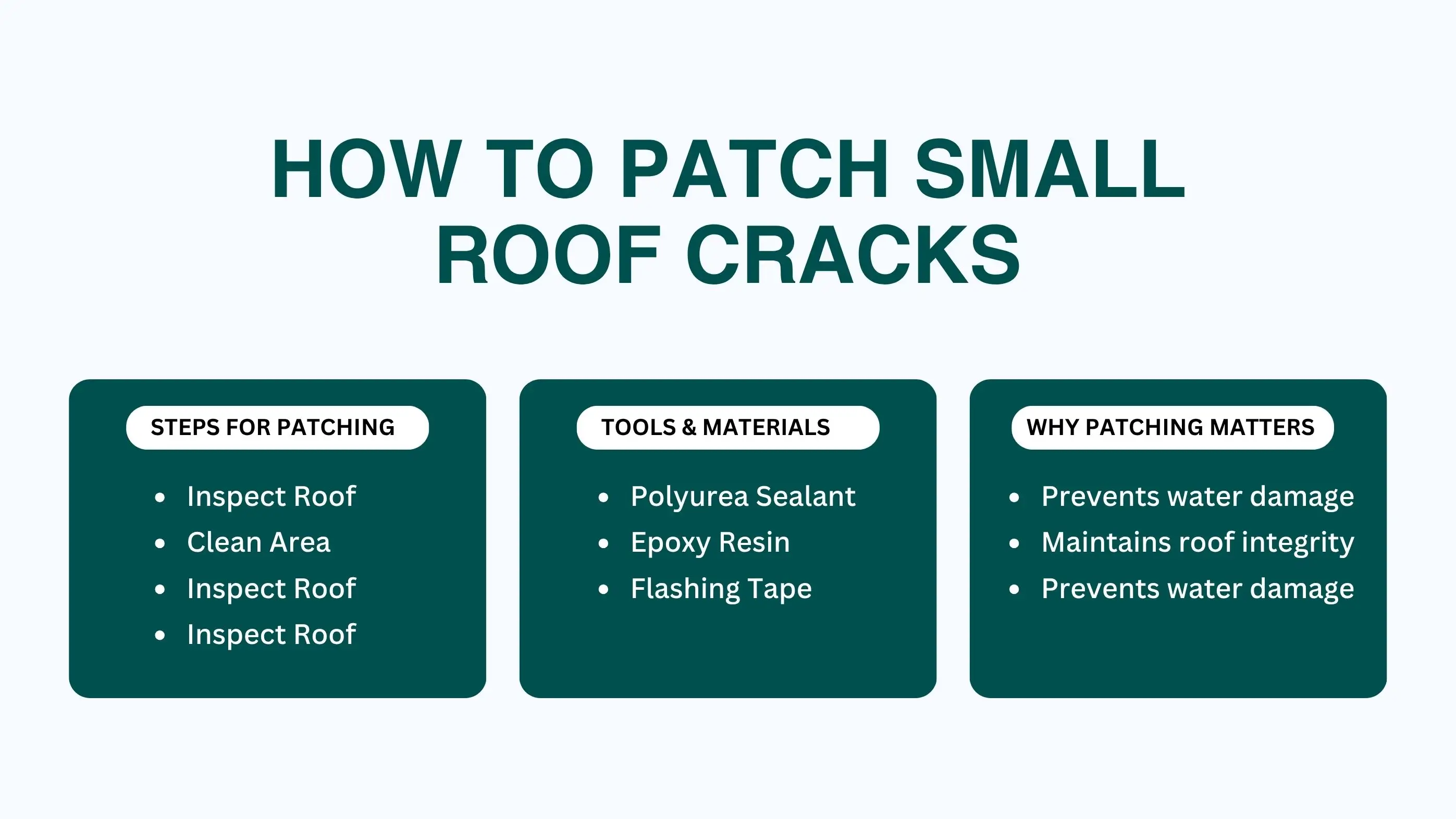
The process of patching small roof cracks involves a few simple but important steps to ensure the repair is strong and leak-proof. By following these steps carefully, you can protect your roof from further damage and extend its lifespan.
Start by carefully checking the roof for cracks, splits, or weak spots. Pay special attention to areas around chimneys, vents, skylights, and roof valleys, these spots are more prone to cracking.
Use a brush or cloth to remove dirt, debris, or loose roofing material. A clean surface helps the sealant stick better and ensures a smoother, stronger repair.
Apply a generous layer of roof sealant, epoxy, or filler directly into the crack. Make sure it fills the entire gap to stop any water from seeping through. For larger cracks, apply two thin coats instead of one thick layer for better results.
Use a trowel, scraper, or gloved hand to smooth the sealant and make sure it blends evenly with the rest of the roof surface. Allow it to dry as directed on the product label before exposing it to rain or sunlight.
Using the right tools and materials is key to making your roof crack repair last. The proper products ensure a strong seal, better protection from leaks, and a smoother, more professional-looking finish.
Polyurea sealant is great for long-lasting repairs. It’s flexible, weather-resistant, and can handle temperature changes without cracking again.
Epoxy resin works well for sealing deep or wide cracks. It hardens quickly and forms a strong, waterproof bond, perfect for concrete or tiled roofs.
If rain is on the way and you need a quick fix, flashing tape can temporarily seal cracks until permanent repairs can be made. It’s sticky, waterproof, and easy to apply.
Ignoring a small crack might seem harmless, but it can quickly turn into a bigger, more expensive problem. Patching small cracks early protects your roof and your wallet.
A small crack today can become a large leak tomorrow. Patching cracks early stops water from seeping in and damaging your roof deck, insulation, or ceilings.
Each repair strengthens your roof’s overall condition. Fixing cracks ensures your roof continues to act as a solid barrier against weather, wind, and debris.
Fixing a crack early costs far less than repairing water damage or replacing an entire roof. Regular inspections and minor patchwork help avoid costly replacements later.
Not all cracks are the same. The repair method depends on what type of roof you have and what materials were used.
Cracked shingles are one of the most common roof problems and can often be fixed with sealant instead of full replacement.
Here are the main benefits of using roof crack sealant for shingles:
Tile roofs are strong, but even one cracked tile can let water in. Repairing them quickly prevents leaks and mold growth underneath.
Here’s how to repair cracked concrete roof tiles in simple steps:
Roof crack sealing solutions are designed to stop leaks, protect your roof, and extend its life. The right sealant can fill small gaps, prevent water from seeping in, and withstand harsh weather conditions. Whether you’re fixing asphalt shingles, concrete tiles, or metal roofs, choosing the right product ensures a durable and long-lasting repair.
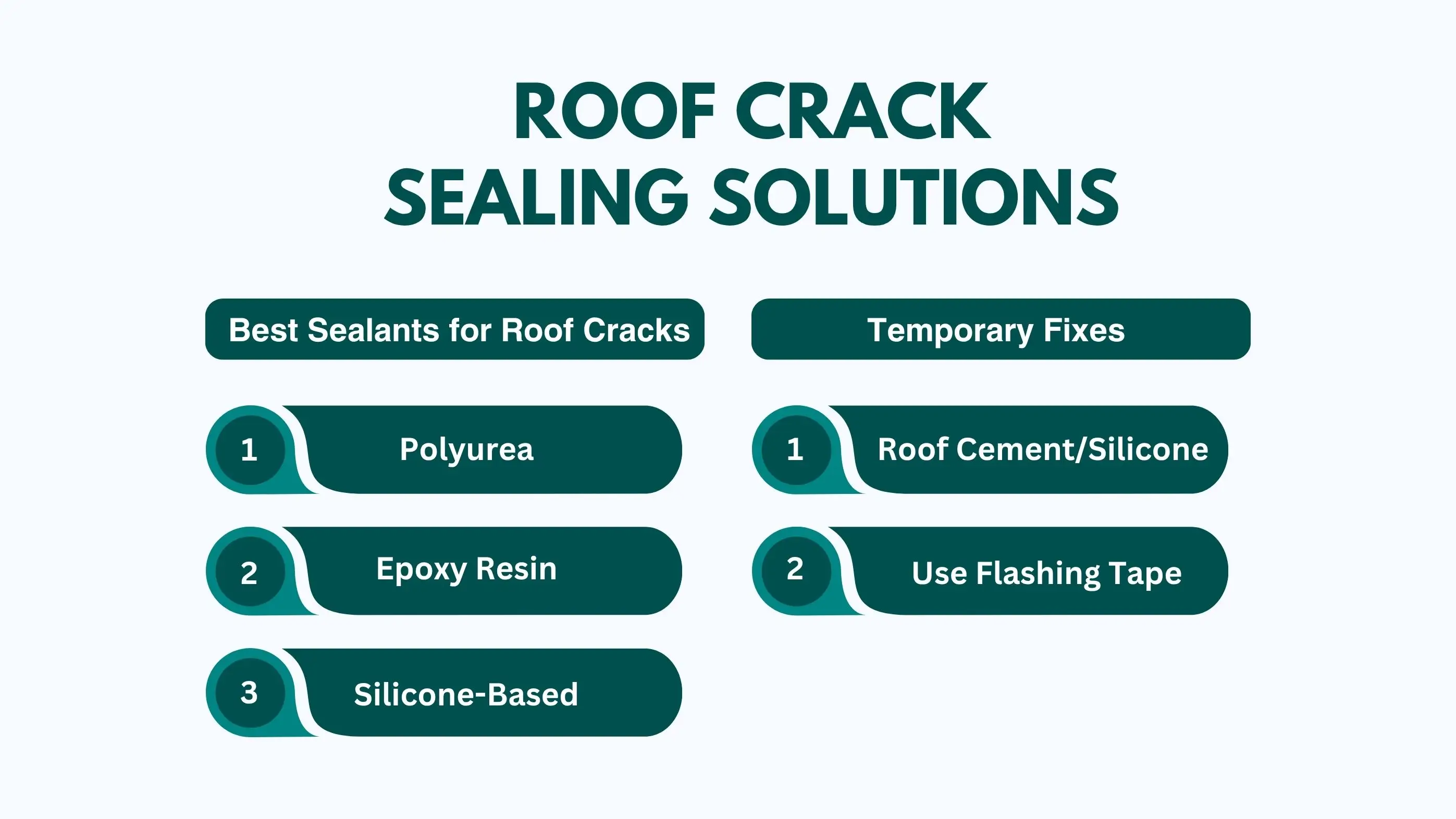
The best sealants for roof cracks are those that provide strong, flexible, and weather-resistant coverage. Options like polyurea, epoxy resin, and silicone-based sealants work well for most roof types. They seal gaps effectively, resist UV rays, and prevent water from entering, ensuring long-lasting roof protection.
Polyurea is one of the most durable options. It can expand and contract with temperature changes and forms a waterproof, UV-resistant coating.
Epoxy resin is ideal for tile and concrete roofs because it creates a hard, long-lasting bond that resists water and weather damage.
Silicone sealants are perfect for emergency repairs. They adhere well to most surfaces, dry quickly, and remain flexible even in extreme weather.
Sometimes, you need a quick solution before professional repairs can be done. Temporary fixes help stop leaks and protect your home from further damage during rain or storms. Materials like flashing tape, silicone sealant, or roof cement can provide short-term protection until a permanent repair is made.
Flashing tape is a fast, simple way to cover a crack temporarily. Just peel, stick, and press firmly over the damaged area until you can make a proper repair.
In urgent cases, applying roof cement or silicone sealant directly over a small leak can stop water instantly. These are temporary fixes but can protect your roof until professional help arrives.
The cost of repairing roof cracks depends on the type of roof, the size of the crack, the materials used, and whether you choose a DIY approach or hire a professional. Understanding the costs upfront helps homeowners plan repairs wisely and avoid unexpected expenses. In many cases, small cracks can be fixed affordably, while larger or structural issues may require professional help.
Repairing small roof cracks is usually not too expensive, especially when handled early. The total cost depends on how severe the crack is, the material of your roof (asphalt, tile, or metal), and local labor rates. Homeowners can expect minor repairs to be relatively budget-friendly compared to major patchwork or replacement.
The table below shows typical price ranges for different types of roof crack repairs. These estimates include materials and labor for a standard single-family home.
| Repair Type | Average Cost Range | Details |
|---|---|---|
| Minor crack sealing | $150 – $300 | Basic sealing with polyurea or silicone sealant. |
| Moderate repairs | $300 – $600 | Includes surface cleaning, sealing, and patching multiple cracks. |
| Major crack or leak repair | $600 – $1,000+ | Involves fixing large cracks or minor structural issues. |
| Full section repair | $1,000 – $2,000 | For replacing part of the roof that’s heavily damaged. |
These prices vary depending on roof accessibility, material type, and the level of damage. Getting an inspection first can help identify whether you need a simple patch or more extensive work.
Tile and shingle repairs differ in cost because of the materials and labor required.
Several key factors influence how much your roof repair will cost:
Homeowners can either handle minor crack patching themselves or hire a professional roofer for more serious damage. While DIY methods are more affordable, professionals offer lasting repairs and can identify deeper issues that may not be visible from the surface.
For small cracks, a DIY approach can be both simple and cost-effective.
Hiring a professional roofer makes sure that the repair is thorough, durable, and safe, especially if your roof has multiple cracks or water damage.
| Repair Type | Average Cost Range | Includes |
|---|---|---|
| Professional Patch | $300 – $800 | Inspection, cleaning, sealing, and materials. |
| Large Crack Repair | $800 – $1,500 | Structural repairs for multiple cracks or leaks. |
| Emergency Fix | $150 – $300 | Temporary sealing for urgent leaks or storm damage. |
Choosing a reliable roofing contractor ensures your roof repairs are done safely and effectively. A good contractor not only fixes visible cracks but also prevents future ones through proper sealing and reinforcement.
When selecting a roofer, consider the following key points:
Using the right tools and materials is key to making your roof crack repair last. The proper products ensure a strong seal, better protection from leaks, and a smoother, more professional-looking finish.
Prevention is always better than repair. With regular care and maintenance, you can extend the life of your roof and avoid costly crack repairs down the road.
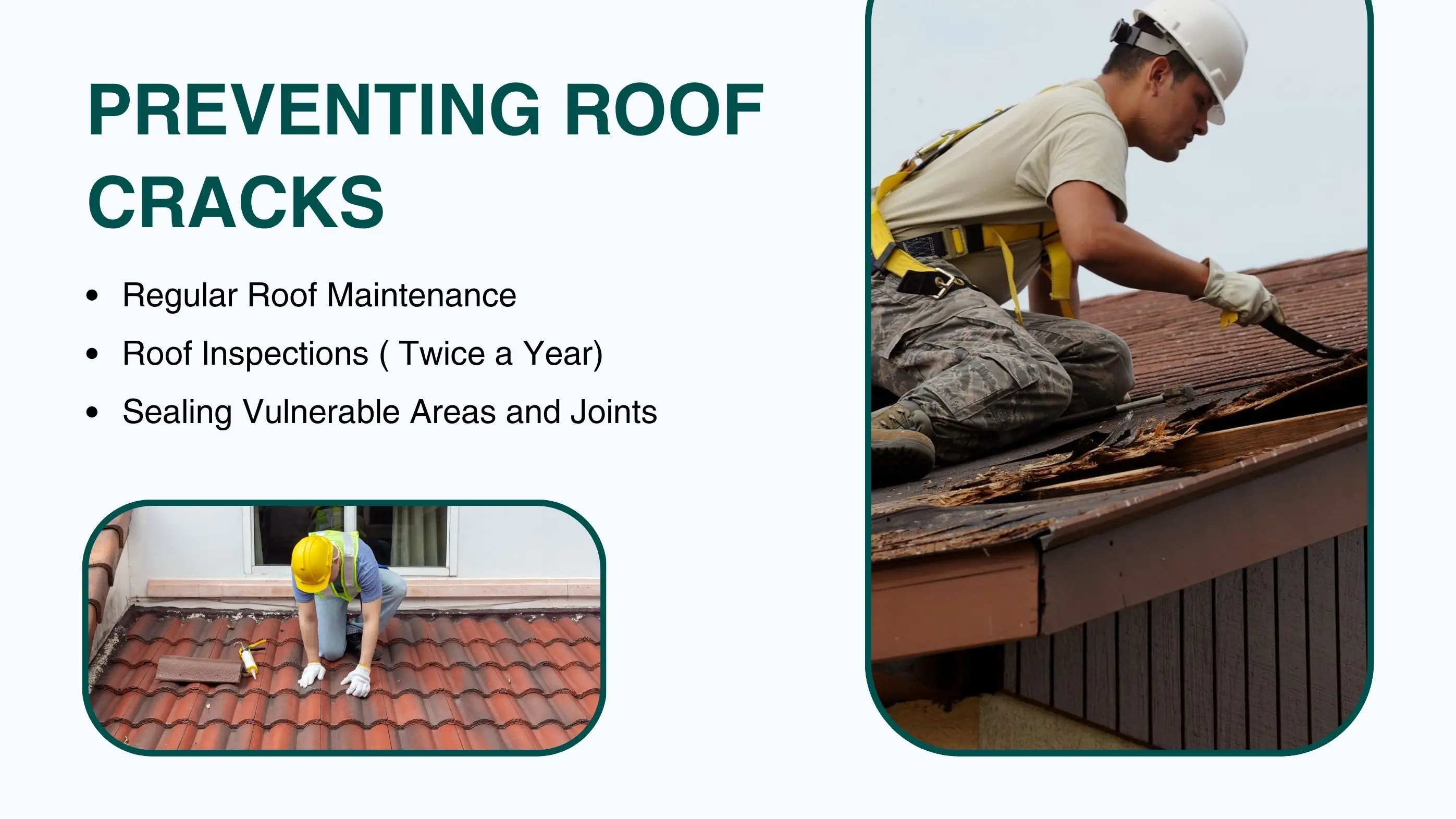
Keeping your roof clean and checking it regularly can help catch small problems before they grow. Maintenance should include cleaning debris, inspecting flashing, and sealing joints to prevent moisture from entering.
Professional roof inspections twice a year, usually in spring and fall, can help detect early signs of damage. During inspections, look for loose shingles, small cracks, or buildup in gutters that may lead to leaks.
Certain areas of your roof, like vents, chimneys, and skylights, are more prone to cracking. Applying sealant around these joints every few years ensures water can’t seep in and weaken the structure.
Choose a dry, mild day between 60°F–80°F (16°C–27°C). Avoid rain, direct sunlight, or humidity, since moisture prevents sealant adhesion and heat can make fillers bubble or peel.
They work as temporary waterproof layers but aren’t long-term solutions. Use them only for emergency fixes, then reseal with roofing-grade polyurea, silicone, or epoxy for lasting results.
Yes, improper mounting or excess weight from panels, satellite dishes, or HVAC units can stress the roof surface. Always use non-penetrating mounts and have installations inspected afterward.
No, cracks never close on their own. Weather cycles expand and widen the gaps, letting water in and weakening shingles or tiles. Leaving them untreated always leads to leaks or mold growth.
High-grade sealants like polyurea or epoxy last 5–10 years when applied correctly on clean, dry surfaces. UV rays, roof slope, and climate all influence how long the patch remains watertight.
Join our mailing list for exclusive updates, expert tips, and special offers tailored to your needs. Be the first to know about the latest in home services.

Renovize Home is a platform that supports homeowners from planning to renovation. Whether it’s Renovize AI for guidance or a one-on-one call with Pro Finder, we understand your project and match you with local contractors tailored to your needs.
Who We Are
About Renovize HomeGet in TouchHomeownwer Support:
Coming Soon!
General Inquiries:
support@renovizehome.com
Head Office:
24 Greenway Plaza, STE 1800M, Houston, TX 77046.