
Explore All
BROWSE BY CATEGORY
Interior
Exterior
Home Essentials
Homeowner Tools
Blogs & Guides
Find a Pro
Book Your Appointment Now
Home Essentials
About Renovize Home
Explore All
BROWSE BY CATEGORY
Interior
Exterior
Home Essentials
Homeowner Tools
Blogs & Guides
Find a Pro
Book Your Appointment Now
Home Essentials
About Renovize Home
Last Updated 2026-02-05
Replacing kitchen appliances is not just about upgrading old units or improving the look of your kitchen. It directly impacts electrical safety, energy efficiency, and overall performance of your home. Modern kitchen appliances often require 20–40% more stable power loads, updated outlets, proper grounding, and compatible wiring compared to older models. If outdated wiring is left unchecked, it can lead to electrical overloads, tripped breakers, overheating wires, or even fire risks.
A proper appliance replacement process also ensures that electrical circuits, gas lines, and plumbing connections are aligned with current safety standards. Many homeowners experience performance issues, water leaks, or frequent appliance failures simply because new high-efficiency appliances are connected to systems designed decades ago. Addressing these compatibility gaps during replacement helps appliances run smoothly, last longer, and operate safely without stressing your home’s infrastructure.
Table of Contents
Why Kitchen Appliances Need Replacement Over Time
What Happens During Kitchen Appliance Replacement
Electrical Readiness When Replacing Kitchen Appliances
Plumbing Considerations for Appliance Replacement
Replacing Built-In vs Freestanding Appliances
When Replacing Kitchen Appliances Is the Right Move
Cost Factors Specific to Replacing Kitchen Appliances
Final Words
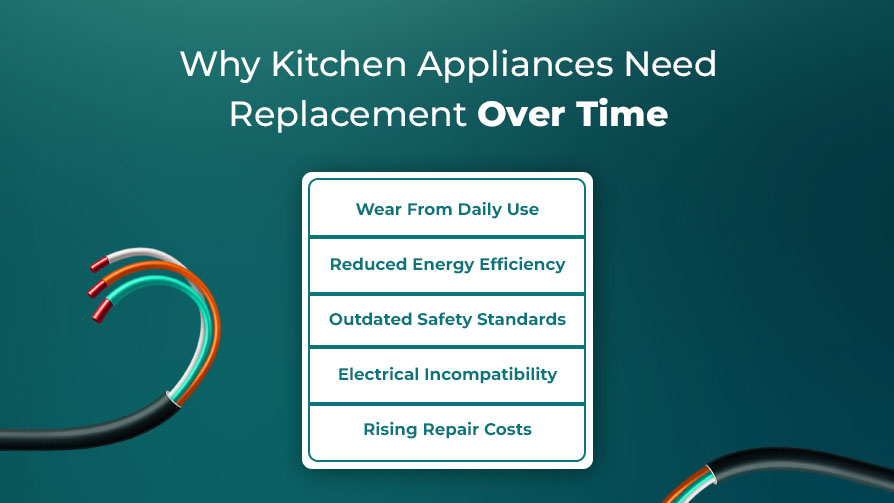
Kitchen appliances are some of the most frequently used systems in a home. Daily cooking, cleaning, heating, and cooling place continuous stress on motors, wiring, seals, and internal components. Over time, this constant usage leads to performance decline, higher energy consumption, and safety risks that are no longer suitable for modern households. Replacing kitchen appliances is often less about convenience and more about maintaining reliability, safety, and efficiency.
Every time an appliance runs, its internal components experience heat, vibration, and electrical load. Over years of use, these stresses slowly break down parts such as motors, heating elements, fans, and wiring connections. Even if an appliance still turns on, internal wear can cause inconsistent performance and unexpected failures.
As wear increases, appliances may take longer to complete tasks, make unusual noises, or shut off unexpectedly. These signs often indicate that internal parts are reaching the end of their functional lifespan, making replacement a safer and more reliable option than repeated repairs.
Older kitchen appliances were built using efficiency standards that are far lower than today’s requirements. As components degrade, energy efficiency drops even further, causing appliances to draw more electricity or gas to perform the same tasks. This reduced efficiency can show up in several ways:
Modern appliances are designed to use 20–40% less energy while delivering better performance. Replacing outdated units helps reduce ongoing energy waste and improves overall household efficiency.
Safety standards for kitchen appliances have changed significantly over the years. Older appliances may lack modern protections such as improved grounding, updated insulation, or advanced shut-off mechanisms. As wiring ages, insulation can crack, connectors can loosen, and internal components may overheat. These issues increase the risk of:
Replacing appliances ensures they meet current electrical and safety codes, reducing the risk of hidden dangers inside your kitchen walls.
Many older appliances were designed for lower electrical loads and simpler wiring setups. Newer appliances often require dedicated circuits, grounded outlets, or higher-capacity wiring to function safely and efficiently.
When old appliances remain connected to newer electrical systems, or new appliances are forced onto outdated wiring, problems can occur such as:
Replacing appliances along with verifying wiring compatibility prevents overloads and ensures smooth, stable operation.
As appliances age, repairs become more frequent and less effective. Replacing one component often reveals another weak part soon after, leading to repeated service calls and rising costs.
At a certain point, the cost of ongoing repairs approaches or exceeds the cost of replacement. New appliances not only restore reliability but also come with updated components, improved warranties, and better long-term performance.
Kitchen appliance replacement is more than removing an old unit and sliding in a new one. Once an appliance is taken out, it often exposes electrical, plumbing, and space-related conditions that have been hidden for years. This stage is critical because it determines whether the new appliance will operate safely, efficiently, and without causing long-term issues.
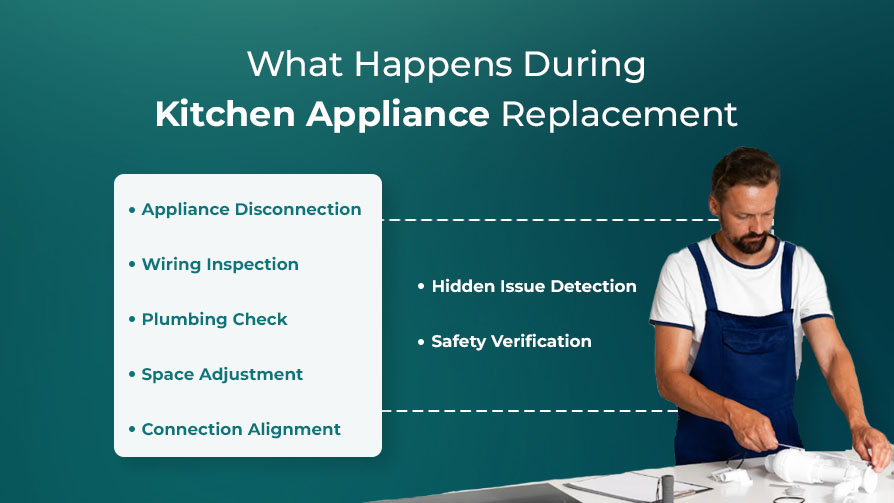
Replacement work focuses not just on the appliance, but on the systems that support it—wiring, outlets, water lines, gas connections, and surrounding cabinetry.
Disconnecting an existing kitchen appliance is a safety-first process. Power, water, or gas connections must be handled carefully to avoid shocks, leaks, or damage to surrounding areas. This step also reveals the actual condition of cords, hoses, and connectors that were previously out of sight. In many homes, this is where early warning signs appear, such as stiff power cords, brittle water lines, or outdated connection methods that are no longer recommended.
Once the appliance is removed, the exposed wiring and plumbing are inspected to ensure they can safely support the new unit. This inspection is often more important than the appliance itself, especially in older kitchens. During this step, professionals usually check:
Modern appliances are often designed differently from older models, even when they appear similar in size. Small differences in depth, height, or connection placement can affect both performance and safety. Adjustments may include:
These changes ensure the appliance fits correctly without placing stress on cords, hoses, or cabinetry.
Appliance replacement frequently exposes problems that were previously hidden behind cabinets or appliances. These issues may not have caused visible symptoms, but can affect safety and long-term reliability. Common hidden findings include:
Skipping proper inspection and adjustment during appliance replacement can lead to poor performance, repeated service calls, or safety hazards. Taking the time to disconnect correctly, inspect supporting systems, and adjust connections ensures the new appliance operates safely and efficiently from day one.
Modern kitchen appliances are designed to operate faster, smarter, and more efficiently than older models, but they also require stronger and more stable electrical support. Without proper electrical readiness, even a new appliance can experience performance issues, frequent shutdowns, or long-term damage. This makes electrical evaluation a critical step during kitchen appliance replacement.
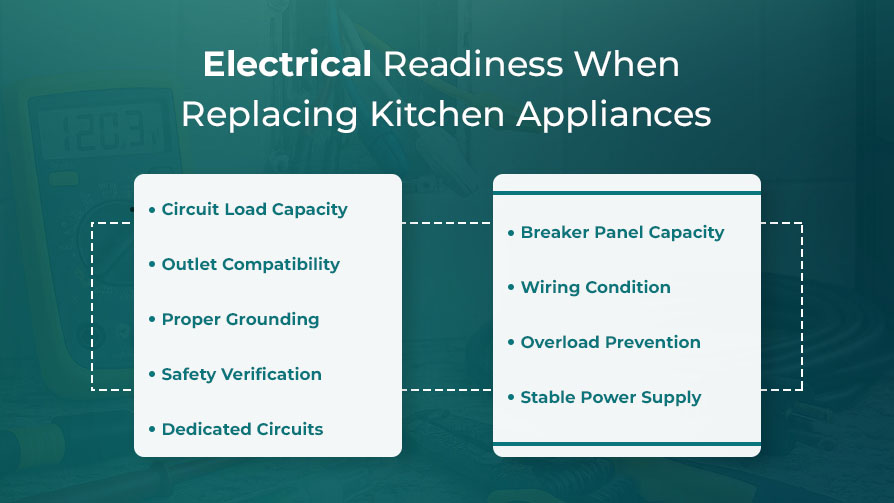
Electrical readiness ensures that circuits, outlets, grounding, and protection systems can safely support appliance demands without overloading the home’s wiring.
Each kitchen appliance has a specific electrical load, especially during startup. Older kitchens often rely on shared circuits that were not designed to handle the higher power demands of modern appliances. When circuit capacity does not match appliance requirements, the result is often breaker trips or overheating wiring.
In most cases, the issue is not the appliance itself but insufficient circuit capacity. When this happens, a circuit upgrade or a dedicated electrical line becomes necessary to support safe operation.
Outlet compatibility involves more than ensuring the plug fits. Modern appliances require properly rated, grounded outlets, while older outlets may be loose, worn, or heat-damaged.
Checking outlet condition during appliance replacement is essential because improper outlets can affect both performance and electrical safety. If upgrades or relocation are needed, they should be completed before the appliance is installed.
Grounding and safety verification play a key role in electrical readiness. These checks focus on identifying risks that are not always visible but can become serious over time. Common safety checks include:
These inspections help prevent hidden electrical hazards and ensure safe appliance operation.
Some kitchen appliances require dedicated circuits due to continuous or high electrical demand. Electric ovens, dishwashers, and built-in microwaves are common examples. Shared circuits are often unsuitable for these appliances.
Without a dedicated circuit, appliances may behave inconsistently or cause repeated breaker trips. During replacement, it is important to determine whether a new circuit is required or if an existing circuit can be safely upgraded.
Electrical readiness also includes reviewing the breaker panel to ensure it can support new appliance loads. Older panels may be near capacity or rely on outdated breakers. A proper panel review typically checks:
Skipping electrical readiness during kitchen appliance replacement increases the risk of overheating, breaker failures, and hidden wiring damage. Proper electrical preparation ensures appliances operate smoothly, safely, and at full efficiency from the first day, protecting both the appliance investment and the home.
Appliances connected to water require careful plumbing evaluation during replacement. When an old appliance is removed, plumbing components that have remained untouched for years are suddenly disturbed. This is often when hidden weaknesses appear, even if no leaks existed before. Ignoring plumbing readiness can lead to slow leaks, water pressure issues, or damage inside cabinets after installation.
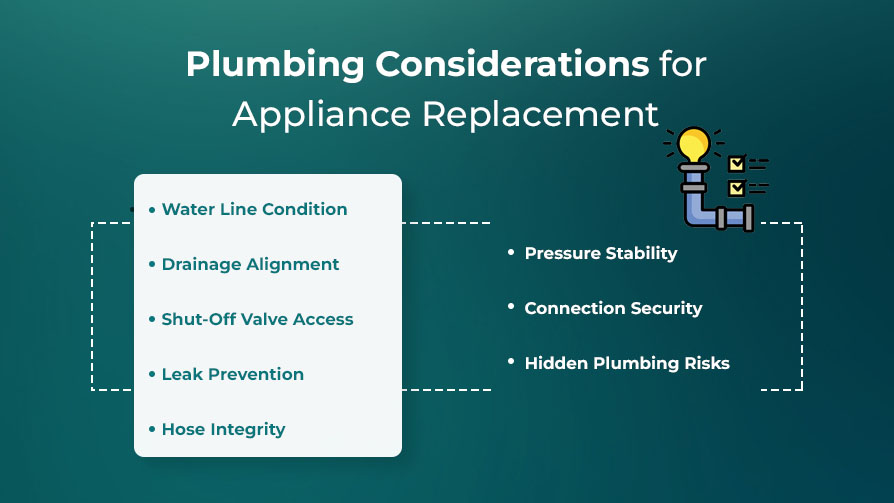
Replacing kitchen appliances such as dishwashers or refrigerators may require minor plumbing adjustments to prevent leaks and ensure long-term reliability.
Water supply lines slowly degrade over time, especially flexible hoses hidden behind appliances. Heat, pressure, and age can weaken these lines internally, even when the exterior looks fine. Once disconnected and reconnected, older lines are more likely to crack or leak.
Checking the water line condition during replacement helps prevent unexpected failures. In many cases, replacing an aging line at this stage is safer than reusing one that is already near the end of its lifespan.
Drainage alignment is critical for appliances like dishwashers. When an appliance is removed, drain hoses can shift position or lose proper slope. Even small alignment issues can cause slow draining, water backups, or moisture buildup under cabinets.
Proper alignment ensures water flows out smoothly without stress on hoses or fittings. This protects surrounding cabinetry and flooring from long-term water exposure.
Shut-off valves allow water to be stopped quickly in case of a leak. In many kitchens, these valves are either difficult to reach or no longer function properly due to age and corrosion.
During appliance replacement, accessibility and operation of the shut-off valve are reviewed. If the valve cannot fully stop water flow or is blocked by cabinetry, correcting it during replacement reduces future risk.
Appliance replacement often exposes plumbing problems that were previously hidden behind cabinets or appliances. These issues may not cause immediate symptoms but can worsen once the system is disturbed. This stage may reveal:
Replacing kitchen appliances can look simple on the surface, but installation complexity changes significantly depending on whether the appliance is built-in or freestanding. Built-in appliances are designed to fit precisely within cabinetry, while freestanding appliances allow more flexibility in placement and connections. This difference directly affects removal effort, fitting accuracy, and overall planning during replacement.
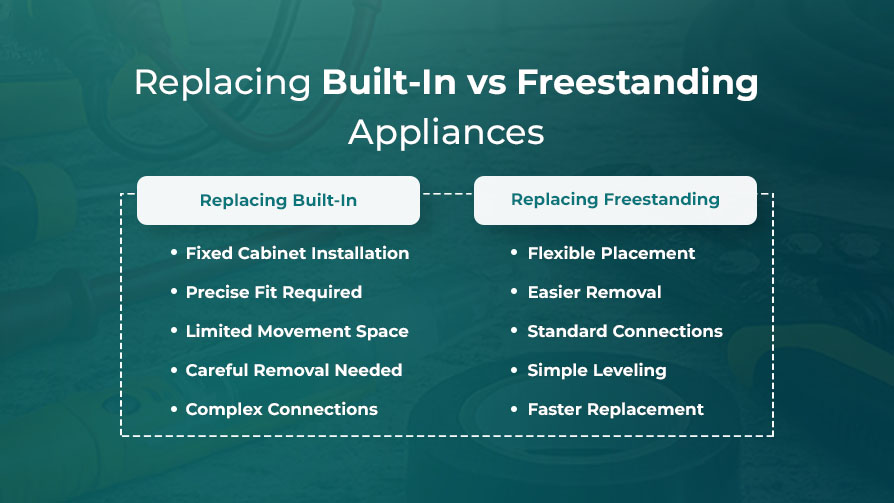
Replacing kitchen appliances that are built-in typically involves tighter tolerances, limited movement space, and more detailed coordination of electrical, plumbing, and structural elements.
Built-in appliances are often secured to cabinets, countertops, or surrounding panels. Removing them requires careful detachment to avoid damaging cabinetry or finishes that are meant to remain intact. Because these appliances are tightly fitted, even small mistakes during removal can lead to chipped panels or misaligned cabinet edges.
This process usually takes more time than freestanding removal and often reveals hidden connection points that must be handled cautiously.
Integrated appliances must align perfectly with surrounding cabinetry for both function and appearance. Unlike freestanding units, these appliances depend on exact spacing, leveling, and panel alignment to operate correctly. Even a slight misalignment can affect door movement, ventilation, or access to controls.
Fitting integrated appliances requires precision planning before installation begins, ensuring that connections and clearances are correct without forcing the unit into place.
Freestanding appliances are generally easier to replace because they are not permanently attached to cabinetry. However, ease of placement does not eliminate the need for proper setup. These appliances still require accurate leveling, secure connections, and sufficient clearance to function properly.
When installed correctly, freestanding appliances offer flexibility for future replacement and easier access for maintenance or service.
Replacing kitchen appliances without proper planning often leads to problems that don’t appear immediately. Many issues develop slowly, showing up weeks or months later as performance drops, leaks, or safety concerns. These mistakes usually happen because homeowners focus on the appliance itself and ignore supporting systems.
Skipping utility checks is one of the most common mistakes homeowners make during appliance replacement. Assuming existing electrical and plumbing systems will support a new appliance often leads to performance issues or safety risks later. Homeowners often skip checking:
Even small spacing problems can restrict airflow, limit door movement, or trap heat. Over time, this leads to overheating, noise, and daily usability frustration. Clearance should always be confirmed before installation, not after problems appear.
Improper reconnections often happen when electrical cords, water lines, or drain hoses are reattached without proper alignment or tension control. Common reconnection problems include:
Replacing kitchen appliances is not just about how old an appliance is. The right time to replace comes when performance, safety, or system compatibility no longer supports everyday kitchen use. Many appliances continue to “work” while quietly creating electrical stress, water risks, or efficiency loss in the background.
A well-planned replacement prevents repeated breakdowns, improves daily reliability, and ensures the kitchen can support modern appliance demands without constant maintenance or risk.
Performance decline is often the first sign that replacement should be considered. Appliances may still turn on, but their output no longer matches normal expectations. What once worked efficiently now feels slow, inconsistent, or unreliable. Common performance signals that point toward replacement include:
These issues usually indicate internal wear that repairs can no longer fully resolve. At this stage, replacement offers better long-term stability than repeated fixes.
Safety concerns are one of the strongest indicators that replacement is the right move. Over time, aging appliances can create electrical, heat, or water-related risks that are not immediately visible.
Issues such as overheating surfaces, recurring breaker trips, leaking connections, or unstable operation should never be ignored. Older appliances may also lack modern safety features designed to protect wiring, plumbing, and surrounding cabinetry. Replacing them reduces the risk of damage, accidents, and costly emergency repairs.
Modern kitchen appliances are designed with higher efficiency standards, but they often require stronger electrical support and more precise plumbing connections. Older kitchens were not always built to handle these requirements.
When existing systems struggle to support newer appliances—even after minor upgrades—replacement becomes the more practical option. Continuing to use appliances that strain outdated systems can shorten appliance lifespan and increase stress on the home’s infrastructure.
Frequent repairs are a clear sign that an appliance is nearing the end of its useful life. When service calls become routine or repair costs increase with each visit, reliability is already compromised.
Instead of continuing to invest in short-term fixes, replacing the appliance provides long-term predictability. This reduces ongoing maintenance expenses and minimizes disruption to daily routines.
Older appliances often consume more electricity or water to achieve the same results as newer models. As efficiency declines, utility bills slowly increase—even if the appliance still functions.
Replacing inefficient appliances improves energy use, reduces water consumption, and lowers long-term operating costs. Over time, these savings help offset replacement expenses while supporting more sustainable kitchen operation.
Replacement also makes sense when planning future kitchen use or home improvements. Appliances chosen with long-term compatibility in mind integrate better with updated layouts, utilities, and efficiency standards.
Making the decision proactively allows homeowners to plan installations carefully instead of reacting to sudden failures. This leads to smoother replacements, better budgeting, and fewer unexpected issues.
The cost of replacing kitchen appliances is influenced by much more than the appliance price itself. While many homeowners expect a simple swap, real-world replacement often includes system upgrades and adjustments that add to the final expense. In fact, 30–50% of total replacement cost can come from electrical, plumbing, or space-related work rather than the appliance alone.
Replacing kitchen appliances becomes more expensive when supporting systems need updates to safely handle modern appliance requirements, especially in homes built more than 15–20 years ago.
Utility upgrades are one of the most common reasons replacement costs increase. Many modern appliances require dedicated circuits (15–20 amps), proper grounding, updated outlets, or stronger water lines to operate safely and efficiently.
In older kitchens, utility upgrades can add $150 to $1,200+ to the project depending on the scope. While this increases upfront cost, these upgrades are essential for safety and help prevent future performance issues, electrical overloads, or emergency repairs.
Removing an old appliance is not always straightforward, especially if it is built-in or tightly fitted. Older appliances may be hardwired, connected to aging plumbing, or secured behind cabinetry, which increases labor time. Removal costs tend to rise when:
On average, appliance removal adds $100–$600, depending on complexity and appliance type.
Installation complexity varies based on appliance type, kitchen layout, and system compatibility. Freestanding appliances are usually quicker to install, while built-in or integrated units require precise alignment and connection planning.
Standard installations may take 1–3 hours, while complex installations can take 4–8 hours or more. Higher labor time directly increases cost, especially when precision fitting or coordination across utilities is required.
Electrical and plumbing adjustments are often discovered only after the old appliance is removed. Even small changes—such as relocating an outlet or replacing a shut-off valve—can affect the final cost.
These adjustments are common in kitchens where systems were designed for lower-demand appliances. Typical adjustment costs range from $100 to $800, depending on accessibility and extent of work. Addressing these issues during replacement helps avoid future failures and emergency service calls.
In some cases, new appliances do not fit existing openings due to dimension changes or ventilation requirements. Minor cabinet trimming, flooring adjustments, or clearance corrections may be required to ensure proper airflow and usability.
Although these modifications are usually small, they add labor time and can increase replacement cost by $100–$500. Planning for these adjustments early helps avoid installation delays and forced fitting.
Below is a general cost range table to show how different factors contribute to the overall replacement expense. Actual costs vary by region, appliance type, and kitchen condition.
| Cost Factor | Typical Cost Range (USD) |
|---|---|
| Basic appliance installation | $150 – $400 |
| Built-in appliance removal | $200 – $600 |
| Electrical circuit or outlet upgrades | $150 – $1,000+ |
| Plumbing line or valve updates | $100 – $600 |
| Cabinet or space adjustments | $100 – $500 |
| Disposal of old appliance | $50 – $150 |
Replacing kitchen appliances is not just an upgrade—it is a preventive step that protects your home’s electrical wiring, plumbing systems, and overall safety. As appliances age, they quietly place more strain on circuits, outlets, water lines, and surrounding cabinetry, even if they appear to function normally. Modern appliances demand stable power, proper grounding, and reliable connections to perform efficiently and safely.
A well-planned replacement process addresses these supporting systems at the same time, reducing the risk of hidden hazards, repeated breakdowns, and rising utility costs. By evaluating electrical readiness, plumbing condition, space requirements, and system compatibility during replacement, homeowners can avoid short-term fixes and create a kitchen setup that supports long-term performance, safety, and peace of mind.
Yes, older appliances and aging wiring increase the risk of overheating, loose connections, and insulation failure. Replacing appliances while checking circuit load, grounding, and breaker response significantly reduces electrical fire risk inside kitchens.
Wiring should be evaluated before installation but does not require purchasing the appliance first. Knowing load requirements in advance prevents installation delays, forced fitting, or unsafe temporary connections after the appliance arrives.
Breaker trips usually indicate that the circuit cannot handle the appliance’s startup or running load. This is common when modern appliances are connected to shared or undersized circuits that were designed decades ago.
No, warm outlets, plugs, or breaker panels are warning signs of poor connections, overloaded circuits, or loose wiring. New appliances should operate without generating heat at connection points.
Yes, aging water lines may crack, leak, or fail when disturbed during replacement. New appliances often operate at higher pressure or with tighter seals, making weak lines more likely to fail after reconnection.
The most common mistake is assuming existing electrical and plumbing systems are “good enough.” Skipping inspections often leads to leaks, breaker issues, or reduced appliance lifespan weeks or months after installation.
Join our mailing list for exclusive updates, expert tips, and special offers tailored to your needs. Be the first to know about the latest in home services.

Renovize Home is a platform that supports homeowners from planning to renovation. Whether it’s Renovize AI for guidance or a one-on-one call with Pro Finder, we understand your project and match you with local contractors tailored to your needs.
Who We Are
About Renovize HomeGet in TouchHomeownwer Support:
Coming Soon!
General Inquiries:
support@renovizehome.com
Head Office:
24 Greenway Plaza, STE 1800M, Houston, TX 77046.