
Explore All
BROWSE BY CATEGORY
Interior
Exterior
Home Essentials
Homeowner Tools
Blogs & Guides
Find a Pro
Book Your Appointment Now
Home Essentials
About Renovize Home
Explore All
BROWSE BY CATEGORY
Interior
Exterior
Home Essentials
Homeowner Tools
Blogs & Guides
Find a Pro
Book Your Appointment Now
Home Essentials
About Renovize Home
Last Updated 2026-01-30
Demolition is the first essential step in any kitchen renovation, offering homeowners a fresh start by clearing away outdated structures and making room for modern designs. According to the National Kitchen and Bath Association (NKBA), kitchen remodels make up nearly 20% of all home renovation projects in the U.S., underscoring their importance. Kitchen renovations typically cost between $12,000 and $35,000, with demolition being an integral part of that budget. This step removes old cabinets, countertops, and walls, opening up space for new, energy-efficient appliances and innovative layouts.
Beyond aesthetics, kitchen demolition also addresses underlying issues like water damage, mold, or outdated wiring, ensuring the space is safer and more functional. By removing these structural obstacles, demolition sets the stage for a kitchen that not only meets modern standards but also enhances the home’s overall value. This process is essential for anyone looking to upgrade their kitchen and create a space that is both beautiful and practical for years to come.
Table of Contents
Step-by-Step Kitchen Structure Demolition Process
Tools Used in Kitchen Demolition
Why Is Kitchen Structure Demolition Crucial for Kitchen Renovations?
Challenges Encountered During Kitchen Demolition
Benefits of Kitchen Structure Demolition
Cost Considerations for Kitchen Structure Demolition
Common Problems Solved by Kitchen Structure Demolition
Final Thoughts
Kitchen structure demolition is the first and most critical phase of any kitchen renovation. It involves carefully removing old cabinets, countertops, appliances, flooring, fixtures, and sometimes walls to prepare the space for a complete redesign. This phase determines how smoothly the rest of the renovation will proceed.
When demolition is done correctly, it prevents costly delays, uncovers hidden structural or utility issues early, and ensures that new installations fit properly. Poorly planned demolition, on the other hand, often leads to safety risks, unexpected repairs, and budget overruns.
For most homes, kitchen demolition takes 1 to 3 days, depending on the size of the kitchen, the materials being removed, and whether layout changes are involved.
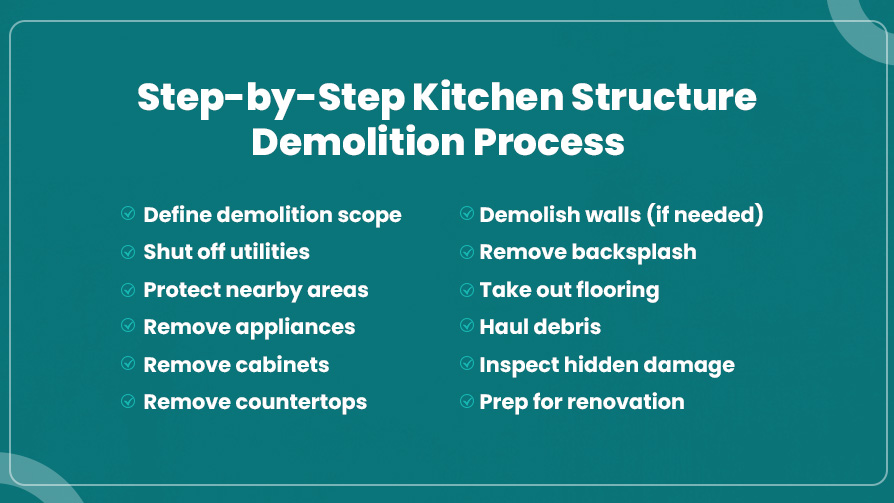
The demolition process begins with detailed planning. This step determines what will be removed, what will stay, and how aggressive the demolition needs to be.
Some kitchens only require removing cabinets, countertops, and appliances. Others involve removing flooring, backsplashes, soffits, or walls to change the layout. Each choice directly affects labor time, disposal volume, and renovation cost. At this stage, measurements are taken, renovation plans are reviewed, and decisions are made about:
Clear scope definition prevents accidental damage, avoids unnecessary demolition, and eliminates surprise costs later.
Before any demolition begins, all kitchen utilities must be safely shut off. This includes:
This step usually takes 30 to 60 minutes but is critical for safety. Skipping or rushing this stage can result in water leaks, electrical hazards, or gas-related risks during demolition.
Once utilities are shut off, safety checks ensure no live connections remain before tools are used.
Kitchen demolition creates dust, debris, vibration, and noise that can easily spread to nearby rooms. Before demolition starts, surrounding areas are protected to prevent damage and reduce cleanup. This includes:
This preparation typically takes 1–2 hours and significantly reduces post-demolition cleaning and repair work throughout the home.
Appliances and fixtures are removed first to create a safe, open workspace. This includes:
Removing these items early prevents damage during demolition and allows homeowners to decide whether appliances will be reused, upgraded, or replaced later in the renovation.
Cabinet and countertop removal is the central phase of kitchen demolition. Upper cabinets are removed first to reduce the risk of injury, followed by countertops and base cabinets.
This stage typically takes 2–4 hours, depending on:
Stone countertops and custom cabinetry require additional care due to their weight and attachment methods.
If the renovation includes layout changes or updated wall finishes, backsplashes and selected walls are removed next.
Structural walls are only removed after professional evaluation, as they affect the stability of the home. Improper wall removal can lead to serious structural problems and costly repairs.
Flooring is removed after heavy demolition to avoid unnecessary damage. Common materials removed include tile, vinyl, laminate, or hardwood. This stage exposes the subfloor, which is inspected for:
Many renovation delays occur at this stage when hidden subfloor issues are discovered and must be corrected before new flooring is installed.
Kitchen demolition generates a significant amount of waste. On average, a full kitchen demolition produces 1–3 tons of debris, including drywall, wood, tile, metal, and insulation. All debris must be:
Proper waste handling keeps the site safe, prevents injuries, and allows renovation work to continue without obstruction.
Once demolition is complete, the exposed space is inspected thoroughly. This step often reveals problems that were hidden behind walls and cabinets, such as:
Identifying and addressing these issues early prevents major delays and unexpected expenses during the construction phase.
The final demolition step involves detailed cleaning and preparation. Dust is removed, debris is cleared, and surfaces are made ready for the next phase of work.
The kitchen is now fully prepared for renovation work to begin efficiently and safely.
Kitchen demolition requires a combination of hand tools, power tools, and safety equipment to remove cabinets, countertops, fixtures, walls, and flooring safely and efficiently. Using the right tools helps prevent structural damage, reduces labor time, and minimizes safety risks during demolition. The tools used may vary depending on kitchen size, materials, and whether partial or full demolition is involved, but the tools below cover most standard kitchen demolition projects.
| Tool Name | Category | Purpose in Kitchen Demolition |
|---|---|---|
| Hammer | Hand Tool | Used for breaking drywall, removing nails, and loosening cabinets or trim |
| Pry Bar / Crowbar | Hand Tool | Helps pull cabinets, countertops, and trim from walls without excessive damage |
| Screwdriver Set | Hand Tool | Used to remove cabinet screws, appliance fasteners, and electrical faceplates |
| Utility Knife | Hand Tool | Cuts caulk, sealant, drywall paper, and flooring edges cleanly |
| Adjustable Wrench | Hand Tool | Disconnects plumbing fittings and appliance connections |
| Power Drill / Driver | Power Tool | Removes screws quickly from cabinets, fixtures, and appliances |
| Reciprocating Saw | Power Tool | Cuts through wood, drywall, nails, and pipes during cabinet or wall removal |
| Circular Saw | Power Tool | Used for cutting subflooring or large wood sections when flooring is removed |
| Oscillating Multi-Tool | Power Tool | Ideal for precise cuts around cabinets, backsplashes, and tight spaces |
| Sledgehammer | Power Tool | Breaks stubborn materials like tile, thick drywall, or masonry backerboard |
| Tile Scraper / Chisel | Hand Tool | Removes tile, backsplash, and adhesive from walls or floors |
| Floor Scraper | Hand Tool | Lifts vinyl, laminate, or tile flooring from the subfloor |
| Stud Finder | Measuring Tool | Locates wall studs before cutting or removing sections |
| Voltage Tester | Safety Tool | Confirms electrical lines are fully disconnected before demolition |
| Pipe Cutter | Plumbing Tool | Cuts copper or PVC pipes safely during plumbing disconnection |
| Dust Mask / Respirator | Safety Equipment | Protects against dust, debris, and potential mold exposure |
| Safety Glasses | Safety Equipment | Shields eyes from flying debris and sharp fragments |
| Work Gloves | Safety Equipment | Protects hands from cuts, splinters, and sharp edges |
| Drop Cloths / Plastic Sheets | Protection Equipment | Covers floors and seals off nearby rooms from dust |
| Dumpster / Debris Bags | Waste Management | Used for collecting and removing demolition waste efficiently |
Kitchen structure demolition is a vital first step in any renovation project. It clears the way for a fresh, modern kitchen by removing old, outdated elements that no longer serve the space’s needs. Demolition creates room for better design, improved functionality, and updated materials. It allows homeowners to reimagine their kitchen, addressing both aesthetic and practical issues.
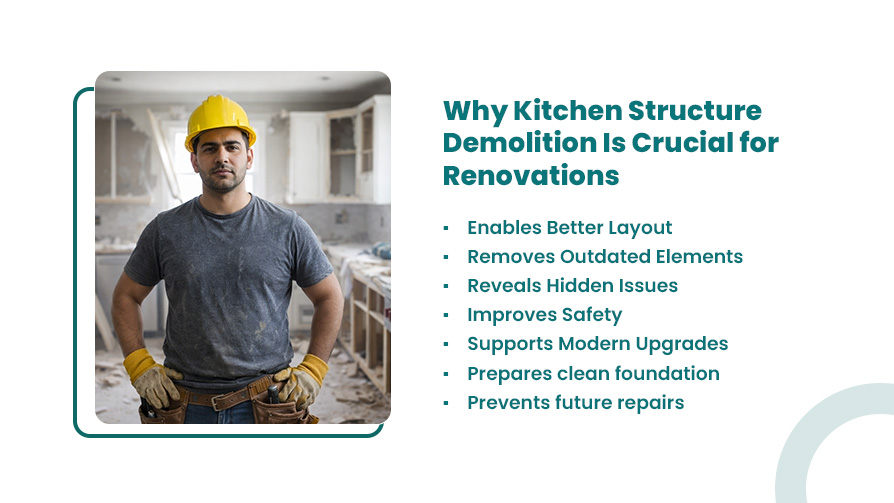
Demolition opens up new possibilities for kitchen design. By removing old cabinets, countertops, and walls, you free up space for a modern layout that meets your needs. This process makes room for more functional features, like large kitchen islands, updated appliances, and better storage options. Whether you’re aiming for an open-plan design or just need more counter space, demolition ensures the space is flexible and ready for any changes.
It also allows you to rethink the flow of the kitchen. Without old, restrictive elements, you can maximize the space’s potential and create an inviting, practical layout. The result is a modern, stylish kitchen that feels more connected to the rest of the home.
During demolition, you have the chance to address any hidden issues that could impact the safety or longevity of your renovation. In older homes, there could be water damage, mold, or structural weaknesses that need immediate attention. Removing outdated walls and materials allows you to assess the overall condition of your kitchen’s structure.
By tackling these problems early, you avoid future repairs or complications, ensuring the new kitchen remains safe and reliable for years to come. Demolition allows you to not only clear the space but also ensure the integrity of your home’s foundation, so you can build on a solid, secure base.
Once demolition is complete, the space is ready for modern upgrades. Old and worn-out appliances, countertops, and cabinets can limit the functionality of your kitchen. By removing them, you make room for energy-efficient appliances, sleek cabinetry, and custom designs that fit the needs of today’s homeowners.
This process also makes it easier to incorporate new technologies, like induction cooktops, smart refrigerators, and eco-friendly lighting. With the space cleared, you can bring in the best materials and features to match your kitchen's updated style and functionality.
Kitchen demolition is an exciting first step in transforming your outdated kitchen into a modern, functional space. However, it’s not always a straightforward process. There are several challenges that homeowners may encounter during the demolition phase, which can affect the timeline, budget, and even the overall renovation process. Understanding these challenges beforehand will help you be better prepared and avoid surprises along the way.
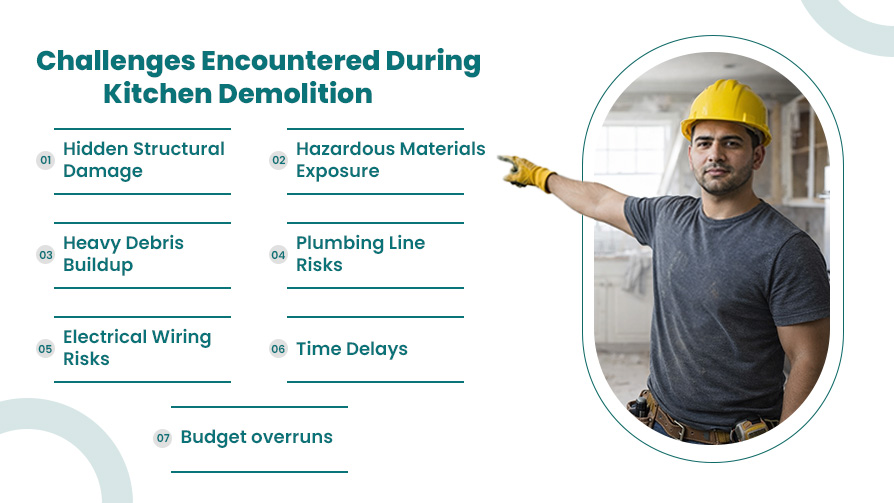
One of the most common challenges during kitchen demolition is uncovering hidden structural issues. These could be water damage, mold growth, or faulty wiring that aren’t visible until you start removing materials. Often, these problems are only discovered once cabinets, countertops, or flooring are torn out.
In older kitchens, it’s common to come across hazardous materials like asbestos or lead-based paint, which were commonly used in the past. These materials can pose significant health risks if not handled correctly and require special removal procedures.
Kitchen demolition generates a lot of waste—old cabinets, countertops, flooring, and appliances need to be properly disposed of. This waste can accumulate quickly, creating an unsafe or disorganized space if not managed properly.
During demolition, there’s always a risk of damaging plumbing lines or electrical wiring that are still in use. Even small mistakes can lead to leaks or electrical problems, causing delays in the renovation process and adding unexpected costs.
Unexpected issues can extend the timeframe and increase costs. Discovering hidden problems, like structural damage or hazardous materials, can delay the demolition process and make the renovation more expensive than originally planned.
Kitchen structure demolition is an essential step in any kitchen renovation, offering numerous benefits that go far beyond just removing old elements. It provides the foundation for transformation, creating space for new designs, improving functionality, and addressing hidden issues. Below, we explore the key benefits of kitchen structure demolition and how it sets the stage for a successful renovation.
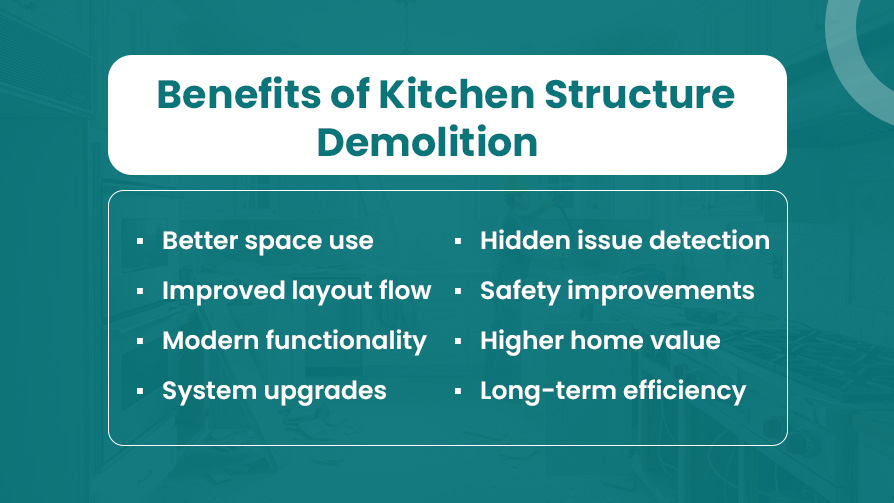
One of the primary benefits of kitchen demolition is the ability to maximize space for better layouts. By removing walls, outdated cabinets, and other structures, you open up the area for more efficient use. Whether you want to create an open-concept design, add an island, or expand your kitchen’s footprint, demolition ensures that you have the freedom to design a layout that suits your needs. This process also eliminates unnecessary obstacles that may have restricted traffic flow or made the kitchen feel cramped, ensuring that the new design is more functional and user-friendly.
Demolition allows for upgrading to modern systems and layouts that make the kitchen more efficient. It clears the space to install energy-efficient appliances, better storage solutions, and smart kitchen features. For example, you can incorporate custom cabinets, new countertops, or more practical work zones that better suit your cooking and storage needs.
It also offers the opportunity to optimize plumbing and electrical systems, ensuring they align with modern appliances and needs. More space and better systems ultimately lead to a kitchen that is more functional and efficient, reducing the amount of time spent on chores.
During kitchen demolition, it’s common to uncover hidden issues such as water damage, mold, or electrical problems. These issues often aren’t visible until you start removing old materials. Identifying these problems early ensures they can be addressed before the new design is implemented.
By fixing these issues during demolition, you prevent potential safety hazards and avoid the need for costly repairs down the line. Demolition serves as an opportunity to inspect and address any structural, electrical, or plumbing issues, ensuring a safe and lasting renovation.
Kitchen structure demolition can significantly increase the value of your home by improving its appeal and functionality. A well-executed kitchen renovation not only enhances the visual appeal of the space but also boosts the overall market value of your home. Potential buyers are often drawn to modern, updated kitchens, making it one of the best investments for homeowners looking to sell. Additionally, the new kitchen layout and features will improve your home’s curb appeal, ensuring the kitchen is both stylish and functional for years to come.
Kitchen structure demolition can be one of the most significant parts of a renovation budget. The cost varies depending on several factors like kitchen size, materials used, and labor costs. On average, kitchen demolition costs range from $1,000 to $5,000, depending on the scope of the project. For a basic kitchen demolition, the price may start at $1,000, while more extensive work, such as removing walls or handling hazardous materials, can push the cost higher.
To help you plan for your renovation, we’ve outlined the key factors that affect kitchen demolition costs, as well as a cost table that provides a breakdown of potential costs based on different factors.
The size of your kitchen will significantly affect the overall cost of demolition. On average, kitchen demolition costs range between $1.50 to $3.50 per square foot, with larger kitchens requiring more labor and time. For example, a small kitchen (around 100 square feet) could cost anywhere between $1,500 - $2,500 to demolish, while a larger kitchen (over 300 square feet) might cost between $3,000 - $5,000.
Different materials require different demolition methods, which impacts the cost. For instance, removing granite countertops or stone backsplashes requires more effort than removing laminate or vinyl surfaces. The cost for specialty materials like hardwood floors and granite countertops can add up quickly, pushing the total demolition cost higher.
Labor is a significant component of kitchen demolition costs, typically accounting for 50%-60% of the total cost. Professional contractors charge an average of $50 - $150 per hour for kitchen demolition, depending on location and project complexity. The number of laborers and hours needed will vary based on the size of the kitchen and scope of work.
The cost breakdown table outlines the primary factors that influence kitchen demolition pricing, providing an estimate for each element based on size, materials, and labor. This table helps you visualize the potential costs and better prepare for your renovation budget.
| Factor | Estimated Cost | Explanation |
|---|---|---|
| Kitchen Size (per sq. ft.) | $1.50 – $3.50 | The larger the kitchen, the higher the demolition cost. |
| Materials (laminate vs granite) | $500 – $2,500 | High-end materials like granite, stone, or hardwood increase cost. |
| Labor (per hour) | $50 – $150 | Professional labor costs vary depending on location and job complexity. |
| Hazardous Material Removal | $1,000 – $3,000 | If asbestos or lead is found, special procedures are required. |
| Total Average Cost | $1,000 – $5,000 | Based on kitchen size, materials, and labor requirements. |
When renovating a kitchen, demolition is often the only solution for addressing deeper problems that hinder the effectiveness or aesthetic of the space. This process allows you to eliminate problematic elements and prepare for a fresh, upgraded design. Below are some common issues that demolition can help solve:
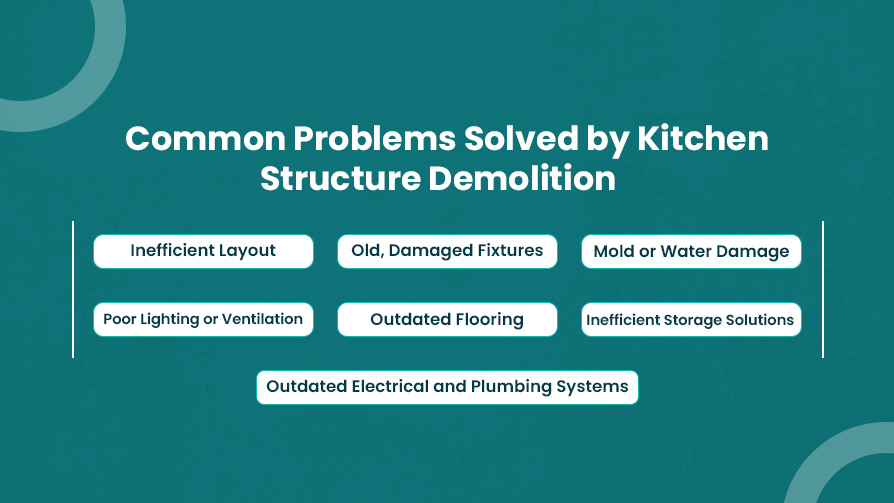
Over time, kitchen layouts become outdated or inefficient. Perhaps your kitchen is cramped, or the work triangle between the sink, stove, and fridge doesn’t work well. Demolition allows you to reconfigure the space, creating a more functional layout that maximizes the space for better flow and usability.
If your kitchen features old, worn-out cabinets, countertops, or appliances, it’s not just an aesthetic issue—it could be a safety risk. Damaged fixtures can lead to accidents or structural problems down the line. Removing these old elements ensures that you address safety concerns and prevent further damage.
Kitchens are prone to water damage, especially in areas where leaks or moisture buildup have occurred. If there’s any mold, rot, or other damage to the walls, floors, or cabinetry, demolition is the only way to fully address the issue. Clearing out damaged structures allows for necessary repairs to be made before you move forward with the renovation.
Over time, plumbing and electrical systems may become outdated or inefficient. Old wiring, failing pipes, and clogged drains can create significant problems, including fire hazards, leaks, and high utility bills. Demolition provides the opportunity to replace old systems with modern, energy-efficient ones that ensure the kitchen functions safely and effectively.
A lack of proper lighting and ventilation issues are common problems in many older kitchens. Poor lighting can make the space feel dark and cramped, while inadequate ventilation can lead to poor air quality, especially around cooking areas. Demolition allows you to rework the layout to include more windows, skylights, or ventilation systems, improving both lighting and air circulation.
Worn or damaged floors can detract from the overall look and safety of the kitchen. Cracked tiles, peeling vinyl, or sagging wood can make the space look run-down and increase the risk of tripping hazards. Demolition removes old flooring, making it possible to install durable, modern materials that are both attractive and safe.
Many older kitchens suffer from inefficient storage, with cabinets that don’t maximize vertical space or deep drawers that are hard to reach. Demolition allows you to redesign the space and incorporate smart storage solutions, like pull-out pantries or corner cabinets, to enhance organization and functionality.
Kitchen structure demolition is the essential first step in any successful renovation, laying the foundation for a modern, functional, and safe kitchen. By addressing common issues like outdated fixtures, poor layouts, and hidden damage, demolition makes way for a kitchen that better suits your lifestyle and needs. Whether it’s improving efficiency with updated appliances or creating more space with a new design, demolition sets the stage for a transformation that will increase the value, comfort, and style of your home. With proper planning and execution, this process allows you to design your dream kitchen with confidence, knowing the foundation is solid and ready for what’s to come.
Homeowners should remove personal belongings, small appliances, pantry items, and anything stored inside cabinets or drawers. Clearing these items beforehand protects valuables, speeds up the demolition process, and prevents accidental damage during work.
Yes, demolition can temporarily impact nearby rooms due to dust, noise, and vibration. Proper sealing, floor protection, and dust barriers help minimize disruption, but homeowners should expect limited access to the kitchen area during demolition.
In some cases, cabinets, appliances, or fixtures can be reused or donated if they are in good condition. However, reuse depends on how items were installed, their age, and whether they meet current building and safety standards
Kitchen floor tiles are removed by using a demolition hammer with a flat chisel bit placed at a low angle under the tile edge. The tool breaks the bond between the tile and the mortar, allowing tiles to lift cleanly without excessive force.
Non-load-bearing kitchen walls are demolished by removing drywall first and then dismantling framing. Structural walls require professional evaluation to ensure the home’s stability is not compromised.
Join our mailing list for exclusive updates, expert tips, and special offers tailored to your needs. Be the first to know about the latest in home services.

Renovize Home is a platform that supports homeowners from planning to renovation. Whether it’s Renovize AI for guidance or a one-on-one call with Pro Finder, we understand your project and match you with local contractors tailored to your needs.
Who We Are
About Renovize HomeGet in TouchHomeownwer Support:
Coming Soon!
General Inquiries:
support@renovizehome.com
Head Office:
24 Greenway Plaza, STE 1800M, Houston, TX 77046.