
Explore All
BROWSE BY CATEGORY
Interior
Exterior
Home Essentials
Homeowner Tools
Blogs & Guides
Find a Pro
Book Your Appointment Now
Home Essentials
About Renovize Home
Explore All
BROWSE BY CATEGORY
Interior
Exterior
Home Essentials
Homeowner Tools
Blogs & Guides
Find a Pro
Book Your Appointment Now
Home Essentials
About Renovize Home
Last Updated 2026-01-07
A heat pump freezing up is a common issue homeowners face, especially during colder or high-humidity conditions. Ice buildup on the outdoor unit can reduce heating performance, increase energy use, and place extra strain on the system. While some light frost is normal during operation, thick ice or continuous freezing signals an underlying problem that should not be ignored.
Understanding why a heat pump freezes up, what conditions cause it, and what steps to take immediately can help prevent system damage and restore proper heating. This guide explains the most common reasons heat pumps freeze, what homeowners can safely do, and when professional attention becomes necessary.
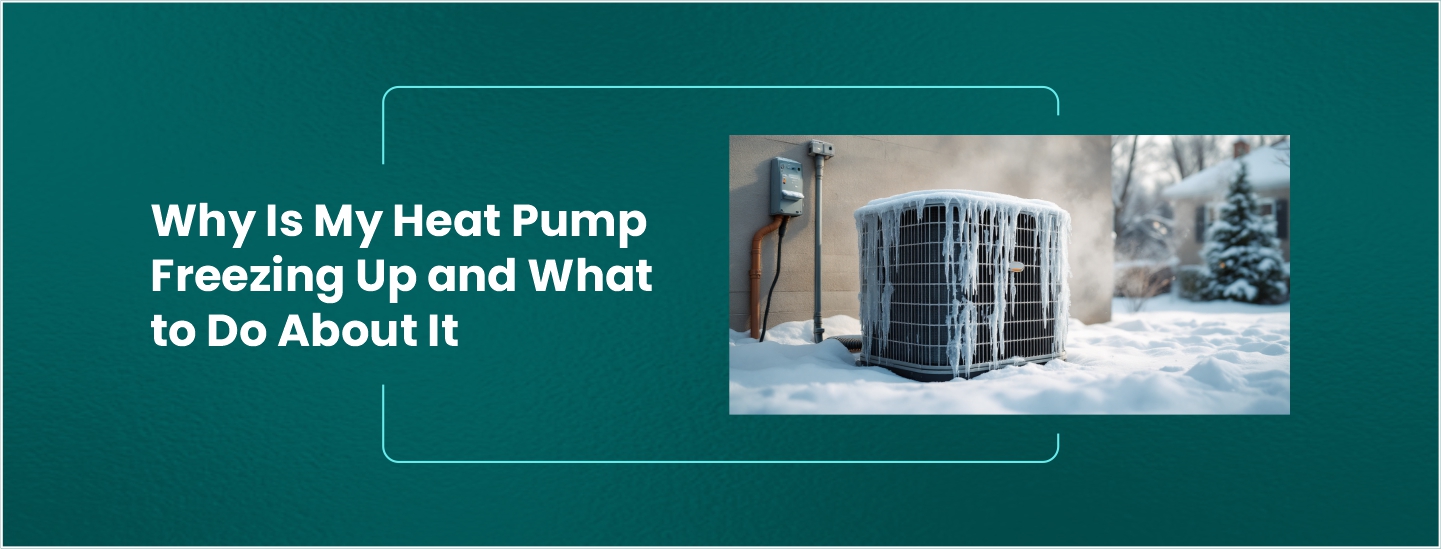
Table of Contents
Can a Heat Pump Freeze Up and Is It Normal?
What Causes a Heat Pump to Freeze Up
What to Do When a Heat Pump Freezes Up
How to Keep a Heat Pump From Freezing
Heat Pump Freezing Up in Winter vs Summer
Outdoor Unit Freezing Problems
Heat Pump Freezing in Heat Mode
Final Thoughts
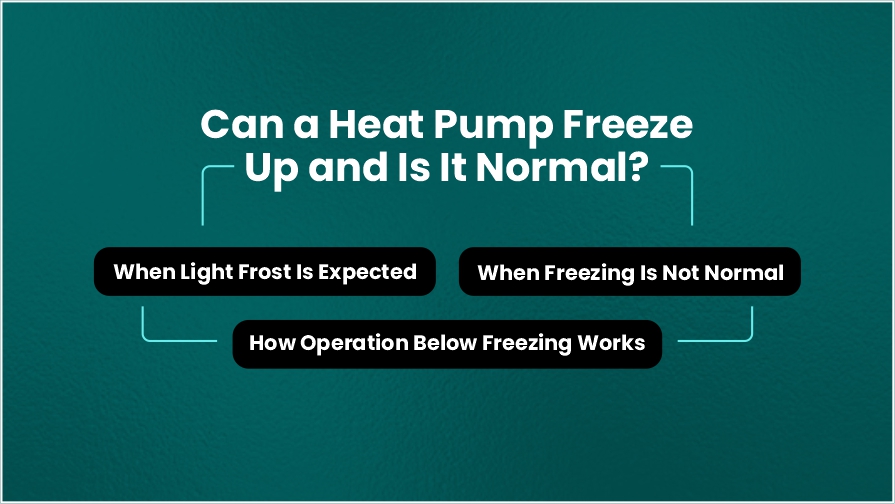
Yes, heat pumps can freeze up. However, whether it is normal depends on several factors, such as temperature and defrost cycles. While light frost is normal, excessive ice buildup signals issues with airflow, refrigerant levels, or defrost cycles.
A heat pump freezing up usually results from restricted airflow, refrigerant issues, or malfunctioning components like the defrost cycle. Here’s a breakdown of common causes:
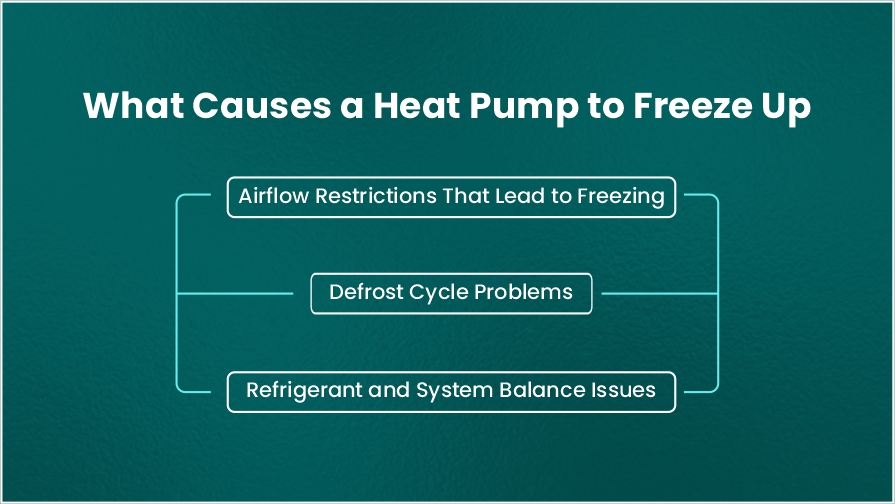
Blocked airflow is a key cause of freezing. Air cannot circulate properly, causing ice to form on the coils.
A malfunctioning defrost cycle can lead to continuous ice accumulation. If the defrost cycle is faulty or not activating properly, the outdoor unit will freeze up.
Refrigerant issues can cause the heat pump to freeze by disrupting the heat exchange process.
If your heat pump freezes up, it can disrupt your home’s heating system and lead to damage if not addressed properly. The freezing can occur for a variety of reasons, such as poor airflow, dirty filters, or malfunctioning components. Here's a step-by-step guide on what to do when you encounter this issue:
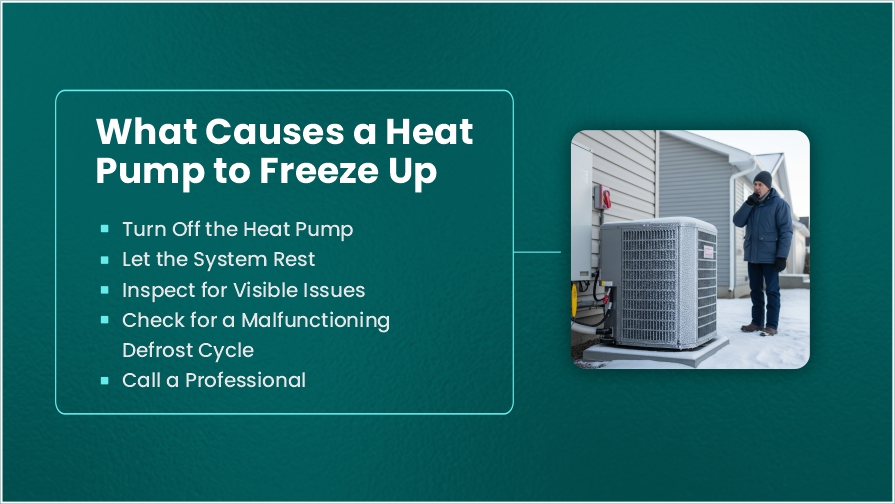
The first thing you should do when you notice your heat pump is frozen is to turn off the system. This prevents the system from running while frozen, which could lead to further damage, especially to the compressor or other critical components. Shutting it down also ensures it doesn’t continue trying to heat the space while ineffective.
Once the heat pump is off, allow the system to thaw naturally. The ice buildup needs to melt before the system can function properly again. This process may take several hours, depending on the severity of the freeze. It's important not to force it, as rushing the thawing process could cause further damage. If you can, leave the system off overnight to ensure it has sufficient time to thaw.
After the system has thawed, inspect the unit for visible issues. Look for signs of ice buildup on the coils or around the outdoor unit. Also, check for debris around the unit that might be blocking airflow or causing poor heat exchange. Additionally, check the filters to see if they are dirty or clogged, as this could impede airflow and cause the system to freeze.
One of the most common reasons for a heat pump to freeze is a malfunctioning defrost cycle. The defrost cycle ensures that ice doesn’t build up on the coils. If this cycle isn’t working properly, the heat pump will continue to freeze up, even after it has thawed. If you're unable to fix this yourself, it could indicate an internal issue with the system, like a faulty defrost thermostat, sensor, or control board.
If the freezing issue persists or if you notice that the heat pump continues to freeze up after thawing, it’s time to call a professional. An HVAC technician can inspect the refrigerant levels, check the defrost cycle, and examine other potential issues that could be causing the system to freeze. They can also perform routine maintenance to ensure your heat pump is operating at its best, preventing future freezing problems.
Preventing your heat pump from freezing is essential for keeping it efficient and extending its lifespan. Frozen heat pumps can lead to poor heating, increased energy bills, and potential system damage. With regular maintenance and proper care, you can avoid freezing issues and ensure the system works smoothly throughout the colder months.
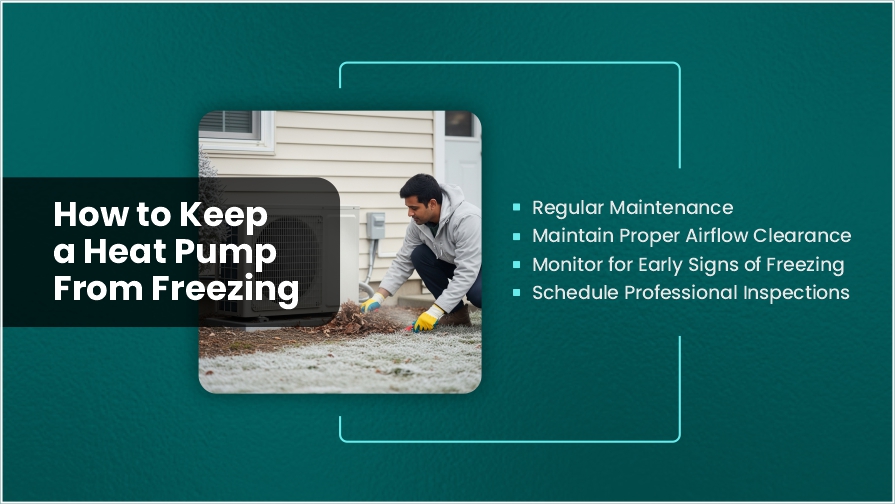
Routine maintenance is the foundation of a properly functioning heat pump. Keeping your system clean and checking its components regularly helps prevent freezing. Here’s what you should focus on:
Good airflow is essential to avoid ice formation. When airflow is blocked, the heat pump can struggle to operate, leading to freezing. To ensure proper airflow:
Identifying freezing issues early can prevent damage to your heat pump. Keep an eye out for the following signs:
Even with regular maintenance, it's important to schedule professional inspections at least once a year. An HVAC technician can check the refrigerant levels, inspect the defrost cycle, and ensure all components are working correctly. They can also catch any underlying issues before they lead to more significant problems like freezing.
Heat pumps operate year-round, providing heating during the winter and cooling during the summer. However, they behave differently depending on the season, and understanding the seasonal dynamics can help you address freezing issues appropriately.
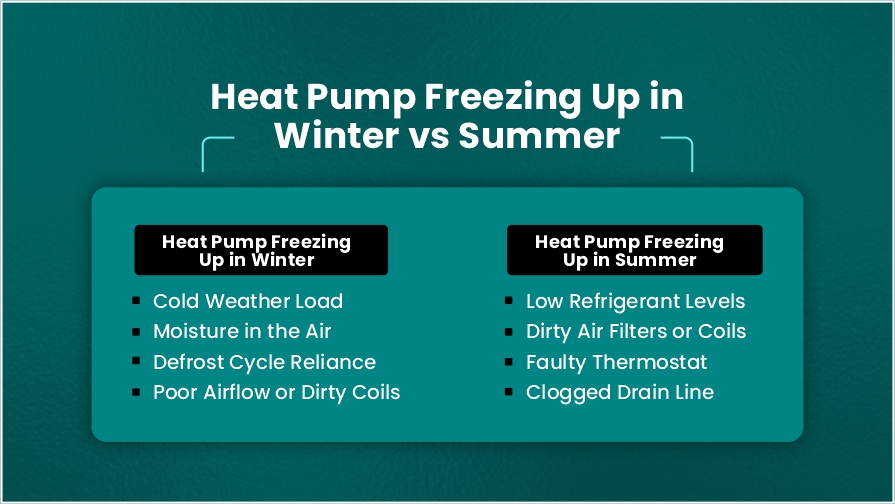
When a heat pump freezes up in winter, it’s typically due to a combination of cold weather conditions and the system’s reliance on the defrost cycle to clear ice from the coils. Here’s why this happens:
While it's more common for heat pumps to freeze up in winter, it's also possible for them to freeze during the warmer months. If your heat pump is freezing up in summer, it’s a red flag that indicates an underlying issue. Here’s why it happens and why it's concerning:
The outdoor unit of your heat pump is directly exposed to the elements, making it particularly susceptible to freezing issues. Problems with exposure, drainage, airflow, and placement can cause ice to build up on the coils and other components. Understanding these issues is essential for preventing freezing and maintaining your system's performance year-round.
Freezing temperatures can significantly impact the performance of the outdoor unit. If exposed to prolonged cold, the coils may freeze, which can cause the heat pump to malfunction and stop generating heat.
A clogged or frozen condensate drain line can trap moisture inside the unit, which may freeze on the coils or other components. Proper drainage is key to preventing these blockages.
Restricted airflow is one of the primary causes of freezing in heat pumps. Blocked air intakes, such as debris or obstructions around the outdoor unit, can reduce the system’s efficiency and cause the coils to freeze up.
The placement of your heat pump plays a critical role in preventing freezing. Units placed in tight corners, near walls, or under trees can have poor airflow, leading to ice and frost buildup.
Heat pumps are designed to operate in both heating and cooling modes, but they can freeze up while in heat mode under certain conditions. This typically occurs when the heat pump fails to properly regulate airflow or temperature, leading to ice buildup on the outdoor unit.
In heat mode, the heat pump extracts warmth from the outside air and pumps it into your home. However, when temperatures drop too low, the moisture in the air can freeze on the coils, causing ice buildup. This is especially common in extreme cold conditions when the system is overworking to maintain indoor temperatures.
In normal operation, heat pumps rely on the defrost cycle to prevent ice buildup. If the system doesn't enter defrost mode correctly, ice can accumulate and impede airflow.
Low outdoor temperatures, poor airflow, and improper defrost cycles can cause a heat pump to freeze up while in heating mode. This not only hampers the system's ability to heat but can lead to long-term damage.
Ice formation occurs when the heat pump struggles to extract heat efficiently from the outdoor air, often due to reduced airflow or excessively cold temperatures. When moisture from the air accumulates on the coils, it freezes and forms ice.
In cold weather, heat pumps automatically enter defrost mode to clear ice buildup. If this function malfunctions, the system will continue to freeze.
When the outdoor temperature falls below a certain threshold, especially around 32°F (0°C), the system may struggle to pull in heat and will ice up. Blocked air filters, debris, or poor unit placement can hinder airflow, causing the heat pump to freeze.
Heat pump freezing issues can be frustrating, but they are often preventable with regular maintenance and attention to airflow, refrigerant levels, and defrost cycles. By understanding the causes and following these actionable steps, you can keep your heat pump running smoothly and avoid costly repairs. If you’re experiencing repeated freezing, it’s best to contact a professional to ensure the system operates efficiently and safely.
Yes, heat pumps can freeze up, but light frost is typically normal, especially during cold weather (below 32°F or 0°C). A small amount of frost is usually managed by the system's defrost cycle. However, excessive ice buildup or continuous freezing indicates a problem with airflow, refrigerant levels, or the defrost cycle.
In winter, a heat pump works harder to extract heat from the outside air as temperatures drop. The lower temperature can cause moisture to freeze on the coils, especially if there’s high humidity or the defrost cycle is malfunctioning. Poor airflow, dirty coils, or debris blocking the outdoor unit can exacerbate the issue.
The defrost cycle in a heat pump is designed to prevent ice buildup on the coils by briefly switching the system to cooling mode to reverse the icing process. If the defrost cycle fails or is too slow, ice can accumulate and reduce the system’s heating efficiency.
If the heat pump continues to freeze despite thawing, or if you notice persistent issues like reduced airflow, ice buildup, or malfunctioning defrost cycles, it’s best to call an HVAC professional. A technician can inspect the refrigerant levels, check the defrost cycle, and identify any underlying issues that might be causing the system to freeze.
While you can address minor issues like turning off the system, thawing it, and cleaning around the unit, more complex problems, such as a malfunctioning defrost cycle or refrigerant issues, should be handled by a professional. Trying to fix these issues yourself can lead to further damage.
Join our mailing list for exclusive updates, expert tips, and special offers tailored to your needs. Be the first to know about the latest in home services.

Renovize Home is a platform that supports homeowners from planning to renovation. Whether it’s Renovize AI for guidance or a one-on-one call with Pro Finder, we understand your project and match you with local contractors tailored to your needs.
Who We Are
About Renovize HomeGet in TouchHomeownwer Support:
Coming Soon!
General Inquiries:
support@renovizehome.com
Head Office:
24 Greenway Plaza, STE 1800M, Houston, TX 77046.