
Explore All
BROWSE BY CATEGORY
Interior
Exterior
Home Essentials
Homeowner Tools
Blogs & Guides
Find a Pro
Book Your Appointment Now
Home Essentials
About Renovize Home
Explore All
BROWSE BY CATEGORY
Interior
Exterior
Home Essentials
Homeowner Tools
Blogs & Guides
Find a Pro
Book Your Appointment Now
Home Essentials
About Renovize Home
Last Updated 2025-12-23
A boiler radiator heating system is a traditional and reliable way to heat a home by using hot water or steam instead of forced air. Many homeowners still rely on this system because it delivers steady warmth, quiet operation, and consistent comfort during cold months. Unlike systems that blow hot air through vents, boiler radiator systems heat rooms evenly without creating drafts or dry air.
This type of heating system is especially common in older homes, but modern boilers have made it more efficient and easier to maintain. Understanding how a boiler radiator heating system works helps homeowners decide whether it fits their comfort needs, home layout, and long-term heating goals.
Table of Contents
What a Boiler Radiator Heating System Is?
Core Components of a Boiler Radiator System
How a Boiler Radiator Heating System Works
Types of Boiler Radiator Heating Systems
Radiator Styles Used in Boiler Systems
Why Boiler Radiator Systems Feel Different From Forced-Air Heating
Common Misunderstandings About Boiler Radiator Heating
Maintenance Basics for Boiler Radiator Systems
Final Takeaway
A boiler radiator heating system is a single, integrated heating system that warms your home using hot water or steam. The boiler and radiators work together as one system, not as separate units, to deliver steady and even heat throughout the house.
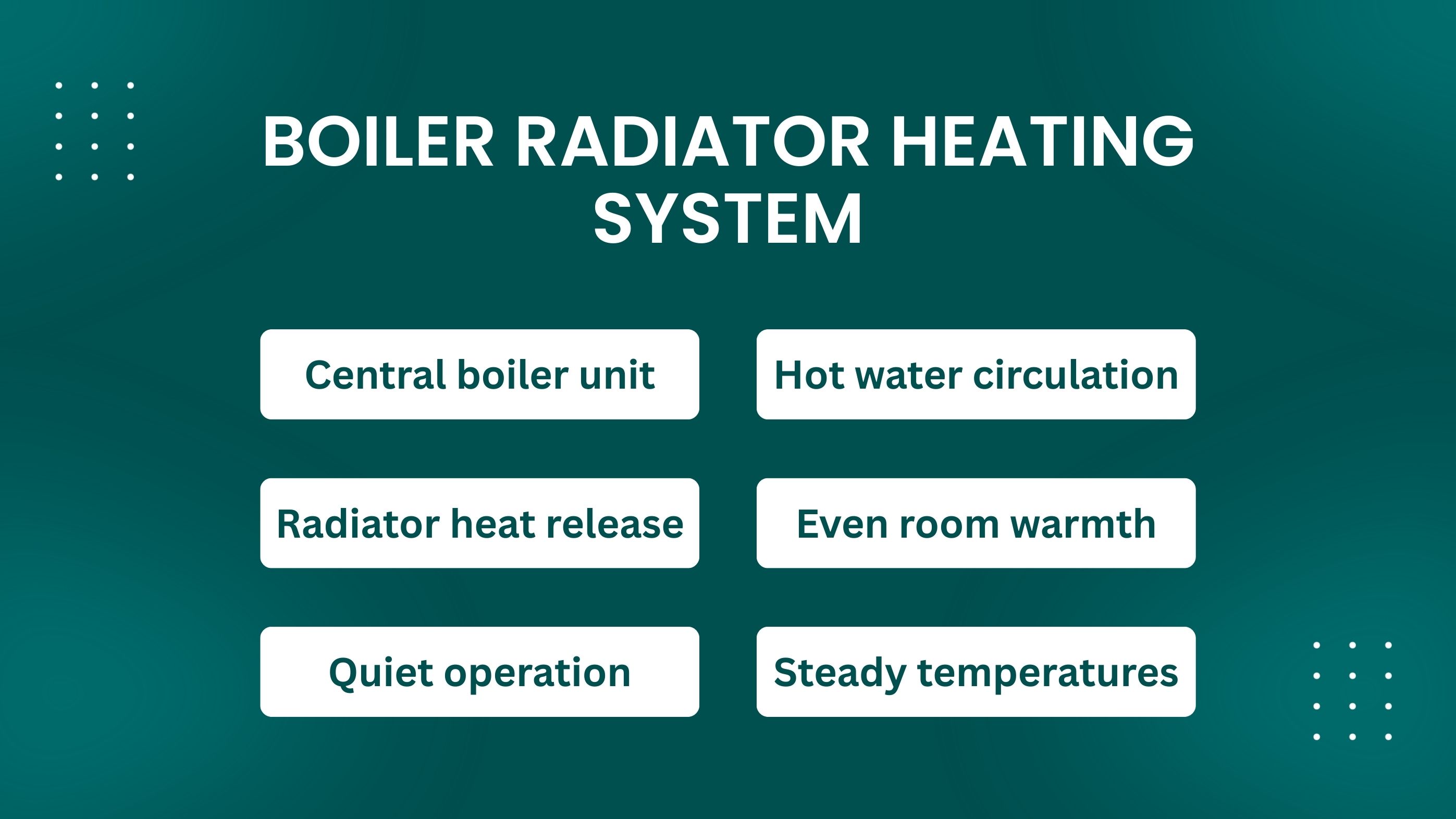
The boiler acts as the heat source. It heats water or creates steam using gas, oil, or electricity. That heated water or steam moves through a network of pipes to radiators placed in different rooms. In hot water systems, water is typically heated to 160–180°F, while steam systems operate at higher temperatures to generate vapor for circulation.
Radiators release the heat slowly into each space, warming the room without blowing air. After releasing heat, the water cools and returns to the boiler to be reheated. This continuous loop keeps indoor temperatures stable and comfortable.
A boiler radiator heating system functions as a single setup with connected parts. The boiler produces heat, and the radiators distribute it. One cannot work without the other, which is why they are considered one system rather than two separate heating solutions.
| Component | What It Does | Typical Range |
|---|---|---|
| Boiler | Heats water or produces steam for the heating system | 50,000 – 200,000 BTUs |
| Pipes | Carry heated water or steam throughout the system | ¾" – 1¼" diameter |
| Radiators | Release heat into individual rooms | 2,000 – 10,000 BTUs per unit |
| Thermostat | Controls system operation and temperature settings | 1–2°F accuracy |
This setup provides quiet operation, even heat distribution, and fewer temperature swings compared to forced-air systems. For many homeowners, it offers a dependable and comfortable way to heat the entire home.
A boiler radiator heating system works smoothly because each part plays a specific role. These components are designed to function together as one unit, moving heat from the source to every room in a controlled and efficient way. Understanding each part helps homeowners see how the system delivers consistent warmth throughout the home.
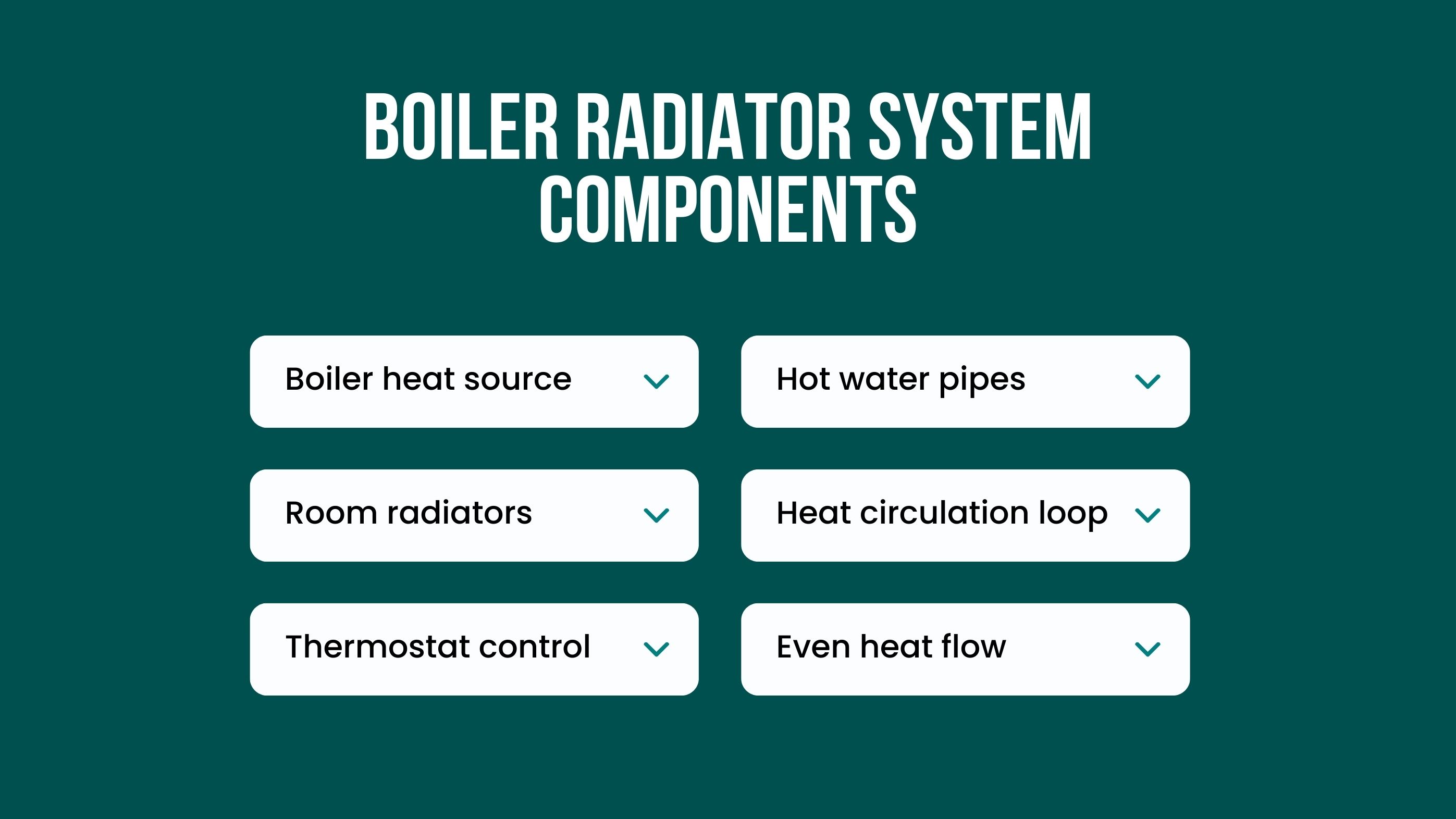
The boiler unit is the heat source of the system. It heats water or produces steam using gas, oil, or electricity. Once the water reaches the required temperature, the boiler sends it through the piping network to the radiators.
Modern boilers are designed to maintain steady temperatures rather than cycling on and off frequently. This helps improve efficiency and ensures the system delivers even heat without sudden temperature changes.
Radiators are responsible for releasing heat into living spaces. As hot water or steam flows through them, the radiator warms up and transfers heat into the room through radiant warmth. This type of heat feels even and comfortable, without strong airflow or drafts.
Because radiators release heat slowly, rooms stay warm for longer periods even after the boiler turns off. This makes radiator heating quiet and comfortable for daily living.
The piping network connects the boiler to each radiator in the home. These pipes circulate hot water or steam from the boiler to the radiators and then return cooled water back to be reheated.
Proper pipe layout and insulation help the system move heat efficiently. When the piping network is in good condition, heat reaches each room evenly and without loss along the way.
The thermostat allows homeowners to control indoor temperature. When the thermostat detects that the home is cooler than the set temperature, it signals the boiler to turn on. Once the desired temperature is reached, the boiler shuts off automatically.
Controls help regulate how much heat is delivered and when. This keeps the system from overheating and ensures comfortable, consistent warmth throughout the home.
A boiler radiator heating system follows a simple and continuous heating cycle. Each step builds on the one before it, allowing heat to move smoothly from the boiler to each room and back again. This steady process is what makes radiator heating reliable, quiet, and consistent. Once heated, the system typically maintains temperature within 1–2°F of the thermostat setting, reducing noticeable temperature swings.
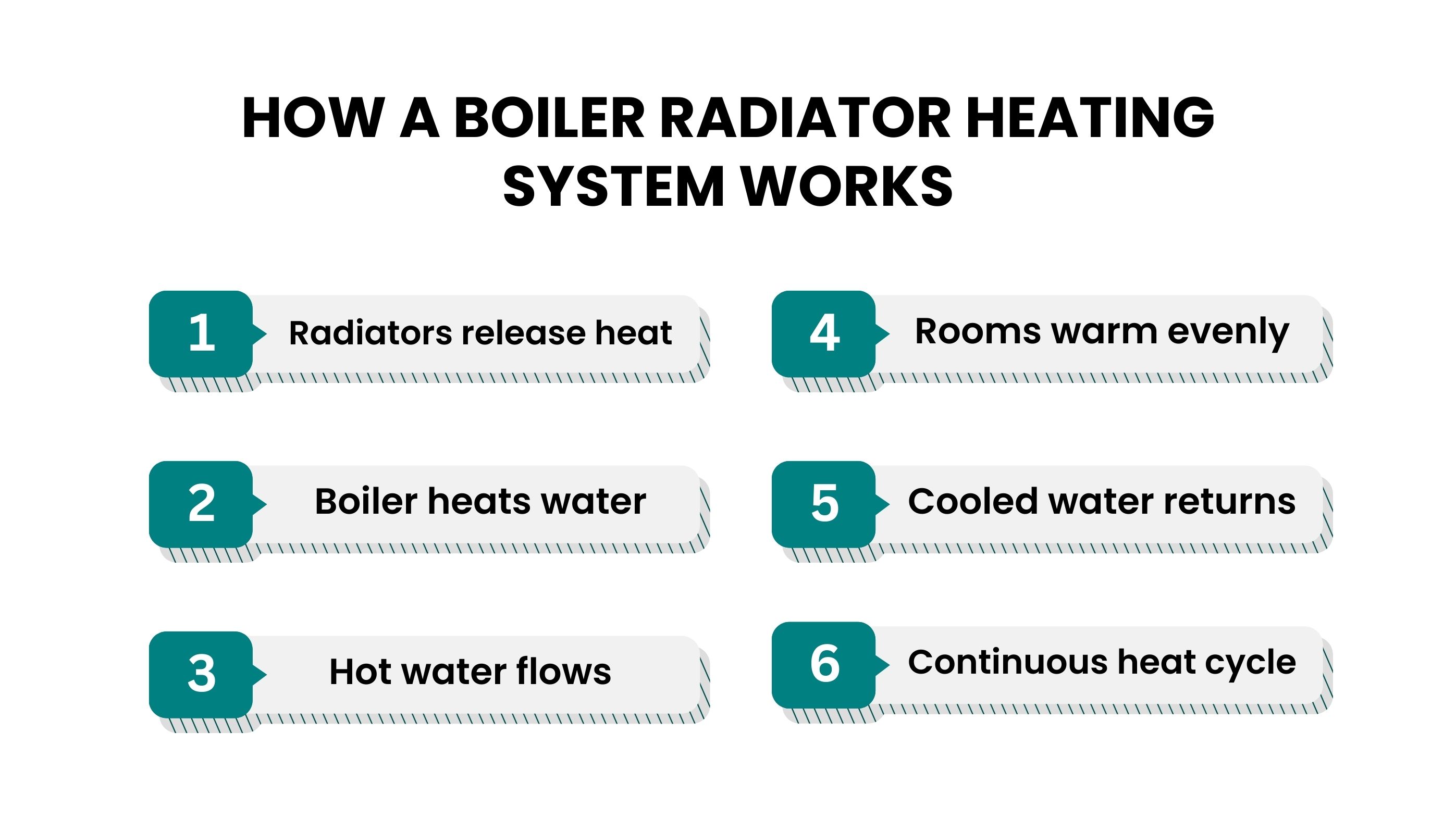
The heating cycle begins at the boiler. When the thermostat calls for heat, the boiler turns on and starts heating water or producing steam. The fuel source provides the energy needed to raise the water temperature or convert it into steam.
Once the correct temperature or pressure is reached, the boiler prepares the heated water or steam to move through the system. This controlled heating step ensures the system delivers warmth without overheating.
After heating, the hot water or steam travels through the piping network. Pipes carry the heat from the boiler to radiators installed throughout the home. This movement happens naturally through pressure or with the help of circulation pumps, depending on the system type. In most homes, hot water reaches all radiators within 5–15 minutes after the boiler turns on.
When hot water or steam enters the radiators, the metal surfaces warm up and release heat into the room. Radiators transfer warmth through radiant heat, which gently warms the air and surrounding surfaces. Radiant heat warms surfaces gradually, which helps rooms retain warmth for 30–60 minutes even after the boiler cycles off.
This method creates even room temperatures without blowing air or creating drafts. The heat feels steady and comfortable, making radiator systems ideal for quiet and consistent heating.
Once the radiators release heat, the water cools down. The cooled water then flows back through return pipes to the boiler. In steam systems, condensed steam returns as water.
This return cycle allows the boiler to reheat the water and repeat the process. The cycle continues until the thermostat signals that the desired indoor temperature has been reached, keeping the home warm and balanced throughout the heating period.
Boiler radiator heating systems follow the same basic concept, but they come in different variations. Each type delivers heat in a slightly different way while still using the same core components. Understanding these variations helps homeowners identify which system they have and how it affects comfort and maintenance.
Hot water systems are the most common type of boiler radiator heating system used today. In this setup, the boiler heats water and circulates it through pipes to radiators throughout the home. The water remains in liquid form, allowing the system to deliver steady and controlled heat. Hot water systems usually operate at 12–20 PSI, allowing quiet and steady heat delivery.
Steam systems are often found in older homes. Instead of circulating hot water, the boiler heats water until it turns into steam. The steam travels through pipes to radiators, where it releases heat as it condenses back into water. Many steam systems still operating today were installed 50–100 years ago, which speaks to their durability when maintained properly.
Steam-based systems typically operate at higher temperatures and pressure, which can make them noisier than hot water systems. While they are durable and effective, steam systems require more careful maintenance to ensure proper pressure balance and efficient operation.
Radiators come in different styles, but they all serve the same purpose within a boiler radiator heating system. Each design releases heat into living spaces while connecting to the same hot water or steam supply. The choice of radiator style affects how heat feels, how quickly rooms warm up, and how the system fits into your home’s design.
Once heated, cast iron radiators can continue releasing warmth for 30–45 minutes after the boiler shuts off.
Cast iron radiators are common in older homes and are known for their durability and heat retention. Once heated, these radiators stay warm for a long time, even after the boiler turns off. This slow heat release helps maintain comfortable room temperatures without frequent cycling.
Because of their weight and solid construction, cast iron radiators provide deep, steady warmth. Many homeowners appreciate their classic appearance and reliable performance, especially in homes with traditional layouts.
Panel radiators offer a more modern and compact design. These units are thinner and lighter than cast iron radiators, making them easier to install and better suited for contemporary interiors. Despite their smaller size, they heat rooms efficiently by distributing warmth evenly across the panel surface.
Panel radiators typically reach operating temperature within 10–20 minutes, allowing faster comfort adjustments.
Boiler radiator heating systems create a noticeably different comfort experience compared to systems that rely on moving air. Instead of pushing warm air through vents, radiators warm rooms gradually and evenly. This difference in heat delivery changes how the space feels, sounds, and even how the air behaves inside your home.
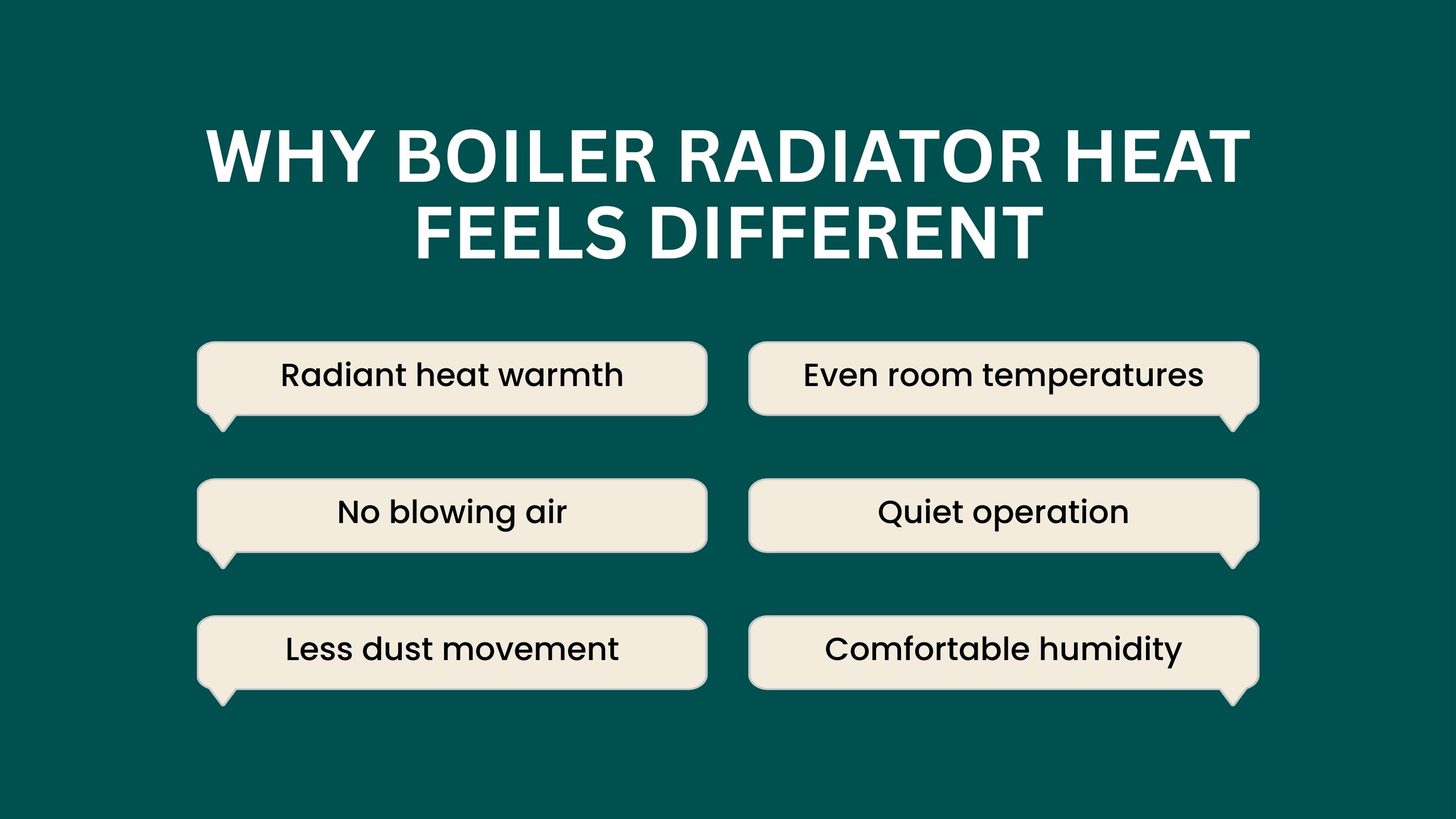
Radiator systems heat rooms through radiant warmth rather than airflow. As radiators warm up, heat spreads evenly across the room and nearby surfaces. This reduces cold spots and keeps temperatures consistent from wall to wall.
Radiant heating reduces temperature stratification, keeping floor-to-ceiling temperature differences within 2–3°F.
Boiler radiator systems operate without blowers or fans. There is no rushing air, cycling noise, or vibration commonly associated with forced-air heating. Most of the time, the system runs silently in the background.
This quiet operation makes radiator heating ideal for bedrooms, living areas, and home offices where noise can be distracting. The absence of moving air contributes to a calmer indoor environment.
Radiator heating does not circulate air throughout the home. This helps reduce the movement of dust, allergens, and other airborne particles. Because there is no forced airflow, indoor air tends to feel more natural and less dry during the heating season.
Many homeowners also find that radiator systems help maintain moisture levels better. The heat feels comfortable without drying out skin or sinuses, contributing to improved overall indoor comfort.
Boiler radiator heating systems are often misunderstood, especially by homeowners who are more familiar with forced-air setups. Clearing up a few common myths helps homeowners better understand how these systems actually work and what role each component plays in home heating.
A common misconception is that boilers and furnaces do the same job in the same way. While both provide heat, they operate differently. A boiler heats water or produces steam and sends it through pipes to radiators, while a furnace heats air and distributes it through ducts.
This difference does not make one system better or worse. It simply means the heat is delivered in a different form. Boiler radiator systems focus on steady, radiant warmth rather than airflow, which explains why they feel different in everyday use.
Another misunderstanding is that radiators create heat on their own. In reality, radiators do not produce heat. They simply release heat that is generated by the boiler.
The boiler is responsible for heating the water or creating steam. Radiators act as the delivery point, transferring that heat into each room. Understanding this helps homeowners see why radiator size and placement affect comfort, while overall energy use depends on the boiler and system efficiency.
Regular maintenance helps a boiler radiator heating system run smoothly and last longer. Basic upkeep keeps the system efficient, prevents performance issues, and ensures consistent heating throughout the home. Homeowners do not need to handle complex tasks, but understanding routine care helps avoid common problems.
Annual inspections help ensure the boiler and connected components are operating safely and efficiently. During an inspection, professionals check the boiler, pipes, and radiators for wear, leaks, or buildup. These checks help catch small issues early before they affect system performance.
Annual inspections are recommended once per year, ideally before the heating season begins.
Over time, air can become trapped inside radiators, which reduces their ability to heat evenly. Radiator bleeding is the process of releasing that trapped air so hot water can circulate properly.
Bleeding a radiator usually takes 2–5 minutes per unit when done correctly.
Proper system pressure is essential for efficient operation. Pressure that is too low can prevent hot water from circulating, while pressure that is too high can stress system components.
Monitoring pressure helps ensure balanced heat delivery across all radiators. When pressure stays within the recommended range, the system runs smoothly, maintains even temperatures, and operates more efficiently over time.
A boiler radiator heating system offers steady, quiet, and comfortable heat by warming rooms evenly with hot water or steam. Because it does not rely on forced air, this system avoids drafts, reduces noise, and helps maintain healthier indoor air during the heating season. For many homeowners, especially those in older homes or homes without ductwork, it remains a dependable and practical heating solution.
With proper maintenance and thoughtful upgrades, boiler radiator systems can continue performing efficiently for many years. Understanding how the system works, its components, and its comfort benefits helps homeowners make informed decisions about upkeep, upgrades, or long-term heating plans. When comfort, consistency, and simplicity matter most, boiler radiator heating remains a proven choice.
A boiler radiator heating system can be energy efficient when it is properly maintained and correctly sized for the home. Because the system uses hot water or steam instead of blowing air, heat is delivered steadily without frequent on and off cycles. This helps reduce energy waste and keeps rooms comfortable for longer periods.
Yes, a boiler radiator heating system is designed to heat the entire home evenly. Radiators are placed in multiple rooms, allowing heat to be distributed throughout the house at the same time.
In many cases, yes. Homeowners can upgrade parts of the system without replacing the entire setup. Common upgrades include installing a newer, more efficient boiler, updating thermostats, or improving radiator controls.
Radiator heating can work very well in modern homes, especially when paired with updated controls and efficient boilers. New radiator designs and zoning options make it easier to match comfort levels with today’s living spaces.
Join our mailing list for exclusive updates, expert tips, and special offers tailored to your needs. Be the first to know about the latest in home services.

Renovize Home is a platform that supports homeowners from planning to renovation. Whether it’s Renovize AI for guidance or a one-on-one call with Pro Finder, we understand your project and match you with local contractors tailored to your needs.
Who We Are
About Renovize HomeGet in TouchHomeownwer Support:
Coming Soon!
General Inquiries:
support@renovizehome.com
Head Office:
24 Greenway Plaza, STE 1800M, Houston, TX 77046.