
Explore All
BROWSE BY CATEGORY
Interior
Exterior
Home Essentials
Homeowner Tools
Blogs & Guides
Find a Pro
Book Your Appointment Now
Home Essentials
About Renovize Home
Explore All
BROWSE BY CATEGORY
Interior
Exterior
Home Essentials
Homeowner Tools
Blogs & Guides
Find a Pro
Book Your Appointment Now
Home Essentials
About Renovize Home
Last Updated 2026-01-06
HVAC load calculation is the process used to determine how much heating or cooling a home actually needs to stay comfortable throughout the year. Instead of guessing system size based on square footage alone, this calculation measures how much heat enters or leaves the home under real conditions. Factors like room size, ceiling height, insulation quality, window area, sunlight exposure, and even the number of occupants all play a role. A properly calculated load ensures the system matches the home’s true demand, not an estimate.
System sizing works hand in hand with load calculation. Once the load is known, the HVAC system is selected to meet that requirement accurately. For example, an undersized system may run continuously and still struggle to maintain temperature, while an oversized system can cycle on and off too frequently, causing uneven comfort and unnecessary energy use. In residential homes, even a difference of 0.5 to 1 ton in cooling capacity can significantly affect comfort and efficiency.
Table of Contents
What an HVAC Load Calculation Means
Why HVAC System Sizing Depends on Load Calculations
How HVAC Load Calculations Are Performed
How Load Results Are Used to Size HVAC Systems
Why Bigger HVAC Systems Are Not Better
Problems Caused by Undersized HVAC Systems
How Proper System Sizing Improves Energy Efficiency
How Load-Based Sizing Improves Comfort
How Load Calculations Affect Ductwork and Airflow
Load Calculations for Different HVAC System Types
Common HVAC Load Calculation Mistakes
Final Takeaway
An HVAC load calculation is a technical process used to determine how much heating or cooling a home truly requires to stay comfortable year-round. Rather than relying on assumptions or square footage alone, this calculation evaluates how heat enters, stays, and escapes from the home under real conditions. The goal is to match system capacity with actual demand, not guesswork.
Homes of the same size can have very different heating and cooling needs. Differences in insulation quality, window placement, ceiling height, and air leakage can significantly change how much energy is required to maintain indoor comfort. An HVAC load calculation accounts for these variations so the system is sized based on performance needs, not averages.
Without this calculation, systems are often oversized or undersized. Oversized systems tend to cycle on and off too frequently, while undersized systems struggle to keep up during extreme temperatures.
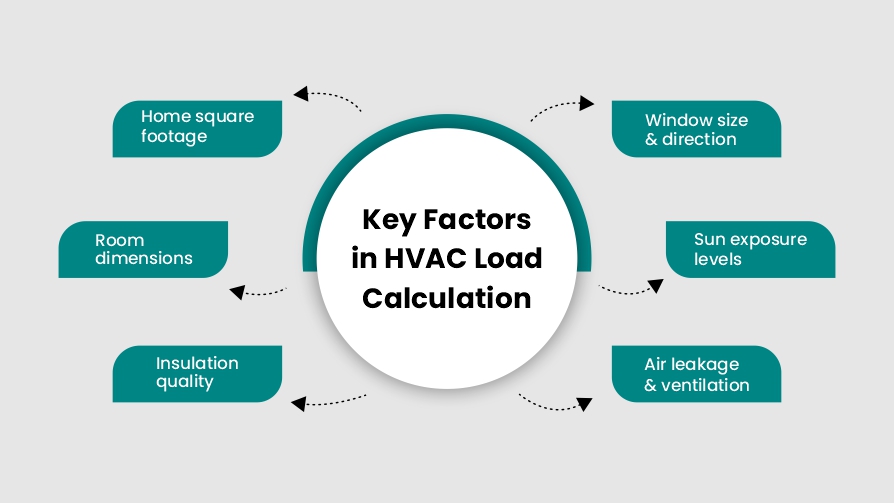
A proper HVAC load calculation evaluates several physical and environmental factors together, such as:
Each of these elements affects how much heat the home gains or loses, directly influencing the final load result.
By calculating the exact heating and cooling demand, HVAC load calculations allow systems to be sized more precisely. Even a difference of 0.5 to 1 ton in system capacity can affect comfort, humidity control, and energy usage. Accurate load results ensure the system runs efficiently, maintains stable indoor temperatures, and avoids unnecessary wear over time.
HVAC system sizing is directly tied to accurate load calculations because the system must be matched to the home’s real heating and cooling demand. Sizing based on assumptions, such as square footage alone, often leads to performance problems. Load calculations provide the data needed to select equipment that can maintain comfort efficiently across changing weather conditions.
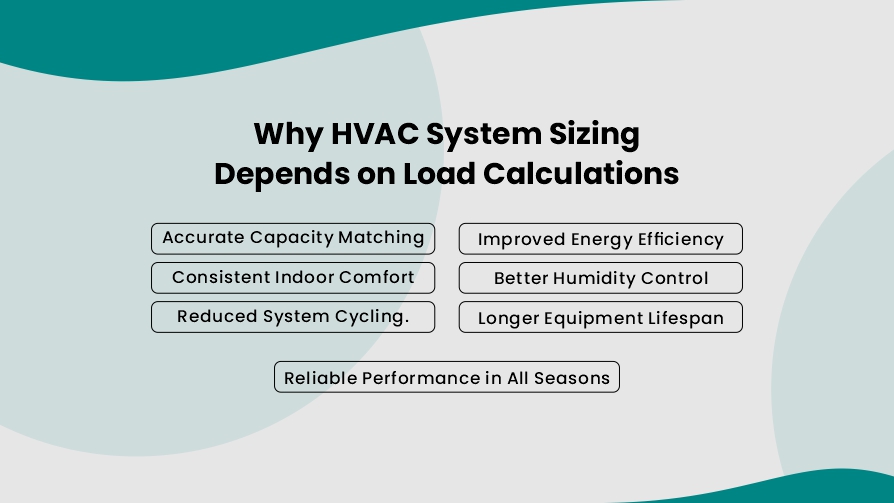
Every home gains and loses heat differently. Factors like insulation quality, ceiling height, window placement, and air leakage determine how hard an HVAC system must work. Load calculations translate these conditions into a measurable requirement, ensuring the selected system capacity aligns with the home’s actual needs rather than an estimate.
When sizing is based on real load data, the system can maintain consistent temperatures without excessive cycling or strain.
Improper sizing is one of the most common reasons HVAC systems underperform. When capacity does not match demand, comfort and efficiency both suffer. Common outcomes include:
These issues are not caused by the equipment itself but by incorrect sizing decisions made without load calculations.
Using load calculations allows HVAC system sizing to be precise. Even a difference of 0.5 to 1 ton in system capacity can impact airflow balance, temperature stability, and long-term system wear. Proper sizing helps the system run longer, steadier cycles, which improves comfort and reduces stress on components.
When HVAC system sizing is based on accurate load data, the system operates within its intended range. This reduces unnecessary strain, supports consistent performance, and helps maintain efficiency over time. Correct sizing also supports future maintenance and upgrades, as the system was selected with the home’s actual conditions in mind.
HVAC load calculations are performed by evaluating how a home gains and loses heat under normal living conditions. Instead of following a simple checklist, the process looks at multiple physical and environmental factors together to understand the home’s true heating and cooling demand. Each factor contributes to the final load value, which is then used to size the HVAC system accurately.
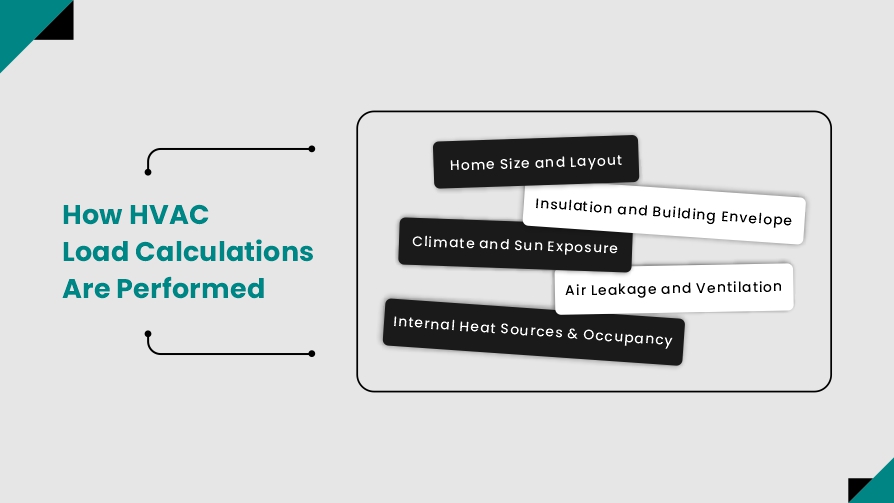
Square footage is an important starting point, but layout matters just as much. Open floor plans, long hallways, multiple levels, and room placement all influence how air moves and where heat builds up. Ceiling height also plays a role, as taller ceilings increase the volume of air that must be heated or cooled, raising overall load values even in homes with the same floor area.
The building envelope includes walls, ceilings, floors, windows, and doors, everything separating indoor and outdoor environments. Insulation quality directly affects how quickly heat escapes in winter or enters during summer. Homes with well-sealed walls and energy-efficient windows typically require less heating and cooling capacity than homes with gaps, older materials, or poor insulation coverage.
Outdoor temperature patterns significantly influence load calculations. Homes in regions with extreme heat or cold naturally require higher system capacity. Sun exposure also matters; rooms with large south- or west-facing windows may experience more heat gain during the day, increasing cooling demand even if the home is otherwise well insulated.
Air leakage through cracks, gaps, and poorly sealed areas allows conditioned air to escape and unconditioned air to enter. This uncontrolled airflow increases the load on the HVAC system. Ventilation requirements, whether natural or mechanical, are also considered to ensure fresh air exchange without overwhelming the system’s capacity.
Internal factors such as the number of occupants, lighting, appliances, and electronics contribute additional heat inside the home. Kitchens, laundry areas, and frequently used rooms often generate more heat, which affects cooling demand. Load calculations account for these internal gains to avoid undersizing the system.
After HVAC load calculations are completed, the results are translated into specific equipment capacity requirements. These values represent how much heating or cooling the system must deliver during peak conditions to maintain comfort. Instead of relying on rough rules, load results guide precise system sizing that reflects how the home actually behaves in different seasons.
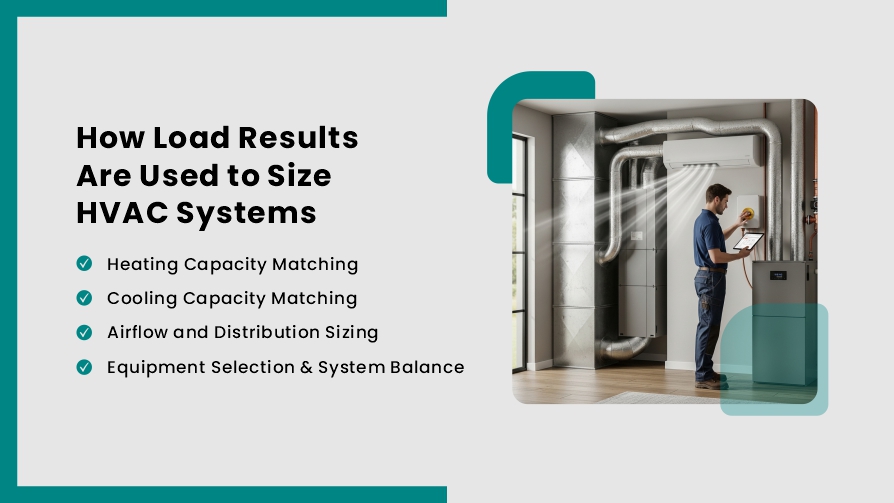
Heating capacity is matched to the home’s winter heat loss. Load results show how much warmth is required to offset heat escaping through walls, windows, ceilings, and air leakage during cold weather. The heating system is sized to meet this demand without excessive runtime or performance gaps. This matching helps ensure:
Cooling capacity is aligned with the home’s summer heat gain. Load calculations measure how much heat enters the home from sunlight, outdoor temperatures, insulation performance, and internal heat sources. The cooling system is then selected to remove this heat efficiently. Proper cooling capacity supports:
Load results also influence how air is distributed throughout the home. Correct capacity alone is not enough if airflow is not matched to room-level demand. Airflow sizing focuses on:
Load calculations guide not only capacity but also how different system components work together. Equipment is selected so heating, cooling, and air movement remain balanced under normal operation. This balance helps:
It’s a common misconception that a larger HVAC system will heat or cool a home more effectively. In reality, oversized systems often create comfort and efficiency problems. HVAC equipment is designed to operate within a specific load range, and when capacity exceeds what the home actually needs, performance becomes unstable rather than improved.
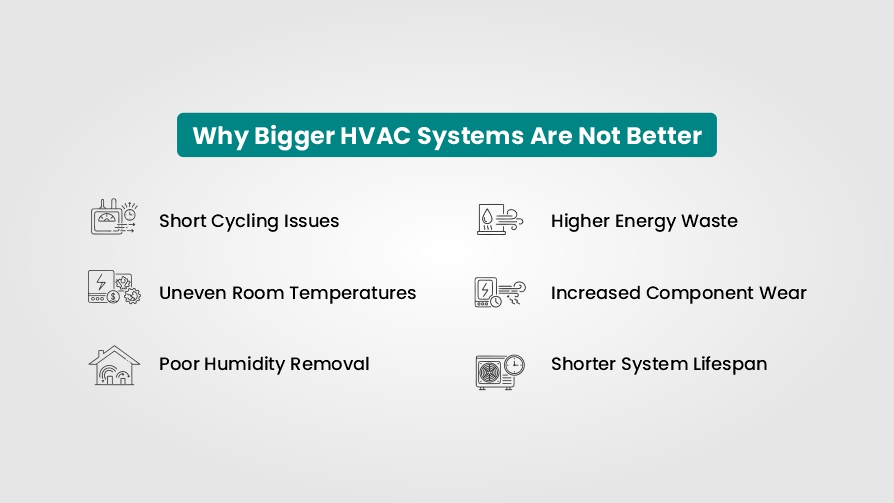
Oversized HVAC systems reach the set temperature too quickly and shut off before completing a full operating cycle. This frequent on-and-off behavior, known as short cycling, prevents the system from running efficiently. Short cycling can result in:
When a system is too large, air is pushed through the ductwork too quickly. This prevents even distribution and makes some rooms feel comfortable while others remain too warm or too cold. Uneven comfort may appear as:
Effective humidity control requires longer, steady cooling cycles. Oversized systems shut off too quickly to remove sufficient moisture from the air, especially during humid weather. This often leads to:
Frequent cycling places unnecessary stress on system components. While an oversized system may seem powerful initially, this stress can shorten its usable life. Long-term effects can include:
Properly sized HVAC systems operate in longer, more stable cycles that support balanced airflow, consistent temperatures, and controlled humidity. Matching system capacity to actual load calculations allows the equipment to perform as designed, efficiently and reliably, without unnecessary strain.
An undersized HVAC system is one that does not have enough capacity to meet the home’s actual heating or cooling demand. While it may run continuously, it still struggles to reach or maintain the desired indoor temperature. This constant effort affects comfort, efficiency, and long-term system health, especially during peak summer or winter conditions.
Undersized systems often run for long periods without achieving the set temperature. Because the equipment cannot keep up with heat gain or loss, indoor spaces may remain uncomfortable even though the system appears to be working.
This issue commonly results in:
Although undersized systems use smaller equipment, they often consume more energy over time because they run almost continuously. Instead of cycling efficiently, the system operates at maximum output for extended periods. This can lead to:
When an HVAC system runs nonstop, internal components experience constant stress. Motors, compressors, and fans are not designed to operate continuously without rest, which accelerates wear.
Over time, this may cause:
Undersized systems often fail to deliver adequate airflow to all areas of the home. Distant rooms, upper floors, or spaces with high sun exposure may remain uncomfortable compared to other areas.
Homeowners may notice:
Proper HVAC sizing ensures the system has enough capacity to handle peak conditions without constant strain. When equipment is matched to accurate load calculations, it can reach target temperatures efficiently, cycle correctly, and maintain balanced comfort throughout the home.
Proper HVAC system sizing improves energy efficiency by allowing the system to operate within its optimal performance range. When capacity closely matches the home’s actual heating and cooling demand, the system avoids unnecessary energy waste caused by frequent starts, stops, or extended runtimes.
Correctly sized systems tend to run longer, steadier cycles, which reduces energy loss during startup and shutdown. This operating pattern also lowers peak electricity demand and helps maintain consistent efficiency during extreme weather conditions. In contrast, improperly sized systems often consume more energy without delivering better comfort.
Load-based sizing directly affects how comfortable a home feels on a daily basis. When HVAC capacity matches the calculated load, the system delivers air at a rate that supports even temperatures, controlled humidity, and balanced airflow across all living spaces.
Proper sizing prevents rooms from cooling or heating too quickly or too slowly. This helps maintain similar temperatures across different areas, including upper floors and rooms farther from the system. Homeowners often experience:
Systems sized according to load calculations run long enough to remove excess moisture from the air. This improves comfort during humid conditions and prevents the indoor environment from feeling damp or sticky.
Load-based sizing supports airflow that matches room-level demand. This allows conditioned air to reach all areas of the home evenly, improving overall comfort without overpressurizing the duct system.
Load calculations influence more than just HVAC equipment size, they also determine how air should move through the home. For heating and cooling to reach every room effectively, ductwork design and airflow capacity must align with the system’s calculated output. When this alignment is off, even a correctly sized system can struggle to deliver comfort.
If ducts are too small or poorly designed for the system’s capacity, airflow becomes restricted. Load calculations help determine how much air needs to move through the duct system so ducts can be sized or adjusted appropriately. This alignment helps:
Load data is used to calculate how much conditioned air each room requires based on size, function, and heat gain or loss. This ensures airflow is not distributed evenly by guesswork, but intentionally based on each space’s needs.
Proper room-level airflow helps maintain consistent temperatures throughout the home and reduces the likelihood of hot or cold spots.
Balanced airflow is not just about comfort, it also affects system stability. When load calculations guide duct and airflow design, pressure differences between rooms are minimized. This helps doors close properly, reduces drafts, and prevents the system from working harder than necessary.
Maintaining proper pressure balance supports long-term system reliability and improves how the HVAC system performs under daily operating conditions.
While HVAC systems vary in design, load calculations apply across all common system types. The calculation establishes a baseline demand that guides sizing decisions regardless of whether the system uses ducts, zones, or combined heating and cooling components.
Load calculations are adapted to suit different setups, ensuring capacity aligns with how the system delivers conditioned air. This prevents mismatches between equipment output and distribution method. Sizing principles remain consistent by focusing on:
Regardless of system type, homes still gain and lose heat based on structure, climate, and usage. Load calculations account for these constants, allowing accurate sizing decisions without relying on brand-specific assumptions.
HVAC load calculations are meant to improve comfort and efficiency, but mistakes in the process can lead to incorrect system sizing. These issues usually come from oversimplification, assumptions, or skipping important evaluation factors.
One of the most common mistakes is sizing an HVAC system based only on home size. Square footage alone does not account for insulation quality, ceiling height, window placement, or air leakage, all of which significantly affect heating and cooling demand.
Homes with poor insulation or air leaks lose conditioned air faster. When these factors are overlooked, load calculations underestimate demand, often resulting in undersized systems that struggle during extreme weather.
Sun-facing windows, roof orientation, and local climate patterns influence how much heat enters or leaves a home. Ignoring these details can distort load results and lead to inconsistent indoor comfort.
Many homeowners assume the existing HVAC system was properly sized. If the original system was oversized or undersized, repeating that size without recalculating load continues the same comfort and efficiency problems.
HVAC load calculation is the foundation of proper system sizing, comfort, and energy efficiency. By evaluating how a home gains and loses heat, it removes guesswork from equipment selection and prevents common problems caused by oversized or undersized systems. Accurate load calculations support stable temperatures, balanced airflow, better humidity control, and long-term system reliability. Whether installing a new system or replacing an old one, understanding load calculations helps homeowners make informed decisions that lead to consistent and comfortable indoor living.
When an HVAC system is sized without a load calculation, it is often oversized or undersized. This can lead to uneven temperatures, poor humidity control, higher energy use, and increased wear on system components over time.
No, square footage is only one factor. Insulation quality, ceiling height, window placement, air leakage, climate, and sun exposure all affect how much heating or cooling a home actually needs.
Yes, changes such as adding insulation, replacing windows, sealing air leaks, or altering room layouts can reduce or increase heating and cooling demand, which directly affects load calculation results.
Yes, when replacing an older system, a new load calculation can reveal whether the previous system was incorrectly sized. This helps ensure the replacement system better matches the home’s current condition.
No, load calculations are equally important for existing homes, especially after renovations or when comfort problems, high energy use, or uneven temperatures are present.
Join our mailing list for exclusive updates, expert tips, and special offers tailored to your needs. Be the first to know about the latest in home services.

Renovize Home is a platform that supports homeowners from planning to renovation. Whether it’s Renovize AI for guidance or a one-on-one call with Pro Finder, we understand your project and match you with local contractors tailored to your needs.
Who We Are
About Renovize HomeGet in TouchHomeownwer Support:
Coming Soon!
General Inquiries:
support@renovizehome.com
Head Office:
24 Greenway Plaza, STE 1800M, Houston, TX 77046.