
Explore All
BROWSE BY CATEGORY
Interior
Exterior
Home Essentials
Homeowner Tools
Blogs & Guides
Find a Pro
Book Your Appointment Now
Home Essentials
About Renovize Home
Explore All
BROWSE BY CATEGORY
Interior
Exterior
Home Essentials
Homeowner Tools
Blogs & Guides
Find a Pro
Book Your Appointment Now
Home Essentials
About Renovize Home
Last Updated 2026-01-12
A malfunctioning thermostat is a common yet frustrating issue many homeowners face, leading to uncomfortable temperatures in the home. Whether it's not responding to adjustments or causing your HVAC system to misbehave, figuring out why your thermostat isn’t working properly is key. This guide will walk you through the common causes of thermostat issues, how to troubleshoot them, and the best solutions to get things back on track quickly.
Table of Contents
Understanding Thermostat Malfunctions
Why Is My Thermostat Not Working Properly?
How to Fix a Thermostat Malfunction
The Importance of Regular Thermostat Maintenance
Cost of Thermostat Repair and Replacement
Final Thoughts
When your thermostat isn't functioning as it should, it can disrupt the comfort of your home. Identifying common thermostat problems can help you troubleshoot the issue and take the right steps toward fixing it.
Thermostat issues can range from simple battery problems to more complex sensor or wiring malfunctions. Understanding the root causes of these problems can help you fix them quickly and avoid further disruptions in your heating or cooling system. Here are some common thermostat problems that homeowners often face:
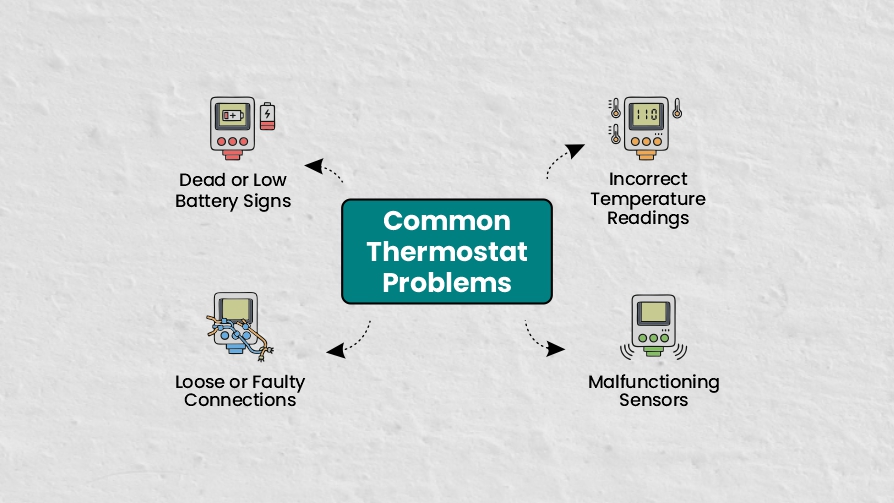
If your thermostat runs on batteries, low or dead batteries can cause it to stop working or give inaccurate readings. Signs include the display going blank or the system failing to turn on. Replacing the batteries is often a quick fix.
Over time, thermostats can lose their calibration and give inaccurate readings. This may cause the system to heat or cool beyond your desired temperature. To solve this, you can recalibrate the thermostat or consult the manufacturer for guidance.
A loose or faulty wire connection can prevent the thermostat from sending the right signals to your heating and cooling system. Check the wires for signs of damage or looseness, and reattach them if necessary.
A thermostat relies on sensors to detect the temperature in your home. If these sensors malfunction, it can result in inaccurate readings, causing your system to cycle on and off unnecessarily. Replacing or repairing the sensors should resolve the issue.
A malfunctioning thermostat can disrupt your home’s comfort levels, leaving your heating or cooling system ineffective. Understanding why your thermostat isn't working properly is crucial in addressing the problem before it escalates. Here are some common reasons your thermostat may not be functioning as it should:
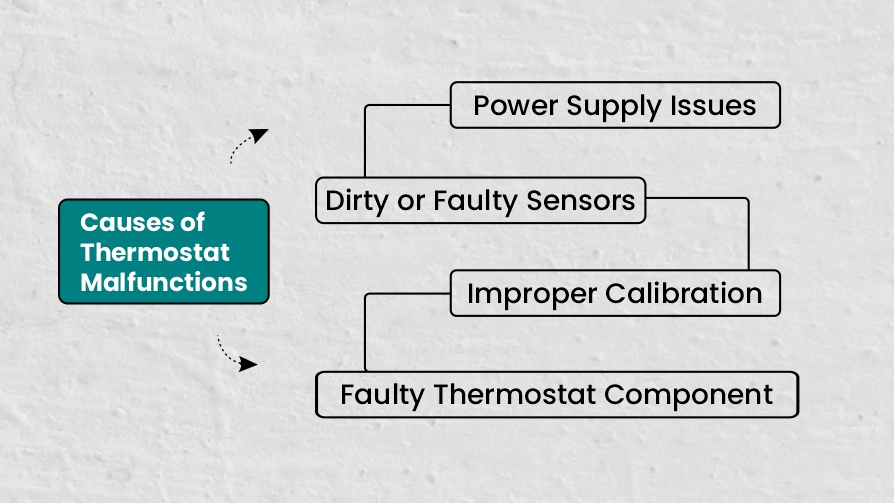
Thermostat malfunctions can stem from various issues, each impacting its ability to regulate temperature effectively. Here are the most common causes:
Fixing a malfunctioning thermostat often involves simple troubleshooting or minor repairs. If you're dealing with a non-responsive or inaccurate thermostat, here's a guide to help you address the issue. Whether it’s recalibration, replacing the battery, or fixing wiring, many thermostat problems can be resolved without professional help.
If you’re experiencing thermostat malfunctions, follow these steps to diagnose and fix the issue:
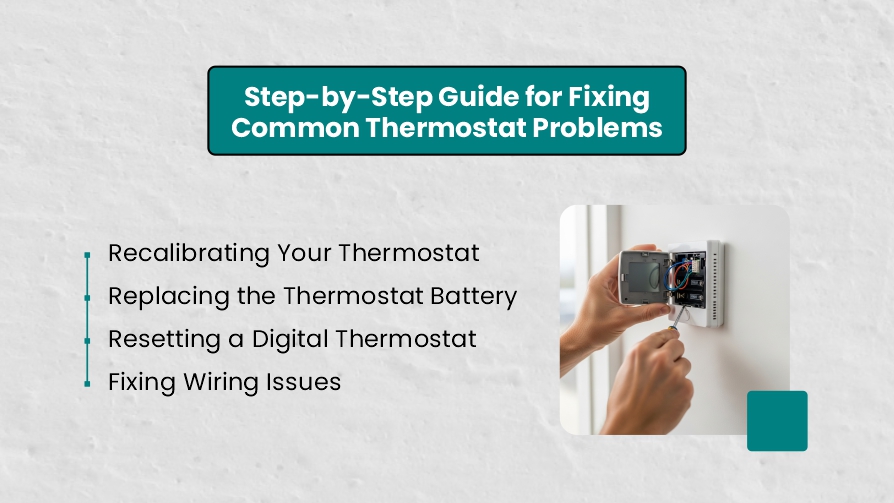
If your thermostat is reading the temperature inaccurately, recalibration can fix this problem. Check the manual for calibration instructions, or adjust the thermostat to a known accurate temperature, such as 68°F (20°C), and monitor how well it regulates the system.
Many thermostats rely on batteries to function. If your thermostat is unresponsive or flickering, replace the battery with a new one. Most models require AA or AAA batteries, but consult your thermostat’s manual for the correct size and type.
Digital thermostats may need a reset to clear software glitches. Turn the thermostat off, wait for a minute, and then turn it back on. Some models may have a reset button or require a combination of button presses to restore factory settings.
Loose, damaged, or disconnected wires can lead to thermostat malfunctions. First, turn off the power to your HVAC system. Then, carefully inspect the wiring for signs of damage or disconnection. If you find any issues, reconnect the wires securely, or replace them if needed.
Sometimes, thermostat problems are more complicated and require a professional's expertise. Here are instances when calling an HVAC technician is the best course of action:
If you've tried troubleshooting without success, it might be time to call an HVAC professional. Technicians can test the wiring, sensors, and other components to diagnose the problem thoroughly. If your thermostat is still not working after performing basic repairs, professional inspection is crucial.
A thermostat that is consistently inaccurate, unresponsive, or older than 10-15 years may be beyond repair. If the internal components are damaged or outdated, a replacement will likely be more cost-effective than trying to repair it. An HVAC technician can help you choose the right replacement model for your system.
Regular thermostat maintenance is key to ensuring your heating and cooling systems run efficiently and effectively. Proper care can extend the life of your thermostat, improve energy efficiency, and prevent unexpected malfunctions. By keeping your thermostat well-maintained, you can ensure it functions at its best, keeping your home comfortable year-round.
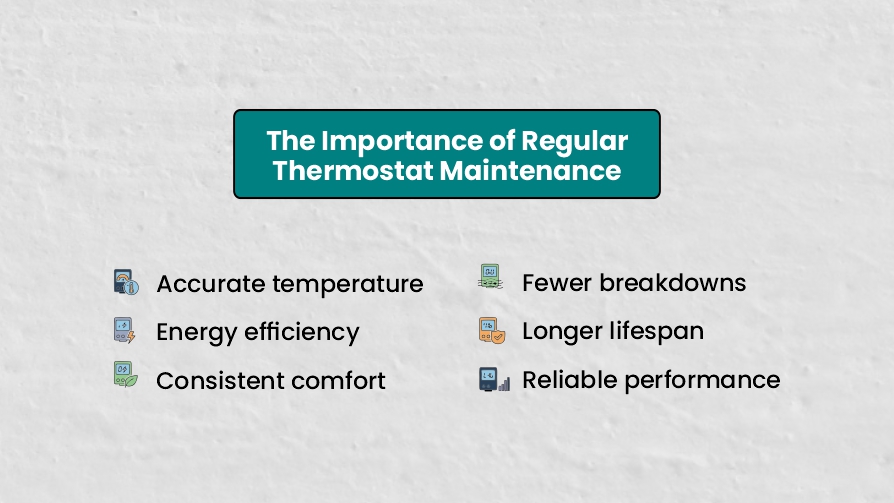
While thermostats don't require frequent maintenance, servicing them periodically ensures they continue working optimally. Here's what you should consider for your thermostat's service schedule:
It’s generally recommended to service your thermostat at least once a year, preferably before the peak heating or cooling seasons. This way, you can ensure it’s properly calibrated and functioning before you rely on it for consistent home comfort. If you have a programmable or smart thermostat, you should also review its settings annually to ensure they are up to date with your home’s needs.
Understanding the cost of thermostat repair and replacement can help homeowners plan for maintenance and avoid unexpected expenses. The cost of repairs depends on the complexity of the problem, while replacement costs vary based on the type of thermostat and its features.
Thermostat repairs can range in price, depending on the issue and how extensive the repairs are. Here's a breakdown of common thermostat repairs:
When your thermostat is beyond repair or is outdated, replacement may be necessary. The cost varies depending on the type of thermostat you choose:
In conclusion, thermostat malfunctions are a common yet solvable issue that can impact your home's comfort and energy efficiency. By understanding the causes whether it's power supply issues, faulty sensors, or improper calibration you can address many problems yourself with simple fixes like recalibrating or replacing batteries. However, more complex issues may require professional help, particularly when dealing with outdated or faulty components. Regular maintenance is key to preventing future malfunctions and ensuring your thermostat operates efficiently. Investing in a reliable thermostat, whether through repairs or upgrading to a smart model, can significantly improve your home’s comfort and reduce energy costs in the long run.
Yes, incorrect calibration, faulty sensors, or poor placement can cause short cycling, making the system turn on and off too often.
Absolutely, thermostats placed near windows, vents, direct sunlight, or appliances can read incorrect temperatures and affect system performance.
Yes, inaccurate readings can cause unnecessary heating or cooling cycles, leading to higher energy consumption and increased utility costs.
The issue could be due to incorrect calibration, faulty sensors, or environmental factors like sunlight hitting the thermostat. Adjusting the placement or recalibrating the unit may resolve the problem.
Consult your thermostat's manual to reset it or use the recalibration option available in the settings for digital models. Most programmable and smart thermostats offer easy-to-follow instructions for recalibration.
If recalibration or repair isn't successful, or if your thermostat is more than 10 years old, it may be time for a replacement. Modern thermostats offer energy-saving features that could reduce your utility bills.
Join our mailing list for exclusive updates, expert tips, and special offers tailored to your needs. Be the first to know about the latest in home services.

Renovize Home is a platform that supports homeowners from planning to renovation. Whether it’s Renovize AI for guidance or a one-on-one call with Pro Finder, we understand your project and match you with local contractors tailored to your needs.
Who We Are
About Renovize HomeGet in TouchHomeownwer Support:
Coming Soon!
General Inquiries:
support@renovizehome.com
Head Office:
24 Greenway Plaza, STE 1800M, Houston, TX 77046.