
Explore All
BROWSE BY CATEGORY
Interior
Exterior
Home Essentials
Homeowner Tools
Blogs & Guides
Find a Pro
Book Your Appointment Now
Home Essentials
About Renovize Home
Explore All
BROWSE BY CATEGORY
Interior
Exterior
Home Essentials
Homeowner Tools
Blogs & Guides
Find a Pro
Book Your Appointment Now
Home Essentials
About Renovize Home
Last Updated 2026-01-05
Smart thermostat installation is becoming a popular upgrade for homeowners who want better control over comfort, energy use, and monthly utility costs. Unlike traditional thermostats, smart thermostats learn your schedule, adjust temperatures automatically, and respond to real-time conditions inside your home. When connected correctly, they work seamlessly with HVAC systems to maintain comfort without constant manual changes.
Homeowners are also interested in smart thermostat installation cost because this upgrade offers both short-term convenience and long-term savings. A properly installed smart thermostat helps reduce wasted heating and cooling, improves system efficiency, and supports modern home living. Understanding how smart thermostats work with HVAC systems and what installation typically costs helps homeowners decide if this upgrade is right for their home.
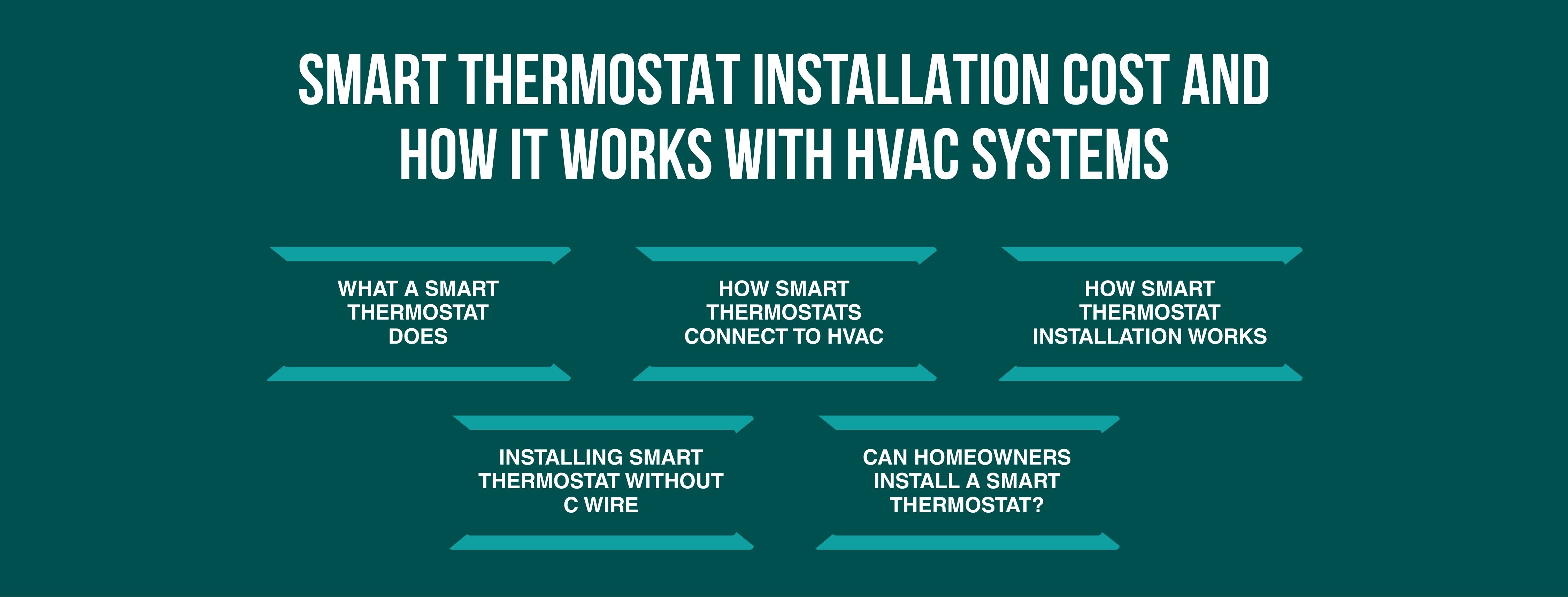
Table of Contents
What a Smart Thermostat Does in an HVAC System
How Smart Thermostats Connect to HVAC Systems
HVAC System Compatibility Considerations
How Smart Thermostat Installation Works
Installing a Smart Thermostat Without Common Wiring
Can a Smart Thermostat Be Installed by Homeowners
Smart Thermostat Installation Cost Explained
How Smart Thermostats Improve HVAC Efficiency
Final Takeaway
A smart thermostat acts as the main control center for your HVAC system. Instead of simply turning heating or cooling on and off at a fixed temperature, it actively manages how and when your system runs. When smart thermostat installation is done correctly, the thermostat works with your HVAC equipment to maintain comfort while reducing unnecessary energy use. In most homes, a smart thermostat can maintain indoor temperatures within 1–2°F of the set point. Traditional thermostats often allow swings of 3–5°F, which leads to extra heating and cooling cycles.
At its core, a smart thermostat monitors indoor temperature, system activity, and user preferences. It then adjusts heating and cooling cycles in real time. This allows the HVAC system to run more efficiently compared to traditional thermostats, which rely on manual settings and fixed schedules.
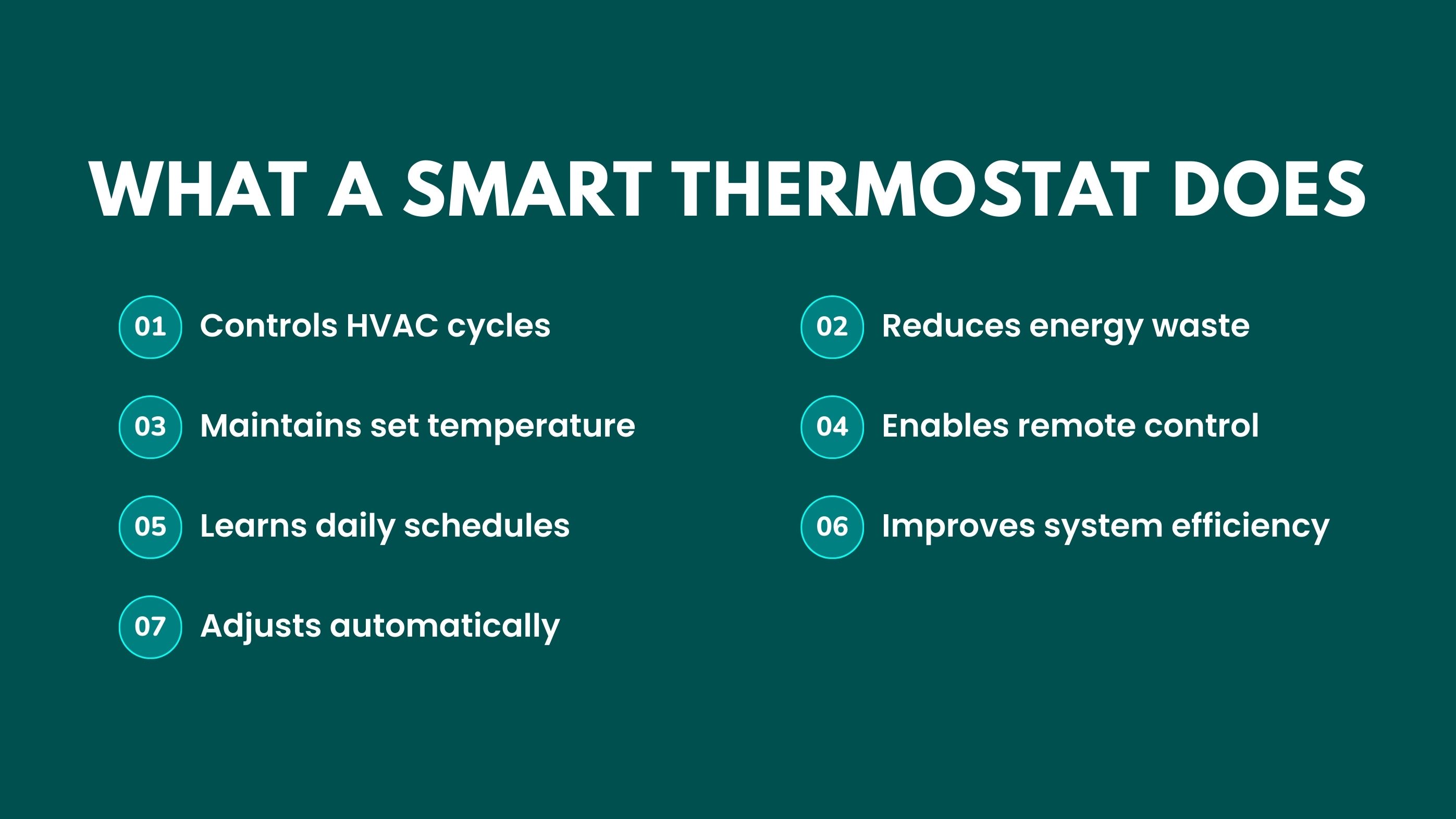
Once installed, a smart thermostat communicates directly with your HVAC system. It tells the system when to start, when to stop, and how long to run based on actual conditions inside the home. Instead of running at full output for long periods, the system operates in more balanced cycles.
This smarter control helps prevent overheating or overcooling. It also reduces frequent on-and-off cycling, which can strain HVAC components over time. For homeowners, this means steadier temperatures and smoother system operation.
One major advantage of installing a smart thermostat is its ability to learn. Over time, the thermostat recognizes patterns such as when you wake up, leave the house, return home, and go to sleep. It uses this information to adjust temperatures automatically without constant input. Most smart thermostats begin learning patterns within 7–14 days of installation. After this learning period, schedules adjust automatically without manual programming.
As the system learns, it reduces heating or cooling when the home is empty and restores comfort before you return. This intelligent scheduling is one of the reasons smart thermostat installation often leads to lower energy use without sacrificing comfort.
Smart thermostats respond to real-time changes inside the home. If indoor temperatures rise faster than expected or drop more slowly, the thermostat adapts the HVAC cycle to compensate. Some systems also factor in humidity levels, which affects how warm or cool a home feels. Smart thermostats can respond to indoor temperature changes within 30–60 seconds, adjusting HVAC cycles before comfort is lost.
This responsiveness allows the HVAC system to work more efficiently throughout the day. Instead of reacting late, the system stays ahead of temperature changes, keeping rooms comfortable with less effort.
After smart thermostat installation, homeowners can control their HVAC system remotely using a phone or tablet. This allows temperature changes even when you are not at home. If plans change or the house will be empty longer than expected, adjustments can be made instantly.
Smart thermostats also provide system feedback, showing when heating or cooling is running and how often. This visibility helps homeowners understand how their HVAC system is being used and where efficiency improvements may be possible.
Traditional thermostats react only to temperature changes. Smart thermostats go further by managing timing, duration, and system behavior. By coordinating these factors, they help HVAC systems run only when needed and avoid wasted energy.
When you install a smart thermostat, the HVAC system becomes more responsive, balanced, and efficient. This improved control is what makes smart thermostats an effective upgrade for homeowners looking to improve comfort while managing energy use more wisely.
Smart thermostats connect directly to your HVAC equipment and act as the command point for heating and cooling. During smart home thermostat installation, the thermostat is wired and configured to communicate with your system so it can control temperature cycles accurately and efficiently. Smart thermostats communicate using 24-volt low-voltage control signals, the same standard used by most residential HVAC systems.
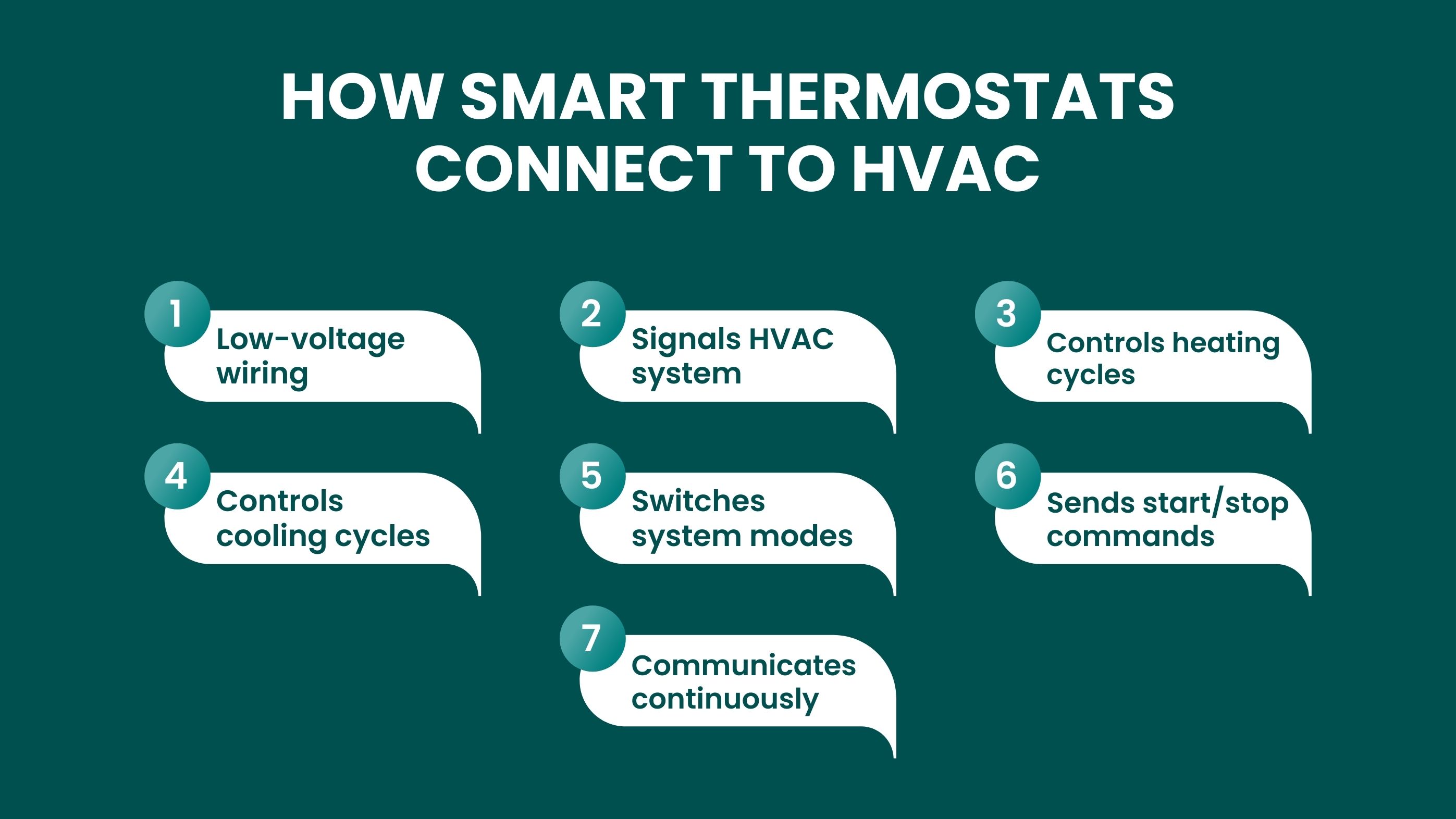
Smart thermostats connect to central air systems through low-voltage wiring. They control cooling cycles by signaling when the system should turn on, adjust, or shut off based on indoor temperature and settings.
When paired with a furnace, the thermostat manages heating cycles by communicating with the control board. It ensures the furnace runs only as long as needed to reach and maintain the set temperature.
For boiler systems, smart thermostats regulate when hot water or steam is produced. They signal the boiler to start or stop based on room temperature, helping maintain steady heat without overuse.
Smart thermostats work with heat pumps by managing both heating and cooling modes. They switch modes automatically and adjust cycles to keep comfort consistent while improving system efficiency.
During smart home thermostat installation, the system is configured to match your HVAC type. Once connected, the thermostat continuously communicates with the equipment to optimize comfort, timing, and energy use.
Not all HVAC systems are wired or configured the same way, which is why compatibility matters before upgrading. Smart thermostats need to match how your heating and cooling equipment is designed so communication stays accurate and reliable.
Most smart thermostats work with common HVAC setups, including central air systems, furnaces, boilers, and heat pumps. Compatibility depends on how the system controls heating and cooling stages, backup heat, and fan operation. Systems with multi-stage heating or combined heating and cooling may need a thermostat designed for those configurations.
Thermostat wiring is what allows a smart thermostat to communicate with HVAC equipment. Some homes have modern wiring that supports smart features, while others use older wiring that may limit options. Understanding wiring compatibility is part of how to install smart thermostat systems correctly, even when installation is handled by a professional.
Installing smart thermostat systems follows a clear and careful process to ensure accurate control and safe operation with your HVAC equipment. While homeowners do not need to handle the technical steps themselves, understanding the process helps set clear expectations and highlights why proper setup matters. Professional smart thermostat installation typically takes 30–90 minutes, depending on wiring condition and HVAC system type.
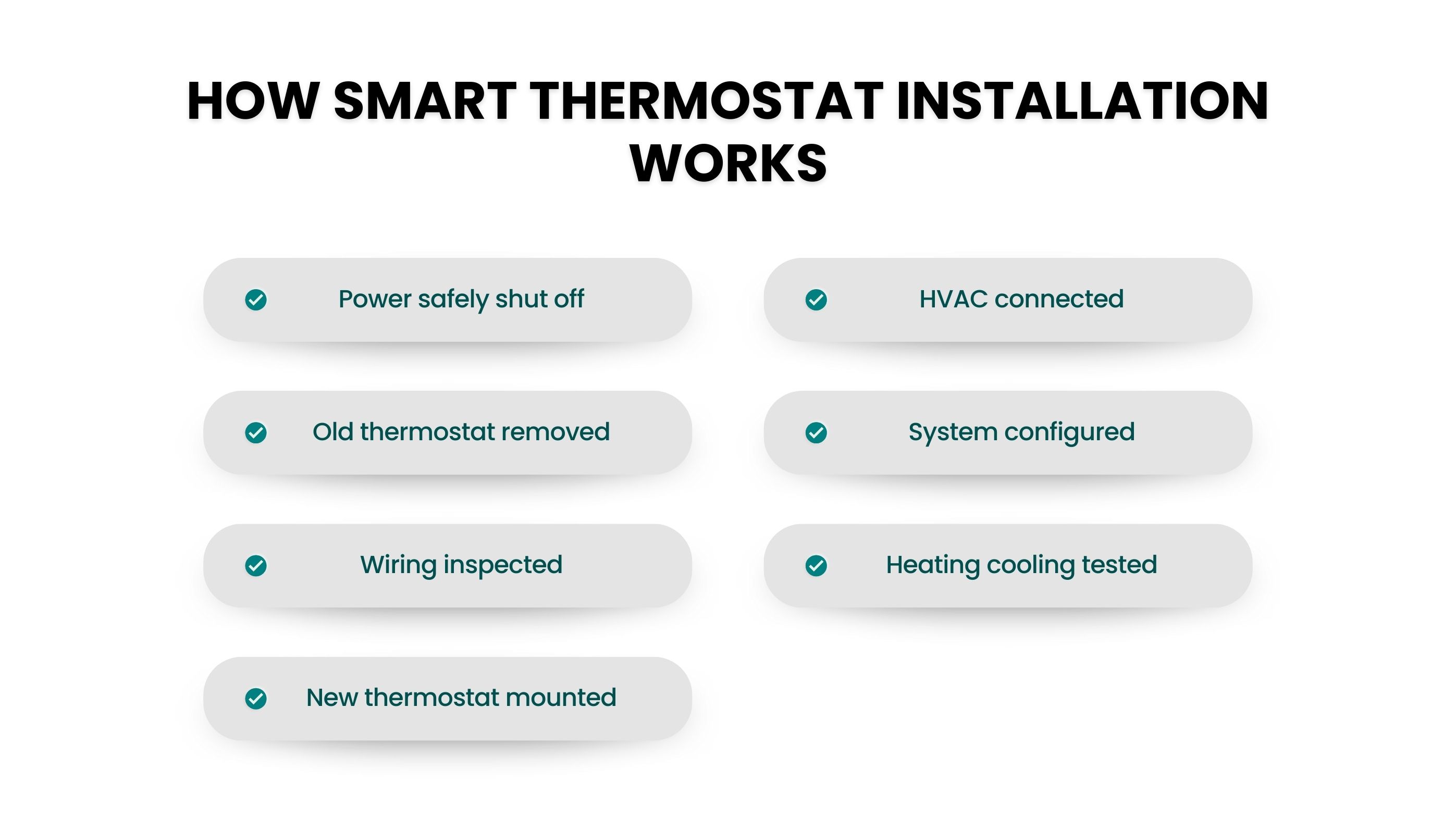
The installation process begins by safely shutting off power to the HVAC system. This prevents electrical issues and protects system components during installation. Existing thermostat settings and wiring are reviewed to ensure compatibility before any changes are made.
The old thermostat is removed, and the wiring behind it is inspected. During installing smart thermostat systems, technicians confirm wire labels, connections, and power availability so the new thermostat communicates correctly with the HVAC system.
The new thermostat is mounted securely and connected to the existing wiring. Connections are matched to the HVAC system type, whether it controls heating, cooling, or both. This step ensures accurate signaling between the thermostat and HVAC equipment.
After installation, the thermostat is configured to match the home’s heating and cooling system. Settings such as system type, temperature limits, and scheduling preferences are adjusted. Final testing confirms that heating and cooling cycles respond correctly, completing the installing smart thermostat process with confidence and reliability.
Not every home has modern thermostat wiring, especially older houses with basic HVAC controls. One of the most common concerns homeowners face is how to install smart thermostats without C wire, since many smart thermostats need constant power to operate properly.
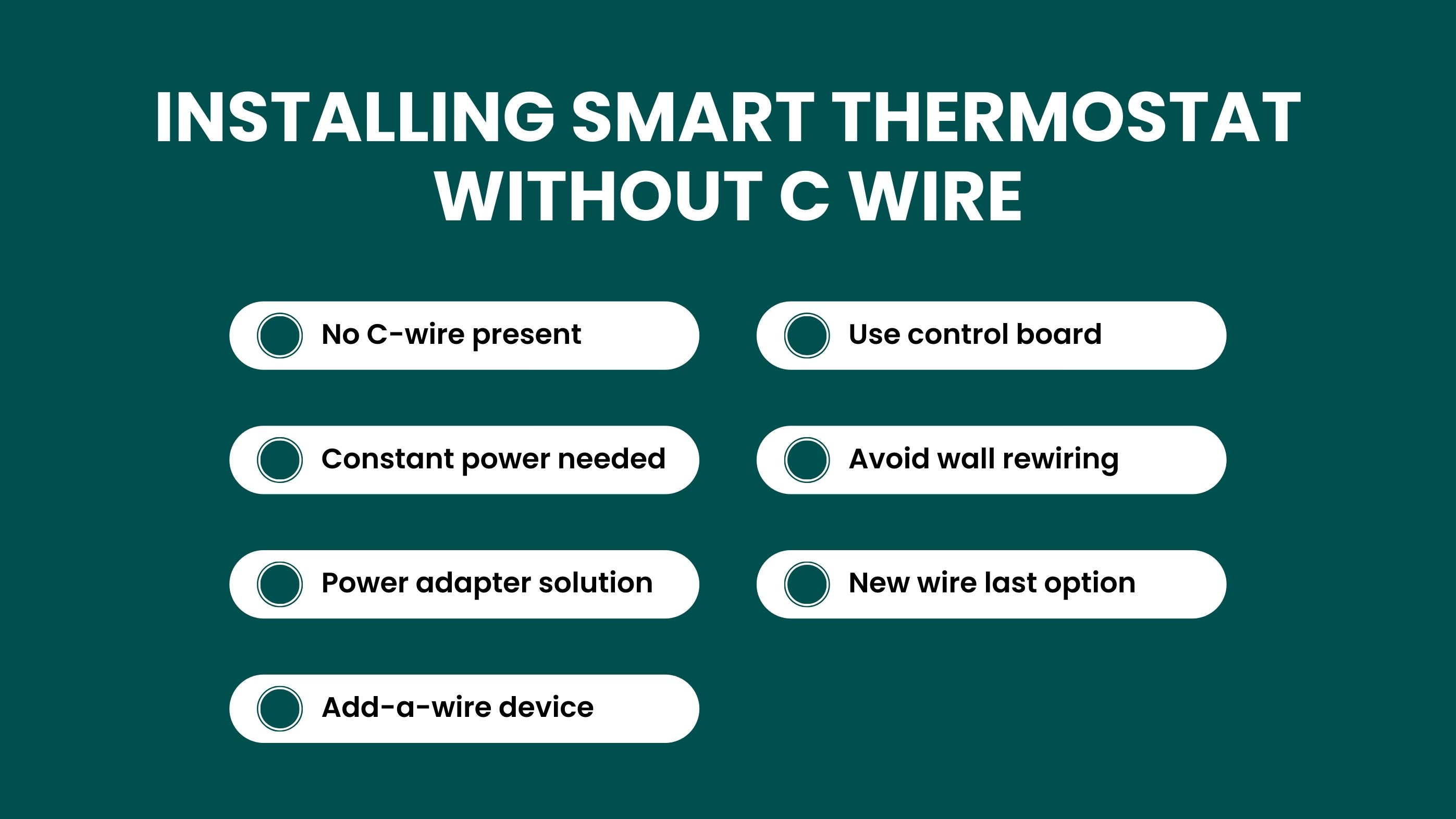
The C wire, or common wire, supplies continuous low-voltage power to the thermostat. Without it, smart thermostats may lose connection, restart frequently, or fail to power advanced features like Wi-Fi and learning modes. Older systems often rely only on heating and cooling signal wires, which were enough for traditional thermostats but not for smart ones.
When a C wire is not present, many smart thermostat installations use a power adapter or add-a-wire device. These solutions draw power directly from the HVAC control board without running new wiring through walls. This is one of the most practical ways to support smart thermostat features in older homes.
Some HVAC systems already have an unused terminal that can function as a common wire. During installation, technicians can repurpose existing wiring if the system supports it. This option avoids wall damage and keeps installation clean while still delivering reliable power.
In rare cases, older HVAC systems cannot support adapters or alternate wiring methods. At that point, installing a new wire may be the only option. This requires HVAC knowledge to avoid control board damage and ensure the system remains safe and responsive.
Many homeowners ask, can I install a smart thermostat myself, and the answer depends on the HVAC system, wiring setup, and comfort with electrical components. While some installations are straightforward, others require professional experience to avoid system issues.
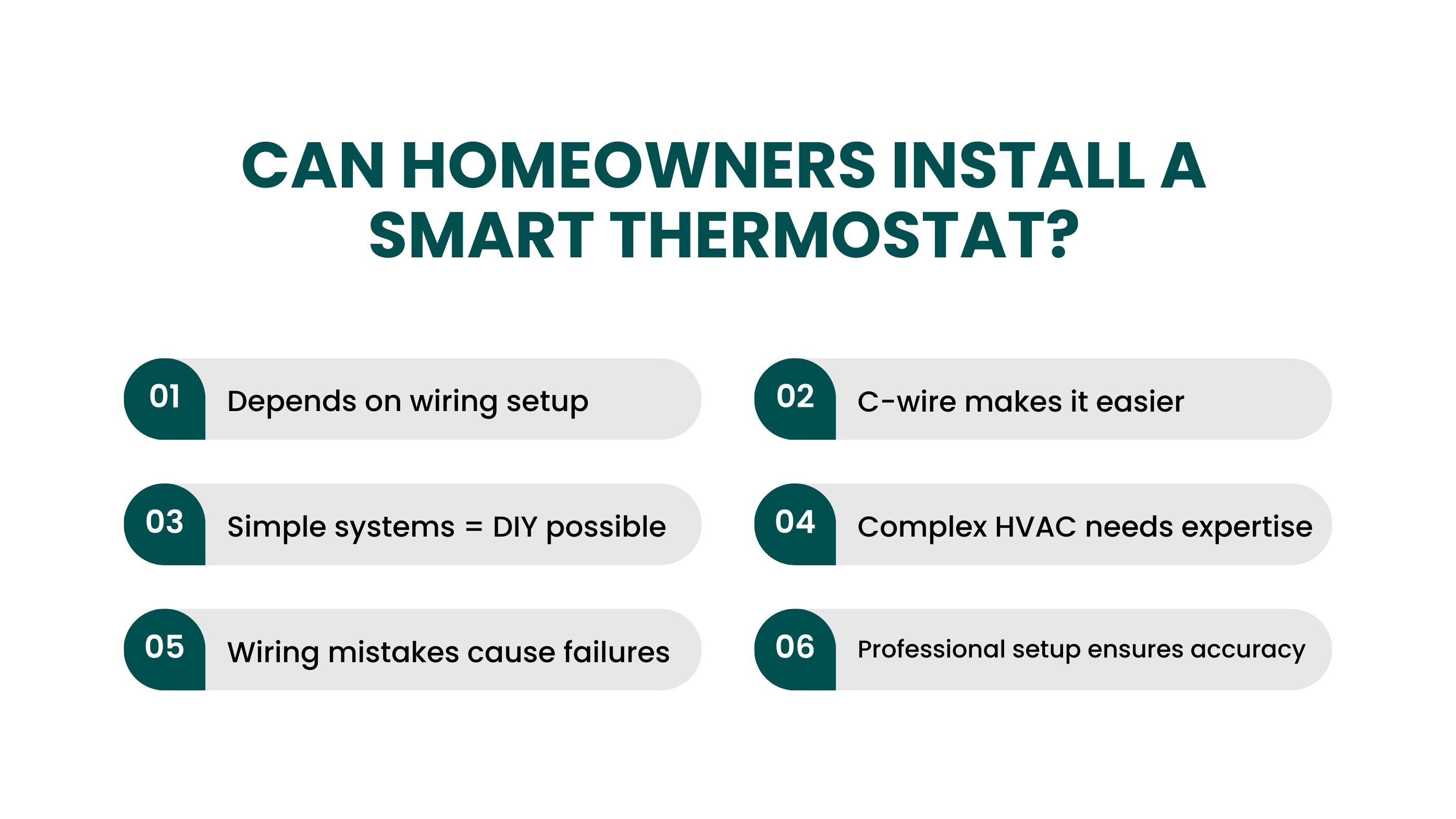
Self-installation may work when the home already has compatible wiring, including a C wire, and a simple single-stage heating and cooling system. In these cases, replacing a thermostat involves matching wires correctly, mounting the device, and completing app-based setup.
Homeowners who are comfortable identifying HVAC wiring and following manufacturer instructions may complete installation successfully in these limited scenarios.
More complex systems require professional handling. Multi-stage heating, heat pumps, boilers, dual fuel systems, or homes without standard wiring increase the risk of incorrect connections. A small wiring mistake can prevent heating or cooling from turning on or cause the system to run continuously.
Understanding control boards, voltage requirements, and system logic is essential in these cases. This is where HVAC experience matters more than basic installation skills.
Improper installation can lead to short cycling, system lockouts, blown fuses, or thermostat failure. It may also limit system efficiency and reduce the benefits homeowners expect from smart control. In some cases, incorrect installation can affect HVAC warranties or future service diagnostics.
Professional installation ensures the smart thermostat is matched correctly to the HVAC system, powered reliably, and configured for optimal performance. Testing confirms heating and cooling respond correctly, schedules work as intended, and smart features operate without interruptions.
For homeowners, this means fewer problems, better comfort control, and confidence that the system is working exactly as designed.
Smart thermostat installation cost reflects more than just attaching a device to the wall. In an HVAC context, installation includes system evaluation, wiring verification, configuration, and testing to ensure the thermostat communicates correctly with heating and cooling equipment. Understanding what is included helps homeowners see why pricing can vary from one home to another.
When professionals install a smart thermostat, the cost typically includes checking HVAC compatibility, reviewing existing wiring, and confirming power requirements. If adjustments are needed, such as adding a power adapter or modifying wiring connections, this work is part of the installation process.
Installation also includes mounting the thermostat, connecting it to the HVAC system, and configuring settings so heating and cooling cycles operate correctly. Final system testing ensures the thermostat responds properly and controls the system without interruptions.
The cost to install smart thermostat systems depends on the type of HVAC equipment in the home. Simple single-stage heating and cooling systems usually require less time to set up. More complex systems, such as heat pumps, boilers, or multi-stage units, require additional configuration and testing, which increases labor time.
Homes without standard wiring or power support may also see higher installation costs due to added setup steps. These factors explain why smart thermostat installation cost varies even when using the same thermostat model.
Homeowners often ask how much does it cost to install a smart thermostat. While exact pricing depends on system complexity and wiring, most installations fall within a predictable range.
| Installation Scenario | Typical Cost Range | Why Cost Varies |
|---|---|---|
| Basic HVAC system with existing wiring | $120 – $250 | Minimal setup and configuration required |
| System without C wire | $180 – $350 | Requires power adapter installation or additional wiring work |
| Complex HVAC systems | $300 – $600 | Advanced system configuration, compatibility checks, and testing |
A properly installed smart thermostat protects HVAC performance and ensures the system operates efficiently. Incorrect setup can lead to short cycling, temperature swings, or lost connectivity. Investing in correct installation helps homeowners get full value from smart thermostat features while avoiding performance issues later.
Smart thermostats improve HVAC efficiency by controlling heating and cooling with greater precision. Instead of allowing the system to run unnecessarily, they manage when, how long, and how often the HVAC system operates. This smarter control reduces energy waste while keeping indoor comfort consistent.
Traditional thermostats often cause short, frequent cycles that waste energy and strain HVAC components. Smart thermostats reduce this by maintaining tighter temperature ranges and allowing the system to run in longer, more efficient cycles. This helps the HVAC system operate smoothly without overworking.
Smart thermostats adjust heating and cooling based on daily routines. They lower system output when the home is empty and restore comfort before occupants return. This prevents energy use in unoccupied spaces and reduces overall system run time.
Instead of reacting late to temperature changes, smart thermostats respond gradually. They make small adjustments before comfort is lost, which keeps the HVAC system from working harder than necessary. This adaptive response improves efficiency and temperature stability.
By limiting unnecessary starts and stops, smart thermostats reduce mechanical strain on HVAC equipment. This steady operation helps maintain efficiency over the long term and supports consistent performance throughout the heating and cooling seasons.
Smart thermostat installation is a practical upgrade for homeowners who want better control over comfort, energy use, and HVAC system performance. By acting as the control center for heating and cooling, a smart thermostat helps HVAC systems run more efficiently, avoid unnecessary cycles, and maintain steady indoor temperatures throughout the day. When installed and configured correctly, it improves comfort without requiring constant manual adjustments.
Understanding compatibility, wiring needs, installation steps, and cost factors helps homeowners make informed decisions before upgrading. While smart thermostats support efficiency and smoother HVAC operation, proper installation and regular system maintenance remain essential. For homeowners looking to modernize comfort control while protecting long-term HVAC performance, smart thermostat installation offers real, measurable value.
A smart thermostat works as the control center for your HVAC system. It sends signals to heating and cooling equipment to start, stop, or adjust output based on indoor temperature, schedules, and system behavior. Unlike basic thermostats, it manages cycle timing more precisely, helping the HVAC system run efficiently and maintain steady comfort.
Installing a smart thermostat can help reduce HVAC energy use by limiting unnecessary heating and cooling. Better scheduling, fewer short cycles, and more accurate temperature control improve efficiency. Actual savings depend on system condition, home insulation, and how the thermostat is used.
Many smart thermostats work with older HVAC systems, but compatibility depends on wiring, system type, and control design. Older systems may require additional setup, power adapters, or professional configuration to ensure proper operation without disrupting heating or cooling performance.
Yes, many smart thermostats are designed to support multi-stage HVAC systems. These systems use different output levels to maintain comfort more efficiently. Proper configuration allows the thermostat to manage stages correctly without overusing energy.
A smart thermostat can support longer HVAC system life by reducing frequent on-off cycling and maintaining smoother operation. While it does not replace maintenance, improved control helps limit unnecessary strain on system components.
Join our mailing list for exclusive updates, expert tips, and special offers tailored to your needs. Be the first to know about the latest in home services.

Renovize Home is a platform that supports homeowners from planning to renovation. Whether it’s Renovize AI for guidance or a one-on-one call with Pro Finder, we understand your project and match you with local contractors tailored to your needs.
Who We Are
About Renovize HomeGet in TouchHomeownwer Support:
Coming Soon!
General Inquiries:
support@renovizehome.com
Head Office:
24 Greenway Plaza, STE 1800M, Houston, TX 77046.