
Explore All
BROWSE BY CATEGORY
Interior
Exterior
Home Essentials
Homeowner Tools
Blogs & Guides
Find a Pro
Book Your Appointment Now
Home Essentials
About Renovize Home
Explore All
BROWSE BY CATEGORY
Interior
Exterior
Home Essentials
Homeowner Tools
Blogs & Guides
Find a Pro
Book Your Appointment Now
Home Essentials
About Renovize Home
Last Updated 2026-01-16
A refrigerant leak in your A/C system is a common issue that can significantly reduce its efficiency, leaving your home uncomfortably warm. The refrigerant is essential for the cooling process, as it absorbs heat and cools the air that circulates through the system. If the refrigerant level gets too low, the A/C unit won’t be able to cool your home effectively. Detecting and repairing a refrigerant leak is crucial to restoring your A/C's performance, and it often involves either finding and sealing the leak or replacing damaged components.
Recharging the A/C system with the correct amount of refrigerant is equally important. This process should only be done after the leak has been fixed, as simply adding refrigerant without addressing the leak will not solve the problem long-term. While a refrigerant recharge is something that can be done by professionals, some homeowners may attempt to do it themselves, provided they have the right tools and knowledge. However, handling refrigerant can be dangerous, and it’s often recommended to seek professional help for the repair and recharge to ensure proper functionality and avoid further damage to your A/C system.
Table of Contents
What Is Refrigerant and Why Is It Important?
What Happens if the Refrigerant Level Is Low?
What Causes Refrigerant Leaks?
How Refrigerant Leaks Affect Your A/C System
The Importance of Recharging Your A/C System
How to Fixing a Refrigerant Leak
Cost of A/C Refrigerant Leak Repair and Recharge
Final Thoughts
Refrigerant is the vital fluid used in air conditioning systems and refrigerators to absorb and release heat. It circulates through the system, helping to lower the temperature of the air inside a home or appliance. Without refrigerant, an A/C system would not be able to cool the air effectively. Understanding what refrigerant is and how it works is key to recognizing how essential it is for your cooling system’s performance.
Refrigerant is a chemical compound, typically a gas or liquid, that has the ability to absorb heat. In air conditioners, it travels through the evaporator coil and compressor to remove heat from the air inside your home and release it outside. The refrigerant moves through different phases (gas and liquid) as it absorbs and expels heat, making it a crucial component in the cooling process.
Refrigerants have specific properties that make them effective at transferring heat, such as low boiling points and high heat-absorption capabilities. Modern refrigerants, such as R-410A, are designed to be environmentally friendly while still performing efficiently, unlike older refrigerants like R-22, which was phased out due to environmental concerns.
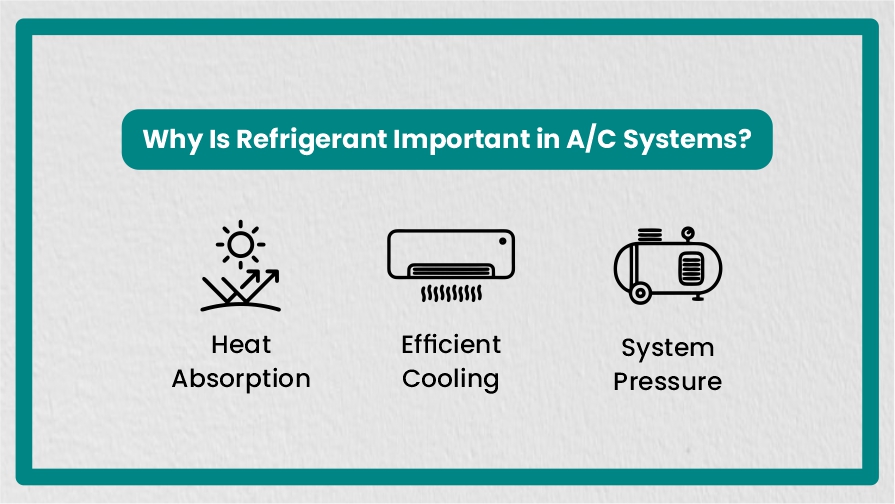
Refrigerants play an essential role in the cooling process, and without it, an air conditioner cannot function. The refrigerant absorbs the heat from indoor air and moves it outside, allowing your home to remain cool. Here’s why refrigerant is crucial for your A/C:
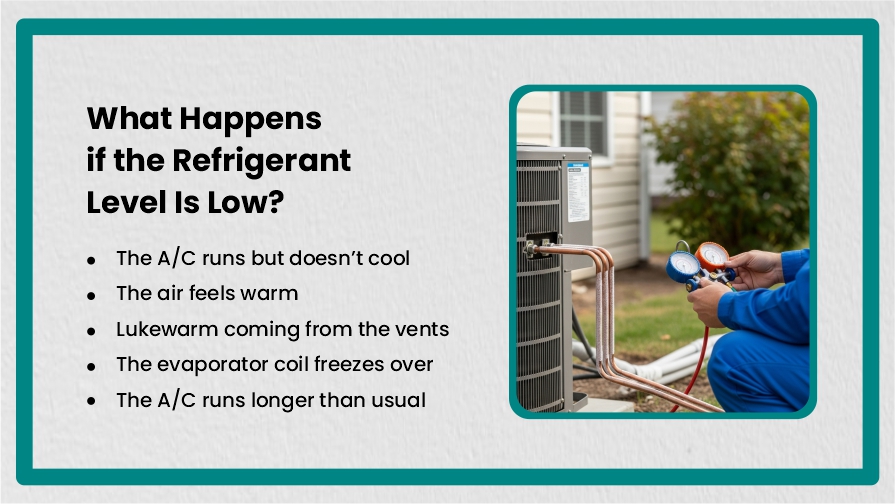
If your A/C system’s refrigerant level is low, the system cannot cool your home efficiently. This leads to longer cooling cycles, higher energy bills, and a lack of comfort. Low refrigerant levels can also cause the evaporator coil to freeze and the compressor to work overtime, potentially causing long-term damage to the system.
Refrigerant leaks are a common issue in air conditioning systems, and they can happen for various reasons. Understanding the causes of these leaks can help you take steps to prevent them or address the problem early before it leads to bigger issues.
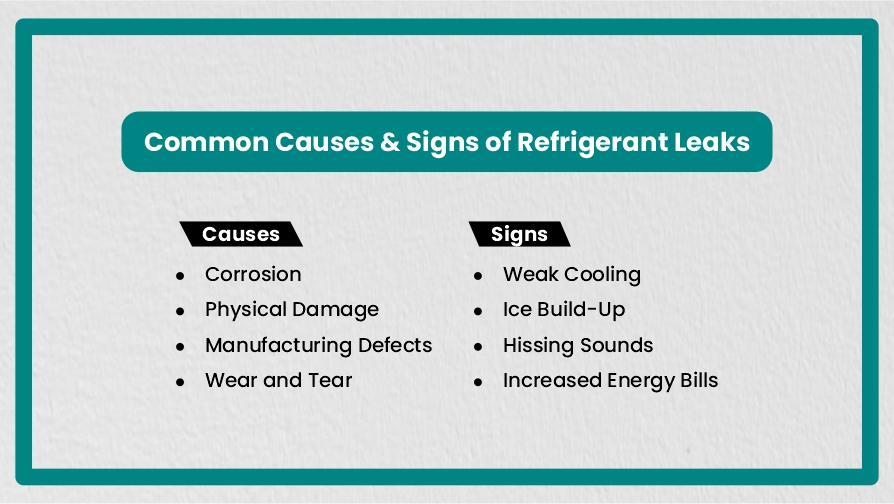
When a refrigerant leak occurs, your A/C system starts to lose its ability to cool effectively. The following are the most common signs that your system might have a refrigerant leak.
Refrigerant is crucial to the operation of your air conditioning system. It absorbs heat from inside your home and releases it outside, helping to maintain a comfortable indoor temperature. A refrigerant leak disrupts this process, leading to several problems. When refrigerant levels drop, the system can't cool as effectively, leading to inefficiency and potential damage if not addressed quickly.
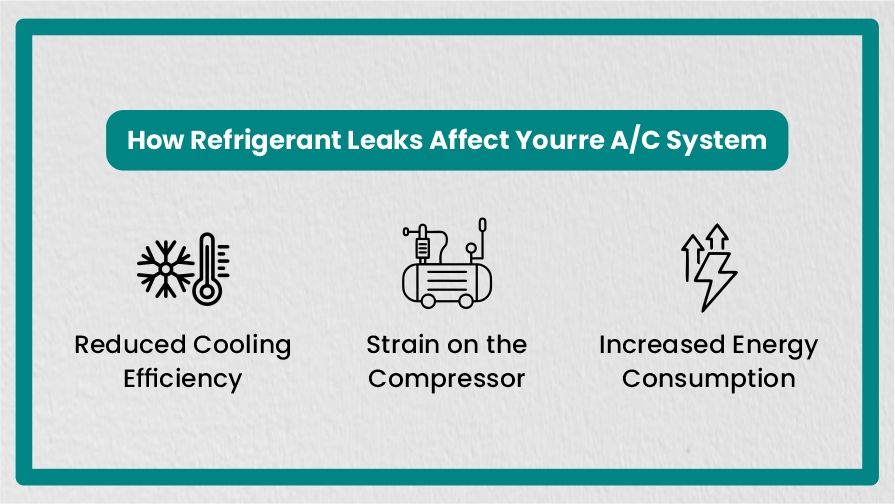
The most immediate effect of a refrigerant leak is reduced cooling capacity. With less refrigerant circulating through the system, the A/C unit struggles to absorb and expel heat, resulting in weak or inconsistent cooling. You might notice that your home isn’t cooling down to the set temperature or that the air feels warm or lukewarm coming from the vents.
The compressor in your A/C system is responsible for pressurizing the refrigerant and circulating it through the system. When the refrigerant level is low, the compressor has to work harder to maintain cooling. This can cause the compressor to overheat, which may eventually lead to a breakdown. A damaged compressor is one of the most expensive repairs in an A/C system.
Running an A/C with a refrigerant leak forces the system to work harder, consuming more energy. This results in higher utility bills and prolonged running times as the system tries to reach the desired temperature. Low refrigerant levels can cause the system to run continuously without ever fully cooling your space.
Once you’ve fixed a refrigerant leak, it’s critical to recharge your A/C system with the correct amount of refrigerant. A recharge ensures that your A/C unit operates at full capacity, cooling your home efficiently and preventing further damage to the system. Here’s why recharging your system is so important:
The primary reason for recharging an A/C system is to restore its ability to cool effectively. Without the right amount of refrigerant, the system cannot absorb or expel heat properly. A recharge brings the refrigerant level back to the manufacturer’s specifications, enabling the system to cool your home effectively again.
A refrigerant recharge also helps protect the compressor. When refrigerant levels are low, the compressor works harder, potentially leading to overheating and failure. By recharging the system with the proper amount of refrigerant, you reduce the strain on the compressor, extending its lifespan and improving system efficiency.
An A/C system that’s properly charged runs more efficiently. When the refrigerant levels are correct, the system works less to maintain the desired temperature, reducing energy consumption and saving you money on your utility bills. A regular recharge ensures optimal functioning year-round.
If you've noticed a refrigerant leak in your A/C system, it’s important to fix it quickly to prevent further damage and ensure the unit runs efficiently. Below are the detailed steps for addressing the problem:
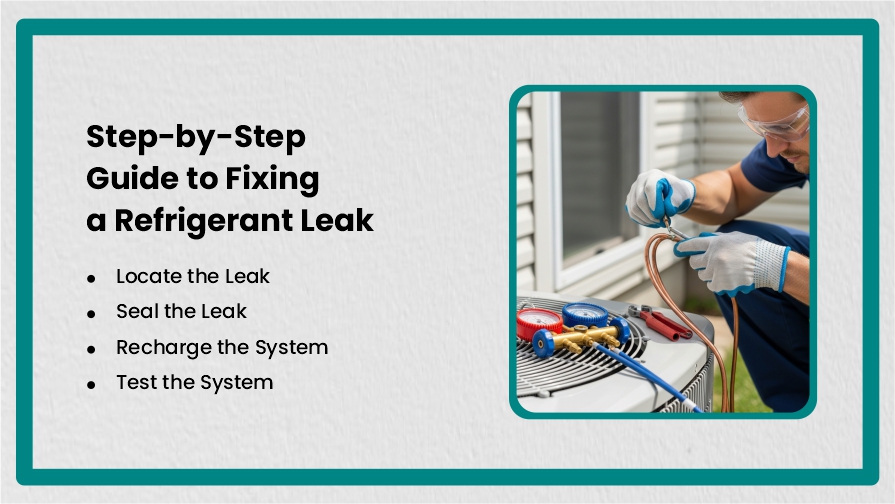
Before you can fix the refrigerant leak, you first need to pinpoint its exact location. This step is crucial because without identifying the leak accurately, your repair attempts will be ineffective.
Once you’ve located the leak, the next step is to seal it. However, sealing the leak requires proper tools and expertise, as using the wrong approach could cause more harm than good.
After fixing the leak, the next crucial step is to recharge the system with the correct refrigerant. Even if you’ve sealed the leak, the system will still be low on refrigerant, which is essential for cooling the air.
After sealing the leak and recharging the system, the final step is to test the A/C to ensure that everything is working properly. This test helps verify that the refrigerant leak is fixed, the system is properly charged, and the A/C unit is cooling effectively.
The cost of fixing a refrigerant leak and recharging your A/C system depends on the severity of the leak and whether you perform the repairs yourself or hire a professional. Below is a breakdown of the costs:
| Action | DIY Cost Range | Professional Help |
|---|---|---|
| Leak Detection | $20 – $50 (leak detector) | $150 – $300 (service charge) |
| Leak Repair | $10 – $30 (sealant) | $100 – $400 (repair costs) |
| Recharging the System | $50 – $150 (DIY kits) | $200 – $500 (includes labor) |
| Full System Check-Up | $50 – $100 (tools) | $150 – $250 (inspection) |
A refrigerant leak is not just a minor A/C issue—it directly affects comfort, efficiency, and the long-term health of your cooling system. Low refrigerant levels force your A/C to work harder, reduce cooling performance, and increase energy costs while putting critical components like the compressor at risk. Fixing the leak first and then recharging the system correctly is the only way to restore proper operation.
While temporary DIY solutions may seem convenient, refrigerant handling requires precision, safety awareness, and accurate pressure control. A properly repaired and recharged system cools more efficiently, runs shorter cycles, and lasts longer. Addressing refrigerant issues early helps avoid expensive repairs and ensures consistent comfort during hot weather.
Running an A/C with low refrigerant can cause internal damage over time. The compressor may overheat, coils can freeze, and electrical components may fail due to excessive strain.
A properly functioning A/C system should never need regular recharging. If refrigerant levels drop, it usually means there is a leak that needs repair.
No, refrigerant circulates in a closed system and does not get consumed. Any loss of refrigerant indicates a leak or system damage.
While refrigerant itself does not typically circulate into indoor air, leaks can reduce humidity control and cooling effectiveness, creating conditions that promote mold growth.
Yes, turning off the system prevents further damage to the compressor and reduces the risk of freezing or overheating components.
Join our mailing list for exclusive updates, expert tips, and special offers tailored to your needs. Be the first to know about the latest in home services.

Renovize Home is a platform that supports homeowners from planning to renovation. Whether it’s Renovize AI for guidance or a one-on-one call with Pro Finder, we understand your project and match you with local contractors tailored to your needs.
Who We Are
About Renovize HomeGet in TouchHomeownwer Support:
Coming Soon!
General Inquiries:
support@renovizehome.com
Head Office:
24 Greenway Plaza, STE 1800M, Houston, TX 77046.