
Explore All
BROWSE BY CATEGORY
Interior
Exterior
Home Essentials
Homeowner Tools
Blogs & Guides
Find a Pro
Book Your Appointment Now
Home Essentials
About Renovize Home
Explore All
BROWSE BY CATEGORY
Interior
Exterior
Home Essentials
Homeowner Tools
Blogs & Guides
Find a Pro
Book Your Appointment Now
Home Essentials
About Renovize Home
Last Updated 2026-01-28
Central heating systems and furnaces play a critical role in keeping homes warm, comfortable, and energy-efficient during colder months. These systems are designed to generate heat and distribute it evenly throughout the home using a controlled airflow network. Understanding how central heating and furnaces work helps homeowners make informed decisions about comfort, efficiency, and long-term system care.
In HVAC systems, the furnace acts as the heat source, while the central heating setup ensures warm air reaches every room consistently. Together, they create a reliable indoor environment by responding to thermostat settings, outdoor temperatures, and household heating demands. This combination supports comfort, safety, and efficient temperature control year-round.
Table of Contents
What Central Heating and a Furnace Do in Your Home Heating System
Types of Furnaces Used in Central Heating Systems
Key Components That Make a Furnace System Work
Common Central Heating and Furnace Problems Homeowners Face
How Central Heating Repairs Are Diagnosed
Repair vs Replacement
Final Thoughts
Central heating and the furnace work together to keep your entire home warm using one controlled system. Central heating manages how warmth is delivered throughout the house, while the furnace is responsible for producing the heat itself. Together, they create a consistent, efficient, and reliable home heating system.
Central heating is the system that distributes warmth evenly to all rooms from a single heat source. Instead of heating spaces individually, it uses a thermostat to regulate temperature for the entire home. When indoor temperatures drop below the set level, the system activates automatically to restore comfort across every room.
The furnace is the main heating unit inside a central heating system. Its job is to generate heat using gas, electricity, or oil. Once activated, the furnace heats the air to the required temperature so it can be delivered throughout the home. Without a working furnace, a central heating system cannot produce heat.
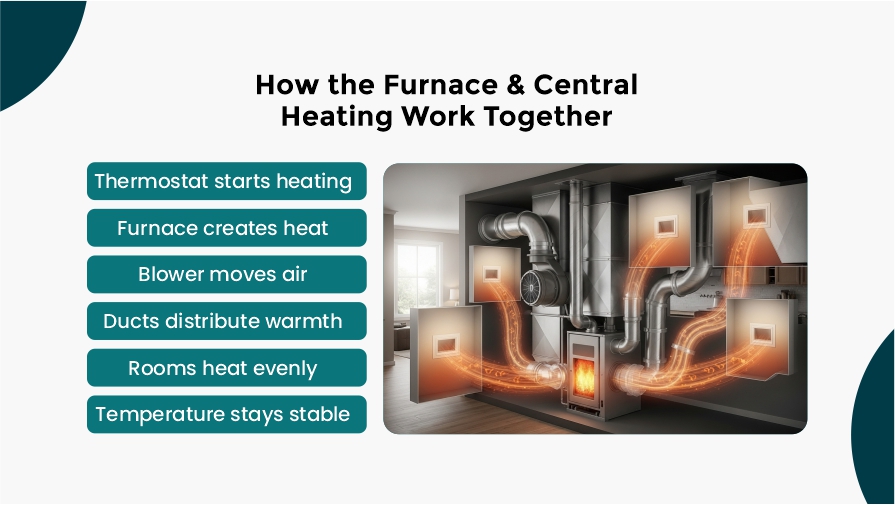
When the thermostat detects that indoor temperatures have dropped below the set level, it sends a signal to the furnace to start heating. The furnace then generates heat using its fuel source—gas, electricity, or oil—until the required temperature is reached. Once the air is heated, a built-in blower fan pushes that warm air into the duct system.
Central heating manages how this heat moves throughout the home. The ductwork carries warm air to supply vents in each room, allowing heat to spread evenly instead of concentrating in one area. This coordinated process keeps indoor temperatures stable, reduces temperature swings, and ensures consistent comfort across the entire home.
The thermostat acts as the control center for both the furnace and the central heating system. It continuously monitors indoor temperature and determines when heating is needed. By signaling the furnace only when necessary, the thermostat helps prevent overheating, improves energy efficiency, and maintains steady comfort.
Once the furnace produces heat, airflow becomes critical. The blower fan and duct system work together to deliver warm air evenly. Proper airflow ensures that all rooms receive the right amount of heat, preventing cold spots, uneven temperatures, or excessive strain on the furnace.
In a home heating system, heat production and heat delivery are handled by different components. The furnace is responsible for creating heat, while the central heating system ensures that heat reaches every part of the home efficiently. Although they operate together, each plays a distinct role in overall system performance.
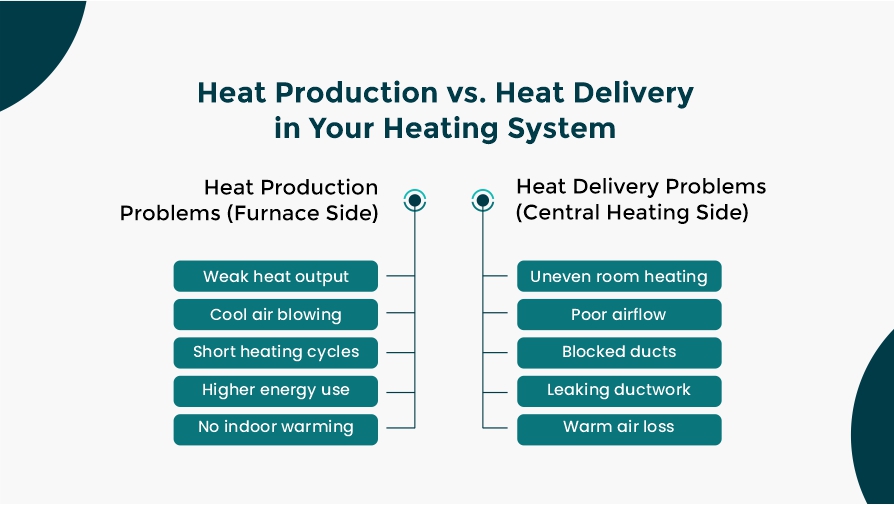
If the furnace is not generating enough heat—or fails entirely—the system may blow cool air or no air at all. Common signs include short heating cycles, rising energy usage, or the system turning on without warming the home. These issues usually point to a problem within the furnace itself.
When the furnace is working properly but heat is not reaching all rooms, the issue often lies in the air distribution system. Blocked ducts, poor airflow, or leaking ductwork can prevent warm air from circulating evenly. Understanding this distinction helps homeowners identify whether comfort issues stem from the furnace or the central heating delivery system.
Furnaces are the heart of central heating systems, and choosing the right type depends on fuel availability, home size, and heating requirements. Here’s a breakdown of the most common furnace types:
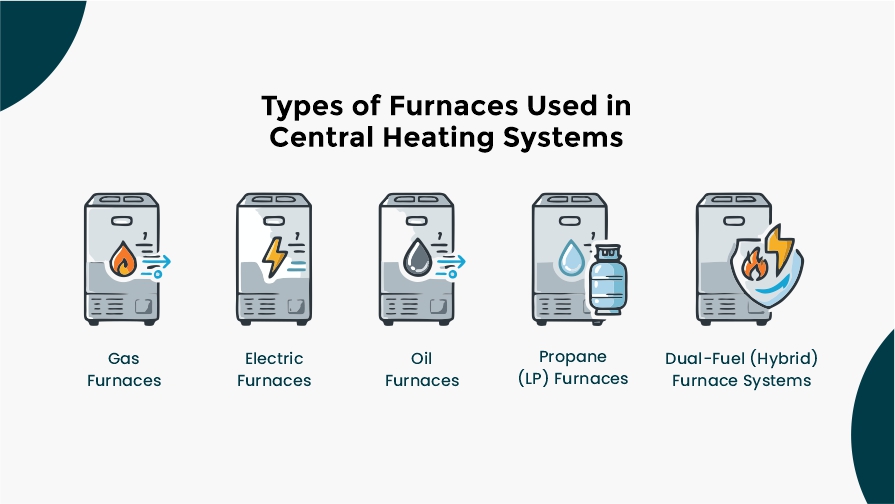
Gas furnaces burn natural gas to create heat. The combustion process warms the air, which is then circulated throughout the home via the duct system.
It's most commonly found in homes where natural gas is readily available. They are highly efficient and cost-effective for heating larger spaces.
Homeowners appreciate the fast heating capability and energy efficiency of gas furnaces. The consistent heat output makes them ideal for colder climates.
Electric furnaces use electric heating elements to generate heat. The elements heat the air, which is then pushed through ducts by the blower motor. These are ideal for homes without access to natural gas or oil. They are commonly used in regions where electricity is cheaper than gas or where gas lines are unavailable.
Electric furnaces don’t require combustion, making them a cleaner heating option. However, they tend to be less efficient than gas furnaces in terms of operational costs, especially in colder climates.
Oil furnaces burn heating oil to generate heat. The oil is atomized in the burner and ignited, creating heat that is transferred through the system. Oil furnaces are often found in homes that don't have access to natural gas, particularly in colder regions. They are also common in rural or older homes where gas infrastructure is not available.
It requires regular maintenance, such as oil filter changes and cleaning to prevent buildup in the burner. The cost of oil can also fluctuate, which affects operational expenses.
Propane furnaces function similarly to gas furnaces but use liquefied petroleum (LP) gas instead of natural gas. They are commonly used in rural areas where natural gas lines are unavailable. Propane furnaces provide strong heating performance but depend on fuel delivery and on-site storage tanks.
Some homes use dual-fuel systems that combine a furnace with an electric heat pump. The system automatically switches between electric heating and fuel-based heating depending on outdoor temperatures, improving efficiency in mild conditions while maintaining strong heating performance in colder weather.
A furnace system relies on multiple components that work together to heat the home safely and efficiently. Each component has a specific function, and understanding these parts helps homeowners recognize how heat is produced, moved, and controlled within the system.
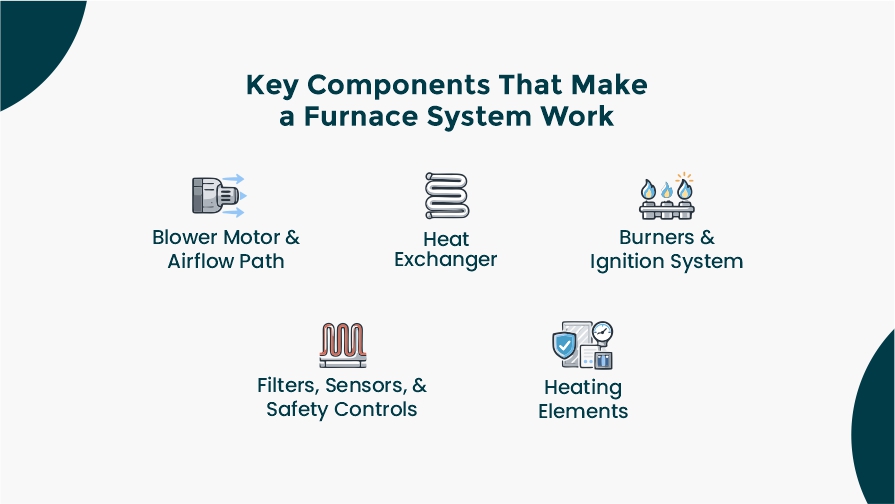
A furnace system relies on multiple components that work together to heat the home safely and efficiently. Each component has a specific function, and understanding these parts helps homeowners recognize how heat is produced, moved, and controlled within the system.
The heat exchanger transfers heat from the combustion process to the air that circulates through the home. It allows the furnace to warm indoor air while keeping combustion gases completely separate from the air you breathe.
A damaged heat exchanger can reduce heating efficiency and create serious safety risks, including carbon monoxide exposure. Because of this, the heat exchanger is one of the most critical safety components in any furnace system.
The blower motor pushes heated air from the furnace into the ductwork and distributes it throughout the home. Without the blower motor, warm air would remain inside the furnace instead of reaching living spaces.
The airflow path determines how evenly heat is delivered to each room. Proper airflow helps maintain consistent indoor temperatures, while restricted airflow can lead to uneven heating, cold spots, or increased strain on the furnace.
In gas and oil furnaces, burners are responsible for producing heat by burning fuel. The ignition system starts this combustion process, either through a pilot light or an electronic igniter.
These components work together to generate controlled heat safely. If burners or ignition systems malfunction, the furnace may fail to produce heat, shut down unexpectedly, or operate inefficiently, making regular inspection essential for safe operation.
Electric furnaces use heating elements instead of burners to generate heat. When electricity passes through these elements, they heat up and warm the air that flows over them.
Because electric furnaces do not rely on combustion, they have fewer fuel-related safety risks. However, damaged or worn heating elements can reduce heating output and increase energy consumption, affecting overall system performance.
Filters, sensors, and safety controls protect the furnace and help maintain stable operation. Filters capture dust and debris to keep airflow clean, while sensors monitor temperature, airflow, and system pressure during operation.
If unsafe conditions are detected, safety controls automatically shut the system down. These features help prevent overheating, equipment damage, and potential fire or gas-related hazards, ensuring the furnace operates within safe limits.
Central heating and furnace systems are built for reliable operation, but over time, normal wear, airflow issues, or control failures can affect performance. Understanding common furnace problems helps homeowners recognize early warning signs, avoid efficiency loss, and prevent more serious system damage.
When a furnace powers on but does not produce heat, the issue is often related to airflow or heat generation. Clogged air filters, blocked ducts, or restricted airflow can prevent warm air from circulating properly. In fuel-based systems, ignition problems such as a faulty pilot light or electronic igniter can stop heat production entirely.
Short cycling occurs when a furnace turns on and off repeatedly instead of completing a full heating cycle. This behavior is often caused by overheating, a dirty air filter, restricted airflow, or a malfunctioning thermostat that sends incorrect signals to the system.
Uneven heating happens when some rooms feel warm while others remain cold. This problem is commonly linked to leaky, blocked, or poorly insulated ductwork that prevents heated air from reaching all areas evenly.
It is normal for a furnace to blow cool air briefly during startup while internal components warm up. However, if the system continues to blow cold or lukewarm air after several minutes, it usually indicates a heating or combustion issue.
Diagnosing problems in central heating systems requires a thorough approach to identify the root cause of issues efficiently. Professional technicians follow a detailed diagnostic process to ensure accurate repair solutions that restore comfort and safety to your home. Here’s an overview of the diagnostic steps involved in assessing central heating problems.
Technicians begin by conducting a comprehensive visual inspection of the furnace and heating system. This involves checking for any visible signs of damage, leaks, or wear, such as cracked ducts, rust, or debris buildup. Identifying these early signs helps narrow down the potential issues.
Once the visual check is complete, the technician will test the system’s operation. This involves turning on the furnace and observing its performance, checking for irregularities like unusual noises, improper heating, or short cycling. This helps detect problems with ignition, thermostat control, or airflow.
Proper airflow is essential for efficient furnace operation. Poor airflow can lead to inadequate heating, increased energy use, and system strain. Technicians assess the airflow by examining the furnace blower, air ducts, and air filters. Blockages, dirt, or damaged ducts can reduce airflow, affecting the furnace’s ability to heat the home effectively.
Common airflow restrictions include clogged air filters, closed vents, or obstructed ducts. These restrictions force the furnace to work harder, reducing efficiency and increasing the likelihood of breakdowns. Technicians will clean filters, check for leaks, and ensure all ducts are free of debris to restore proper airflow.
Safety checks are critical when diagnosing central heating systems, especially in gas-powered furnaces. Technicians will inspect gas lines, burners, and electrical components, ensuring that everything is functioning safely. Faulty wiring, gas leaks, or malfunctioning sensors can pose serious hazards, so these components are thoroughly tested.
In addition to testing components, technicians will check the furnace’s performance under various conditions, ensuring it operates efficiently and safely. This includes verifying temperature sensors, flame sensors, and gas supply to ensure the system does not overheat, emit unsafe gases, or cause carbon monoxide buildup.
When a furnace malfunctions, the decision between repairing or replacing it depends on several factors. Both options offer benefits depending on the system's condition, age, and performance. Here’s how the decision-making process typically works:
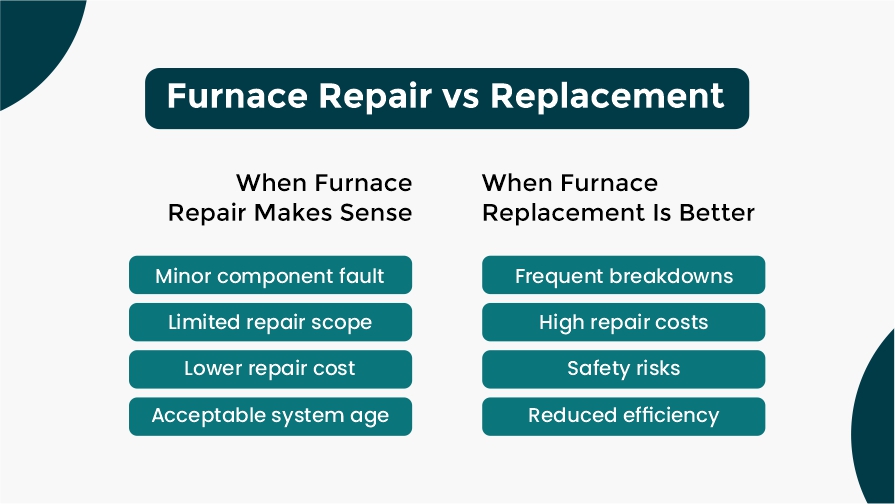
If the issue is isolated to a single component, such as a faulty thermostat, burner, or ignition switch, repairing that specific part can be a cost-effective solution. Technicians will assess whether the malfunction is localized, and in many cases, replacing a small part can restore the system's full functionality without the need for a complete replacement.
A furnace in good condition, even if it’s older, can often still perform well after repairs. If the system is relatively young (typically under 10-15 years) and well-maintained, repairing it can extend its lifespan. If the furnace hasn’t experienced frequent breakdowns and the repairs are not too costly, it may make sense to repair and continue using it.
If the furnace has undergone multiple repairs over the years or experiences frequent breakdowns, it may be more cost-effective to replace it. Repeated failures often indicate that the system is nearing the end of its lifespan and is no longer reliable. Continuous repairs can add up, and a new system will likely provide better efficiency and reliability.
If the furnace has undergone multiple repairs over the years or experiences frequent breakdowns, it may be more cost-effective to replace it. Repeated failures often indicate that the system is nearing the end of its lifespan and is no longer reliable. Continuous repairs can add up, and a new system will likely provide better efficiency and reliability.
When a furnace develops safety issues—such as carbon monoxide leaks, faulty gas connections, or malfunctioning safety sensors—it is better to replace the unit than attempt a repair. Safety is the top priority, and if the system poses a risk to the health and well-being of the household, a replacement ensures that these hazards are eliminated.
As furnaces age, they lose efficiency, leading to higher energy bills and inconsistent heating. If the system is consuming more energy than it used to, even after repairs, replacement may be a more energy-efficient solution. Newer models are designed to be more energy-efficient, offering long-term savings on heating costs and improved comfort.
This blog offers a comprehensive guide to understanding central heating and furnace systems, covering the components, types, common issues, and how to diagnose and repair problems. It's a valuable resource for homeowners looking to maintain their heating systems effectively. With the right knowledge, homeowners can make informed decisions about furnace repairs or replacements, ensuring long-term comfort and safety.
By following the proper maintenance practices and understanding system components, homeowners can maximize the efficiency and lifespan of their HVAC systems. Investing in timely repairs or upgrades ensures a warmer, more comfortable living environment throughout the year.
Central heating needs a heat source to function. If a home uses a furnace-based system, heating cannot operate without it. Some homes use boilers or heat pumps instead of furnaces.
Most furnaces last between 15 and 20 years with proper maintenance. Factors like fuel type, usage frequency, and airflow quality directly affect lifespan.
This usually indicates an airflow or distribution issue. Common causes include blocked ducts, dirty filters, blower problems, or incorrect thermostat placement.
Central heating is generally more energy-efficient for whole-home comfort. Room heaters may seem cheaper short-term but often consume more energy when used across multiple rooms.
Furnace systems should be inspected once a year, ideally before the heating season. Annual checks help identify safety issues, efficiency loss, and worn components early.
Join our mailing list for exclusive updates, expert tips, and special offers tailored to your needs. Be the first to know about the latest in home services.
Renovize Home is a platform that supports homeowners from planning to renovation. Whether it’s Renovize AI for guidance or a one-on-one call with Pro Finder, we understand your project and match you with local contractors tailored to your needs.
Who We Are
About Renovize HomeGet in TouchHomeownwer Support:
Coming Soon!
General Inquiries:
support@renovizehome.com
Head Office:
24 Greenway Plaza, STE 1800M, Houston, TX 77046.