
Explore All
BROWSE BY CATEGORY
Interior
Exterior
Home Essentials
Homeowner Tools
Blogs & Guides
Find a Pro
Book Your Appointment Now
Home Essentials
About Renovize Home
Explore All
BROWSE BY CATEGORY
Interior
Exterior
Home Essentials
Homeowner Tools
Blogs & Guides
Find a Pro
Book Your Appointment Now
Home Essentials
About Renovize Home
Last Updated 2025-12-23
Heat pump installation is becoming a smart choice for homeowners who want better comfort, lower energy use, and long-term savings. A heat pump can both heat and cool your home, which means one system works year-round to keep indoor temperatures steady. For many homes, this upgrade improves comfort while reducing dependence on traditional heating and cooling systems.
Homeowners also choose heat pumps because they are energy-efficient and better for long-term home value. When installed correctly, a heat pump helps control monthly energy costs, supports cleaner energy use, and adapts well to different home sizes and layouts. Understanding the types, costs, and benefits of heat pump installation helps you decide if this system fits your home and budget.
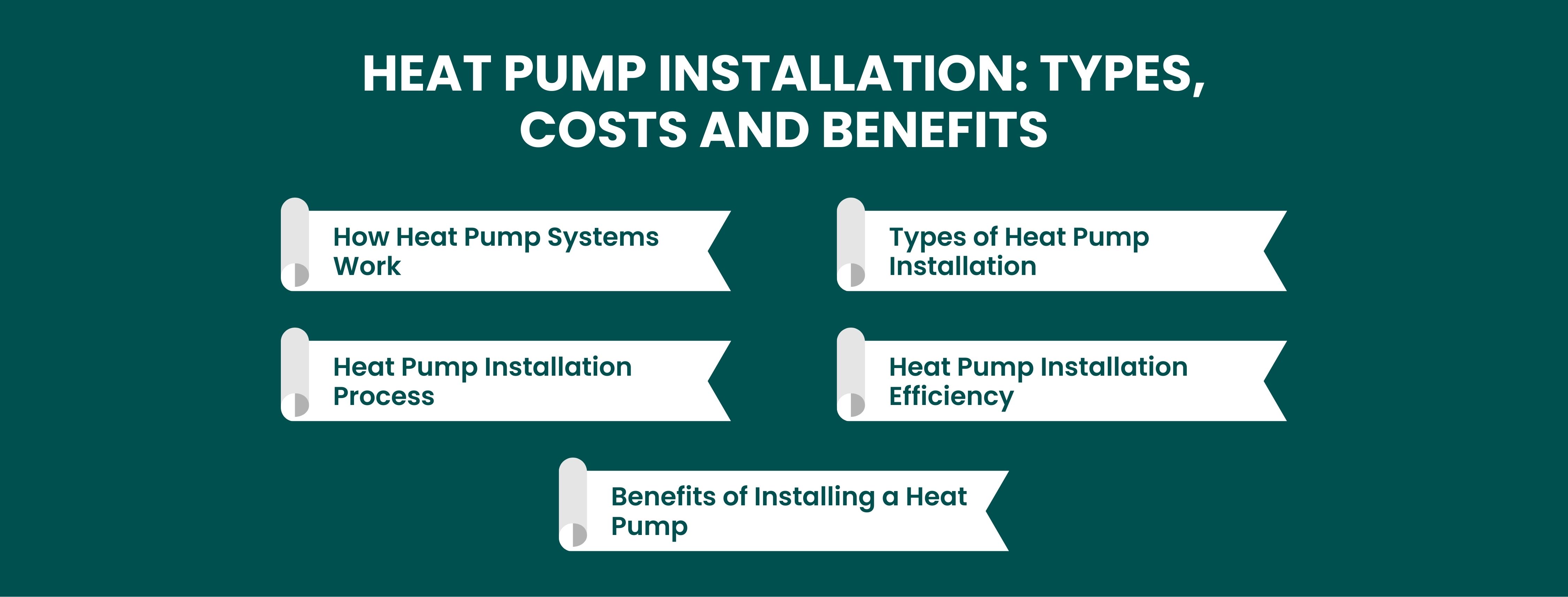
Table of Contents
What Is Heat Pump Installation?
How Heat Pump Systems Work
Types of Heat Pump Installation
Heat Pump Installation Process
Cost of Heat Pump Installation
Heat Pump Installation Efficiency
Benefits of Installing a Heat Pump
Final Thoughts
Heat pump installation is the process of setting up a single system that provides both heating and cooling for your home. Instead of using separate equipment for each function, a heat pump handles temperature control year-round by moving heat rather than generating it. This makes heat pump installation an efficient and practical option for many homeowners.
Once a heat pump is installed, it works with indoor and outdoor components that communicate with each other to regulate indoor comfort. In colder months, the system pulls heat from the outside air or ground and transfers it indoors. During warmer months, it reverses the process and removes heat from inside the home, releasing it outdoors. This allows one system to replace both a furnace and an air conditioner.
A heat pump system operates by transferring heat instead of creating it. This process allows the system to adjust smoothly to temperature changes and maintain a consistent indoor environment. Heat pumps installed in residential homes respond continuously to thermostat settings, reducing sharp temperature swings and improving comfort in every room.
Because heat pumps installation focuses on heat movement, the system uses less energy compared to traditional heating methods. This efficient operation helps reduce overall energy use while keeping indoor spaces comfortable throughout the year.
This dual function is why many homeowners choose heat pump installation when upgrading their heating and cooling systems. Managing both functions with one setup simplifies maintenance and improves efficiency.
Traditional heating systems create heat by burning fuel or using electric resistance, while cooling systems remove heat separately. Heat pump installations work differently by transferring existing heat, which reduces energy waste and mechanical strain.
When heat pumps are installed properly, they provide steady comfort, quieter operation, and improved efficiency. This makes heat pump installation a strong option for homeowners looking for a modern, all-in-one heating and cooling solution.
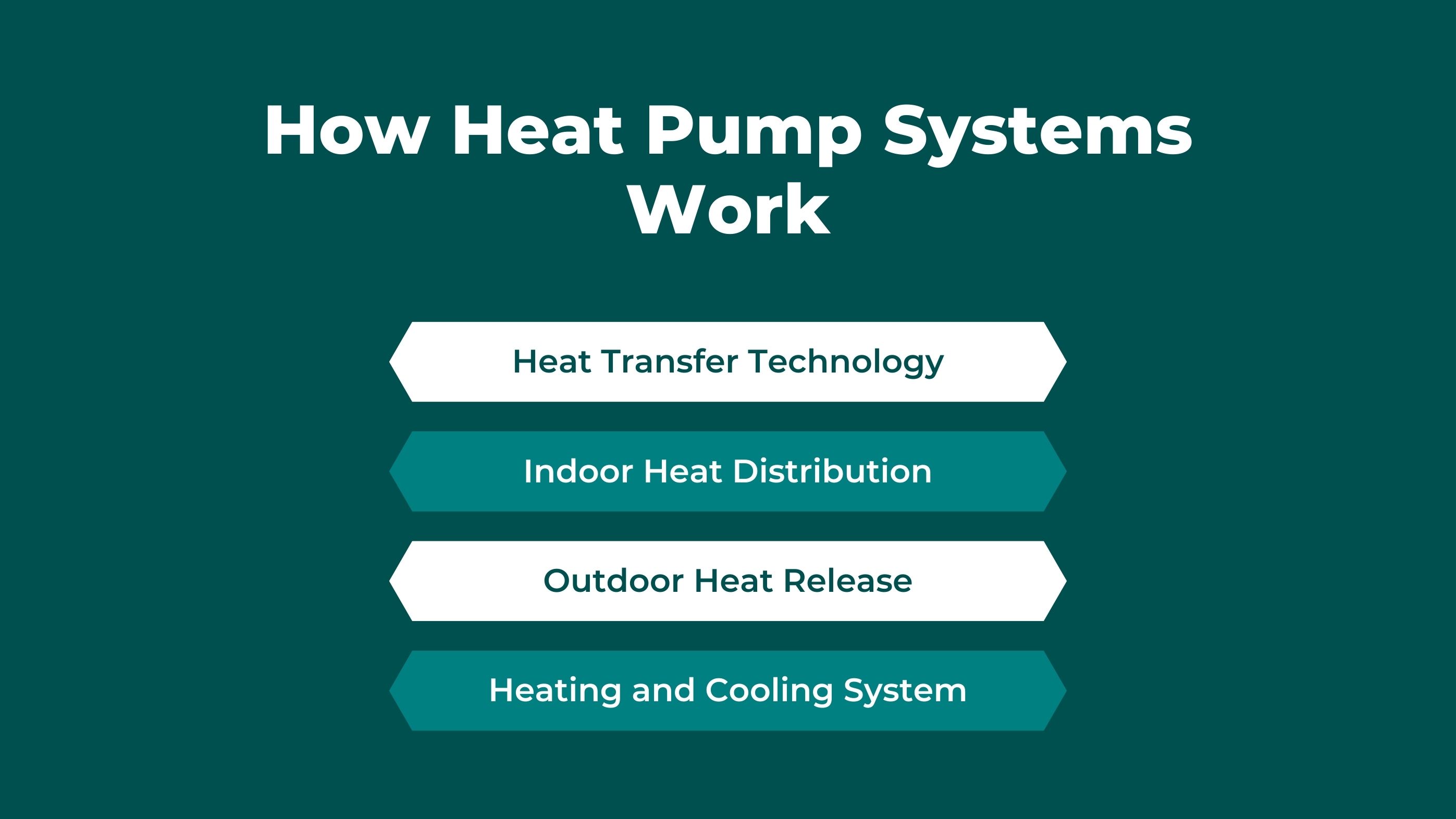
Heat pump systems work by moving heat instead of creating it. This simple idea is what makes them efficient and reliable for both heating and cooling. Understanding how heat transfer works helps homeowners feel more confident about how a heat pump keeps their home comfortable throughout the year.
Many homeowners also wonder how to install a heat pump and what actually happens during setup. While installation is handled by professionals, the basic operation of the system is easy to understand once you know how heat moves through the system.
A heat pump uses electricity to move heat from one place to another. It does not burn fuel or generate heat directly. Instead, it captures existing heat and transfers it where it is needed.
Even when outdoor temperatures feel cold, there is still usable heat in the air or ground. A heat pump collects that heat and brings it inside during winter. In summer, it does the opposite by pulling heat out of your home and releasing it outdoors. This transfer process is what allows one system to handle both heating and cooling.
Heat pumps operate in two main modes depending on the season and thermostat settings. The system automatically switches between these modes to maintain comfort.
In heating mode, the outdoor unit pulls heat from the air or ground and transfers it indoors. The indoor unit then distributes warm air evenly throughout your home. This process provides steady warmth without the sharp temperature swings common with traditional heating systems.
In cooling mode, the system reverses the flow. Heat is removed from indoor air and released outside. This works much like an air conditioner but uses the same equipment. Because the system is designed for year-round use, cooling feels smooth and consistent even during hotter months.
When homeowners ask how to install a heat pump, the process involves connecting indoor and outdoor units, setting up refrigerant lines, electrical connections, and configuring the thermostat. Once installed, the system runs automatically with minimal input from the homeowner.
After installation, heat pumps operate quietly in the background. Sensors monitor indoor temperature, outdoor conditions, and system performance. This allows the system to adjust gradually instead of turning on and off aggressively, which helps improve comfort and reduce energy use.
Heat pump systems are designed to work continuously at low power rather than in short bursts. This steady operation is what makes them efficient, comfortable, and well-suited for modern homes.
| Heat Pump Type | Best For | Installation Complexity | Cost Level |
|---|---|---|---|
| Air Source | Homes with ducts or mild climates | Moderate | Low to Mid |
| Ductless Mini Split | Homes without ductwork or room zoning | Moderate | Mid |
| Geothermal | Long-term homeowners with yard space | High | High |
| Heat Pump Water Heater | Energy-efficient water heating only | Low | Low |
Different homes require different heat pump setups. The right type of heat pump installation depends on your climate, home size, insulation, and available space. Each system moves heat in a slightly different way, but all are designed to improve comfort and energy efficiency. Understanding the main installation types helps homeowners choose a system that fits their needs and budget.
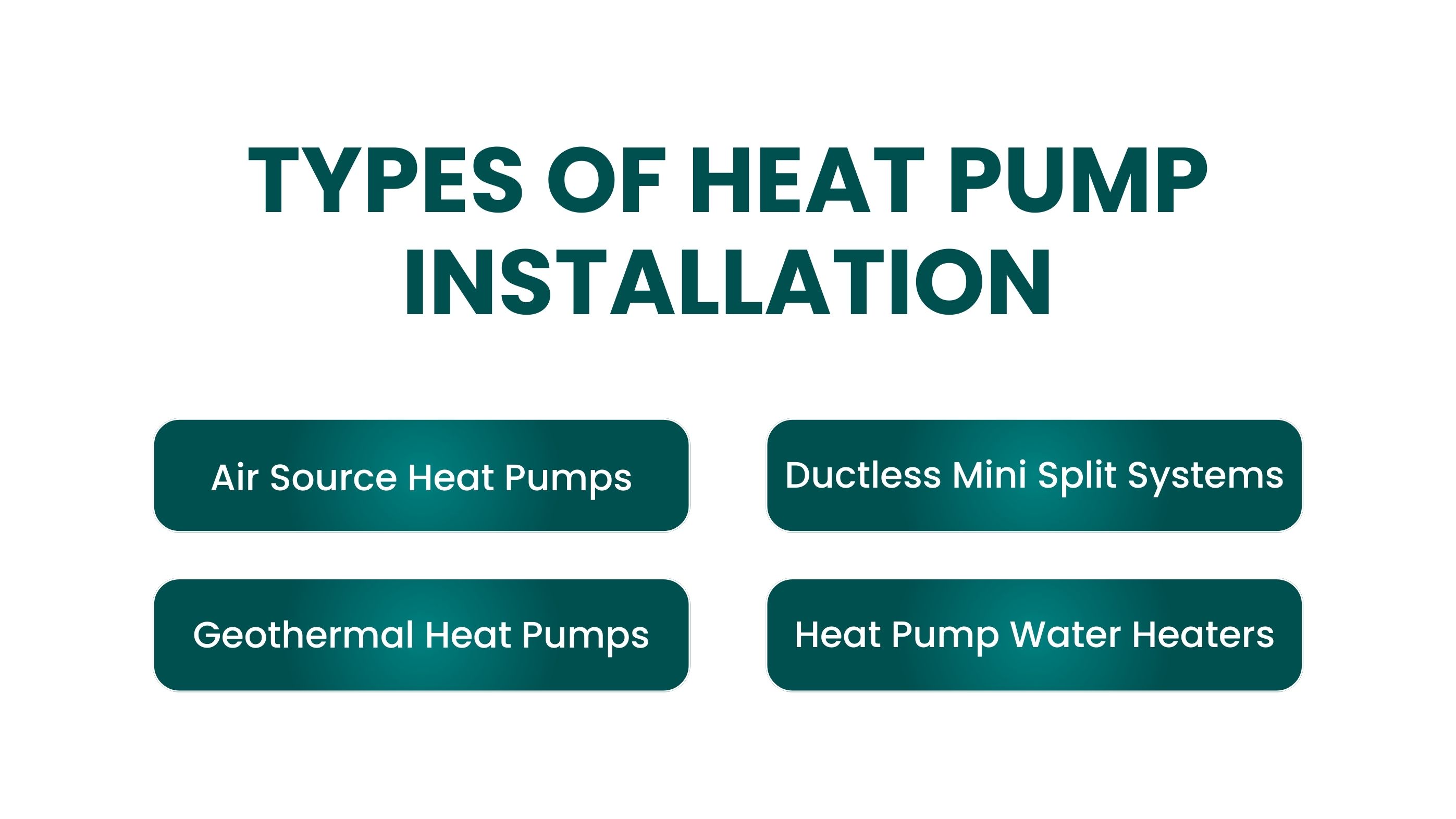
Air source heat pump installation is the most common option for residential homes. These systems pull heat from the outdoor air and transfer it indoors during colder months. In warmer weather, they reverse the process and remove heat from inside the home, releasing it outdoors. Because air is readily available, this system works well in many regions across the U.S.
Homes with existing ductwork often find air source heat pump installation easier and more cost-effective. The system connects to the home’s air distribution setup, allowing warm or cool air to circulate evenly through each room. Even in cooler climates, modern air-based systems are designed to operate efficiently at lower temperatures.
Air source systems are popular because they balance performance, installation flexibility, and affordability. Installing an air source heat pump typically requires less structural work compared to other systems, which helps keep installation time and costs more manageable. For many homeowners, this type of heat pump installation offers a reliable, all-season solution for heating and cooling.
Ductless heat pump installation is a flexible solution for homes that do not have existing ductwork or need room-by-room temperature control. These systems use compact indoor units connected to an outdoor unit, allowing heating and cooling without running air through ducts. This setup works especially well for older homes, home additions, garages, and finished basements.
With ductless and mini split heat pump installation, each indoor unit operates as its own zone. This zoning feature lets homeowners control the temperature in individual rooms instead of heating or cooling the entire house at once. As a result, comfort improves while energy use stays more efficient, since you only condition the spaces you are actively using.
Mini split systems also offer greater installation flexibility. Indoor units can be wall-mounted, ceiling-mounted, or recessed, making it easier to match the system to the room layout and design. Because ductless heat pump installation requires less structural work, installation is typically faster and less disruptive than ducted systems. This makes mini split setups a popular choice for homeowners seeking efficient comfort without major remodeling.
Geothermal heat pump installation uses the steady temperature beneath the ground to heat and cool a home efficiently. Because underground temperatures stay consistent year-round, these systems deliver reliable comfort regardless of outdoor weather changes.
During installation, a network of buried pipes called ground loops is placed horizontally in the yard or vertically deep underground. These loops circulate fluid that absorbs heat from the earth in winter and releases indoor heat back into the ground during summer.
Since the system relies on stable ground temperatures instead of fluctuating air conditions, performance stays smooth and predictable. This reduces strain on the system and helps maintain even indoor temperatures throughout the home.
Geothermal systems require more planning and space, but they offer long-term efficiency and durability. For homeowners planning to stay in their home long-term, geothermal heat pump installation can provide dependable comfort with fewer performance swings.
Heat pump water heater installation is a smart option for homeowners looking to heat water more efficiently without relying on traditional electric or gas heaters. Instead of generating heat directly, this system pulls warmth from the surrounding air and transfers it to the water stored in the tank. This process uses less energy while still providing reliable hot water for daily use.
A heat pump water heater draws in warm air from the room where it is installed and uses that heat to warm the water inside the tank. Because it moves heat rather than creating it, the system operates efficiently and maintains a steady hot water supply. This makes heat pump water heater installation ideal for basements, utility rooms, or garages with adequate airflow.
Most homeowners install heat pump water heaters in spaces that stay above freezing and have enough air volume. Proper placement allows the system to capture heat efficiently and avoid performance issues. When installed correctly, the unit provides consistent hot water without the high energy use of standard water heaters.
Heat pump water heater installation offers long-term savings and dependable performance. These systems are known for reducing energy use while delivering reliable hot water for showers, sinks, and appliances. For homeowners upgrading to a more efficient home system, this option provides a practical balance between comfort and energy efficiency.
Heat pump installation follows a clear and structured process to ensure the system performs efficiently and lasts for years. Proper planning, careful setup, and accurate adjustments all play a role in how well the system works once it is running. Understanding this process helps homeowners know what to expect and why each step matters.
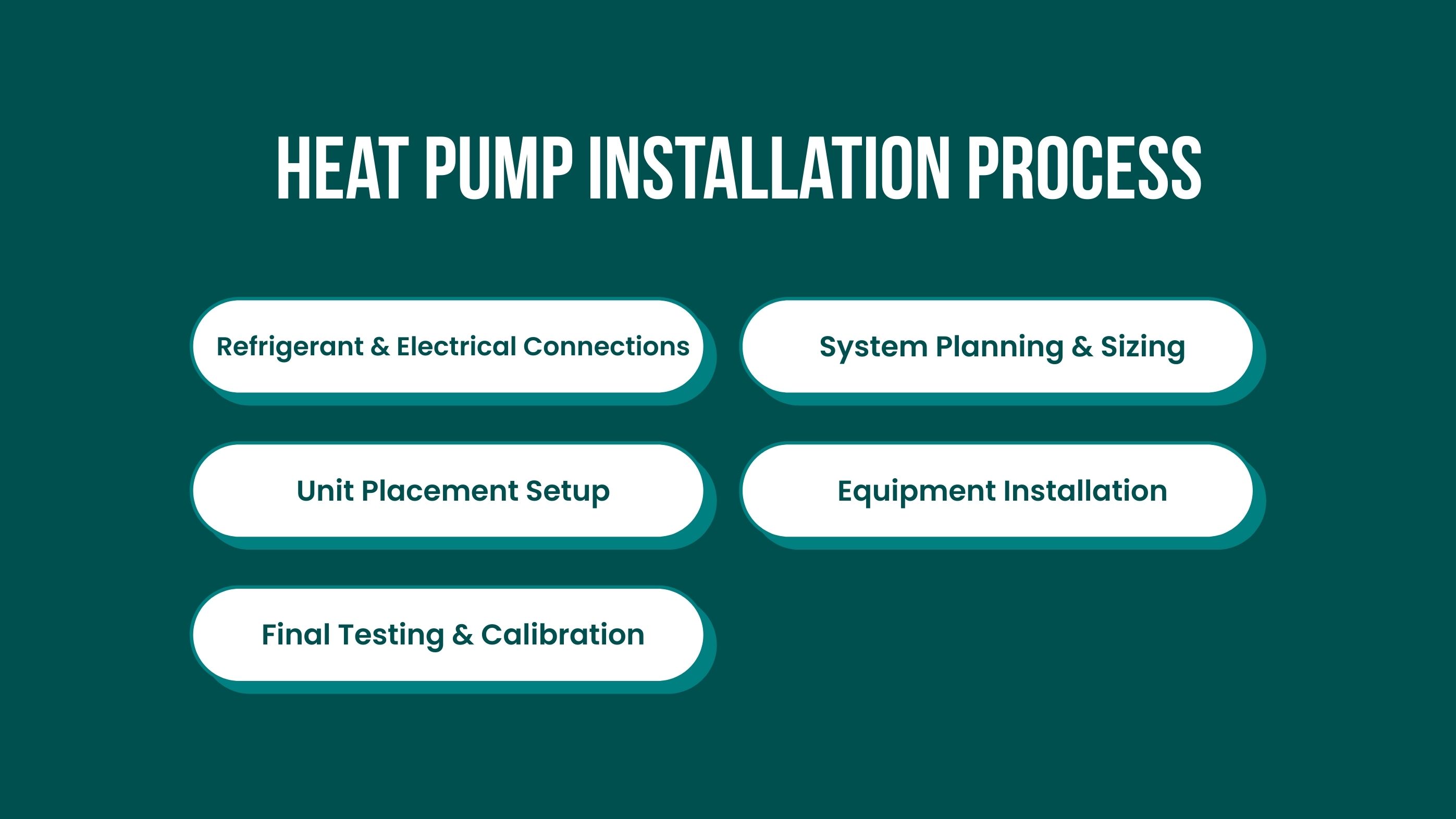
Heat pump system installation begins with careful planning. This step focuses on choosing the right system size, identifying the best layout, and preparing the home for installation. Proper planning ensures the heat pump delivers consistent comfort without overworking or wasting energy.
Sizing is one of the most important parts of heat pump system installation. A system that is too small may struggle to maintain indoor temperatures, while an oversized unit can cycle on and off too often. Professionals calculate size based on home square footage, insulation levels, ceiling height, and local climate to ensure balanced performance.
Planning also includes deciding where indoor and outdoor units will be placed. Outdoor units need enough airflow and clear space, while indoor units must be positioned to distribute air evenly. Proper layout improves efficiency, reduces noise, and helps the system operate smoothly throughout the home.
Before installation begins, electrical capacity, ductwork, and ventilation are reviewed. Any needed upgrades or adjustments are handled early to avoid delays later. This preparation step helps heat pump system installation move efficiently and ensures the system is ready to perform as designed once installed.
Once planning is complete, the next step is to install heat pump equipment and connect all system components. This phase focuses on secure mounting, proper connections, and initial setup to ensure the system operates safely and efficiently.
To install heat pump systems correctly, indoor and outdoor units must be mounted in stable, well-ventilated locations. Outdoor units are placed on level pads or wall brackets to reduce vibration and protect them from weather exposure. Indoor units are positioned to allow even airflow and easy access for future maintenance.
After mounting, refrigerant lines and electrical wiring are carefully connected between the indoor and outdoor units. These connections allow heat to transfer efficiently and power the system. Proper sealing and insulation at this stage prevent leaks, improve performance, and protect the system over time.
Once all components are connected, technicians configure the system settings and controls. Thermostat calibration, airflow adjustments, and safety checks are completed before the system is powered on. This setup ensures the heat pump operates smoothly and delivers consistent heating and cooling from day one.
Final testing is the last step before a heat pump system is ready for daily use. This phase ensures everything installed is working correctly, safely, and efficiently. Professional heat pump installation services rely on thorough testing to confirm the system delivers reliable comfort from the start.
During testing, technicians run the system in both heating and cooling modes to confirm proper operation. Airflow, temperature output, and electrical connections are carefully reviewed. These checks help identify any issues early and ensure the system meets performance standards before regular use.
If adjustments are needed, they are handled during this stage. Settings are fine-tuned to match the home’s layout and comfort needs. This step helps heat pump installation services deliver balanced temperatures and efficient operation across all rooms.
Once testing is complete, homeowners are guided through basic system use and thermostat controls. Installation contractors explain maintenance basics and answer questions, ensuring the system is fully ready for everyday operation. This final walkthrough helps homeowners feel confident in their new heat pump system.
The cost of installing a heat pump depends on the system type, home size, and installation complexity. While pricing varies by property, understanding realistic cost ranges helps homeowners plan budgets and avoid surprises. A properly sized and installed system delivers long-term value, so cost should always be considered alongside efficiency and comfort performance.
Heat pump installation costs typically fall within a broad range because no two homes are the same. For most U.S. residential homes, average heat pump installation costs range from $4,500 to $12,000.
This range reflects differences in system type, labor requirements, and basic setup. Air-source heat pumps usually sit on the lower end, while ductless and geothermal systems increase costs due to added components or site work. These averages generally include standard labor and basic installation but may exclude major electrical, ductwork, or structural upgrades.
Homeowners should treat the average heat pump installation cost as a planning estimate rather than a fixed price. A professional evaluation provides accurate pricing based on layout, insulation, and system capacity needs.
The cost of a heat pump installed represents the total turnkey price, including equipment, labor, mounting, connections, testing, and final system calibration.
For most homes, installed heat pump system costs range between $6,000 and $15,000, depending on system size and home conditions.
Homes with existing ductwork, adequate electrical capacity, and easy equipment access often fall toward the lower end. Homes needing panel upgrades, new ducts, or zoning adjustments may see higher totals.
When reviewing installed system cost, homeowners should also consider long-term savings. Efficient heat pumps can reduce monthly energy use and maintenance needs, helping offset the upfront investment over time.
The cost to install a heat pump varies mainly by system type because each option requires different equipment, labor, and site preparation. Understanding these differences helps homeowners choose a system that fits both comfort goals and budget expectations.
| System Type | Typical Installation Cost Range | Why the Cost Varies |
|---|---|---|
| Air Source Heat Pump | $4,500 – $8,500 | Uses outdoor air and often existing ductwork, keeping installation simpler |
| Ductless Mini-Split | $6,000 – $12,000 | Multiple indoor units, zoning setup, and wall penetrations |
| Geothermal Heat Pump | $18,000 – $35,000+ | Ground loops, excavation or drilling, and longer installation time |
| Heat Pump Water Heater | $2,500 – $5,500 | Smaller system focused only on water heating |
While some systems cost more upfront, higher efficiency and system lifespan often improve long-term value. A professional assessment helps determine which option delivers the best balance between installation cost and ongoing savings.
Geothermal heat pump installation costs are higher than other systems because of the underground work required. Unlike air-based systems, geothermal systems rely on buried loop systems to exchange heat with the earth.
For most homes, geothermal heat pump installation costs range from $18,000 to $35,000 or more.
The largest cost driver is excavation or drilling. Horizontal loops require sufficient yard space, while vertical loops involve deep drilling with specialized equipment. Soil conditions, lot size, and access limitations can further affect pricing.
Although upfront costs are higher, geothermal systems offer long service life and consistent efficiency. Many homeowners view geothermal installation as a long-term investment that balances initial cost with stable comfort and lower operating expenses over decades.
Heat pump water heater installation costs are generally lower than whole-home heat pump systems because they serve only water heating needs. For most homes, heat pump water heater installation costs range from $2,500 to $5,500, including equipment and standard installation.
Heat pump installation efficiency plays a major role in how comfortable your home feels and how much energy you use year-round. An efficient installation allows the system to deliver steady heating and cooling without wasting electricity. When the system is designed and set up correctly, homeowners notice smoother temperature control, quieter operation, and lower monthly energy use.
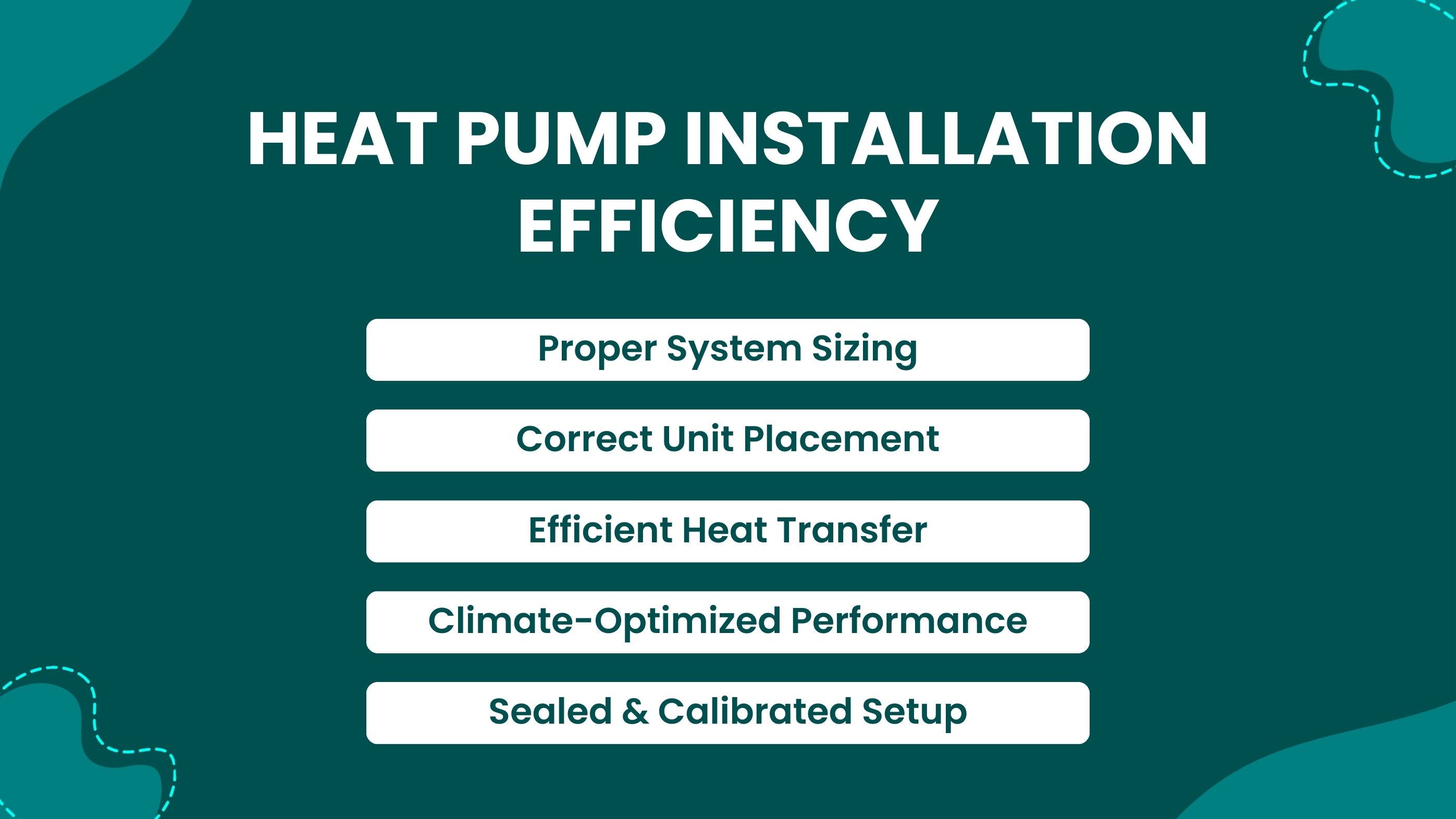
Heat pump installation efficiency depends on how effectively the system moves heat under real-world conditions. A properly installed system transfers heat smoothly instead of working harder than necessary, which helps reduce energy loss and improves long-term reliability.
Several elements affect how efficiently a heat pump performs. Home insulation, airtightness, and correct system sizing all play a role. When these factors are addressed during installation, the system maintains stable temperatures without frequent cycling or energy spikes.
Electric heat pump installation is especially effective in well-insulated homes, where less energy is needed to maintain comfort. The system runs at lower power levels for longer periods, which improves efficiency and reduces wear.
Cold climate heat pump installation has improved significantly with modern technology. These systems are designed to extract heat even when outdoor temperatures drop. When installed correctly, they continue delivering reliable warmth without switching to backup heating as often.
In regions with wide temperature swings, dual fuel heat pump installation can improve performance. This setup allows the heat pump to handle most heating and cooling needs while a secondary system supports extreme conditions. The result is balanced comfort and optimized energy use.
Even the most efficient heat pump can underperform if installation is rushed or poorly planned. Correct airflow, sealed connections, and accurate calibration all contribute to heat pump installation efficiency. When these details are handled properly, homeowners benefit from consistent comfort and dependable performance across every season.
The benefits of installing a heat pump go beyond simple heating and cooling. This system improves everyday comfort, supports energy efficiency, and adds long-term value to your home. Because one system handles both temperature needs, homeowners enjoy consistent performance throughout the year without relying on multiple units.
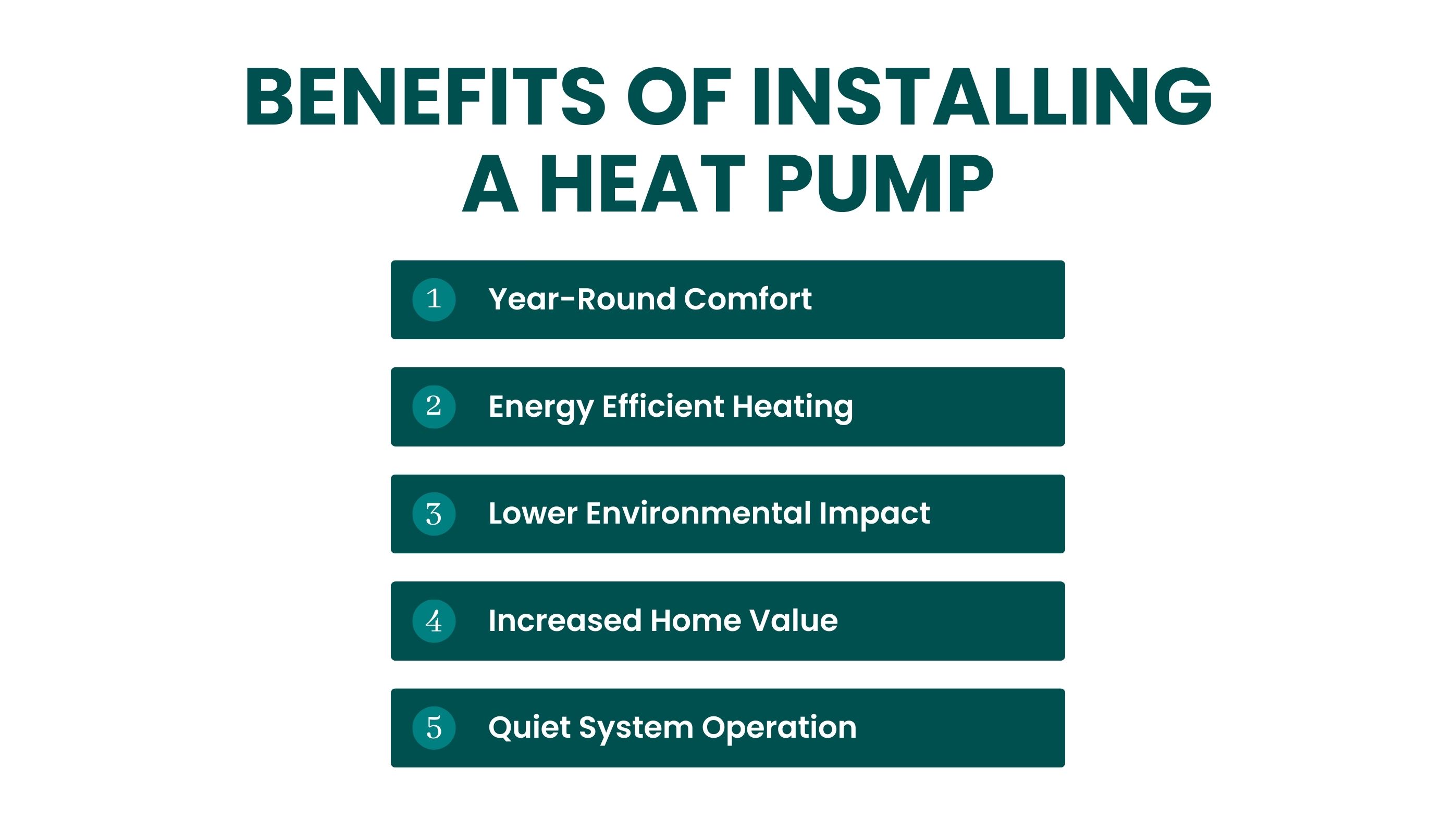
A heat pump provides both heating and cooling, which means your home stays comfortable in every season. Instead of switching between systems, the heat pump adjusts automatically to changing temperatures. This creates smoother indoor conditions with fewer temperature swings and more even airflow from room to room.
One of the main benefits of installing a heat pump is how efficiently it uses energy. By transferring heat instead of generating it, the system reduces wasted energy. Over time, this leads to lower energy use and more predictable monthly costs, especially in homes with good insulation.
Heat pumps rely on electricity rather than fuel combustion. This reduces direct emissions inside the home and supports cleaner energy use. For homeowners interested in reducing their environmental footprint, installing a heat pump is a practical step toward more sustainable living.
Installing a heat pump can increase the appeal of your home. Many buyers look for energy-efficient features that reduce future costs and maintenance. A professionally installed heat pump signals modern comfort, efficiency, and long-term reliability, making it a valuable upgrade for homeowners planning ahead.
Heat pumps operate with less noise compared to traditional heating systems. Instead of turning on and off loudly, they run steadily in the background. This quieter performance improves comfort while maintaining consistent indoor temperatures without disruption.
Heat pump installation is a practical, future-ready solution for homeowners who want reliable comfort, better energy control, and long-term value. With one system handling both heating and cooling, heat pumps simplify home comfort while adapting to different home sizes, layouts, and climates. When installed correctly, they deliver steady temperatures, quiet operation, and efficient performance throughout the year.
Choosing the right heat pump type, understanding the installation process, and planning for realistic costs all play a key role in getting the best results. Professional installation ensures the system is sized, placed, and configured properly so it performs as intended for years to come. For homeowners focused on comfort, efficiency, and smarter home upgrades, heat pump installation is a strong and dependable option.
Modern heat pumps are designed to perform efficiently even in cold climates. Cold-climate heat pumps can extract heat from outdoor air at temperatures well below freezing. In extremely cold regions, systems may include backup heating to maintain comfort during peak winter conditions. Proper sizing and installation are key to ensuring reliable performance year-round.
Some homes may require electrical upgrades before installing a heat pump, especially older properties with limited panel capacity. Heat pumps often need a higher electrical load than traditional systems. If your existing panel or wiring cannot support the system safely, upgrades may be necessary to ensure proper operation and long-term reliability.
Yes, a heat pump can replace both heating and cooling systems in most homes. Heat pumps provide heating in winter and cooling in summer using the same equipment. This dual functionality reduces the need for separate systems, simplifies maintenance, and improves overall energy efficiency when properly installed.
A well-installed and properly maintained heat pump typically lasts 15 to 20 years. Ground-source systems often last longer due to protected underground components. Routine maintenance, correct sizing, and quality installation play a major role in extending system lifespan and maintaining consistent performance over time.
Heat pumps are generally more energy efficient than furnaces or electric resistance heating because they transfer heat instead of generating it. This efficiency can result in lower monthly energy use. Actual savings depend on climate, system type, insulation levels, and how the home is used throughout the year.
Heat pumps require regular maintenance to operate efficiently and avoid performance issues. Typical maintenance includes filter changes, coil cleaning, refrigerant checks, and system inspections. Consistent upkeep helps maintain energy efficiency, improves comfort, and reduces the risk of unexpected repairs over the system’s lifespan.
Join our mailing list for exclusive updates, expert tips, and special offers tailored to your needs. Be the first to know about the latest in home services.

Renovize Home is a platform that supports homeowners from planning to renovation. Whether it’s Renovize AI for guidance or a one-on-one call with Pro Finder, we understand your project and match you with local contractors tailored to your needs.
Who We Are
About Renovize HomeGet in TouchHomeownwer Support:
Coming Soon!
General Inquiries:
support@renovizehome.com
Head Office:
24 Greenway Plaza, STE 1800M, Houston, TX 77046.