
Explore All
BROWSE BY CATEGORY
Interior
Exterior
Home Essentials
Homeowner Tools
Blogs & Guides
Find a Pro
Book Your Appointment Now
Home Essentials
About Renovize Home
Explore All
BROWSE BY CATEGORY
Interior
Exterior
Home Essentials
Homeowner Tools
Blogs & Guides
Find a Pro
Book Your Appointment Now
Home Essentials
About Renovize Home
Last Updated 2026-01-26
Electrical and ignition issues are one of the most common reasons HVAC systems fail to start or stop working suddenly. Problems like loose wiring, a faulty ignition switch, or a damaged control board can prevent your system from turning on, even when everything else seems fine. These issues often show up in systems that are 10–15 years old or units that haven’t had regular inspections. Fixing electrical and ignition problems early helps restore reliable heating or cooling, improves safety, and prevents small faults from turning into expensive system failures.
Table of Contents
What Are Electrical and Ignition Issues in HVAC Systems?
How Electrical and Ignition Systems Work in HVAC Units?
Diagnosing Electrical and Ignition Problems in HVAC Systems
Fixing Electrical and Ignition Issues
Cost of Electrical and Ignition Repairs
Final Thoughts
Electrical and ignition problems are among the most common reasons HVAC systems fail to start or stop working suddenly. These issues affect how power flows through the system and how heating begins. Because modern HVAC units rely on multiple electrical and safety components, a single fault can prevent the entire system from operating correctly.
Understanding these real issues helps explain why systems shut down, struggle to heat, or behave unpredictably.
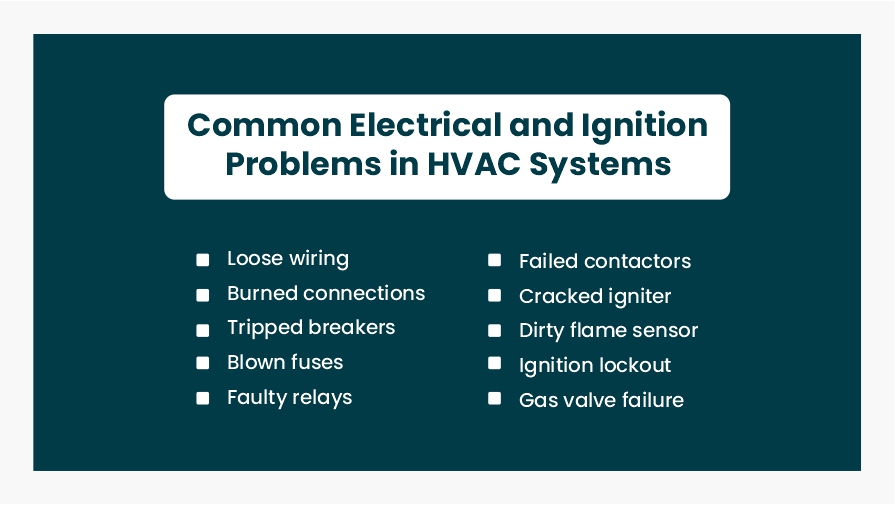
Electrical problems occur when power cannot move reliably through the system. Over time, wiring and electrical components are exposed to heat, vibration, and wear, which can lead to failures. One of the most common issues is loose or burned wiring connections, which interrupt power delivery and cause the system to stop responding.
Blown fuses or tripped circuit breakers are also frequent problems. These usually occur when the system experiences a power surge, electrical overload, or short circuit. When this happens, the HVAC unit may not turn on at all or may shut off suddenly during operation.
Other common electrical issues include failing contactors or relays, which prevent power from reaching motors and heating components. Corroded terminals, damaged insulation, and inconsistent voltage supply can further disrupt normal operation. In many cases, these problems cause the system to start and stop randomly or fail to respond to thermostat commands.
Ignition issues directly affect the heating function of an HVAC system. These problems occur when the system cannot properly start the heating process or safely confirm that heating is active.
A very common issue is a worn or cracked igniter that no longer sparks or glows correctly. When the igniter fails, the system cannot light the burner, and heating will not begin. Another frequent problem is a dirty or faulty flame sensor, which fails to detect the flame even when ignition occurs. When this happens, the system shuts down immediately as a safety measure.
Additional ignition problems include ignition switches not engaging, delayed ignition, or gas valves failing to open during startup. Repeated ignition failures often trigger a system lockout, leaving the home without heat until the issue is resolved.
The control board is responsible for managing communication between the thermostat, ignition system, blower, and safety sensors. When the control board fails, multiple system functions are affected at once. Common control board issues include:
These problems can cause delayed startup, random shutdowns, or complete system non-response. In some cases, the system may display error codes but still fail to operate correctly.
Partial control board failures may affect only certain components, such as the blower or ignition, while full board failure prevents the HVAC system from functioning entirely. Because the control board controls critical operations, even minor damage can lead to widespread system disruption.
Electrical and ignition systems are responsible for powering the HVAC unit, starting heating operations, and maintaining safe, controlled performance. Every heating cycle depends on a precise sequence of electrical signals and ignition responses. If any step in this sequence fails, the system will not operate correctly—or will shut down entirely for safety.
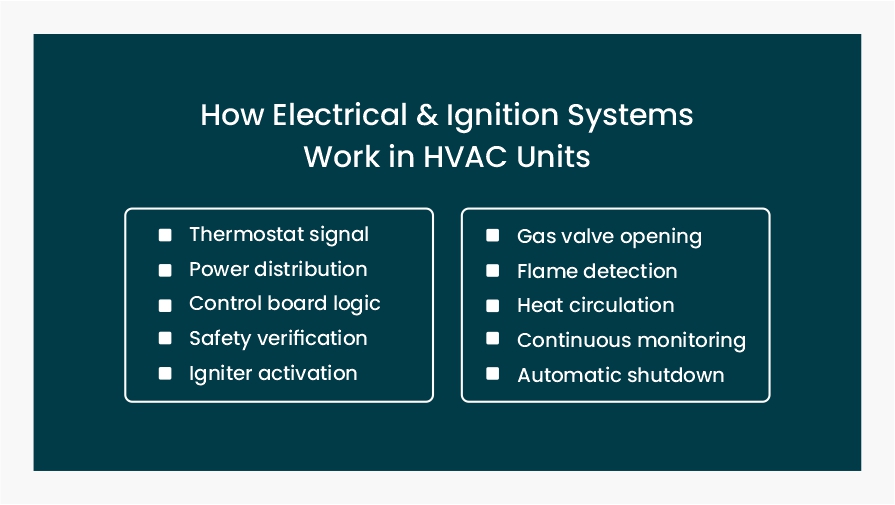
The electrical system supplies power and controls communication between all HVAC components. It ensures that commands from the thermostat are delivered correctly and that each part activates in the proper order. Key responsibilities of the electrical system include:
The heating cycle begins at the thermostat. When indoor temperature drops below the set level, the thermostat sends an electrical signal to the HVAC system. This signal:
The control board acts as the system’s central controller. It receives the thermostat signal and determines whether the system can operate safely. Before allowing heating to begin, it checks that all required conditions are met. The control board also controls timing, ensuring each component activates in the correct order. When a fault is detected, it immediately stops the system to prevent damage or unsafe operation.
Before ignition begins, the system performs several built-in safety checks. These checks ensure that airflow is adequate and that all protective switches are functioning correctly. Only when these conditions are confirmed does the control board allow the ignition system to activate. If any safety check fails, the system remains off to avoid hazards.
Once electrical checks are complete, the ignition system begins the heating process. Modern HVAC units use electronic ignition instead of standing pilot lights. The ignition system:
After ignition, the flame sensor confirms that heating is occurring safely. The flame sensor:
If the flame sensor does not detect a flame—even if one exists—the system shuts down immediately to prevent gas buildup.
Throughout the heating cycle, the electrical system monitors internal conditions. It tracks airflow, temperature levels, and component performance. If abnormal conditions occur, such as overheating or pressure loss, the system shuts down automatically. This continuous monitoring protects both the HVAC unit and the home.
When the thermostat reaches the desired temperature, it signals the system to stop heating. The gas supply shuts off first, followed by the igniter. The blower continues running briefly to remove residual heat from the system. After this, the HVAC unit powers down until the next heating demand.
Diagnosing electrical and ignition problems requires careful inspection and targeted testing to pinpoint the exact cause. Since these systems control startup, operation, and safety shutdowns, accurate diagnosis helps avoid unnecessary part replacements and ensures dependable performance. A proper diagnostic process follows a logical sequence, starting with simple checks and moving toward deeper system testing.
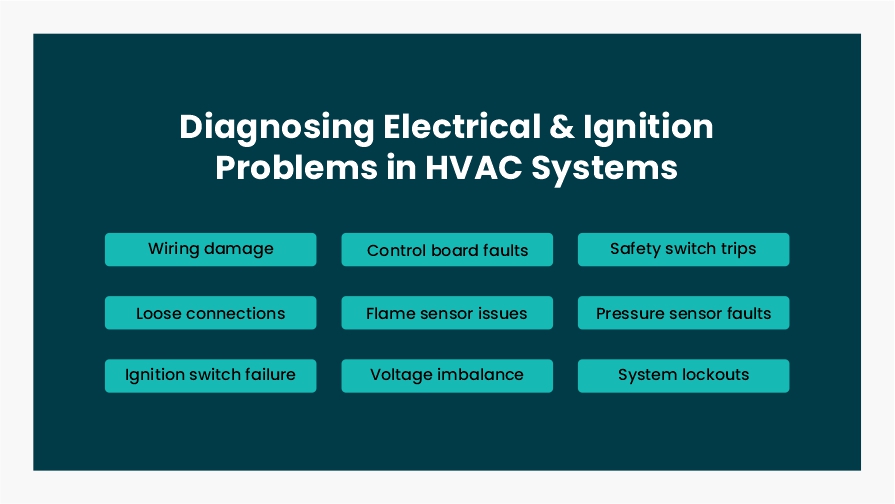
The first step is inspecting visible wiring and electrical connections inside the HVAC unit. Signs such as burn marks, frayed insulation, melted wire coverings, or discoloration often indicate overheating or electrical strain. Loose or corroded connections can interrupt power flow, especially in systems that operate 1,500 or more hours per year. Even minor wiring issues can prevent signals from reaching critical components.
The ignition switch is tested to confirm it sends power when heating is requested. A multimeter is used to check continuity and signal output. If the switch fails to send the correct signal, the heating sequence cannot begin. This test typically takes 10–15 minutes and quickly confirms whether the ignition switch is functioning properly or failing under load.
The control board is visually inspected for scorch marks, corrosion, cracked solder joints, or loose terminals. Technicians also review diagnostic error codes, which indicate communication failures between components. Control board issues are especially common after power surges, lightning strikes, or moisture exposure, and they often cause multiple symptoms at once.
The flame sensor is inspected and tested to confirm it can properly detect a burner flame. Dirt, oxidation, or improper positioning can prevent the sensor from sending confirmation signals. During diagnosis, technicians verify sensor readings while the system attempts ignition. A faulty flame sensor often causes the system to ignite briefly and shut down repeatedly.
Power supply testing ensures the HVAC system is receiving stable and correct voltage. Low voltage, fluctuating current, or imbalanced power can prevent ignition components and control boards from operating correctly. Voltage testing helps rule out external electrical issues before internal components are replaced.
Safety switches and pressure sensors are checked to confirm they are opening and closing properly. These devices prevent operation when unsafe conditions are detected, such as restricted airflow or improper venting. If a sensor sends a false shutdown signal, the system will not allow ignition, even when other components are functioning.
Many modern HVAC systems store error codes when ignition or electrical faults occur. These codes provide valuable insight into where the failure happened in the startup sequence. Diagnosing lockout conditions helps determine whether the issue is intermittent, persistent, or caused by repeated failed ignition attempts.
Fixing electrical and ignition issues requires addressing the exact component causing the failure. These repairs focus on restoring safe power flow, reliable startup, and proper system communication. Once the faulty part is corrected, the HVAC system can return to stable and efficient operation.
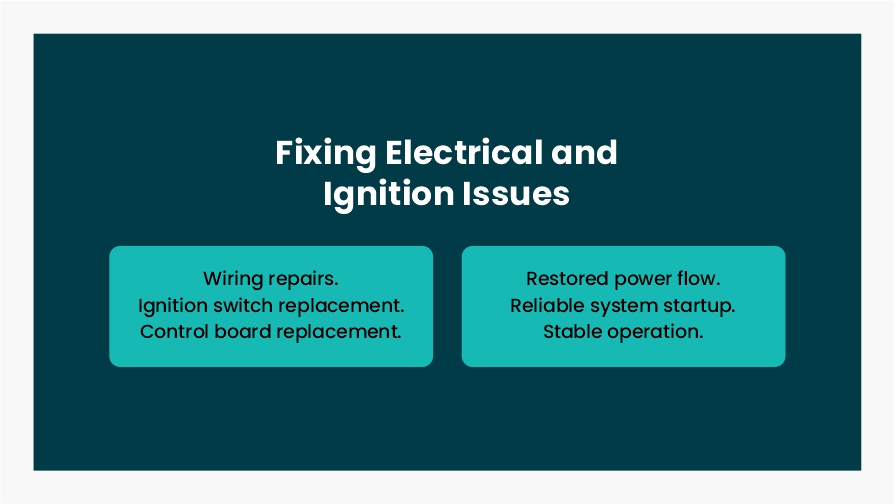
Damaged or worn wiring must be repaired or replaced to restore proper electrical flow. Technicians remove frayed wires, tighten loose connections, and replace sections affected by heat or corrosion. This step is critical because faulty wiring can cause repeated shutdowns or electrical shorts if left unresolved.
When the ignition switch fails, the system cannot begin the heating cycle. Replacing the switch restores the furnace’s ability to ignite safely and consistently. This repair typically takes 30–60 minutes and immediately resolves issues like no heat or repeated startup failures.
A damaged control board must be replaced to restore communication between system components. Since the control board manages startup, airflow, and safety checks, replacement ensures smooth and predictable operation. Control board replacement usually takes 1–2 hours, depending on system access and wiring layout.
The cost of electrical and ignition repairs depends on which component has failed and how complex the repair is. Minor issues can be resolved quickly, while control-related problems may require more time and parts. Below is a clear breakdown to help homeowners plan ahead.
Wiring repairs typically cost between $100 and $500, depending on how much wiring is damaged. Simple fixes like tightening loose connections cost less, while replacing burnt or frayed wires increases labor time. Wiring issues are common in systems older than 10 years.
Replacing an ignition switch usually costs $150 to $400, including parts and labor. This repair restores the system’s ability to start heating properly. In most cases, the replacement takes under 1 hour and immediately resolves no-heat problems.
Control board replacement is the most expensive electrical repair, ranging from $300 to $1,200. The cost varies based on system brand, model, and board complexity. Since the control board manages multiple system functions, accurate replacement is critical for stable operation.
| Repair Type | Typical Cost Range | What Affects Cost |
|---|---|---|
| Wiring Repairs | $100 - $500 | Extent of wire damage, labor time |
| Ignition Switch Replacement | $150 - $400 | Switch type, system access |
| Control Board Replacement | $300 - $1,200 | System model, board complexity |
Electrical and ignition issues can bring your HVAC system to a complete stop, affecting comfort, safety, and energy efficiency. Problems like faulty wiring, failed ignition switches, or damaged control boards should never be ignored, as they often worsen over time and lead to costly breakdowns. Timely diagnosis and professional repairs help restore reliable system startup, stable operation, and proper temperature control. Addressing these issues early not only protects your HVAC system but also ensures your home stays comfortable and safe when you need it most.
If your HVAC system won’t turn on, the most common causes are a faulty ignition switch, damaged wiring, or a failed control board. These issues prevent power from reaching key components. A professional technician can quickly diagnose the problem and restore proper startup.
A faulty ignition switch often causes the system to click but never start, produce no heat or cooling, or display ignition-related error codes. In many cases, the system shuts down within 5–10 seconds of attempting to start. A multimeter test is used to confirm ignition failure.
HVAC electrical repairs are not safe to handle without proper training. Components like wiring, control boards, and ignition systems carry live power and safety risks. Hiring a certified HVAC technician helps prevent electrical hazards and further system damage.
Replacing an HVAC control board usually takes 1 to 3 hours, depending on system access and wiring complexity. During replacement, the technician also checks related components to ensure the new board functions correctly. This helps prevent repeat failures after repair.
Join our mailing list for exclusive updates, expert tips, and special offers tailored to your needs. Be the first to know about the latest in home services.

Renovize Home is a platform that supports homeowners from planning to renovation. Whether it’s Renovize AI for guidance or a one-on-one call with Pro Finder, we understand your project and match you with local contractors tailored to your needs.
Who We Are
About Renovize HomeGet in TouchHomeownwer Support:
Coming Soon!
General Inquiries:
support@renovizehome.com
Head Office:
24 Greenway Plaza, STE 1800M, Houston, TX 77046.