
Explore All
BROWSE BY CATEGORY
Interior
Exterior
Home Essentials
Homeowner Tools
Blogs & Guides
Find a Pro
Book Your Appointment Now
Home Essentials
About Renovize Home
Explore All
BROWSE BY CATEGORY
Interior
Exterior
Home Essentials
Homeowner Tools
Blogs & Guides
Find a Pro
Book Your Appointment Now
Home Essentials
About Renovize Home
Last Updated 2026-01-23
A reliable furnace is essential for keeping your home warm during cold months, especially in regions with harsh winters. On average, a properly installed furnace can last 15 to 20 years, but only if it's maintained well. Whether you're installing a new system or repairing an existing one, ensuring that it's efficient and up-to-date is key to saving energy and avoiding high utility bills.
Table of Contents
What Is Central Heating/Furnace Installation and Repair?
How Central Heating/Furnaces Work
Process of Furnace Installation
Furnace Repair and Maintenance
Benefits of Proper Furnace Installation and Repair
Costs of Furnace Installation and Repair
When Should You Repair or Replace Your Furnace?
Who Needs Furnace Installation and Repair?
Final Takeaway
Central heating or furnace installation and repair involve setting up or fixing the heating system that keeps your entire home warm. There are three main types of furnaces: gas, electric, and oil. These systems work by heating air and circulating it through the home using ducts.
For optimal performance, efficient airflow and properly functioning components, such as the blower motor, heat exchanger, and thermostat, are essential. Regular installation and timely repairs ensure reliable, cost-effective heating, reducing energy consumption and preventing unexpected breakdowns during cold weather. Proper installation can improve the efficiency of your furnace by up to 30%, ensuring that your home stays warm without wasting energy.
Central heating systems rely on a furnace to generate heat and distribute it throughout your home. While the basic principle remains the same, heating air and circulating it via ducts the way each type of furnace works can differ depending on the fuel used. Here’s a breakdown of how each type of furnace operates:
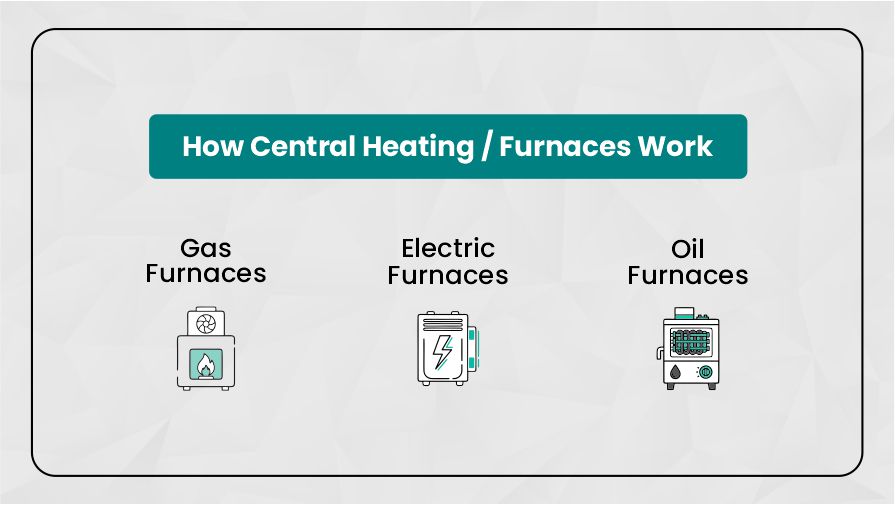
Gas furnaces burn natural gas to generate heat. The process starts when gas is ignited in the burner, and the heat exchanger transfers the heat to the air. The blower fan then circulates the warm air throughout the home. Gas furnaces are the most common choice due to their energy efficiency, often providing 80-98% efficiency. They are typically cheaper to operate than electric or oil furnaces, especially in areas where natural gas is readily available.
Electric furnaces use electric coils to generate heat. When electricity flows through the coils, they heat up, and a blower fan distributes the warm air. These furnaces are typically more expensive to run, especially in regions with high electricity costs. However, they are simpler to install and require no fuel supply other than electricity, making them a good option for smaller homes or areas without access to gas or oil. Installation costs for electric furnaces range from $1,500 to $3,500.
Oil furnaces burn oil to create heat. Similar to gas furnaces, the heat generated is transferred through a heat exchanger and circulated through ducts. Oil furnaces are less common than gas but still used in some areas where natural gas is not available. They can be more expensive to maintain due to the cost of oil and the need for regular cleaning. Oil furnaces are typically more costly to install, with prices ranging from $3,000 to $7,000.
| Furnace Type | How It Works | Efficiency Range | Installation Cost |
|---|---|---|---|
| Gas Furnace | Burns natural gas to produce heat | 80% – 98% | $2,500 – $6,000 |
| Electric Furnace | Uses electric heating coils to warm air | 100% (but higher operating cost) | $1,500 – $3,500 |
| Oil Furnace | Burns heating oil to generate heat | 80% – 85% | $3,000 – $7,000 |
The furnace installation process involves several critical steps to ensure that your system works efficiently and safely. From selecting the right unit to proper setup and testing, the goal is to provide consistent and effective heating. Here's how the process typically unfolds:
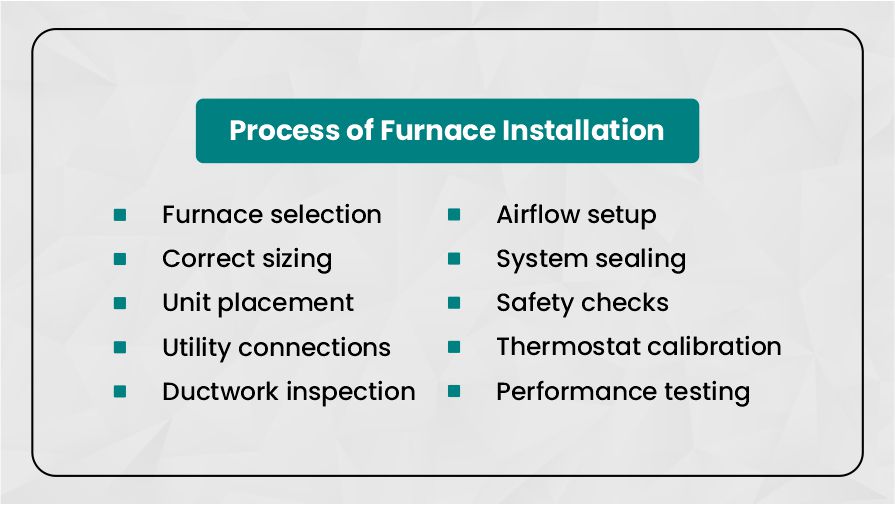
The first step in furnace installation is selecting the right type and size of furnace for your home. A professional technician will assess several factors, including your home’s square footage, insulation, and climate.
For example, a home in a colder climate will require a higher-capacity furnace than one in a warmer region. Additionally, your HVAC technician will help you choose between a gas, electric, or oil furnace based on fuel availability and energy efficiency needs. The correct furnace size is critical for energy savings. An undersized unit will struggle to heat your home, while an oversized unit will waste energy.
Once the furnace is selected, the technician will install it in an appropriate location, typically in a basement, attic, or utility room. The furnace must be positioned to optimize airflow and access to necessary utilities.
The technician will then connect the furnace to the home’s electrical, gas, or oil supply, ensuring all components are securely in place. Installation includes properly sealing and securing ducts, gas lines, and electrical connections to meet local building codes
Proper airflow is essential for efficient heating. The technician will inspect your home’s ductwork to ensure it is correctly sized, sealed, and unobstructed. This ensures that warm air circulates effectively throughout the home.
The technician may recommend duct sealing or even upgrading certain sections to prevent air loss, ensuring that the furnace can distribute air to each room evenly. Poorly maintained ductwork can reduce furnace efficiency by up to 20%, so this step is crucial for maximizing system performance.
After the furnace is installed, the technician will thoroughly test the system to ensure it is operating correctly. This includes checking the ignition system, airflow, and heat production.
The technician will also calibrate the thermostat and make any necessary adjustments to ensure the furnace runs smoothly and efficiently. Once the system passes all tests, the technician will explain how to operate the furnace and advise on proper maintenance.
Furnace repair and maintenance are critical to keeping your heating system running efficiently and extending its lifespan. Regular repairs address issues that arise over time, while routine maintenance ensures your furnace continues to perform at its best. Here’s a look at the essential aspects of furnace repair and maintenance:
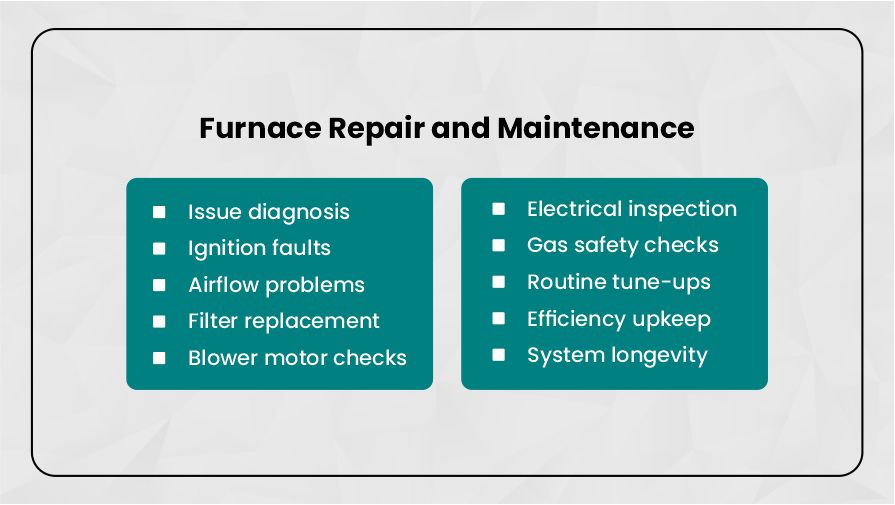
Furnace repairs often begin with diagnosing the problem. Common issues include faulty ignition, poor airflow, or strange noises coming from the system.
A professional technician will inspect the furnace to identify any worn-out components or blockages that may be causing the issue. For example, a failing ignition system could prevent the furnace from starting, while poor airflow may indicate clogged filters or a malfunctioning blower motor. Proper diagnosis helps prevent unnecessary repairs and ensures a quick solution.
Furnaces can develop several issues over time. Here are some of the most common furnace repairs:
Routine maintenance is essential to keep your furnace running efficiently and extend its lifespan. Regular maintenance tasks include:
Routine furnace maintenance can prevent costly breakdowns and ensure that your system operates at peak efficiency. Scheduling a yearly tune-up can save you up to 30% on energy costs and prevent major repairs.
Proper furnace installation and timely repairs offer several benefits that not only improve the comfort of your home but also save you money in the long run. Below are some key advantages of maintaining and installing your furnace correctly:
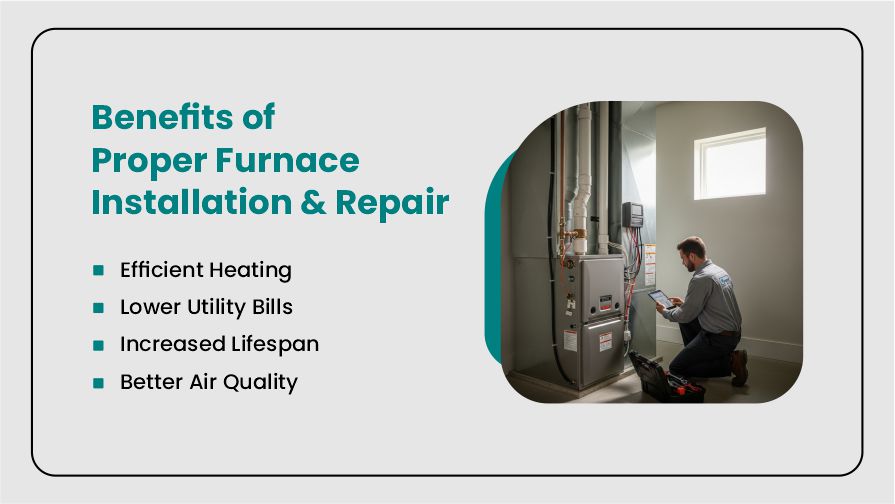
Proper furnace installation ensures that your system operates efficiently, providing even heating throughout your home. An efficiently installed furnace reduces the amount of energy required to heat your space, ensuring that all rooms receive consistent warmth. With the right size and setup, your furnace won’t have to work overtime, helping you maintain comfortable temperatures without wasting energy.
A well-maintained furnace uses less energy, which directly impacts your utility bills. By fixing issues like clogged filters, worn-out blower motors, or faulty thermostats, your furnace won’t have to work harder to heat your home. Regular maintenance ensures optimal system performance, potentially saving you 10-30% on heating costs.
Timely repairs and regular maintenance can significantly extend the lifespan of your furnace. Most furnaces last 15-20 years, but routine care like changing filters, cleaning components, and checking for gas or electrical issues can add years to its service life. By preventing major breakdowns, you’ll avoid the need for premature replacements, which can be costly.
Proper airflow and clean filters help prevent the circulation of dust, dirt, and allergens, which can impact your home's indoor air quality. When the furnace operates efficiently, it filters and circulates air more effectively, reducing the chances of airborne irritants. Regularly replacing filters ensures that your furnace contributes to a healthier home environment, especially important for those with allergies or respiratory issues.
The cost of furnace installation, repairs, and maintenance can vary based on the type of system, the complexity of the installation, and the severity of any issues. Understanding these costs helps homeowners budget effectively and make informed decisions about their heating systems. Here’s a breakdown of the typical costs involved:
Installing a new furnace is an investment that typically costs between $2,500 and $6,000, depending on factors like the furnace type, system size, and the complexity of installation.
For example, a gas furnace installation usually falls on the lower end of the spectrum, while oil furnaces or high-efficiency models may cost more due to additional installation steps. The cost also includes labor, which may vary by region, and any necessary modifications to your existing ductwork or venting.
Furnace repair costs can range from $100 to $1,000, depending on the nature of the issue. Simple repairs, such as replacing a thermostat or cleaning air filters, may cost on the lower end. More complex repairs, like replacing a blower motor, fixing an ignition system, or repairing a heat exchanger, can be more expensive. Here’s a general idea of repair costs:
| Repair Type | Average Cost |
|---|---|
| Ignition Issues | $150 – $400 |
| Clogged Air Filters | $50 – $150 |
| Blower Motor Replacement | $300 – $900 |
| Heat Exchanger Replacement | $600 – $1,000 |
Routine furnace maintenance is crucial for extending the lifespan of your heating system and ensuring it operates efficiently. Annual tune-ups typically cost between $100 and $300, depending on the services provided.
A standard maintenance check includes inspecting components, cleaning the system, checking for wear and tear, and ensuring the furnace is operating safely. Regular maintenance can prevent costly repairs and keep your furnace running efficiently, reducing your overall energy bills.
Knowing when to repair or replace your furnace is essential for maintaining a comfortable home and preventing unnecessary costs. Here are key signs that it may be time for a repair or full replacement:
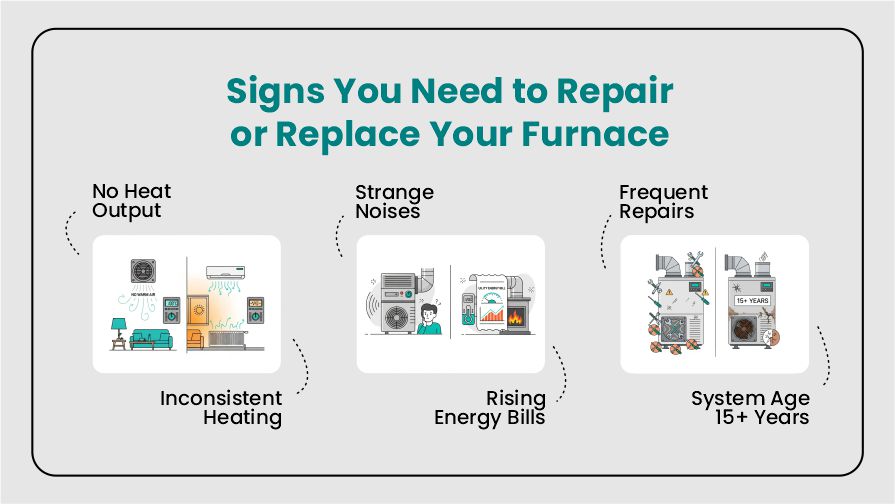
If your furnace is not producing heat or struggling to maintain a consistent temperature, it could be due to a malfunctioning component. This issue could be as simple as a clogged air filter or as complex as a broken heat exchanger. If repairs can’t restore proper heating, or if the system is continually failing, it may be more cost-effective to replace the furnace rather than repeatedly repairing it. If the furnace is under 15 years old, repairing it might be sufficient, but older units often require more frequent repairs.
Unusual noises like banging, grinding, or squealing are often signs of internal issues with the furnace. These noises could indicate worn-out components, such as a broken belt, malfunctioning blower motor, or loose parts. While some noises can be fixed with a simple repair, persistent or loud sounds are typically a sign that the furnace is nearing the end of its lifespan. Ignoring these sounds can lead to further damage and higher repair costs.
A sudden spike in energy bills, even though your usage hasn’t changed, is a common sign that your furnace is no longer operating efficiently. An inefficient furnace uses more energy to heat your home, leading to higher utility bills. Common causes of this inefficiency include poor insulation, wear on the furnace components, or a buildup of dirt and debris. Regular maintenance can often resolve minor issues, but if the problem persists, it may be time to consider a replacement.
Furnaces older than 15 years are typically less energy-efficient and more prone to breakdowns. Newer models are designed to be more energy-efficient, often saving homeowners up to 20-30% on heating costs. If your furnace is over 15 years old and frequently requires repairs, it may be time to invest in a new, more energy-efficient model to reduce long-term costs and improve comfort.
Furnace installation and repair services are essential for homeowners dealing with a malfunctioning furnace or those looking to upgrade to a more efficient heating system. If your furnace is struggling to maintain consistent heat or has become unreliable, it’s time to call in a professional.
Additionally, homeowners seeking to improve energy efficiency and reduce the risk of costly breakdowns should consider professional furnace installation and repair. Ensuring your furnace is installed and maintained correctly will not only enhance comfort but also help reduce long-term heating costs.
Proper furnace installation and timely repairs are crucial for maintaining a comfortable and energy-efficient home. Whether you're installing a new system or addressing common issues like inconsistent heating, strange noises, or high energy bills, addressing furnace problems promptly can save you money and ensure your system lasts longer. Regular maintenance and professional repair services help prevent costly breakdowns and keep your furnace running at peak efficiency. If you’re experiencing furnace issues or planning an installation, don't hesitate to reach out to a trusted HVAC professional for a thorough inspection and expert service.
If your furnace isn’t heating, the issue could be with several components, such as the ignition system, blower motor, or a clogged air filter. A faulty ignition system may prevent the furnace from starting, while a damaged blower motor could stop air from circulating. Clogged filters can restrict airflow, causing the furnace to overheat. A professional technician will diagnose and repair the problem to restore heat to your home.
Furnace installation typically takes 4 to 8 hours, depending on the complexity of the system and the layout of your home. This time frame includes removing the old furnace (if necessary), installing the new unit, connecting the necessary components, and performing initial tests to ensure everything is functioning properly. If your home requires additional modifications, such as updating ductwork or electrical connections, the installation may take longer.
While some minor issues, like changing filters, can be handled by homeowners, furnace repairs should generally be left to professionals. Handling gas, electrical, or high-temperature components without proper knowledge can be dangerous. A licensed technician has the skills and tools to safely diagnose and fix furnace problems, preventing further damage or safety hazards.
It’s recommended to have your furnace serviced annually to ensure it runs efficiently and lasts longer. Regular maintenance helps identify potential issues before they become major problems, and it can extend the lifespan of your furnace by 5-10 years. An annual tune-up typically includes cleaning, checking the ignition system, inspecting the blower motor, and ensuring that the furnace operates safely and efficiently.
Join our mailing list for exclusive updates, expert tips, and special offers tailored to your needs. Be the first to know about the latest in home services.

Renovize Home is a platform that supports homeowners from planning to renovation. Whether it’s Renovize AI for guidance or a one-on-one call with Pro Finder, we understand your project and match you with local contractors tailored to your needs.
Who We Are
About Renovize HomeGet in TouchHomeownwer Support:
Coming Soon!
General Inquiries:
support@renovizehome.com
Head Office:
24 Greenway Plaza, STE 1800M, Houston, TX 77046.