
Explore All
BROWSE BY CATEGORY
Interior
Exterior
Home Essentials
Homeowner Tools
Blogs & Guides
Find a Pro
Book Your Appointment Now
Home Essentials
About Renovize Home
Explore All
BROWSE BY CATEGORY
Interior
Exterior
Home Essentials
Homeowner Tools
Blogs & Guides
Find a Pro
Book Your Appointment Now
Home Essentials
About Renovize Home
Last Updated 2025-12-23
Installing a central heating or furnace system involves choosing the right type for your home’s size, layout, and heating requirements. Common options include gas furnaces, electric furnaces, oil furnaces, and heat pumps, each with its own efficiency ratings and operating costs. For instance, gas furnaces typically range from 80% to 98% efficiency, while electric systems are nearly 100% efficient but may have higher energy costs depending on local electricity rates.
The costs for installing these systems vary widely based on the type, size, and complexity of the installation. On average, homeowners can expect to pay $3,000–$7,000 for a mid-range gas furnace installation, while high-efficiency models or large homes can push costs above $10,000. Despite the upfront investment, central heating systems provide long-term benefits, including energy savings, improved comfort, and increased home value. Well-maintained furnaces can last 15–20 years, offering reliable performance and reducing the need for frequent repairs.
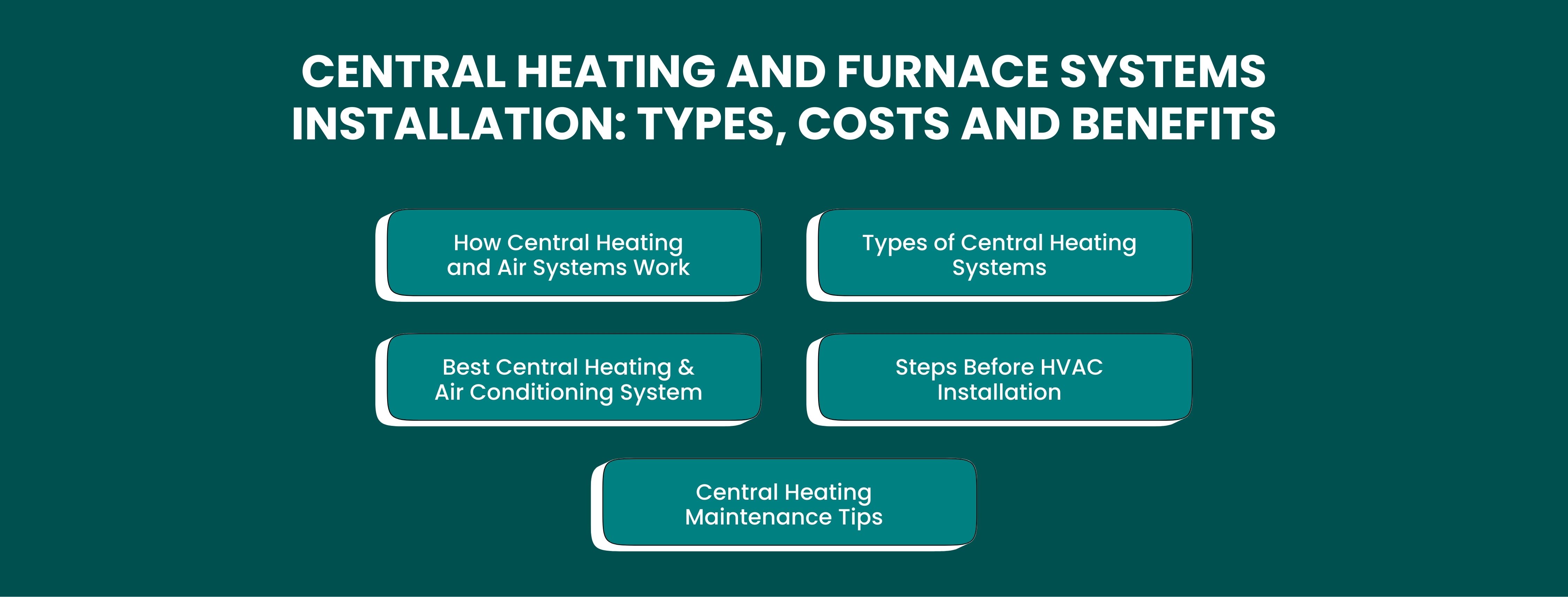
Table of Contents
What Is Central Heating?
How Central Heating and Air Systems Work
Types of Central Heating Systems
What is the Best Central Heating and Air Conditioning System
Central Heating and Cooling Integration
What Steps Should Homeowners Take Before Installation?
How to Install Central Heating and Air Conditioning
Central Heating System Costs
Central Heat vs Heat Pump
Central Heat vs Space Heaters
Central Heating Maintenance and Service
When to Upgrade or Replace Central Heating
Final Views
Central heating is a system that provides consistent warmth throughout a home from a single heat source. Unlike space heaters or localized units, it distributes heat evenly to multiple rooms using ducts, pipes, or radiators. This ensures every part of the home remains comfortable, particularly during colder months when maintaining a steady indoor temperature is essential.
Central heating systems are made up of several key components that work together to deliver warmth efficiently:
By combining these components, central heating systems offer a reliable, comfortable, and energy-efficient solution for keeping your home warm throughout the winter.
Central heating and air systems provide consistent comfort throughout a home by distributing heat or cooled air from a single source to multiple rooms. These systems are designed to maintain a steady temperature while optimizing energy efficiency, making them essential for year-round indoor comfort.
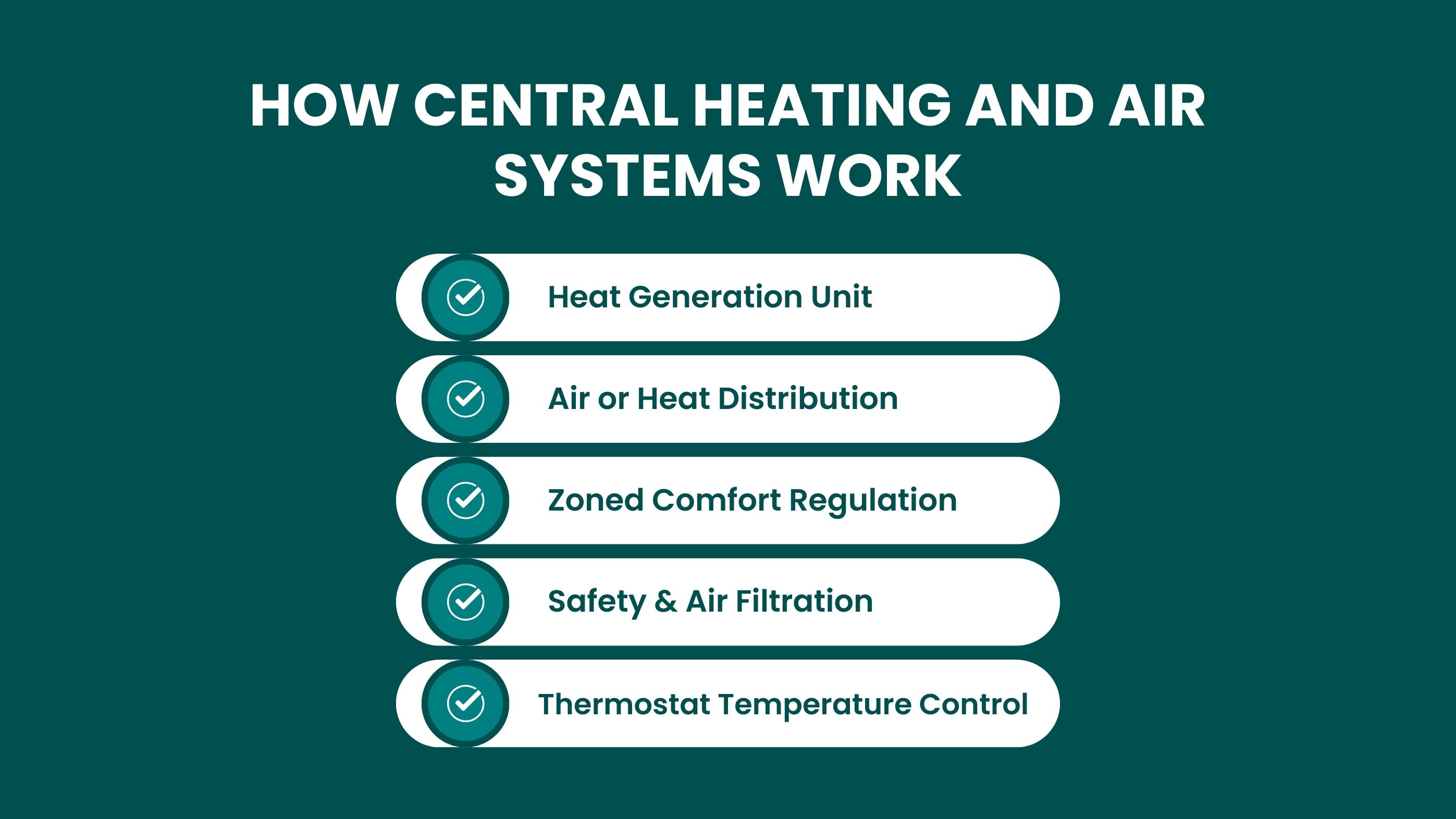
The heating process starts at the main unit, which could be a furnace, boiler, or heat pump:
After the heat is generated, it is distributed throughout the home using ducts, vents, or piping systems:
Thermostats or smart controls regulate the system, ensuring optimal comfort and efficiency:
Modern systems include safety and efficiency mechanisms to ensure reliability and indoor air quality:
By combining controlled heat generation, efficient distribution, and smart regulation, central heating and air systems deliver a comfortable and energy-efficient environment for any home.
Central heating systems come in various types, each designed to suit different home sizes, layouts, and heating needs. Understanding the differences helps homeowners choose the most efficient and cost-effective system for their space. These systems can be broadly categorized into furnaces, boilers, heat pumps, and electric central heating systems.
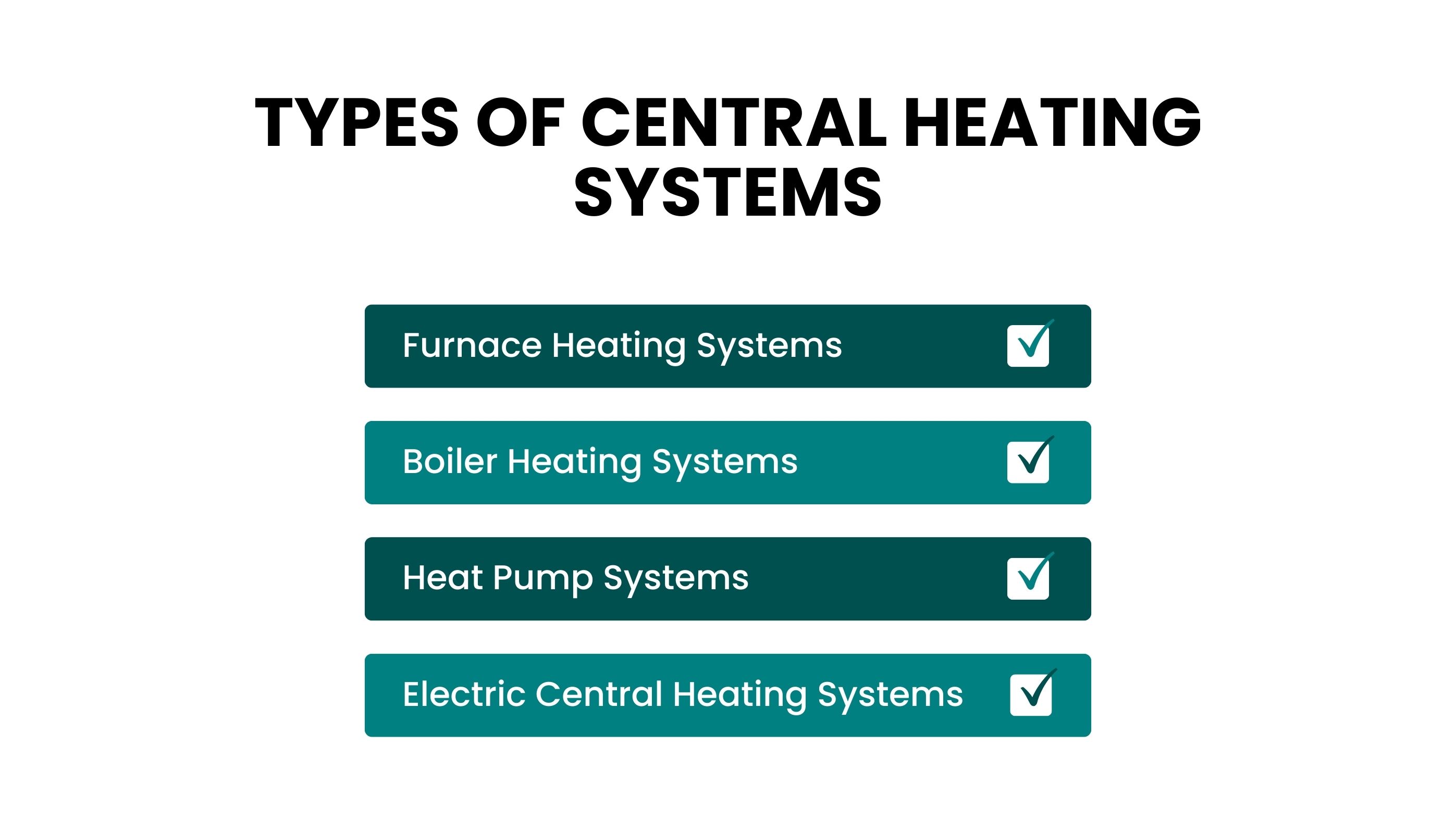
Furnaces are one of the most common types of central heating systems. They heat air and distribute it throughout the home via ducts and vents. Modern gas furnaces typically have efficiency ratings between 80–98%, meaning most of the fuel is converted into usable heat. Oil furnaces are also used in some areas and can provide reliable heat in regions without access to natural gas. Furnaces are ideal for homes that already have ductwork installed. Some main key features are:
Boilers use water or steam to provide heat, which is then circulated through radiators, baseboards, or underfloor heating panels. High-efficiency boilers can achieve ratings up to 95–98%, making them very energy-efficient. Hydronic systems are quiet, provide even heat, and are excellent for homes that prefer a gentle, radiant warmth rather than forced air. Its key features are:
Heat pumps are versatile systems that can both heat and cool your home. They transfer heat from outside air or the ground into your home, providing an energy-efficient alternative to traditional furnaces or boilers. Air-source heat pumps are suitable for mild climates, while ground-source (geothermal) heat pumps are more efficient in colder regions. Heat pumps can achieve COP (Coefficient of Performance) ratings of 3–5, meaning they deliver 3–5 times more heat energy than the electricity they consume. Here are some key features are:
Electric systems use electric resistance elements to heat air or water. While generally more expensive to operate than gas or heat pumps, they are easier to install, require minimal maintenance, and are suitable for homes without gas lines. Some electric systems also integrate with solar panels, reducing long-term energy costs. Key features include:
Choosing the best central heating and air conditioning system depends on your home size, climate, budget, and energy efficiency priorities. No single system is perfect for every household, but understanding the strengths and limitations of each option can help you make an informed decision. Modern systems are designed to provide consistent comfort, lower energy costs, and long-term reliability, so the “best” system is one that aligns with your specific needs.
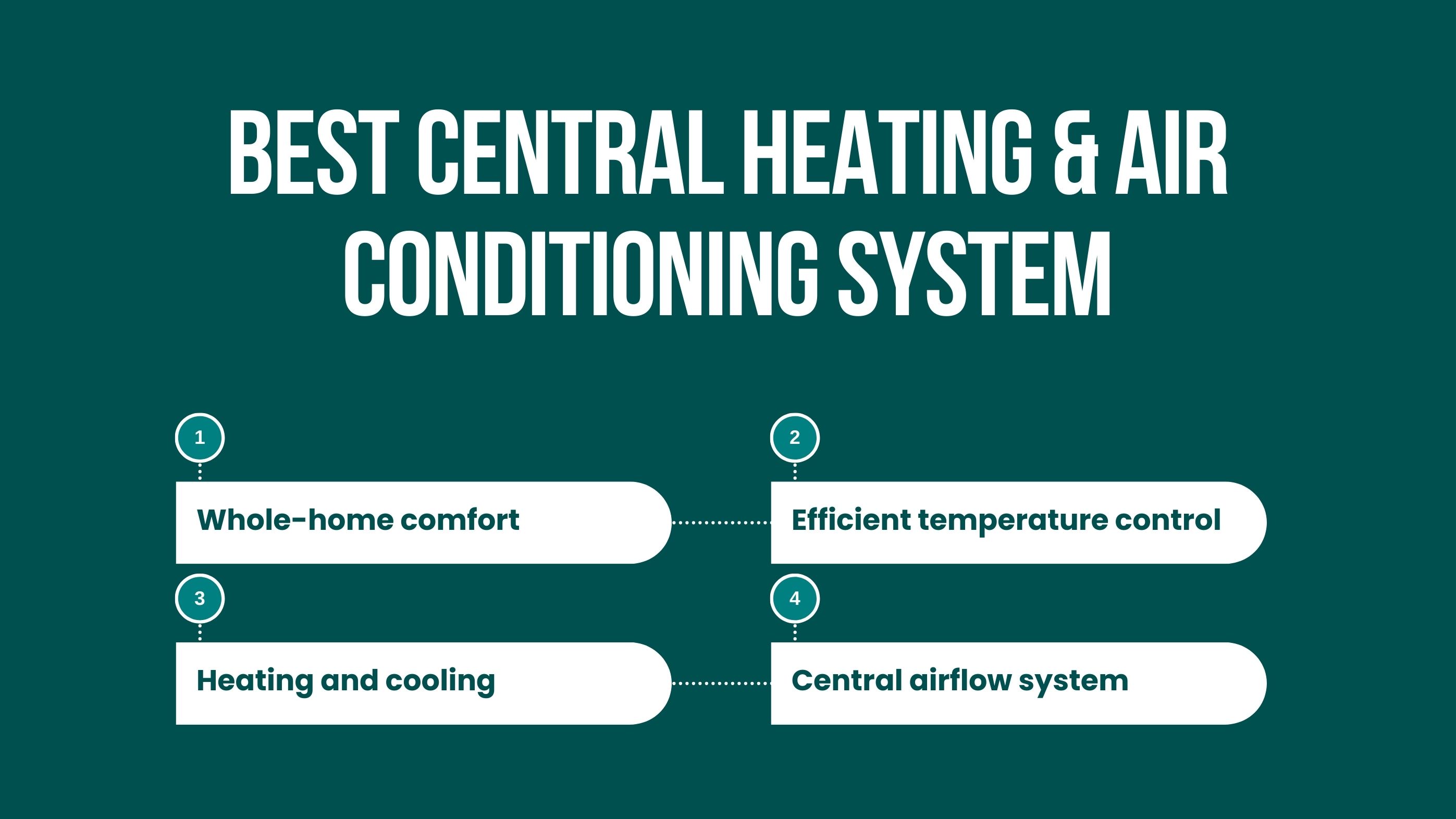
When selecting a system, consider these main factors:
These are the top-rated systems, chosen for their long lifespan and high energy efficiency.
Central heating and cooling integration combines both systems into a single setup, ensuring year-round comfort while improving energy efficiency. Instead of running separate units for winter and summer, an integrated system shares components like ductwork, thermostats, and control mechanisms, reducing energy waste and simplifying maintenance.
Integrated systems use shared ducts, vents, and sometimes piping to distribute heat and cooled air efficiently. This design ensures consistent temperature across all rooms and reduces energy loss compared to separate units. Streamlined installation also makes maintenance easier over time.
Most integrated systems include programmable or smart thermostats, allowing homeowners to maintain different temperatures in various zones. Multi-zone control can improve energy efficiency by up to 30%, since only occupied areas are actively heated or cooled. For example, bedrooms can remain cooler at night while living areas stay warmer.
Integration also enhances convenience, allowing users to control heating and cooling from a single interface. Many systems support mobile apps or home automation, enabling:
Combining heating and cooling reduces operating costs and simplifies maintenance. Fewer components mean fewer potential points of failure, which can help extend system lifespan. Regular upkeep, such as filter changes and annual inspections, ensures consistent performance and energy efficiency.
Before installing a central heating and cooling system, proper preparation ensures a smooth process, optimal performance, and long-term efficiency. Taking the right steps ahead of time can save time, reduce costs, and prevent potential installation issues.
Homeowners should assess the size of their home, number of rooms, insulation quality, and the existing ductwork. This evaluation helps determine the type and capacity of the system needed. For example, a 2,000 sq. ft. home may require a system with at least 60,000–80,000 BTUs for effective heating. Key considerations include:
Review your current plumbing, ductwork, electrical supply, and venting. Ensuring compatibility with the new system is crucial. Homes with outdated or leaky ductwork may require repairs or upgrades to maximize efficiency and prevent heat or cool air loss.
Compare different system types, including furnaces, boilers, heat pumps, and electric systems, focusing on energy efficiency ratings such as AFUE for heating and SEER for cooling. Important points to consider:
Installation costs vary depending on system type, size, and labor. On average:
Homeowners should plan for both equipment and installation costs, and explore financing, rebates, or energy-efficiency incentives offered by local utilities.
Before finalizing your purchase, have a professional HVAC technician inspect your home. This ensures proper system sizing and identifies potential installation challenges. A professional assessment helps:
Installing a central heating and air conditioning system requires careful planning and professional expertise to ensure efficiency, safety, and long-term performance. The process involves several key steps, from preparing the installation area to testing the system after setup.
Before beginning, clear space around the furnace, air handler, or heat pump and ensure that ductwork, electrical supply, and plumbing lines are accessible. Inspect the area for any needed repairs that could impact installation or system performance. Key considerations include:
The furnace, boiler, or air handler is positioned and connected to the home’s existing infrastructure. Furnaces are mounted in utility areas and connected to ductwork and fuel supply, while boilers link to water or steam pipes. Heat pumps or AC units may be installed outdoors, with refrigerant lines and electrical connections running to the indoor air handler. Technicians ensure units are level, securely mounted, and compatible with the home’s plumbing and electrical setup.
For forced-air systems, ducts are connected from the main unit to each room. Proper sealing of joints and insulation prevents heat loss and maintains efficiency. Hydronic systems use hot water or steam pipes connected to radiators, baseboards, or underfloor panels. Critical points to check:
Thermostats, including smart or programmable models, are installed to regulate temperature, fan operation, and zoning. Considerations for homeowners include:
After installation, the system is tested to ensure proper operation. Technicians check heating and cooling output, airflow or water flow through ducts and pipes, and temperature consistency across all zones. Safety features such as pressure regulators and automatic shut-offs are also verified. Minor adjustments may be made to optimize performance before handing the system over to the homeowner.
The cost of a central heating system varies based on the type of system, home size, energy source, and whether you choose DIY installation or professional setup. Understanding these factors helps homeowners budget effectively and select a system that balances upfront investment with long-term savings.
The main factor affecting cost is the type of system:
Professional installation ensures proper setup, energy efficiency, and safety. Labor costs vary depending on system complexity and location:
Some additional expenses may include:
While high-efficiency systems have higher upfront costs, they often save 10–30% on energy bills compared to older or less efficient models. Regular maintenance also extends system lifespan, typically 15–20 years, helping maximize your investment.
Here’s a clear cost table for central heating systems, following your instructions:
| System Type | Equipment Cost (USD) | Installation/Labor (USD) | Additional Notes |
|---|---|---|---|
| Gas Furnace | $2,500 – $7,500 | - | High-efficiency models may exceed $10,000; efficiency ranges from 80%–98% |
| Boiler | $3,000 – $8,000 | - | High-efficiency or combination boiler models can reach $12,000+ |
| Air-Source Heat Pump | $4,000 – $8,000 | - | Geothermal systems cost $10,000–$25,000+ due to piping and excavation |
| Electric Heating System | $1,500 – $5,000 | - | Higher long-term energy costs depending on electricity rates |
| Additional Costs | Varies ($50 – $2,500) | - | Includes ductwork, thermostat upgrades, permits, and inspection fees |
When choosing a heating system, it’s helpful to understand the basic differences between central heat and heat pump. This comparison provides homeowners with quick context without going into full detail, helping guide decisions based on climate, efficiency, and energy costs.
When considering heating options, homeowners often compare central heat vs space heaters to determine which approach best suits their needs. While central heating provides consistent warmth throughout the home, space heaters offer localized heat for individual rooms or specific areas. Understanding the differences helps decide which solution is most efficient, cost-effective, and convenient.
Regular maintenance is essential to keep a central heating system running efficiently and reliably. Proper care not only extends the lifespan of furnaces, boilers, and heat pumps but also ensures consistent comfort and helps reduce energy bills. Homeowners who schedule routine service can avoid costly repairs and identify potential issues before they become serious problems.
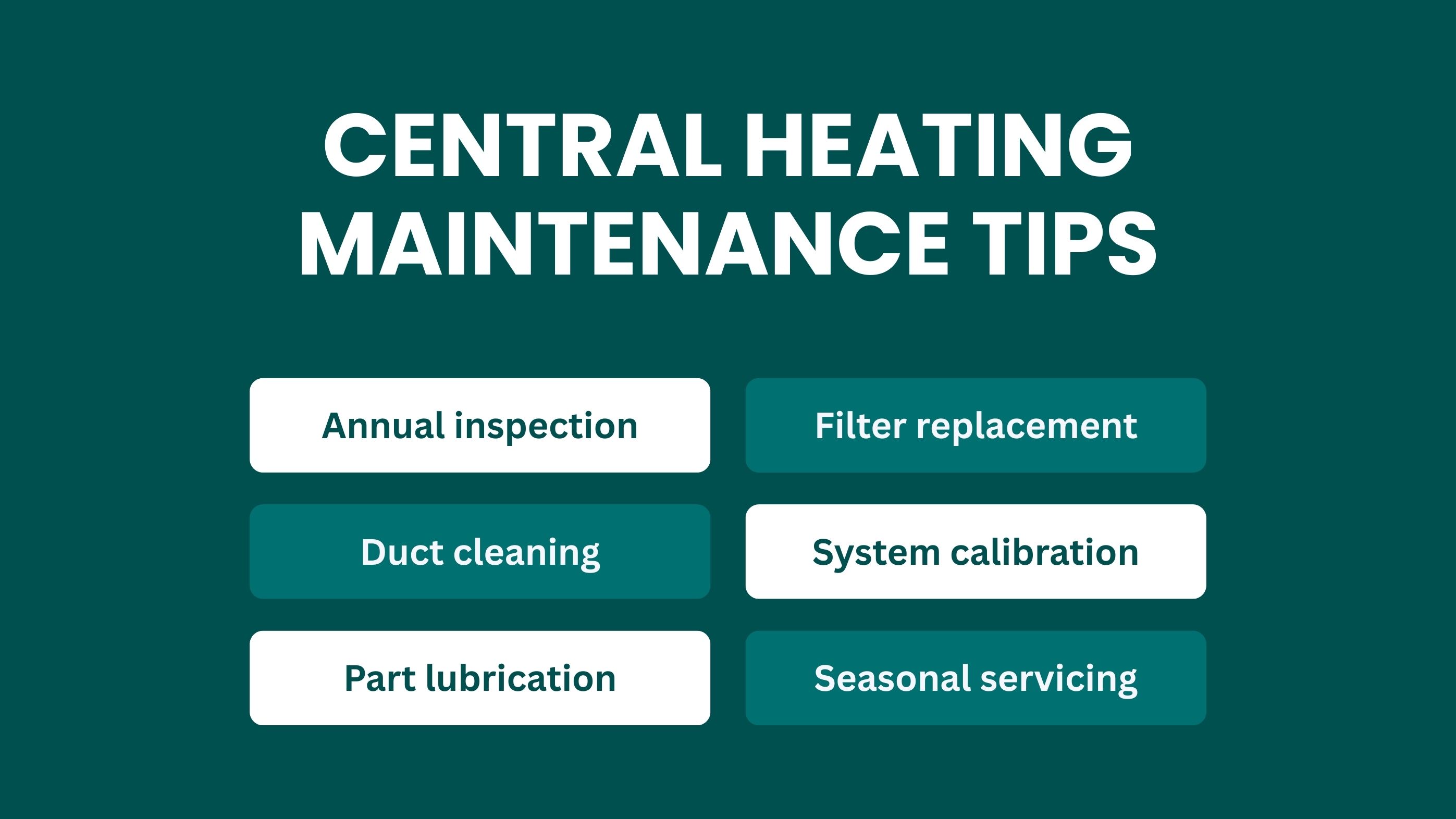
Scheduling a professional inspection at least once a year helps ensure all components are functioning correctly. Technicians check for:
Dirty filters reduce airflow, making the system work harder and increasing energy consumption. Replacing or cleaning filters every 1–3 months, depending on usage, helps maintain efficiency and indoor air quality.
Dust and debris in ducts or vents can block airflow and reduce system performance. Regular cleaning improves heating efficiency and helps prevent uneven temperatures in different rooms.
Technicians can adjust system settings to ensure the heating unit is operating at peak efficiency. Calibration includes checking gas pressure, airflow rates, and thermostat performance. Proper calibration can save 10–15% on energy bills annually.
Blower motors, fans, and moving parts require periodic lubrication. Technicians also check for worn belts, loose connections, or other minor issues that could lead to larger failures if left unaddressed.
Homeowners should be aware of emergency service options and seasonal maintenance, such as winter startup checks or pre-summer inspections for systems that also provide cooling. This ensures the system is ready for high-demand periods.
Understanding when to upgrade or replace your central heating system is essential to maintain comfort, safety, and energy efficiency. Most furnaces, boilers, and heat pumps have a typical lifespan of 15–20 years, but several warning signs may indicate it’s time for a replacement or upgrade. Homeowners should consider both age and performance when deciding whether to install a new central heat and air unit.
Understanding these common questions helps homeowners operate and maintain their central heating systems effectively. Proper installation, routine maintenance, and knowing when to switch the system to ensure optimal comfort and energy efficiency. Choosing the right system and using smart controls can save money, extend system lifespan, and provide reliable warmth throughout the home. Regular checks prevent breakdowns and keep your home cozy all year round.
Central heat and air refers to a system that provides both heating and cooling to a home from a single, centralized unit. Heat is distributed through ducts, vents, or radiators, ensuring consistent temperature across all rooms.
Common causes include a tripped circuit breaker, a faulty thermostat, clogged filters, or pilot/ignition issues. Regular maintenance helps prevent these problems and keeps the system running efficiently.
Yes, central heating is generally more energy-efficient for heating the entire home. Space heaters are best for localized areas but can be costly if used to heat multiple rooms over long periods.
Not always. Some central air systems include integrated heating (like heat pumps), while others provide cooling only. Homes with separate furnaces or boilers will have heating and cooling managed independently.
Homeowners typically switch on central heating when indoor temperatures consistently drop below 68°F (20°C) or when early morning and evening chills make the home uncomfortable. Smart thermostats can automate this process for efficiency.
Join our mailing list for exclusive updates, expert tips, and special offers tailored to your needs. Be the first to know about the latest in home services.

Renovize Home is a platform that supports homeowners from planning to renovation. Whether it’s Renovize AI for guidance or a one-on-one call with Pro Finder, we understand your project and match you with local contractors tailored to your needs.
Who We Are
About Renovize HomeGet in TouchHomeownwer Support:
Coming Soon!
General Inquiries:
support@renovizehome.com
Head Office:
24 Greenway Plaza, STE 1800M, Houston, TX 77046.