
Explore All
BROWSE BY CATEGORY
Interior
Exterior
Home Essentials
Homeowner Tools
Blogs & Guides
Find a Pro
Book Your Appointment Now
Home Essentials
About Renovize Home
Explore All
BROWSE BY CATEGORY
Interior
Exterior
Home Essentials
Homeowner Tools
Blogs & Guides
Find a Pro
Book Your Appointment Now
Home Essentials
About Renovize Home
Last Updated 2026-01-05
A central air conditioning system is designed to cool an entire home using a single, centralized unit that distributes cooled air through a network of ducts and vents. The system works by removing heat from indoor air and releasing it outside. Warm air from inside the home is pulled through return vents, filtered, and passed over cold evaporator coils, where heat is absorbed. The cooled air is then circulated back into living spaces through supply vents. Most central air conditioning systems are capable of cooling a home to a comfortable range of 72–78°F (22–26°C), depending on thermostat settings and outdoor conditions.
Central air conditioning systems are valued for their efficiency, quiet operation, and ability to improve indoor air quality. Modern systems often include high-efficiency ratings, smart thermostat compatibility, and advanced filtration, allowing homeowners to reduce energy use while maintaining comfort. When properly sized and maintained, a central air system can operate efficiently for 15–20 years, making it a long-term solution for whole-home cooling.
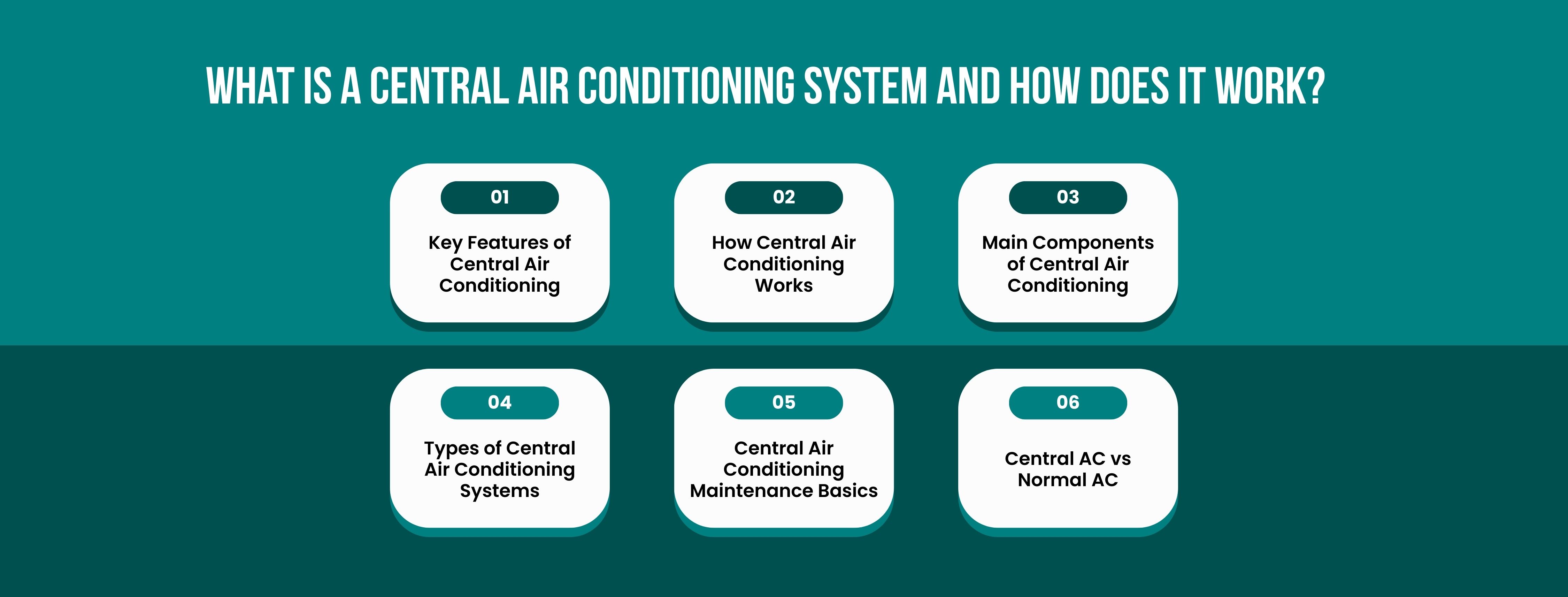
Table of Contents
What a Central Air Conditioning System Is?
How a Central Air Conditioning System Works
Main Components of a Central Air Conditioning System
Types of Central Air Conditioning Systems
Cost of Installing a Central Air Conditioning System
Power Use and Efficiency Considerations
Central Air Conditioning System Maintenance Basics
When Central Air Conditioning System Replacement Is Considered
Common Issues With Central Air Conditioning Systems
How Long a Central Air Conditioning System Lasts
Central Air Conditioning and Heating Systems
What Is The Difference Between Central AC and Normal AC?
Final Words
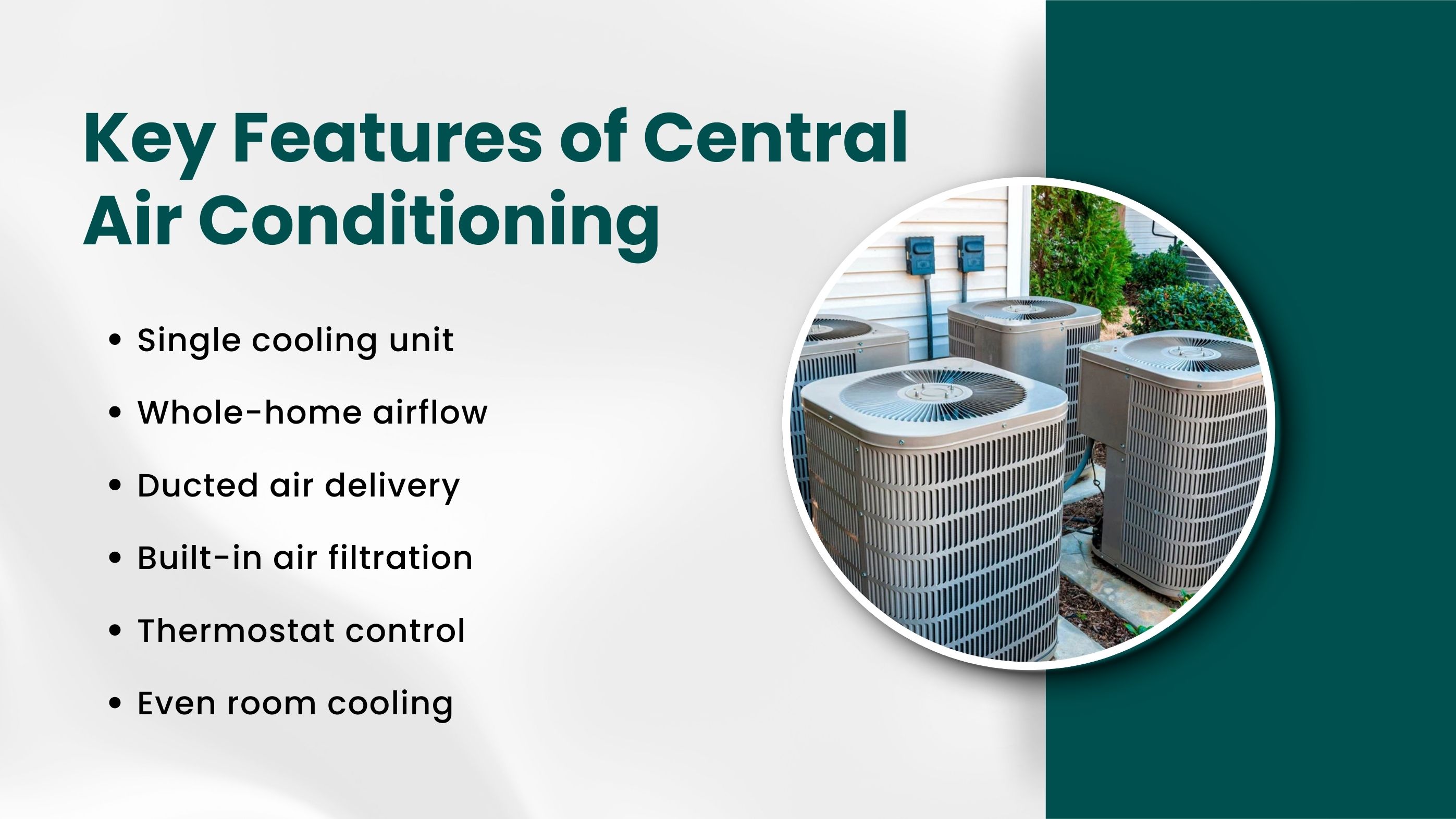
A central air conditioning system is a whole-home cooling solution that uses a single, centralized unit to control indoor temperature across multiple rooms. Instead of cooling spaces individually, the system works as one connected setup, ensuring consistent comfort throughout the house. This centralized design is what makes it different from window or portable air conditioners.
A central system is designed to cool efficiently while maintaining indoor air quality. Common characteristics include:
The cooling cycle begins when warm air from inside the home is pulled through return vents into the system. This air passes over cold evaporator coils, where heat is absorbed and removed. The cooled air is then pushed back through ductwork and released into rooms through supply vents. Meanwhile, the absorbed heat is carried outside and released, allowing the system to keep cooling efficiently.
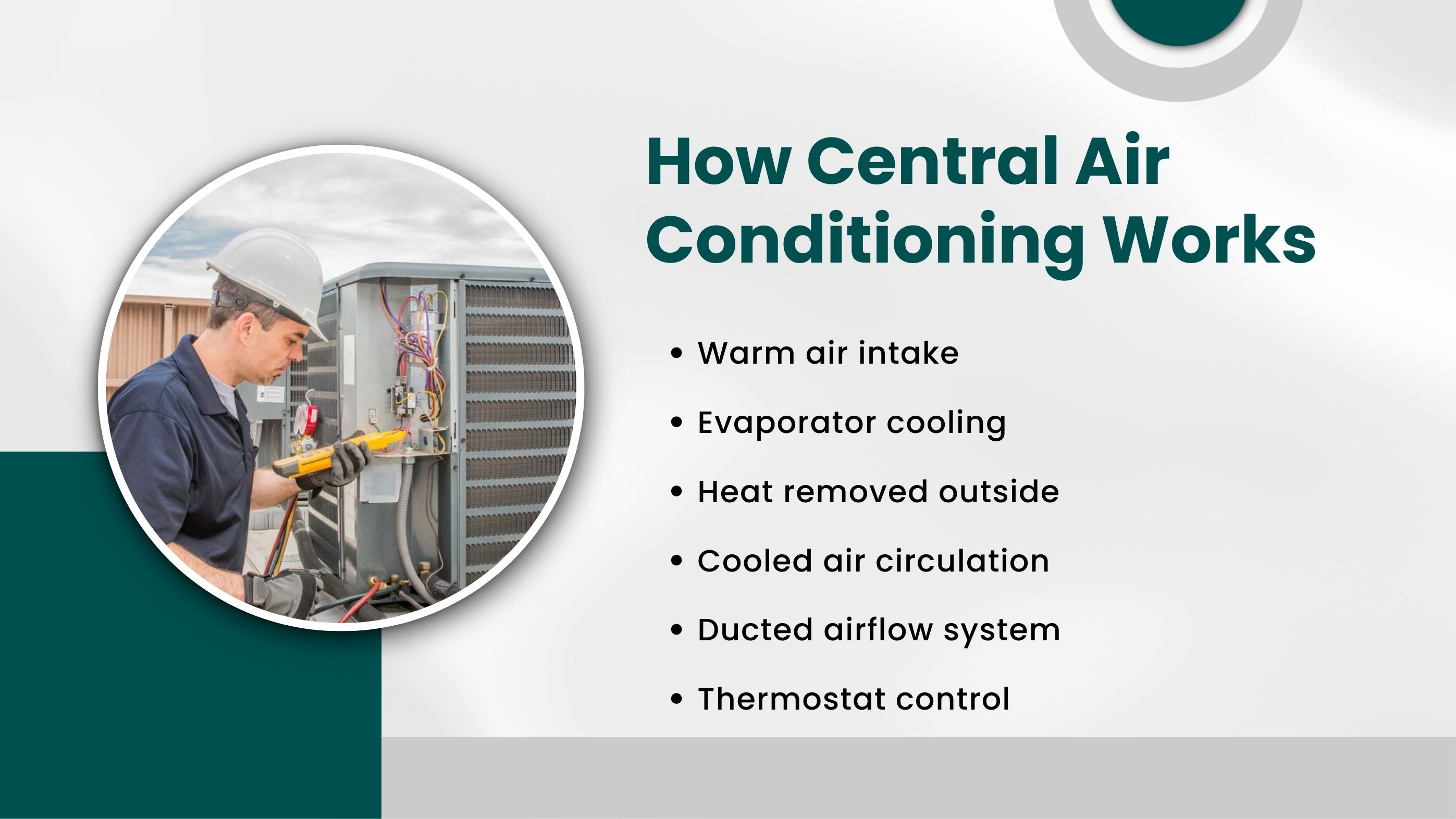
Airflow is a key part of how a central air conditioning system works. The system is designed to move air evenly so that no room becomes too warm or too cold. Proper airflow depends on:
When airflow is balanced, central air conditioning systems can cool an entire home evenly without noticeable temperature differences between rooms.
Temperature control is managed through a thermostat, which monitors indoor conditions and signals the system when cooling is needed. Once the set temperature is reached, the system automatically shuts off and restarts only when temperatures rise again. Modern thermostats allow scheduling, zoning, and energy-saving adjustments, helping homeowners maintain comfort while reducing unnecessary energy use.
A central air conditioning system works through multiple connected parts that operate together to cool the home efficiently. Each component has a clear role in producing cool air, distributing it evenly, and controlling temperature. Understanding these central air conditioning system components helps homeowners see how the system functions as a complete unit rather than isolated parts.
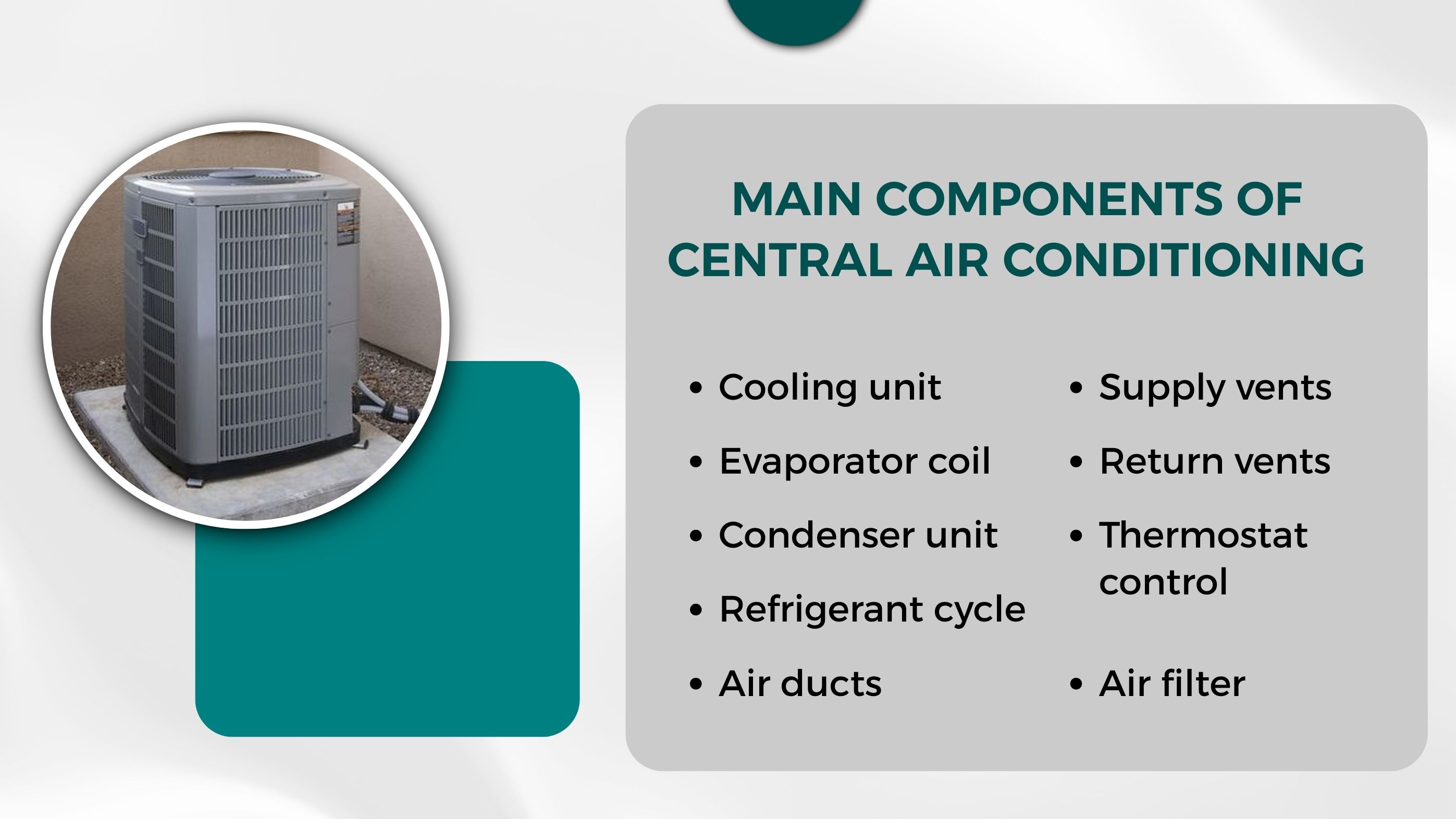
The cooling unit is responsible for producing cool air and removing heat from inside the home. It consists of the indoor evaporator coil and the outdoor condenser unit, which work together through the refrigerant cycle. Warm indoor air passes over the evaporator coil, where heat is absorbed and carried outside, allowing cooled air to circulate back indoors.
Key elements involved in cooling include:
Air distribution determines how effectively cooled air reaches every room. Once air is cooled, it moves through ductwork and exits through supply vents, while return vents pull warm air back into the system. Balanced airflow is essential to prevent uneven cooling and temperature differences throughout the home.
A proper air distribution setup depends on:
The control system manages when and how cooling occurs. It relies on a thermostat to monitor indoor temperatures and activate the system when cooling is needed. Modern control systems allow homeowners to set schedules, manage zones, and reduce unnecessary energy use while maintaining comfort.
Refrigerants and coils are critical to how the system transfers heat. The refrigerant circulates between the evaporator and condenser coils, absorbing heat indoors and releasing it outdoors. Without this heat-transfer process, none of the other parts of a central air conditioning system could function properly.
Air filters protect the system and improve indoor air quality by capturing dust, pollen, and airborne particles as air circulates. Clean filters help maintain airflow, reduce strain on internal components, and support healthier indoor air. This often-overlooked component plays a key role in system efficiency and longevity.
Central air conditioning systems are available in different configurations to match various home layouts, cooling demands, and efficiency goals. While all systems aim to cool the home from a centralized setup, the internal design and air delivery method can differ significantly. Knowing these variations helps homeowners select the most suitable option for long-term comfort.
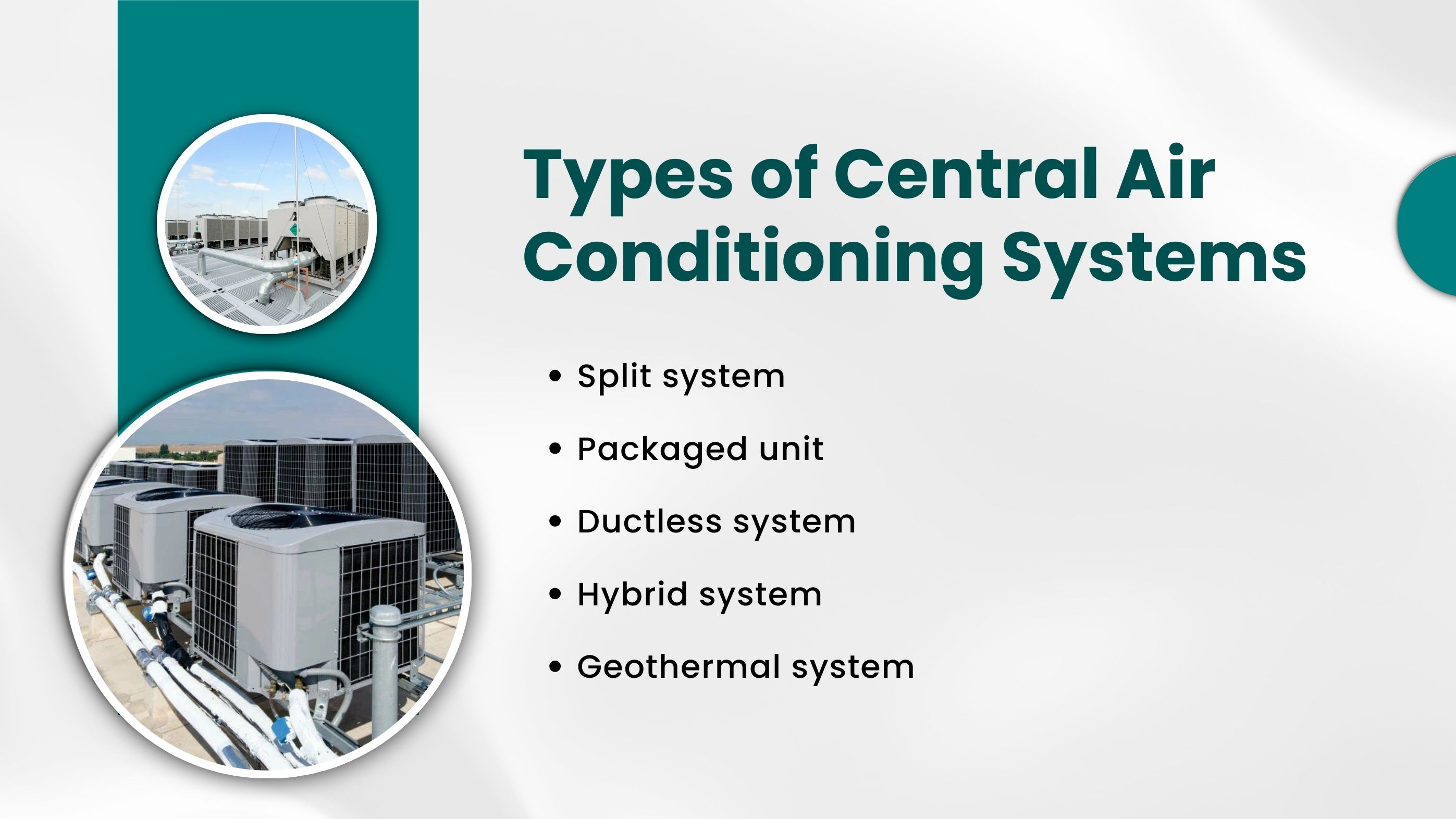
A split central air conditioning system uses two separate units: one installed indoors and one outdoors. The indoor unit manages air circulation and cooling, while the outdoor unit releases absorbed heat. This separation improves efficiency and keeps operational noise outside the living space.
Split system central air conditioning units are widely used in residential homes because they balance performance and flexibility. They work especially well in houses with existing ductwork and allow easier future upgrades. This system is commonly chosen when homeowners want:
A packaged central air conditioning system combines all major components into a single outdoor unit, typically installed on the roof or beside the home. Because everything is housed together, the system requires less indoor space and fewer installation steps.
Packaged systems are often selected for homes where interior mechanical space is limited. While compact and convenient, they may produce slightly more noise since all components are located in one unit. This type is usually suitable for:
Ductless central air conditioning systems deliver cooling without relying on traditional ductwork. Instead, individual indoor units connect to an outdoor compressor, allowing each space to be cooled independently. This setup supports zoned cooling and improved energy control.
These systems are especially useful for older homes or additions where duct installation would be disruptive or costly. Zoned operation also helps reduce unnecessary cooling. Ductless systems are ideal for:
Hybrid systems combine a standard central air system with an energy-efficient secondary source, often a heat pump. The system automatically switches between energy sources depending on outdoor temperature to maintain efficiency.
This setup is beneficial in climates with fluctuating temperatures, offering both flexibility and energy savings without sacrificing cooling reliability.
Geothermal systems use stable underground temperatures to assist with cooling and heating. Instead of relying solely on outdoor air, heat is transferred to the ground through buried loop systems, allowing the system to operate efficiently year-round.
While installation costs are higher, geothermal systems appeal to homeowners focused on sustainability, durability, and long-term savings. These systems are typically chosen for:
The cost of installing a central air conditioning system depends on several variables related to the home, system type, and installation complexity. There is no single fixed price, because each home requires a system sized and configured specifically for its cooling needs. Understanding these cost factors helps homeowners set realistic expectations and make informed decisions without focusing on sales-driven messaging.
On average, homeowners often ask how much does a new central air conditioning system cost, but the answer varies widely. For most homes, the central air conditioning system installation cost typically falls between $3,500 and $8,500, while larger homes or high-efficiency systems can exceed $10,000.
One major factor is home size and cooling capacity. Larger homes require higher-capacity systems measured in tons (1 ton ≈ cooling for 400–600 sq ft). A 1,500 sq ft home may need a 2.5–3 ton system, while a 3,000 sq ft home may require 4–5 tons, increasing equipment and labor costs.
Another key factor is system type and efficiency rating. Higher-efficiency systems cost more upfront but often reduce long-term energy usage. Homes choosing premium efficiency units will see a higher central air conditioning system cost compared to standard models.
Existing ductwork conditions also plays a role. Homes with intact, sealed ducts typically cost less to upgrade, while homes requiring duct repairs or full replacements face higher installation expenses.
Additional factors that affect the average cost of a central air conditioning system include:
| Cost Component | Typical Price Range (USD) | What It Covers |
|---|---|---|
| AC Unit Equipment | $2,000 – $5,000 | Outdoor condenser, indoor coil, and refrigerant |
| Installation Labor | $1,500 – $4,000 | System setup, connections, and performance testing |
| Ductwork Repairs / Modifications | $500 – $3,000 | Duct sealing, repairs, or partial duct replacements |
| Electrical & Permits | $200 – $800 | Electrical upgrades, permits, and inspections |
| Total Installed Cost | $3,500 – $8,500+ | Varies by home size, system capacity, and installation complexity |
The central air conditioning system power consumption depends on system size, runtime, and how efficiently the system removes heat from the home. Larger homes and higher-capacity units naturally use more electricity, especially during long cooling cycles in peak summer months.
Central air systems consume power mainly when the compressor and blower are running. The longer the system runs to reach or maintain the set temperature, the more electricity it uses. Homes with good insulation and sealed ducts require shorter run times, which helps reduce overall power usage.
System age, maintenance, thermostat settings, and airflow balance influence efficiency. Modern systems cool more effectively with less power, while poorly maintained units often consume more energy without improving comfort.
Routine central air conditioning system maintenance helps preserve efficiency, maintain consistent cooling, and prevent gradual performance decline. Regular care reduces strain on the system during high-demand summer months and supports stable airflow throughout the home. Over time, proper upkeep also helps minimize unexpected operational issues. Basic maintenance focuses on a few essential tasks that directly impact system performance, such as:
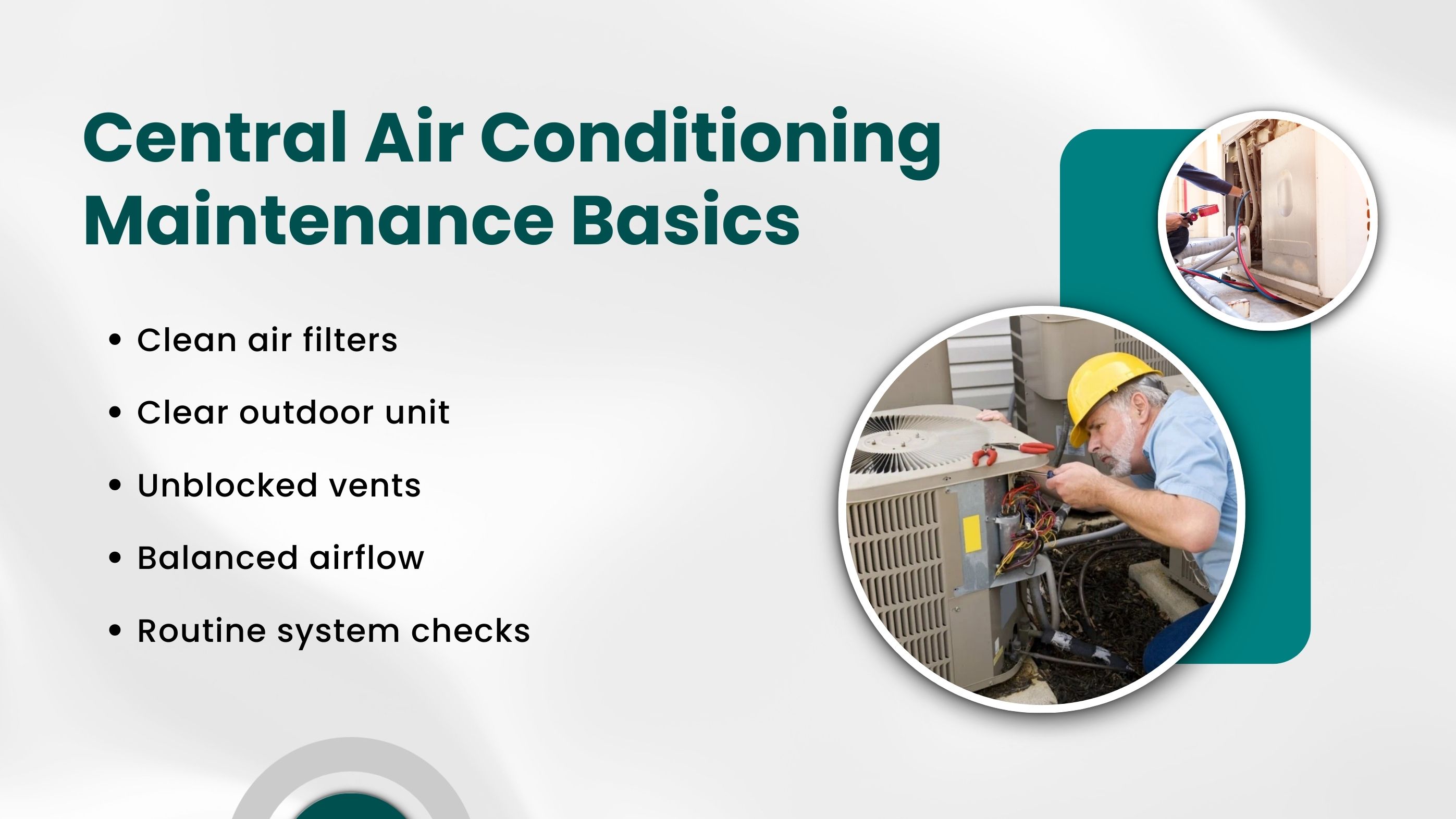
When these simple maintenance steps are followed consistently, central air conditioning systems tend to operate more quietly, cool more evenly, and experience fewer long-term performance issues. This balanced approach keeps the system running efficiently without requiring frequent intervention.
A central air conditioning system replacement is usually considered based on long-term performance trends rather than sudden system failure. Homeowners often begin evaluating replacement when cooling becomes less consistent, operating noise increases, or energy usage rises steadily despite normal usage patterns.
Most central air conditioning systems have a functional lifespan of 15–20 years. As systems age, internal components wear down and efficiency gradually decreases. Even if the system still runs, it may require more energy to deliver the same level of cooling, making replacement a practical consideration rather than a reaction to failure.
Another common reason replacement is considered is the frequency of repairs. When maintenance issues become repetitive or cooling performance fluctuates between rooms, it often signals that the system is nearing the end of its effective service life. At this stage, homeowners typically weigh long-term reliability against ongoing upkeep.
Replacement decisions are often made calmly and strategically, rather than during emergencies. Planning ahead allows homeowners to align replacement timing with comfort goals, budget considerations, and seasonal demand. This approach helps avoid unexpected breakdowns while ensuring consistent cooling performance moving forward.
Central air conditioning systems can develop issues over time due to regular use, aging components, or inconsistent maintenance. Most problems do not appear suddenly; instead, homeowners notice gradual changes in cooling performance, airflow, or system behavior that indicate something is not working as efficiently as it should.
When a central air conditioning system is not working as expected, the most common causes are restricted airflow, dirty filters, duct leaks, or refrigerant imbalance. These issues prevent the system from removing heat effectively, even though it may continue running.
In many cases, poor cooling does not indicate total system failure. Addressing airflow restrictions or performing routine maintenance often restores normal performance without major repairs.
Uneven cooling between rooms is another common issue homeowners notice. Some rooms may feel comfortable while others remain warm, which is often linked to duct obstructions, poor vent placement, or airflow imbalance.
This issue affects comfort rather than system operation itself and usually develops gradually as dust buildup or duct inefficiencies increase over time.
When the system runs for extended periods without reaching the set temperature, it may be struggling with efficiency loss. This can be caused by heat gain, aging components, or airflow limitations.
Longer run cycles increase energy use but do not always mean immediate replacement is required. Identifying the cause early helps prevent unnecessary strain on the system.
New or unfamiliar sounds such as buzzing, rattling, or persistent humming can indicate loose components, airflow issues, or wear within the system. While some operational noise is normal, noticeable changes should not be ignored.
Monitoring these changes helps homeowners address small issues before they develop into larger performance problems.
The average life of a central air conditioning system is usually between 15 and 20 years, but this range can vary based on several practical factors. While some systems reach the upper end of this lifespan, others may decline earlier due to operating conditions, maintenance habits, and installation quality. Understanding these influences helps homeowners set realistic expectations over time.
How well a system is installed has a direct impact on how long it lasts. Improper sizing, poor airflow setup, or incorrect refrigerant levels can cause the system to work harder than necessary. Over time, this added strain accelerates wear on internal components and shortens overall lifespan.
Regular maintenance plays a major role in system longevity. Systems that receive routine filter changes, airflow checks, and general upkeep tend to operate more smoothly and experience fewer mechanical issues. In contrast, neglected systems often face gradual efficiency loss and earlier component failure.
Local climate conditions affect how frequently a system runs throughout the year. In hotter regions where cooling is required for longer periods, systems naturally experience more operational hours. Higher usage does not mean poor quality, but it does increase long-term wear compared to systems in milder climates.
Balanced airflow helps reduce stress on the system. Homes with sealed ductwork and proper ventilation allow cooled air to move efficiently, reducing unnecessary strain. When airflow is restricted, the system may run longer cycles, which can shorten its effective service life over time.
Central air conditioning heating systems are commonly designed to work together as part of a single, integrated comfort setup. While cooling and heating functions operate differently, they often rely on shared infrastructure to distribute air evenly throughout the home. This integration helps maintain consistent indoor comfort across all seasons without requiring separate systems for temperature control.
Integrated systems typically share ductwork, thermostats, and airflow pathways, allowing both heating and cooling to use the same distribution network. This shared setup improves consistency in temperature delivery and reduces the complexity of managing separate systems.
By using common components, integrated systems help maintain balanced airflow year-round. Homeowners can switch between heating and cooling modes without adjusting multiple controls, making seasonal transitions smoother and overall temperature management more efficient.
The difference between central AC and standard air conditioning systems lies mainly in how cooling is delivered and how much area the system is designed to cover. While both systems cool indoor spaces, they are built for very different usage needs and home layouts.
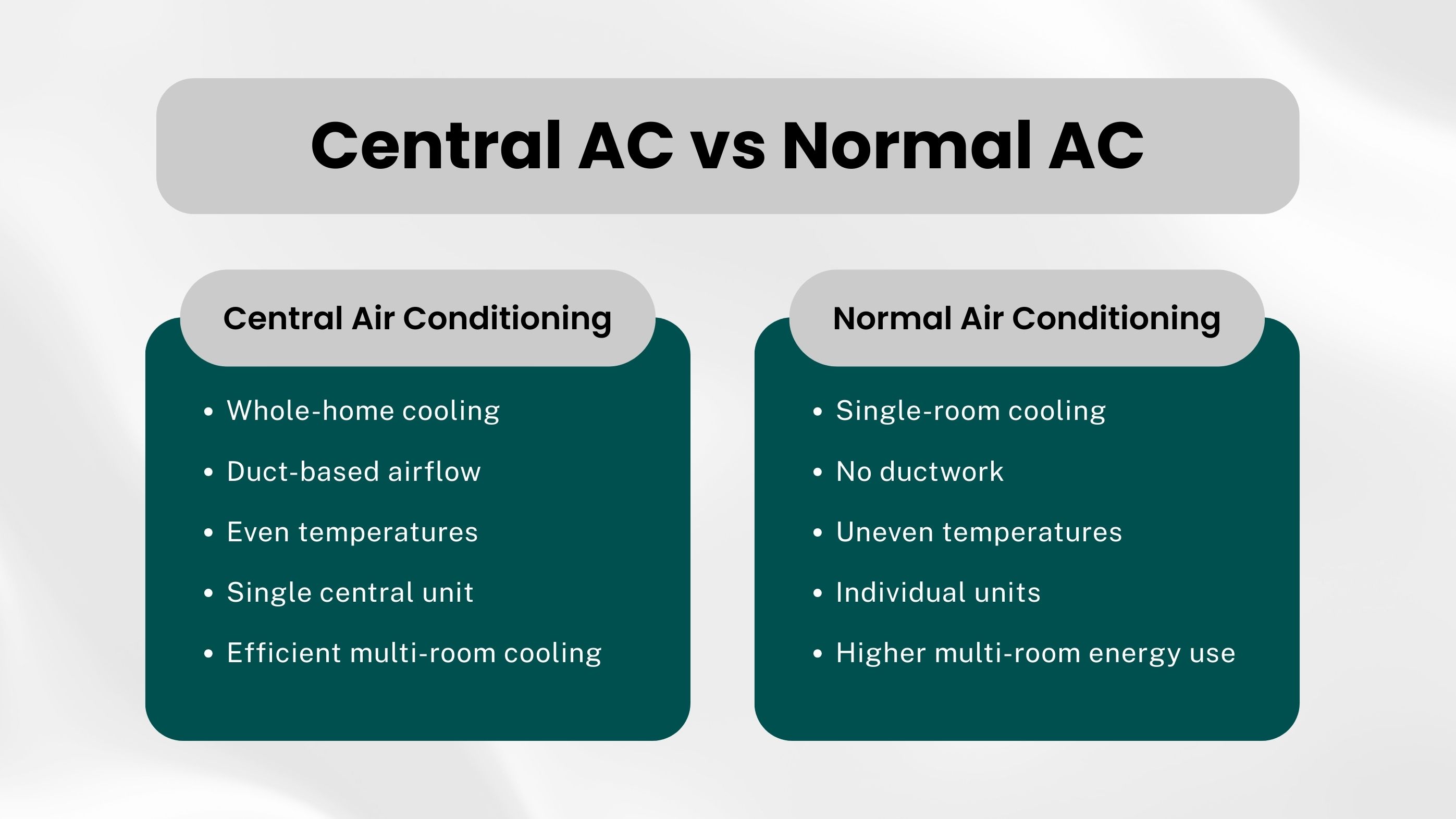
Central air conditioning systems are designed to cool the entire home from a single, centralized unit. Cooled air is distributed through ducts and vents, allowing consistent temperatures across multiple rooms. In contrast, standard air conditioners, such as window or split units, cool only the room or area where they are installed.
Central AC provides uniform cooling, reducing temperature differences between rooms. Standard AC units often result in uneven cooling, where one room feels comfortable while others remain warm. This makes central systems more suitable for larger homes or families seeking consistent comfort.
Central air conditioning systems require ductwork and a dedicated installation setup, making them more suitable for homes designed for whole-house cooling. Standard AC units are easier to install and require no ductwork, which makes them common in apartments or single-room cooling needs.
Central AC systems are generally more efficient for cooling multiple rooms at once, while standard AC units can become less efficient when used to cool several rooms individually. Running multiple room ACs for long periods often leads to higher overall electricity use compared to a single centralized system.
A central air conditioning system is designed to provide consistent, whole-home cooling through a centralized setup. Understanding how the system works, its components, costs, efficiency, and common considerations helps homeowners make informed decisions without confusion. While central AC may require higher upfront planning, it often delivers better comfort, balanced temperatures, and long-term reliability for suitable homes. By knowing when maintenance, upgrades, or alternatives make sense, homeowners can manage cooling needs confidently and realistically.
When homeowners ask how much is a central air conditioning system, the cost usually depends on home size, system capacity, and installation needs. On average, installed costs range from $3,500 to $8,500, with larger or high-efficiency systems costing more.
The main parts include the indoor evaporator coil, outdoor condenser unit, refrigerant lines, ductwork, air filter, and thermostat. These components work together to remove heat, circulate cooled air, and control indoor temperature.
Central air conditioning is best suited for homes with existing ductwork or space to install it. Smaller homes, apartments, or properties without ducts may find ductless or room-based systems more practical.
Instead of “regular AC,” a clearer comparison is central AC vs room AC units. Central AC is usually more cost-effective for cooling the entire home, while multiple room AC units can increase electricity use when cooling several spaces at the same time.
Join our mailing list for exclusive updates, expert tips, and special offers tailored to your needs. Be the first to know about the latest in home services.
Renovize Home is a platform that supports homeowners from planning to renovation. Whether it’s Renovize AI for guidance or a one-on-one call with Pro Finder, we understand your project and match you with local contractors tailored to your needs.
Who We Are
About Renovize HomeGet in TouchHomeownwer Support:
Coming Soon!
General Inquiries:
support@renovizehome.com
Head Office:
24 Greenway Plaza, STE 1800M, Houston, TX 77046.