
Explore All
BROWSE BY CATEGORY
Interior
Exterior
Home Essentials
Homeowner Tools
Blogs & Guides
Find a Pro
Book Your Appointment Now
Home Essentials
About Renovize Home
Explore All
BROWSE BY CATEGORY
Interior
Exterior
Home Essentials
Homeowner Tools
Blogs & Guides
Find a Pro
Book Your Appointment Now
Home Essentials
About Renovize Home
Last Updated 2026-01-29
Boiler and radiator systems are an excellent choice for maintaining consistent heat throughout your home. Unlike traditional heating systems, they use water or steam to distribute warmth evenly, avoiding hot and cold spots. This results in a more comfortable living environment during colder months.
These systems are also known for their energy efficiency, helping you save on heating costs. With proper installation and regular maintenance, a boiler and radiator setup can provide reliable, long-lasting performance, ensuring your home stays warm and cozy year after year.
Table of Contents
What Are Boiler and Radiator Systems?
How Boiler and Radiator Heating Works
2. Pressure and Pumps Move Heat Through the System
3. Heated Water or Steam Enters the Radiators
Common Issues with Boiler and Radiator Systems
Boiler and Radiator Maintenance for Longevity
Signs You Need a Professional Boiler and Radiator Service
Benefits of Boiler and Radiator Heating Systems
Final Thoughts
Boiler and radiator systems are a long-established home heating solution known for providing steady, even warmth. Instead of blowing heated air, these systems warm spaces by circulating hot water or steam from a central boiler through radiators placed in different rooms. This method delivers consistent heat, reduces temperature fluctuations, and creates a comfortable indoor environment during colder months.
Because the heat is distributed gradually and evenly, boiler and radiator systems are often considered a reliable long-term heating option, especially for homes that prioritize comfort, quiet operation, and stable temperatures.
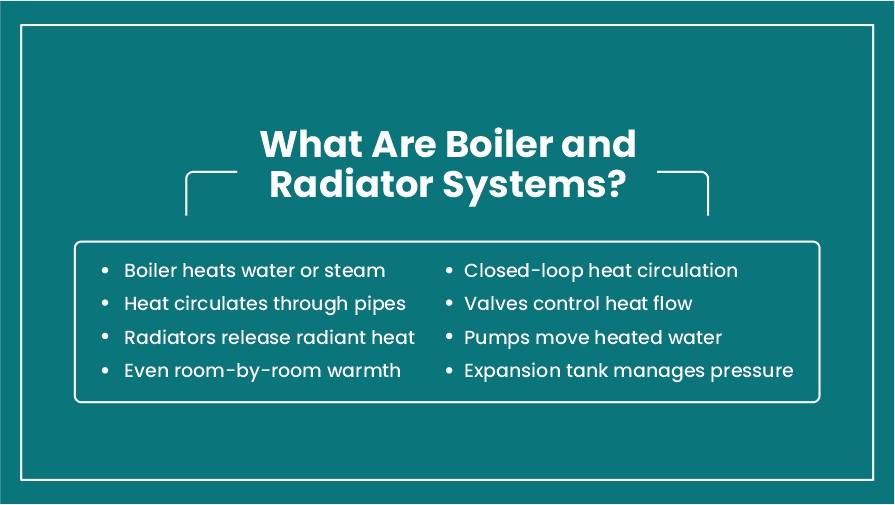
A boiler system works by heating water or producing steam, which then acts as the heat source for the entire home. In hot water boiler systems, heated water flows through pipes to radiators and returns to the boiler to be reheated. Steam boiler systems, on the other hand, generate steam that rises through pipes and transfers heat as it condenses inside radiators.
Both systems are designed to maintain consistent warmth, with hot water boilers being more common in modern homes due to better temperature control and efficiency.
Radiators serve as the point where heat is released into living spaces. Made from metal materials that conduct heat efficiently, radiators absorb warmth from the hot water or steam passing through them and gradually radiate that heat into the room.
This radiant heating process warms the surrounding air and surfaces evenly, helping rooms feel comfortable without sudden blasts of hot air. As a result, temperatures remain stable, and indoor air feels less dry compared to forced-air heating systems.
In a closed-loop boiler system, the same water continuously circulates through the pipes, radiators, and boiler. After releasing heat, the water returns to the boiler to be reheated, making the system efficient and consistent. Since the water is reused, heat loss is minimized, and operating efficiency remains high.
Open-loop systems, by contrast, use fresh water for each heating cycle and discharge it afterward. Because this requires constant replenishment, open-loop systems are generally less efficient and less commonly used in residential heating setups.
A boiler and radiator system relies on several essential components working together to provide safe and effective heating:
Boiler and radiator heating systems work by heating water or creating steam at a central boiler and circulating that heat through radiators installed throughout the home. The system operates as a continuous loop, ensuring steady and controlled heat delivery to each room.
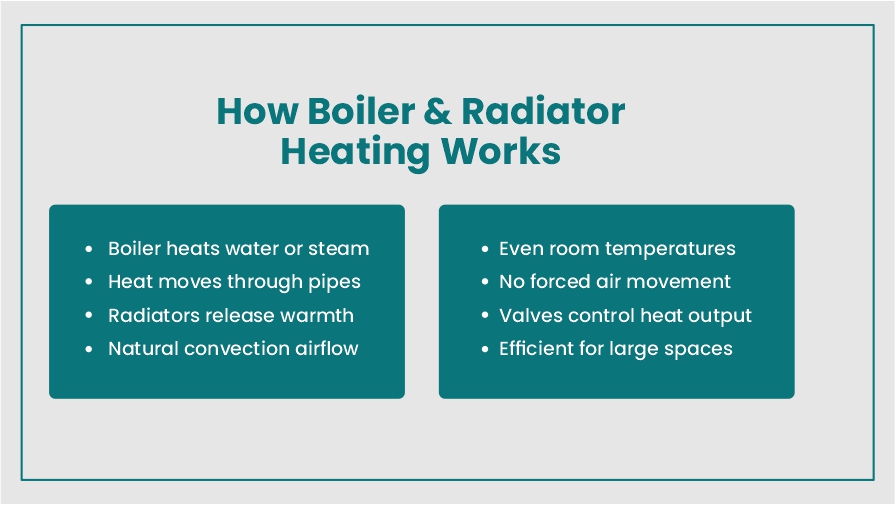
The process begins at the boiler, which serves as the heat source for the entire system. The boiler uses fuel or electricity to heat water or convert water into steam.
This heated water or steam holds the thermal energy that will be delivered throughout the home.
Once water or steam is heated, it must travel from the boiler to the radiators.
This movement ensures that heat reaches radiators installed in different rooms and levels of the house.
The heated water or steam flows into each radiator through inlet pipes. Radiators are typically made of cast iron, steel, or aluminum, materials that absorb and transfer heat efficiently. As the hot fluid enters the radiator, the metal surface begins to warm up evenly across its structure.
Once the radiator heats up, it releases warmth into the surrounding space through radiation and natural air circulation.
As heat transfers from the radiator into the room, the water inside the radiator gradually cools. In steam systems, steam condenses back into water after releasing its heat. This cooling signals that the heat has been delivered to the living space.
After releasing its heat, the cooled water flows back to the boiler through return pipes.
The system operates based on thermostat settings and radiator controls.
This heating cycle repeats automatically during operation. The constant circulation of heated water or steam allows the system to maintain stable indoor temperatures without sudden fluctuations.
Because heat is delivered gradually and continuously, boiler and radiator systems provide consistent warmth across all connected rooms.
Boiler and radiator systems are generally reliable, but like any home heating system, they can develop problems over time. Below are some common issues homeowners may face, along with their causes, effects, and potential solutions.
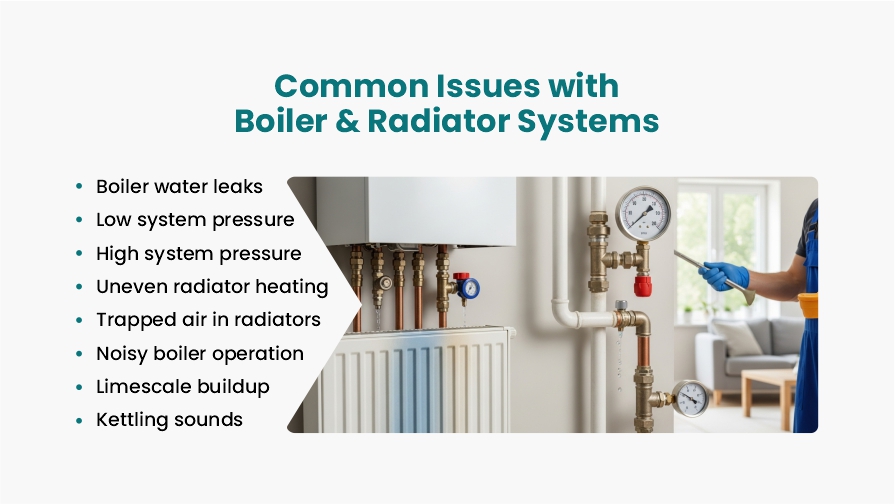
Water leaks in a boiler system are common and can result from corroded pipes, loose fittings, or damaged seals. Leaking water not only wastes energy but can also cause water damage in surrounding areas. Pressure relief valves help prevent overpressure by releasing excess water when the system becomes too pressurized, preventing further damage. If you notice water pooling around your boiler, it’s important to address the issue quickly to avoid more serious problems, such as system failure or damage to walls and floors.
Pressure issues, such as low or high pressure, are common in closed-loop systems. Low pressure can be caused by water leaks, air in the system, or a malfunctioning pressure valve. High pressure can result from issues like a faulty expansion tank or blocked pipes. To diagnose pressure issues, check the boiler’s pressure gauge and consult the user manual to find the correct pressure range (typically 1-1.5 bar for most systems). Correcting pressure issues early can prevent system damage and maintain efficient heating performance.
It’s not uncommon for some radiators to heat up faster than others or for certain areas of the house to feel colder. This can happen when air gets trapped in the radiator, preventing warm water from circulating properly. Bleeding radiators is a simple fix that releases trapped air, allowing the radiator to heat up evenly. If the imbalance persists, balancing the system adjusting the flow of water to each radiator can ensure uniform heating throughout your home.
Noises like kettling (loud banging or gurgling sounds) are caused by the buildup of limescale or air in the system. Kettling happens when water inside the boiler is heated too quickly, causing it to boil and form steam bubbles. This can lead to inefficient heating and even damage the boiler. Airlocks in the system can also cause unusual sounds, often related to trapped air that restricts the flow of water. Bleeding the system and descaling the boiler can reduce or eliminate these noises, improving overall system performance.
Regular maintenance is key to keeping your boiler and radiator systems running smoothly and extending their lifespan. Proper care prevents breakdowns, improves efficiency, and reduces the need for costly repairs down the line. Here’s how to keep your system in top condition:
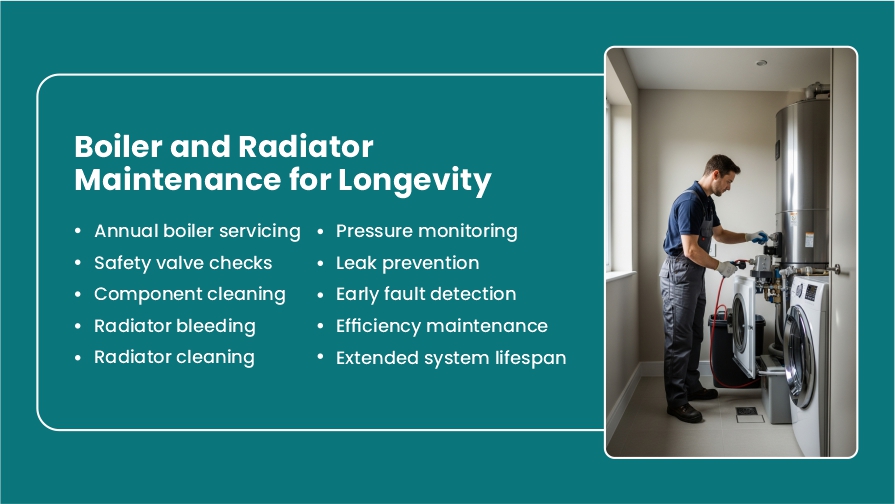
Regular boiler servicing is essential for optimal performance and safety. Professional inspections should be scheduled annually to check for issues like leaks, faulty safety valves, or reduced efficiency. A certified technician will clean key components, check gas or electrical connections, and ensure the system is running safely. Efficiency tests help identify potential problems early, preventing energy waste and ensuring your system runs at its best.
Dirt, debris, and air can clog up radiators, reducing their efficiency and causing uneven heating. Regular cleaning of radiators removes dust and debris, allowing them to heat more effectively. Bleeding radiators is an essential part of maintenance, as trapped air prevents proper circulation of hot water. You can bleed radiators yourself using a radiator key, but for a thorough cleaning or if the system is heavily clogged, a professional cleaning may be required. Keeping radiators clear of obstructions ensures even heat distribution throughout your home.
Preventing system failures involves regular checks and maintenance. Annual servicing for both the boiler and radiators helps identify any issues before they become major problems. Additionally, sealing leaks and checking the system’s water pressure can prevent unnecessary strain on the system, ensuring it continues to function smoothly. By addressing small issues early, you can avoid costly repairs and extend the life of your boiler and radiators by 5–10 years.
It’s important to recognize when your boiler and radiator system requires professional attention. Timely service ensures that your system runs efficiently, prolongs its lifespan, and prevents costly repairs. Here are some signs that it’s time to call in a professional:
If your home feels cold despite the boiler running, or if you’re experiencing uneven heating from your radiators, this is a clear sign that something is wrong. The boiler may not be operating at full capacity, or there may be issues with the radiator system, such as airlocks or clogged pipes. A professional service can diagnose and fix these problems, ensuring consistent warmth throughout your home.
If your boiler starts making strange noises like whistling, rumbling, or banging, it could be a sign of a buildup of limescale, air in the system, or a faulty component. These noises are not normal and can indicate problems such as kettling, where the water inside the boiler is boiling due to excessive buildup. A professional technician can fix these issues and prevent further damage to the system.
Leaks in the system, whether from pipes, valves, or radiators, can lead to water damage and reduced system efficiency. If you notice water pooling around your radiators or under the boiler, it’s important to have it inspected right away. Condensation on the outside of the boiler could also indicate issues with the pressure or the system’s efficiency. A professional can identify the source of the leak and fix it to avoid further damage.
Boiler and radiator systems offer numerous advantages over other heating methods. Their quiet operation, energy efficiency, and long lifespan make them a smart choice for homeowners looking for consistent comfort and lower maintenance costs. Here’s why these systems stand out:
Boiler and radiator systems deliver warmth without the noise associated with forced-air heating systems. Unlike traditional HVAC systems, which often produce blowing air and rattling ducts, radiators provide a gentle, quiet heat. This type of heating is ideal for maintaining a peaceful atmosphere, especially in bedrooms or living rooms. Additionally, when properly maintained, these systems are highly efficient, ensuring that energy is used effectively to keep your home warm.
A well-maintained boiler and radiator system can last 15-20 years, making it a long-term investment. Regular maintenance, such as annual servicing and prompt repairs, helps prevent wear and tear, allowing the system to continue providing reliable heating for many years. The longevity of these systems makes them an excellent choice for homeowners who want a heating solution that stands the test of time.
Boiler and radiator systems require relatively low maintenance compared to other heating methods. By regularly cleaning the system, checking for leaks, and replacing parts when necessary, you can avoid costly repairs. Additionally, newer models are designed with efficiency in mind, which means fewer repairs and lower operating costs. Proper care ensures that your system remains functional without incurring high repair bills.
Choosing the right boiler and radiator system is about matching the system to your home’s size, layout, and heating demands. The right choice improves comfort, energy efficiency, and system lifespan, while the wrong one can lead to uneven heating and higher running costs. Below are the key factors that help determine the best option for your home.
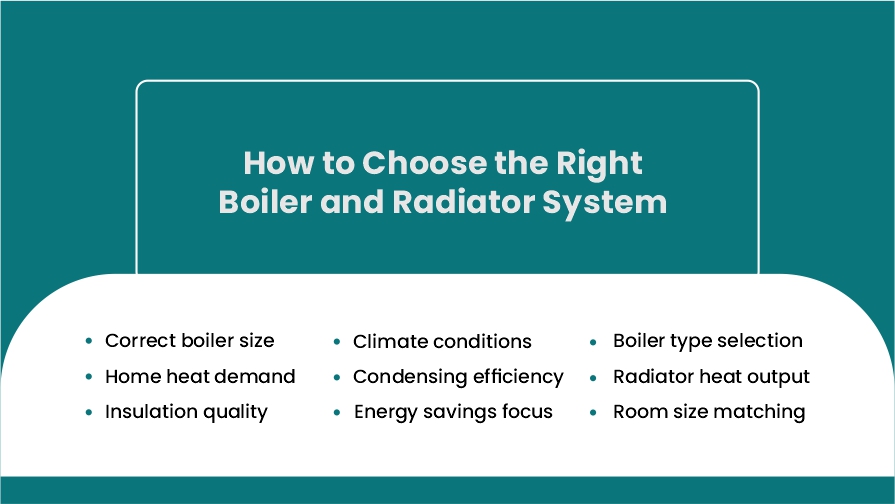
Boiler size plays a major role in how well your heating system performs. A boiler that is too small may struggle to heat your home properly, leading to longer run times and uneven temperatures. A boiler that is too large can cycle on and off frequently, wasting energy and increasing operating costs.
Proper sizing is based on factors such as home square footage, insulation quality, number of rooms, ceiling height, and overall heat demand. A professional assessment ensures the boiler is sized accurately so it delivers consistent heat without unnecessary energy use.
Boilers generally fall into two main categories based on how efficiently they use heat.
Condensing boilers are designed to reuse heat from exhaust gases that would otherwise be lost. This improves efficiency and reduces energy consumption. These systems are well-suited for modern homes and are known to lower heating costs over time.
Non-condensing boilers release exhaust heat directly through the flue. While they may cost less initially, they tend to use more energy and are less efficient over the long term. For most homes, condensing boilers are the preferred option due to their higher efficiency and better long-term performance.
Radiators should be selected based on room size, insulation level, and heat demand. Different rooms may require different radiator types to maintain even warmth.
Common radiator options include:
Matching radiator size and output to the room prevents cold spots and ensures balanced heating throughout the home.
Boiler and radiator systems offer reliable and efficient heating when properly maintained. Regular servicing, early repairs, and addressing common issues like leaks, airlocks, or pressure problems can ensure your system remains efficient and safe. These systems are a long-term investment, providing consistent warmth and energy savings when cared for properly. Keeping an eye on system performance and seeking professional help when needed can help you avoid costly repairs and keep your home comfortable year-round.
A boiler can leak water due to several reasons, including corroded pipes, faulty seals, or pressure relief valve issues. Over time, pressure build-up or wear can cause leaks. If you notice water pooling around the boiler, it’s important to call a professional to fix the problem before it leads to further damage.
Bleeding your radiators is a simple process that releases trapped air, which can block hot water from circulating properly. To bleed a radiator, use a radiator key to slowly open the valve at the top of the radiator, allowing the air to escape. Once water begins to flow steadily, close the valve. This helps restore even heating and improves the efficiency of your system.
If your radiator isn’t heating up fully, it could be due to trapped air (airlock) inside the system, which prevents hot water from circulating properly. Bleeding the radiator can fix this. Alternatively, there may be issues with blockages, incorrect valve settings, or a faulty pump. A professional inspection can identify and fix the issue.
It’s recommended to service your boiler and radiator system at least once a year. Regular servicing ensures that your system runs efficiently, helps identify small issues before they become bigger problems, and extends the lifespan of your equipment. Annual tune-ups can also help maintain safety and improve energy efficiency.
Modern boiler systems are more energy-efficient, eco-friendly, and cost-effective compared to older models. They use advanced technology to heat your home faster while consuming less energy, leading to lower heating bills. Newer systems also offer features like condensing technology, which captures and reuses heat, improving overall performance by up to 30%.
Boiler pressure should typically be between 1.0 and 1.5 bar when the system is cold. If the pressure is too low (below 1 bar), your system may fail to heat effectively. If the pressure is too high (above 2.5 bar), it could lead to safety issues. Most modern boilers have a pressure gauge that indicates the current level. If pressure is consistently too high or low, it’s best to call a professional to adjust or fix the issue.
Join our mailing list for exclusive updates, expert tips, and special offers tailored to your needs. Be the first to know about the latest in home services.

Renovize Home is a platform that supports homeowners from planning to renovation. Whether it’s Renovize AI for guidance or a one-on-one call with Pro Finder, we understand your project and match you with local contractors tailored to your needs.
Who We Are
About Renovize HomeGet in TouchHomeownwer Support:
Coming Soon!
General Inquiries:
support@renovizehome.com
Head Office:
24 Greenway Plaza, STE 1800M, Houston, TX 77046.