
Explore All
BROWSE BY CATEGORY
Interior
Exterior
Home Essentials
Homeowner Tools
Blogs & Guides
Find a Pro
Book Your Appointment Now
Home Essentials
About Renovize Home
Explore All
BROWSE BY CATEGORY
Interior
Exterior
Home Essentials
Homeowner Tools
Blogs & Guides
Find a Pro
Book Your Appointment Now
Home Essentials
About Renovize Home
Last Updated 2026-01-26
When your HVAC system starts malfunctioning, one of the most common culprits is the blower motor or fan. These components are responsible for circulating air throughout your home, so when they fail, your system’s efficiency and comfort can take a hit. Whether it's strange noises, weak airflow, or no air circulation at all, understanding the potential issues with your blower motor or fan is the first step in resolving the problem. In this guide, we'll help you troubleshoot common issues and explore effective solutions to get your HVAC system back on track.
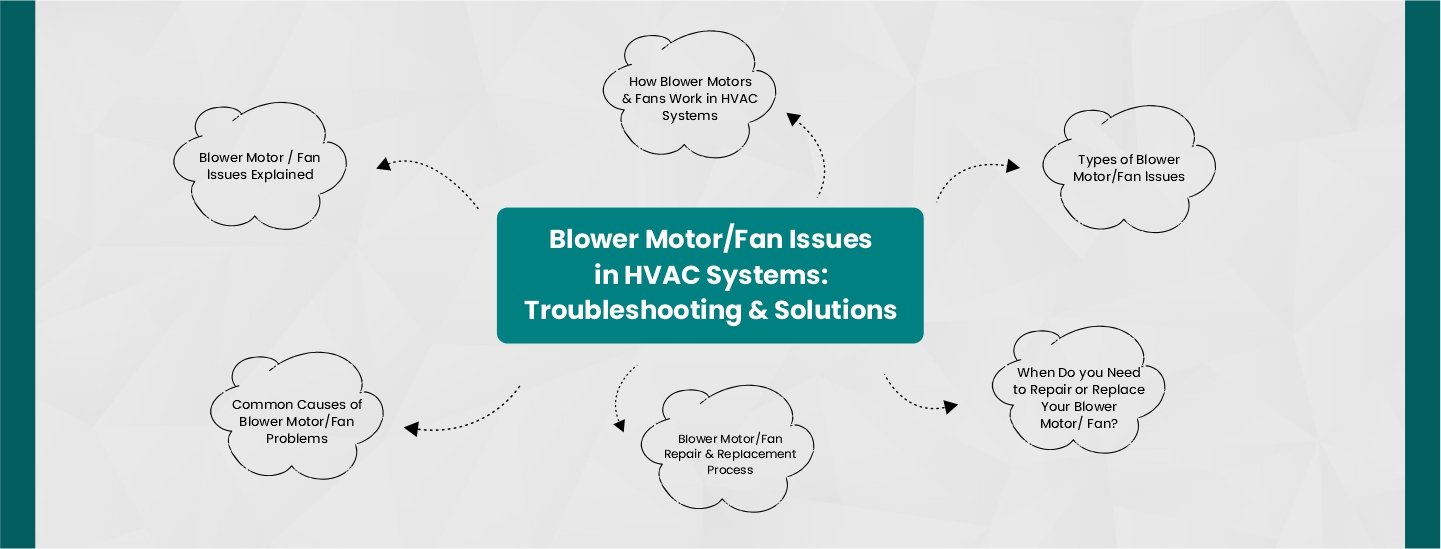
Table of Contents
What Are Blower Motor and Fan Problems in HVAC Systems?
How Blower Motors and Fans Work in HVAC Systems
Types of Blower Motor/Fan Issues
Common Causes of Blower Motor/Fan Problems
Blower Motor/Fan Repair and Replacement Process
Benefits of Fixing Blower Motor/Fan Issues
Costs of Blower Motor/Fan Repairs
When Do You Need to Repair or Replace Your Blower Motor/Fan?
Who Needs Blower Motor/Fan Repair?
Common Problems Blower Motor/Fan Issues Solve
Final Takeaway
Blower motor and fan problems occur when key airflow components inside your HVAC system fail to operate correctly. The blower motor powers the fan that pushes heated or cooled air through your ductwork and into your living spaces. When this system is not working properly, airflow becomes restricted, causing your heating or cooling system to lose efficiency.
As a result, homeowners often notice uneven room temperatures, rising energy costs, or unusual system noises. Identifying these problems early helps prevent larger mechanical failures and keeps your HVAC system operating smoothly.
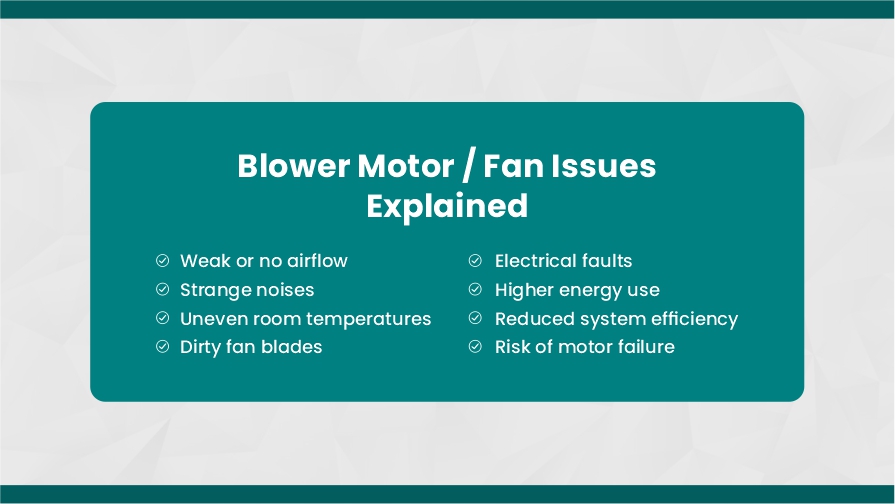
When airflow problems begin, your HVAC system will usually show clear warning signs. The most common symptoms include:
Reduced airflow from vents often indicates that the blower motor is struggling or the fan is not spinning at full capacity, limiting air circulation throughout the home.
Sounds such as squealing, grinding, or rattling can signal worn motor bearings, loose fan blades, or internal motor stress that should not be ignored.
If some rooms feel noticeably warmer or cooler than others, the blower motor may not be distributing air evenly through the duct system.
Several mechanical and electrical factors can lead to blower motor or fan malfunction, including:
Over time, dirt accumulation on fan blades can reduce airflow efficiency and force the motor to work harder than necessary.
Blower motor bearings naturally wear down with use, increasing friction and reducing the motor’s ability to operate smoothly and quietly.
Problems such as faulty wiring, damaged relays, or blown components can interrupt power delivery, preventing the blower motor from functioning correctly.
The blower motor in your HVAC system powers the fan, pushing air through the ducts and ensuring an even temperature throughout your home. A well-functioning motor is essential for proper airflow and efficient heating and cooling.
The fan helps circulate air over the coils, enabling temperature regulation and comfort across your living spaces. When these components are in top shape, your HVAC system runs smoothly and efficiently.
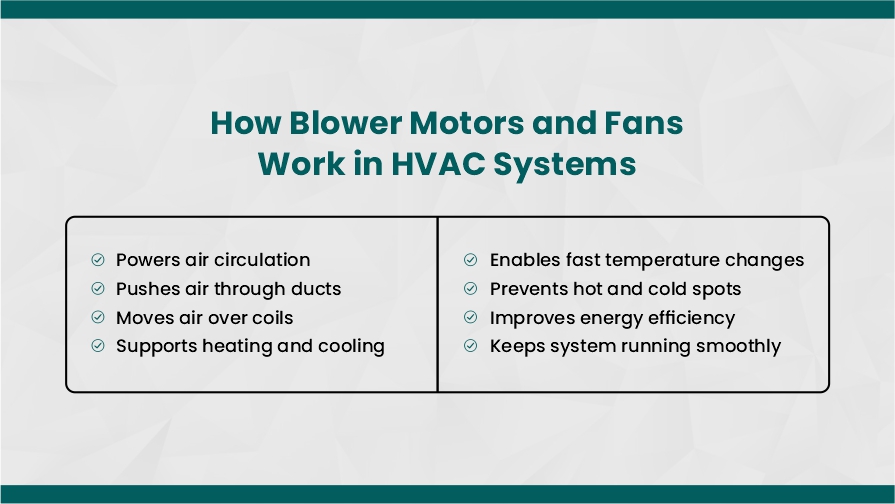
The blower motor drives the fan, which moves air through the ductwork and into rooms. In a typical home, the motor circulates air at speeds of up to 2,000 CFM (cubic feet per minute), allowing for quick temperature control. If the blower motor is malfunctioning, air circulation is compromised, leading to uneven temperatures and reduced system efficiency.
Once the blower motor powers the fan, the air is pushed over the heating or cooling coils. During winter, the air passes over heated coils, warming the space, and in summer, the air is cooled as it moves over chilled coils. The fan ensures that air passes through these coils efficiently, providing consistent comfort throughout your home.
When the blower motor or fan isn’t working properly, your HVAC system struggles to regulate air and temperature. This could result in higher energy bills or a lack of airflow, leaving some rooms uncomfortable. Prompt repairs can help prevent more serious issues and maintain system efficiency.
Blower motor and fan issues can vary in severity, from minor annoyances to major system failures. Understanding the different types of problems that can arise helps homeowners identify potential issues early. Let's dive into some of the most common blower motor and fan issues.
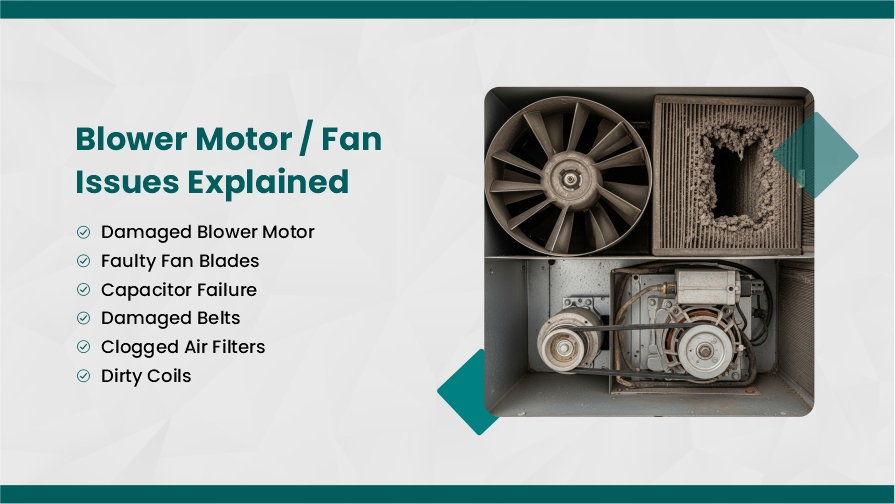
A damaged blower motor can result in weak airflow or no airflow at all, leaving your HVAC system unable to heat or cool your home effectively. Common causes of damage include wear and tear, overheating, or electrical issues. If you notice weak airflow, or if the blower motor makes strange noises or doesn’t run at all, it may be time for a replacement.
Worn-out or bent fan blades can cause an imbalance, leading to noisy operation and poor air distribution. When fan blades are damaged, the fan cannot circulate air as efficiently, resulting in uneven temperatures or loud, disruptive sounds. Regular maintenance and ensuring the fan blades are in good condition can help avoid these issues.
Capacitors are essential for helping the motor start and maintain operation. When a capacitor fails, the blower motor may not function properly, causing inefficient air circulation. Signs of a failing capacitor include delayed fan start-up, weak airflow, or a motor that doesn’t run. Replacing the capacitor can restore proper function to your HVAC system.
In older HVAC systems, belts connect the motor to the fan. A broken or loose belt can prevent the fan from spinning, which will lead to a significant loss of airflow. Regular inspection of belts, especially in older units, is essential to avoid this problem. If a belt is damaged, it should be replaced immediately to prevent further issues.
Clogged air filters are a common issue that can reduce airflow, putting extra strain on the blower motor. When filters are clogged with dust and debris, they block the air from flowing freely through the system, causing the motor to work harder. Regularly replacing or cleaning air filters can prevent this issue and maintain proper airflow.
Dirty evaporator or condenser coils can reduce the efficiency of both the motor and fan. When coils become dirty, they struggle to absorb or expel heat, leading to higher energy consumption and decreased system performance. Cleaning the coils regularly ensures your HVAC system operates efficiently and avoids overworking the blower motor.
Blower motor and fan problems can arise due to a variety of reasons. Understanding these causes will help you identify the issue early and avoid costly repairs. Below are the most common causes of blower motor/fan problems:
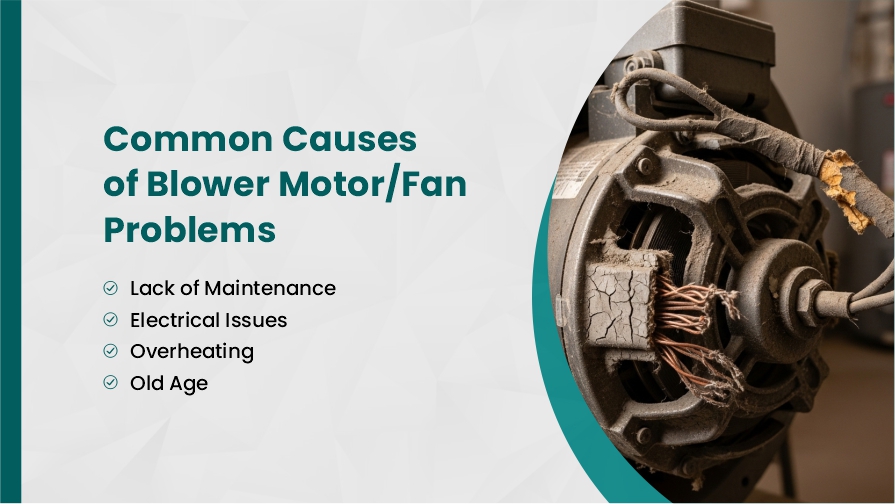
One of the leading causes of blower motor/fan issues is a lack of maintenance. Over time, dust, dirt, and debris can accumulate on the motor and fan blades, causing them to work harder and increasing the strain on the system. This buildup can lead to overheating, poor airflow, and ultimately, system failure. Regular maintenance, such as cleaning air filters and lubricating moving parts, can help prevent these issues and keep your HVAC system running smoothly.
Electrical problems, such as faulty wiring or capacitor failure, are common causes of blower motor issues. If the wiring is frayed or disconnected, or the capacitor fails, the motor may not receive the proper voltage to operate. In fact, electrical issues are responsible for about 30% of HVAC system failures. Checking wiring and replacing damaged components regularly can prevent unexpected shutdowns.
Extended use, blocked vents, or insufficient airflow can cause the blower motor to overheat. Overheating leads to motor strain and potential failure. In fact, an overheated motor can wear out in as little as 2-3 years if not properly maintained. To prevent overheating, ensure that vents are clear of debris, and clean the system's coils and filters regularly to maintain airflow.
As HVAC systems age, components like the blower motor, fan blades, belts, and capacitors naturally wear out. A system that has been in operation for 10-15 years may experience parts failure due to general wear and tear. Replacing these worn-out components as needed can extend the lifespan of the system and improve its efficiency.
| Cause | Explanation | Impact on System |
|---|---|---|
| Lack of Maintenance | Dust, dirt, and debris buildup strain the motor and fan blades. | Poor airflow, overheating, motor failure |
| Electrical Issues | Faulty wiring or capacitor failure prevents the motor from receiving proper power. | Inconsistent operation, motor failure |
| Overheating | Blocked vents or extended use without maintenance causes overheating. | Reduced motor lifespan, system shutdown |
| Old Age | Wear and tear on components like motors, belts, and capacitors. | Decreased efficiency, system failure |
When your HVAC system's blower motor or fan malfunctions, it’s important to follow a systematic repair or replacement process. Depending on the issue, repairs can range from simple fixes like replacing a capacitor to full motor replacement. Here’s a step-by-step guide on how these repairs are typically carried out:
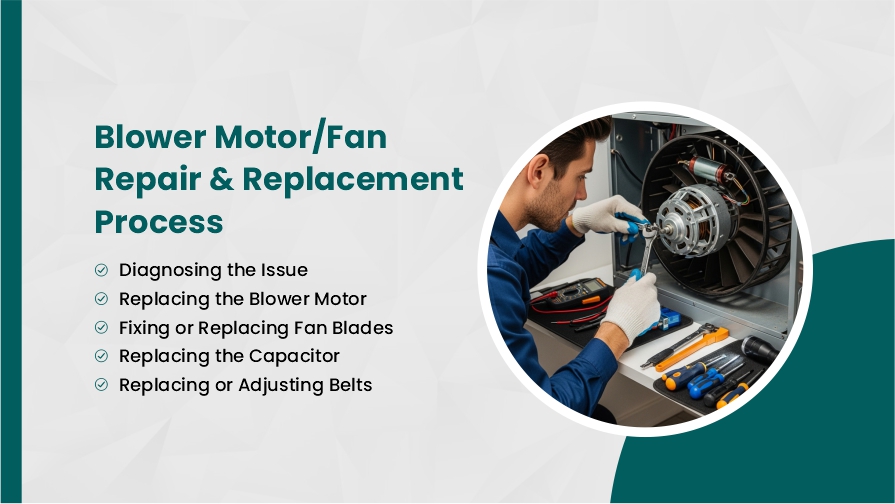
Before diving into repairs, it's essential to diagnose the problem. Start by checking if the motor is receiving power. If the motor doesn’t run, it could be a power supply issue or an internal electrical fault.
Next, check if the fan blades are spinning properly if not, the issue may be with the motor or fan assembly. Listen for any unusual noises like squealing or grinding, which can indicate worn bearings or other mechanical issues. Once you identify the problem, you can determine if a repair or full replacement is needed.
If the blower motor is damaged beyond repair, it will need to be replaced. The new motor must be compatible with your HVAC system’s specifications, including the voltage, amperage, and RPM (revolutions per minute).
Depending on the size and complexity of your system, this replacement can take anywhere from 2-4 hours. Replacing the blower motor helps restore proper airflow, allowing your HVAC system to operate efficiently again.
If the fan blades are bent, cracked, or broken, they will need to be replaced. Damaged blades can cause imbalance, leading to excessive noise and poor air circulation.
In some cases, the blades can be repaired if only minor damage has occurred. However, replacing the fan blades is often the most effective solution. This repair typically takes around 1-2 hours to complete, depending on accessibility and the extent of the damage.
Capacitors help the motor start and keep it running. If the capacitor fails, the motor may not start at all or may run inefficiently. Replacing the capacitor is a relatively simple and cost-effective repair. It usually takes about 30-45 minutes to replace the capacitor.
Be sure to choose a new capacitor that matches the specifications of your HVAC system for proper operation.
In older HVAC systems, belts connect the blower motor to the fan. If the belt is worn, cracked, or loose, it can prevent the fan from spinning properly, causing airflow issues. Replacing or adjusting the belt ensures the fan operates smoothly and can take around 1-2 hours. Regularly inspecting belts for wear and tear can help prevent these issues and extend the lifespan of your HVAC system.
Addressing blower motor and fan issues promptly offers several key benefits that enhance the overall performance of your HVAC system. Not only will you improve comfort and efficiency, but you'll also extend the lifespan of your system and reduce long-term costs. Here are the main benefits of fixing blower motor/fan issues:
Fixing the blower motor or fan restores proper airflow throughout your home. Whether your system was underperforming due to a damaged motor or obstructed fan blades, repairing these issues ensures that air is circulated evenly across all rooms. This helps maintain consistent temperatures and enhances overall comfort, allowing your HVAC system to function at its best.
A malfunctioning blower motor or fan forces your HVAC system to work harder, leading to higher energy consumption. By fixing these issues, you reduce the strain on your system, which can lead to 10-20% savings on your monthly energy bills. A well-functioning motor and fan ensure that air moves efficiently, improving the energy efficiency of your heating and cooling system.
Consistent airflow is crucial for maintaining comfort in your home. When your blower motor or fan is working properly, your HVAC system can provide even heating and cooling across all areas of the house. This reduces hot or cold spots and ensures your living spaces are comfortable year-round, no matter the season.
Regular maintenance and timely repairs prevent minor issues from escalating into costly problems. By fixing blower motor or fan issues early, you prevent further damage to your HVAC system, helping it last longer. Addressing these concerns can extend the lifespan of your HVAC unit by 5-10 years, saving you money on replacements and repairs down the road.
The cost of repairing or replacing a blower motor or fan varies depending on the issue, the complexity of the system, and labor costs. Understanding the typical costs associated with these repairs can help you budget and plan accordingly. Here’s a breakdown of common blower motor and fan repairs:
Replacing a blower motor is one of the more expensive repairs, typically ranging from $300 to $1,000. The price depends on factors like the size of the HVAC system, the motor type (e.g., single-speed vs. variable-speed), and the complexity of the installation.
For larger systems or high-efficiency models, the cost can be on the higher end of the spectrum. A professional technician will usually handle this replacement, and it can take 2-4 hours to complete.
If the fan blades are damaged, replacing them typically costs between $100 and $400, including parts and labor. The cost depends on whether you’re replacing a few blades or the entire fan assembly. Fan blade replacement is usually a quicker job, taking 1-2 hours to complete. Regular inspection of fan blades can prevent damage from worsening, saving you money on costly repairs.
Capacitors are crucial for starting and running the motor. If the capacitor fails, it can prevent the motor from operating properly. Replacing a faulty capacitor typically costs between $100 and $300. Since capacitors are relatively inexpensive components, the cost is mainly for labor. The replacement process is straightforward and can often be completed in 30-45 minutes.
In older HVAC systems, belts connect the blower motor to the fan. If the belt is damaged, it needs to be replaced to restore proper airflow. Belt replacement typically costs between $50 and $150, depending on the system type and the amount of labor required. Replacing the belt usually takes about 1-2 hours, depending on accessibility and the system’s configuration.
| Repair Type | Typical Cost Range | Key Factors Affecting Cost |
|---|---|---|
| Blower Motor Replacement | $300 - $1,000 | System size, motor type, labor costs |
| Fan Blade Replacement | $100 - $400 | Number of blades, system size, labor time |
| Capacitor Replacement | $100 - $300 | Motor type, labor time |
| Belt Replacement | $50 - $150 | Belt type, system type, labor time |
Blower motor and fan issues should be addressed promptly to avoid further damage to your HVAC system and maintain comfort in your home. Here are some clear signs that it’s time to repair or replace the blower motor or fan:
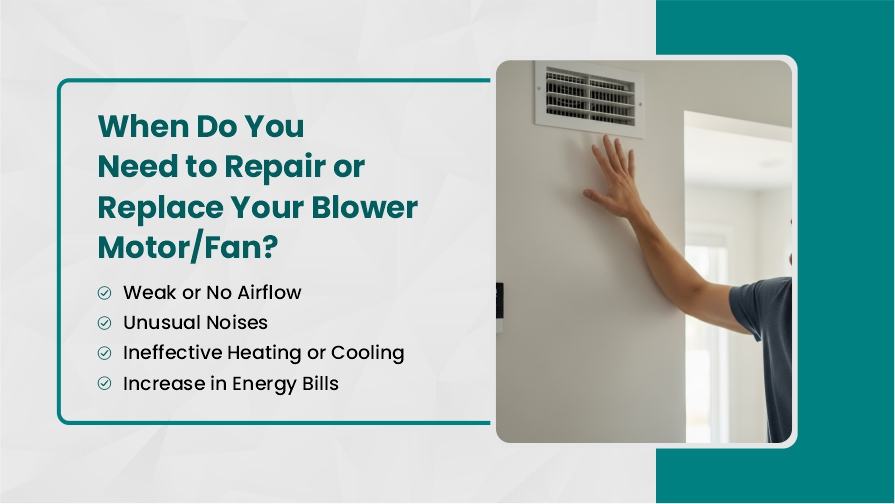
One of the most obvious signs that your blower motor or fan needs attention is when the airflow becomes weak or stops completely. If you notice that air is no longer being distributed evenly or at all, it’s a strong indication that the motor or fan is malfunctioning. A lack of airflow can significantly impact the efficiency of your heating or cooling system, so addressing this issue as soon as possible is essential.
Unusual noises, such as grinding, rattling, or squealing, often signal problems with the blower motor or fan. Grinding or rattling sounds can indicate worn-out bearings or fan blades that are unbalanced, while squealing noises may suggest that the motor’s belt is slipping. These noises should not be ignored, as they usually point to mechanical issues that will worsen over time.
If your HVAC system is struggling to heat or cool your home effectively, it could be due to a malfunctioning blower motor or fan. When the motor or fan isn’t working properly, it can prevent the system from circulating air efficiently, resulting in uneven temperatures throughout your home. A timely repair can restore your system’s ability to maintain a comfortable indoor climate.
A malfunctioning blower motor or fan causes the HVAC system to work harder, which can lead to a significant increase in your energy bills. If you notice that your utility costs are rising without any change in usage, this could be a sign that your system is inefficient. Fixing or replacing the blower motor or fan can help your HVAC system run more efficiently, ultimately saving you money on energy costs.
Blower motor and fan repairs are essential for homeowners facing issues such as weak airflow, noisy HVAC operation, or inefficient heating and cooling. If your system is struggling to maintain a comfortable temperature or making unusual sounds, it may be time for a repair.
These issues are particularly common in older HVAC systems or homes that have neglected regular maintenance. Fixing these problems ensures your HVAC system continues to operate at its best, improving both comfort and energy efficiency.
Blower motor and fan issues can cause significant disruptions in your HVAC system's performance. Addressing these issues promptly restores the efficiency and comfort of your home.
Fixing the blower motor or fan restores proper air circulation throughout your home. When the motor or fan is malfunctioning, airflow can be weak or nonexistent, making it harder for the HVAC system to regulate temperature. A quick repair can restore airflow, ensuring even heating and cooling across all rooms.
Blower motor or fan issues often cause strange noises, such as grinding, rattling, or squealing. These sounds typically indicate mechanical problems, like worn bearings or unbalanced fan blades. Repairing or replacing the damaged components eliminates the noise and restores quiet, smooth operation to your HVAC system.
A malfunctioning blower motor or fan forces your HVAC system to work harder, which increases energy consumption. A repaired or replaced blower motor ensures the system runs efficiently, cutting down on unnecessary energy use and lowering your utility bills. An efficient HVAC system helps maintain a comfortable home while saving money on energy costs.
Blower motor and fan issues, if left unaddressed, can lead to poor airflow, increased energy bills, and discomfort in your home. Timely repairs or replacements not only restore proper system function but also improve efficiency, extend the lifespan of your HVAC system, and ensure consistent comfort. By recognizing the signs of blower motor or fan problems early, you can take proactive steps to keep your HVAC system running smoothly. If you're experiencing any of these issues, don't hesitate to reach out to a professional technician to resolve the problem and enjoy a well-functioning system year-round.
If your blower motor isn’t working, it could be due to a faulty capacitor, damaged fan blades, or electrical issues like a blown fuse or shorted wiring. Diagnosing and replacing the motor or faulty components can resolve the issue and restore airflow to your HVAC system.
Signs of a broken HVAC fan include weak airflow, strange noises, or no air circulation at all. If you notice these issues, it’s best to call a professional technician to inspect the motor, fan blades, and related components to pinpoint the cause and fix the problem.
Repairing a blower motor requires electrical knowledge and the proper tools. It's best to hire a professional HVAC technician to avoid making the problem worse or causing safety hazards. Attempting a repair without the right skills could lead to further damage or personal injury.
A typical blower motor lasts between 10 to 20 years, depending on usage and maintenance. Regular maintenance, like cleaning and lubricating components, can help extend the motor’s lifespan. If your blower motor is nearing the end of its life or showing signs of failure, it may be time for a replacement.
Delaying repairs for blower motor or fan issues can lead to complete motor failure and costly system damage. Timely attention helps maintain proper airflow, reduces energy waste, and extends the overall lifespan of your HVAC system. Addressing minor issues early ensures reliable performance and avoids unexpected breakdowns during peak heating or cooling seasons.
Join our mailing list for exclusive updates, expert tips, and special offers tailored to your needs. Be the first to know about the latest in home services.
Renovize Home is a platform that supports homeowners from planning to renovation. Whether it’s Renovize AI for guidance or a one-on-one call with Pro Finder, we understand your project and match you with local contractors tailored to your needs.
Who We Are
About Renovize HomeGet in TouchHomeownwer Support:
Coming Soon!
General Inquiries:
support@renovizehome.com
Head Office:
24 Greenway Plaza, STE 1800M, Houston, TX 77046.