
Explore All
BROWSE BY CATEGORY
Interior
Exterior
Home Essentials
Homeowner Tools
Blogs & Guides
Find a Pro
Book Your Appointment Now
Home Essentials
About Renovize Home
Explore All
BROWSE BY CATEGORY
Interior
Exterior
Home Essentials
Homeowner Tools
Blogs & Guides
Find a Pro
Book Your Appointment Now
Home Essentials
About Renovize Home
Last Updated 2025-11-25
Waterproof flooring has become one of the most reliable choices for modern homes, especially where spills, moisture, and heavy use are common. Whether you’re dealing with kids, pets, or high-traffic areas, choosing a moisture-safe surface protects your floors from swelling, staining, and long-term damage.
In this, we will explain the best waterproof flooring options, how they perform in different rooms, and why they’re ideal for kitchens, bathrooms, basements, and busy households. With simple breakdowns and clear comparisons, you’ll learn which durable, pet-resistant materials can keep your home looking great in every season.
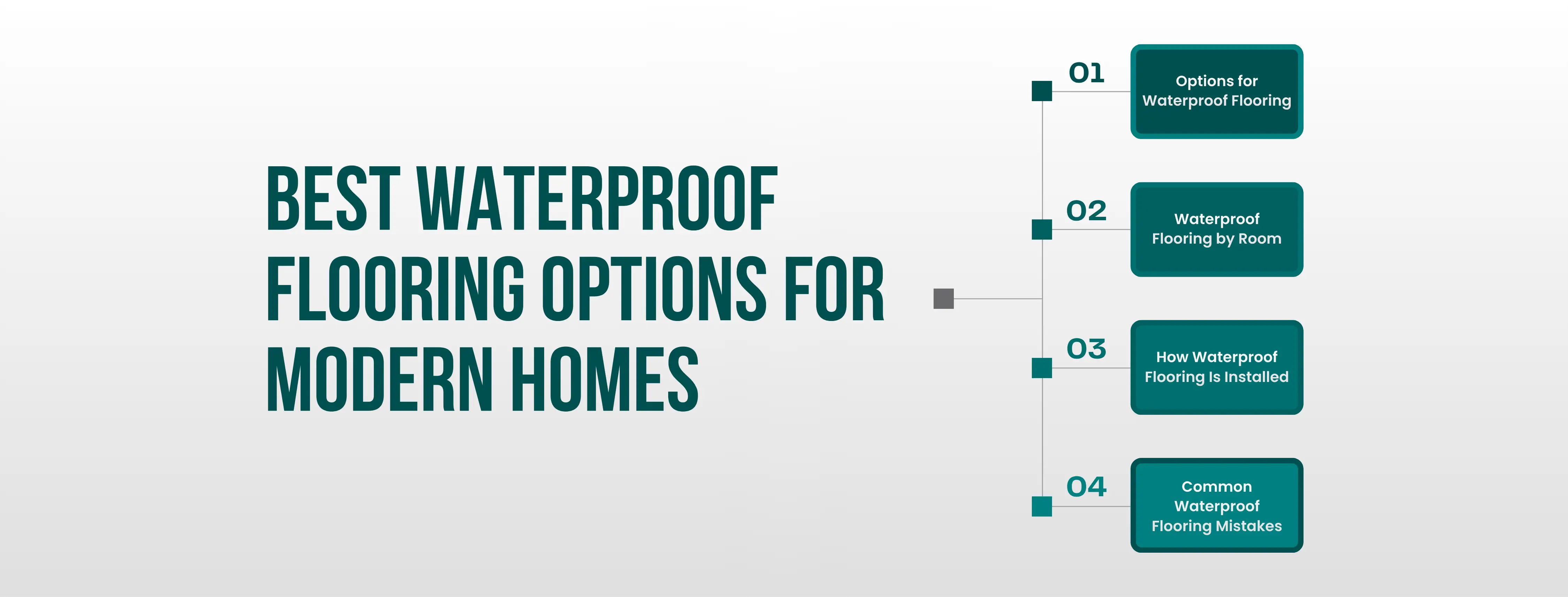
Table of Contents
What Waterproof Flooring Really Means
Benefits of Choosing Waterproof Flooring
Options for Waterproof Flooring
Waterproof Flooring by Different Home Area
How Waterproof Flooring Is Installed
Waterproof Flooring for Pet Owners
Cost of Waterproof Flooring Installation
Maintenance and Care for Waterproof Floors
Common Mistakes to Avoid With Waterproof Flooring
When to Choose Waterproof vs Water-Resistant Flooring
Final Thoughts
Waterproof flooring is designed to withstand moisture without swelling, warping, or getting damaged, even when water sits on the surface for long periods. Understanding the difference between waterproof and water-resistant helps homeowners choose the right material for each room.
Waterproof flooring can handle standing water, leaks, and spills without absorbing moisture. These materials are safe for bathrooms, basements, laundry rooms, and any space where water is common.
Water-resistant flooring, on the other hand, can handle small spills and everyday moisture, but not long-term exposure. It must be cleaned quickly to prevent damage.
Some common materials are given below:
Waterproof flooring offers more than spill protection, it adds durability, safety, and long-term value to your home. Whether you have pets, kids, or high-traffic rooms, these floors remain stable and attractive for years.
Waterproof floors stop moisture from seeping into the subfloor, preventing mold growth, musty odors, and structural damage. This makes them ideal for bathrooms, basements, and laundry rooms.
Because waterproof materials do not warp or swell, they maintain their shape and strength for many years. This long lifespan makes them a strong investment compared to traditional flooring.
These surfaces resist stains, spills, and dirt, allowing quick cleanups with a mop or vacuum. They’re perfect for homeowners who want beautiful floors without constant upkeep.
Waterproof flooring handles pet accidents, muddy paws, and everyday messes without staining or absorbing odors. Many options also come with scratch-resistant coatings for added durability.
Rooms like bathrooms, kitchens, mudrooms, and basements face regular moisture. Waterproof floors stay stable in these areas, preventing buckling, peeling, or damage caused by humidity.
Waterproof flooring comes in many styles, each offering different levels of protection, durability, and design. Below are the most reliable waterproof options homeowners choose for kitchens, bathrooms, basements, and busy living areas.
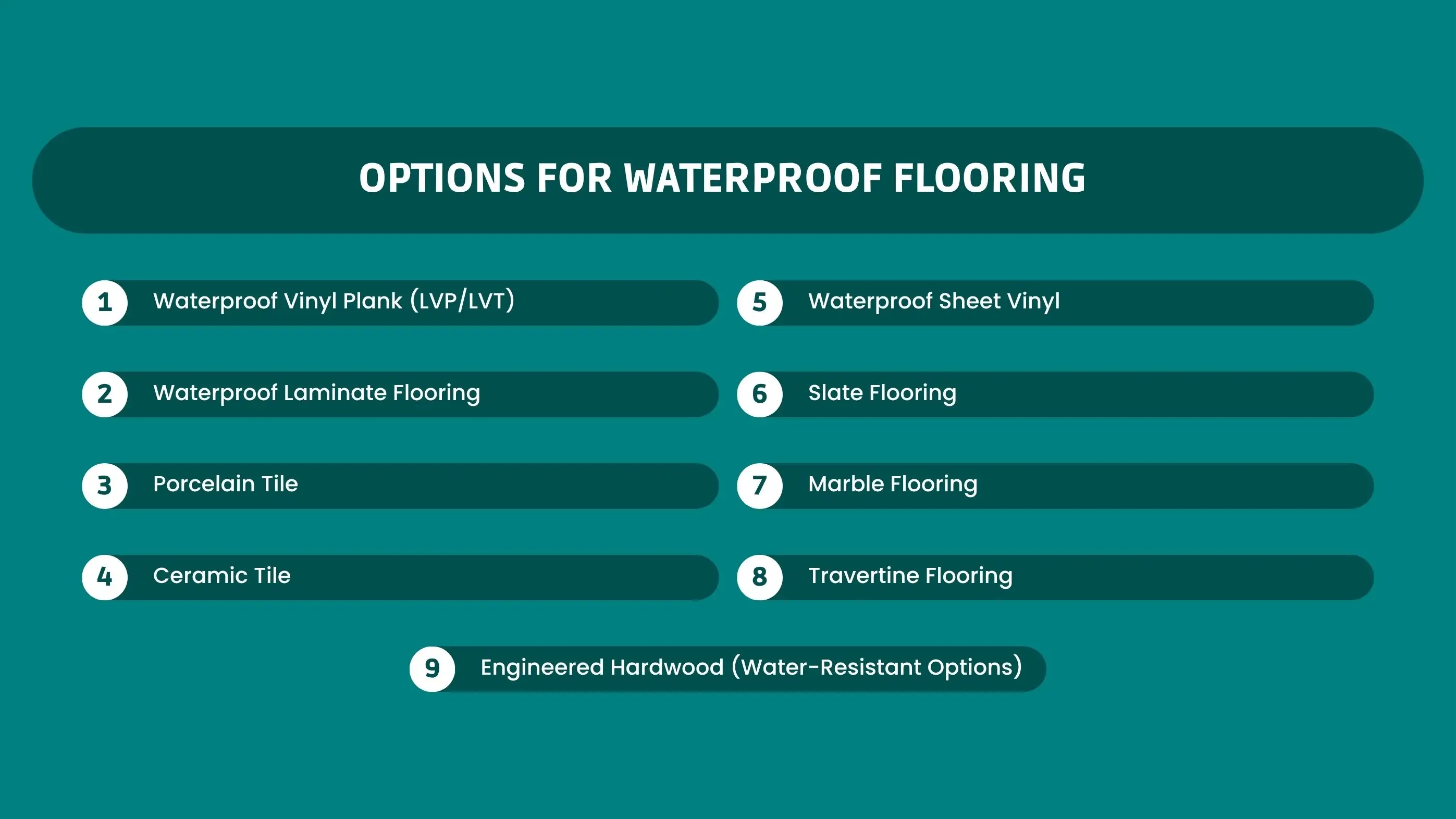
Waterproof vinyl plank is one of the most popular choices because it has a 100% waterproof core that won’t swell or warp. Its click-lock installation makes it easy to install over most subfloors, even concrete. LVP/LVT also offers highly realistic wood and stone designs, making it both durable and stylish for any room.
Modern waterproof laminate uses sealed edges, tight locking systems, and water-resistant cores to prevent moisture from entering the boards. It looks like hardwood but withstands spills far better than traditional laminate. While not as waterproof as vinyl, it performs well in kitchens and hallways with everyday moisture.
Porcelain and ceramic tile are naturally waterproof, making them perfect for bathrooms, showers, laundry rooms, and kitchens. Their dense surface prevents water absorption, and when installed with proper grout and sealing, they offer unmatched durability. These tiles are also resistant to stains, heat, and heavy foot traffic.
Sheet vinyl provides seamless, edge-to-edge coverage, which prevents water from seeping underneath the flooring. It’s a great option for bathrooms and kitchens where spills or pooling water are common. Its flexible surface, easy installation, and low maintenance make it ideal for budget-conscious homeowners.
Natural stone flooring has strong water-resistant properties and offers a premium look. However, stones like slate and travertine require regular sealing to prevent stains and moisture absorption. Their textured surfaces can also provide slip resistance, which is helpful in wet areas like entryways and bathrooms.
Engineered hardwood includes moisture barriers within its layered core, making it safer than solid wood in areas with mild humidity. While it is not fully waterproof, it can handle occasional spills when cleaned quickly. It’s a good choice for living rooms, bedrooms, and dining areas where homeowners still want a real-wood look.
Every room in the home has different moisture levels, traffic patterns, and cleaning needs. Choosing the right waterproof flooring for each space ensures better durability, easier maintenance, and long-term protection against water damage.
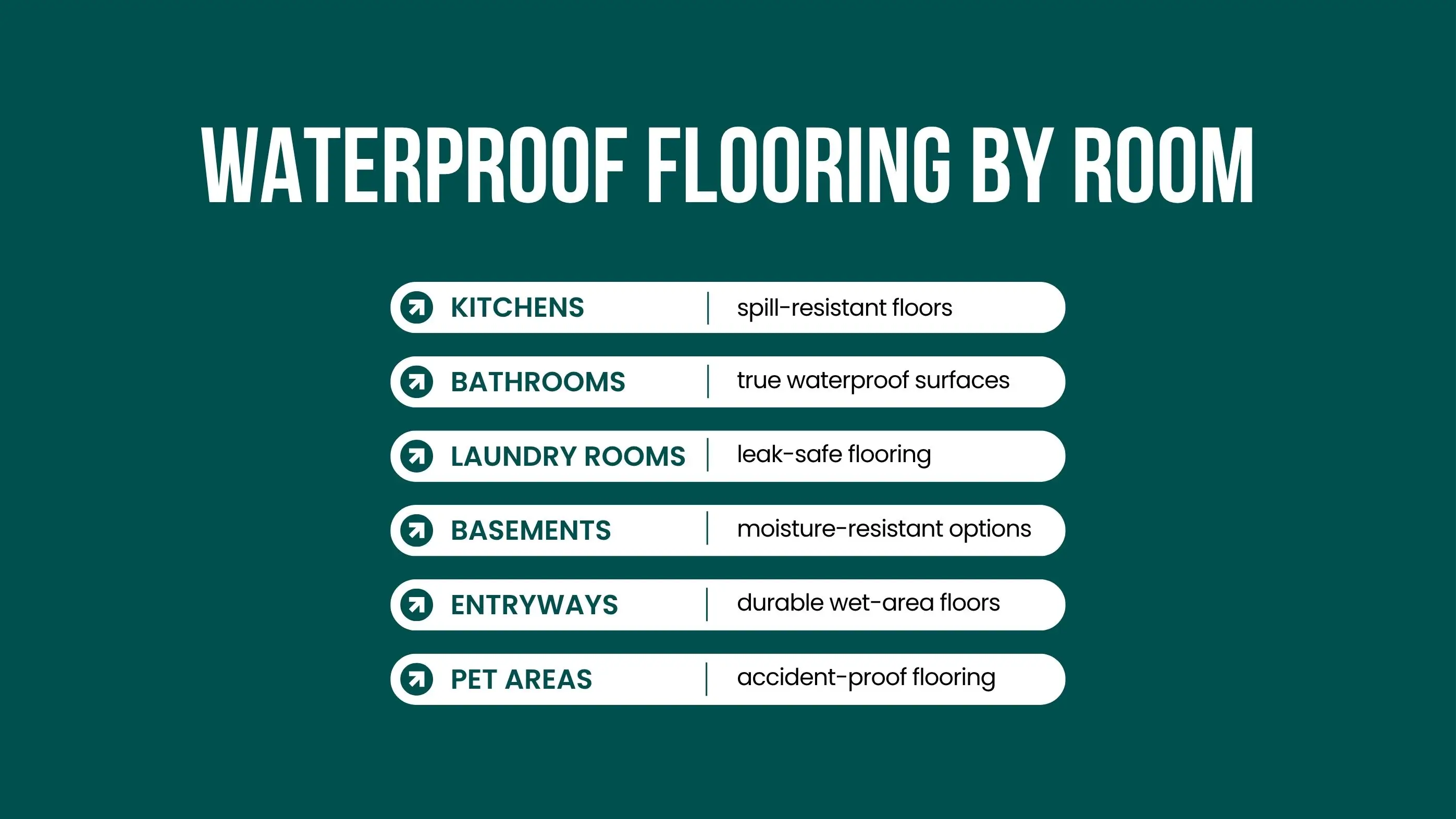
Kitchens need waterproof flooring that can handle spills, splashes, and dropped items. Materials like LVP/LVT, tile, and waterproof laminate offer stain resistance, quick cleaning, and strong durability for daily cooking activities. Their rigid surfaces stay stable even with constant foot traffic and moisture exposure.
Bathrooms face standing water, steam, and high humidity, making true waterproof materials essential. Porcelain tile, ceramic tile, and sheet vinyl are the best choices because they resist warping, swelling, and mold growth. These floors stay stable even around tubs, showers, and sinks where water exposure is common.
Laundry rooms need flooring that can withstand leaks, overflows, and vibration from appliances. LVP, sheet vinyl, and tile are ideal because they prevent water from reaching the subfloor. Their waterproof construction ensures long-lasting protection even during accidental spills or hose failures.
Basements often deal with moisture, humidity, and below-grade temperature changes. LVP, ceramic tile, and sealed concrete perform best because they resist mold, do not absorb water, and remain stable in damp environments. These options prevent warping and offer reliable safety in spaces prone to moisture.
Entryways and mudrooms see dirt, rainwater, and frequent foot and pet traffic. Waterproof vinyl plank, tile, and stone flooring handles wet shoes, mud, and cleaning without damage. Their durable surfaces prevent staining and make everyday cleaning quick and easy.
Pet zones require waterproof flooring that resists accidents, scratches, and odors. LVP, tile, and sealed stone perform well because they don’t absorb moisture or trap smells. Their scratch-resistant surfaces also handle active pets, making them ideal for homes with cats and dogs.
Installing waterproof flooring requires proper preparation to ensure long-term durability. A good installation starts with checking the subfloor, adding the right moisture barriers, leveling the surface, and using correct locking or bonding techniques. These steps help prevent water intrusion, swelling, and future flooring damage.
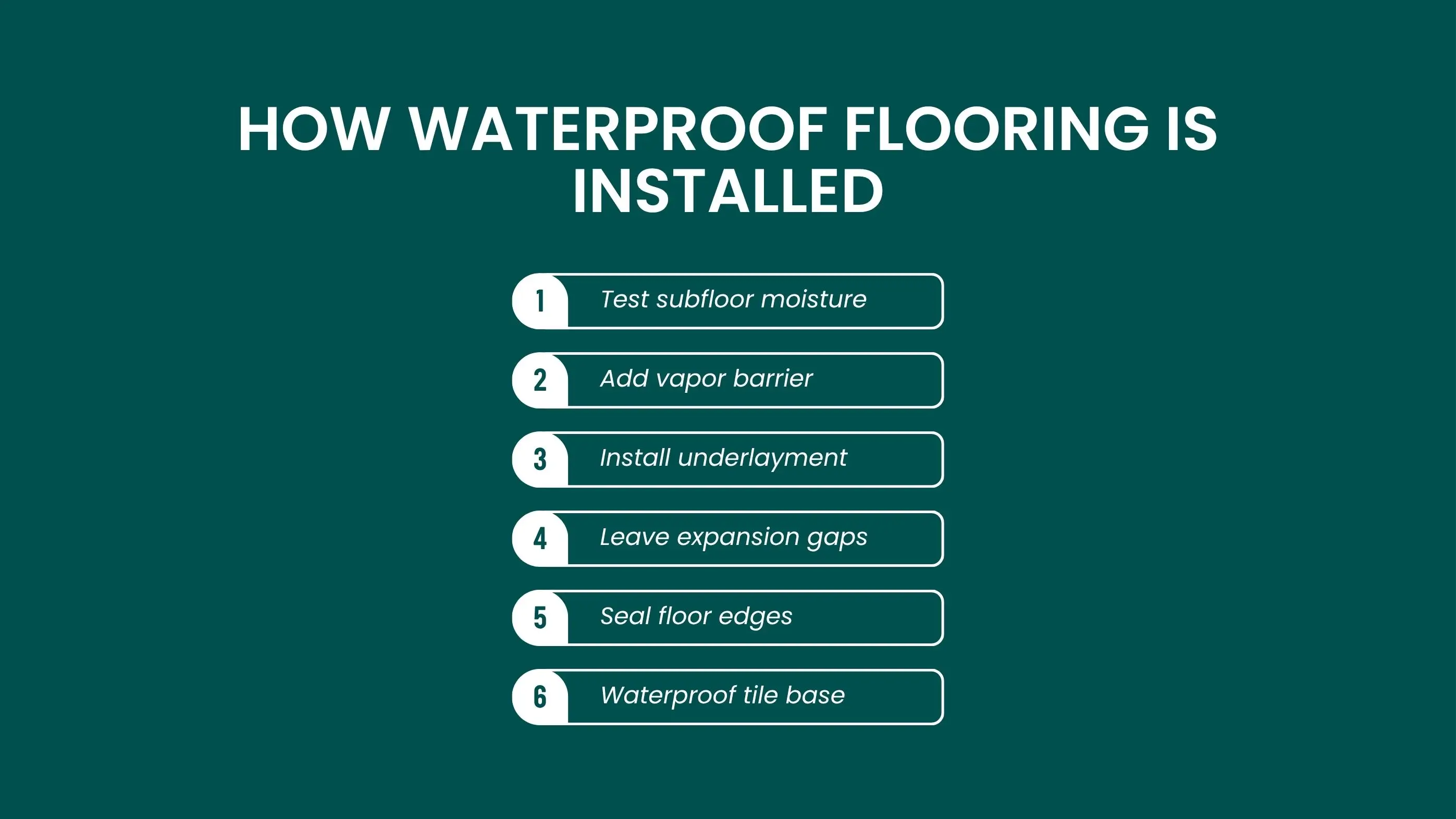
Before installation begins, professionals use a moisture meter to check the subfloor’s humidity levels. This simple test ensures the surface is dry enough for waterproof vinyl, laminate, or tile. If moisture levels are too high, issues like mold, cupping, or adhesive failure can occur.
Some waterproof floors still need vapor barriers or underlayments.
These layers prevent moisture from reaching the flooring and help keep surfaces level.
Even waterproof floors need expansion gaps around walls to prevent buckling. Installers leave small gaps and later cover them with trim or quarter round. For extra protection, edges or seams may be sealed to block water from slipping beneath the surface, especially in bathrooms, laundry rooms, and kitchens.
Tile requires extra waterproofing steps to stay leak-proof. Installers place cement board under the tile for strength, apply thinset mortar, and add waterproof membranes to protect against moisture. After the tiles are set and grouted, grout sealing keeps water and stains from penetrating the surface.
Pets bring joy, but also spills, scratches, and accidents. Waterproof flooring makes cleanup easier and keeps your home smelling fresh. The best pet-friendly surfaces resist stains, prevent odors from sinking in, and stay strong even with claws and frequent activity.
Luxury vinyl plank (LVP) is the top choice for pet owners because it’s 100% waterproof, scratch-resistant, and easy to mop. It doesn’t absorb odors from urine and won’t swell if accidents aren’t cleaned immediately. Its durable wear layer also protects against claw marks and rough play.
Waterproof floors prevent liquids from soaking into seams or subfloors, stopping the smell before it spreads. Vinyl, tile, and sealed stone block moisture completely, making pet accidents fast and stress-free to clean.
Pet fur, mud, and spills can be wiped away with a damp cloth or mop. Waterproof surfaces require very little maintenance and stay fresh even in homes with multiple pets.
The total cost depends on the flooring material, labor rates, and room size. Waterproof flooring is often more affordable long-term because it lasts longer and avoids moisture damage repairs.
| Flooring Type | Material Cost (Per Sq. Ft.) | Labor Cost (Per Sq. Ft.) | Total Installed Cost |
|---|---|---|---|
| LVP / LVT (Waterproof Vinyl) | $2 – $5 | $2 – $4 | $4 – $9 |
| Waterproof Laminate | $2 – $4 | $2 – $4 | $4 – $8 |
| Porcelain / Ceramic Tile | $3 – $8 | $6 – $10 | $9 – $18 |
| Sheet Vinyl | $1 – $3 | $1 – $3 | $2 – $6 |
| Stone Flooring | $5 – $12 | $8 – $15 | $13 – $27 |
Waterproof flooring lasts longer and reduces repair costs from moisture, pets, and spills. Homeowners often save money over time by avoiding mold removal, subfloor repairs, and flooring replacements.
Even though waterproof flooring is designed to resist moisture, proper care helps it stay clean, durable, and attractive for many years. A few simple habits can protect the surface, prevent stains, and keep the waterproof layer performing at its best. Some Major points for maintenance and care are given below:
Even waterproof flooring can fail when installed incorrectly. Avoiding the issues below ensures the floor performs as intended, resists moisture, and maintains long-term durability.
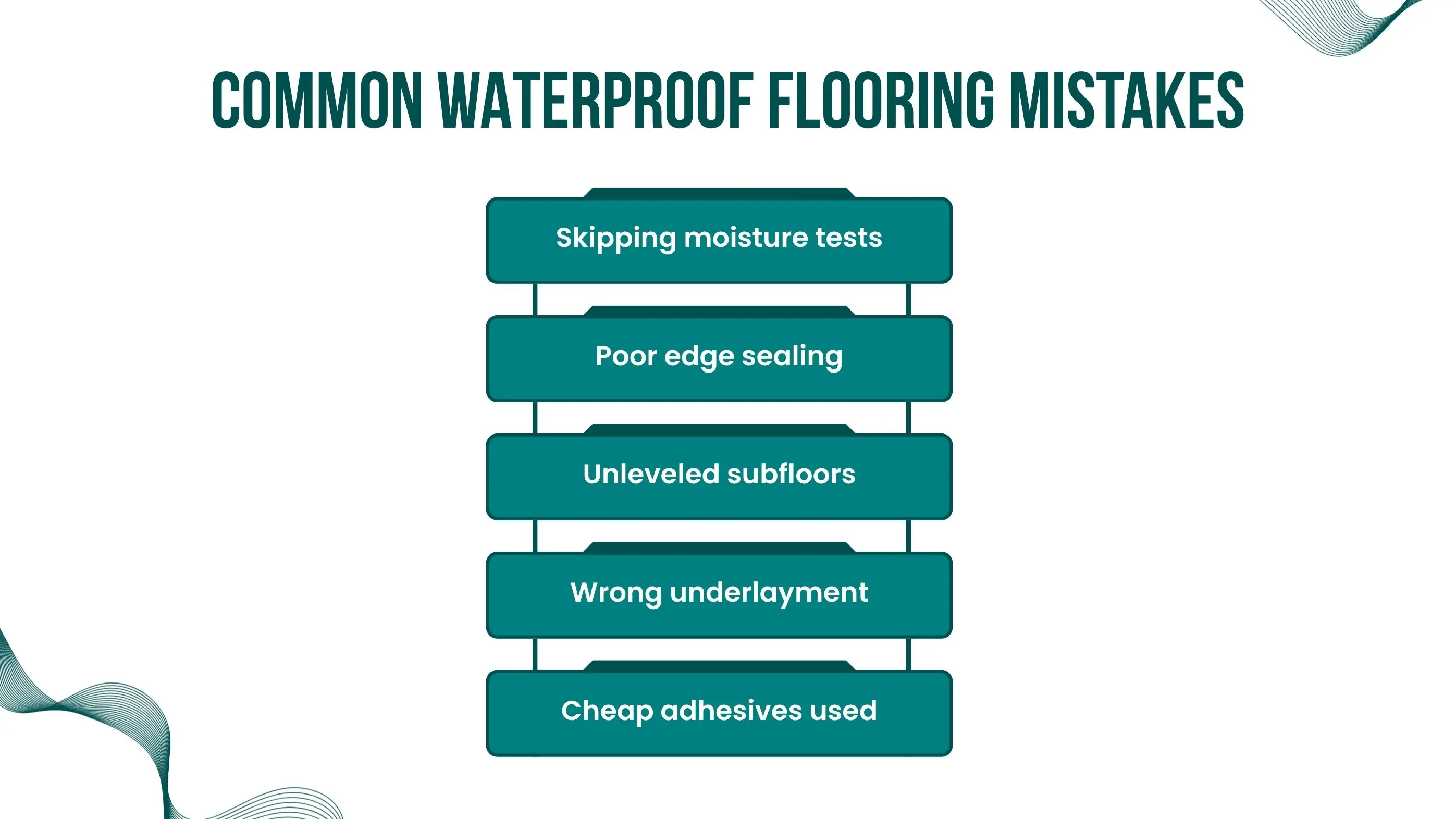
Not checking the subfloor’s moisture levels can lead to mold, swelling, or adhesive failure. Waterproof flooring still requires a dry, stable base to prevent hidden damage.
If edges and perimeter gaps are not sealed correctly, water can slip underneath the flooring and become trapped. This leads to subfloor damage, odors, and long-term moisture issues.
Dips, high spots, and leftover debris create an unstable surface that causes shifting, clicking, or premature wear. A level, clean subfloor is essential for proper waterproof flooring installation.
Cheap adhesives or the wrong type of underlayment reduce waterproof performance and shorten the floor’s lifespan. Proper materials ensure full moisture protection and secure installation.
Choosing between waterproof and water-resistant flooring depends on how much moisture a room experiences and how durable you need the surface to be. Each option offers different levels of protection, so understanding the difference helps you select the right flooring for your space and avoid long-term damage.
Waterproof flooring is the best choice for areas exposed to heavy moisture, spills, or standing water. Use it in bathrooms, basements, laundry rooms, kitchens, mudrooms, and pet zones. These materials stay stable, won’t swell or warp, and protect the subfloor from long-term damage.
Water-resistant flooring works well in rooms that only face occasional moisture or light spills. Living rooms, bedrooms, hallways, and offices usually don’t require full waterproof protection. These floors offer good durability and everyday spill resistance but shouldn’t be exposed to large leaks or prolonged water contact.
Waterproof flooring offers one of the best ways to protect your home from spills, moisture, and daily wear while keeping every room looking clean and stylish. With options like vinyl plank, tile, stone, and waterproof laminate, homeowners can match durability with design in any space. Choosing the right floor for each room, whether fully waterproof or water-resistant, ensures long-lasting performance and fewer maintenance worries. When installed correctly and cared for properly, waterproof flooring can handle pets, kids, and high-traffic areas with ease. It’s a smart, reliable investment that keeps your home comfortable, safe, and beautiful for years.
No. Vinyl is waterproof, but it is not designed for constant water submersion. Tile or stone is the proper choice for shower interiors.
It resists spills and surface moisture but cannot handle standing water for long periods. Vinyl is a safer option for bathrooms and wet areas.
Yes, a vapor barrier is recommended, especially over concrete slabs or basement floors. It prevents mold, protects adhesives, and keeps the warranty valid.
Luxury vinyl plank (LVP) and tile are the most reliable options. Carpet, hardwood, and laminate are not recommended below grade.
Urine won’t penetrate the surface, but long exposure can cause odor or discoloration. Cleaning spills quickly prevents problems.
Join our mailing list for exclusive updates, expert tips, and special offers tailored to your needs. Be the first to know about the latest in home services.

Renovize Home is a platform that supports homeowners from planning to renovation. Whether it’s Renovize AI for guidance or a one-on-one call with Pro Finder, we understand your project and match you with local contractors tailored to your needs.
Who We Are
About Renovize HomeGet in TouchHomeownwer Support:
Coming Soon!
General Inquiries:
support@renovizehome.com
Head Office:
24 Greenway Plaza, STE 1800M, Houston, TX 77046.