
Explore All
BROWSE BY CATEGORY
Interior
Exterior
Home Essentials
Homeowner Tools
Blogs & Guides
Find a Pro
Book Your Appointment Now
Home Essentials
About Renovize Home
Explore All
BROWSE BY CATEGORY
Interior
Exterior
Home Essentials
Homeowner Tools
Blogs & Guides
Find a Pro
Book Your Appointment Now
Home Essentials
About Renovize Home
Last Updated 2025-11-25
Loose or hollow-sounding flooring is more than a cosmetic issue, it signals weakened adhesion, subfloor gaps, or moisture problems hiding beneath the surface. When tiles shift or lift, they create trip hazards, grout cracks, and irritating noises with every step.
Proper repair restores full bond strength, eliminates movement, and prevents further damage from spreading across the floor. Whether caused by poor installation, old thinset, or structural changes in the subfloor, fixing loose flooring early ensures a safe, solid, and long-lasting surface throughout your home.
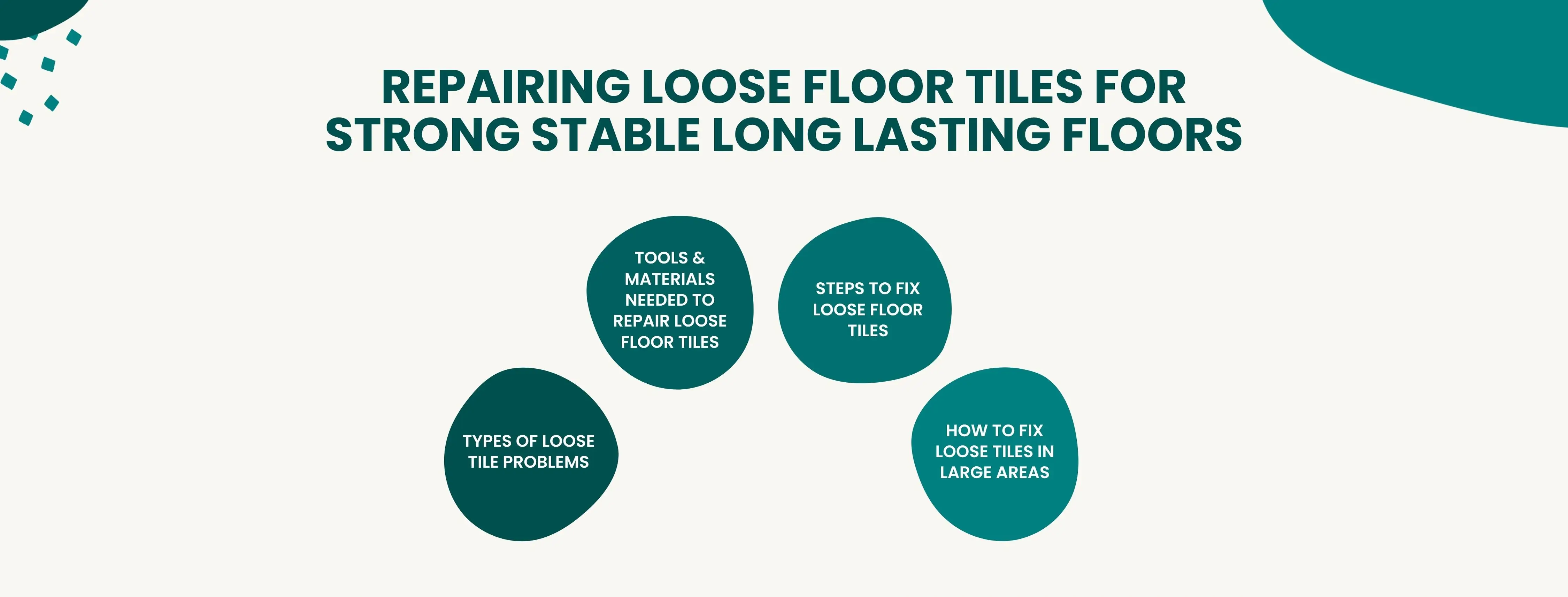
Table of Contents
Why Floor Tiles Become Loose and How to Identify the Issue
Types of Loose Tile Problems You Can Repair
Tools and Materials Needed to Fix Loose Floor Tiles
Step-by-Step Process to Fix Loose Floor Tiles
Fixing Loose Floor Tiles Without Removing Them
How to Fix Loose Tiles in Large Areas
Preventing Loose Tiles in the Future
Professional Loose Tile Repair Services
Final Thoughts
Floor tiles loosen when the bond between the tile, thinset, and subfloor weakens over time. This can happen due to poor thinset coverage during installation, adhesive failure caused by age, or movement in the subfloor that creates gaps under the tile. Moisture is another major cause water seeps into weak spots, softening thinset and leading to gradual debonding. In older homes, structural settling or temperature changes can also break the bond and create hollow pockets beneath tiles.
You can identify loose or hollow tiles through several clear warning signs. A tile that sounds hollow when tapped indicates missing or deteriorated adhesive underneath. Movement or rocking when stepped on shows the tile has lifted from the thinset bed. Lifted corners, shifting tiles, and subtle popping noises are also signs of failing adhesion. Cracked or crumbling grout often appears as the first visual indicator, signaling that the tile is no longer secure and needs repair before the damage spreads.
Loose tile problems show up in different ways, and each issue affects your floor’s safety, stability, and appearance. Some tiles shift visibly, while others only sound hollow but still need urgent attention to prevent full detachment. Understanding the type of looseness helps you choose the right repair method whether it’s rebonding, re-grouting, or addressing moisture problems beneath the surface.
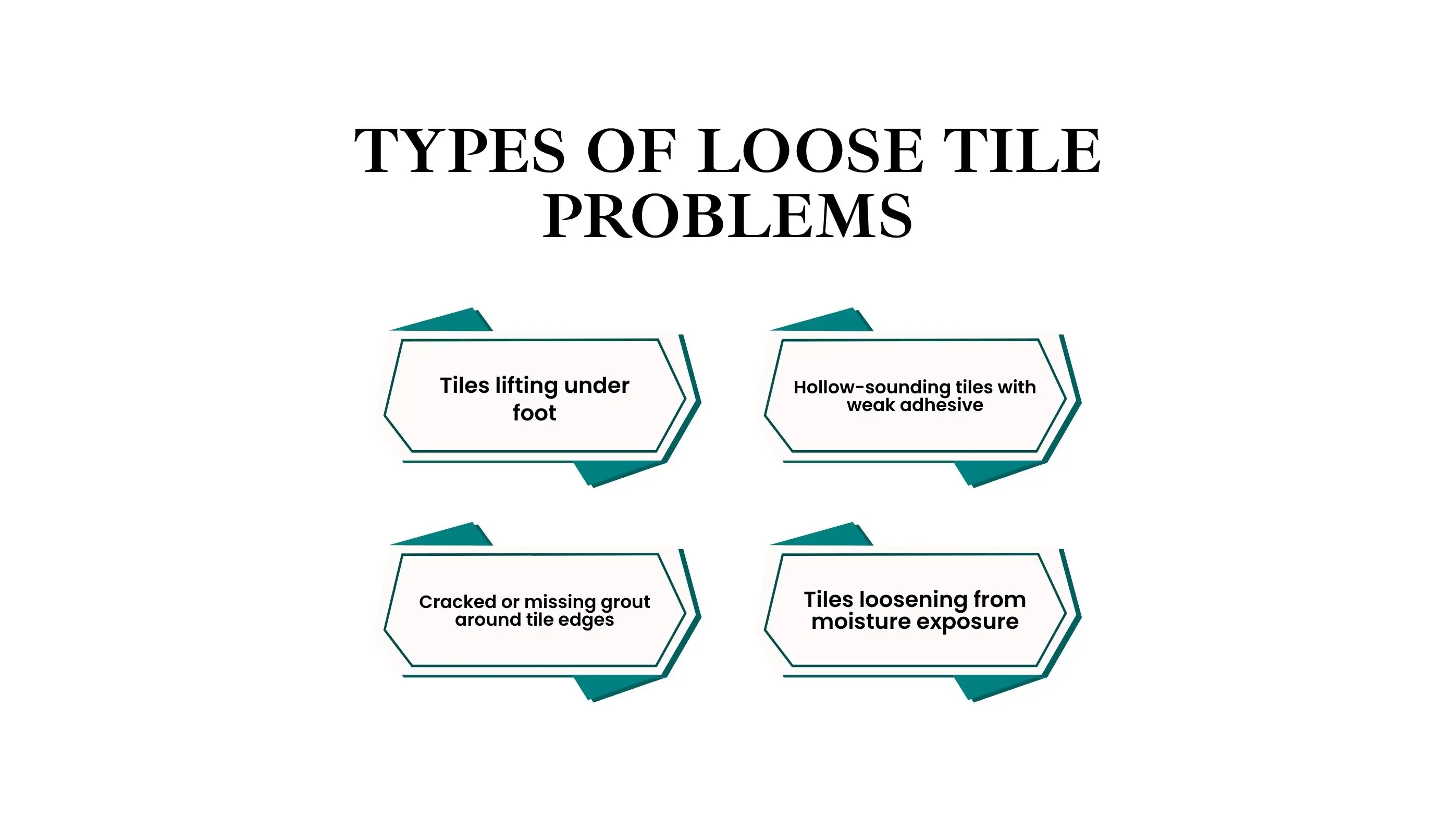
Tiles that shift when stepped on have lost their bond with the thinset, often due to poor initial coverage, moisture intrusion, or subfloor movement. As the adhesive weakens, the tile no longer sits firmly, causing rocking or clicking noises. This type of looseness becomes a safety hazard because tiles can crack, pop up, or cause trips if not secured quickly.
Hollow tiles may still look intact, but the sound indicates missing or deteriorated adhesive beneath the surface. These tiles are only partially supported and will eventually loosen completely if ignored. Re-bonding hollow tiles early prevents widespread detachment and saves surrounding tiles from cracking due to uneven support.
Cracked, crumbling, or missing grout is often the first visible sign of tile movement. When grout breaks away, tile edges lose lateral support, making it easier for tiles to shift under pressure. If left unaddressed, the gaps allow dirt and moisture to enter, accelerating adhesive failure and loosening more tiles in the area.
Tiles in bathrooms, kitchens, and laundry rooms are more prone to loosening because constant moisture weakens thinset and seeps into grout lines. Water exposure can also cause subfloor swelling, which lifts tiles from below. In these areas, repairs must address both the tile bond and any underlying moisture issues to ensure long-lasting stability.
Fixing loose or hollow tiles is easier and more successful when you use the correct tools. Each item helps remove, re-bond, or reset the tile safely and securely. Below is a clear list of what homeowners or professionals typically need:
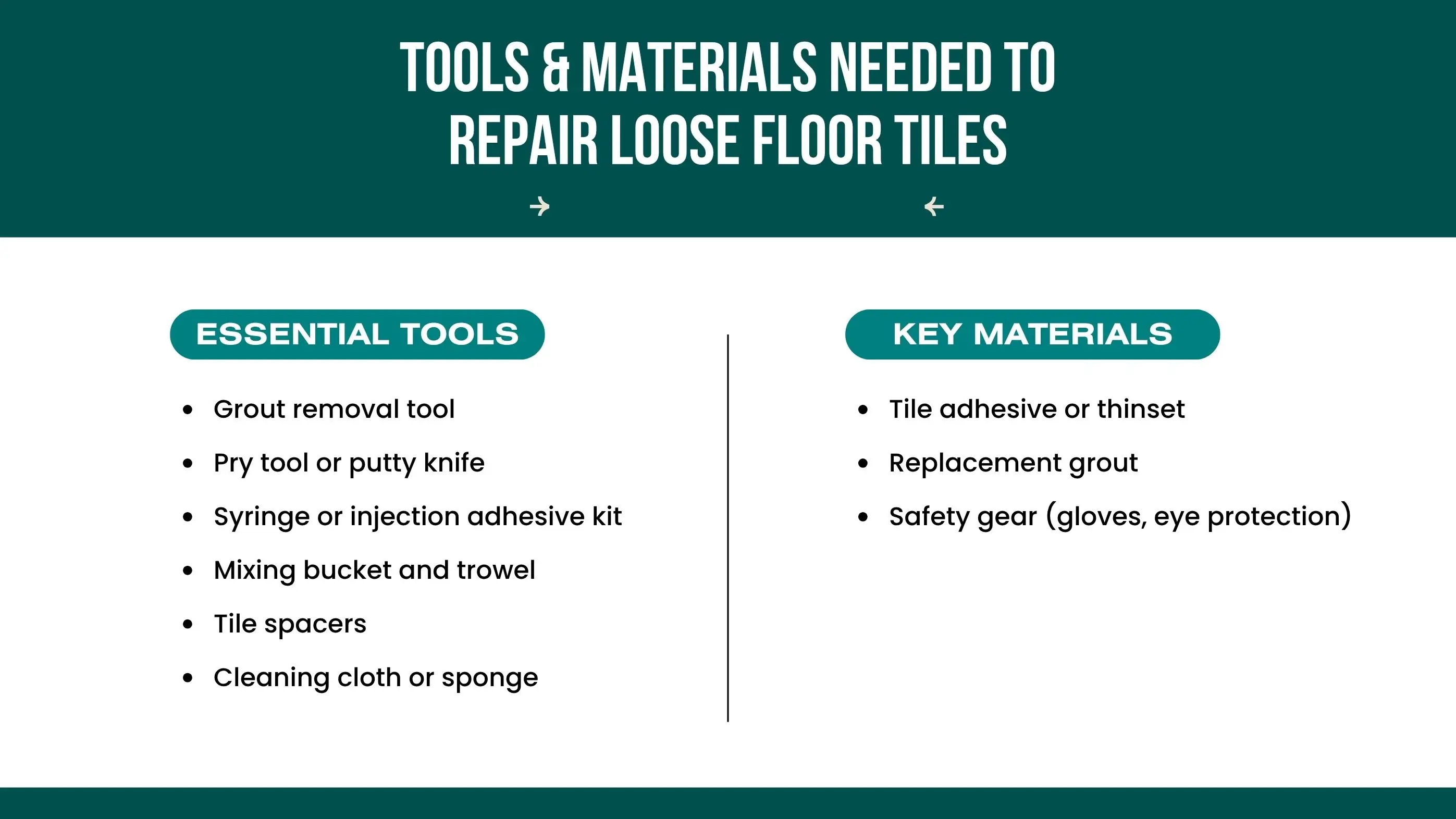
Thinset mortar is the most common bonding material for reattaching loose tiles because it provides a strong mechanical and chemical bond. For precision repairs, epoxy-based adhesives offer superior strength in areas where thinset cannot be easily applied.
Tile-bonding adhesives, including flexible polymer-modified formulas, help resist subfloor movement and temperature changes. Injection glues delivered through a syringe can re-bond hollow tiles without fully removing them, making them effective for targeted, minimally invasive repairs.
Repairing loose or hollow floor tiles requires careful preparation, clean removal, and proper re-bonding to ensure the repair lasts. By following a structured process, homeowners can restore tile stability, eliminate hollow sounds, and prevent further cracking or shifting. Here’s the clear, easy-to-follow method professionals use for reliable results.
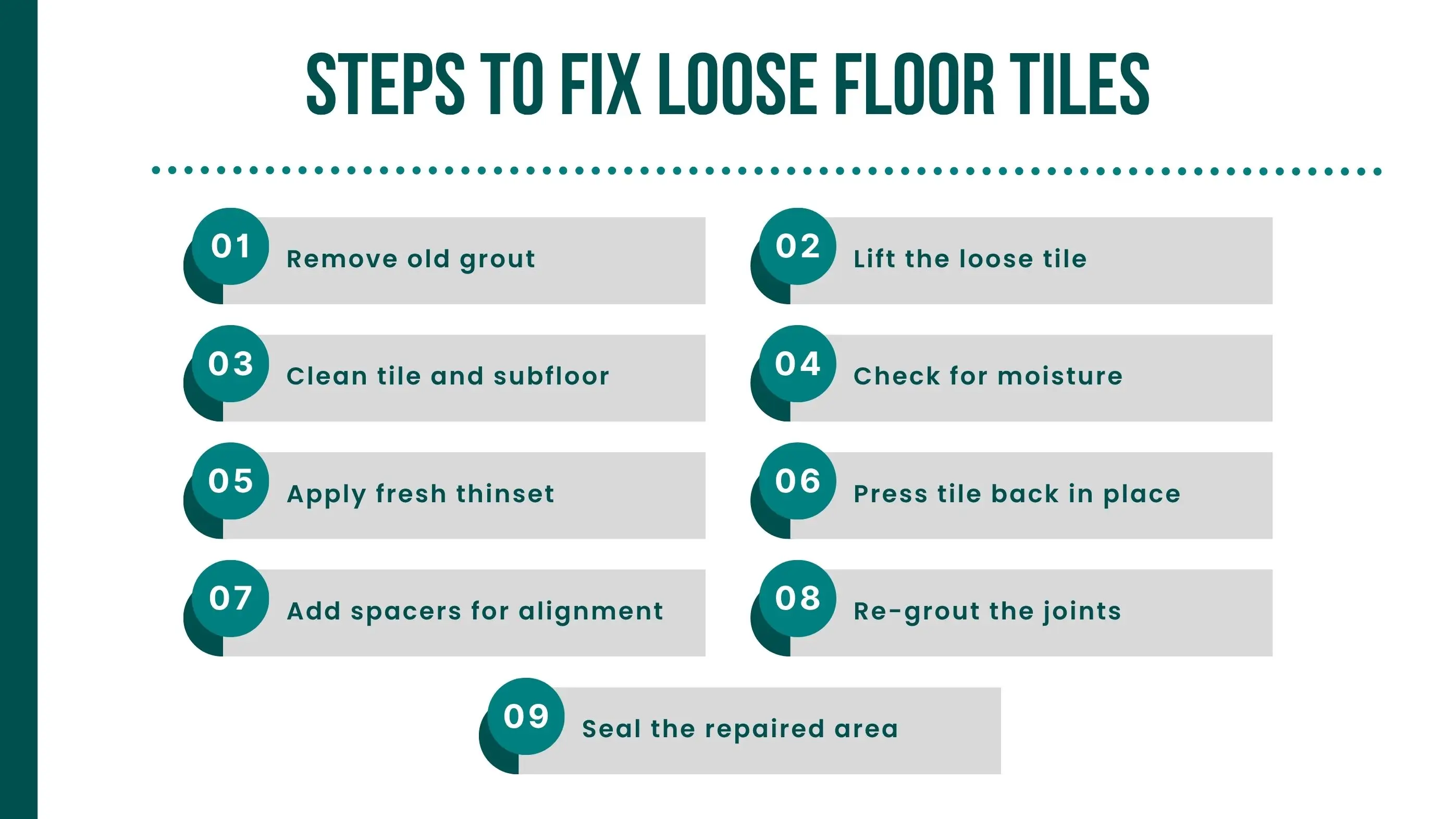
Begin by removing debris, dirt, and any remaining grout around the loose tile using a grout saw. Cleaning this perimeter prevents damage to surrounding tiles when lifting the loose piece. Once the edges are cleared, gently tap the tile to confirm which areas are unstable, ensuring you only remove the tiles that truly need repair.
To safely remove the tile, use a suction cup or a thin pry tool to lift it without cracking the surface. Apply gentle pressure and work slowly around each edge; forcing the tile can cause breakage. If the tile is stubborn, a little heat from a heat gun softens old adhesive, making lifting easier and safer.
Once removed, scrape away old thinset from both the subfloor and the back of the tile until both surfaces are smooth. Leveling bumps or uneven patches ensures the tile bonds tightly when reinstalled. During cleaning, check for moisture or soft spots, these indicate leaks or subfloor issues that must be fixed before reattaching the tile.
Spread fresh thinset mortar evenly using a notched trowel, ensuring full coverage to prevent air pockets that can lead to future hollowness. Apply adhesive to both the tile and the floor if needed for extra strength. The goal is a solid, continuous bond that eliminates voids and keeps the tile firmly in place.
Press the tile gently but firmly into the new thinset, using a slight twisting motion to ensure it settles evenly. Use spacers to maintain consistent grout lines and check alignment with surrounding tiles to avoid uneven edges. A level or tapping block helps make sure the tile sits perfectly flush with the rest of the floor.
After the thinset cures, apply matching grout to fill the joints and reinforce tile stability. Smooth the grout lines for a uniform finish, then allow it to dry fully. Finally, apply a grout sealer to protect against moisture, prevent cracking, and reduce the risk of future tile loosening especially in bathrooms or kitchens.
Homeowners often want to know how to fix a loose floor tile without removing it, especially when the tile is intact and only sounds hollow. In many cases, you can re-bond the tile using injection adhesives delivered through a syringe, allowing the thinset void beneath the tile to be filled without lifting or damaging the tile surface.
This method restores stability, eliminates hollow sounds, and prevents further loosening making it a useful solution for tiles that are still level and visually undamaged.
A small hole is drilled through the grout line (not the tile) to access the hollow area underneath. A syringe filled with a specialized tile-bonding adhesive is inserted into the hole, and the adhesive is injected until the cavity beneath the tile is fully filled.
As the glue spreads, it reconnects the tile to the subfloor and creates a solid, supportive bond. Once set, the tile feels firm again, vibrations disappear, and the hollow sound is eliminated.
Injection repair is effective when the tile is hollow but still level, uncracked, and firmly attached around most edges. It’s ideal for small problem spots where thinset coverage was inadequate during the original installation. This method is especially helpful in large tiled areas where removing tiles could disrupt surrounding pieces.
If the tile rocks underfoot, lifts easily, or has significant movement, injection glue won’t provide long-term stability. Cracked tiles, moisture-damaged subfloors, and tiles with failing or missing thinset require full removal and rebonding to restore proper adhesion. If grout lines are deteriorating or water has entered beneath the tile, complete removal is the safer and more durable repair option.
Loose or hollow tiles across a wide section of the floor usually indicate a deeper installation failure rather than a simple isolated issue. Large-area debonding often happens when the original thinset didn’t achieve full coverage, the subfloor flexes under load, or moisture has weakened the adhesive bond over time.
Fixing this properly requires checking the root cause, stabilizing the underlying surface, and re-bonding multiple tiles in a single workflow to prevent repeated failures.
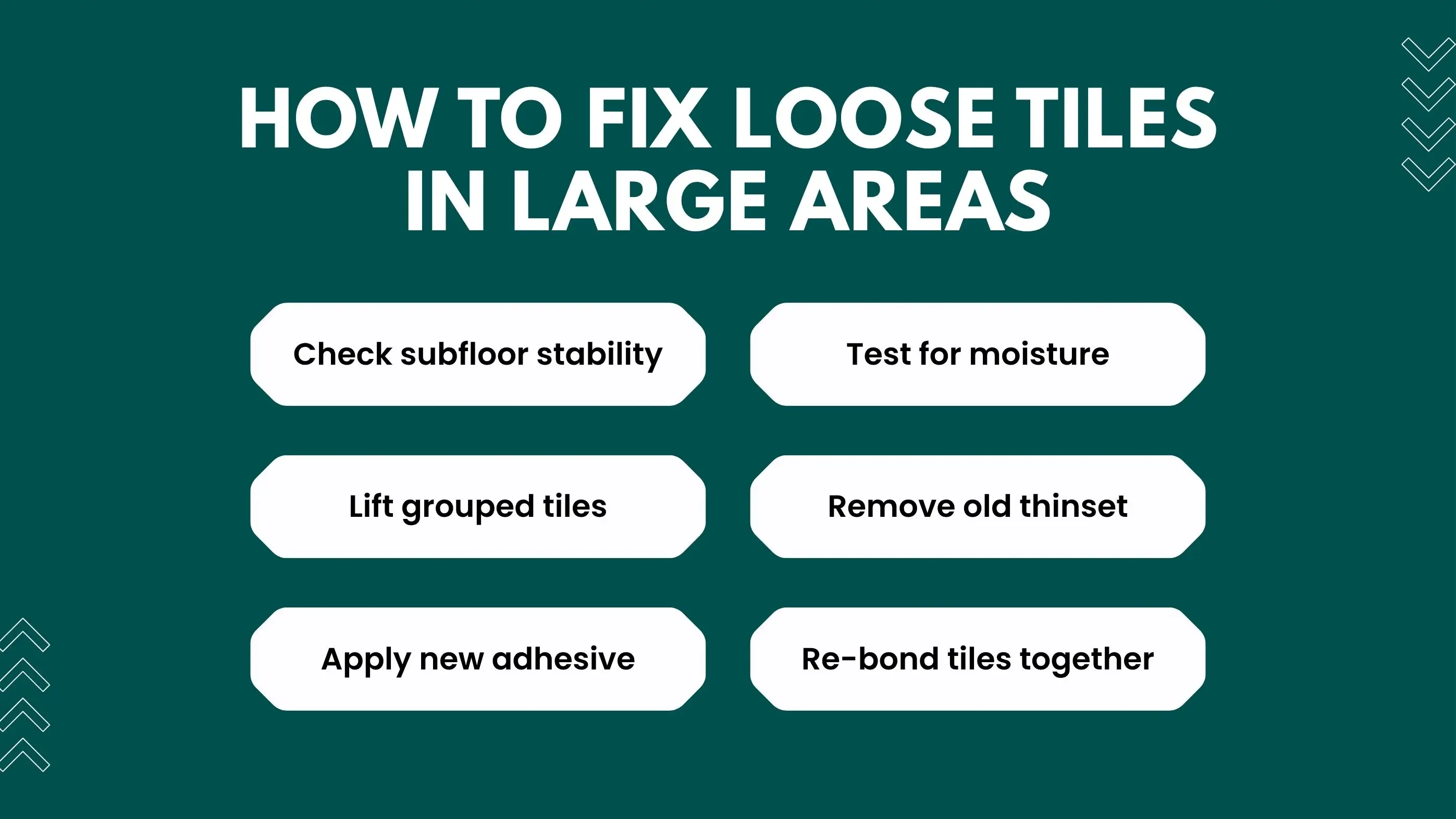
Before repairing large sections, it’s essential to test whether the subfloor is stable and dry. Small movements called deflection cause entire tile fields to loosen because rigid tiles cannot bend with the floor.
A contractor checks the subfloor for bounce, unevenness, or weak spots and reinforces the structure if needed. Moisture meters or calcium chloride tests are used to identify hidden water issues that may have softened thinset or caused rot. Correcting these problems ensures the new bond will last and prevents widespread debonding from happening again.
When several tiles are loose, they are lifted together so the underlying thinset can be removed and the surface flattened. Fresh adhesive is spread uniformly across the entire area, ensuring full coverage under every tile to avoid future hollow spots.
For sections with minimal movement, contractors may use high-strength injection adhesives to re-bond grouped tiles through grout lines without removing each tile individually. This method saves time while restoring a solid, continuous bond across the entire tile field.
Preventing tiles from becoming loose again requires consistent care, moisture control, and ensuring the flooring structure stays stable. Good maintenance habits protect the adhesive bond, while proper underlayment and expansion gaps help the floor handle temperature and movement changes without cracking or debonding. These steps keep tiles secure, noise-free, and long-lasting.
Using gentle, pH-neutral cleaners helps preserve grout and prevent slow adhesive deterioration caused by harsh chemicals. Avoid soaking the floor with large amounts of water standing moisture can seep through grout lines and weaken thinset. Sealing grout every 1–2 years reduces water absorption and prevents dirt buildup that can cause cracks or loosen tiles at the edges.
Tile floors stay secure only when the subfloor remains dry and stable. High moisture levels can soften adhesives, cause mold, and weaken the bond underneath tiles. Keeping bathrooms ventilated, fixing leaks quickly, and using dehumidifiers in basements help prevent moisture from penetrating through grout or cracks. These small steps protect the tile bond and stop widespread loosening over time.
Correct underlayment such as cement board or uncoupling membranes absorbs slight floor movement and prevents stress from transferring to the tile. Expansion joints around room edges give tiles space to expand and contract naturally. Without these, tiles may press against walls and eventually loosen or crack. Ensuring your installer uses the right underlayment and leaves proper spacing significantly extends the life of your tile floor.
Professional loose tile repair provides the precision, durability, and long-term stability that DIY fixes often fail to achieve. Experts use tools such as moisture meters, infrared scanners, and precision leveling systems to identify the exact cause of tile failure.
During repairs, professionals use high-bond adhesives, premium thinset, and dust-controlled grinding equipment to reattach tiles securely without damaging surrounding flooring. They also match grout color accurately, restore waterproofing layers, and reinforce weak subfloor sections to prevent tiles from loosening again.
This combination of technical skill and specialized tools ensures repaired tiles stay firmly bonded for years, even in high-moisture or heavy-traffic areas.
Bathrooms and showers require moisture-resistant repair methods because constant water exposure is a primary cause of tile debonding. Professionals inspect for mold behind loose tiles, check waterproof membranes, and repair any compromised areas before re-bonding tiles. Using waterproof thinset, flexible grout, and moisture-rated sealants ensures the repaired surface remains fully watertight. This prevents leaks, mildew, and long-term tile movement in humid, high-moisture environments.
Kitchens and hallways experience heavy foot traffic, which places additional pressure on loose or weak tiles. Professional repair focuses on increasing bond strength by using high-compression adhesives and ensuring complete thinset coverage beneath each tile. Experts also check for subfloor movement or unevenness and correct these issues before reinstalling the tile. This ensures the repaired tiles can withstand daily wear without shifting, cracking, or becoming hollow again.
Loose tiles over concrete often indicate slab cracks, poor thinset adhesion, or moisture migration from below. Professionals begin by assessing the concrete for movement, vapor emission, or hairline cracking that could interfere with bonding. These underlying issues are addressed using crack-isolation membranes, moisture barriers, and leveling compounds. Once the slab is stabilized, the tile is reinstalled with a polymer-modified thinset designed specifically for concrete, ensuring a strong and long-lasting bond.
Repairing loose floor tiles early prevents bigger problems like cracking, moisture damage, and spreading debonding that can compromise the entire flooring system. A proper fix restores full stability, eliminates hollow sounds, and brings back the clean, solid feel of a well-installed tile floor whether the repair involves rebonding a single hollow tile or addressing larger subfloor issues. With the right tools, adhesives, and moisture control, these repairs can last for decades, keeping your floors safe, durable, and looking their best.
Yes, loose tiles can crack under pressure, causing sharp edges and tripping risks. They also allow water to seep underneath, leading to mold growth, adhesive failure, and long-term subfloor damage if not addressed promptly.
Grout typically cracks when the tile beneath it is shifting. This movement often comes from poor thinset coverage, an uneven or flexible subfloor, or moisture expansion. Replacing grout alone won’t solve the issue because the tile itself needs to be stabilized.
Yes, as long as the tile is still intact. Adhesive-injection repair uses a syringe to push bonding glue beneath the tile, filling voids and restoring adhesion without removing the tile. It’s a fast fix for tiles that sound hollow but haven’t broken.
Tiles can loosen over time due to aging adhesives, repeated moisture exposure, foundation shifts, temperature fluctuations, improper thinset coverage, or grout deterioration. Even well-installed floors can develop hollow spots as materials expand and contract.
When repaired with high-bond adhesives or fresh thinset on a stable subfloor, the fixed tile can last 10–25 years similar to a new installation. Longevity mainly depends on moisture control, traffic levels, and the condition of the substrate.
Join our mailing list for exclusive updates, expert tips, and special offers tailored to your needs. Be the first to know about the latest in home services.

Renovize Home is a platform that supports homeowners from planning to renovation. Whether it’s Renovize AI for guidance or a one-on-one call with Pro Finder, we understand your project and match you with local contractors tailored to your needs.
Who We Are
About Renovize HomeGet in TouchHomeownwer Support:
Coming Soon!
General Inquiries:
support@renovizehome.com
Head Office:
24 Greenway Plaza, STE 1800M, Houston, TX 77046.