
Explore All
BROWSE BY CATEGORY
Interior
Exterior
Home Essentials
Homeowner Tools
Blogs & Guides
Find a Pro
Book Your Appointment Now
Home Essentials
About Renovize Home
Explore All
BROWSE BY CATEGORY
Interior
Exterior
Home Essentials
Homeowner Tools
Blogs & Guides
Find a Pro
Book Your Appointment Now
Home Essentials
About Renovize Home
Last Updated 2025-11-26
Damaged flooring planks can make your entire floor look worn, uneven, or unsafe. Scratches, cracks, and loose boards not only ruin the appearance of your home but can also create tripping hazards and lead to bigger structural issues if ignored.
Whether your planks are hardwood, laminate, or vinyl, the good news is that most surface damage can be repaired with simple tools, while deeper problems can be fixed by replacing only the affected boards. In this, you will get to know how to identify different types of plank damage, how to repair them correctly, and how to protect your floor so it stays smooth, strong, and long-lasting.
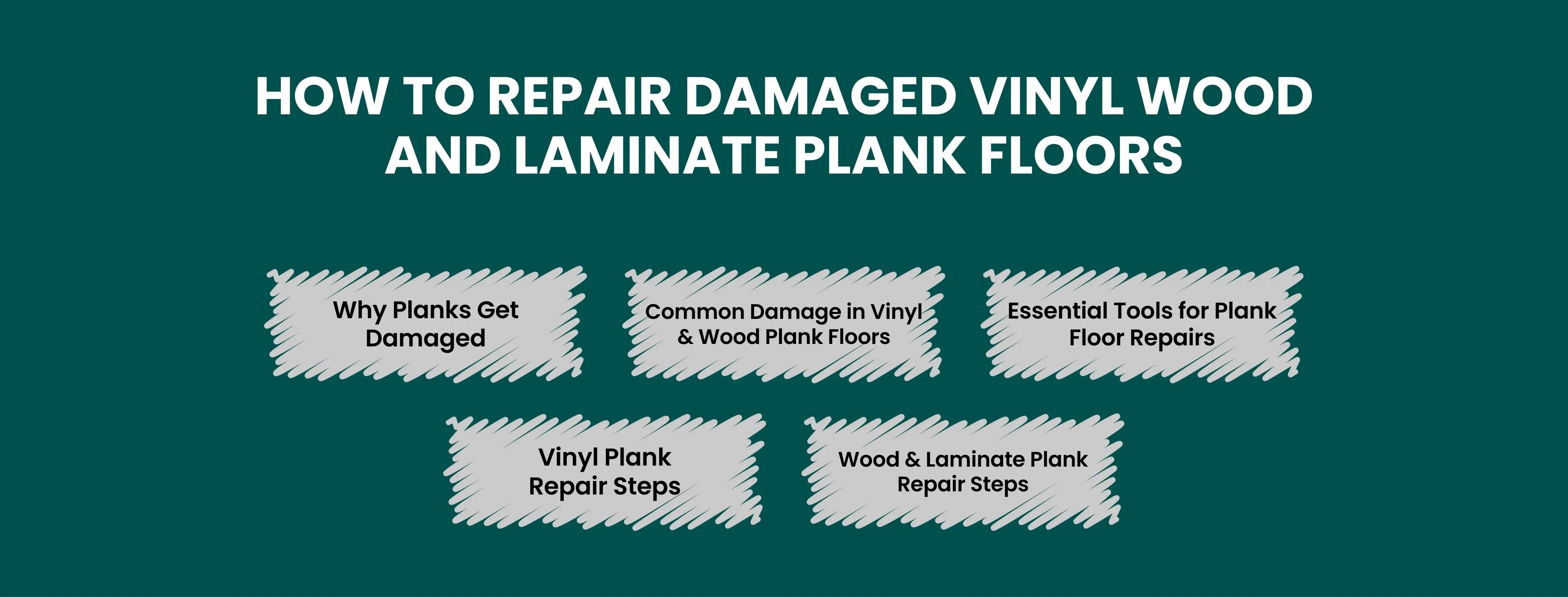
Table of Contents
Why Planks Get Damaged and How to Identify the Issue
Types of Damage Seen in Vinyl and Wood Plank Floors
Tools and Materials Needed for Plank Repairs
Step-by-Step Process to Repair Vinyl Plank Flooring
Subfloor Issues That Can Damage Plank Flooring
Professional Plank Repair Services
Final Views
Plank flooring can get damaged for many different reasons, and understanding the cause helps you decide whether a simple repair is enough or if a full plank replacement is needed. By identifying the source of the damage early, homeowners can prevent bigger problems like warping, lifting, or long-term wear.
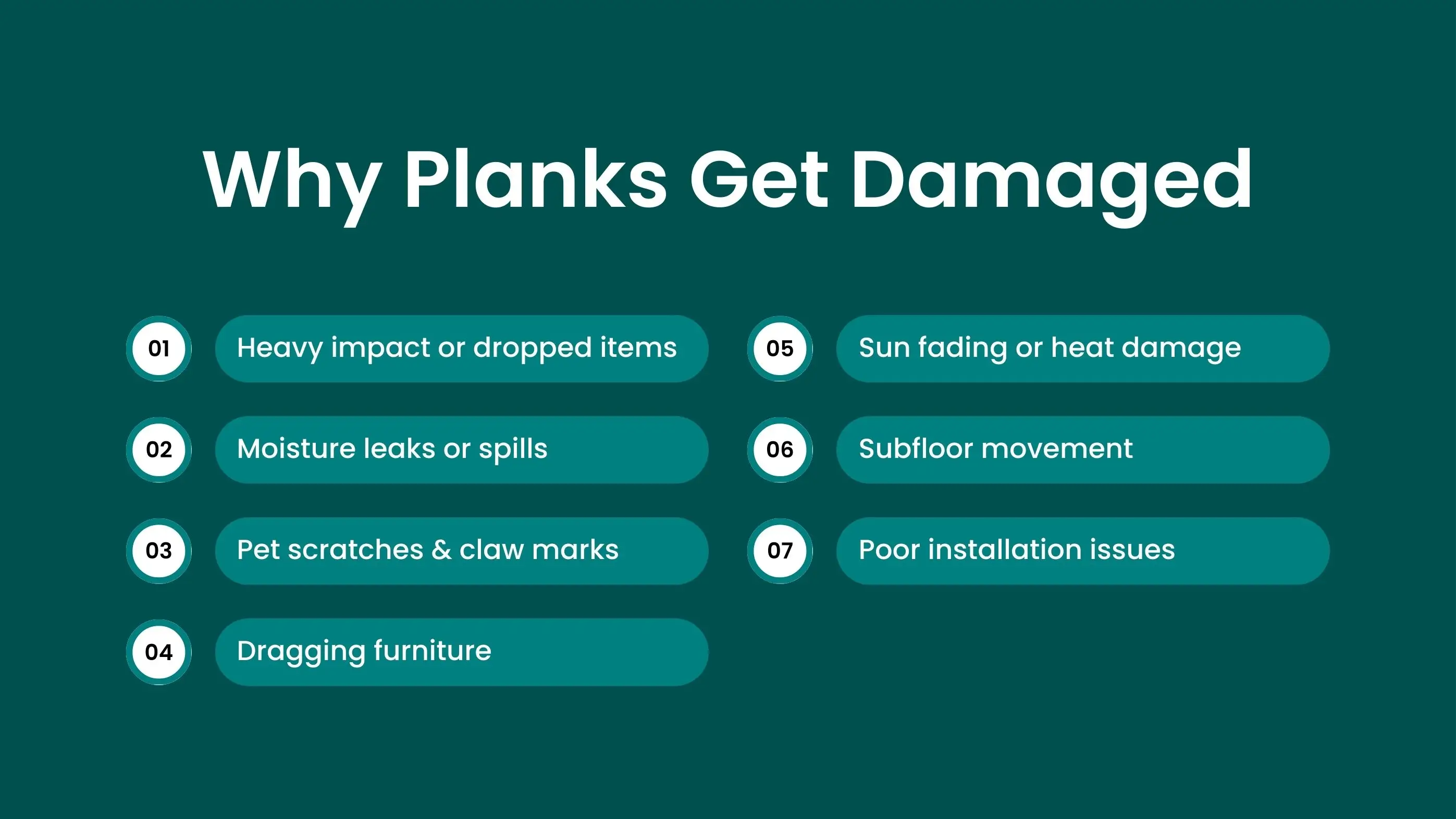
Planks can develop problems over time because of daily wear, environmental conditions, or installation issues. Understanding the common causes helps homeowners prevent early damage and maintain a long-lasting, stable floor.
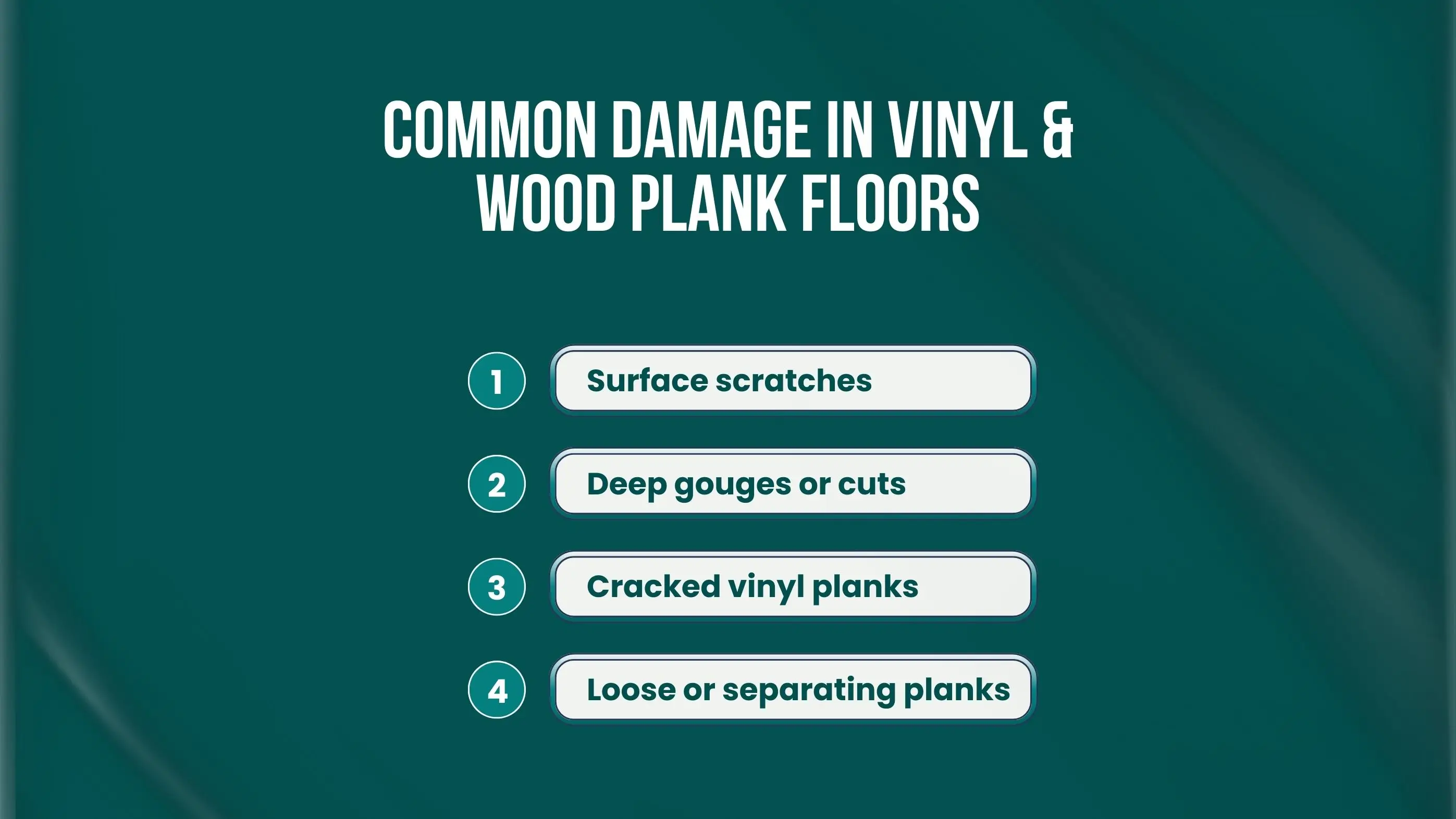
Plank floors can develop many types of damage, from light surface marks to issues that affect the subfloor beneath. Each problem impacts durability, appearance, and safety differently. Understanding the type and severity of damage helps you choose the right repair method and prevent the issue from spreading.
Surface scratches are the most common problem in both vinyl and wood floors.
These scratches are usually cosmetic and can be repaired quickly when addressed early.
Deep damage is harder to hide because it affects the wear layer and may reach the inner core of the plank.
Replacing severely damaged planks prevents future cracking and maintains long-term durability.
Cracked vinyl planks usually occur from heavy impact, dropped items, or installation over an uneven subfloor.
This repair is straightforward as long as the flooring system allows single-plank replacement.
Loose, shifting, or gapped planks are signs of movement caused by temperature changes, humidity, or installation problems.
Common causes include:
Fixing these issues may involve relocking the planks, applying adhesive where allowed, or adjusting spacing so the floor settles correctly again.
Repairing plank flooring becomes much easier with the right tools. Whether you’re fixing scratches or replacing a full plank, having these items helps you complete the repair smoothly and safely.
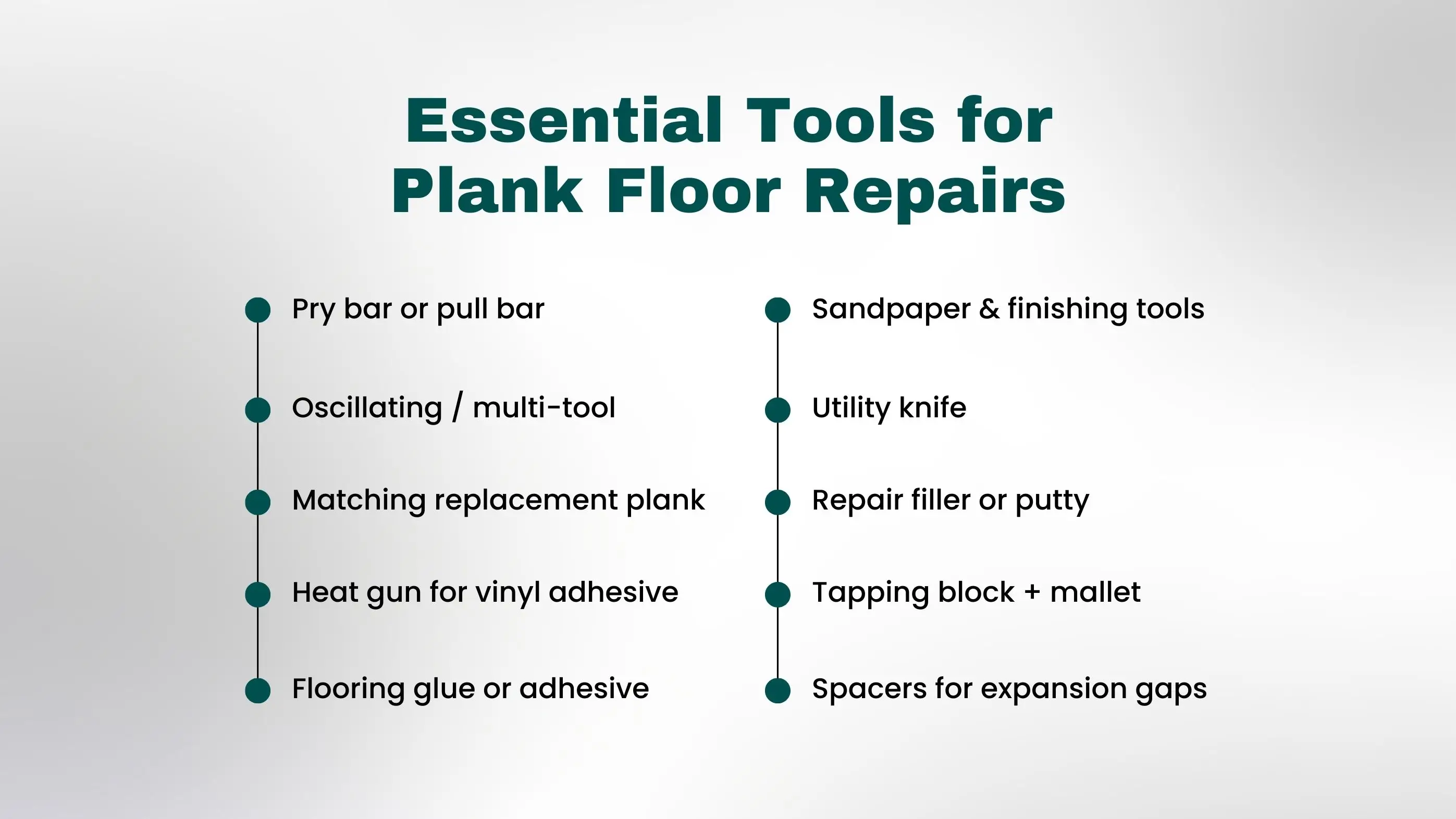
Having the right tools makes plank repair faster, cleaner, and much easier. Whether you’re fixing scratches, tightening loose planks, or replacing a damaged board, these essential items help ensure a smooth and safe repair with professional-looking results.
Repair kits are useful for fixing small cosmetic issues such as scratches, dents, scuffs, or tiny chips in vinyl plank flooring. These kits typically include:
They work best for minor surface-level damage and help restore the appearance of the floor without replacing planks.
Adhesives are needed when planks shift, separate, or lose their locking connection. The right adhesive ensures flexibility, strong bonding, and long-term durability without causing cracking or stiffness. Common options include:
Using the correct adhesive keeps planks aligned, prevents gapping, and helps maintain a stable, seamless floor surface.
Repairing vinyl plank flooring depends on whether the damage is surface-level or deep enough to affect the plank’s structure. Light scratches can be fixed on top, while cracks, swelling, or broken edges usually require plank replacement. Below is a simple, homeowner-friendly process that covers both repair types.
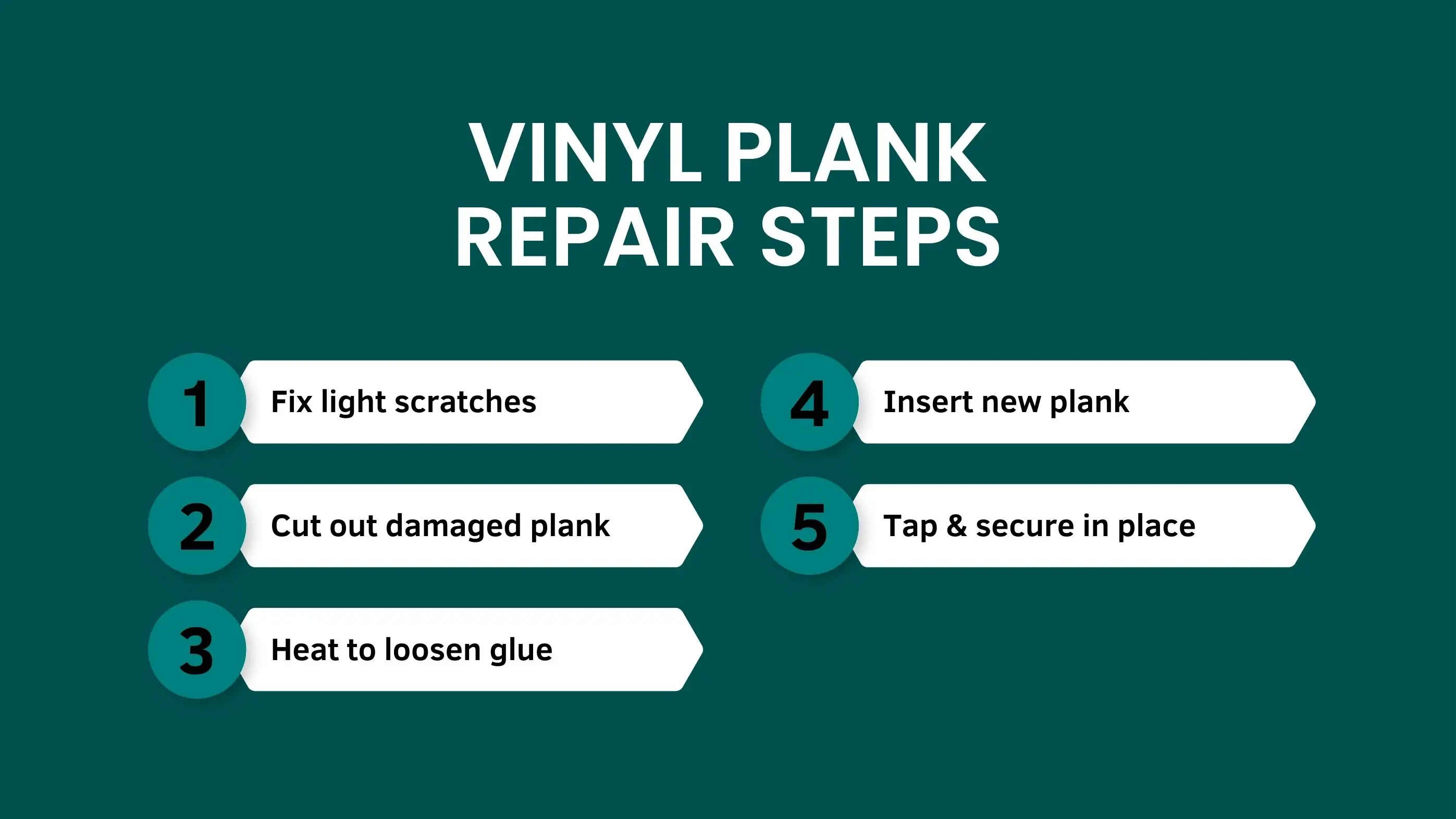
Surface scratches, scuffs, and light marks can be repaired without removing the plank. To restore the finish, homeowners use:
These cosmetic fixes work well for light, shallow damage and help the repaired plank blend naturally with the surrounding floor.
When a plank is cracked, swollen, or deeply gouged, it must be removed and replaced. The method depends on whether the flooring is click-lock or glue-down.
Step-by-step removal process:
Removing only the damaged plank protects the rest of the floor and exposes the subfloor for inspection.
Once the old plank is removed, the new one must fit securely and level with the surrounding flooring. Here are the Installation steps:
Some plank problems come from underneath rather than the plank itself. Moisture, uneven surfaces, or hollow spots can cause repeated damage if not fixed early.
Moisture under plank flooring can weaken adhesives, cause warping, and lead to repeated damage unless the source is found and corrected.
An uneven or noisy subfloor can cause planks to shift, separate, or crack, so leveling and securing the surface is essential before reinstalling flooring.
Proper care helps your floor last longer and prevents scratches, warping, and gaps. Simple habits can keep both vinyl and wood floors in great condition.
Vinyl planks are durable and water-resistant, but proper care keeps the surface looking new and prevents scratches or wear over time.
Wood and laminate floors need gentle maintenance and stable indoor conditions to prevent warping, swelling, or surface damage.
Some flooring problems go beyond simple DIY fixes. When the damage is widespread, connected to subfloor issues, or requires perfect color and pattern matching, hiring a professional ensures long-lasting and seamless results. Experts use specialized tools and techniques to restore damaged planks without harming the surrounding floor.
Professionals can handle every type of vinyl plank damage, from surface scratches to full plank replacement. They repair dents, fill deep marks, fix cracked planks, and replace damaged boards without disturbing the rest of the floor. Experts also identify hidden issues like adhesive failure or subfloor movement that may cause repeated damage.
Wood floors often require skilled repairs to preserve their natural look. Professionals can refinish scratched sections, replace damaged planks, and match stain colors so the repair blends perfectly with the existing floor. They also handle warped boards or moisture-related problems that DIY methods cannot fix.
Laminate flooring repairs must be done carefully to avoid pattern mismatch or uneven seams. Professionals know how to cut out damaged planks cleanly, install new boards without disturbing surrounding rows, and maintain proper locking alignment. This ensures a smooth, consistent surface that looks just like the original installation.
Repairing damaged planks helps keep your floor looking smooth, safe, and long-lasting. Whether the issue is a small scratch, a loose board, or a cracked vinyl plank, fixing the problem early prevents bigger repairs later and protects the entire flooring system. With the right tools and techniques, many plank repairs can be done at home, but complex issues, like subfloor problems or pattern matching, are best handled by professionals. By maintaining your floors properly and addressing damage quickly, you can extend the life of your vinyl, laminate, or wood planks and keep your home looking clean and beautiful for years.
Yes, most vinyl plank systems are designed so individual planks can be removed and replaced. Click-lock planks lift out with heat and careful prying, while glued vinyl tiles require cutting and adhesive removal.
Signs include swelling, buckling, soft spots, discoloration, or edges lifting. Moisture often affects multiple planks and may require checking the subfloor.
For scratches, small dents, or minor surface imperfections, they work well. For deep cuts or cracked planks, replacement is more effective and long-lasting.
Yes, professionals match color, texture, and plank pattern. When exact matches are unavailable, they use blending techniques or replace planks in a staggered layout.
If the damage is surface-level, refinishing works. Deep cracks, water damage, or lifted edges require replacement.
Join our mailing list for exclusive updates, expert tips, and special offers tailored to your needs. Be the first to know about the latest in home services.

Renovize Home is a platform that supports homeowners from planning to renovation. Whether it’s Renovize AI for guidance or a one-on-one call with Pro Finder, we understand your project and match you with local contractors tailored to your needs.
Who We Are
About Renovize HomeGet in TouchHomeownwer Support:
Coming Soon!
General Inquiries:
support@renovizehome.com
Head Office:
24 Greenway Plaza, STE 1800M, Houston, TX 77046.