
Explore All
BROWSE BY CATEGORY
Interior
Exterior
Home Essentials
Homeowner Tools
Blogs & Guides
Find a Pro
Book Your Appointment Now
Home Essentials
About Renovize Home
Explore All
BROWSE BY CATEGORY
Interior
Exterior
Home Essentials
Homeowner Tools
Blogs & Guides
Find a Pro
Book Your Appointment Now
Home Essentials
About Renovize Home
Last Updated 2025-11-25
Heated floor installation brings warmth directly beneath your flooring surface, creating an even temperature distribution that eliminates cold spots and drafts. Unlike forced-air systems that lose heat through ducts, radiant floors deliver efficient, targeted warmth that feels natural and comfortable underfoot.
These systems also reduce energy waste by heating the room from the ground up, allowing homeowners to maintain comfort at lower thermostat settings. Whether installed during new construction or an existing remodel, radiant flooring adds superior comfort, a modern luxury feel, and long-term energy savings to any home.
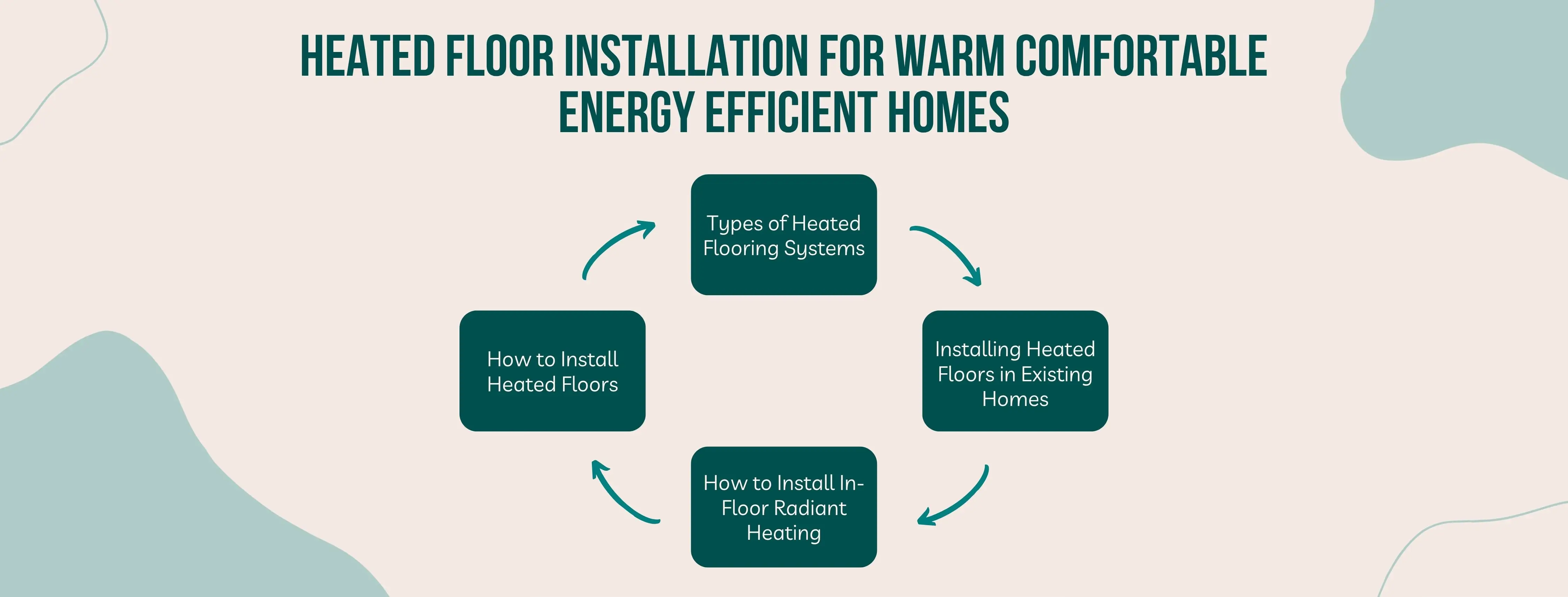
Table of Contents
What Heated Floors Are and How They Work
Types of Heated Flooring Systems
Installing Heated Floors in Existing Homes
How to Install Heated Floors
Professional Heated Floor Installation Services
How to Install In-Floor Radiant Heating in a Concrete Slab
Cost of Heated Floor Installation
Final Thoughts
Heated floors use radiant heat technology to warm a room from the ground up, creating consistent, comfortable temperatures without relying on air circulation. Unlike traditional heating systems that blow warm air into a space, radiant floors heat the floor surface itself and allow that warmth to gently rise. This eliminates cold spots, avoids heat loss through ducts, and provides a more natural, even warmth throughout the entire room.
Two main systems are used:
Both systems keep the floor warm to the touch and maintain steady temperatures with excellent energy efficiency. Homeowners choose heated floors because they offer silent operation, improved indoor air quality, and a luxurious, spa-like comfort that standard heaters cannot match.
Heated flooring systems come in several designs, each built for specific flooring materials, room conditions, and energy preferences. Choosing the right system depends on whether you're renovating, building new, or upgrading comfort in a single room. Below are the most practical and homeowner-friendly options, explained with unique, precise details.
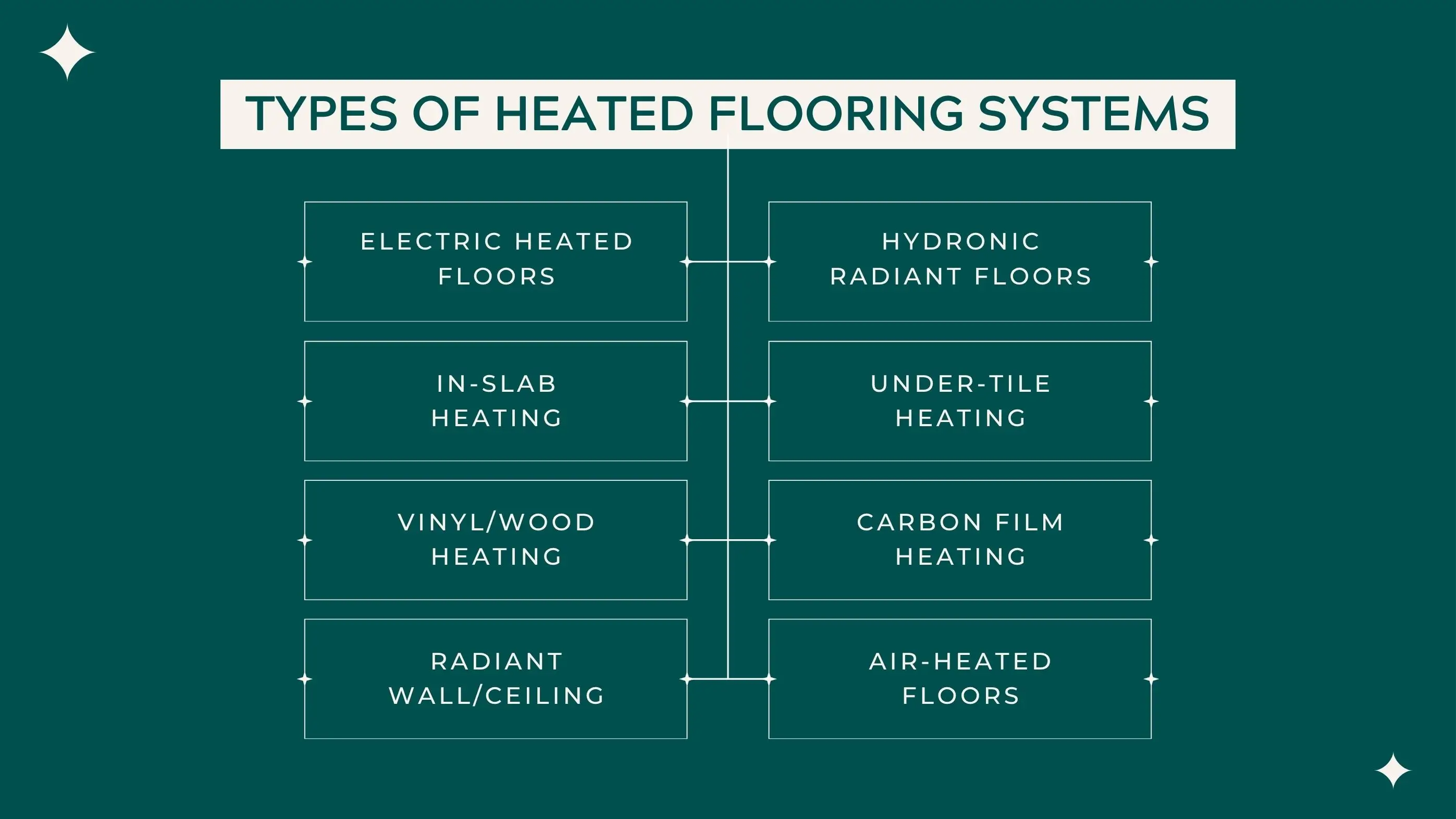
Electric heated floors use flexible heating cables or pre-made mats installed directly beneath the flooring surface. A programmable thermostat controls temperature precisely, allowing timed heating for comfort and energy savings. These systems are ideal for bathrooms, kitchens, and small spaces where fast, direct warmth is needed.
Hydronic floors circulate warm water through durable tubing connected to a boiler or water heater. They’re highly efficient for large homes because water retains heat longer than electricity. This system shines in whole-house applications, cold climates, and rooms with high ceilings that benefit from steady, low-cost heat.
In-slab systems embed heating cables or hydronic tubing inside poured concrete, turning the entire slab into a large thermal mass. This setup stores heat and releases it slowly, making it ideal for basements, garages, and new-construction homes. The system offers stable warmth but requires careful planning before the slab is poured.
Tile is an excellent heat conductor, making under-tile systems the most responsive radiant option. Heating mats or cables are installed beneath ceramic or porcelain, distributing warmth evenly across the surface. Homeowners choose this system for bathrooms, showers, kitchens, and entryways where cold tile is uncomfortable.
Vinyl and engineered wood require radiant systems with controlled temperature limits to avoid warping. Installers use special underlayments, spacing, and thermostat caps to prevent overheating. When done correctly, both LVP and hardwood can safely pair with radiant heat for soft, comfortable warmth.
Carbon film heating uses ultra-thin sheets placed under floating floors like laminate or LVP. They heat quickly using low voltage and offer consistent warmth without bulky components. This is a popular choice for retrofits because it requires minimal floor height increase.
Although not floor-based, radiant panels installed in ceilings or walls use the same radiant principles to warm surfaces evenly. They’re useful for remodels where floor height changes aren't possible but homeowners still want the comfort of radiant heat. These systems supplement or replace traditional heating in targeted rooms.
Air-based radiant systems push warm air through channels beneath the floor. Although less common due to lower efficiency, they’re sometimes used in solar-heated homes with air-based solar collectors. They provide consistent radiant warmth without water or electricity underfoot.
Installing radiant floor heating in an existing home requires careful planning because you’re working around finished rooms, existing flooring, and limited subfloor access.
Unlike new construction, where systems are embedded early, a retrofit installation must account for floor height build-up, electrical load requirements, and how easily the installer can reach the subfloor.
When learning how to install radiant floor heating in an existing house, homeowners should understand that some systems like electric mats install easily over the old subfloor, while hydronic systems may require partial floor removal or access from the level below.
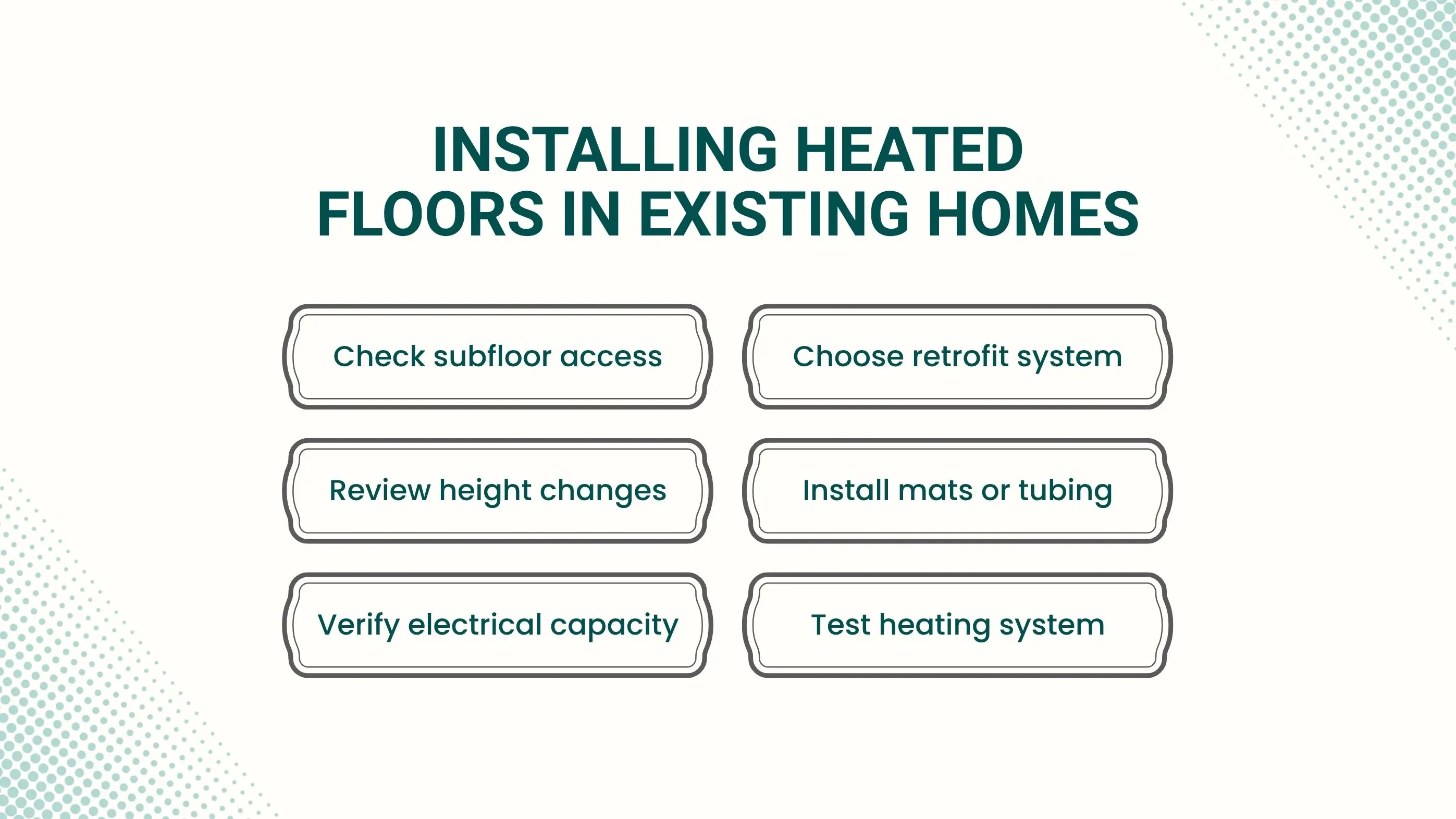
For most retrofits, installers evaluate three main factors:
Retrofit radiant floors work best in bathrooms, kitchens, and bedrooms where comfort is a priority, and electric systems often become the preferred option because they install quickly without major structural work.
Heated floor installation follows a structured process designed to ensure safe wiring, proper insulation, and consistent heat distribution. Whether electric mats or hydronic tubing is used, installers follow precise layout plans to avoid cold spots, overheating, or damaged cables. This step-by-step breakdown helps homeowners understand what to expect during professional installation.
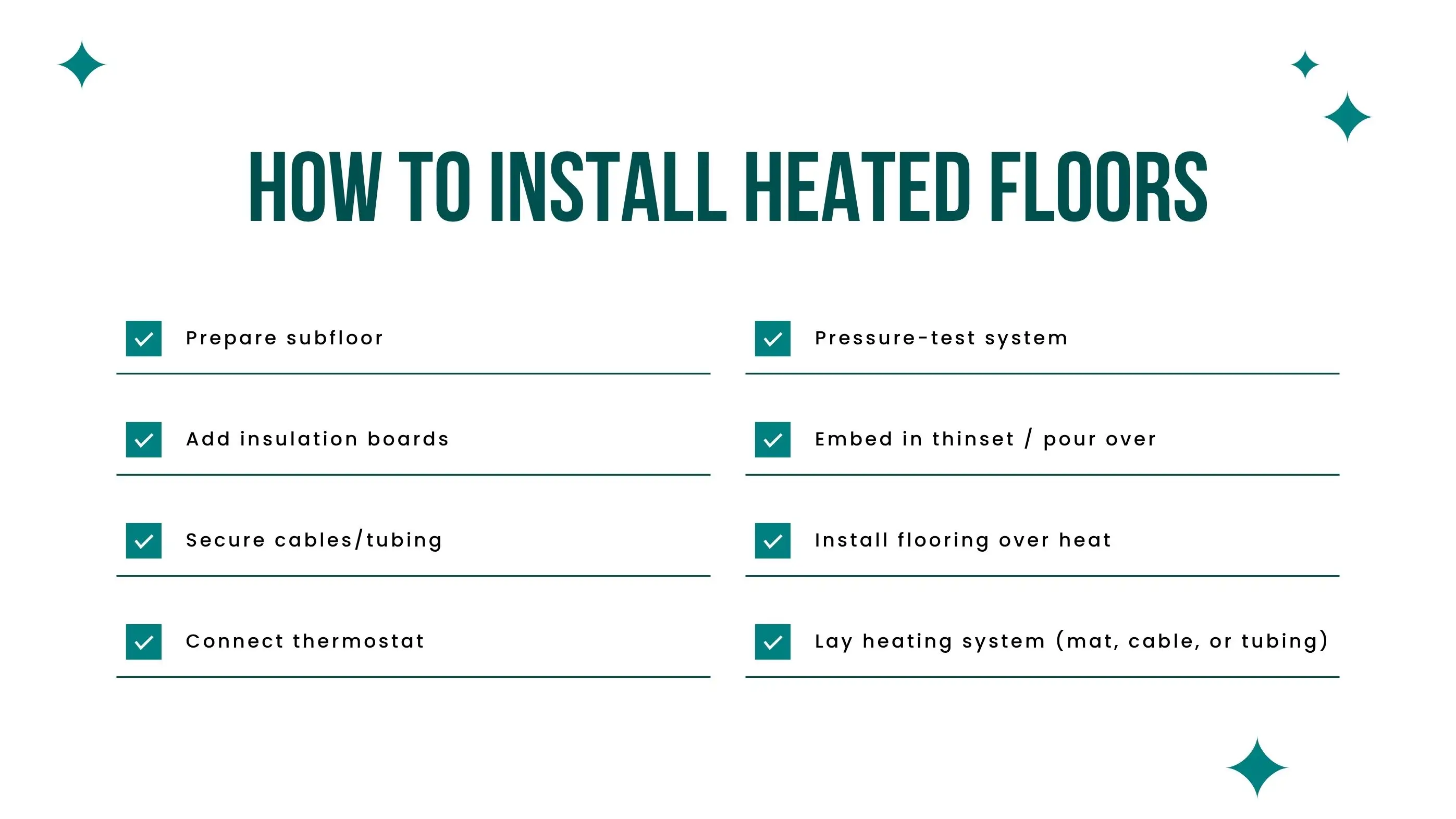
Before installing floor heating, prepare the subfloor by clean, level, and dry. Installers check for moisture issues, repair weak spots, and add insulation boards to prevent heat loss into the subfloor. A flat, debris-free surface ensures heating mats or tubing sit evenly and perform at maximum efficiency.
Electric radiant heating systems are installed by rolling out heating mats or arranging loose cables across the prepared subfloor. Cable spacing is measured carefully to guarantee even heat distribution without overheating. A thermostat is wired to a dedicated circuit, similar to Quiet Warmth or SunTouch heated floor installation systems, ensuring precise temperature control.
Installing radiant floor heat using a hydronic system involves placing flexible tubing in loops across the room according to a layout plan. The tubing connects to a manifold, which distributes warm water from a boiler or water heater. After installation, the system is pressure-tested to ensure there are no leaks before any flooring is added.
When learning how to install underfloor heating on a concrete floor, installers first add insulation boards to block heat from sinking into the slab. Heating cables or hydronic tubes are then secured directly on the concrete. For new construction, the heating system is embedded into the concrete pour, creating a large thermal mass that keeps rooms warm for longer.
When installing heated floors under tile, cables or mats are secured with thinset, ensuring full coverage and preventing air pockets. Tile is then set directly over the heating system, which distributes warmth evenly across ceramic or porcelain surfaces. This method works perfectly for bathrooms, where homeowners want warm tile underfoot year-round.
When installing in floor heating under vinyl or laminate, installers use low-temperature radiant systems to prevent warping or discoloration. A compatible underlayment separates the heating elements from the floating floor above. The thermostat is programmed with a temperature cap to protect sensitive flooring materials.
Underfloor heating mats simplify the process of how to install a heated floor by combining cables and mesh into one roll-out system. Installers cut the mesh not the wires to fit around corners and fixtures. The mats are secured with thinset or adhesive to ensure complete floor coverage and consistent heating.
Schluter heated floor installation uses the Ditra-Heat membrane, which combines uncoupling protection with radiant heating. Installers snap heating cables into the membrane channels, guaranteeing proper spacing and avoiding cable movement. Once bonded to the subfloor, tile is installed directly over the membrane for a durable, heated surface.
Professional heated floor installation ensures every component from wiring to insulation is completed safely and according to building codes. Experts prevent common mistakes like overheating, improper spacing, or electrical overload, which can damage floors or void product warranties.
Certified installers also handle load calculations, thermostat setup, moisture protection, and compatibility checks with your flooring material. Homeowners benefit from a system that runs efficiently, lasts longer, and delivers consistent warmth without safety risks.
Below are the most common areas where professionals install radiant heating systems, each with unique requirements and benefits.
Bathrooms benefit the most from radiant heating because tile surfaces get cold quickly, especially in winter. Professionals ensure cables or mats are properly waterproofed and safely integrated with shower or vanity layouts. The result is a warm, spa-like environment with even heat distribution and fast floor warming.
Kitchens often have large tile or vinyl surfaces that feel cold underfoot during meal prep. Installers place heating mats strategically around islands, work zones, and walk paths for balanced comfort. Proper insulation prevents heat loss into lower levels, especially in two-story homes.
Radiant heating in bedrooms creates a calm, draft-free environment that’s ideal for restful sleep. Professionals design the layout to avoid overheating under furniture and ensure even warmth across the entire room. Electric mats or hydronic loops work well depending on home size and insulation quality.
Living rooms with large open spaces or high ceilings benefit from radiant heating because warmth rises evenly from the floor. Experts use hydronic systems or large-format electric mats to cover wide areas without cold zones. This creates a consistently comfortable space without noisy ductwork or dry air.
Basements naturally feel colder due to concrete slabs that absorb heat. Professionals often install in-slab radiant systems or layer insulation boards before adding heating cables. This helps reduce moisture issues and transforms cold basements into warm, usable living areas.
Radiant floor systems in garages make winter work and storage much more comfortable. Hydronic tubing is often embedded in the slab during construction to maintain stable temperatures. The setup also helps prevent snow melt from refreezing and reduces humidity in the space.
Mudrooms and entryways experience constant temperature fluctuations from outdoor weather. Installers place heating mats beneath tile or stone to eliminate cold surfaces and help dry wet shoes faster. Radiant heat also reduces moisture buildup, keeping floors safer and less slippery.
Sunrooms often struggle with uneven temperatures due to glass exposure. Radiant heating creates stable warmth without blocking natural light or adding bulky heaters. Professionals choose electric or hydronic systems based on square footage and insulation levels.
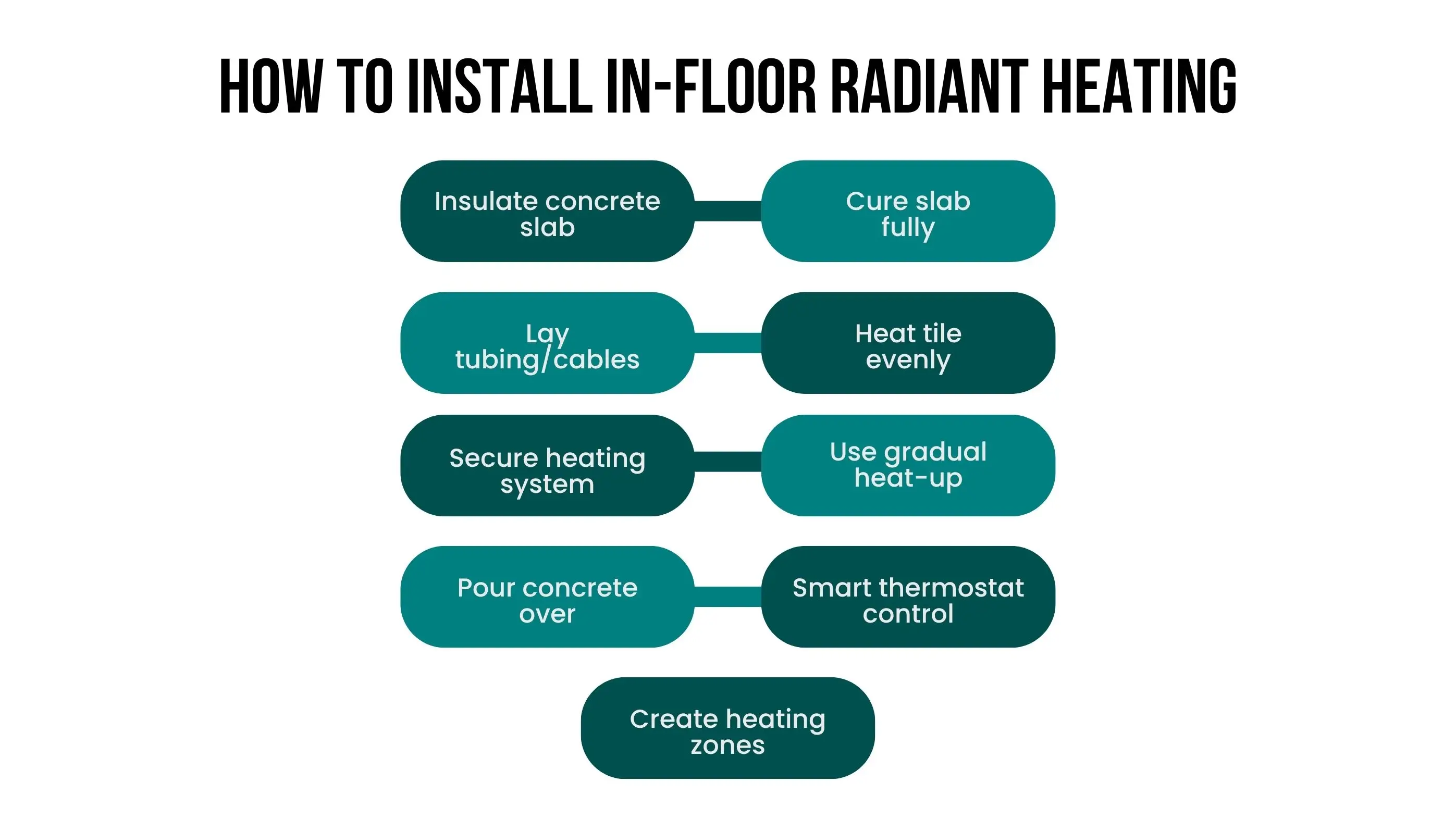
Installing radiant heating in a concrete slab turns the entire slab into a long-lasting thermal mass that holds heat for hours. The process begins with insulating the slab to prevent heat loss into the ground. Hydronic tubing or electric heating cables are then laid out in a precise pattern and securely fastened so they remain fixed during the concrete pour.
Once installed, the concrete is carefully poured over the system, fully embedding the heating components. After curing, the slab provides stable, even heat ideal for basements, garages, and new construction homes.
Tile floors pair exceptionally well with radiant heating due to their high thermal conductivity, allowing heat to transfer quickly and evenly. After installation, professionals run post-install heat cycles, gradually increasing temperature so the thinset and grout cure properly without cracking.
Thermostat programming is calibrated to avoid sudden temperature changes, ensuring long-term stability and even warmth across all tile surfaces. This careful heat-up schedule protects tile integrity while delivering warm bathroom and kitchen floors year-round.
Modern radiant floor heat installation now includes advanced thermostats, WiFi-enabled controls, and zoning systems that let homeowners manage temperatures by room. Smart thermostats learn heating patterns, optimize energy use, and allow remote control from mobile apps.
During radiant floor heating install, zones can be created for bathrooms, bedrooms, or entire floors, ensuring each space heats only when needed. These advanced systems boost comfort, reduce energy usage, and give homeowners total control over their heating performance.
The cost to install heated floors depends on the type of radiant system, room size, flooring material, and whether electrical or plumbing upgrades are needed. Smaller spaces like bathrooms cost less, while large rooms or whole-home hydronic systems require higher labor and material investment. Overall pricing ranges from simple electric mats to advanced hydronic installations that involve manifolds, boilers, or in-slab heating systems.
Below is a complete breakdown of heated flooring costs for different areas in the home. These ranges include both materials and professional labor.
| Installation Area | Electric Heated Floors | Hydronic Radiant Floors | Notes |
|---|---|---|---|
| Bathroom | $12 – $25 per sq ft | $18 – $35 per sq ft | Most common installation; fast install with electric mats. |
| Kitchen | $15 – $28 per sq ft | $20 – $38 per sq ft | Larger areas increase material and labor cost. |
| Bedroom | $10 – $22 per sq ft | $18 – $32 per sq ft | Ideal for consistent, draft-free warmth. |
| Living / Family Room | $14 – $28 per sq ft | $22 – $40 per sq ft | Large coverage often requires zoning thermostats. |
| Basement (Concrete Slab) | $16 – $30 per sq ft | $18 – $45 per sq ft | In-slab hydronic heating offers long-term efficiency. |
| Garage | Not common | $20 – $42 per sq ft | Hydronic systems perform best in cold garages. |
| Entryway / Mudroom | $12 – $24 per sq ft | $20 – $34 per sq ft | Helps dry wet surfaces and prevent slippery floors. |
| Sunroom | $14 – $25 per sq ft | $22 – $38 per sq ft | Electric or hydronic depending on room size. |
Hydronic radiant heating is the most efficient option for large homes or full-floor installations. Costs typically range between $18 and $40 per sq ft, depending on tubing layout, boiler capacity, and manifold complexity. Full hydronic upgrades for an entire level can cost $10,000 to $35,000, especially when insulation or plumbing changes are required. While more expensive upfront, hydronic systems offer long-term energy savings and exceptional comfort.
Electric systems are easier and more affordable to install, especially in bathrooms, kitchens, and small rooms. Pricing usually falls between $10 and $25 per sq ft depending on mat wattage, cable density, and thermostat type. Larger mats, smart thermostats, and programmable timers increase cost slightly. Electrical panel upgrades when needed add an additional $150 to $600 to ensure the heating system runs safely and efficiently.
Heated floor installation is one of the smartest comfort upgrades homeowners can make, delivering warm, even temperatures that eliminate cold spots and make every room feel more welcoming. Whether installed under tile, vinyl, concrete, or wood, radiant floors provide quiet, energy-efficient warmth that rises naturally without relying on air ducts or constant thermostat changes.
With the right system and proper installation, heated floors offer long-lasting performance, lower energy use, and a level of comfort that instantly elevates everyday living making them a valuable addition to both new construction and home remodels.
Electric heated floors typically warm up within 10–30 minutes, depending on floor thickness and wattage. Hydronic systems take longer because they heat water first, but they hold and release heat for a much longer period.
Yes, heated floors are safe in wet areas when installed with GFCI protection, waterproof membranes, and UL-listed heating mats. These safety features prevent electrical hazards and ensure long-term reliability in moisture-heavy spaces.
Radiant systems are very efficient, so energy use is lower than most homeowners expect. They heat only the floor surface, allowing the thermostat to remain at lower settings while still keeping the room comfortable.
Radiant floors can replace traditional heating in well-insulated homes or smaller spaces. In colder climates, they’re often used as a supplemental heating system to maintain consistent comfort without relying entirely on forced air.
Electric radiant floor systems typically last 20–35 years with no maintenance required. Because the heating cables have no moving parts, their lifespan depends primarily on proper installation and consistent thermostat use.
Radiant heat is safe for most modern vinyl and LVP floors as long as temperatures stay within manufacturer limits, usually around 85°F (29°C). Proper thermostat programming prevents overheating and keeps vinyl flooring fully protected.
Join our mailing list for exclusive updates, expert tips, and special offers tailored to your needs. Be the first to know about the latest in home services.

Renovize Home is a platform that supports homeowners from planning to renovation. Whether it’s Renovize AI for guidance or a one-on-one call with Pro Finder, we understand your project and match you with local contractors tailored to your needs.
Who We Are
About Renovize HomeGet in TouchHomeownwer Support:
Coming Soon!
General Inquiries:
support@renovizehome.com
Head Office:
24 Greenway Plaza, STE 1800M, Houston, TX 77046.