
Explore All
BROWSE BY CATEGORY
Interior
Exterior
Home Essentials
Homeowner Tools
Blogs & Guides
Find a Pro
Book Your Appointment Now
Home Essentials
About Renovize Home
Explore All
BROWSE BY CATEGORY
Interior
Exterior
Home Essentials
Homeowner Tools
Blogs & Guides
Find a Pro
Book Your Appointment Now
Home Essentials
About Renovize Home
Last Updated 2025-11-26
Floor patching is an important repair process that restores damaged surfaces by filling cracks, holes, dips, and uneven areas. Whether your floors are made of concrete, wood, vinyl, or laminate, proper patching helps prevent bigger problems like moisture buildup, tripping hazards, and surface wear. It also creates a smooth base for new flooring installation, making it an essential step before remodeling or resurfacing.
With the right tools and patching materials, homeowners can extend the life of their floors and improve the overall strength and appearance of their space. This guide explains the most effective floor patching methods and materials to help you repair different types of flooring safely and correctly.
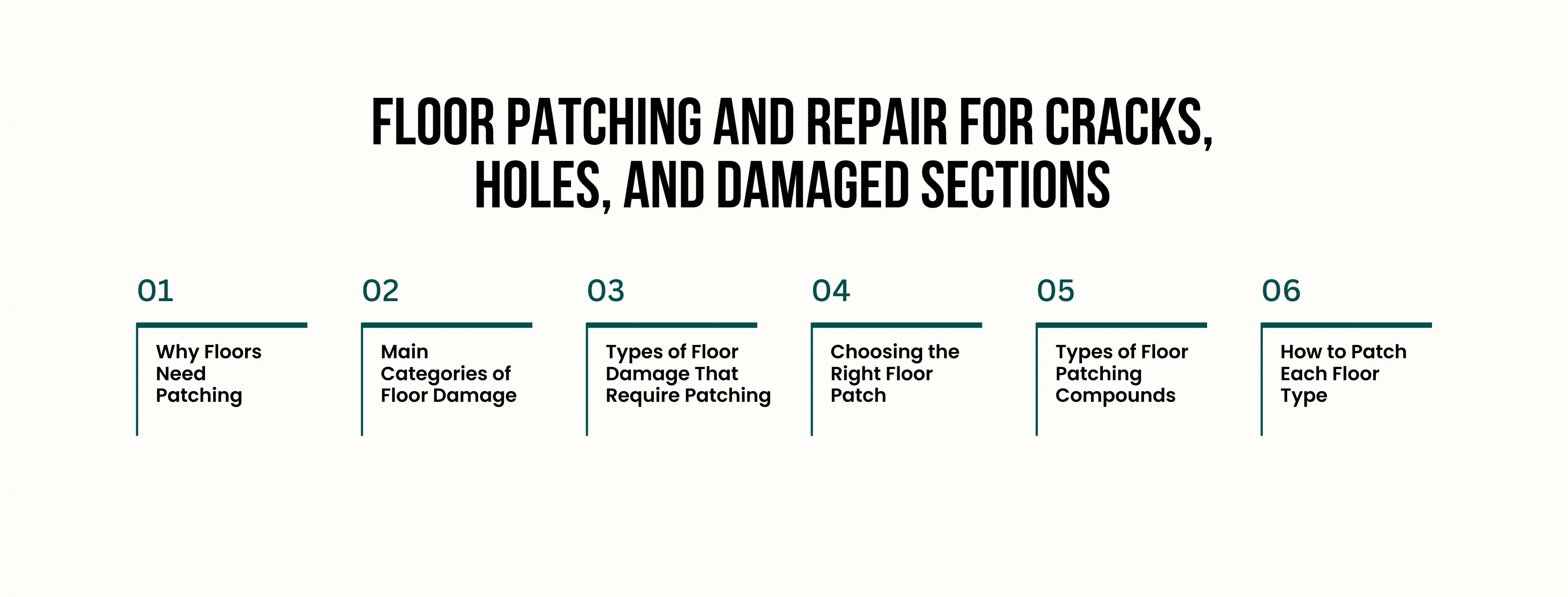
Table of Contents
Why Floors Need Patching
Types of Floor Damage That Require Patching
Tools and Compounds Used in Floor Patching
How to Patch Each Floor Type
When Patching Is Not Enough
Final Thought
Floors can develop cracks, holes, soft spots, and uneven areas over time due to daily wear or deeper structural issues. Patching helps restore the surface, prevent further damage, and prepare the floor for new flooring installation. Understanding the root causes of floor damage makes it easier to choose the right patching method and product.
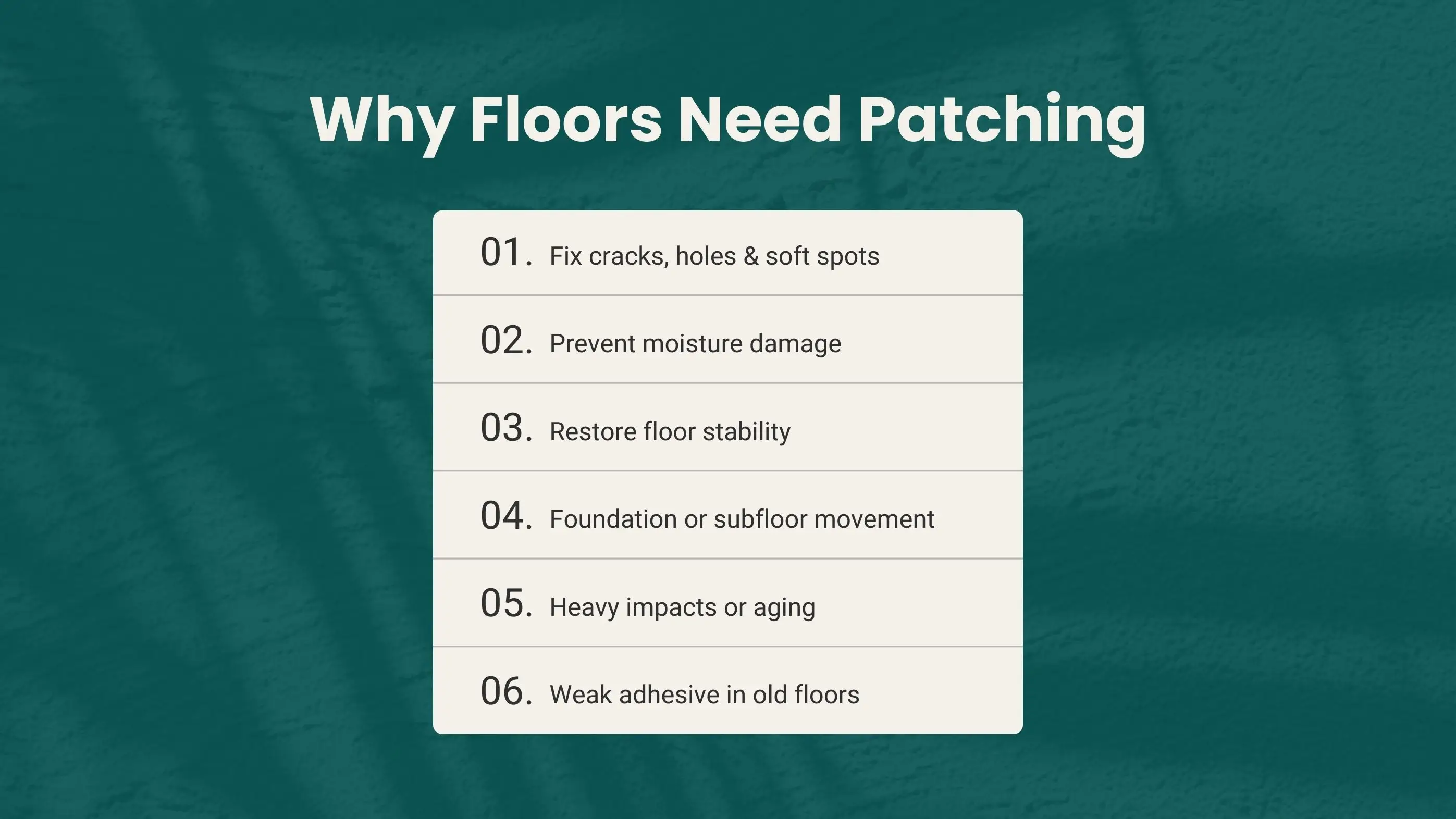
Cracks and holes appear when the flooring material weakens or the base beneath it shifts. Heavy pressure, improper installation, and aging can cause gaps to form across concrete, wood, vinyl, or laminate flooring. These openings allow moisture to enter, leading to even bigger problems if not patched quickly. Some main common causes are:
Before patching a floor, it’s important to understand the different types of problems that cause cracks, holes, soft spots, and uneven surfaces. These common damage categories help identify why a floor fails and what repair method works best.
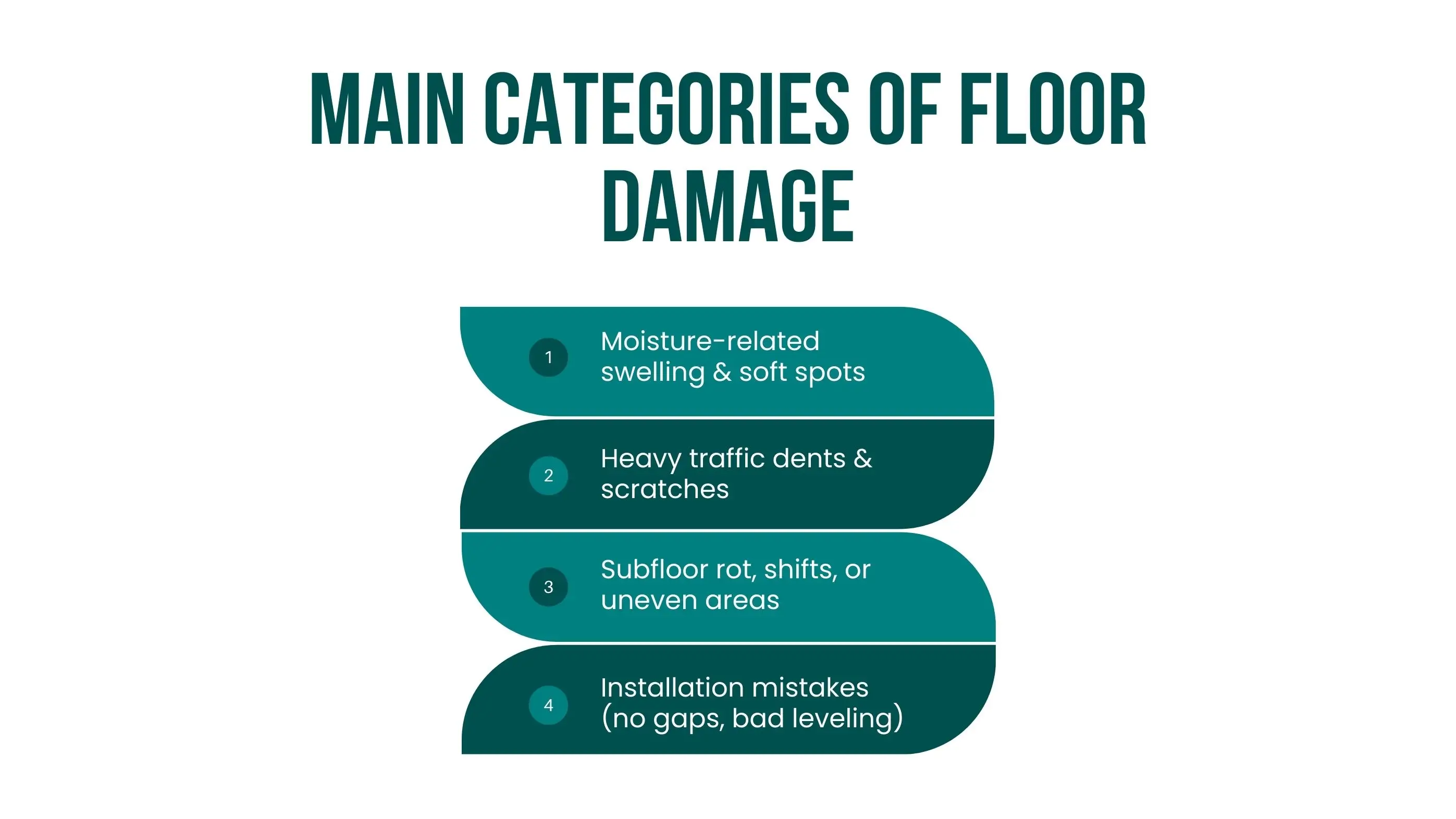
Moisture is one of the biggest reasons floors need patching. Water can seep into concrete, soften wood, and loosen vinyl and laminate layers. Over time, this causes swelling, cracks, bubbling, and soft spots. The major signs of moisture damage include:
Constant pressure from heavy furniture or high foot traffic can weaken floor surfaces. In concrete floors, this creates dents or stress cracks. In wood and laminate floors, it often leads to scratches, chipped boards, and deep impressions. The common wear-related issues are:
Sometimes the problem isn’t the floor covering but the subfloor under it. If the subfloor shifts, weakens, or becomes uneven, the flooring above develops visible damage like:
Incorrect installation is a silent but common cause of floor damage. If the installer fails to level the floor, use the right adhesive, or leave proper expansion gaps, the flooring can separate, lift, or crack.
A quick comparison helps you understand how different flooring materials get damaged and why patching is needed for each one. This overview makes it easier to identify the type of problem you’re dealing with and choose the right repair method.
| Floor Type | Common Damage | Reason for Patching |
|---|---|---|
| Concrete | Cracks, holes, dips | Settling, moisture, heavy load |
| Wood | Soft spots, rot, dents | Water damage, wear, subfloor issues |
| Vinyl | Bubbles, tears, loose edges | Moisture, poor adhesive |
| Laminate | Separations, swollen boards | Water, humidity, and installation errors |
Floors can develop various types of damage based on material, age, foot traffic, and moisture exposure. Concrete, wood, vinyl, laminate, and linoleum each show deterioration in different ways, but most localized issues can be repaired with proper patching. Identifying the severity of the damage helps you decide whether a small patch is enough or if deeper structural repairs are required.
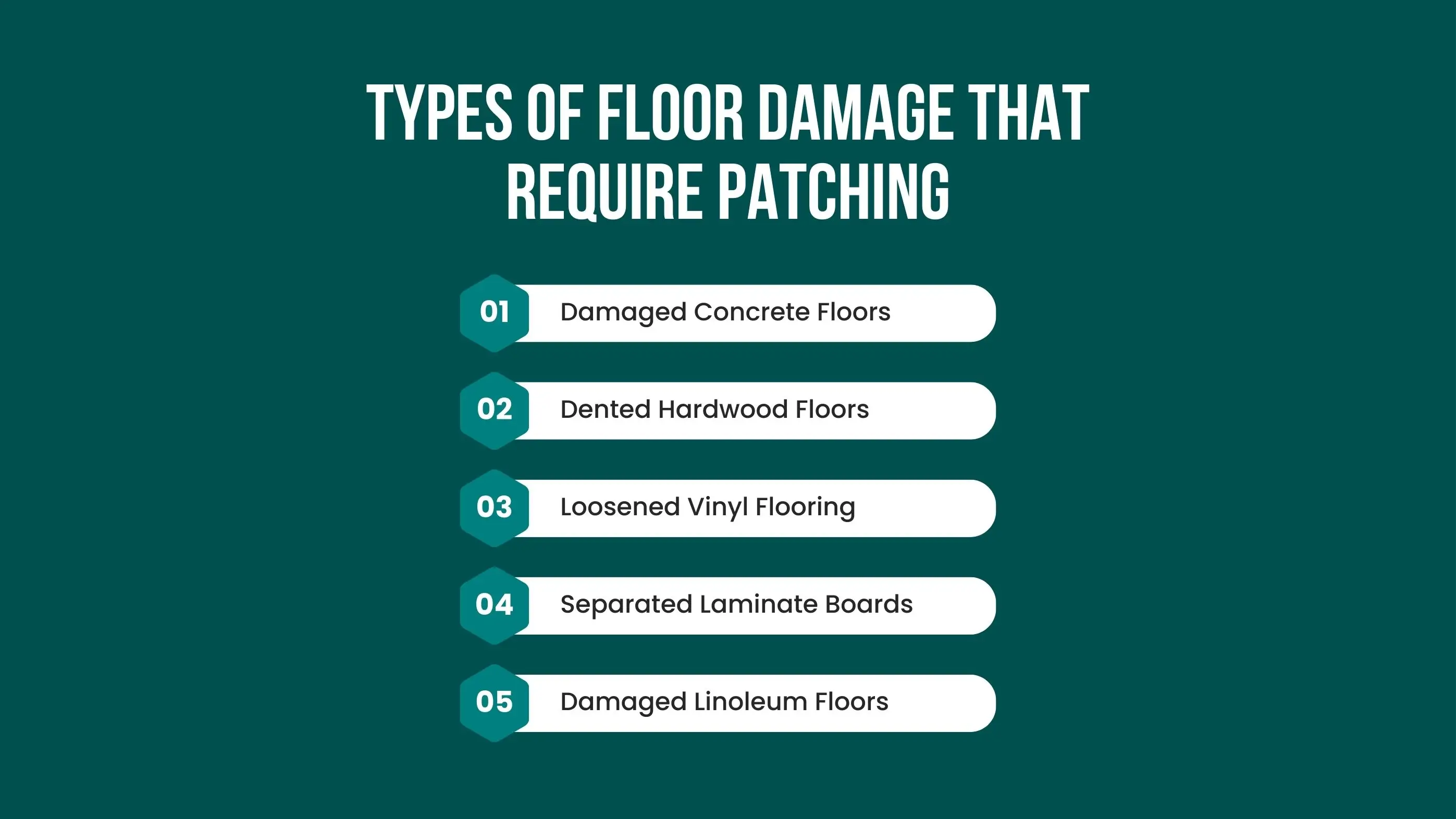
Concrete floors often develop cracks, pits, or holes due to natural settling, heavy weight, or moisture intrusion. Patching is required when:
Repairing these areas strengthens the slab, prevents further deterioration, and creates a smooth base for any future flooring installation.
Hardwood is prone to dents, chips, and deep scratches from furniture impact, dropped objects, and seasonal humidity changes. Patching becomes necessary when:
Wood fillers or patching compounds restore appearance and protect the plank from future moisture absorption. Severe damage may indicate underlying subfloor issues that need correction before refinishing.
Vinyl flooring tears easily when sharp objects damage the surface or when adhesive loses grip. Patching is important when:
A vinyl patch seals the damaged area, prevents moisture intrusion, and restores a smooth, safe walking surface without replacing the entire sheet.
Laminate flooring absorbs water quickly, causing the core to swell, lift, or bubble. Because laminate cannot be sanded or refinished, patching is often the only solution for isolated damage. Patching is required when:
Damaged boards are cut out and replaced with matching planks. If multiple boards show swelling, hidden moisture must be addressed before patching.
Linoleum can wear thin in high-traffic areas, peel around edges, or crack with age. Patching is needed when:
A proper patch blends into the existing linoleum and restores durability while preventing further deterioration.
Effective floor patching depends on using the right combination of patching compounds and tools. Different floors, whether concrete, wood, vinyl, laminate, or linoleum, need specific materials that bond properly and create a smooth, long-lasting surface. Understanding these tools and compounds helps ensure that repairs are strong, level, and ready for new flooring installation.
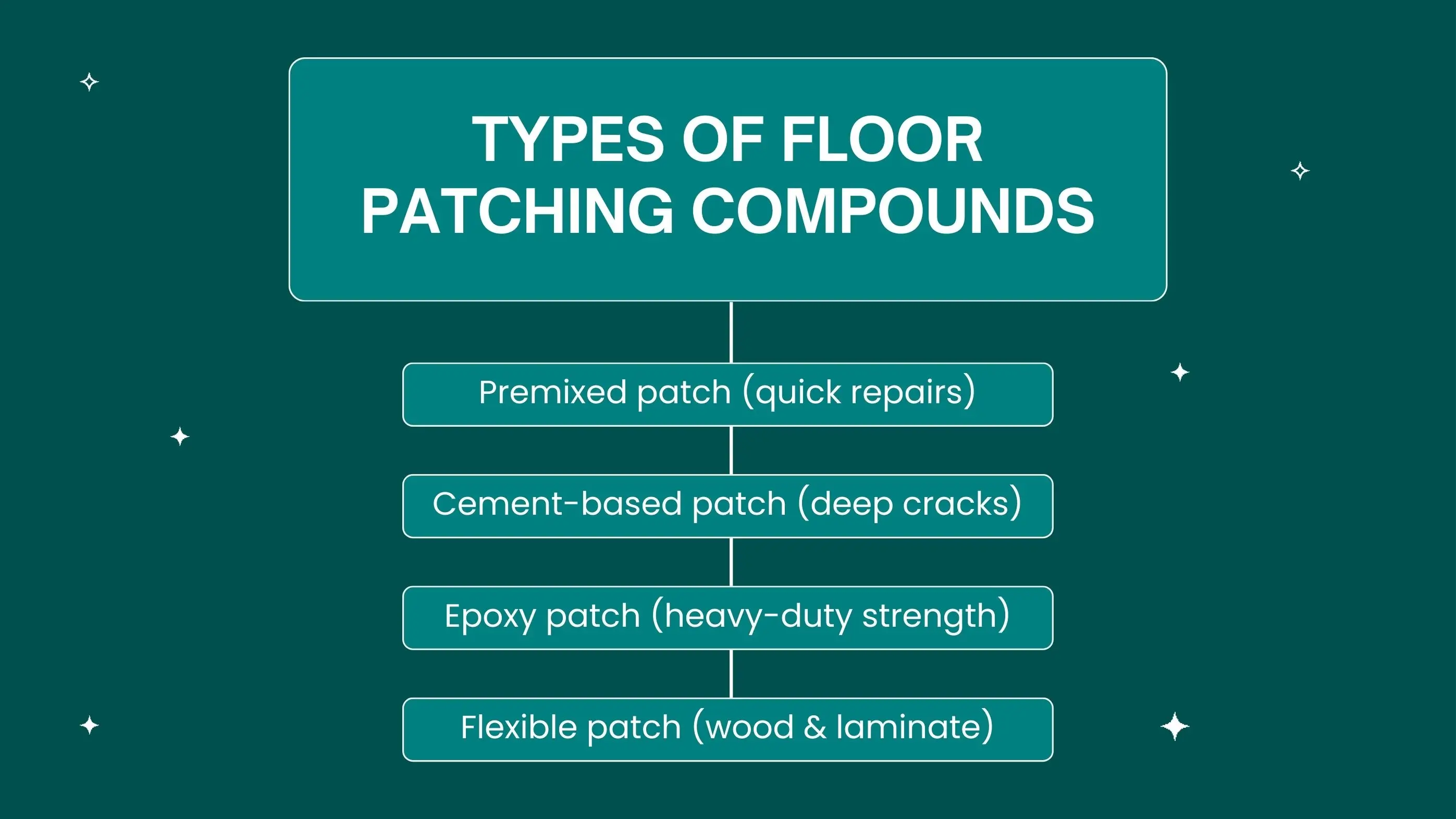
Floor patching compounds come in several formulas, each designed for a specific type of damage and flooring material. Choosing the right one makes the repair stronger and prevents cracks from returning.
Premixed patches come ready to use and are ideal for quick repairs on small holes, chips, and shallow cracks. They dry fast and are easy to spread with a trowel, making them perfect for beginners. Premixed products are commonly used on wood, vinyl, and small concrete surface defects.
Cement-based patches are stronger and used for concrete floors, deep cracks, and structural repairs. They bond tightly to concrete slabs and can handle heavy loads once fully cured. This type of patch is ideal for leveling uneven areas or fixing spalling surfaces before installing new flooring.
Epoxy patches are extremely durable and resist moisture, chemicals, and heavy impact. They are used when concrete floors have deep holes or cracks that need extra strength. Epoxy compounds cure into a hard, long-lasting surface that is stronger than regular cement patches.
Flexible patches are designed for materials that move slightly, such as wood, laminate, or subfloors. These compounds bend with the material instead of cracking again. They are useful for filling gaps, dents, and small separations where a rigid patch would fail.
Using the right tools ensures the patch is applied smoothly and firmly. Each tool plays a specific role in preparing, spreading, or smoothing the patching compound.
Trowels are used to spread and smooth patching compounds across the floor. They help create an even layer and ensure proper bonding. A flat trowel gives a smooth finish, while notched trowels help level the compound in thicker areas.
Scrapers remove loose debris, old adhesive, and damaged floor pieces before patching. Putty knives are used to apply filler into small cracks or chips, especially on wood, laminate, or vinyl floors.
Cement-based or powder patching compounds need to be mixed with water. A mixing bucket and a drill mixer help create a smooth, lump-free mixture for a strong repair.
Sanding tools help smooth the patch after it dries, especially on wood floors, where blending is important. For larger wood repairs, small floor sanders give a more even finish.
A clean surface is essential before applying any patch. Dust, dirt, and loose concrete particles can prevent the compound from bonding properly. Using a vacuum or stiff brush helps prepare the floor for repair.
Floor patching looks different depending on the material. Concrete, wood, vinyl, and laminate each require specific tools and repair techniques to ensure the patch blends well and lasts long. The steps below explain exactly how to fix common damage in each floor type using safe, effective methods.
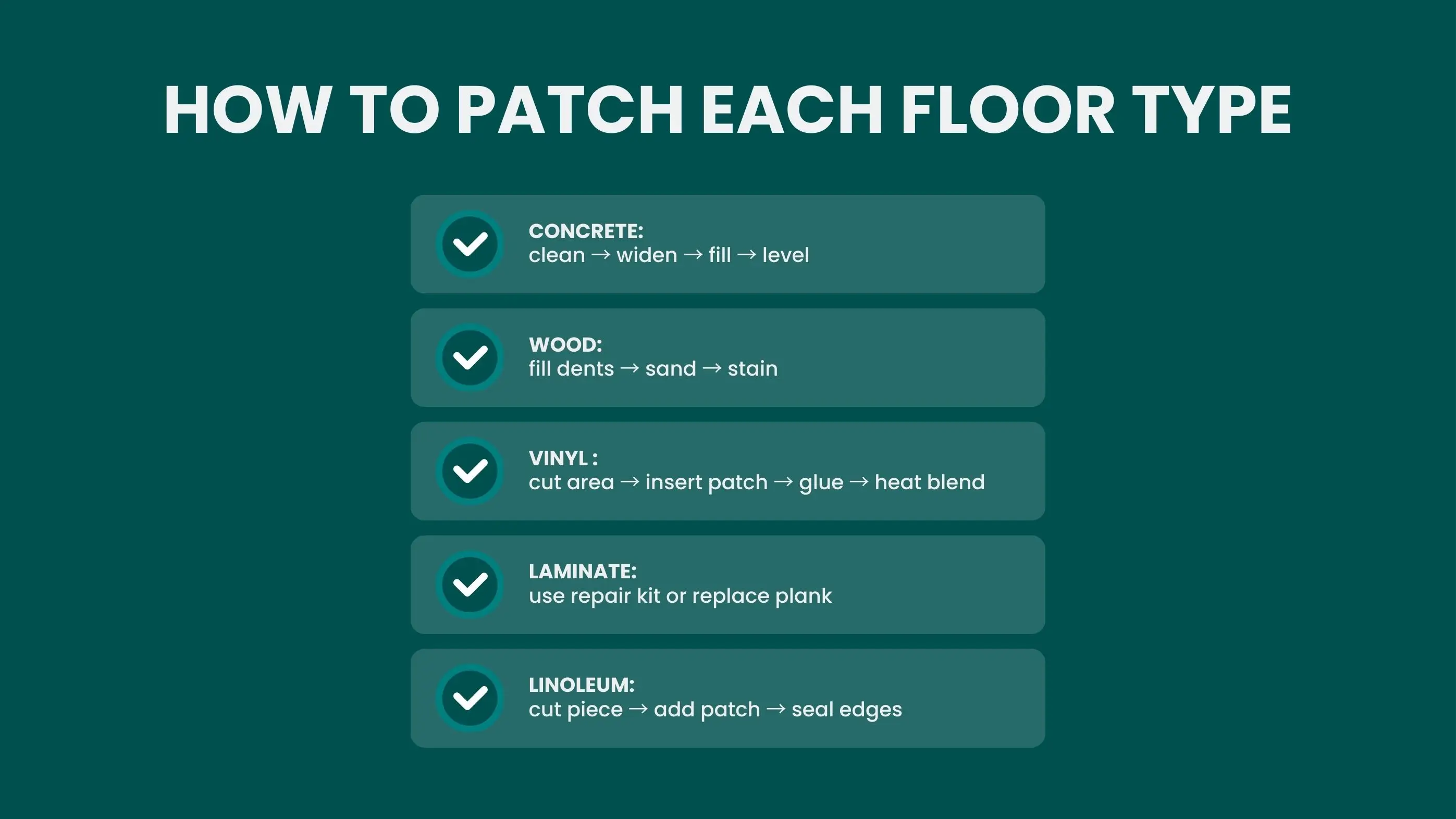
Concrete floors develop cracks, pits, and holes from settling, heavy loads, or moisture. Patching concrete restores strength and creates a smooth surface for future flooring installation.
Remove dust, loose concrete, old filler, or debris using a brush or vacuum. A clean surface helps the patch bond properly.
Use a chisel or grinder to slightly widen narrow cracks. This helps the patching compound hold better and prevents the crack from reappearing.
Brush on a bonding agent so the new patch sticks firmly to the old concrete. This prevents separation and improves durability.
Use a cement-based patch or epoxy, depending on the depth. Press the compound firmly into the damaged area and smooth it with a trowel.
Feather the edges of the patch so it blends smoothly with the surrounding concrete. For dips or sunken areas, use a self-leveling compound.
Let the patch dry according to the product instructions. Some concrete patches cure in hours, while deeper repairs may take a full day.
Wood floors can chip, dent, or develop soft spots from moisture or impact. Patch methods depend on whether the damage is shallow or deep.
Check if the wood is only scratched or if it’s soft, cracked, or sinking. Soft or rotten boards must be replaced, not patched.
Use wood filler or hardwood patching compound to fill dents, nail holes, and shallow chips. Smooth the surface with a putty knife.
Once the filler dries, sand the patched section until it’s level with the surrounding wood. This prepares the surface for staining.
Apply a matching wood stain or finish to blend the patch with the rest of the floor. Let it dry fully before walking on it.
Not all floor damage can be solved with patching. If the floor keeps sinking, cracking, or showing signs of structural problems, deeper repairs are needed. Subfloor rot, water damage, and large cracks often indicate issues beneath the surface that patching alone cannot fix.
You may need a replacement if:
Floor patching is an effective way to restore damaged surfaces, strengthen weak areas, and prepare floors for new installations. Whether your home has concrete, wood, vinyl, laminate, or linoleum, using the right patching materials and techniques ensures a smoother, safer, and longer-lasting result. Understanding the cause of the damage, choosing the correct patch, and following proper repair steps are the keys to a successful fix.
While many minor repairs can be handled with patching compounds and basic tools, more serious problems, such as deep cracks, swelling, sinking, or moisture damage, may require subfloor repairs or professional help. Regular maintenance, moisture control, and surface protection can prevent future damage and reduce the need for repeated patching. With the right approach, you can extend the life of your floors and keep them looking strong and stable for many years.
Minor cracks can be patched. Large cracks, soft spots, or structural movement require deeper repair or subfloor replacement.
Yes, moisture beneath concrete, vinyl, or wood will cause patch failure. Always dry the area fully first.
Yes, as long as the correct compound is used (epoxy or cement-based). Flexible patch is better for wood areas.
Proper sanding and color-matching can make patches nearly invisible, especially on wood floors.
Only if the old patch is bonded securely. Loose, crumbling, or hollow areas must be removed first.
Join our mailing list for exclusive updates, expert tips, and special offers tailored to your needs. Be the first to know about the latest in home services.

Renovize Home is a platform that supports homeowners from planning to renovation. Whether it’s Renovize AI for guidance or a one-on-one call with Pro Finder, we understand your project and match you with local contractors tailored to your needs.
Who We Are
About Renovize HomeGet in TouchHomeownwer Support:
Coming Soon!
General Inquiries:
support@renovizehome.com
Head Office:
24 Greenway Plaza, STE 1800M, Houston, TX 77046.