
Explore All
BROWSE BY CATEGORY
Interior
Exterior
Home Essentials
Homeowner Tools
Blogs & Guides
Find a Pro
Book Your Appointment Now
Home Essentials
About Renovize Home
Explore All
BROWSE BY CATEGORY
Interior
Exterior
Home Essentials
Homeowner Tools
Blogs & Guides
Find a Pro
Book Your Appointment Now
Home Essentials
About Renovize Home
Last Updated 2025-11-26
Warped flooring repair restores floors that have lifted, curved, or buckled after moisture exposure from leaks, spills, floods, or indoor humidity. When water enters wood or laminate, it expands and forces sections of the floor to rise out of place. This creates uneven walking surfaces, noisy movement, and in some cases structural weakening of the subfloor.
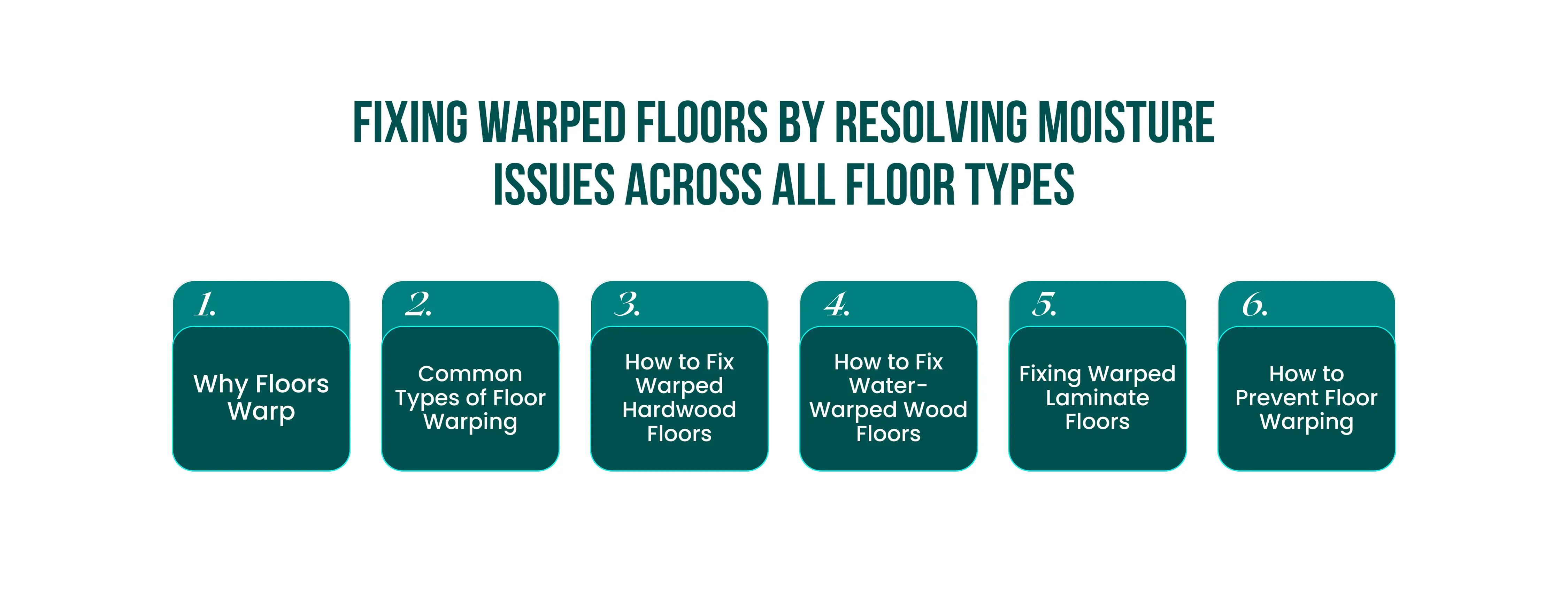
Table of Contents
Why Floors Warp
Types of Warping Homeowners Commonly See
How to Fix Warped Hardwood Floors
Fixing Warped Wood Floors Caused by Water
Identify and Stop the Moisture Source
How to Fix Warped Wood Floor Boards
How to Fix Warped Laminate Flooring
Final Thoughts
Floors warp when planks expand, contract, or lose stability due to moisture exposure, temperature changes, or problems within the subfloor. Understanding the exact cause helps you choose the correct repair method and prevent the issue from returning.
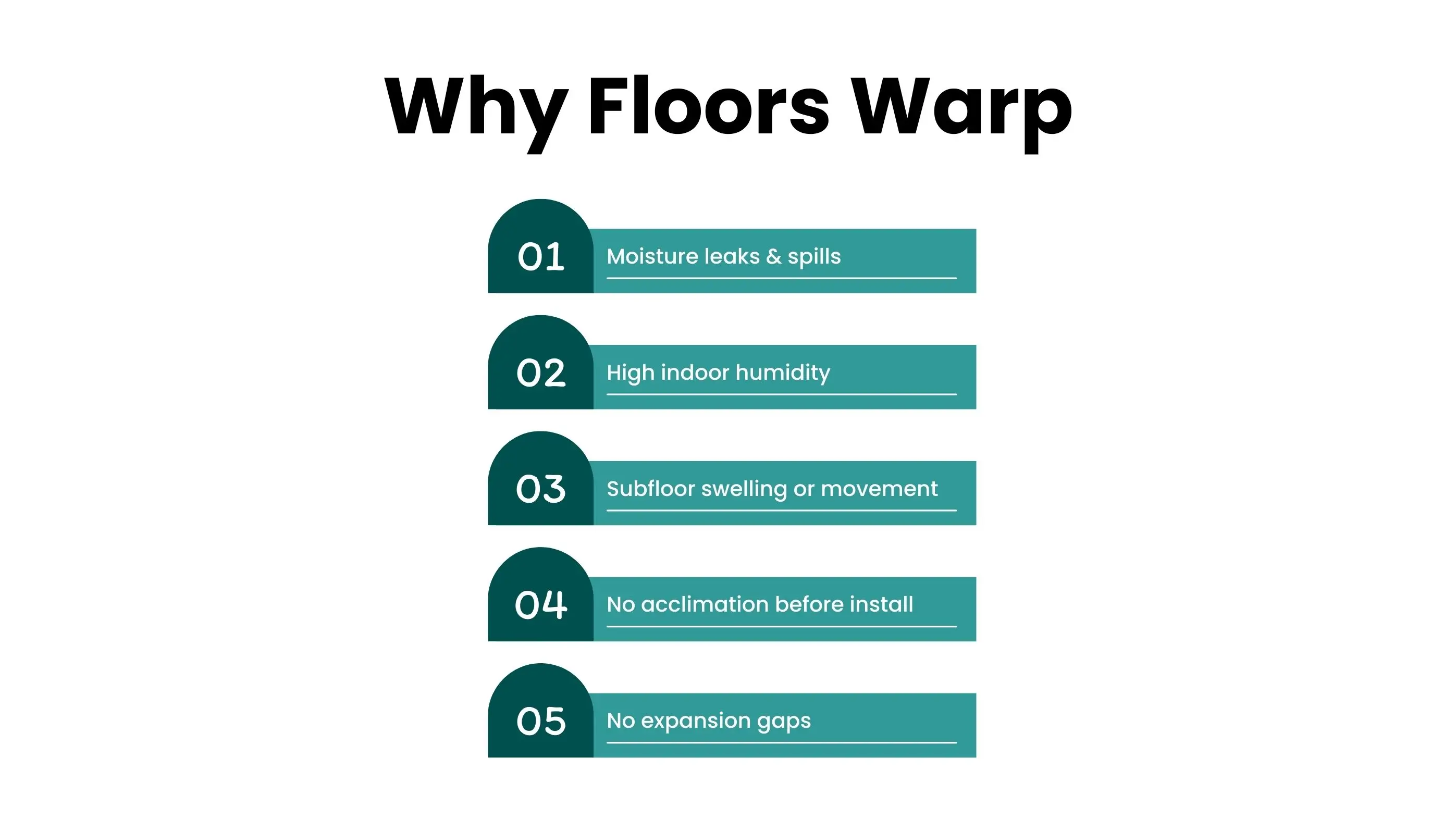
Water from plumbing leaks, appliance failures, or bathroom and kitchen overflow seeps into flooring seams and causes swelling.
High humidity causes gradual plank expansion even when no visible water is present. Bathrooms, basements, and laundry rooms are common hotspots. Signs include:
Laminate floors absorb humidity faster than hardwood, so they warp sooner without proper ventilation.
When the subfloor absorbs moisture or shifts due to structural issues, it pushes the flooring above out of alignment.
Wood and laminate must adjust to the home’s temperature and humidity before installation. Without acclimation, planks expand after installation and create buckling or raised areas.
Engineered wood tolerates changes better than solid hardwood, but it still requires a proper acclimation period.
Floating laminate floors are most sensitive to this issue, while nailed hardwood may show gradual lifting or creaking.
Before deciding how to fix a warped floor, it helps to understand which type of warping is affecting the surface. Each pattern shows how moisture and movement are changing the shape of the wood or laminate, and identifying it correctly prevents choosing the wrong repair method.
Before deciding how to fix a warped floor, it helps to understand which type of warping is affecting the surface. Each pattern shows how moisture and movement are changing the shape of the wood or laminate, and identifying it correctly prevents choosing the wrong repair method.
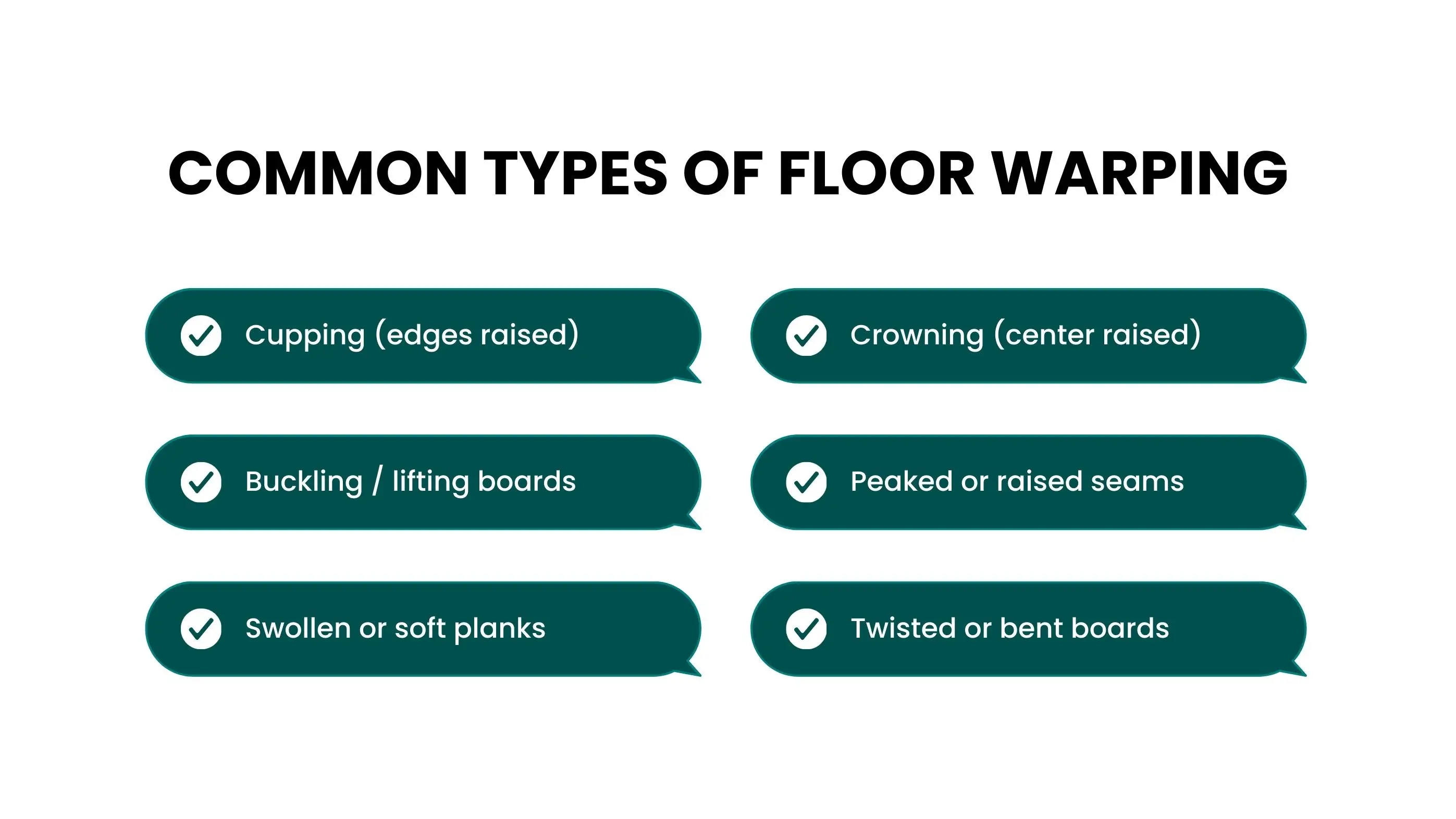
Cupping appears when moisture collects underneath the planks, causing the bottom fibers to expand more than the top. The edges begin to curve upward, creating a shallow “bowl” shape. Homeowners often see this near dishwashers, bathroom fixtures, or basement areas where humidity is high. Cupping requires controlled drying and moisture correction before refinishing or plank replacement.
Crowning occurs when the top surface absorbs more moisture than the underside, often because the floor was sanded before it was fully dry after a previous water event.
The center becomes rounded and higher than the edges. Repair typically involves moisture reduction and refinishing, but sanding too early can worsen the damage.
Buckling is the most severe form of warping and happens when flooring detaches from the subfloor completely. Planks may arch several millimeters or even centimeters above their original level.
This usually results from major leaks, flooding, or missing expansion gaps. Fixing buckling may require plank removal, subfloor repair, and reinstallation.
When edges push against each other, the joints rise and form sharp ridges that are noticeable when walking across the floor. This is common in laminate floating floors that were installed without proper expansion space or were exposed to rapid temperature change. Repair may involve trimming perimeter boards and relieving pressure before replacing damaged planks.
Swelling happens when planks absorb moisture and expand without visibly distorting their shape. The floor may feel uneven or spongy when stepped on, especially with laminate or engineered wood.
A swollen floor often means the core material is damaged, and repairs require replacing the affected sections and drying the subfloor.
In some cases, boards twist along their length instead of rising at the edges. This usually occurs with solid hardwood that has absorbed moisture unevenly or dried too quickly. Twisted boards cannot be sanded flat and typically must be replaced to restore a safe and even surface.
Fixing warped hardwood floors begins with understanding how much moisture the wood has absorbed and whether the planks can return to their natural shape.
Sanding or refinishing too early can permanently damage the wood, so repairs should only begin once moisture levels are fully stabilized. Using a professional moisture meter is the most reliable way to confirm the floor is dry and ready for repair.
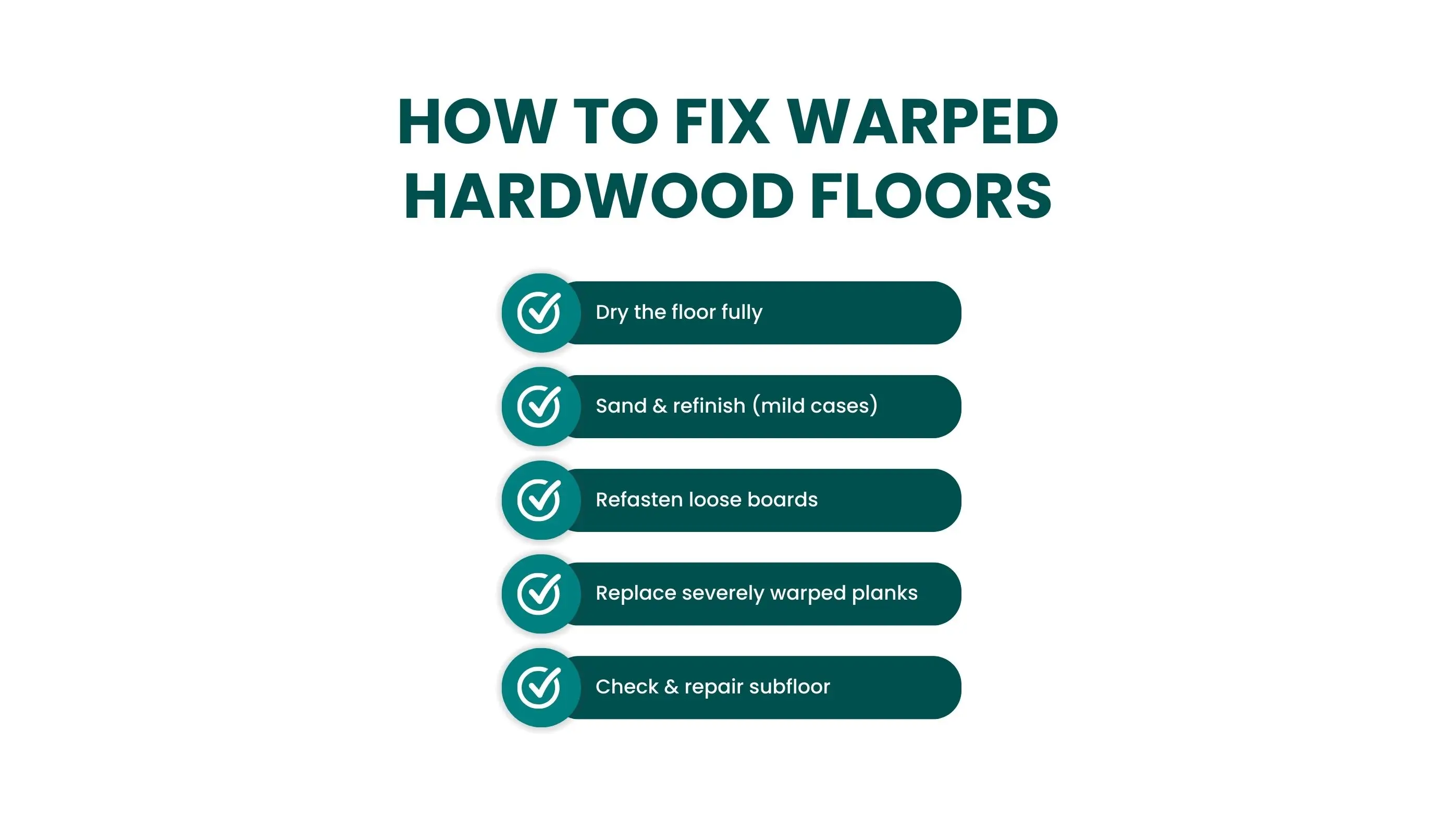
The first step is drying the hardwood and reducing humidity in the room. Dehumidifiers, fans, and proper ventilation help the boards shrink slowly and safely.
Stabilizing moisture prevents further warping and prepares the floor for sanding or repair.
Once the wood reaches a safe moisture level, light cupping or crowning can be corrected by sanding down high spots. The floor is then refinished to restore a smooth, even surface and protective coating. Refinishing the entire room or section ensures a consistent color and sheen.
If planks have loosened due to moisture, they may move or squeak. Refastening the boards with appropriate flooring nails or screws secures them back to the subfloor and prevents gaps from forming as the wood settles again.
Heavily warped, split, or permanently misshaped boards cannot be restored. These planks must be removed and replaced. The process includes:
If the subfloor is wet, soft, moldy, or uneven, warping will return even after hardwood repairs. Subfloor work may include:
Fixing a warped wood floor caused by water begins with stopping the moisture source and determining how deeply the water has reached. Warping can come from sudden leaks, slow drips under appliances, or humidity that gradually saturates the boards.
Drying and moisture control must be the first steps before any sanding or replacement begins. Ignoring the moisture source leads to repeated damage, so leak detection is essential.
Homeowners should inspect plumbing lines, refrigerator and dishwasher connections, and areas around bathrooms and laundry rooms, since these spots commonly cause warped floorboards.
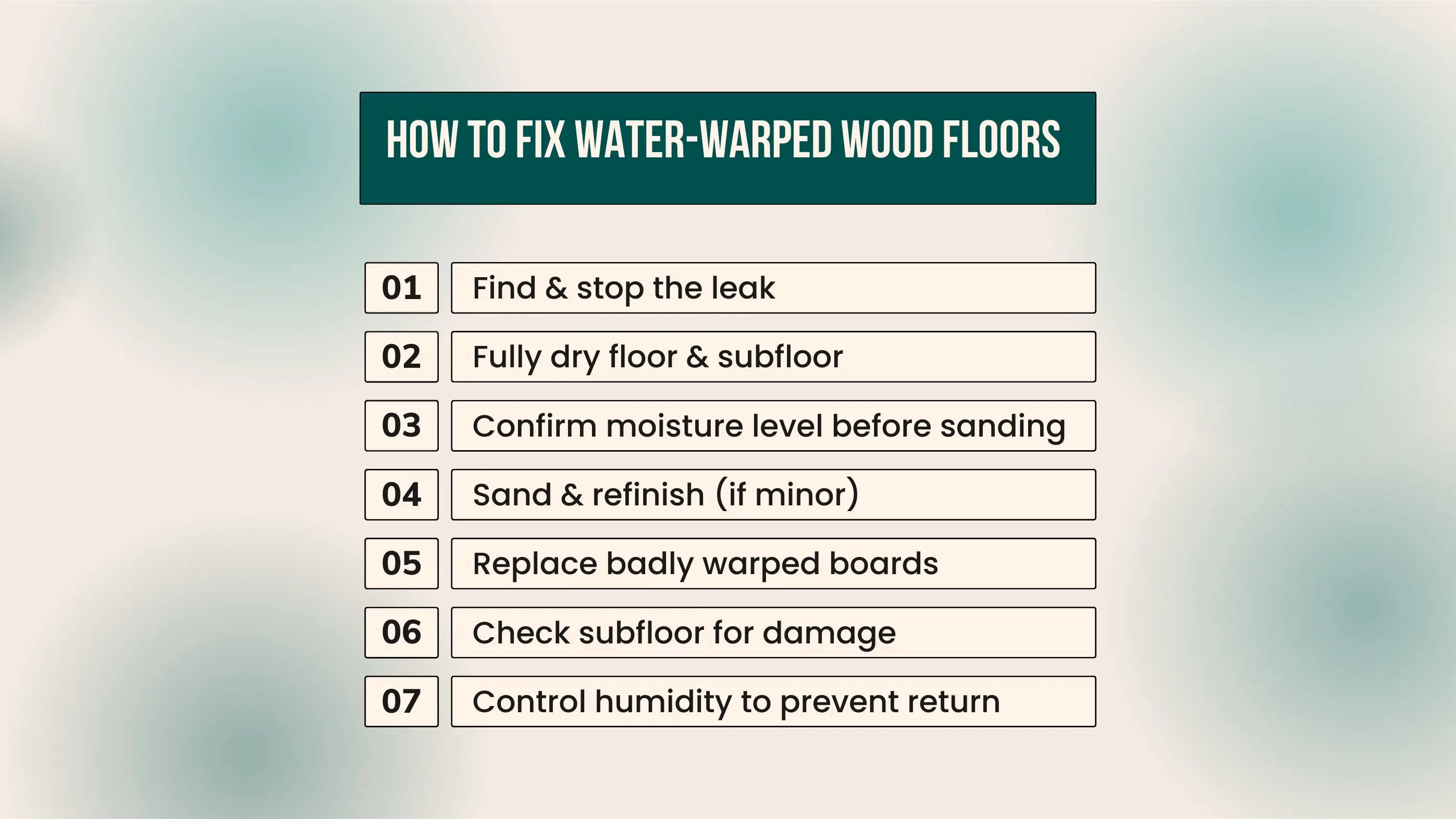
Before repairs begin, the leak must be found and corrected. This prevents further damage and ensures repairs last. Typical sources include:
Once the leak is fixed, drying starts. Fans, air movers, and dehumidifiers remove moisture from both the wood surface and the subfloor below. Depending on how long water remains trapped, drying may take several days.
A moisture meter should always confirm that the flooring has reached a safe moisture level before repairs move forward. Sanding wet or damp wood can cause permanent damage, leading to crowning or cupping later.
After drying, some boards may return to their natural shape. In that case, sanding and refinishing can restore the wood’s appearance.
However, if boards stay lifted, deeply cupped, buckled, or separated from the subfloor, those planks must be removed and replaced. When removing damaged boards, the subfloor must also be checked for:
OSB or plywood subfloors often require panel replacement if they absorb too much water, since weakened subfloors can cause repeated warping.
If only a small section of the floor is affected, a localized repair may be enough. But when a large area is damaged, refinishing the entire room creates an even color and texture across all boards. Full refinishing also resets the protective surface layer, reducing future moisture absorption.
After repairs are complete, moisture prevention is key. Proper humidity control and ventilation help wood floors remain stable. Homeowners can reduce future problems by:
Fixing warped wood floor boards starts with determining whether the distortion is mild or severe. Light warping caused by seasonal humidity can often be corrected by improving airflow and allowing the boards to dry until they return to normal moisture levels. Once the wood stabilizes, light sanding and refinishing can restore a flat, even surface.
If a board has lifted slightly or shifts underfoot, tightening or replacing fasteners can secure it firmly back to the subfloor. When a small gap remains underneath, thin shims or a leveling compound may be added to support the board, preventing movement and future creaking. This step works well when the wood is structurally sound but has separated due to moisture changes.
Boards that are deeply cupped, twisted, split, or permanently swollen usually require full replacement. The damaged plank is carefully cut out, the subfloor is inspected for hidden moisture or soft spots, and a matching board is installed. Once in place, the area is sanded and finished to blend seamlessly with the surrounding floor.
Maintaining proper humidity levels and addressing moisture issues early are the most effective ways to keep floors from warping again. Using exhaust fans in damp rooms, running a dehumidifier in humid seasons, and repairing leaks immediately all help maintain stable wood moisture levels and protect the flooring over time.
Fixing warped laminate flooring begins with understanding that laminate cannot be sanded flat like hardwood. When the core material swells, the damage is permanent and the affected planks must be replaced. The first step is identifying the source of moisture, whether it comes from leaks, spills, wet mopping, or missing expansion gaps that cause pressure and lifting.
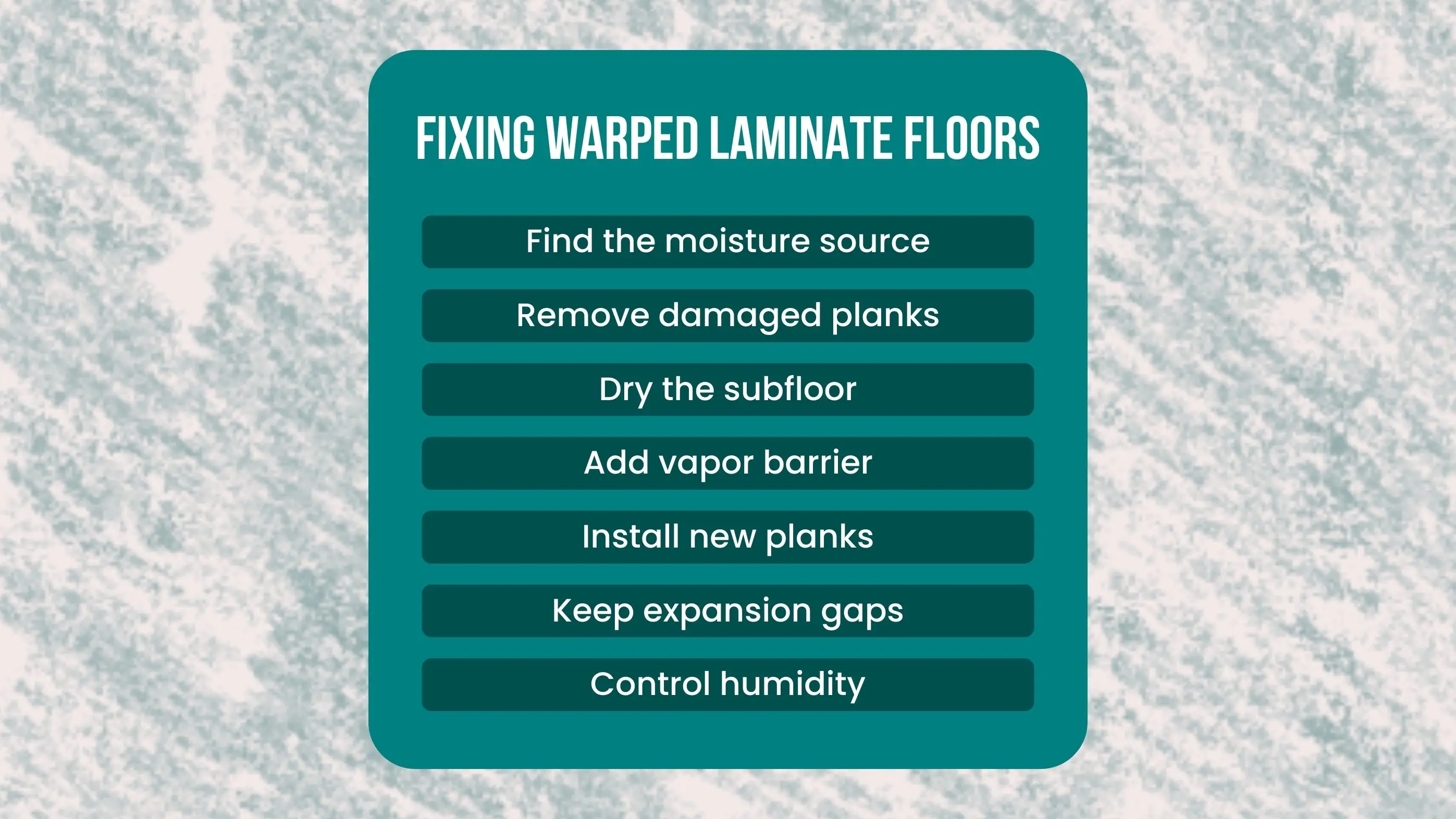
Laminate repairs start by removing warped planks from the nearest wall so the locking system can come apart safely without damaging surrounding boards. Once the damaged section is lifted, the subfloor is inspected and thoroughly dried. Any signs of mold, soft spots, or trapped moisture must be addressed before new boards are installed. If moisture entered from below, upgrading the vapor barrier or underlayment may be necessary.
When reinstalling laminate, proper expansion spacing must be maintained around the room’s perimeter to allow the boards to expand and contract with humidity changes. New planks should match the existing floor in:
Preventing future warping depends on controlling moisture. Homeowners can reduce the risk by:
Fixing warped floors the right way means solving the moisture problem first, restoring the damaged boards second, and protecting the home long-term with better ventilation, humidity control, and routine leak checks.
Warping is almost always a symptom of a deeper issue whether it’s hidden water, installation errors, or shifts in the subfloor so lasting results come from addressing both the visible floor and the conditions underneath it. With proper repair and prevention, homeowners can restore a smooth, safe, and stable floor that stays resistant to warping for years to come.
Minor cupping caused by short-term humidity changes may gradually correct itself once indoor moisture levels return to normal. Severe bending, lifted edges, or boards that have absorbed significant water will not flatten without professional repair or replacement.
Drying can take 24 hours to up to two weeks depending on the material, ventilation, and depth of moisture. Hardwood and subfloors take longer than laminate because moisture can settle deeper into the wood structure.
Coverage is usually limited to sudden and accidental water events, such as a burst pipe or appliance failure. Warping from long-term leaks, poor drainage, or improper maintenance is typically not covered.
Sanding works only on mild surface cupping. Boards that are significantly buckled, cracked, or permanently swollen need to be removed and replaced to restore a safe, even surface.
Laminate contains a fiber core that absorbs moisture quickly. Without proper expansion gaps or if water becomes trapped underneath, the planks swell and lose their shape, making repairs difficult without replacement.
When boards are lifting several inches, feel soft or spongey, or show signs of mold or odor, replacement is safer. Severe movement suggests damage has reached the subfloor and requires deeper inspection.
Join our mailing list for exclusive updates, expert tips, and special offers tailored to your needs. Be the first to know about the latest in home services.

Renovize Home is a platform that supports homeowners from planning to renovation. Whether it’s Renovize AI for guidance or a one-on-one call with Pro Finder, we understand your project and match you with local contractors tailored to your needs.
Who We Are
About Renovize HomeGet in TouchHomeownwer Support:
Coming Soon!
General Inquiries:
support@renovizehome.com
Head Office:
24 Greenway Plaza, STE 1800M, Houston, TX 77046.