
Explore All
BROWSE BY CATEGORY
Interior
Exterior
Home Essentials
Homeowner Tools
Blogs & Guides
Find a Pro
Book Your Appointment Now
Home Essentials
About Renovize Home
Explore All
BROWSE BY CATEGORY
Interior
Exterior
Home Essentials
Homeowner Tools
Blogs & Guides
Find a Pro
Book Your Appointment Now
Home Essentials
About Renovize Home
Last Updated 2025-11-21
Your bathtub is more than just a place to bathe, it's where you relax and unwind after a long day. But over time, bathtubs can lose their shine, get stained, or just look outdated. When that happens, upgrading your bathtub is one of the easiest and smartest home improvements you can make. Upgrading your bathtub can not only make your bathroom look new again, but it can also improve comfort, save energy, and add long-term value to your home.
In this guide, we’ll walk you through everything you need to know about upgrading your bathtub from why it’s a good idea, to the costs, materials, and styles to choose from. By the end, you’ll know exactly how to transform your bathroom into a relaxing retreat.
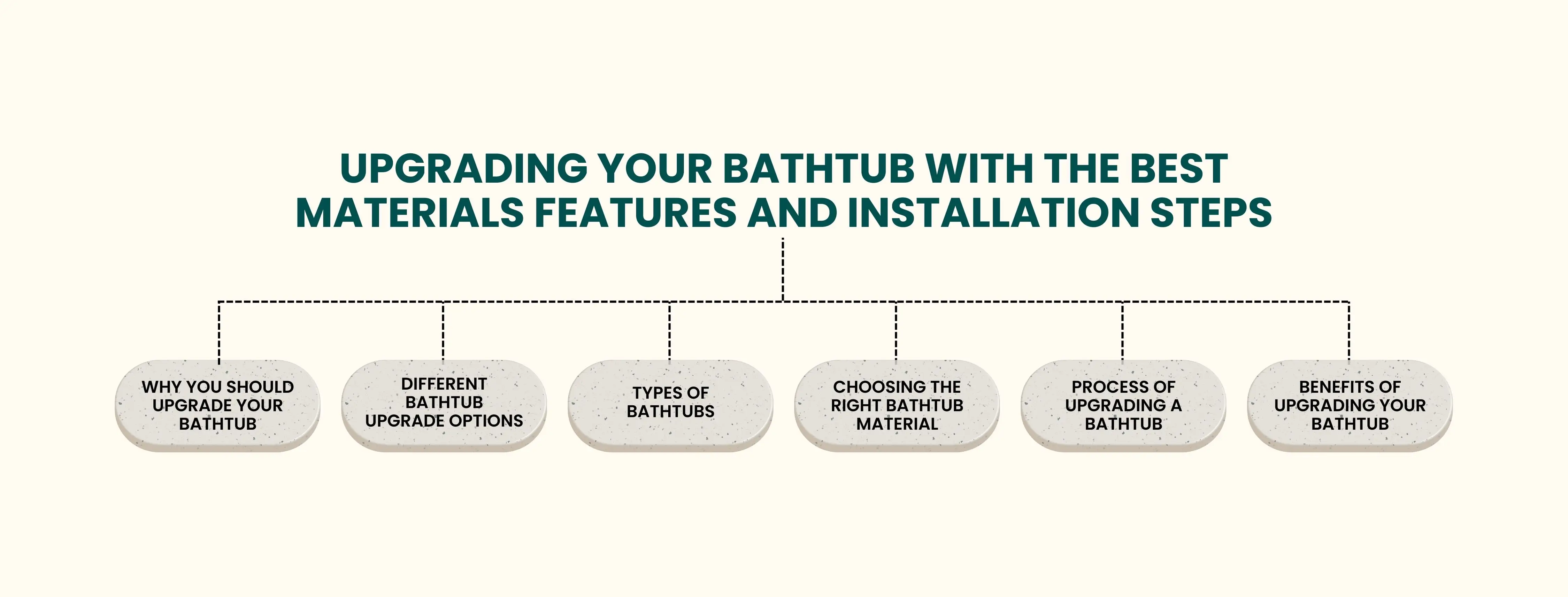
Table of Contents
Why You Should Upgrade Your Bathtub
Different Bathtub Upgrade Options
Types of Bathtubs
Choosing the Right Bathtub Material
Step-by-Step Process of Upgrading a Bathtub
Average Cost of Bathtub Upgrades
Benefits of Upgrading Your Bathtub
Maintenance Tips After Upgrading
DIY vs Professional Bathtub Upgrade
When to Hire a Professional
Final Thoughts
Upgrading your bathtub improves hygiene by eliminating cracks and stains, making your bathroom more comfortable and easier to clean. It also enhances your bathing experience with modern features like better water flow and slip-resistant surfaces. Plus, a fresh bathtub can increase the value of your home, making it a smart long-term investment.
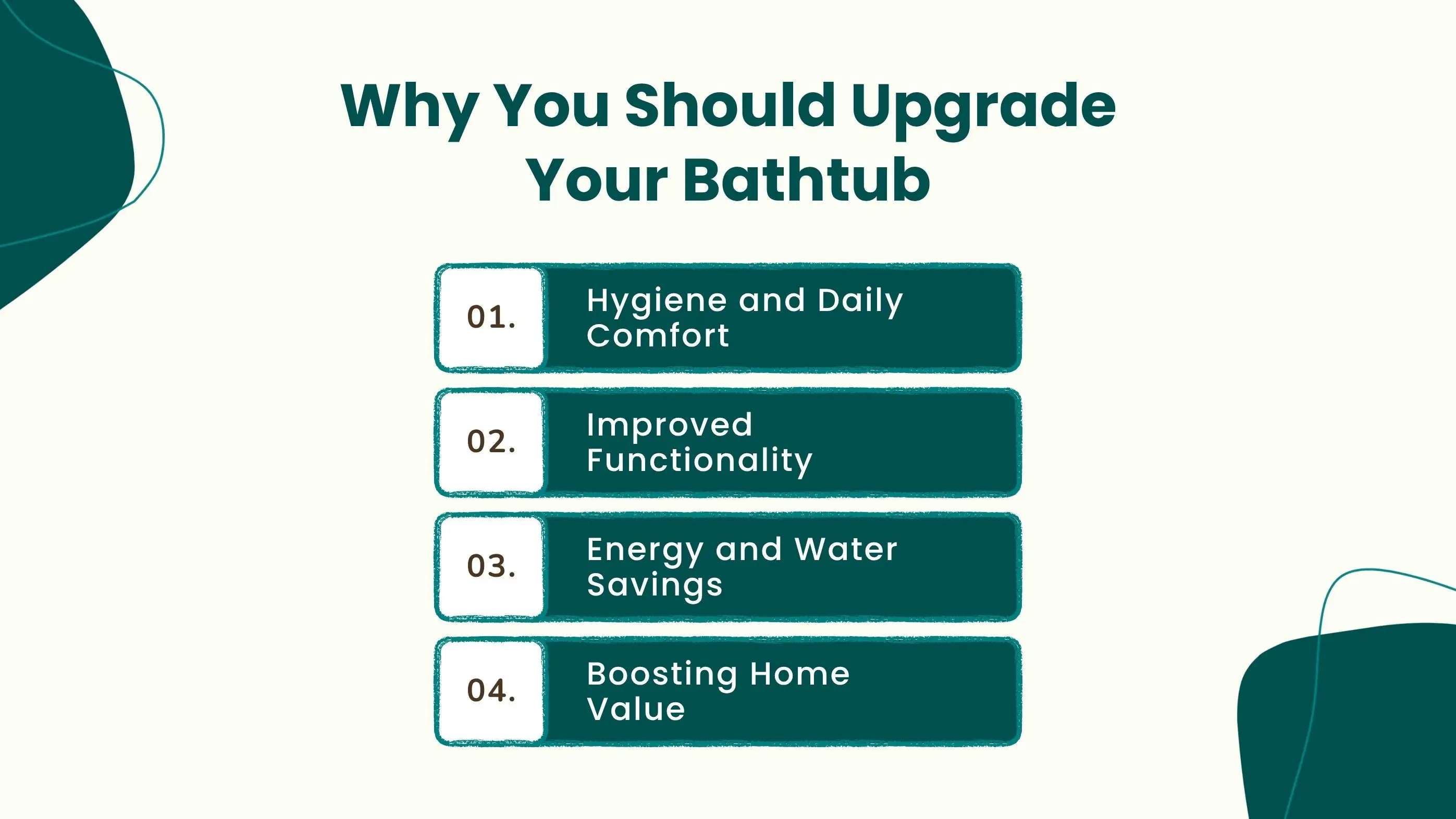
Old bathtubs often show signs of wear, cracks, discoloration, or mineral buildup that can make cleaning difficult and unhygienic. A new or refinished bathtub ensures a smoother surface, easy cleaning, and a healthier bathing experience.
Modern bathtubs come with ergonomic designs and smart water flow systems. They provide better back support, slip-resistant surfaces, and temperature control, making your daily bath safer and more comfortable.
Today’s bathtubs are made with heat-retaining materials and efficient plumbing fixtures. They use less water to fill and stay warm longer, helping you lower both your water and energy bills.
A bathroom upgrade is one of the most value-adding improvements you can make. A stylish, modern bathtub can increase your home’s resale appeal, giving potential buyers a lasting first impression.
Upgrading your bathtub doesn’t always mean replacing the entire unit. Depending on your budget and the condition of the current tub, you can choose from several upgrade methods.
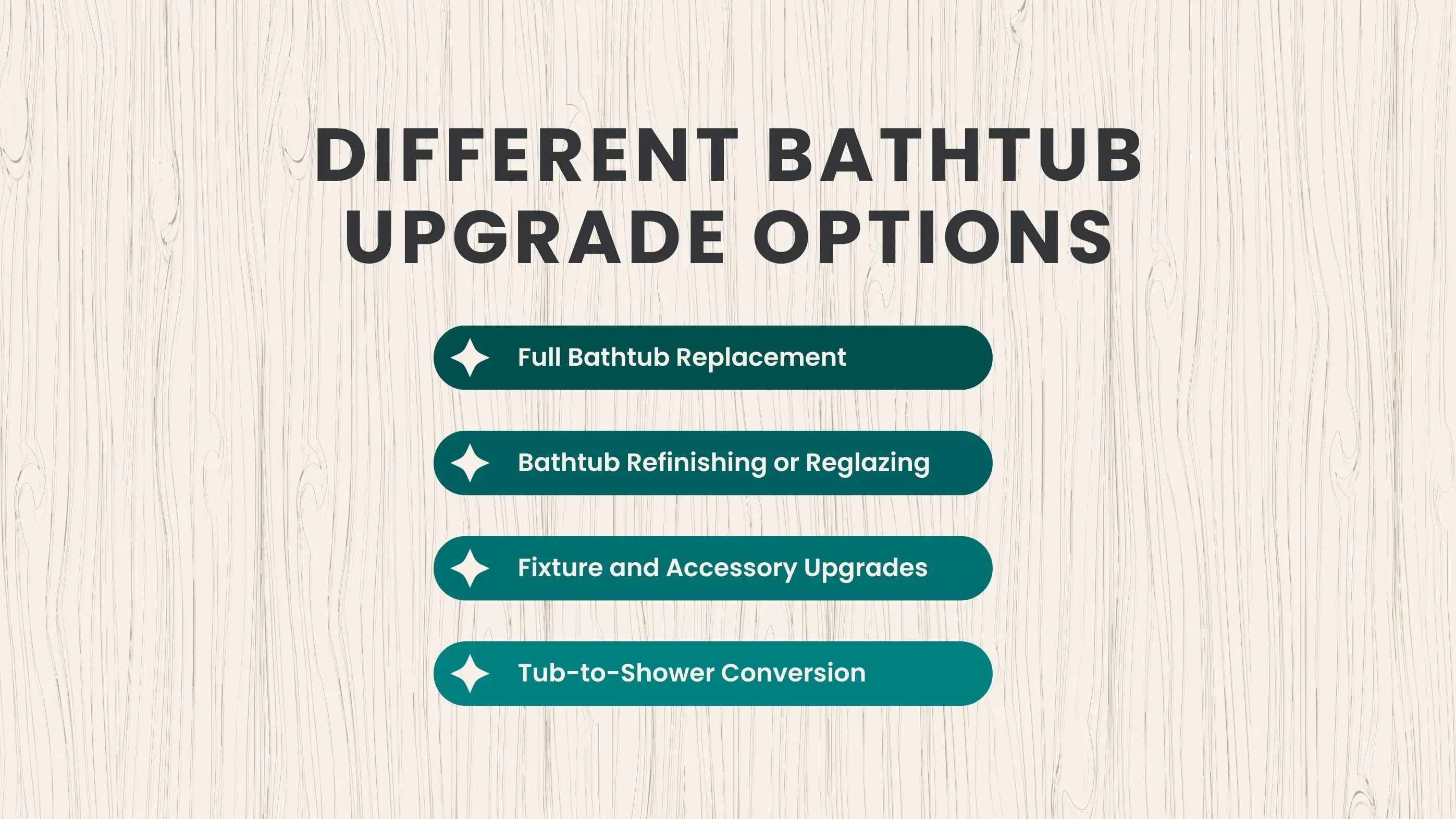
If your current bathtub is cracked, leaking, or outdated, a complete replacement is the best solution. This involves removing the old tub, checking plumbing connections, and installing a brand-new model. It’s ideal for long-term results.
Refinishing is a process that repairs surface damage and adds a new glossy finish to your existing bathtub. It’s a cost-effective solution that makes your tub look brand new without a major renovation.
Sometimes, a small change goes a long way. Replacing old faucets, drains, or showerheads can instantly elevate the look and feel of your bathtub. You can even add features like handheld sprayers or LED waterfall spouts for a modern touch.
If you rarely use your bathtub, converting it into a walk-in shower can save space and improve accessibility. This upgrade is popular among homeowners who want a minimalist and practical design.
When upgrading, it helps to understand what type of bathtub best suits your needs and bathroom layout. Some are given below:
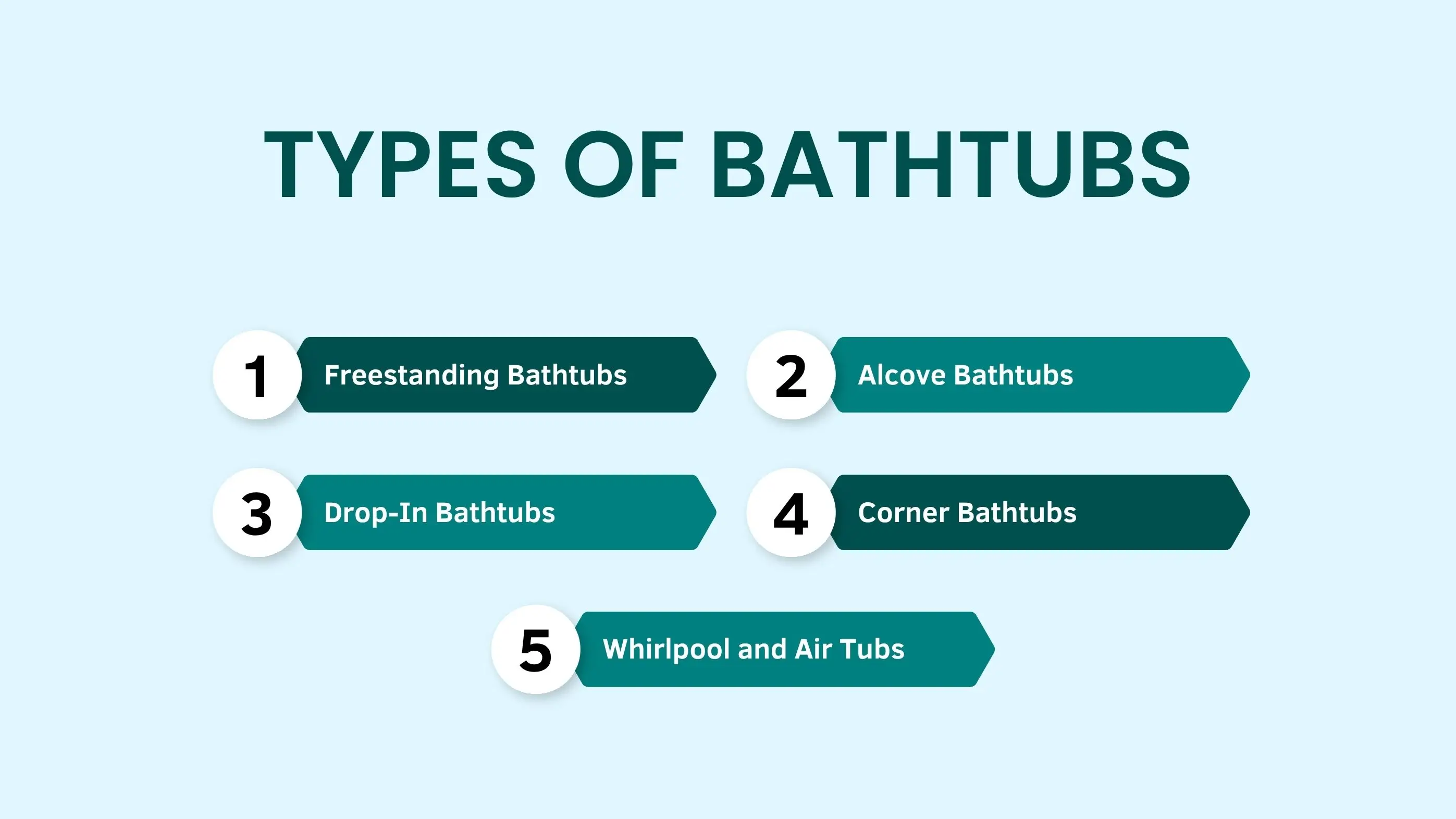
These tubs stand independently and are often the highlight of modern bathrooms. They come in stylish shapes like oval, rectangular, or clawfoot, offering both beauty and comfort.
Installed between three walls, alcove tubs are perfect for small bathrooms. They usually come with shower combinations, offering functionality within limited space.
Drop-in tubs fit into a custom-built platform or deck. They look sleek, are easy to clean, and offer a polished appearance in larger bathrooms.
Ideal for maximizing space, corner tubs add a touch of luxury. They’re deep and great for soaking, but require precise measurements during installation.
Whirlpool and air tubs offer a luxurious bathing experience with built-in jets that provide soothing massages, helping to relax muscles and improve circulation. These tubs are perfect for those seeking a spa-like atmosphere at home, though they come at a higher price and may require more maintenance.
The material you choose for your bathtub will play a significant role in its durability, how well it retains heat, how easy it is to clean, and, of course, its cost. Below, we’ll go over the most common materials used in bathtubs, each with its own unique set of benefits and drawbacks.
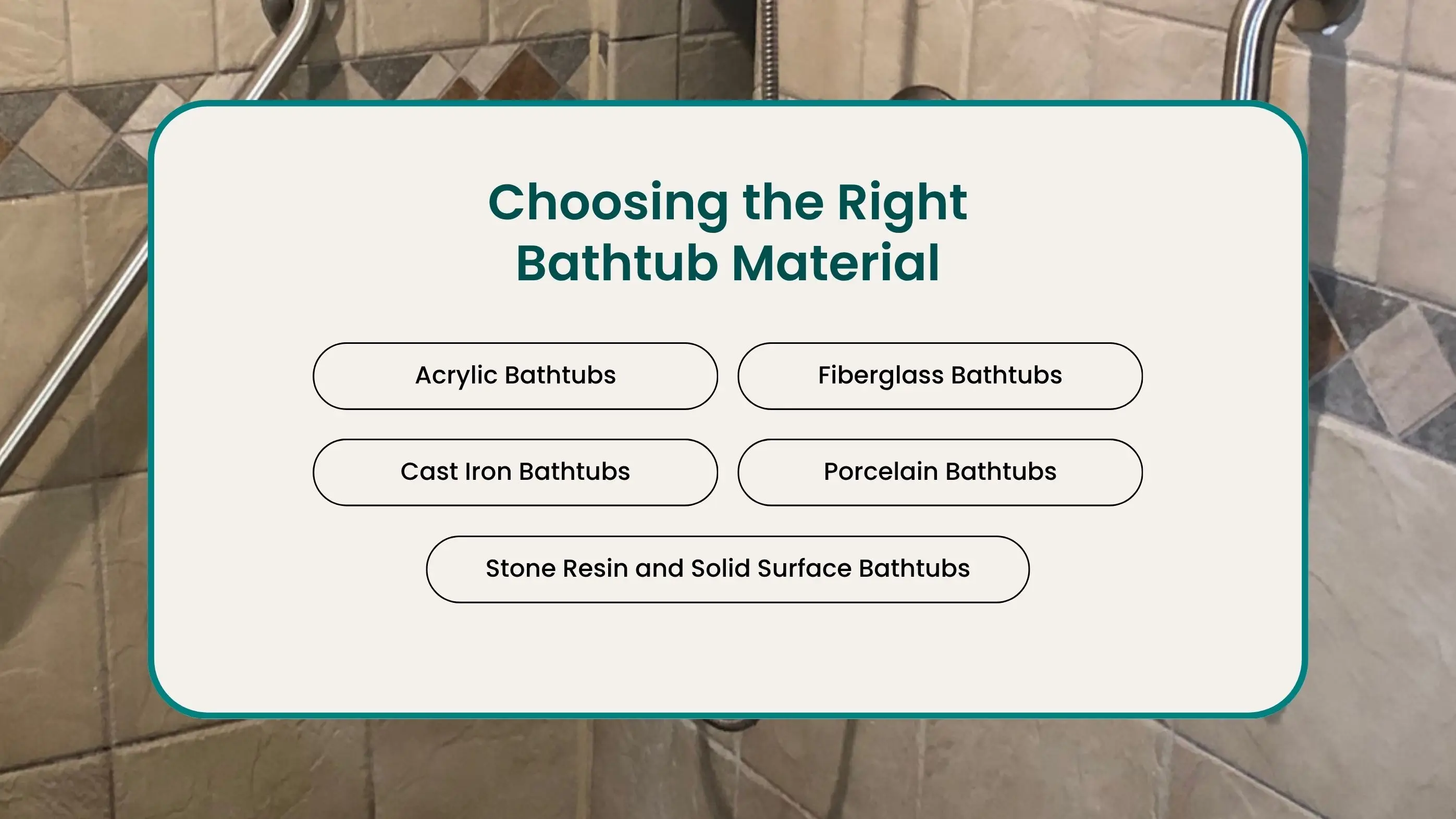
Acrylic bathtubs are a top choice for homeowners looking for a lightweight, affordable, and easy-to-maintain option. Acrylic is a thermoformed plastic, meaning it can be molded into various shapes and sizes, making it highly versatile and stylish. Here are the key benefits:
Fiberglass is one of the most budget-friendly bathtub materials available. Fiberglass bathtubs are made by layering glass fibers and resin, which are then molded into the desired shape. Here are the important details:
Cast iron tubs are known for their durability and heat retention. Made by pouring molten iron into a mold and coating it with enamel, cast iron is a heavy but highly sturdy material. Let’s look at its key features:
Porcelain bathtubs are essentially enamel-coated steel bathtubs, offering the smooth, shiny surface of porcelain with the strength of steel beneath. Here’s what you need to know:
Stone resin and solid surface materials are a premium option for those looking for luxury and modern design. These tubs are made from a mix of stone particles and resins, offering a durable and sleek look. Here are the key benefits:
Upgrading your bathtub is more than replacing an old fixture. It involves careful preparation, correct installation, and proper sealing to ensure long-term durability. Each stage plays a crucial role in preventing leaks, moisture damage, and future repairs. Here is the process explained clearly, with only the essential points added.
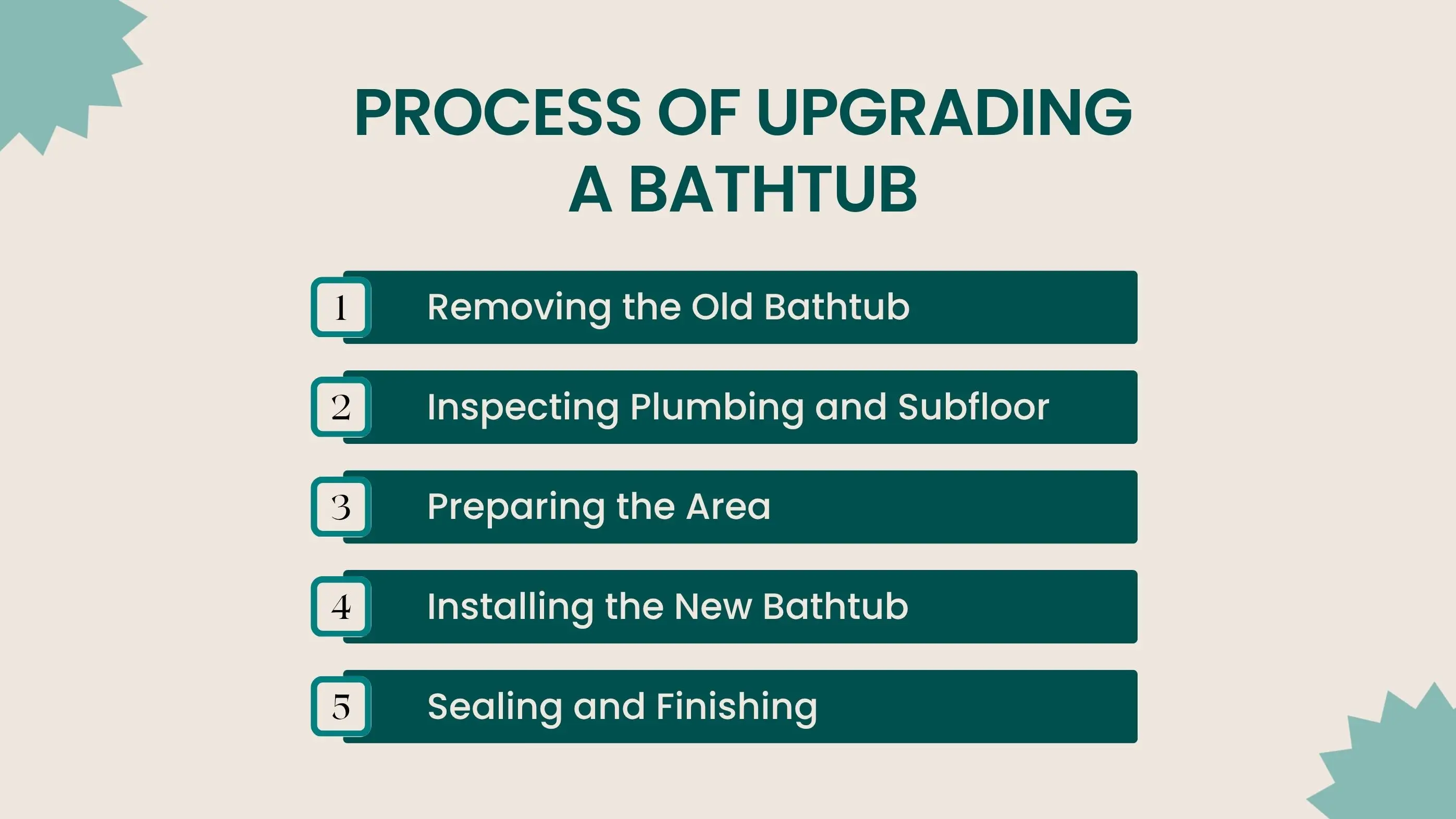
The upgrade starts with removing the existing bathtub safely. A professional turns off the water supply, disconnects the plumbing connections, and cuts through the old caulk or adhesive. This prevents damage to nearby tiles and flooring.
If tiles need to be removed for access, only the necessary portion is taken out to maintain the surrounding layout. Older tubs, especially cast iron, may require sectioning for safe removal. Once the tub is out, the space is cleared so the next steps can be done properly.
With the tub removed, the plumbing lines and subfloor are inspected for issues that might affect the new installation. This includes checking for rust, leaks, worn connectors, or outdated parts that may need replacing.
The subfloor is examined for signs of water damage or soft spots. If any moisture-related damage is found, it’s repaired to ensure the new tub sits on a strong, even base. This step prevents long-term structural issues and ensures the installation lasts.
Before installation, the area is cleaned and made ready for the new bathtub. Old sealant, debris, and dust are removed, and the floor is checked for levelness. If the surface is uneven, it’s adjusted to avoid poor drainage or movement once the tub is installed.
If you’re upgrading to a different size or shape, minor plumbing adjustments may be required. This is also the stage where any necessary framing or spacing adjustments are made to ensure the new tub fits properly.
The new bathtub is positioned carefully and checked for levelness. This step is essential because even a slight tilt can cause drainage issues or stress on plumbing parts.
The tub is then secured in place and connected to the drain, overflow, and water supply lines. Once connections are made, the contractor tests the plumbing to confirm that everything drains correctly and no leaks are present before moving forward.
The final stage ensures the bathtub is watertight and visually complete. Waterproof caulk is applied around the edges to prevent moisture from entering the surrounding walls or flooring. New fixtures such as the faucet, showerhead, and handles are installed.
If part of the upgrade includes new tiles or wall panels, they are added around the tub and sealed properly. The area is cleaned, inspected, and tested one last time to ensure everything works as expected.
With the upgrade complete, your bathroom is refreshed, protected from moisture damage, and ready for everyday use.
Before you begin your bathtub upgrade, it’s important to have a clear idea of the costs involved. The average cost of upgrading a bathtub depends on the type of upgrade, with full replacements ranging from $1,500 to $4,500, while refinishing is a more affordable option at $300 to $800. Additional costs for fixtures, plumbing, and tile work can increase the total project price.
| Upgrade Type | Average Cost (USD) | Description |
|---|---|---|
| Bathtub Replacement | $1,500 – $4,500 | Includes removal, new tub, and labor |
| Bathtub Refinishing | $300 – $800 | Restores surface shine and removes stains |
| Faucet & Fixture Upgrade | $150 – $500 | Adds new faucets, drains, or showerheads |
| Tub-to-Shower Conversion | $1,800 – $5,000 | Converts a bathtub into a walk-in shower |
| Freestanding Tub Installation | $2,000 – $6,000 | Luxury upgrade with plumbing adjustments |
| Tile Surround Replacement | $800 – $2,500 | Replaces old wall tiles around the bathtub |
| Plumbing Repair (if needed) | $200 – $600 | For fixing leaks or replacing pipes |
Upgrading your bathtub improves comfort, safety, hygiene, and the overall value of your home. A modern tub not only looks better but also works better, making your bathroom easier to maintain and more enjoyable to use.
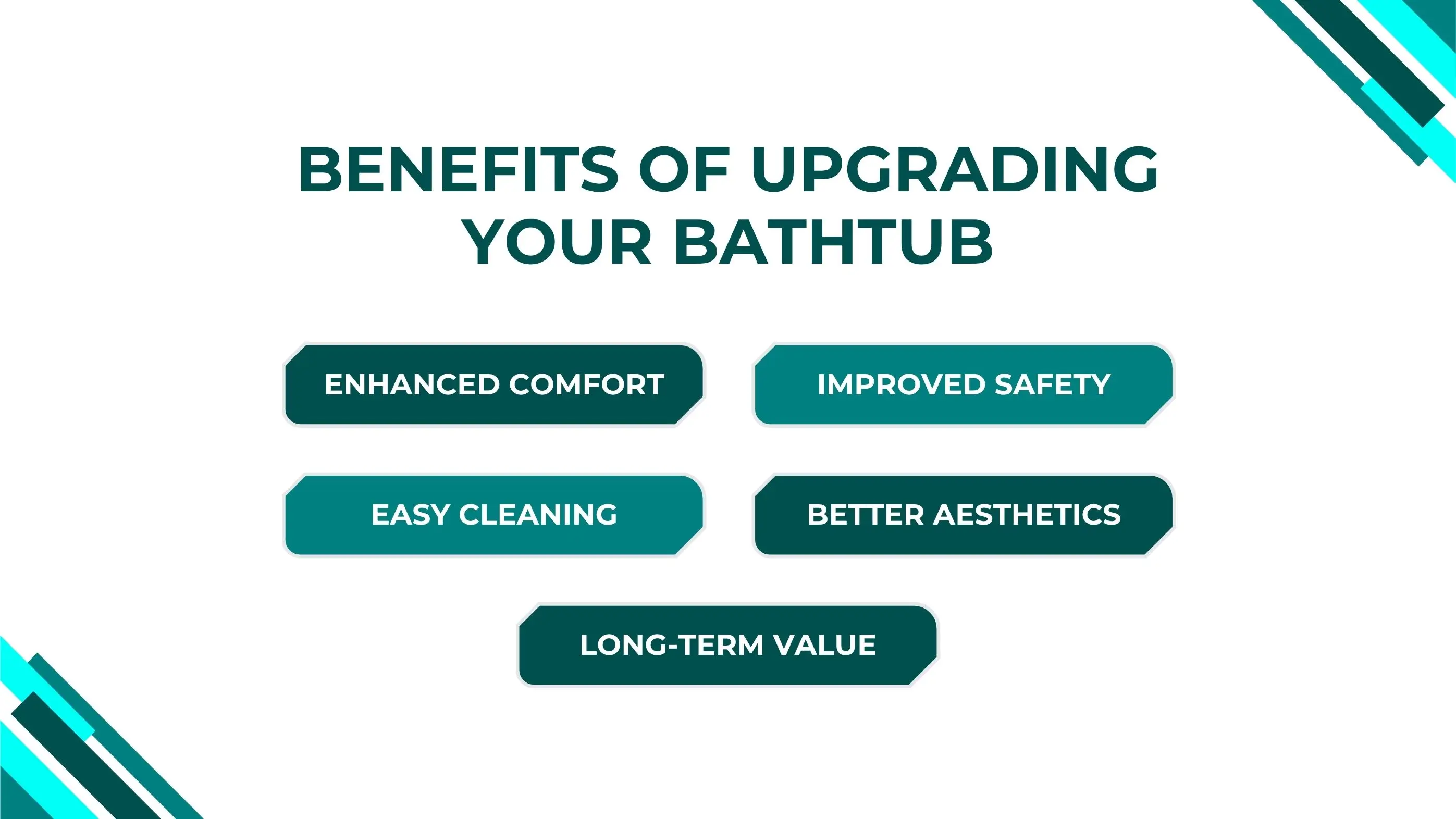
Modern bathtubs are designed to support your body and create a more relaxing bathing experience. Features that improve comfort include:
These improvements reduce pressure on your body, keep water warm for longer, and make everyday baths noticeably more enjoyable.
New bathtubs come with built-in features that reduce the risk of slips and falls. Key safety upgrades include:
These additions make the bathroom safer for seniors, children, and anyone with mobility challenges.
Old tubs stain, scratch, and trap moisture. Modern materials are designed to stay cleaner for longer. Popular hygienic options include:
These non-porous surfaces resist mold, discoloration, and soap buildup, making cleaning faster and helping your bathroom stay fresh with minimal effort.
A new bathtub instantly updates the entire room. Clean lines, modern shapes, and fresh finishes create a brighter, newer look without needing a full remodel. Whether you choose a sleek alcove tub or a deeper soaking model, the visual upgrade is immediate.
A bathtub upgrade increases your home’s value and reduces future repair issues. Long-lasting materials include:
These materials resist cracking, fading, and wear over time. A properly installed tub also protects surrounding floors and walls from leaks, helping maintain your bathroom’s long-term structure. When selling your home, an updated bathroom becomes a strong buyer advantage.
Maintaining your new bathtub properly will help it last longer, look great, and stay functional. Here are some easy tips for keeping your bathtub in top shape:
To prevent soap scum buildup and stains, clean your bathtub regularly. Use mild, non-abrasive cleaners and soft cloths or sponges to wipe down the surface. Harsh chemicals, such as bleach or ammonia, can damage the finish of your bathtub, so avoid using those. A quick weekly clean can keep your bathtub looking fresh and prevent the need for deep cleaning down the road.
Inspect the edges of your bathtub every few months to ensure the caulking around the tub is intact. If you notice cracks or gaps, re-caulk the edges to prevent water from seeping into the walls or floor. This is especially important in areas with high humidity, like bathrooms, where water damage can occur quickly if seals are compromised.
Bathtubs made from acrylic or fiberglass are relatively lightweight, but they can chip or crack if struck by heavy objects. Be mindful when placing items like shampoo bottles or cleaning tools around the tub. Dropping a heavy object, such as a razor or a cleaning product, can damage the tub’s surface, leading to scratches or cracks. Handle tools and cleaning equipment carefully to avoid accidents.
A bath mat or liner is not just for comfort, it also helps protect the tub surface from scratches and wear. In addition, bath mats provide extra grip, helping to prevent slips and falls when getting in and out of the tub. A good mat absorbs water and keeps your bathroom floor dry, reducing moisture buildup that could cause damage to the tub and surrounding area.
Upgrading your bathtub doesn’t always require professional help, but certain tasks demand experience, proper tools, and technical skill. Here’s when a DIY approach is enough and when calling a professional is the smarter, safer choice.
DIY is a good option for small, simple upgrades that don’t involve plumbing adjustments or structural changes. Common tasks you can handle yourself include:
These tasks require basic tools and minimal plumbing knowledge. If your upgrade doesn’t involve removing the tub, adjusting plumbing lines, or opening wall sections, doing it yourself can save you time and money.
Professional help becomes essential when the job involves complex installation or anything connected to plumbing, drainage, or the surrounding wall structure. Call a professional when:
Even small mistakes such as misaligning the tub, installing it without proper leveling, or applying weak seals can lead to hidden water damage, mold growth, and expensive repairs. A skilled installer makes sure the new tub fits correctly, drains properly, and stays watertight for years.
Upgrading your bathtub isn’t just a design choice, it’s about improving your comfort, safety, and home value. Whether you choose a full replacement, refinishing, or simple fixture upgrades, the right approach can completely change your bathroom’s atmosphere. Start by setting a clear budget, selecting the right materials, and working with a trusted professional. A modern bathtub can transform your daily routine into something more peaceful, refreshing, and worth every minute.
If the tub only has surface stains, dullness, or small scratches, refinishing is enough. Replacement becomes necessary when there are deep cracks, leaks, rusted metal, soft spots under the tub, mold behind the walls, or recurring drainage issues. A soft or bouncy tub floor is the biggest sign you need a full replacement.
A refinishing job takes 3–5 hours and cures in 24–48 hours. A full bathtub replacement typically takes 1–3 days depending on plumbing, tile removal, and framing adjustments. Tub-to-shower conversions often take 2–4 days. Delays happen only if hidden plumbing or subfloor damage is discovered during removal.
A properly installed bathtub reduces moisture issues because new tubs have tighter seals, better caulking, and improved overflow systems. Moisture problems only occur if the tub is not leveled, waterproofed, or sealed correctly — which is why most homeowners hire a professional for installation.
Not usually, but when you switch to deeper soaking tubs or whirlpool units, improved ventilation is recommended because they produce more humidity. A simple exhaust fan upgrade helps prevent mold and paint damage.
Cast iron and stone-resin tubs retain heat best because their dense material stores warmth and prevents rapid cooling. Acrylic provides moderate heat retention, while fiberglass loses heat the fastest.
Join our mailing list for exclusive updates, expert tips, and special offers tailored to your needs. Be the first to know about the latest in home services.

Renovize Home is a platform that supports homeowners from planning to renovation. Whether it’s Renovize AI for guidance or a one-on-one call with Pro Finder, we understand your project and match you with local contractors tailored to your needs.
Who We Are
About Renovize HomeGet in TouchHomeownwer Support:
Coming Soon!
General Inquiries:
support@renovizehome.com
Head Office:
24 Greenway Plaza, STE 1800M, Houston, TX 77046.