
Explore All
BROWSE BY CATEGORY
Interior
Exterior
Home Essentials
Homeowner Tools
Blogs & Guides
Find a Pro
Book Your Appointment Now
Home Essentials
About Renovize Home
Explore All
BROWSE BY CATEGORY
Interior
Exterior
Home Essentials
Homeowner Tools
Blogs & Guides
Find a Pro
Book Your Appointment Now
Home Essentials
About Renovize Home
Last Updated 2025-11-13
Upgrading bathroom plumbing and electrical systems is more than a cosmetic choice, it’s a safety and performance upgrade. Older homes built before 2000 often have galvanized pipes or outdated wiring that can’t handle modern water pressure or electrical loads. These issues can cause leaks, corrosion, short circuits, or low voltage, which not only increase repair costs but also risk water and fire damage.
Modern upgrades use PEX or PVC pipes that last up to 50 years and energy-efficient wiring with GFCI protection, required by current safety codes for bathrooms. Together, they improve water flow, prevent shocks, and support smart fixtures like heated mirrors or LED lighting. Upgrading once ensures long-term safety, lower utility bills, and peace of mind for years to come.
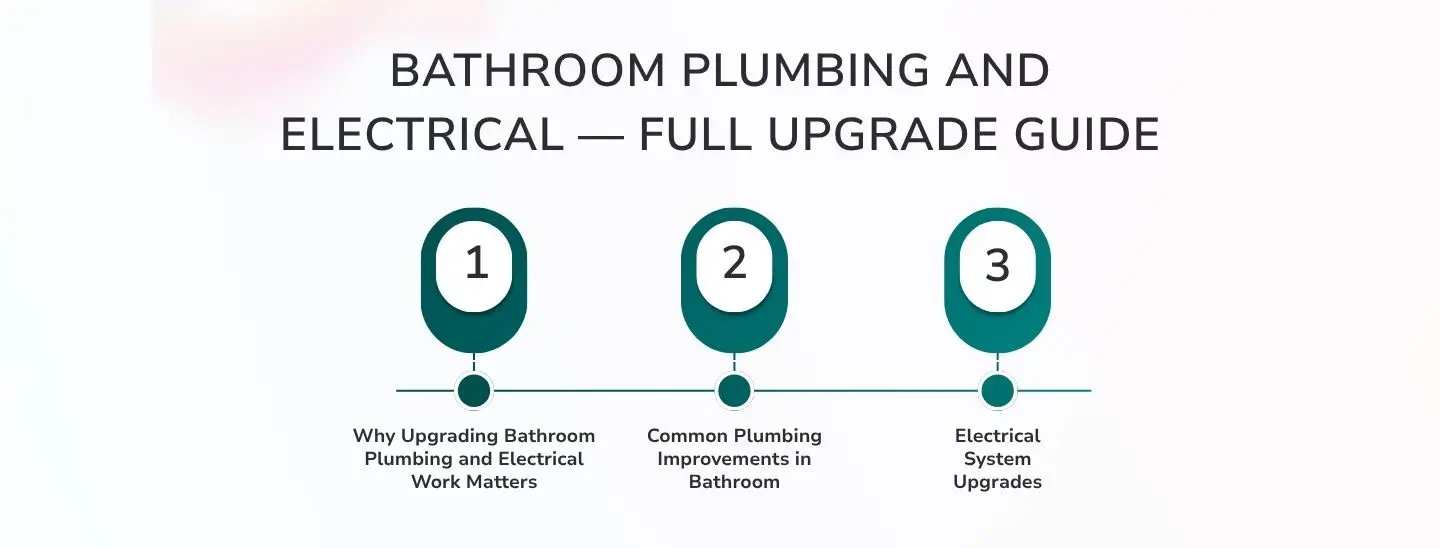
Table of Contents
How Bathroom Plumbing and Electrical Work
Bathroom Plumbing Upgrades
When to Upgrade Both Systems Together
Cost of Bathroom Plumbing & Electrical Upgrades
Why Hiring a Professional
Final Thoughts
Plumbing and electrical systems are the hidden backbone of your bathroom. The plumbing handles clean water flow and drainage, while the electrical system powers your lighting, fans, and outlets. When you renovate, these systems often need adjustments to fit new layouts, modern fixtures, and safety standards.
Even if your bathroom looks fine on the surface, the hidden systems behind the walls tell a different story. Old pipes, worn-out wiring, and outdated layouts can quietly cause leaks, low pressure, or electrical risks. Upgrading brings your bathroom up to modern safety and performance standards while also improving comfort and efficiency. Here are some reasons for upgrading:
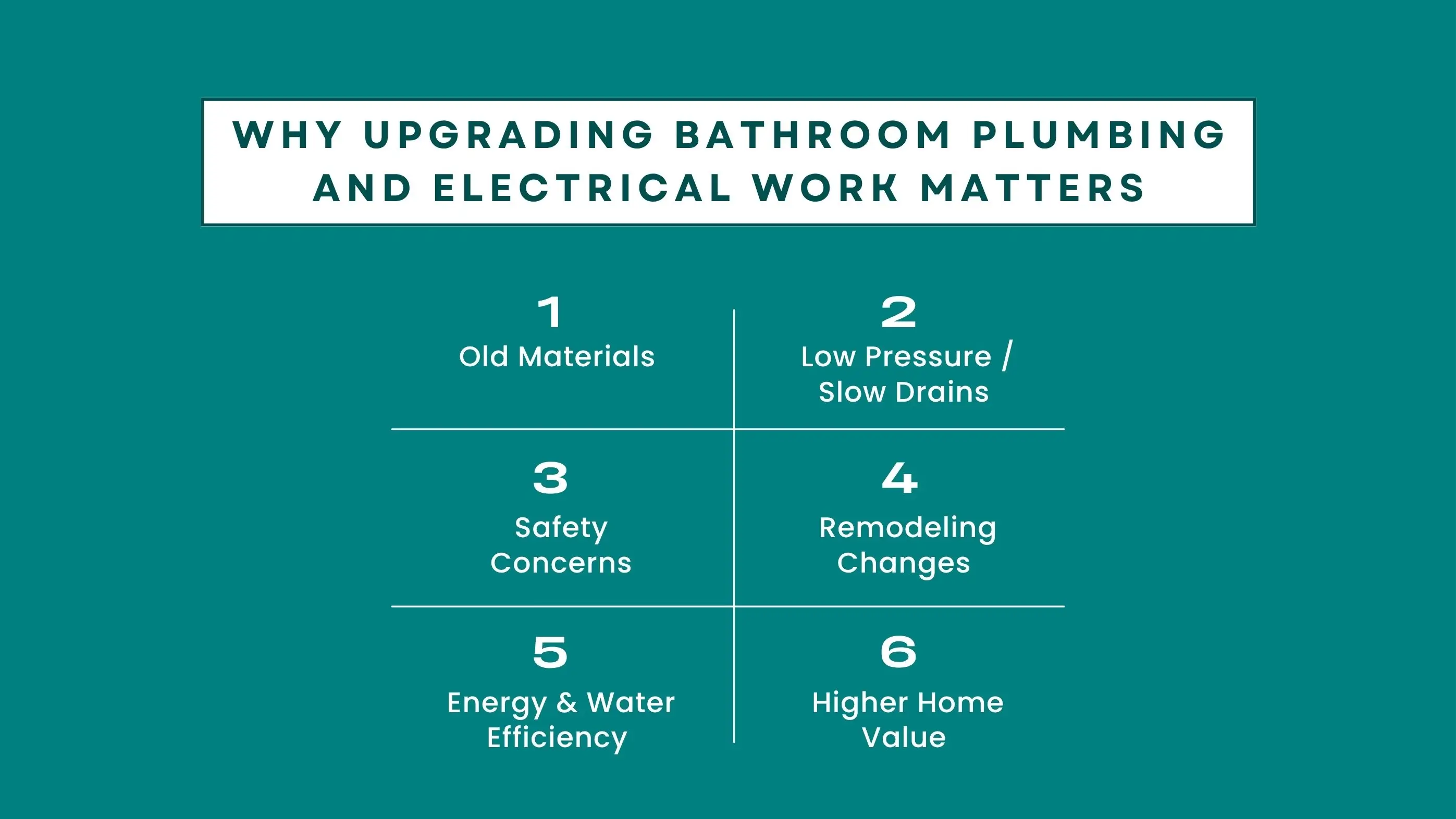
Replacing them prevents leaks, rust, and electrical shorts.
Mineral buildup or small pipe diameters can reduce water flow. Upgrading pipes restores proper pressure and makes your bathroom more enjoyable to use.
Water and electricity don’t mix well. Adding GFCI outlets, grounded circuits, and safe wiring reduces the risk of shocks and fire hazards.
Moving a sink, tub, or light fixture often requires new connections. Upgrading ensures everything fits perfectly and works correctly in your new design.
Modern plumbing and lighting systems use less water and electricity, cutting down monthly bills and supporting an eco-friendly home.
Updated systems not only improve daily comfort but also increase your property’s resale value, as buyers look for homes with safe and modern infrastructure.
Plumbing upgrades usually involve replacing old pipes, adjusting drainage, and installing new valves or shut-offs. If you’re changing the bathroom layout, your plumber will also reroute the water lines and drains. During renovation, it’s smart to check all hidden joints and seals. A small leak behind a wall can waste up to 90 gallons of water per day, which adds up to thousands of gallons every year. Upgrading ensures you have clean, consistent water flow and fewer repair surprises later.
Newer PEX or PVC pipes replace older materials that corrode or clog easily. Plumbers also add shut-off valves for easy maintenance and update drainage systems to prevent backups. These small improvements make a big difference in how smoothly your bathroom runs. You may need plumbing updates if you notice.
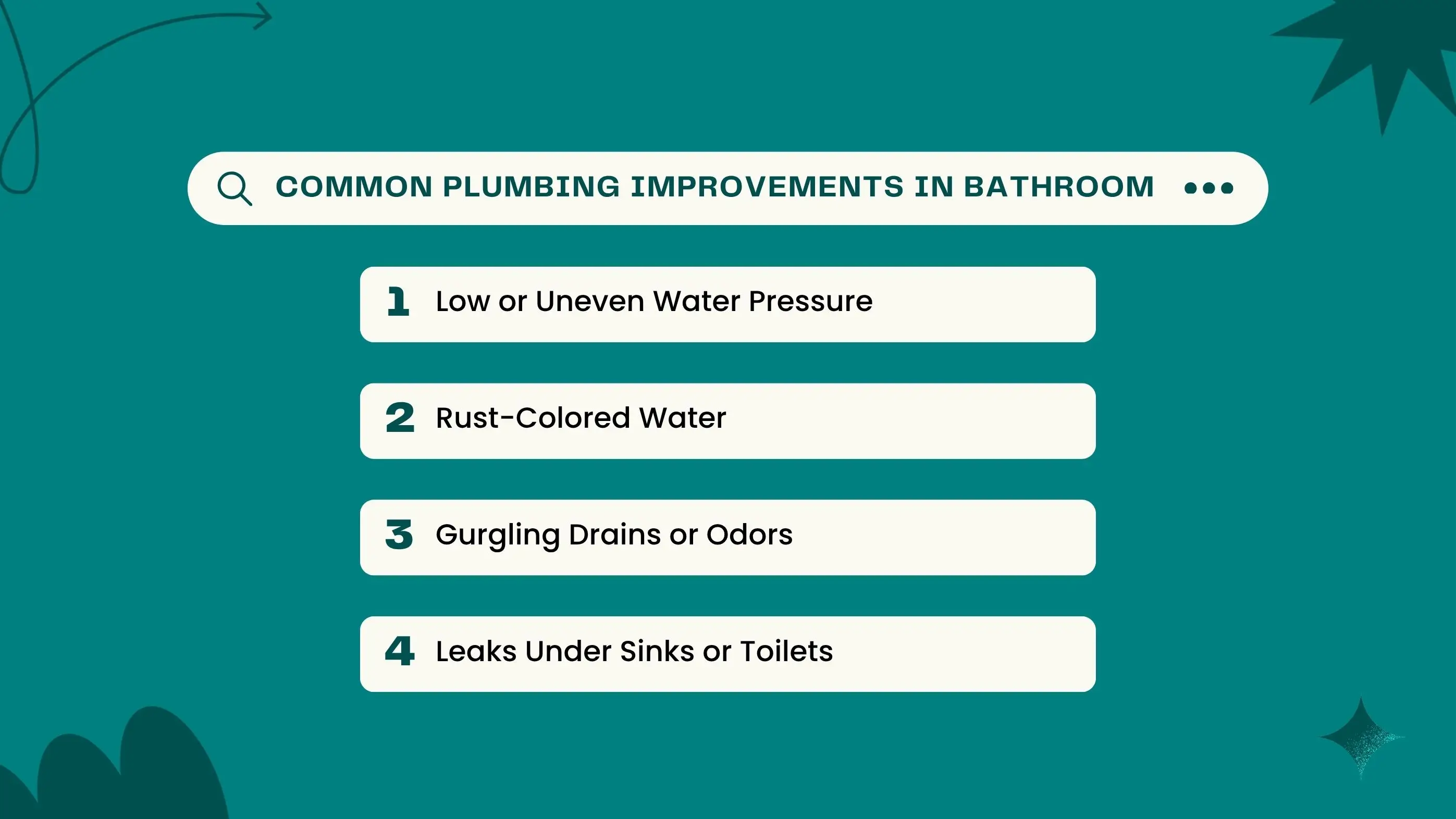
If your shower or faucets suddenly lose pressure, it usually means buildup or corrosion inside old pipes. This not only makes daily use frustrating but also signals that your plumbing system is struggling to keep up.
Brown or reddish water means your pipes are rusting from the inside. It’s a clear sign of corrosion that can stain fixtures and eventually cause leaks or burst pipes. Replacing old metal lines with PVC or PEX fixes this permanently.
Strange gurgling noises or foul odors from drains often mean blockages or poor venting. These issues can cause slow drainage and water backup, especially in older bathrooms with outdated pipe layouts.
Even small leaks can waste gallons of water daily and damage flooring or cabinets. If you see moisture, puddles, or mold growth near plumbing joints, it’s time for repair or a full pipe replacement.
Electrical updates keep your bathroom bright, safe, and energy-efficient. Most older bathrooms have wiring that can’t handle modern appliances or moisture. That’s why upgrading is essential. New electrical setups include GFCI outlets, dedicated lighting circuits, and LED fixtures. These prevent electric shocks and power overloads. Wondering how often electrical work is needed? Most homes benefit from a full inspection or upgrade every 15–25 years, depending on use and wiring condition.
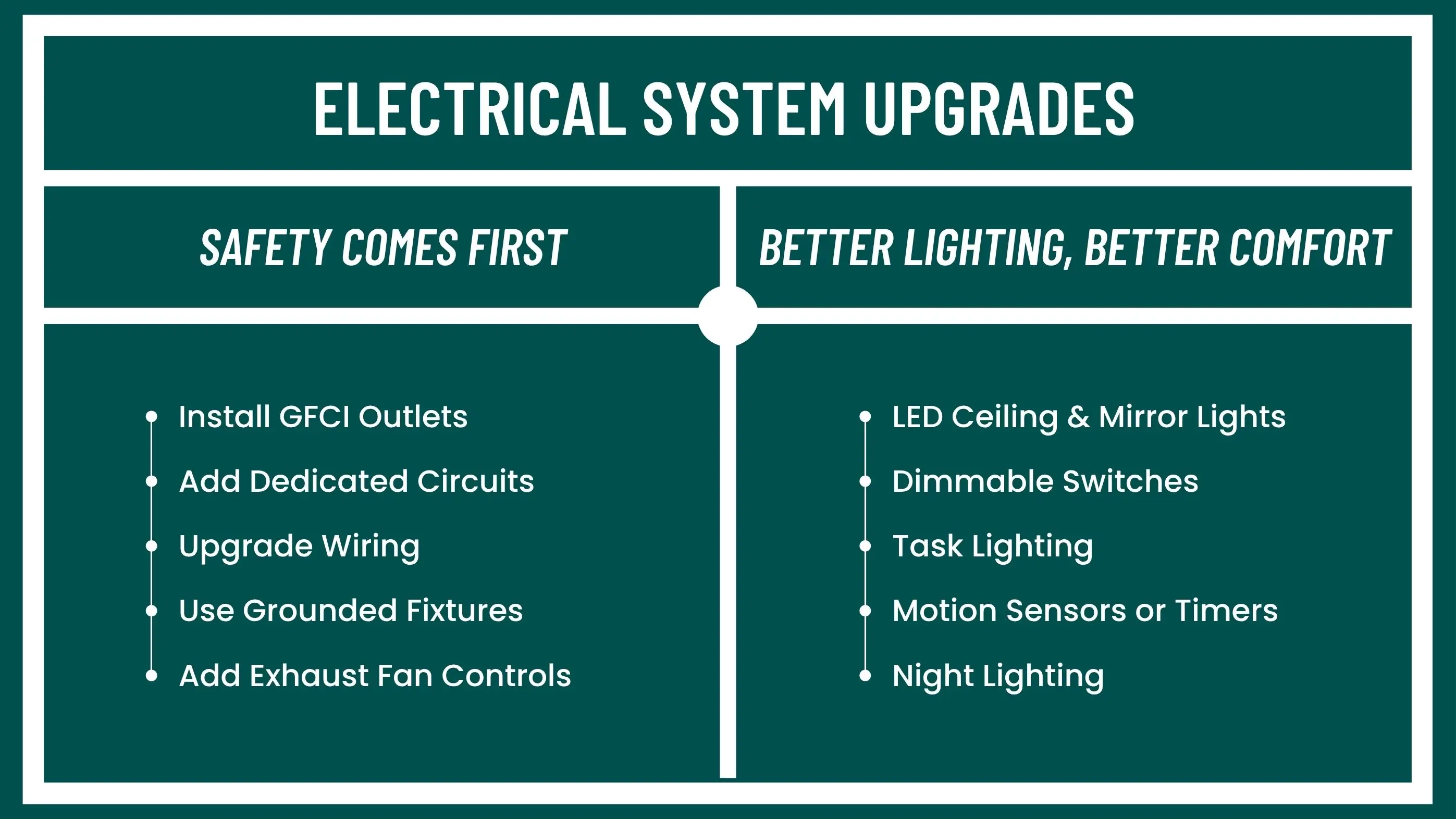
Modern bathrooms require GFCI outlets, which prevent electric shocks when moisture is present. An electrician may also install dedicated circuits for lighting, exhaust fans, and outlets, ensuring the system can handle the load safely.
Good lighting transforms your bathroom experience. LED ceiling lights, mirror lights, and dimmable switches make the space more comfortable and efficient. If you’re remodeling, it’s best to upgrade all wiring at once while the walls are open, as it saves both time and money.
If your home is older or you’re doing a full remodel, upgrade plumbing and electrical systems at the same time. It saves 15–20% on labor costs and prevents future issues. When both teams work together, they plan around each other’s work, which means fewer holes in the walls and faster installation.
Doing both upgrades now also avoids double-spending later. You won’t have to reopen walls twice for different repairs. It’s smarter, cleaner, and more cost-effective.
Here’s what homeowners typically spend on plumbing and electrical work in the U.S.:
| Service | Average Cost Range | Details |
|---|---|---|
| Replace old plumbing lines | $800 – $2,500 | Uses PEX or PVC; cost varies by bathroom size |
| Install new drains & valves | $300 – $800 | Includes sink, shower, and tub lines |
| Electrical rewiring | $500 – $1,500 | For new wiring, outlets, and safety upgrades |
| Lighting & fixture upgrades | $300 – $900 | Energy-efficient LEDs, dimmers, and switches |
| Full system remodel (both) | $2,000 – $5,000+ | Combined plumbing and electrical overhaul |
Plumbing and electrical work can look simple, but requires professional skill. Certified pros make sure your system meets building codes, is leak-free, and is wired safely.
DIY repairs can lead to hidden leaks, weak pressure, or even short-circuit problems that cost much more to fix later. Plumber and electrician will test everything before closing your walls, ensuring your bathroom works perfectly from day one.
Bathroom plumbing and electrical upgrades might not be the most visible part of your remodel, but they’re what make everything function perfectly. Whether you’re installing a new shower or redesigning your entire space, a solid plumbing and electrical foundation ensures safety, comfort, and peace of mind for years to come.
Ungrounded wiring often causes light flickering, mild shocks from switches, or tripped breakers. A licensed electrician can test and ground your circuits to prevent potential electrical hazards.
Yes, but only if your electrical panel supports the added load. During remodeling, electricians can install extra outlets for hair dryers, smart mirrors, or heated floors safely and to code.
Sudden shifts often mean pressure imbalance or outdated plumbing valves. Installing modern pressure-balancing or thermostatic valves helps maintain consistent temperature and prevent scalding.
Warning signs include bubbling paint, damp odors, or unexplained water bills. A plumber can use thermal imaging or moisture meters to locate hidden leaks without damaging your walls.
Damp- or wet-rated LED fixtures are best for bathrooms. They’re designed to handle steam and moisture, reducing the risk of electrical shorts or corrosion over time.
Yes, low-flow faucets, dual-flush toilets, and water-saving shower valves reduce water usage by up to 30% without affecting comfort or pressure.
Join our mailing list for exclusive updates, expert tips, and special offers tailored to your needs. Be the first to know about the latest in home services.

Renovize Home is a platform that supports homeowners from planning to renovation. Whether it’s Renovize AI for guidance or a one-on-one call with Pro Finder, we understand your project and match you with local contractors tailored to your needs.
Who We Are
About Renovize HomeGet in TouchHomeownwer Support:
Coming Soon!
General Inquiries:
support@renovizehome.com
Head Office:
24 Greenway Plaza, STE 1800M, Houston, TX 77046.