
Explore All
BROWSE BY CATEGORY
Interior
Exterior
Home Essentials
Homeowner Tools
Blogs & Guides
Find a Pro
Book Your Appointment Now
Home Essentials
About Renovize Home
Explore All
BROWSE BY CATEGORY
Interior
Exterior
Home Essentials
Homeowner Tools
Blogs & Guides
Find a Pro
Book Your Appointment Now
Home Essentials
About Renovize Home
Last Updated 2025-11-20
Upgrading your bathroom mirror is one of the easiest and most transformative updates you can make. A modern mirror improves lighting, adds visual space, and complements your bathroom’s design theme. Today’s mirrors combine functionality with style offering features like LED lighting, touch controls, anti-fog technology, and even Bluetooth connectivity. Whether you prefer a simple frameless model or a smart mirror with ambient light, the right choice adds both elegance and everyday convenience.
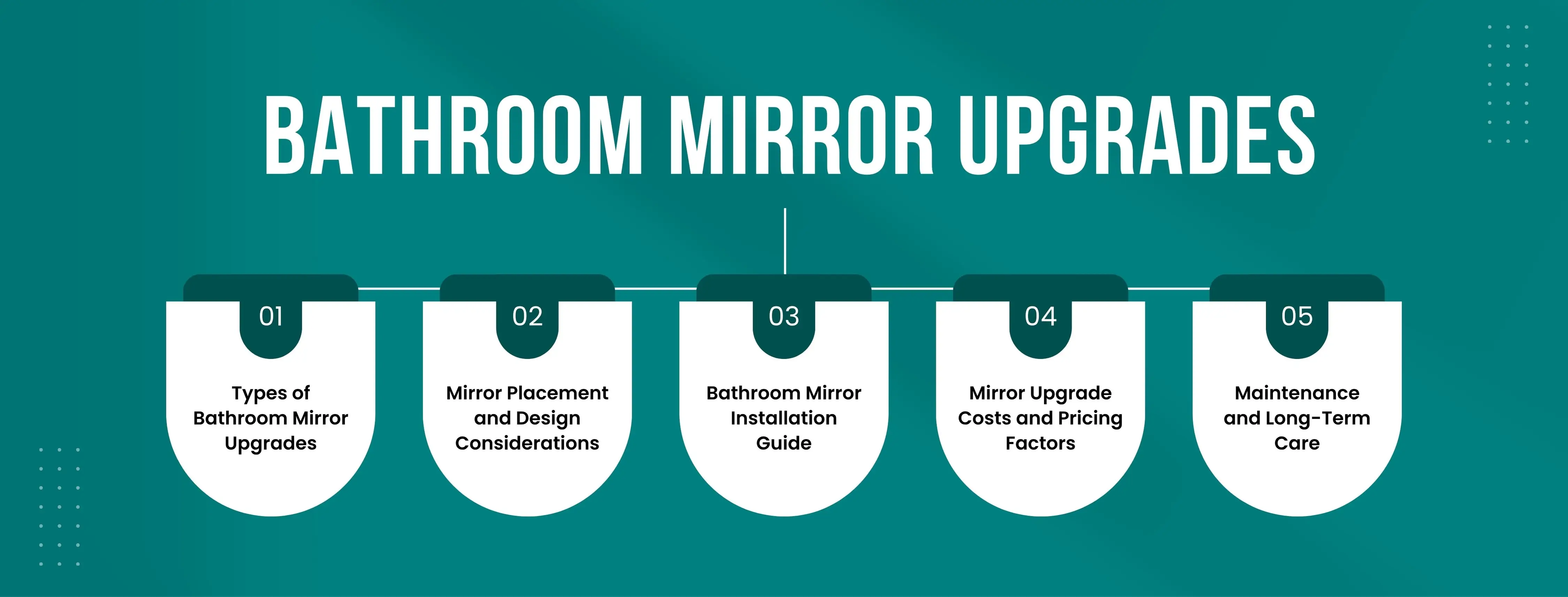
Table of Contents
Types of Bathroom Mirror Upgrades
Mirror Placement and Design Considerations
Bathroom Mirror Installation Guide
Maintenance and Long-Term Care
Hiring Professionals for Mirror Upgrades
Final Takeaway
Modern bathroom mirrors go beyond simple reflection; they are a blend of lighting, technology, and artistry. From framed elegance to tech-powered smart mirrors, there’s a style for every taste, layout, and budget.
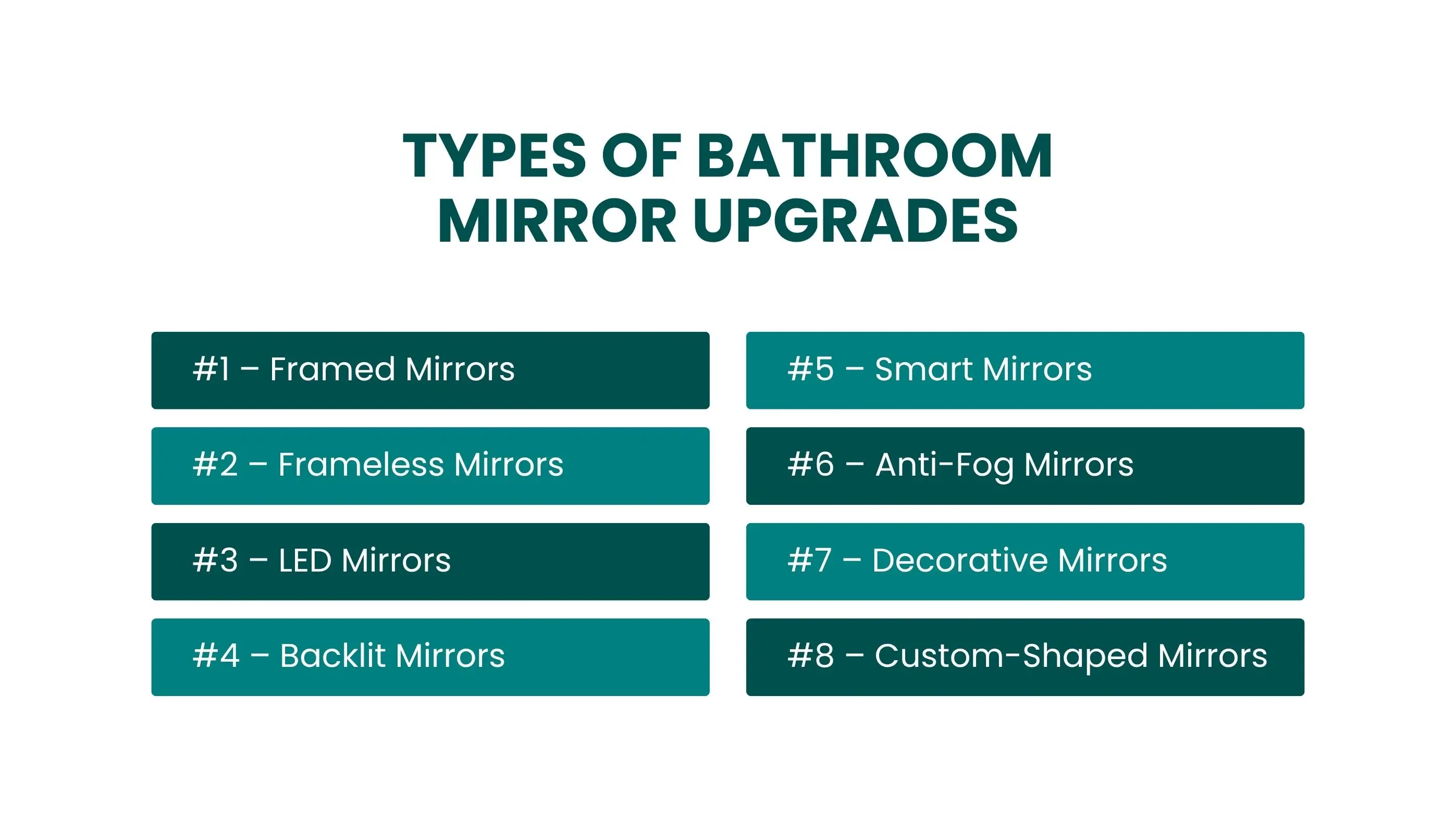
Framed mirrors add structure and personality to a bathroom. Wood or metal frames enhance specific styles like rustic, farmhouse, or industrial. Frameless mirrors, on the other hand, create a clean, modern aesthetic that reflects more light and makes smaller bathrooms appear larger.
| Type | Pros | Cons | Best For |
|---|---|---|---|
| Framed Mirror | Adds decorative flair and texture | Slightly harder to clean | Traditional or farmhouse bathrooms |
| Frameless Mirror | Creates sleek, open look | Edges can chip if unsealed | Modern and minimalist designs |
LED and backlit mirrors merge beauty and functionality. They offer soft, even illumination that minimizes shadows ideal for makeup or grooming. LED lights are energy-efficient and long-lasting, reducing electricity use compared to overhead bulbs.
| Feature | Pros | Cons | Best For |
|---|---|---|---|
| LED Mirror | Energy-efficient, evenly lit | Needs power connection | Compact or modern bathrooms |
| Backlit Mirror | Adds ambient glow | Limited brightness for shaving tasks | Spa-inspired or luxury bathrooms |
Smart mirrors redefine convenience. They include digital clocks, temperature displays, touch sensors, anti-fog systems, and Bluetooth audio. Some even connect to smart assistants like Alexa or Google Home, making them perfect for high-tech lifestyles.
| Feature | Pros | Cons | Best For |
|---|---|---|---|
| Smart Mirror | Adds luxury and automation | Higher cost, needs wiring | Tech-savvy or premium homes |
| Anti-Fog Feature | Clear view after showers | Requires electricity | Bathrooms with high humidity |
Decorative mirrors bring artistry to your bathroom. Unique shapes such as round, oval, hexagonal, or irregular, create focal points that elevate your space. Custom mirrors can be designed to fit any layout, combining function with visual interest.
Proper mirror placement is key to achieving both functionality and aesthetic balance in your bathroom. The way a mirror interacts with natural and artificial light can completely transform how spacious and bright the room feels. Correct alignment ensures that your mirror reflects light effectively, enhances visibility, and complements your vanity layout. Strategic placement also helps create visual harmony, making your bathroom feel more open, elegant, and comfortable for daily routines.
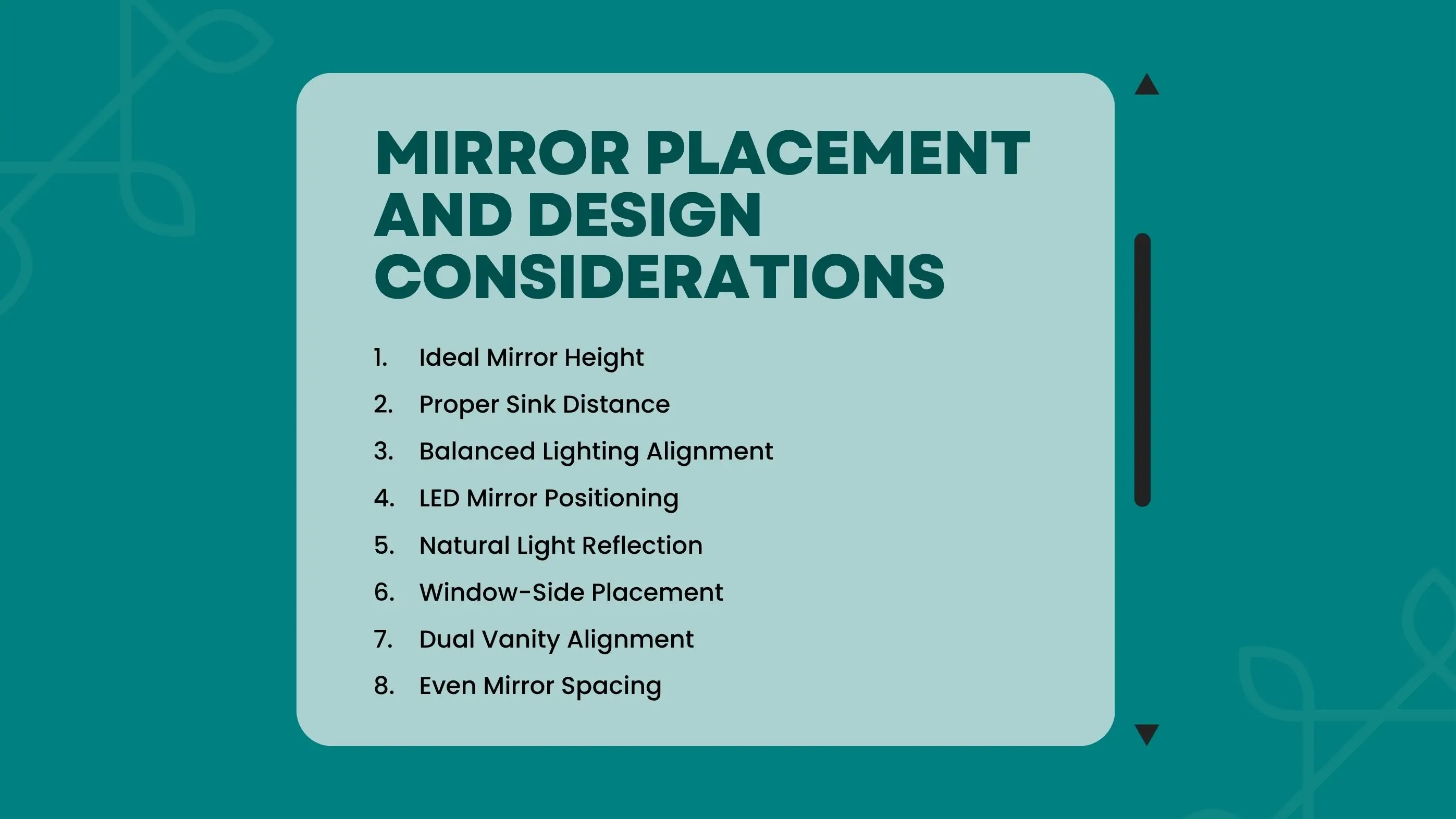
A mirror’s center should typically be about 60–65 inches from the floor. The bottom edge should sit 5–10 inches above the sink to prevent splash marks and maintain a comfortable eye level for most users.
| Factor | Ideal Measurement | Benefit |
|---|---|---|
| Mirror Height | 60–65 inches from floor | Comfortable eye-level reflection |
| Distance from Sink | 5–10 inches | Prevents water spots and easy cleaning |
Mirrors and lighting should complement each other. Place lights on either side of the mirror instead of above to eliminate shadows. If using LED mirrors, align the power connection with wall outlets for a seamless look.
Mirrors placed across or beside windows reflect sunlight, brightening the space and reducing energy use. Frameless mirrors maximize light flow, making even small bathrooms feel open and airy.
Dual vanities look best with two evenly spaced mirrors. Align each mirror above its respective sink and maintain consistent spacing between them. This layout adds elegance, symmetry, and practicality.
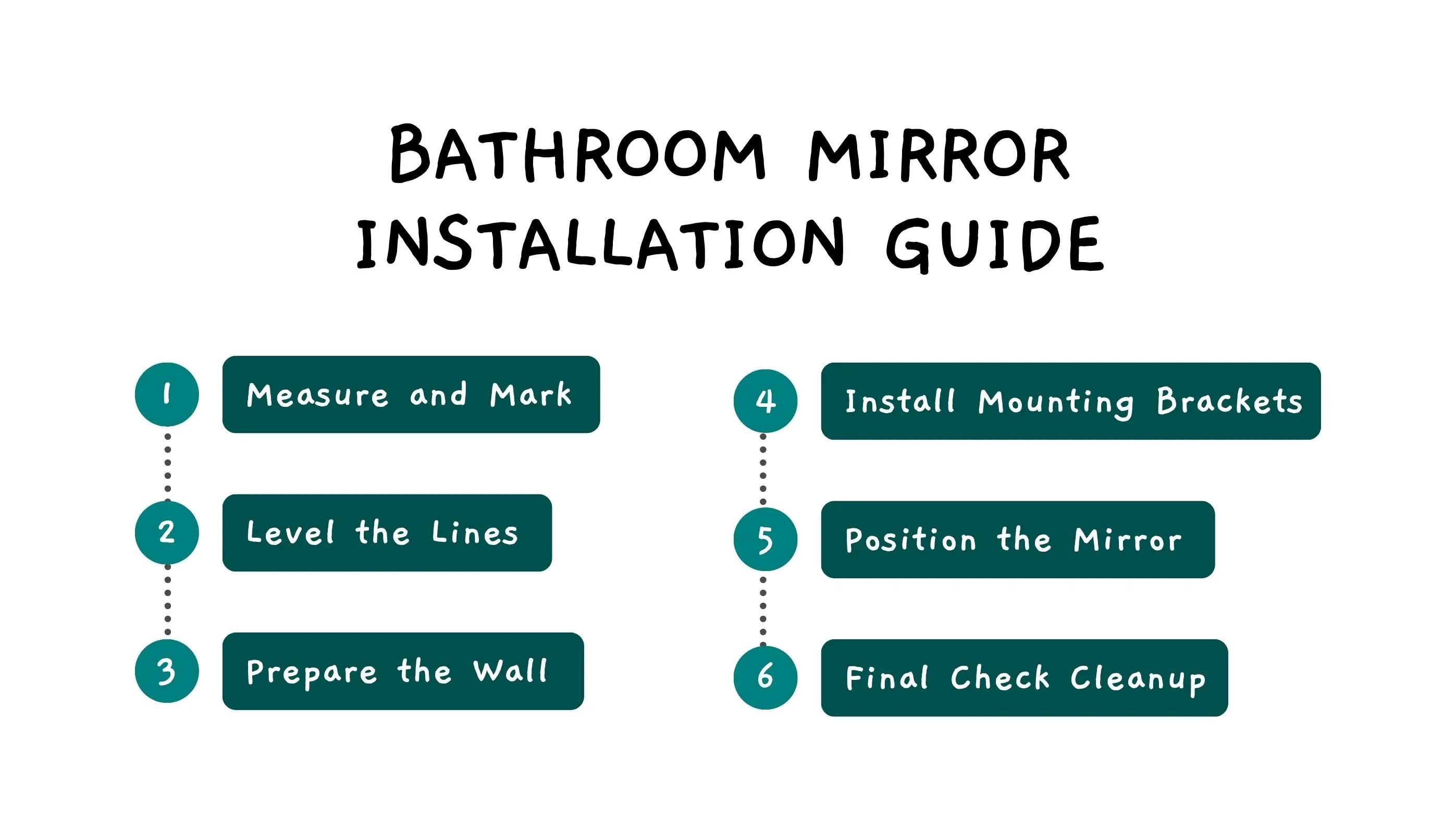
Installing a bathroom mirror requires a careful balance of precision, safety, and the right tools. A properly mounted mirror not only enhances the look of your bathroom but also ensures long-term stability and safety. Preparation is key from measuring and leveling to choosing the correct mounting method. Whether you’re hanging a lightweight frameless mirror or a heavy smart mirror with built-in lighting, following the right process prevents damage and ensures a professional-quality finish. Here is the process for mounting bathroom mirrors:
Use a measuring tape to determine the mirror’s position above the vanity. Mark the height and width with a pencil, ensuring the mirror is centered and at a comfortable eye level.
Place a spirit level along the markings to make sure the mirror will be perfectly horizontal. This prevents uneven installation, especially noticeable in frameless designs.
Clean the area to remove dust or grease. For drywall, use anchors to add strength, while tiled walls may require a masonry bit to drill holes without cracking tiles.
For heavy mirrors, use mounting brackets or clips to secure the frame. For lightweight mirrors, apply strong construction adhesive or mirror mastic evenly on the back, leaving a one-inch gap near the edges for air circulation.
Carefully align the mirror with your markings, press it firmly in place, or hook it onto brackets. Hold or brace it for a few minutes to allow adhesives to set.
Verify alignment with a level again, then clean fingerprints or residue using a soft cloth. Inspect edges for gaps or loose sections, sealing them with clear silicone if necessary to prevent moisture from entering.
Bathroom mirror upgrades range widely in cost based on type, size, and features. Understanding each factor helps in budgeting effectively.
| Mirror Type | Average Cost | Description |
|---|---|---|
| Standard Frameless Mirror | $100–$300 | Basic mirror with clean edges |
| Framed Decorative Mirror | $150–$400 | Adds design and character |
| LED or Backlit Mirror | $300–$800 | Integrated light and energy-efficient |
| Smart Mirror | $700–$1,500 | Features like anti-fog, sensors, and Bluetooth |
The total cost of a bathroom mirror installation depends on several factors, including the mirror’s size, mounting method, wall condition, and technology features. Larger or frameless mirrors require precise alignment and professional tools for stability, while LED or smart mirrors often need electrical connections that increase labor expenses. Additional elements like wall reinforcement, tile drilling, or custom framing can also raise the price. Investing in proper installation ensures your mirror remains secure, perfectly aligned, and free from future maintenance issues.
| Cost Factor | Description | Impact on Price |
|---|---|---|
| Mirror Size | Larger mirrors require more materials and handling. | Moderate to High |
| Mounting Type | Brackets or clips cost more than adhesive methods but offer better support. | Moderate |
| Wall Preparation | Uneven or tiled walls may need drilling or reinforcement. | Moderate |
| Electrical Wiring | Needed for LED or smart mirrors with lighting and defogger features. | High |
| Customization | Unique shapes, frames, or finishes add to the overall expense. | High |
DIY installation is the budget-friendly option for lightweight mirrors and simple setups. Homeowners can expect to spend around $50–$100 on basic tools, adhesives, and hardware. However, professional installation provides precision, safety, and warranty-backed service ideal for larger, framed, or smart mirrors. Labor costs for professionals generally range between $100–$250, depending on complexity. For LED or smart mirrors, hiring a licensed installer ensures safe wiring, proper mounting, and long-term performance without risk of electrical faults or alignment errors.
Proper cleaning and care preserve clarity, prevent corrosion, and extend lifespan. Moisture control and regular upkeep are crucial in humid bathrooms.
Always use a soft, lint-free cloth. Avoid ammonia or harsh cleaners that can damage coatings. Clean in circular motions and wipe dry immediately to prevent streaks or haze.
Seal edges with silicone and avoid water pooling. Ensure proper bathroom ventilation to reduce humidity buildup, especially in frameless mirrors.
Replace mirrors with cracks, corrosion, or warped backing. These issues affect both appearance and reflection quality. Modern replacements add efficiency and elevate design.
Turn off LED or smart mirrors when not in use to save energy. Maintain consistent airflow and avoid rough scrubbing to preserve the reflective coating.
Professional installation ensures precision, safety, and longevity, especially for heavy or tech-integrated mirrors.
| Hiring Factor | Why It Matters | Tip |
|---|---|---|
| Licensed Installer | Guarantees safety and compliance | Verify license and insurance |
| Experience with LED Mirrors | Ensures correct wiring | Ask for past projects |
| Transparent Pricing | Prevents hidden costs | Request written estimates |
A bathroom mirror upgrade is more than a visual improvement; it's a functional and lifestyle enhancement. From smart mirrors with ambient lighting to elegant framed designs, each type offers unique benefits for your space. Choosing the right mirror and ensuring proper installation guarantees a brighter, more beautiful bathroom. For a flawless setup, connect with verified local pros through Renovize Home and transform your bathroom with comfort, style, and precision.
Black edges (desilvering) happen when moisture penetrates the mirror’s backing. Steam, cleaning chemicals, and unsealed edges speed up the damage. Adding a silicone seal around the mirror, improving ventilation, and avoiding ammonia-based cleaners prevent further spreading.
Using a small wall-mounted heating pad behind the mirror, installing better ventilation, or leaving a slight gap behind wall-mounted mirrors helps reduce fogging. A thin layer of shaving cream buffed onto the surface also prevents short-term fog buildup.
Most LED mirrors offer soft, even illumination ideal for grooming, but they usually don’t replace overhead lights. They work best when paired with ceiling or wall fixtures to eliminate shadows and brighten the full room.
Quality LED bathroom mirrors last 30,000–50,000 hours, or roughly 10–15 years of daily use. They require almost no maintenance unless the driver or wiring fails.
Distortion is usually caused by improper mounting, warped walls, or uneven adhesive application. Reinstalling with proper support or switching to bracket mounting fixes the issue and keeps the mirror flat.
Join our mailing list for exclusive updates, expert tips, and special offers tailored to your needs. Be the first to know about the latest in home services.

Renovize Home is a platform that supports homeowners from planning to renovation. Whether it’s Renovize AI for guidance or a one-on-one call with Pro Finder, we understand your project and match you with local contractors tailored to your needs.
Who We Are
About Renovize HomeGet in TouchHomeownwer Support:
Coming Soon!
General Inquiries:
support@renovizehome.com
Head Office:
24 Greenway Plaza, STE 1800M, Houston, TX 77046.