
Explore All
BROWSE BY CATEGORY
Interior
Exterior
Home Essentials
Homeowner Tools
Blogs & Guides
Find a Pro
Book Your Appointment Now
Home Essentials
About Renovize Home
Explore All
BROWSE BY CATEGORY
Interior
Exterior
Home Essentials
Homeowner Tools
Blogs & Guides
Find a Pro
Book Your Appointment Now
Home Essentials
About Renovize Home
Last Updated 2025-11-17
Remodeling your bathroom to include accessibility features like grab bars, walk-in showers, and raised toilets is not only a smart home improvement but also an investment in safety, comfort, and convenience. These upgrades are essential for people with mobility challenges, seniors, or anyone who might need extra support in the bathroom. Whether you are renovating for yourself, a loved one, or as part of aging-in-place plans, these features will improve daily life, reduce fall risks, and make your bathroom a safer, more functional space.
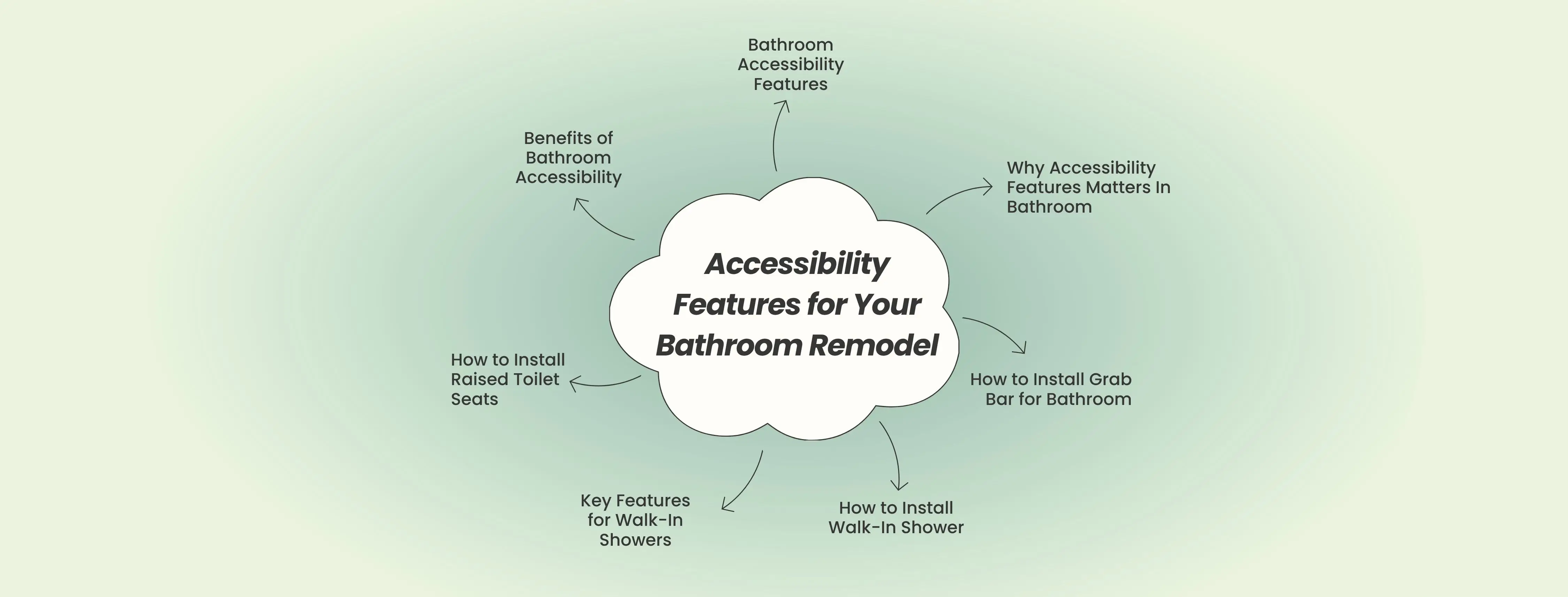
Table of Contents
Understanding Bathroom Accessibility Features
How Accessibility Features Improve Your Bathroom
What to Consider When Installing Bathroom Accessibility Features
Core Types of Accessibility Features for Your Bathroom
How to Install Grab Bars for the Bathroom
How to install Walk-In Shower
How to Install Raised Toilet Seats
Professional Installation vs DIY
Cost of Bathroom Accessibility Features Installation
Benefits of Installing Accessibility Features in Your Bathroom
Final Thoughts
Bathroom accessibility features are essential upgrades that make the bathroom safer and more user-friendly for individuals with physical limitations. These features are especially important for seniors, individuals with disabilities, or anyone recovering from surgery. Accessibility features ensure that people can use the bathroom independently without risk of injury, promoting confidence and reducing the need for assistance.
By installing features such as grab bars, walk-in showers, and raised toilets, you can create a space that offers both safety and comfort while improving overall bathroom functionality. These modifications are also beneficial for aging in place, allowing people to stay in their homes longer with ease.
Bathroom accessibility features are design elements that make the bathroom safer, more comfortable, and easier to use for individuals with mobility challenges. These features help users maintain balance, improve stability, access showers and toilets more easily, and reduce physical strain during daily routines. Common accessibility features include:
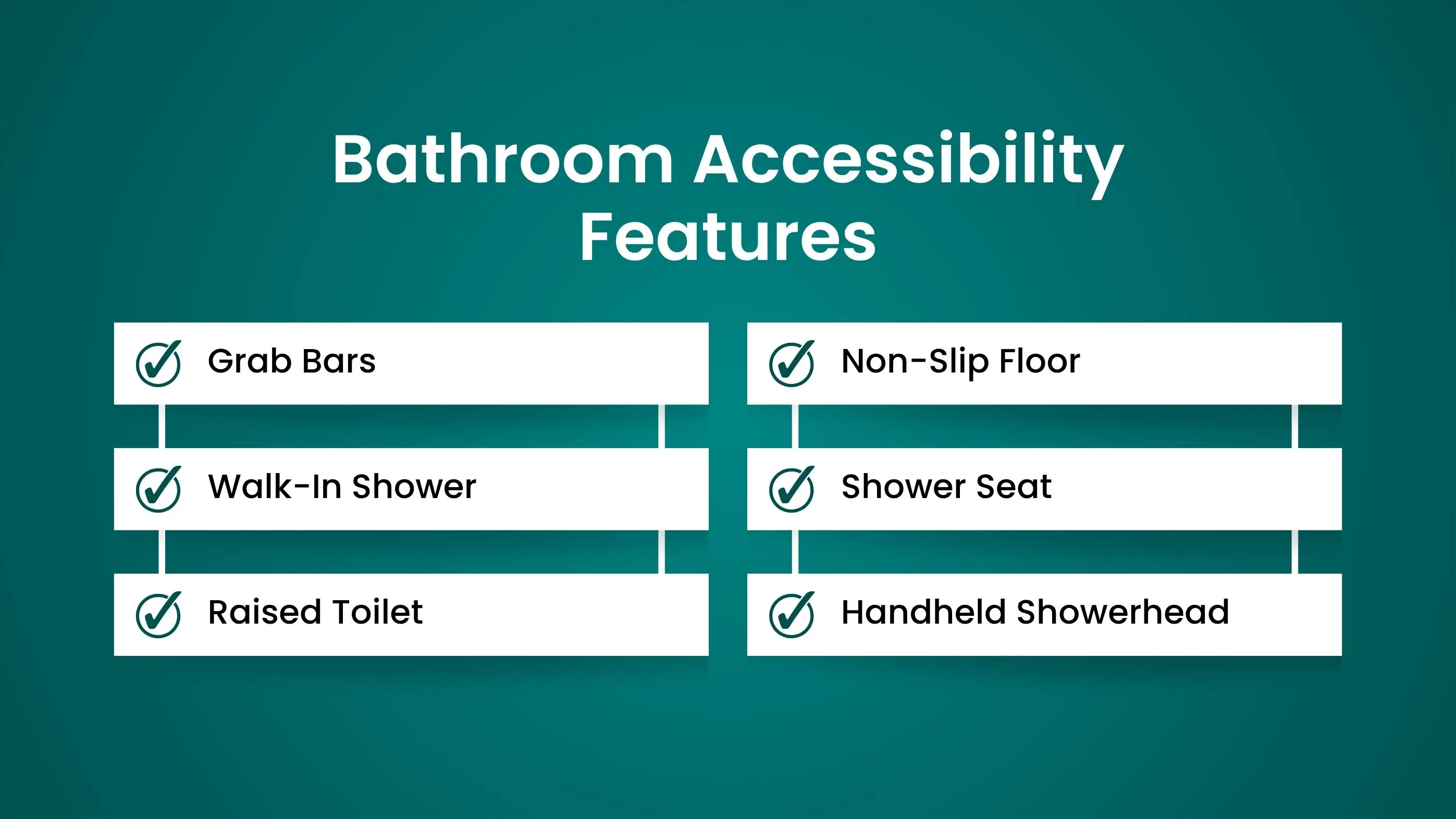
Installing accessibility features like grab bars, walk-in showers, and raised toilets greatly improves bathroom safety and ease of use. These upgrades help prevent slips, reduce fall risks, and make movement more comfortable for anyone with mobility challenges.
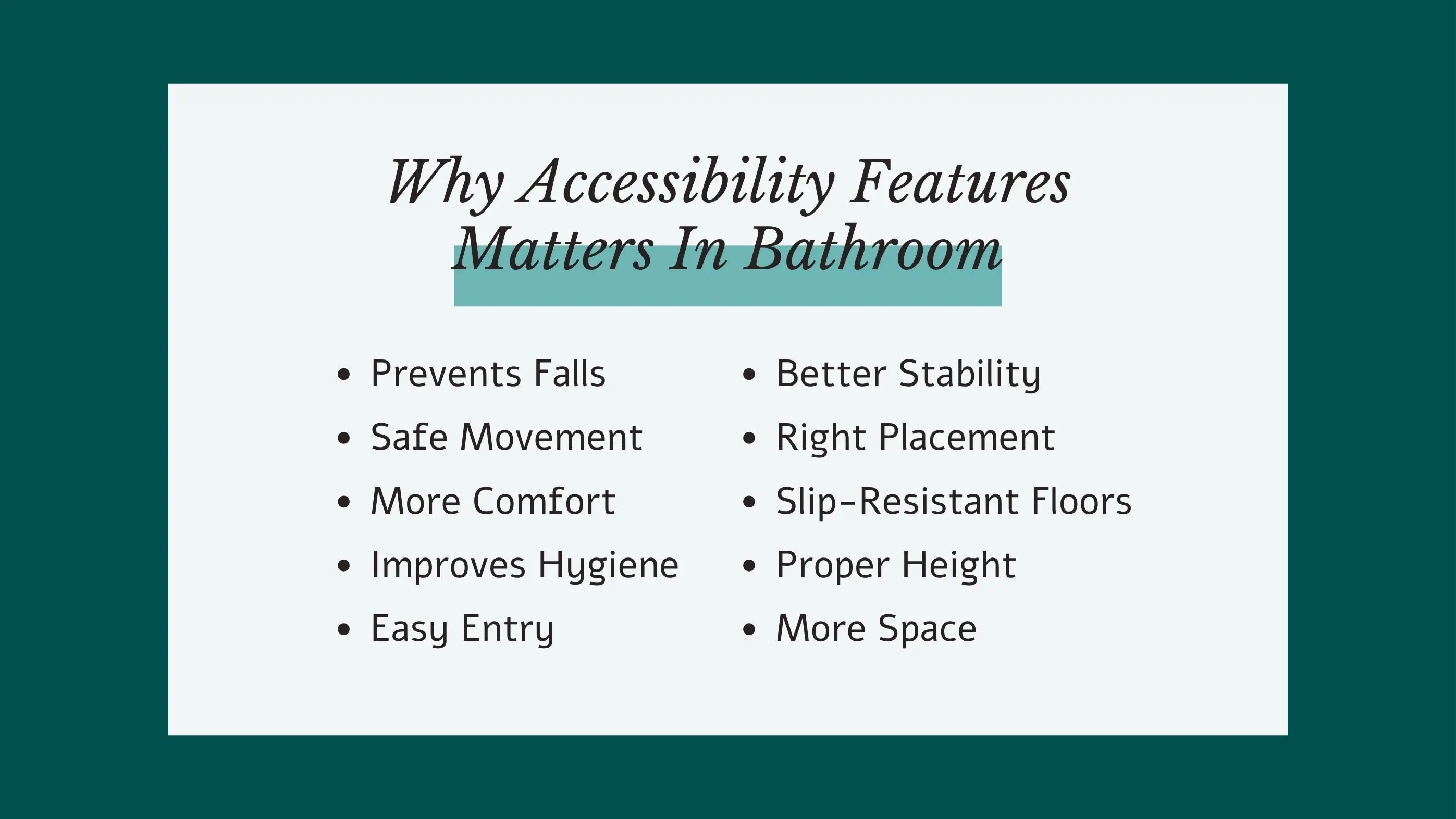
Improve bathroom safety by preventing slipping and reducing the risk of falls, especially on wet floors.Provide strong support with grab bars that help users stand, sit, and maintain balance more confidently.Make entry easier with walk-in showers that remove high tub edges and allow smooth, step-free access.
Reduce physical strain with raised toilets that make sitting down and standing up less difficult.Lower the chances of accidents in one of the most common areas for slips and falls.Support independent use so individuals can complete daily bathroom tasks without assistance.Improve comfort and confidence by making movements easier and less tiring.
Adding accessibility features can completely improve how safe and convenient your bathroom feels.
To create an effective accessible bathroom, consider the user’s specific needs and daily challenges.
Key points include:
The core types of accessibility features for your bathroom focus on improving safety, balance, and easy movement for people with mobility challenges. These features make daily routines safer and more manageable by providing better support and reducing the risk of slips or falls.
Grab bars offer necessary support in areas like the toilet, shower, or bathtub. They help individuals maintain balance and provide a secure grip when standing, sitting, or transitioning between different positions. Grab bars should be installed at the correct height and location to ensure maximum support.
Walk-in showers are designed with low thresholds or no barriers, making it easier for users with mobility challenges to enter. The smooth, step-free entry reduces the risk of falls and offers better access to the shower. Many walk-in showers are equipped with grab bars and non-slip floors to enhance safety.
Raised toilets are ideal for those with difficulty sitting down or standing up. The height of the toilet is increased, reducing strain on the knees, hips, and back. For additional support, many raised toilets come with handles, helping individuals transition more easily from sitting to standing.
Installing grab bars correctly is essential for bathroom safety. Grab bars must always be mounted into wall studs, not just drywall, to support the user’s weight and prevent accidents. Proper placement is equally important and ensures the user has support where it is needed most, such as near the toilet, inside the shower, or beside the bathtub.
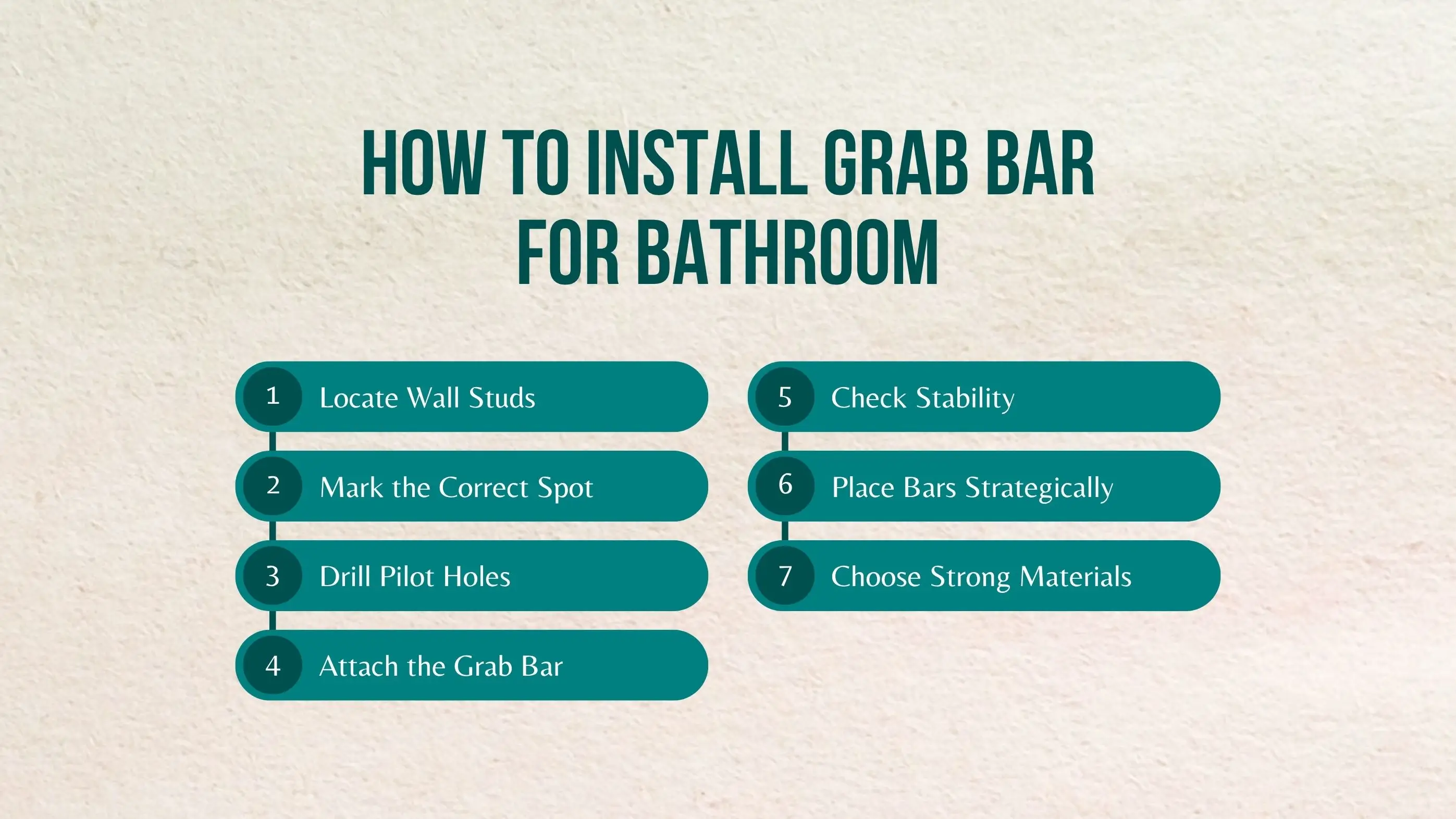
Choose areas where support is most needed, such as next to the toilet for sitting and standing, inside the shower for balance, or beside the bathtub for entering and exiting safely.
Use a stud finder to locate the wall studs, then drill pilot holes to ensure the screws anchor securely into solid wood, not hollow drywa
Position the grab bar over the pilot holes and use high-quality screws to fasten it tightly into the studs. Make sure all screws are fully tightened so the bar does not move.
Apply firm pressure in different directions to ensure the bar feels stable and does not loosen. A properly installed bar should support full body weight without shifting.
Grab bars should be installed in areas where users need the most stability and support:
Walk-in showers allow users to enter without stepping over a high edge, making them safer for seniors and individuals with limited mobility. These showers are usually equipped with slip-resistant flooring, grab bars, and ample space to provide maximum safety and accessibility.
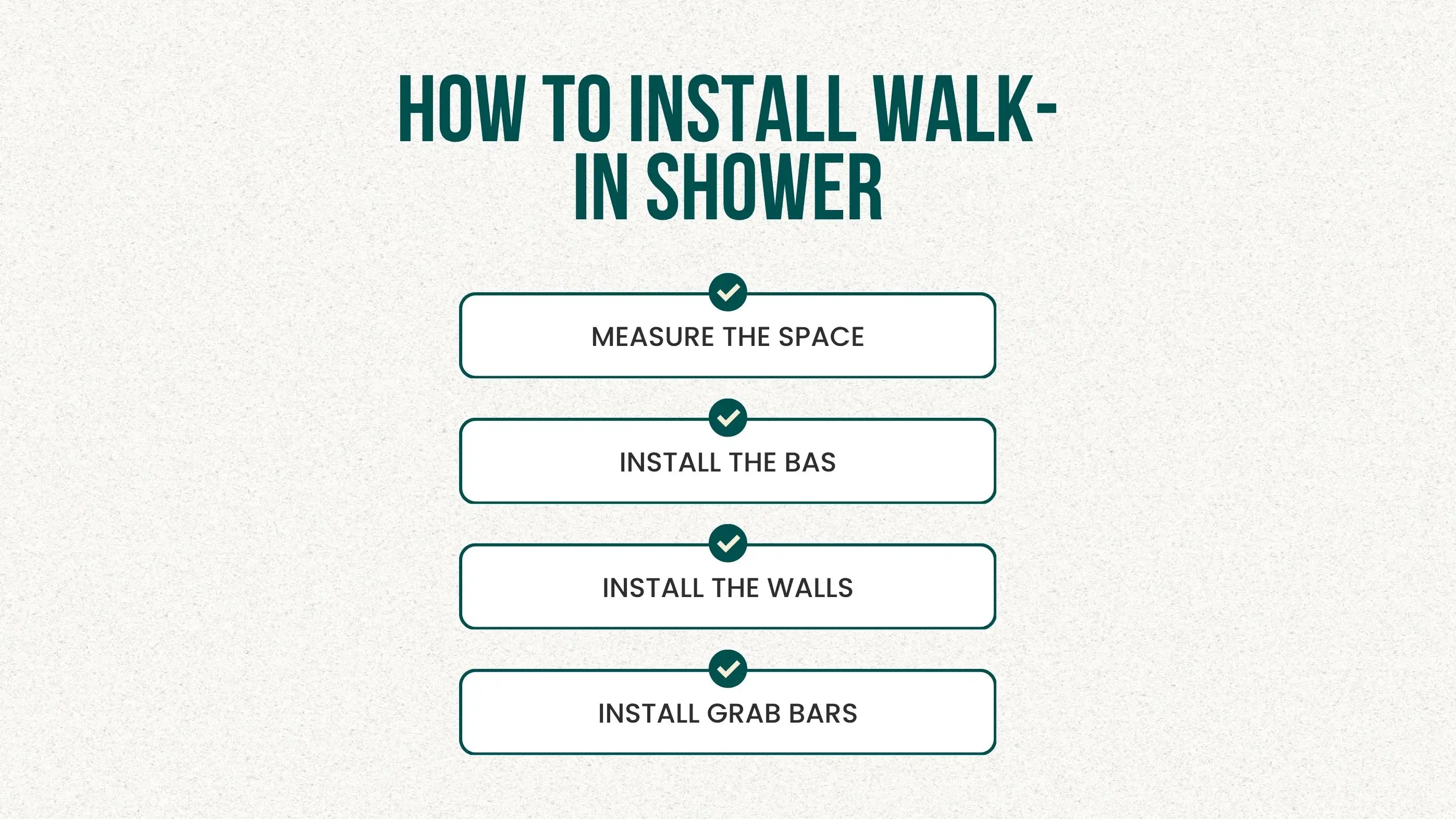
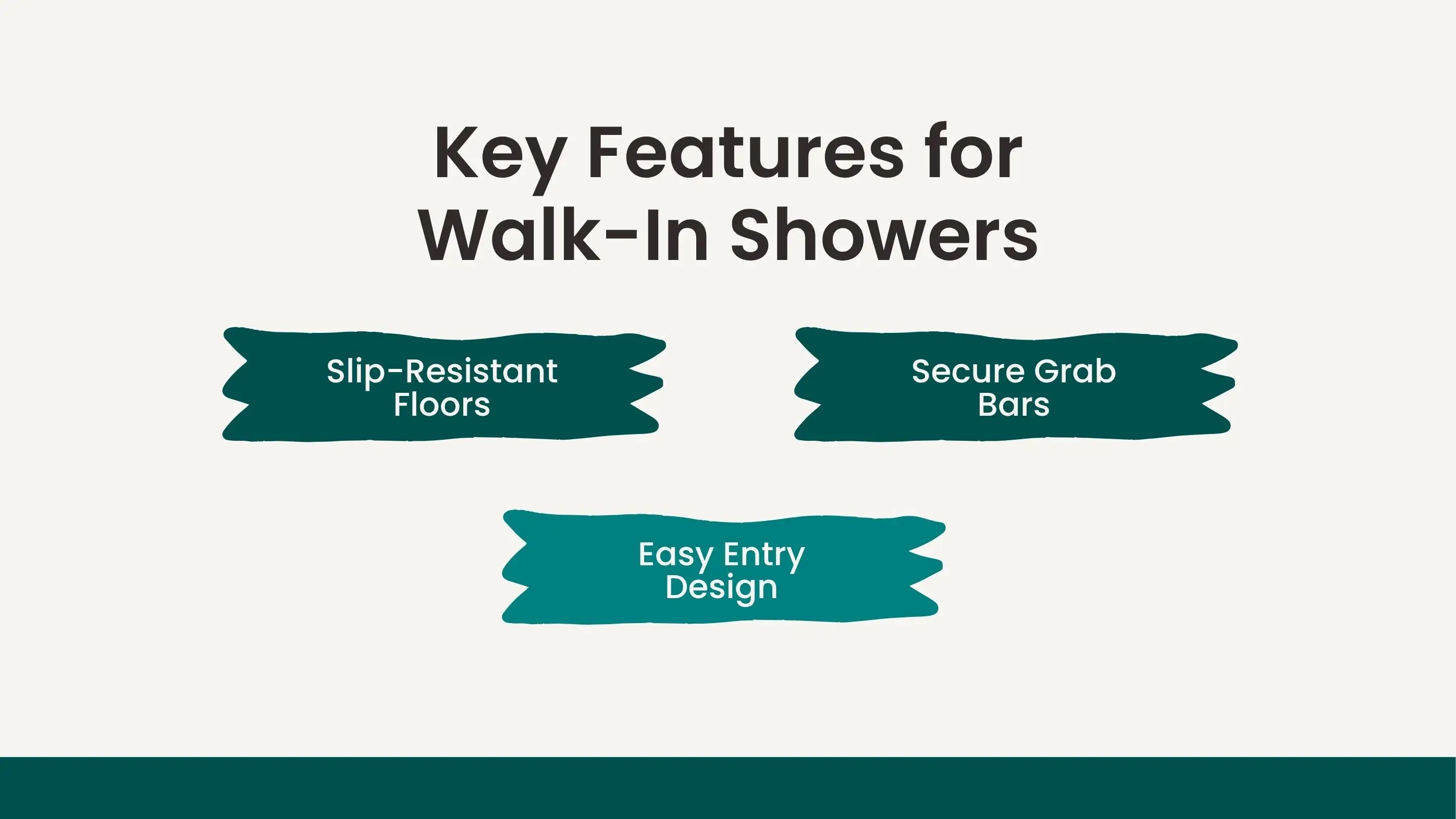
Key features include slip-resistant flooring to prevent falls, grab bars for stability, and an easy-entry design to remove tripping hazards. These features ensure that the shower is accessible and safe for all users.
Walk-in showers can be customized for any bathroom layout. Consider corner showers for smaller spaces or larger, open showers with additional features like seating. Customization options such as glass doors, built-in shelves, and adjustable shower heads allow you to fit the shower to your needs.
Walk-in shower installation typically costs between $1,000 and $5,000, depending on the materials, features, and complexity of the job. Additional plumbing adjustmentsand custom features like seating can increase the cost.
Installing a raised toilet seat is a simple way to improve bathroom safety, reduce strain, and make sitting or standing easier for individuals with limited mobility. A properly installed seat offers better comfort, added support, and a stable surface that helps prevent slips or loss of balance.
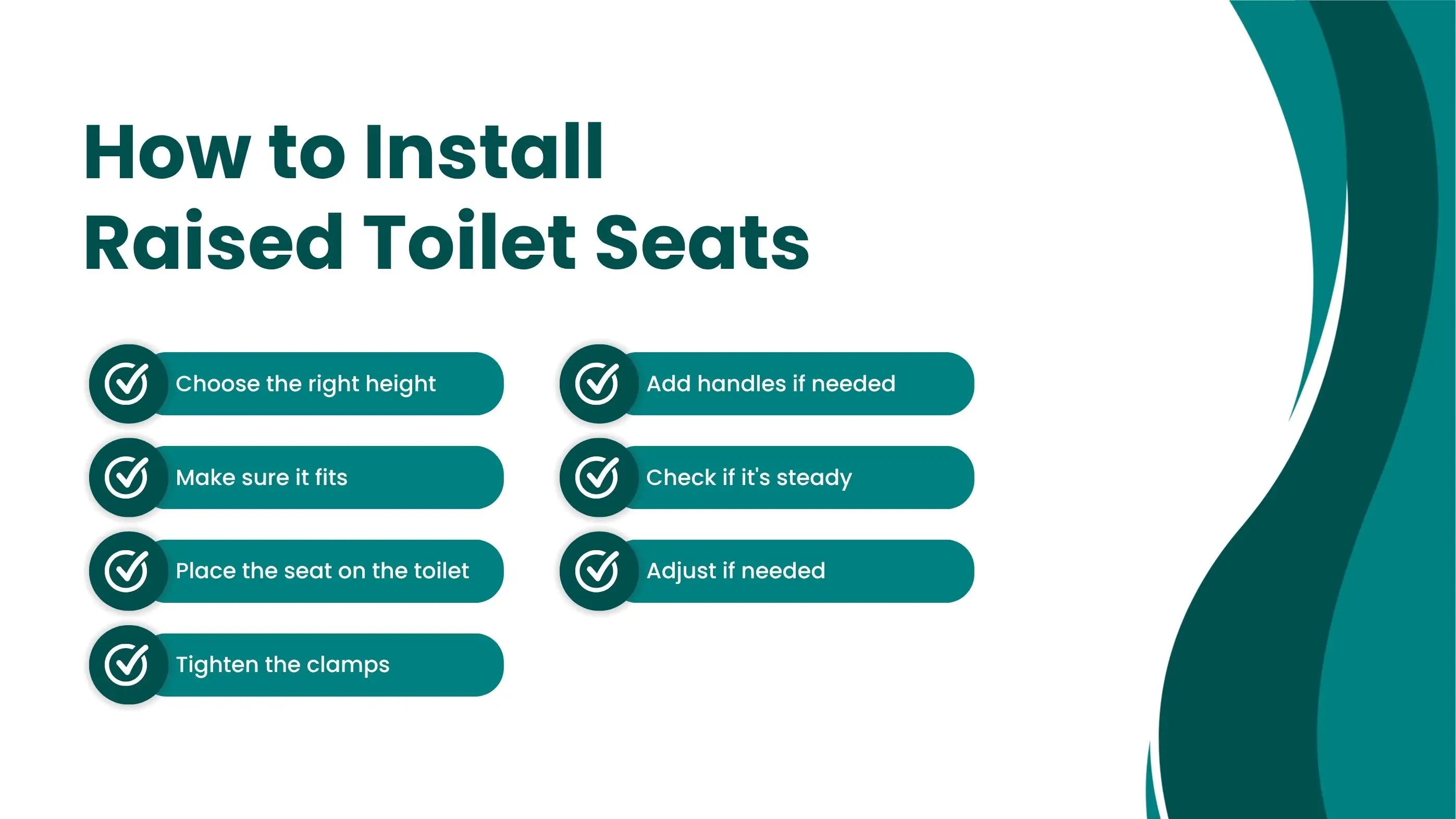
Look for raised toilet seats with handles for added support, adjustable heights, and non-slip surfaces for safety. These features make it easier for users to grip the handles when sitting or standing.
Elongated raised toilet seats offer a larger seating area for added comfort, while standard raised toilet seats are more compact and suitable for smaller bathrooms. Consider the user’s comfort and the space available in your bathroom when choosing between the two.
Bathroom accessibility features can be installed as DIY projects, but every installation must be done correctly to ensure safety and long-term stability. DIY work requires locating studs, measuring accurately, tightening all fixtures securely, and following the manufacturer’s instructions. Professional installers, however, provide important advantages, including:
For seniors or individuals with mobility challenges, professional installation offers peace of mind that every feature is safely installed and ready to provide dependable support.
The cost of these upgrades can vary depending on materials, the complexity of the installation, and whether you choose professional or DIY help. Here’s an overview of typical costs:
| Feature | Cost Range | Details |
|---|---|---|
| Grab Bar Installation | $100–$500 | Based on number and placement of bars |
| Walk-In Shower Installation | $1,000–$5,000 | Custom features and plumbing adjustments affect the price |
| Raised Toilet Installation | $30–$100 for seat, $500–$1,000 for full toilet | Seats are affordable; full toilet installation can be more costly |
| Professional Installation | $150–$500+ | Includes labor and possible plumbing adjustments |
Adding accessibility features makes the bathroom safer, easier to use, and more comfortable for people with mobility challenges. These upgrades help prevent accidents, reduce strain, and support independence at every age.
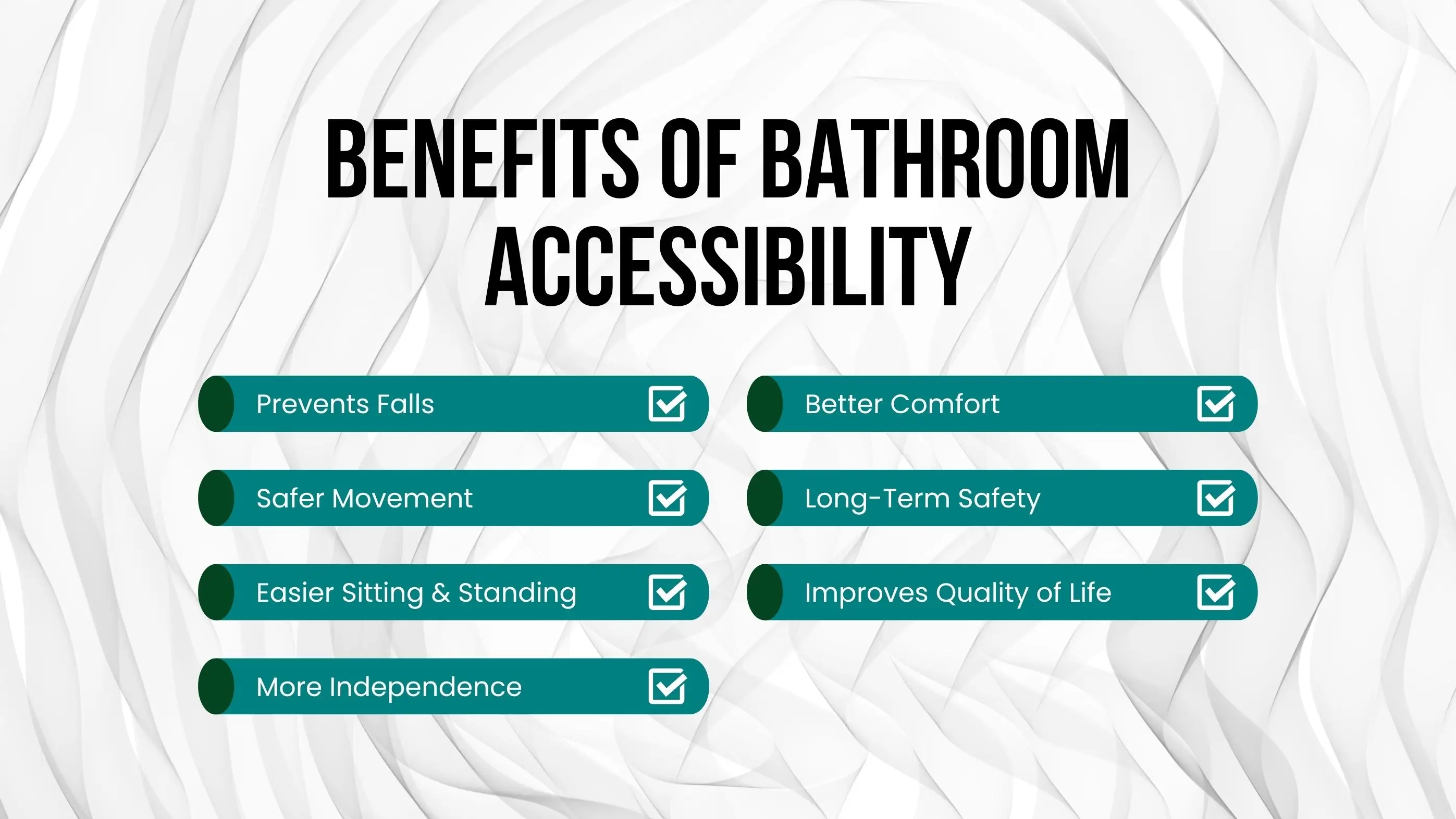
Adding accessibility features like grab bars, walk-in showers, and raised toilets is a valuable investment for enhancing safety, comfort, and independence in the bathroom. These upgrades make it easier for people with mobility challenges to navigate the bathroom safely and comfortably. Whether you're planning a remodel for yourself or a loved one, these features are essential for a functional, accessible bathroom that improves quality of life and reduces the risk of injury. If you're ready to install bathroom accessibility features, consider working with a professional to ensure proper installation and maximum safety.
Grab bars usually take 2 to 4 hours to install, while walk-in shower installations can take several days, depending on complexity.
Yes, many features like grab bars and raised toilet seats can be installed by homeowners. However, professional installation is recommended for walk-in showers or if plumbing adjustments are needed.
With proper care, grab bars and raised toilets can last 10-15 years, while walk-in showers can last much longer if maintained properly.
In most cases, no. However, if plumbing adjustments or structural changes are involved, a permit may be required.
Join our mailing list for exclusive updates, expert tips, and special offers tailored to your needs. Be the first to know about the latest in home services.

Renovize Home is a platform that supports homeowners from planning to renovation. Whether it’s Renovize AI for guidance or a one-on-one call with Pro Finder, we understand your project and match you with local contractors tailored to your needs.
Who We Are
About Renovize HomeGet in TouchHomeownwer Support:
Coming Soon!
General Inquiries:
support@renovizehome.com
Head Office:
24 Greenway Plaza, STE 1800M, Houston, TX 77046.