
Explore All
BROWSE BY CATEGORY
Interior
Exterior
Home Essentials
Homeowner Tools
Blogs & Guides
Find a Pro
Book Your Appointment Now
Home Essentials
About Renovize Home
Explore All
BROWSE BY CATEGORY
Interior
Exterior
Home Essentials
Homeowner Tools
Blogs & Guides
Find a Pro
Book Your Appointment Now
Home Essentials
About Renovize Home
Last Updated on October 16, 2025
Roof leaks can occur at any time, often leading to considerable damage if not addressed quickly. Whether the leak is caused by a minor issue or a more complex problem, repairing it promptly is essential to maintain the safety and integrity of your home. This guide will walk you through identifying, fixing, and preventing roof leaks, helping you understand the causes, methods for repair, and when to seek professional help.
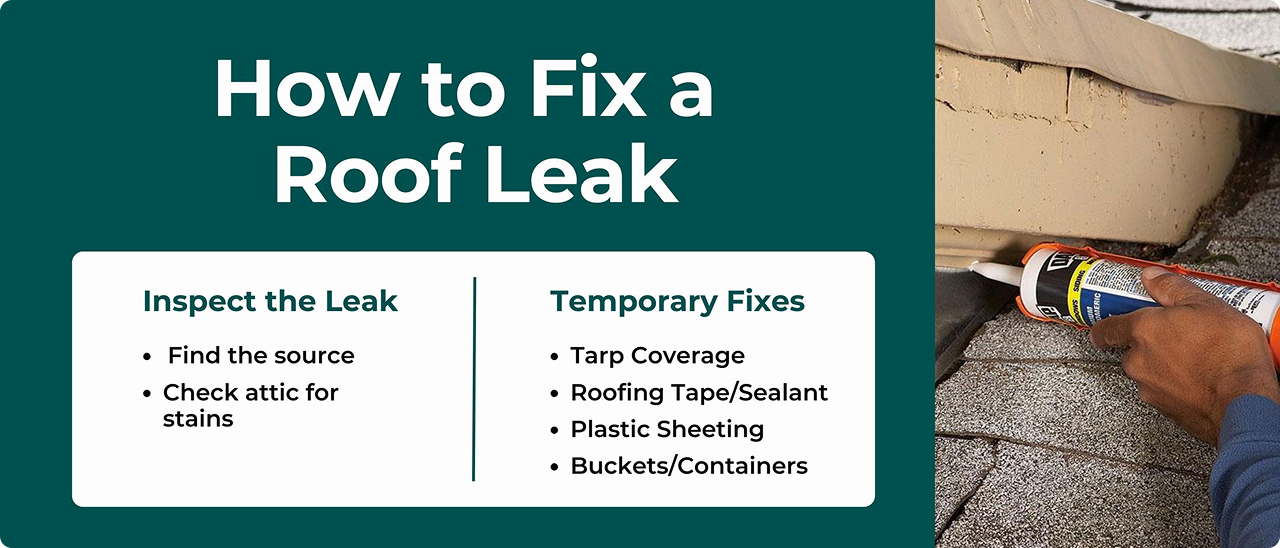
Table of Contents
Understand the Common Causes of Roof Leaks
Types of Roof Leaks
How to Fix a Roof Leak
Fix a Leak on a Flat Roof
Emergency Roof Leak Fix
Cost to Fix Roof Leaks
When to Call a Professional for Roof Leak Fixes
Conclusion:
Before diving into the repair process, it’s crucial to understand what causes roof leaks. Roofs are exposed to various elements such as harsh weather, aging, and wear-and-tear. Identifying the root cause of a leak is essential in ensuring the right repair approach is taken.
Shingles are the first line of defense against water intrusion. Over time, exposure to the sun, wind, and rain can weaken shingles, causing them to crack, curl, or blow away. This can create gaps through which water can seep into the roof deck and, eventually, into the interior of your home. Missing or damaged shingles are often a leading cause of roof leaks.
Roof vents are designed to allow air to flow freely through your attic, which helps regulate temperature and moisture levels. If the vents are broken or damaged, they can allow water to leak in. Cracked vent pipes, or improperly sealed vents, create gaps through which water can seep into your home.
Improper installation of roofing materials is another leading cause of leaks. Whether it's improperly installed flashing, inadequate sealing, or incorrect overlap of shingles, poor installation can lead to gaps and allow water to seep in over time. This is why professional installation is so important.
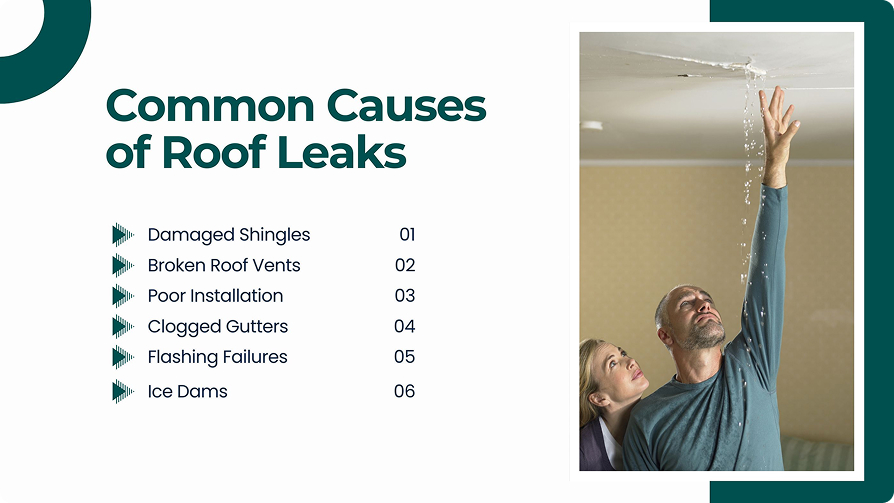
Gutters play a critical role in directing water away from the roof and foundation of your home. If gutters become clogged with debris like leaves, twigs, or dirt, water can back up and seep under the shingles, causing leaks. Additionally, clogged gutters can cause water to pool on the roof, leading to further damage.
Flashing is a metal or plastic material used around roof penetrations, such as chimneys, vents, and skylights, to direct water away from these areas. When flashing deteriorates or becomes loose, it can create gaps that allow water to penetrate the roof. Flashing failures are common around areas where the roof meets walls or other structures.
In colder climates, ice dams can form along the roof’s edges when snow melts and refreezes. These ice dams trap water beneath the shingles, preventing it from draining properly. Over time, the trapped water can leak into the attic and cause significant damage.
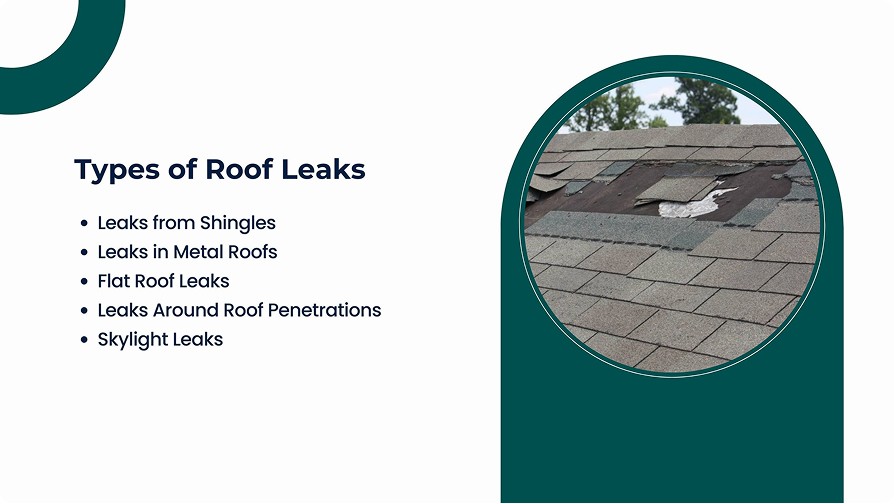
Not all roof leaks are created equal, and the type of roof you have will influence the approach required for repairs. Various roof styles and materials have unique vulnerabilities, which means the cause and extent of a leak can vary widely. It’s crucial to understand the different types of roof leaks so you can address them effectively and ensure the long-term integrity of your roof. Below are the most common types of roof leaks and what you need to know about each:
Type of Roof Leak
| Type of Roof Leak | Description |
|---|---|
| Leaks from Shingles | Water seeps through damaged or missing shingles, often causing water stains or mildew inside the home. |
| Leaks in Metal Roofs | Metal roofs are generally durable, but leaks can occur where seams meet or around fasteners. |
| Flat Roof Leaks | Flat roofs are prone to leaks due to poor drainage, which leads to water pooling and causing damage. |
| Leaks Around Roof Penetrations | Roof penetrations, such as chimneys, vents, and skylights, are vulnerable to leaks if the flashing is damaged or poorly installed. |
| Skylight Leaks | Skylights can leak if the seals around them deteriorate or if the roof surrounding the skylight is damaged. |
Once you've identified the source of the roof leak, it’s time to take action. Repairing a roof leak can be straightforward if you follow a systematic approach, ensuring the leak is effectively sealed and future damage is prevented. Below is a comprehensive, step-by-step guide to help you through the repair process:
Before you begin any repairs, it's important to accurately identify the exact source of the leak. Start by inspecting the ceiling and walls inside your home for visible signs of water damage, such as water stains, damp spots, or mold growth. These indicators can help you track down the location of the leak.
In some cases, the leak may not be directly below the visible water stains, so it’s important to trace the leak’s path to its point of entry. If you have an attic, access it and look for water stains or dampness on the underside of the roof deck, as this is often where leaks first appear. Sometimes, the leak might be caused by issues elsewhere on the roof, such as damaged shingles, flashing, or vents, so be thorough in your inspection.
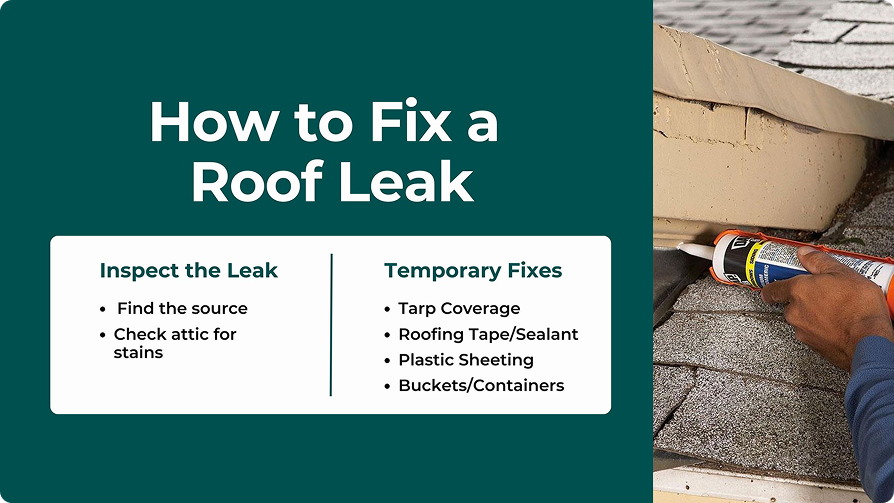
While you're waiting to make permanent repairs, it’s important to prevent further water damage. A temporary fix can help protect your home from additional moisture infiltration. Here are some quick solutions:
Flat roofs are particularly vulnerable to leaks due to their minimal slope, which can lead to water pooling in low spots. This stagnant water can gradually seep through the roof material, causing long-term damage to your roof structure, insulation, and interior. Fortunately, fixing a flat roof leak can be done with the right tools and materials. Below is a more detailed guide to addressing flat roof leaks:
For small holes or cracks, applying a high-quality roof sealant is often the most effective way to create a temporary or long-lasting fix. Here's how to properly apply sealant to a flat roof:
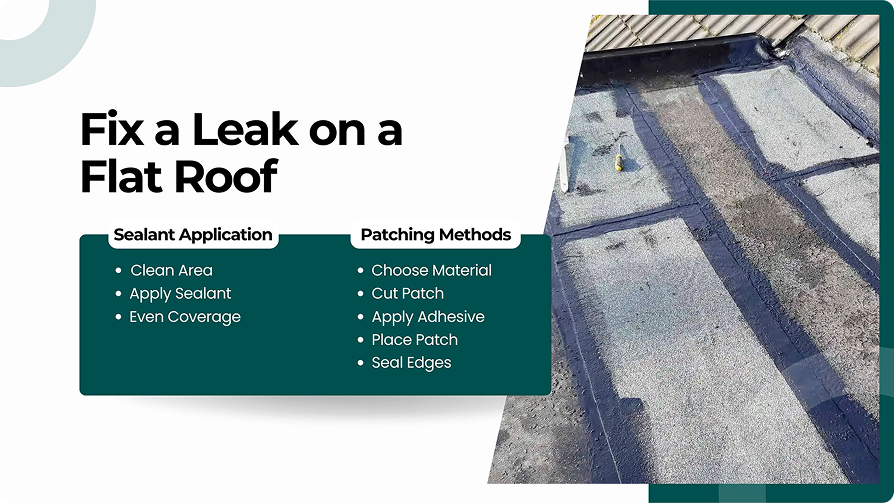
For larger leaks or extensive damage, applying a patch is the best solution. Here’s how to patch a flat roof properly:
Our professional contractors are just a click away.
When a roof leak occurs unexpectedly, such as during a storm or at night, it’s essential to take immediate action to minimize the damage before you can make a permanent repair. Here’s how to handle an emergency roof leak efficiently:
If you're unable to access your roof during the rain or storm, you can use Flex Seal as a temporary solution. Flex Seal is a liquid rubberized coating that can help prevent water from entering through small cracks or holes. Here’s how to use it:
Roof leak repair costs vary depending on the type of roof, the extent of the damage, and the materials needed. Here’s an overview of what you can expect:
Cost to Fix Roof Leaks
| Roof Type | Cost Range | Additional Costs |
|---|---|---|
| Asphalt Shingles | $250 – $1,000 | Includes labor and materials for small leaks |
| Metal Roofs | $500 – $2,500 | Costs rise for larger leaks or metal roofing material |
| Flat Roofs | $300 – $1,500 | Patching or full membrane installation |
| Sheet Metal Patch | $250 – $500 | Minor fixes such as replacing a shingle or sealing a crack |
While many homeowners can handle small roof leaks on their own, more complex or extensive leaks require the attention of a professional roofer. Professional roofers bring years of expertise and specialized tools that can ensure your roof is properly repaired and sealed. Here’s when it’s time to call in an expert:
If the leak has caused significant damage to the structure, attic, or ceilings of your home, it’s time to call in a professional. Water that has seeped into the walls, insulation, and wooden structures can lead to rot, mold, and potentially compromise the structural integrity of your home
If you have multiple leaks across your roof or if the damage appears widespread, it’s time to bring in a professional. DIY repairs often work for isolated issues, but when the roof shows signs of systemic problems, you need an expert to assess and fix the roof thoroughly.
If your roof leak is small and contained, you might feel confident enough to handle the repairs yourself. However, for extensive damage, complex leaks, or if you’re unsure about the source of the problem, calling a professional is the best course of action. Timely repairs can save you money and prevent further damage, ensuring your home remains dry, safe, and structurally sound. If you're in doubt, consult a professional roofer to get an expert assessment of the situation.
Minor leaks often present as small water stains or drips, typically caused by issues like damaged shingles or flashing. Major problems may involve significant water intrusion, sagging ceilings, or mold growth. If you're unsure, it's advisable to consult a professional roofer for an assessment.
If possible, safely inspect the attic for signs of water entry. Inside the home, place containers to catch drips and move valuables away from the affected area. It's crucial to contact a professional roofer promptly to prevent extensive damage.
If your roof is over 20 years old, has widespread damage, or frequent leaks, replacement might be more cost-effective than repeated repairs. A professional inspection can help determine the best course of action.
Yes, roof repairs can be performed in winter, but cold temperatures may affect certain materials. Professional roofers have the tools and techniques to handle repairs in various weather conditions
Indicators include water stains on ceilings or walls, missing or damaged shingles, sagging areas, and visible mold or mildew growth. Regular inspections can help catch issues early.
Join our mailing list for exclusive updates, expert tips, and special offers tailored to your needs. Be the first to know about the latest in home services.

Renovize Home is a platform that supports homeowners from planning to renovation. Whether it’s Renovize AI for guidance or a one-on-one call with Pro Finder, we understand your project and match you with local contractors tailored to your needs.
Who We Are
About Renovize HomeGet in TouchHomeownwer Support:
Coming Soon!
General Inquiries:
support@renovizehome.com
Head Office:
24 Greenway Plaza, STE 1800M, Houston, TX 77046.